Author: Health Freedom Idaho

  • Food & Mood

    Food and Mood: How food impacts your brain health

    We are all aware of how our moods influence our food choices.  Many of us have used food as an alternative to feeling our feelings.  It is often easier to feel full than it is to feel angry, sad, lonely, depressed or anxious.  We celebrate with food, we commiserate with food, we soothe ourselves with food.  Our mood often impacts the decision to eat and what we choose to eat!

    But did you know that what you eat also influences how you feel.  The food we eat can actually impact our mood.  What we eat can contribute to feelings of stress, anxiety, sadness and even depression.  Our food choices even influence how our brain ages and can contribute to the development of dementia or Alzheimer’s in our later years.

    How food impacts brain health

    The food we eat provides the basic building blocks for all of our physiological needs.   Our brain weighs about 2% of our body mass but uses 20% of our caloric needs.  We know that what we eat impacts our health, but a lot of people forget that our brain is attached to our body and what we eat impacts its health as well!

    If you were to build a house out of rotten lumber what do you think would happen??  The food we eat essentially provides the building blocks we use to build and renovate a healthy body and brain.  Healthy food, healthy brain.


    Food provides the building blocks for a healthy brain

    Neurotransmitter synthesis requires adequate amino acids (which are derived from protein) and vitamin and mineral co factors.  Deficiencies in either protein or B12, folate, B6 and zinc can cause symptoms of depression and dementia such as low mood, fatigue, cognitive decline and irritability.

    Omega 3 fatty acids also benefit our moods and reduce the risk of dementia.  Recently a large meta- analysis which included 26 studies and over 150,000 individuals confirmed that high fish consumption (which is one of the best sources of omega 3 fatty acids) is significantly associated with a reduced risk of depression.  Other research has also shown that some diet rich in omega 3 fatty acids (especially EPA) has a beneficial effect on the symptoms of depression.

    The brain on fire

    One of the reasons that omega 3 fatty acids are beneficial is that they are anti-inflammatory.  More and more research is linking neuro inflammation to depression, anxiety, dementia, Alzheimer’s and ADHD.  Omega 3 fatty acids help put out the fire!

    One of the challenges with the standard North American Diet is that we don’t consume enough omega 3 fatty acids and we over consume omega 6 fatty acids – which are pro inflammatory.  Current ratios of omega 6 to omega 3 fatty acids are 16:1.   Traditional diets ranged from 4:1 to 1:4.  A far cry from current consumption ratios.

    Antioxidants also play a role

    A diet rich in antioxidants can have a positive impact on mood and brain health in general.  Antioxidants are substances that protect our cells against the effects of free radicals.  Free radicals are by products  of normal physiological processes.  They are also created  after exposure to a variety environmental toxins such as cigarette smoke, pollution etc.  Free radicals cause oxidative stress and contribute to the development of many diseases ranging from cancer, heart disease , depression, anxiety, Alzheimer’s, multiple sclerosis to name just a few.

    Vitamins A,C and E, carotenoids, flavonoids, tannins, lignans and phenols are antioxidants derived from food that protect our cells from free radical damage.

    Plant based foods are the best sources – fruits, vegetables, nuts,

    seeds, herbs, spices, whole grains.  And even chocolate!  Current dietary recommendations are 7 to 10 servings of fruits and vegetables.  In 2014, only 39.5% of Canadians aged 12 and older reported eating 5 or more servings daily.


    Lets talk about sugar

    Sugar also impacts our mood.  There are actually no government guidelines in North America regarding the daily intake of sugar.  The World Health Organization recommends we decrease our consumption of added sugar to no more than 5% of our daily calories or a maximum of 6 teaspoons of sugar daily.  If you read labels it is helpful to know that 4 grams of sugar is equal to 1 teaspoon.

    The average Canadian eats 18 teaspoons of sugar daily.  That is an astounding 88 pounds a year.  Teenagers eat more – boys a whopping 138 pounds of sugar a year.


    Sugar is like a drug

    When we eat sugar there is a release of feel good hormones.  Sugar hijacks the brains reward pathway.  Over activity of this reward system leads to more cravings and an increased tolerance to sugar.  So begins a vicious cycle of cravings.

    Sugar and carb laden foods mess with our brains neurotransmitters.  Sugar also causes our blood sugar crash and can cause symptoms such as irritability, mood swings, brain fog and fatigue.  Chronically high blood sugar has also been linked to inflammation in the brain.

    The standard N.A. diet that is high in processed food (sugar, fat, salt) increases the risk of  depression compared to those who eat a whole foods diet that is lower in sugar and processed food.


    How to boost your mood with food

    • Start with real food. Real food is the kind of food that has been around for hundreds of years.   Avoid processed and refined food, preservatives, artificial flavours and sweeteners.
    • Get a minimum of 7 -10 servings of fruits and vegetables.
    • Eat fish several times a week. Wild salmon, herring, sardines are the highest in omega 3 fatty acids.  Supplement with a good source of fish oil if this is preferable.
    • Add more healthy fats to your diet. Great sources are nuts, seeds, avocados, flax seeds, extra virgin olive oil.
    • Eat less sugar and refined carbohydrates. Aim for less than 6 teaspoons daily.
    • Incorporate more herbs and spices into your cooking.
    • Enjoy good quality dark chocolate in moderation!!
    • But don’t forget to also move your body daily, practise gratitude, and have more fun…….


  • Are Gum Additive Safe?

    What are Gum additives and Why are they in our food?

    Gum additives are everywhere in our food supply today. Xanthan and guar gum are by far the most common. But there are many others too, such as locust bean gum (carob gum), gellen gum, cellulose gum, and relative newcomer tara gum. The savvy shopper is clued into which gum additives to avoid and which are no big deal.

    Gums are mostly comprised of indigestible polysaccharides. Some are produced from plants and some from bacterial fermentation. Others are produced from edible plants and even a few from ornamentals.

    Food manufacturers love gums because they have unique properties that add desirable texture and/or shelf life to processed foods. Typical use is for thickening, stabilizing or emulsifying. Some are more heat and cold resistant than others. Others are more acid and pH resistant. Most are utilized as powders.

    Are Gum Additives Safe?

    Examination of the most common gum additives in food today indicates that in general they are safe for occasional consumption by healthy persons with normal gut function. The exceptions to this are xanthan gum, which infants should not consume. The worst of the lot is cellulose gum. It is best avoided by everyone as it is a chemically treated, ultra cheap, industrialized product.

    Guar gum, tara gum, gellen gum, and locust bean (carob) gum are all safe in small amounts. Tara gum has a perfect safety record in the research so far, although these results are only in animal studies.

    Locust bean gum is currently under investigation for pharmaceutical use and is well tolerated even by full term infants with reflux.

    All of the gums listed in this article must be temporarily avoided for those on the GAPS or SCD diets. This is due to to unknown long term effects on gut flora and the potential for inflaming a healing gut.

    Learn more about specific gums at 
  • Oregon Government Threatens to Spray 2000 acre Organic Farm with ROUNDUP

    UPDATE! Organic Farm WINS! 

    The government received 40,000 emails regarding their threat to spray the organic farm. A closed door meeting brought farmer out smiling as the County is willing to work on a resolution in weed mangement that DOES NOT INCLUDE spray! 

    Oregon a 2000 acre organic farm is UNDER THREAT of being force SPRAYED WITH ROUNDUP! You can help. You must send your email to lhernandez@co.sherman.or.us or call Lauren at 541-565-3416 by May 17. Let your voice be heard. 

    Send an email expressing your concern to the county government: lhernandez@co.sherman.or.us

    Read all the details at Azure’s website: https://hl.azurestandard.com/healthy-living/info/azure-farm-moro/

    PLEASE SHARE THIS FAR AND WIDE!!

  • Aluminum eliminating the bad and ugly

    Our bodies are exposed to pollutants before we’re even born. Many pollutants, like the ones in our air, are unavoidable. But there are many toxins that we can choose to avoid. Aluminum is one of those toxins. Unlike vitamins, minerals, and trace elements, the body does not need aluminum. And aluminum is no innocent or benign participant. Aluminum accumulates in the kidneys, brain, lungs, liver and thyroid where it competes with calcium for absorption and can affect skeletal mineralization. In infants, this can slow growth. Animal models have linked aluminum exposure to mental impairments. [1]

    The scary truth about aluminum is that it is found in so many things in our world and it is toxic to our bodies, even in small amounts. From household products to vaccinations, aluminum pervades our lifestyle, and if not monitored closely, can easily make its way into our bodies causing lasting, harmful effects.

    ALUMINUM IS FOUND IN:

    THE DANGERS OF ALUMINUM

    • Why is Aluminum Exposure Harmful?

      Just as cigarette smoke damages lung function and overexposure to UV rays will degrade your skin, aluminum is an attacker and its target is your central nervous system. [2]Studies show that toxic metals contribute to brain diseases by producing oxidative stress and aluminum is one of the worst offenders. [1] The prevailing belief around the world is that aluminum is linked to degenerative brain diseases:

      • linked to Alzheimers
      • epilepsy
      • dementia
      • osteomalacia
      • ADD
      • chronic fatigue syndrome

    It makes sense, research shows aluminum can produce toxic, oxidative stress in the brain and a brain autopsy study of elderly persons found them to have aluminum levels 20+ times higher than a middle-aged group. [3] [4] The Agency for Toxic Substances and Disease Registry, part of the U.S. Department of Health and Human Services, recognizes aluminum as one of several metals known to affect the neurological system. [5] As far as aluminum is concerned, the supreme brain-health concern is Alzheimer’s disease.

    • AVOIDING ALUMINUM
      Aluminum is one of the most abundant metals on earth and it has permeated mainstream products to the degree that it’s virtually impossible to completely avoid exposure. However, you can take certain measures to reduce your exposure.

      • Avoid using disposable aluminum pans for cooking. Use glass pans for baking, stoneware for cookie sheets, and cast-iron for stove-top cooking.
      • Do not wrap food in foil to cook in oven or on grill. Potatoes bake just fine with no wrapping at all on oven rack.
      • Don’t use deodorant that contains aluminum. Try using baking soda (as long as it is aluminum-free, too) or buy all-natural, aluminum-free deodorant, or make your own.
      • Read all labels on food and pay attention to packaging. Acidic foods in aluminum cans react, causing the aluminum to leach into the contents of the can.
      • Use all-natural shampoos, soaps, lotions, and cosmetics.
      • Avoid aluminum-containing antacids. Try natural remedies for heartburn and indigestion like sipping a glass of water with one tablespoon of apple cider vinegar, eat fresh pineapple or papaya, chew a sprig of parsley, drink a cup of peppermint tea, drink aloe vera, or coconut water, or milk.

    References (13)
    1. Kumar V, Gill KD. Aluminium neurotoxicity: neurobehavioural and oxidative aspects. Arch Toxicol. 2009 Nov;83(11):965-78. doi: 10.1007/s00204-009-0455-6. Epub 2009 Jul 1. Review.
    2. Michalke B, Halbach S, Nischwitz V. JEM spotlight: metal speciation related to neurotoxicity in humans. J Environ Monit. 2009 May;11(5):939-54. doi: 10.1039/b817817h. Epub 2009 Mar 19. Review.
    3. Fernández-Dávila ML, Razo-Estrada AC, García-Medina S, Gómez-Oliván LM, Piñón-López MJ, Ibarra RG, Galar-Martínez M. Aluminum-induced oxidative stress and neurotoxicity in grass carp (Cyprinidae–Ctenopharingodon idella). Ecotoxicol Environ Saf. 2012 Feb;76(2):87-92. doi: 10.1016/j.ecoenv.2011.09.012. Epub 2011 Oct 10.
    4. Jansson ET. Aluminum exposure and Alzheimer’s disease. J Alzheimers Dis. 2001 Dec;3(6):541-549.
    5. Pohl HR, Roney N, Abadin HG. Metal ions affecting the neurological system. Met Ions Life Sci. 2011;8:247-62.
    6. Brenner S. Aluminum may mediate Alzheimer’s disease through liver toxicity, with aberrant hepatic synthesis of ceruloplasmin and ATPase7B, the resultant excess free copper causing brain oxidation, beta-amyloid aggregation and Alzheimer disease. Med Hypotheses. 2013 Mar;80(3):326-7. doi: 10.1016/j.mehy.2012.11.036. Epub 2012 Dec 20.
    7. Shrivastava S. Combined effect of HEDTA and selenium against aluminum induced oxidative stress in rat brain. J Trace Elem Med Biol. 2012 Jun;26(2-3):210-4. doi: 10.1016/j.jtemb.2012.04.014. Epub 2012 May 8.
    8. Bondy SC. The neurotoxicity of environmental aluminum is still an issue. Neurotoxicology. 2010 Sep;31(5):575-81. doi: 10.1016/j.neuro.2010.05.009. Epub 2010 May 27. Review.
    9. Belojević G, Jakovljević B. [Aluminum and Alzheimer’s disease]. Srp Arh Celok Lek. 1998 Jul-Aug;126(7-8):283-9. Review. Serbian.
    10. Nishida Y. Elucidation of endemic neurodegenerative diseases–a commentary. Z Naturforsch C. 2003 Sep-Oct;58(9-10):752-8. Review.
    11. Mandour RA, Azab YA. The prospective toxic effects of some heavy metals overload in surface drinking water of Dakahlia Governorate, Egypt. Int J Occup Environ Med. 2011 Oct;2(4):245-53.
    12. Riihimäki V, Aitio A. Occupational exposure to aluminum and its biomonitoring in perspective. Crit Rev Toxicol. 2012 Nov;42(10):827-53. doi: 10.3109/10408444.2012.725027. Epub 2012 Sep 27. Review.
    13. Polizzi S, Pira E, Ferrara M, Bugiani M, Papaleo A, Albera R, Palmi S. Neurotoxic effects of aluminium among foundry workers and Alzheimer’s disease. Neurotoxicology. 2002 Dec;23(6):761-74.

    †Results may vary. Information and statements made are for education purposes and are not intended to replace the advice of your doctor. Global Healing Center does not dispense medical advice, prescribe, or diagnose illness. The views and nutritional advice expressed by Global Healing Center are not intended to be a substitute for conventional medical service. If you have a severe medical condition or health concern, see your physician.

  • Farmed Salmon the Dirty Secret

    HFI: Here are some facts about Farmed Salmon which may get you think twice about buying one again:
    1. Farmed salmon is fed pellets of chicken feces, soy, GMO canola oil, corn meal and other fish with high levels of toxins
    2. Farmed salmon has 7 times higher levels of PCB’s compared to wild salmon
    3. Farmed salmon has 30 times more sea lice
    4. Farmed salmon is given toxic chemicals to intesify their flesh’s color
    5. Farmed salmon is pumped with more antibiotics than any other livestock
    6. Farmed salmon has less omega 3’s as a result of the lack of wild diet
    7. Farmed salmon is prone to more disease

    Next time you dine out and decide to try the salmon, make sure it’s wild and not farmed.

    According to the EPA the most toxic fish in the world is farmed salmon. They even advise people that more than one meal of farmed salmon a month is the maximum they should eat.

    But even their recommendation is wrong because farmed salmon is one of the most toxic FOODS in the world and should not be consumed in any amount.

    You should know that farmed fish of any kind is not good for your health and can wreak havoc on your organism in ways you can’t even imagine. Why? Well, because fish in the wild doesn’t eat corn, grains or pork, while farmed fish do, but they’re not supposed to. Moreover, farmers give fish a toxic combination of vitamins and antibiotics, which afterwards end up in your system. Some fish even get synthetic pigments.

    Farmed Salmon – One of the Most Toxic Foods in the World

    What’s even more surprising is that the toxins in farmed fish don’t come only from pesticides and antibiotics, most of them come from the dry pellet feed. Research has found that the fish feed contains dangerous amounts of dioxins, PCBs and a bunch of other drugs and chemicals which can cause permanent damage to your body and can even be linked to immune system problems, endocrine system disorders, autism and ADHD.

    Dr. Monsen, a well-renowned biologist says:

    “I do not recommend pregnant women, children or young people eat farmed salmon. It is uncertain in both the amount of toxins salmon contain, and how these drugs affect children, adolescents and pregnant women… The type of contaminants that have been detected in farmed salmon have a negative effect on brain development and is associated with autism, ADD / ADHD and reduced IQ. We also know that they can affect other organ systems in the body’s immune system and metabolism.”

    Omega-3 Levels in Farmed Salmon Is Nearly Half of That in Wild Salmon

    The International Fishmeal and Fish Oil Organization (IFFO) says that the farmed fish we eat today doesn’t contain even half of the amount of omega-3s compared to a decade ago. This is mostly due to the fact that farmed salmon are now fed more on byproducts of hog and poultry processing, soybeans and soybean oil, canola oil, corn and other grain when they should be fed smaller wild fish rich in omega-3s.

    Farmed Salmon Can Cause Cancer

    According to research, people that eat farmed salmon more than once a month are at a higher risk of developing some type of cancer later in life as a result of the high amount of chemicals and antibiotics found in the farmed salmon fillet.

    Moreover, it has been revealed that farmed salmon contains high levels of cancer causing PCB, 16 times higher than wild salmon. Farmed salmon also contains 11 times more dioxin than wild salmon.

    If this wasn’t enough, farmed salmon is rich in inflammation producing omega-6 fatty acids, which consequently can increase your risk of developing serious diseases like diabetes, cancer, arthritis, coronary artery disease and Alzheimer’s.

    Banned Synthetic Astaxanthin

    It’s astonishing to find out that farmers pump their salmon with synthetic astaxanthin, a substance that has been banned by every government in the world for human consumption. This harmful substance makes the farmed fish’s flesh look more pinkish and similar to wild salmon, fooling people into thinking they’re actually eating wild salmon.

     How can you tell the difference?
    Well, if the menu doesn’t say you can ask, and if it’s cheaper than usually it’s surely farmed because farmed salmon is more affordable than wild. Wild salmon can sometimes cost as much as a high end cut of beef. If you want to preserve your health choose wild and forget about farmed. Another telltale sign your salmon isn’t wild?  The color!  Farm- raised salmon is much lighter than wild salmon!

    Source: http://chere1.com

  • 6 Natural Remedies for Headache

    HFI: The occassional headache. Its unavoidable it seems. Headaches are something that millions of people experience daily. They are at best, an unwelcome annoyance and at their worst, completely debilitating. There are many reasons for the onset of a headache and many classifications of headaches. While many types of headaches are related to other health issues, the number one cause of headaches is stress and fatigue…. 

    Here are some suggested home remedies for headaches that have worked for friends and families of Health Freedom Idaho.  Please note headaches are not something a child should regularly experience. Injury, illness, food intolerances, and emotional upheaval certainly can bring on the random headache but in general, children should not get headaches. If your child is experiencing frequent headaches, you need to seek medical expertise to get to the root. Never mess around with on ongoing headache.

    Favorite Headache Home Remedy:

    Lavender Oil

    Not only does lavender smell great — it’s also a useful home remedy for headaches and migraine pain. Lavender oil can be either inhaled or applied topically. Two to four drops for every two to three cups of boiling water are recommended when inhaling lavender-oil vapors as a headache treatment. Unlike many medicinal oils, this home remedy can also be safely applied externally without the need to dilute it. Lavender oil should not be taken orally.

    Peppermint Oil

    Peppermint is a soothing home remedy that has been shown to benefit tension headaches. This fresh-smelling oil has vaso-constricting and vaso-dilating properties, which help control blood flow in the body. Headaches and migraine pain are often due to poor blood flow, and peppermint oil helps to open and close the vessels that promote flow. Peppermint home remedies also open up the sinuses so that more oxygen can get into the bloodstream.

    Basil Oil

    Basil, the strong-scented herb used as a topping for pizzas and pastas, certainly tastes and smells good. And for people in need of a natural headache treatment, the oil derived from basil plants can also be a useful home remedy. Basil works as a muscle relaxant, so it is especially helpful for headaches caused by tension and tight muscles.

    DIY Scalp Massage

    Do-it-yourself scalp massages can be an effective way to alleviate migraine pain, and they feel great. Researchers in Brazil showed that massaging the greater occipital nerve — the area in the back of the head, at the base of the skull — reduces migraine pain. Massage in general has been identified as a useful home remedy for headaches, especially reflexology (massaging reflex points on the hands and feet).

    Feverfew

    Feverfew, as its name suggests, is used to treat fever, but it’s most commonly known as an herbal headache treatment. This home remedy became popular in the 1980s, when a landmark study in Great Britain showed that 70 percent of participants had less migraine pain after taking feverfew daily. Since then, more studies have demonstrated feverfew’s benefit in preventing and treating migraine pain. One study showed improvement in migraine pain among people who took daily feverfew in combination with white willow, another herbal home remedy, which contains properties similar to aspirin.

    Flaxseed

    Some headaches are caused by inflammation, which can be reduced by consuming omega-3 fatty acids. Flaxseed can help provide headache relief because it’s rich in omega-3s. Flaxseed can be used as a home remedy in several forms, including as an oil and ground or whole seeds.

    Buckwheat

    Buckwheat’s usefulness as a home remedy for headaches and migraine pain comes from a flavonoid known as rutin. Flavonoids are phytochemicals, which are found in plants, and have been shown to contain antioxidant properties, which counteract damage to cells. In addition, researchers in Taiwan have demonstrated the effects of flavonoids on inflammation, a common cause of headaches.

    FDA Disclosure: THESE STATEMENTS HAVE NOT BEEN EVALUATED BY THE FDA AND ARE NOT INTENDED TO DIAGNOSE, TREAT OR CURE ANY DISEASE. ALWAYS CHECK WITH YOUR PHYSICIAN BEFORE STARTING A NEW DIETARY SUPPLEMENT PROGRAM.

  • Measles: A Treatable Disease

    Large portions of this editorial are from vaccine choice advocate Shawn Siegel as posted publicly on Facebook here.

    There’s no such thing as an illness or disease that doesn’t have sometimes associated complications and death – even the common cold. Yet, we wouldn’t call the common cold anything other than benign. The pictograph posted below, of pre-vaccine America, makes it as plain as the nose on your face: measles is a benign illness. It should also make it obvious that the one child in 7,500 cases who died had some pretty serious health issues; that complications and death don’t follow the virus, or bacteria, they follow the person.

    There have been no childhood deaths in the U.S. from measles in the past 15 years. Those measles death statistics in the CDC and pharma-backed “science” blogs are in third-world countries, not in the US! Measles is not a deadly disease for people with food and water.  The 98% decline in disease rates for measles was PRIOR to the introduction of the vaccine due to advancements in living conditions, nutrition and healthcare.

    Once again, the media is discarding factual reporting in favor of mindless sensationalism, attributing an alleged measles resurgence — even this claim is specious — to the unvaccinated and a push for vaccination for everyone. 

    Interestingly, a  report on Jan 31, 2019 124 cases of measles confirmed in New York October 2018 to present, NO FATALITIES 
    and media reports only 34 were unvaccinated. That means that 90 of the 124 cases were vaccinated – that would be close to a 75% vaccine failure rate. 

    Whether or not this claim is actually true pales in importance compared to the fact that measles really isn’t much of a threat in the first place. The measles vaccine, on the other hand, is a whole different story.

    RESEARCH LINKS AND RESOUCES can be found on this article: FACTS ABOUT OUTBREAKS and MEASLES

    Health issues can often be improved through proper treatments and therapies. 

    Health in no way can be improved through vaccination – through injection of disease, certainly of multiple diseases, known neurotoxins – literal poisons – carcinogens and other chemicals, none of which belong in the human bloodstream. 

    That’s why the MMR vaccine – sticking to measles – is listed by Health and Human Services as causing brain inflammation, brain damage, potentially fatal anaphylactic shock, chronic arthritis, thrombocytopenic purpura – a blood platelet autoimmune disorder so named because the resulting accumulation of internal bruises ultimately turns the body purple – and “Any acute complication or sequela, including death,…”.

     “preventable diseases” are actually treatable with modern medicine or even with just – better nutrition. Measles is treated with vitamin A. The severity of whooping cough can be greatly reduced with high doses of vitamin C. These diseases were hardly considered dangerous and rather more like a rite of passage for kids in the 50s & early 60s, and now we know so much more about how to treat them. But the fear-mongering in the media and from medical professionals is intense. And ridiculous. Ashley Everly ThinkLoveHealthy.com

    The USCDC lists measles as “the deadliest of the fever / rash diseases”, giving a terribly misleading, dishonest impression of the reality of the illness, when they know full well that what was stated by an MD in a 1959 British Medical Journal issue is true:

    “In this practice measles is considered as a relatively mild and inevitable childhood ailment that is best encountered any time from 3 to 7 years of age. Over the past 10 years there have been few serious complications at any age, and all children have made complete recoveries. As a result of this reasoning no special attempts have been made at prevention even in young infants in whom the disease has not been found to be especially serious.”

    Critically, multiple studies tell us “preventable diseases” are actually beneficial to the immune system to contract and are linked to having a reduced risk of cancer

    That is, from a valid perspective the process we call infectious illness is corrective in nature – an adjustment, if you will, to afford better immunological strength in adolescence and adulthood. 

    Beyond being terribly divisive, the notion that vaccination is protective in any way, for anyone – most of all, ironically, for the vaccinated – is false.

    The final irony is that it’s not really about choice; that no parent who’s seen enough honest vaccine information would ever choose to vaccinate in the first place.

    – Shawn Siegel

    By definition, benign diseases are: generally without complications, and a good prognosis (outcome) is usual. – via Britannica.com

    MORE RESEARCH RESOURCES: 

    Researching Vaccines: Where to Start

    Measles Vaccine Injury and Death

    Vitamin A for Treating Measles in Children

    Lead image courtesy of David D. on Flickr.

  • 3 Pesticide Realities

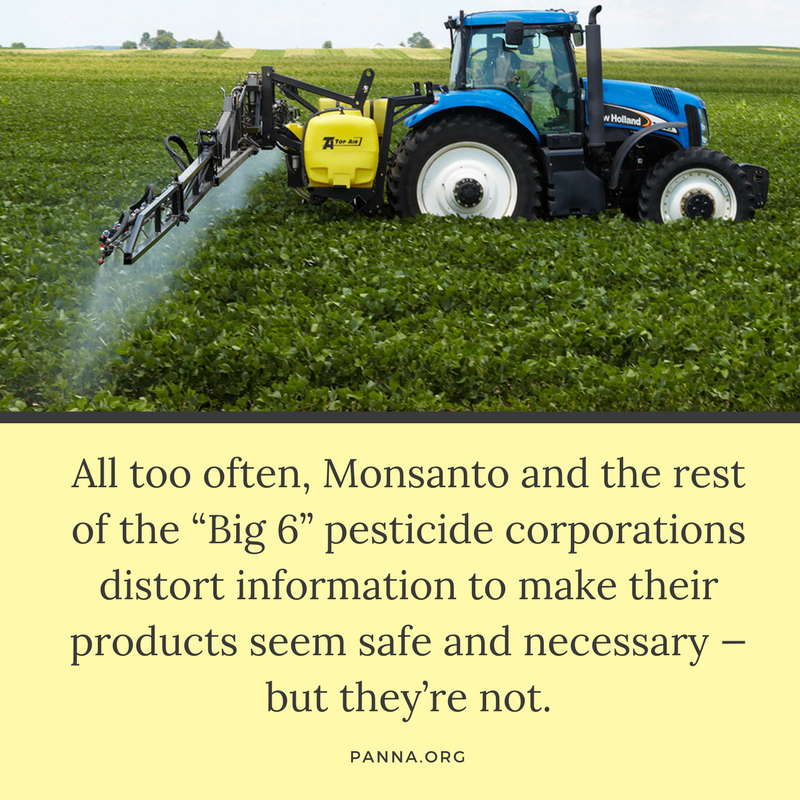
    All too often, Monsanto and the rest of the “Big 6” pesticide corporations distort information to make their products seem safe and necessary — but they’re not.

    Myths about pesticides are a testimony to the power of advertising, marketing and lobbying. Pesticide corporations, like big tobacco and the oil industry, have systematically manufactured doubt about the science behind pesticides, and fostered the myth that their products are essential to life as we know it — and harmless if “used as directed.”

    The book Merchants of Doubt calls it the Tobacco Strategy: orchestrated PR and legal campaigns to deny the evidence, often using rogue scientists to invent controversy around so-called “junk science” to deny everything — from second-hand smoke causing cancer to global warming to the hazards of DDT.

    Here are eight of the seemingly plausible myths we hear from the Big 6 every day:

    1. Pesticides are necessary to the feed the world
    2. Pesticides aren’t that dangerous
    3. The dose makes the poison
    4. The government is protecting us
    5. GMOs reduce reliance on pesticides
    6. We’re weaning ourselves off of pesticides
    7. Pesticides are the answer to global climate change
    8. We need DDT to end malaria, combat bedbugs, etc.

    Myth #1: “Pesticides are necessary to the feed the world”

    Reality: The most comprehensive analysis of world agriculture to date tells us that what can feed the world — and what feeds most of the world now, in fact — is small-scale agriculture that does not rely on pesticides.

    Dow, Monsanto, Syngenta and other pesticide producers have marketed their products as necessary to feed the world. Yet as insecticide use increased in the U.S. by a factor of 10 in the 50 years following World War II, crop losses almost doubled. Corn is illustrative: in place of crop rotations, most acreage was planted year after year only with corn. Despite more than a 1,000-fold increase in use of organophosphate insecticides, crop losses to insects has risen from 3.5% to 12% (D. Pimental and M. Pimental, 2008).

    More to the point, hunger in an age of plenty isn’t a problem of production (or yields, as the pesticide industry claims), efficiency or even distribution. It is a matter of priorities. If we were serious about feeding people, we wouldn’t grow enough extra grain to feed 1/3 of the world’s hungry — and then pour it into gas tanks.

    Myth #2: “Pesticides aren’t that dangerous”

    Reality:  Pesticides are dangerous by design. They are engineered to cause death. And harms to human health are very well documented, with children especially at risk. Here are a few recent examples from the news:

    • An entire class of pesticides (organophosphates) has been linked to higher rates of ADHD in children.
    • The herbicide atrazine, found in 94% of our water supply, has been linked to birth defects, infertility and cancer.
    • Women exposed to the pesticide endosulfan during pregnancy are more likely to have autistic children.
    • Girls exposed to DDT before puberty are five times more likely to develop breast cancer.
    • The World Health Organization recently designated the key ingredient in the widely used herbicide RoundUp a “probable human carcinogen.”

    A large and growing body of peer-reviewed, scientific studies document that pesticides are harmful to human health. The environmental damage caused by pesticides is also clear; from male frogs becoming females after exposure, to collapsing populations of bats and honeybees.

    Myth #3: “The dose makes the poison”

    Reality: If someone is exposed to an extremely small amount of one ingredient from a single pesticide at a time, and it was a chemical of relatively low toxicity and exposure occurred outside any window of biological vulnerability, it might pose little danger. Unfortunately, that’s an unlikely scenario.

    First, pesticide products typically contain several potentially dangerous ingredients (including so-called “inerts” not listed on the label). Second, we’re all exposed to a cocktail of pesticides in our air, water, food and on the surfaces we touchThe combination of these chemicals can be more toxic than any one of them acting alone. Third, many pesticides are endocrine disruptors and even extremely low doses can interfere with the delicate human hormone system and cause lifechanging damage.

    Finally, the timing of exposure can be just as — if not more — important than the dose. Even extremely low levels of pesticides can cause irreversible, lifechanging harm if they occur at a moment when organs or other systems are developing. One stark example from a recent study using MRI technology illustrates the point: children exposed in utero to the neurotoxic insecticide chlorpyrifos experienced lasting changes in their brain architecture.

    It’s also important to understand that research used to determine the safety of a pesticide is funded and conducted by the corporations marketing the product, often leading to distortion of findings.

  • March

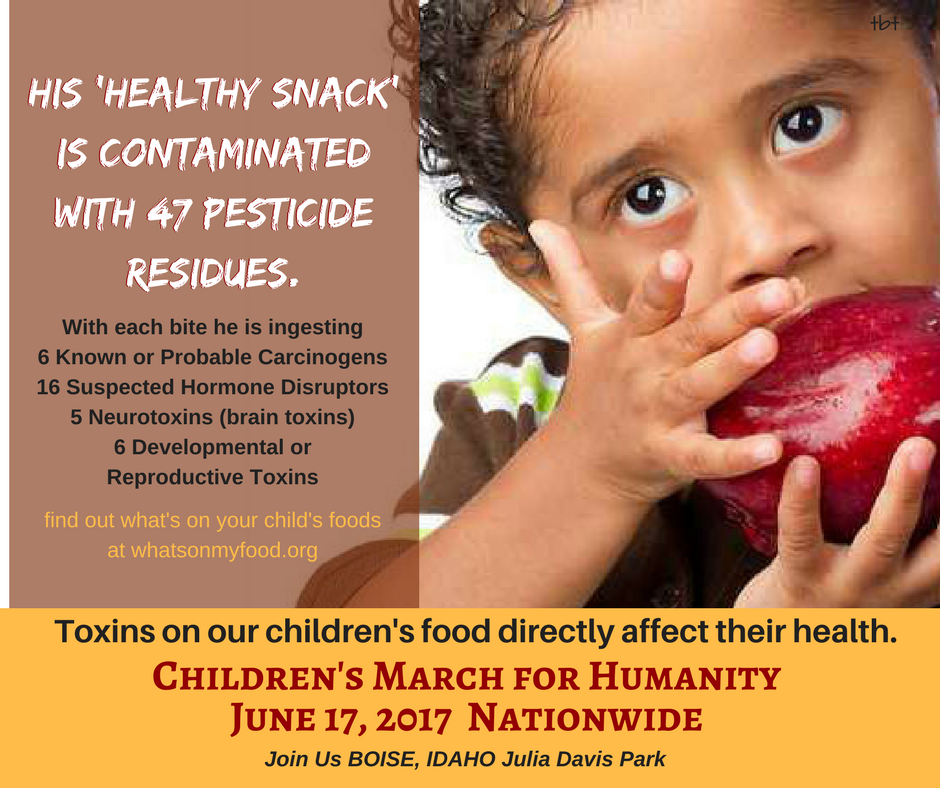
    Come join us on June 17 at Julia Davis Park as IDAHO JOINS NATIONWIDE MARCH & COMMUNITY EVENT for Children’s Health!

    Join us for encouraging speakers and family activities. We will learn how toxins effect our children’s health, discover way to protect, and heal our kids from the everyday toxicity that bombards their systems. Live Music, Engaging Speakers, Family activities and a local vendor marketplace will allow us to come together as a community to invoke a change in the environment for the sake of our children’s future.

    Free Family Event with encouraging speakers and children’s activities.
     Join us in the park across from the Boise Zoo.

    Children’s March For Humanity RSVP to this free event

    Health Freedom Idaho Hosts this FREE family event in the park across from Zoo Boise! Learn about the effects of toxins we are constantly bombarded with that affect our health and the health of our children. Be encouraged with practical ways to protect and heal our kids from the everyday toxicity present in our environment and food.
     Lots of kids activities such as bounce houses, bubbles, arts and crafts, park games, live music, and yummy healthy food vendors!
     **JOIN THE PARADE! Have your kids dress up as professionals or grown ups and join our parade**

    Speakers Include: 

    9:00 am Chelsi Goddard, Health Freedom Idaho, will open with what the Children’s March For Humanity is all about as well as going over the rules and safety protocol. 9:10 am Lucas Baumbach, Treebrook Farm, will teach the kids about organic farming.9:25 am Dr Rosie Main, Main Health Solutions, will bring the solution as she educates parents and children about what to do about all of these toxins bombarding our bodies.9:40 amGovernor elect Russ Fulcher will be educating the citizens about why and how to get involved politically to protect our children.  9:55 am Miste Karlfeldt, Executive Director of Health Freedom Idaho, give a send off to the parents and children to march to the around the City.

    11:oo am Marti Hinckley, Million Mom Movement, shares about protecting our food supply

    11:10 am Julie True, Health Freedom Idaho, directions for days activities including easy action steps each family can take today to protect the future

    Afternoon Activities: Community Building. Family and Kids Activities. Information tables.

    Bring your own picnic or enjoy foods from vendors Boise Fry Company and Organic Idaho Juice and Java

    REGISTER YOUR FAMILY TODAY!

    Thanks to Our Sponsors!

  • Johnson & Johnson faces a $110 million verdict in baby powder suit

    A Virginia woman just won a record-setting $110.5 million in a lawsuit that alleges that using Johnson & Johnson’s baby powder caused her ovarian cancer.

    62-year-old Louis Slemp of Wise, Virginia is the latest in a line of plaintiffs with similar claims, including three previous St. Louis juries who awarded a total of $197 million, including a decision in October that awarded a California woman $70 million.

    Slemp was diagnosed with ovarian cancer in 2012, which spread to her liver. As a 40-year user of J&J’s talcum-containing products, such as baby powder, she blames her cancer on the extended talcum use. 

    Talc is a naturally occurring mineral, and is made up primarily of magnesium, silicon, and oxygen. It’s widely used in cosmetics and personal care products to absorb moisture, cut down on friction, prevent caking and improve the product’s feel. In its natural form, talc can contain asbestos, which is known to cause cancers in and around the lungs when inhaled. But all talcum products sold in the U.S. have not contained asbestos since the 1970s.

    Johnson & Johnson said in a statement that it would appeal and disputed the scientific evidence behind the plaintiffs’ allegations.

    The evidence concerning asbestos-free talcum products and cancer risk is unclear, but some studies report a slightly increased risk in women who use talcum powder in the genital area.