Author: Health Freedom Idaho

  • Peppermint for Upset Stomach

    Peppermint – more than a candy cane for Christmas time, in our house its the 1st line of defense against an upset stomach. With a little who has food sensativities this has been our go medicinal herb. It goes easily and can be an envasive plant to potted is best to avoid having it overrun your herb garden.

    When it comes to the uses of peppermint for upset stomach, its most potent compound is menthol, a strong antispasmodic that helps to calm spasms in the stomach and intestines.

    This antispasmodic activity makes peppermint useful for vomiting, gas pains, colic, intestinal cramping, and even minor symptoms of irritable bowel syndrome (IBS). In addition to being anti-spasmodic, menthol reduces built-up gas, stimulates the production of bile, and relieves pain.

    How to Use Peppermint for Upset Stomach

    The digestive system is prone to a great number of issues: heartburn, indigestion, nausea, cramping, gas. The list goes on and on. Peppermint can help soothe and calm nearly every complaint the digestive system throws at it.

    There are a few ways to use peppermint for upset stomach, and some are more effective at easing certain problems. Let’s look at peppermint tea first…

    Peppermint Tincture for Indigestion

    Peppermint tincture, made by soaking the herb in alcohol to draw out its beneficial compounds, has proven to be more effective in relieving indigestion than the herbal tea. The reason for this is that peppermint’s medicinal compounds are only partially soluble in water – but alcohol can draw them all out.

    Take 20-60 drops (0.5-1 ml) of peppermint tincture in a small glass of water up to three times a day for the relief of indigestion.

    Alternatively, try making a peppermint julep for a cool and soothing treat on a hot day. It will make you feel like a rich, southern aristocrat too!

    Just crush 4-5 sprigs of peppermint and put in a glass with two teaspoons sugar and 2 1/2 ounces bourbon. Fill the rest of the glass with crushed ice. Stir well and enjoy.

    Peppermint Essential Oil

    Inhaling peppermint essential oil can be very helpful for allaying feelings of nausea and may even keep vomiting at bay. I often grab some to breathe while brewing peppermint tea.

    Breathe directly from the bottle every 5-10 minutes as needed or place 5-7 drops in an essential oil diffuser. If you’re on the go, put a couple drops on a tissue to keep in your pocket and inhale when the nausea rises up again.

    Caution:

    Inhaling peppermint essential oil may aggravate asthmatic symptoms.

    Peppermint oil should not be confused with peppermint essential oil, which should not be taken internally.

    Using peppermint for upset stomach of all sorts can be beneficial for many people. Peppermint is one of the best-tasting medicinal herbs we have, which makes using it when the digestive system is in an uproar easy and pleasant. Even if you’re feeling nauseous or have been vomiting, drinking a cup of peppermint tea will be delicious.

    How do you use peppermint?

    Sources

    Duke, James A., Ph.D. The Green Pharmacy. Rodale Press Inc., 1997.

    Stengler, Mark, ND. The Natural Physician’s Healing Therapies: Proven Remedies Medical Doctors Don’t Know. Prentice Hall Press, 2010.

    This information has not been evaluated by the FDA and is intended only for educational purposes. It is not intended to diagnose, prevent, treat, or cure disease. Always consult a healthcare professional before making significant changes to your healthcare routine.

  • Study Finds the Birth Control Pill Has a Pretty Terrible Impact on Women’s Wellbeing

    HFI: A new study has reinforced what many women have been saying for years – the oral contraceptive pill is associated with reduced quality of life and wellbeing in healthy women. The double-blind, randomised, placebo-controlled trial found that healthy women reported reduced quality of life, mood, and physical wellbeing after taking a common birth control pill containing ethinylestradiol and levonorgestrel for three months.

    FIONA MACDONALD
    20 APR 2017
     

    A new study has reinforced what many women have been saying for years – the oral contraceptive pill is associated with reduced quality of life and wellbeing in healthy women.

    The double-blind, randomised, placebo-controlled trial found that healthy women reported reduced quality of life, mood, and physical wellbeing after taking a common birth control pill containing ethinylestradiol and levonorgestrel for three months.


    The findings reinforce earlier research and anecdotal claims that women are struggling with the side effects of the contraceptive pill.

    But there was no significant evidence that the contraceptive increased depressive symptoms in the latest study… so, there’s that.

    Surprisingly, this is one of the most rigorous studies to date to look into the impact of the pill on women’s quality of life.

    “Despite the fact that an estimated 100 million women around the world use contraceptive pills we know surprisingly little today about the pill’s effect on women’s health,” said lead researcher Angelica Lindén Hirschberg from the Karolinska Institutet in Sweden.

    “The scientific base is very limited as regards the contraceptive pill’s effect on quality of life and depression and there is a great need for randomised studies where it is compared with placebos.”

    To fix that, her team took 340 healthy women aged between 18 and 35 and gave them either placebo pills, or contraceptive pills containing ethinylestradiol and levonorgestrel over a three-month period.


    Ethinylestradiol and levonorgestrel-containing pills are among the most common form of combined oral contraceptive pills around the world because they’re the least associated with a risk of blood clots, and they include brand names such as Levlen, Microgynon, Portia, and Alesse.

    The study was double blind, which meant that neither the researchers giving out the pills or the women taking them knew whether they were getting a placebo or not.

    At the start of the study, the women had their general health measured, including weight, height, and blood pressure.

    They also filled out two well-known surveys on general wellbeing and depressive symptoms – the Psychological General Wellbeing Index and the Beck Depression Inventory.

    They then went through the same tests at the end of the three months so the researchers could compare the results.

    The women who were given contraceptive pills reported that their quality of life was significantly lower at the end of the study than those who were given placebos.

    This was true for general quality of life and also specific aspects of wellbeing, such as self control and energy levels.

    No significant increase in depressive symptoms was observed.

    While it’s an interesting first step towards better measuring the pills’ side effects, the researchers caution that the changes were relatively small so we can’t read too much into them just yet. And we can only apply these findings to ethinylestradiol and levonorgestrel-containg pills.

    Also, the study only looked at women over three months – it will require longer monitoring to get a more accurate idea of how the contraceptive pill affects women.

    “This might in some cases be a contributing cause of low compliance and irregular use of contraceptive pills,” said one of the researchers, Niklas Zethraeus.

    “This possible degradation of quality of life should be paid attention to and taken into account in conjunction with prescribing of contraceptive pills and when choosing a method of contraception.”

  • Fragrance Is The New Secondhand Smoke

    Fragrance is the New Secondhand Smoke | Branch Basics 
     
    Surely you’re familiar with one of these scenarios: The Scented Candle That Won’t Go Away

    You walk into a store full of scented candles. They smell so fresh and lovely, but a few minutes later, your nose starts to itch and you are starting to get a headache. You notice that you’re having a harder time focusing on anything and you start to feel light-headed.  You end up buying a candle and leaving, feeling better as soon as you walk out the door. A few days later, the smell of your new candle is on everything: your coat, your car, the living room – even when it’s not lit. The headache just won’t go away and you start to feel worn down and tired.

    The Mist That Never Disappears

    You spray a fine mist of air freshener all over that musty pile of backpacks in the mudroom. Your second-grader grabs his bag, now slightly wet and sweet-smelling, and starts to do homework, but is having trouble focusing. He’s getting a headache and starting to whine about wanting to play outside. Meanwhile, the fake scent of flowers dissipates as it numbs sensory receptors in your nose and starts driving your puppy a little crazy. Eventually, you can’t smell it anymore, but you’ve ingested it through your nose, lungs, and skin.

    Fragrance Is the New Secondhand Smoke

    If you’ve experienced anything like this and connected the dots, you know how insidious synthetic fragrance can be. It’s only human to seek out pleasant smells and to try to eliminate unattractive scents from our environments. However, the immediate and long-term effects of synthetic  fragrance exposure is hazardous to our health. Simply adding a pleasant smelling chemical to our bodies and air will not only affect our own health, but the health of the people (and pets!) who share the air with us.

    What’s Actually in A Fragranced Product?

    Today, fragrance is the elephant in the room. “Fragrance” or “parfum” on an ingredient list actually represents a trade secret fragrance recipe that could be made up of not just one or two chemicals, but hundreds of synthetic chemicals.4 These chemicals are selected from a reservoir of 5,000 ingredients.5 And of this large number of ingredients, none of them actually have to be disclosed or tested for safety.6

    According to an Environmental Working Group (EWG) study, 72% of products with the ingredient “fragrance” contained endocrine disruptors called phthalates.7 Phthalates have been linked to diabetes, obesity, liver and breast cancer, hormone disruption affecting fertility and development as well as linked to ADHD and Autism in first and third trimester prenatal exposure. The National Academy of Sciences, working with an expert panel, stated that there may be cancer-causing chemicals in fragrance recipes.8 Unfortunately, because of secrecy and a lack of transparency in labeling, there is really no way for a consumer to make informed decisions about fragranced products.9

    Up to 95% of these the synthetic chemicals used to make fragrance recipes are derived from petrochemicals.10 These particular ingredients are known (according to a 1991 EPA analysis) to cause cancer, birth defects, nervous system disorders, asthma, and allergies.11 To make matters even worse for the unsuspecting public, many products labeled as “unscented” are actually the fragranced product with the addition of another masking fragrance.12

    What about Natural Fragrance or Essential Oils?

    Unfortunately, the term “natural fragrance” or “essential oil” on an ingredient list does not necessarily mean it is safe. In a study analyzing 25 top selling products, researchers found that the “green”, natural, and organic fragranced products emitted just as many hazardous chemicals as regular fragranced products.13 That’s because most essential oils in consumer products are processed with a toxic solvent. In addition, essential oils containing terpenes such as pine and citrus oils react with ozone in surrounding air to create secondary pollutants such as formaldehyde, acetaldehyde, acetone, and ultrafine particles.14 To ensure safety, essential oils in products should be verified as organic and wildcrafted and extracted without solvents. 15, 16

    How can we help protect the public?

    Fragranced products  are harmful to our health. Babies, children, the elderly, and those with cancer or other chronic illness are particularly at risk. The current demand for products that  “smell good” reflects the misinformed innocence of consumers. Awareness of this issue is in its infancy, but the good news is that action is already being taken to pave the way in educating and protecting the public. The American Lung Association has created a fragrance-free policy for workplaces and for schools. Harvard University teaching hospital is a model for promoting fragrance-free policies in their hospital.17 Brigham and Women’s Hospital has even initiated a campaign for fragrance-free health care.

    The best way for individuals to influence the fragrance industry is at the cash register – this will ultimately provide the impetus for change in the marketplace.  Be proactive and only buy products that are unscented or have pure, safe essential oils. Even just removing all products with fragrance as an ingredient will immediately improve air quality in your home.  Take charge of your family’s health and wellbeing – ditch these synthetics! 

    Clean Up Your Act Branch Basics: Fragrance is the New Secondhand Smoke

    Join us to Clean Up Your Act. We are pledging the following:

    1. Don’t Buy Fragranced Products (unless contain pure organic essential oils)
    2. Ditch All Synthetic Fragrances
    3. Invest in Fragrance-Free, Nontoxic Alternatives

  • Ketchup. That bottled stuff is not so good for you!

    Many of you are not aware of the method of labeling ingredients in food products. Namely, companies list the ingredients according to the amounts added to the food, from the most to the least.

    This is important as it gives you an opportunity to control what you consume.

    When it comes to Heinz ketchup, we strongly advise you to stay away from it, and we give the most important reasons:

    High Fructose Corn Syrup

    Heinz ketchup is loaded with high fructose corn syrup, and this would have been evident if the company did not list the same ingredients twice under a different name, corn syrup, and high fructose corn syrup.

    This ingredient acts as sugar in the body when metabolized, and raises the blood sugar levels, and endangers the functioning of the liver. It is derived from GMO and causes obesity, weight gain, heart diseases, diabetes, and weakened immune system.

    Distilled Vinegar and Sugar

    Despite the high fructose corn syrup, they have also added additional sugar- even 4 extra grams of sugar per tablespoon!

    In the end, they add distilled vinegar, which is another GMO corn ingredient.

    Therefore, this product contains three GMO ingredients, sugar, chemicals, and actually no place for any nutrients! Does this sound healthy, does it actually sound like a food?

    The list of ingredients continues with additives, salt, onion powder, no fiber, no protein, and no nutritional value.

    Therefore, I’d advise you to never consume this ketchup again!…

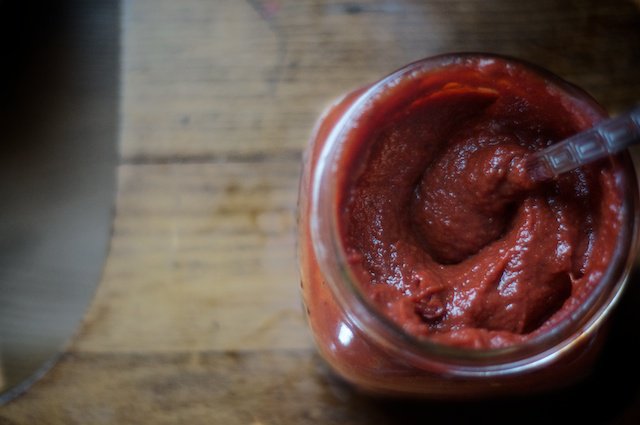
    Probiotic Ketchup – the GOOD STUFF 

    My kids are beginning to get a taste for it. I am realistic – it takes time for taste buds to change.

    Spiced, Fermented Ketchup

    The spices here can totally be optional, but I love a heavily spiced ketchup, so I went nuts.  I went heavy on the clove, because I like it and the morning glory version is noticeably clovey.  Feel free to omit any spices that you don’t love, since this is definitely a heavily spiced ode to the good ol’ MG ketchup.

    I didn’t add any salt because my kraut juice contained all the salt I wanted.  If you use a different starter, add a pinch or two of salt.

    Ingredients

    1 cup tomato paste

    1 1/2 cups drained, canned tomatoes (or sub ~4 medium, fresh, milled tomatoes), canned liquid reserved

    1 1/2 teaspoon mustard powder

    1/2 teaspoon allspice

    1/2 teaspoon cayenne (omit if you don’t like heat)

    1 teaspoon clove

    1 cup sauerkraut juice

    2 tablespoons maple syrup

    How-To

    1.  Combine all ingredients except sauerkraut juice and maple syrup. Put them in a sauce pan over medium heat and cook for 40 minutes, stirring regularly. When the mixture has thickened a bit, stir in the maple syrup.

    2. Remove from heat and bring back to room temperature. If you find the mixture  has gotten thicker than you like, use the reserved canning liquid to thin it out a bit, a tablespoon at a time. Add the sauerkraut juice.

    2.  Pour into a 1 1/2 pint jar and tighten the lid.

    3.  Let it sit at room temperature for 24 to 48 hours or until the lid has puffed up and is a bit rigid.

    4.  I like to give it another whirl in the food processor to smooth it out even more after fermentation.

    5.  Refrigerate and consume with abandon

    http://phickle.com/ketchin-up-spiced-style/

  • New HPV vaccine with DOUBLE the aluminum

    CDC updates immunization schedule and adds new HPV vaccine with double the aluminum

    The Human Papillomavirus, or HPV, is the most common STD contracted in the United States. In addition, the U.S. Centers for Disease Control and Prevention (CDC) says that just about every sexually active person (male or female) has the virus at some point.

    But, what most people are NOT told is, HPV resolves on its own without causing complications or the need to ‘modify’ the immunization schedule with more toxic vaccines.

    On rare occasions, HPV can lead to cervical cancer and cancers of adjacent organs.  This was the motive for creating the Human Papillomavirus vaccine. The two main HPV vaccines in use are Gardasil and Cervarix – with many integrative healthcare providers warning us about the potential health risks associated with these vaccines.

    New HPV vaccine promoted within the immunization schedule offers many unwanted side effects

    The CDC recently released a new immunization schedule for the HPV vaccine for both adults and adolescents. New recommendations say the vaccine can be administered as young as 9 years old but with an average of 11 or 12 for the first dose.

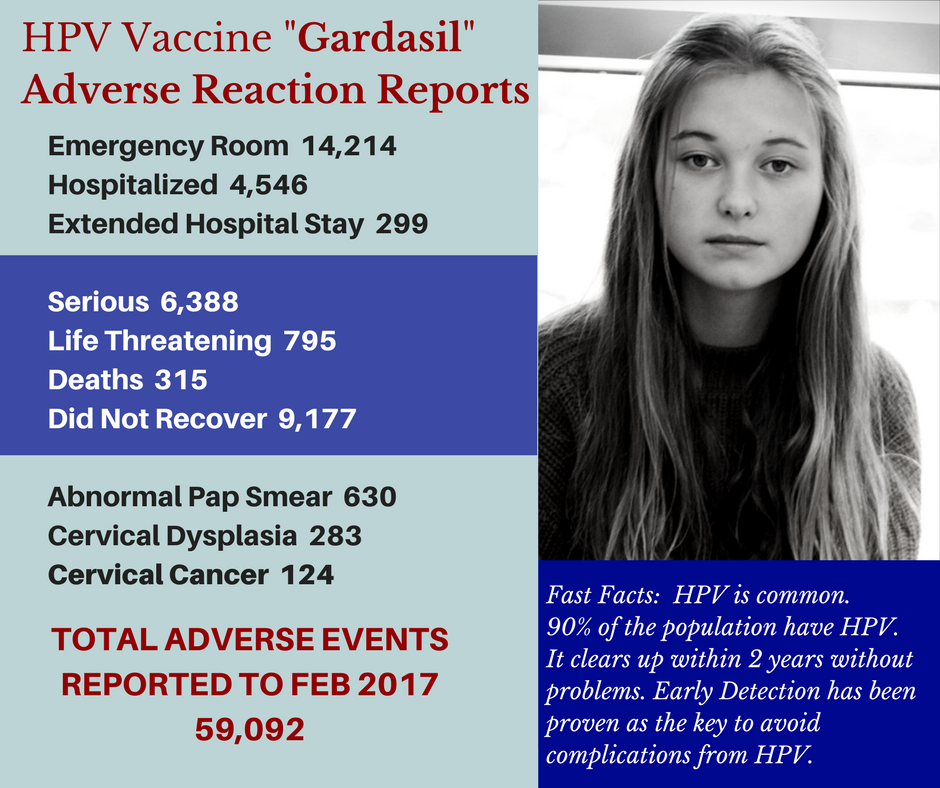
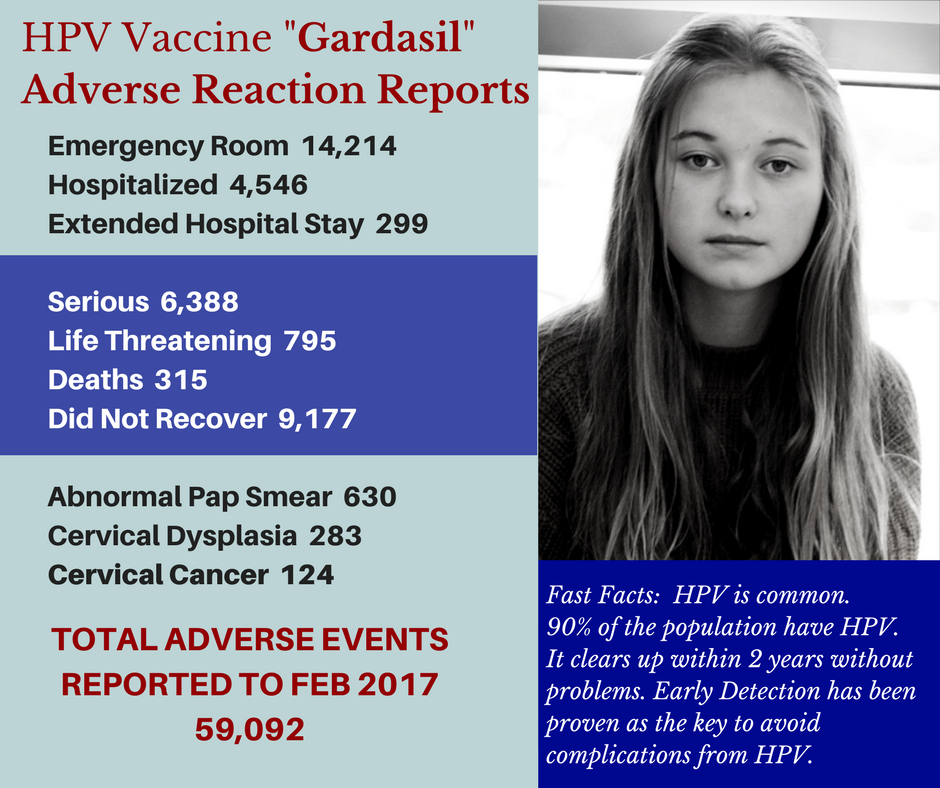
    However, the American College of Pediatricians (ACP) expressed serious concerns about Gardasil in January of 2016. The HPV vaccine has been linked with POF (premature ovarian failure, also known as premature menopause), as well as amenorrhea (absence of menstruation).

    HPV vaccine side effects can be deadly

    Most doctors are not aware of these potential complications, so incidents of this vaccine side effect could be even higher than reported. Gardasil also contains polysorbate 80, a compound linked with ovarian toxicity in experiments done with rats. Polysorbate 80 has also been connected with severe anaphylactic reactions, encephalitis and multiple sclerosis.

    Other disturbing effects of the HPV vaccine are autoimmune conditions, permanent disability and early death in young women. And, let’s not forget, HPV vaccines contain aluminum – a known neurotoxin.

    This fact is not debatable: More than 1,600 peer-reviewed published papers and scientific documents have confirmed the hazards of aluminum toxicity.

    nine-valent HPV vaccine Double the dose of toxic aluminum offsets any potential health benefits

    Despite these HPV vaccine side effects, a new “super” version of the HPV vaccine called 9vHPV vaccine is now being pushed. The vaccine makers claim the new version targets nine strains of HPV and 80 percent of vulvar, cervical and anal cancers, up from 65 percent by the previous version. It’s being sold under the name Gardasil 9 and is being marketed as an “improvement” over the previous version.

    Despite these claims, the new version actually has double the toxic aluminum of the previous one. How the potential risks of aluminum exposure are worth any supposed benefits is hard to believe by any reasonable (thinking) person.

    The World Health Organization has found that the death rate from cervical cancer is actually 2.5 times LOWER than the very serious complications and side effects documented from the HPV vaccine. In some parts of the world, HPV vaccine risks are as much as FOUR TIMES higher than the cervical cancer death rate.

    HPV vaccine marketing campaign ramps up despite risks

    Vigilant parents of teenage girls have been giving the vaccine a less-than-enthusiastic reception, so the drug makers have started marketing HPV vaccines to boys and young adults of both genders. While the previous version of the HPV vaccine was problematic, the new version could be even more devastating to health.

    Pediatricians and other medical professionals need to start speaking up and standing up for their patients, especially the youngest among us. When you consider all the facts, aluminum exposure risks and HPV vaccine side effects far overshadow any possible benefit of these vaccines.

    Ask questions and always make an informed decision about your health.

    References:

    https://www.fda.gov/downloads/BiologicsBloodVaccines/Vaccines/ApprovedProducts/UCM426457.pdf

    http://www.aafp.org/news/health-of-the-public/20170206immunskeds.html

    http://www.aafp.org/news/health-of-the-public/20170206immunskeds.html

    https://www.cdc.gov/std/hpv/stdfact-hpv.htm

    http://www.naturalhealth365.com/hpv-vaccine-side-effects-1752.html

    HPV vaccine immunization schedule vaccine side effects2017-04-25

  • 2017 Legislative Wrap Up

    2017 WINS 
    Health Freedom Idaho Members Impacted the Following Legislation:

    SB 1182 Re-defining child neglect to include parents who don’t follow conventional medical protocols “Faith-Healing Exemption” <FAILED>
    HB 195 returns health care options to allow Chiropractors to adminster IVs. <PASSED>
    HB 91 tracking of vaccine status of ADULTS <FAILED>
    We had some big wins in the 2017 legislative session but we are already prepping for the bigger fight ahead in 2018. Now is time to get involved and take a stand for the wellness of our children and future generations!

    Message from Miste Karlfeldt, Executive Director regarding
     SB1050 Requiring Health Dept to Adhere Current Vaccine Exemption Statutes Requirements (instead of allowing them to create their own) 
    <FAILED TO BE HEARD>

    Idaho’s vaccine exemption form for school attendance. The Idaho Health Department would like parents to believe that Idaho has a no-shots-no-school policy. However, Idaho statues allows vaccine exemptions for daycare and schools. A parent who chooses to avoid some or all of the 68 CDC recommended vaccines for their school aged child, is legally allowed to enroll the child in school (or daycare). Currently, parents are forced to sign IDHW’s mandatory form that demands parents state that their child is more likely to contract a “vaccine preventable disease with specific complication” and that it is negligent for willfully denying your son/daughter the life-saving protection that vaccines offer” in order to enroll their children into school. 

    A parent choosing to take the legal exemption because of religious reasons is required (by the Health Department’s form) to acknowledge ‘card carrying membership’ to a ‘qualified religious organization’ that opposes vaccines and the parent is then required to list their religious objections.

    The Health Department has stepped significantly outside the law that clearly states a parent need only supply a written statement to the schools that they object to vaccines on a religious or philosophical ground without need to clarify or excuse their parental choice.

    Leslie Manookian and Miste Karlfeldt, Executive Director of Health Freedom Idaho spoke with Chairman Lee Heider several times over the summer about this very issue.  He whole-heartedly agreed that The Health Department has severely overstepped it bounds.  He agreed to carry a bill for us to clarify within the statute that a form provided by the Department of Health and Welfare did not need to be filled out in order to enroll our children in school.  

    Health Freedom Idaho went knocking on Legislator’s doors to discuss this situation and we had much support in the Senate Health and Welfare Committee.  Sen. Fred Martin did his homework by calling the schools.  They verified that they were in fact requiring this form and Sen Martin agreed that was outside of the statute.  Our bill, SB 1050, never had a hearing.  

    Dick Armstrong (Director of Health and Welfare) spent much time with the legislators explaining why he requires this form.  He stated that he uses it to educate the public and feels that it is his duty to do so.  Of course, we believe that is up to the parent to educate themselves while using all of the resources available to them.  The shenanigans that took place to keep this bill from being heard were appalling and included Governor Butch Otter telling Sen Lee Heider not to hear the bill.  Sen Heider decided to drawer the bill that he had once promised to carry.  The people were neither heard nor represented on this issue. 

    Parents are faced with another year of trying to enroll their children in school without incriminating themselves on the form mandated by the Dept. of Health and Welfare.  Some have decided to homeschool but not everyone has that option.  Many are having to sign this form under duress just to allow their child access to their promised education.  

    LOOKING AHEAD

    Now that our legislative session has come to a close we look forward to opportunities to educate the public with a desire to build a community of like-minded individuals.  This summer will provide two such opportunities. On June 17, we join more than two dozen other cities with the Children’s March for Humanity.  

    This family friendly summer event will focus on toxins and our children. During the past 50 years, more than 85,000 industrial chemicals have been registered in the United States.  Many of these chemicals have found their way into children’s environments: in the food they eat, the water they drink, the air they breathe and the products to which they are exposed. Some children may even be exposed to them while still in the womb. Recently a study showed nearly 300 chemicals in the cord blood of American newborns. Alarmingly, the majority of these chemicals are largely unstudied and unregulated until proof of harm is already established. 

    Here in Idaho a proven neurotoxin, Fluoride is added to community water. Glyphosate, now labeled a carcinogen, is sprayed in our fields adjacent to schools. Its residue is found on our foods, in our vaccines and even in an infant’s formula and mother’s breast milk. Contamination of the environment by man-made and natural toxins is detrimental to our children’s health.

    Saturday June 17, In Boise, at Julia Davis Park we hope to bring local businesses, community organizations, professionals and families together to share resources, start dialogue and seek ways to support each other in our desire to create a less toxic environment for our children.

    In August, we intend on hosting our second annual Fund-raising Luncheon. This event will allow the Health Freedom community to grow as we are motivated by engaging speakers, encouraged by our growing community and challenged to step out of our comfort zone.

    We are doing all we can to protect you and your family – and we need your help.  We are a volunteer organization and rely on member donations to keep the freedom march alive.

    We had some big wins in the 2017 legislative session but we are already prepping for the bigger fight ahead in 2018. Now is time to get involved and take a stand for the wellness of our children and future generations!

    Please take a minute  become a member today click the JOIN banner above. Or, you can donate once or monthly. It is there you can sign up for our newsletter or even contribute an article to our website.

    We genuinely appreciate your support! Thank you for being a freedom-loving citizen and for supporting the cause!

  • Not Settled Nor Trustworthy?

    Science.

    by Ashley Cates.

    When you have studies on one side stating that vaccines do not cause autism, and studies on the other side stating there is a link, which scientific conclusion do you trust?

    In a 2009 meta-analysis of survey data on how many scientists fabricate and falsify research, it was found that almost 2% of scientists admitted to personally fabricating, falsifying, or modifying data or results at least once and almost 34% admitted other questionable research practices. In addition, 14% of scientists surveyed admitted that their colleagues falsified research and 72% admitted their colleagues participated in other questionable practices.

    The authors state:

    “…Misconduct was reported more frequently by medical/pharmacological researchers than others. Considering that these surveys ask sensitive questions and have other limitations, it appears likely that this is a conservative estimate of the true prevalence of scientific misconduct.”

    http://journals.plos.org/plosone/article…

    __________________________________________

    But, scientific research is peer-reviewed prior to acceptance and publication in prestigious medical journals. How can this be?

    “At the BMJ we did several studies where we inserted major errors into papers that we then sent to many reviewers. Nobody ever spotted all of the errors. Some reviewers did not spot any, and most reviewers spotted only about a quarter. Peer review sometimes picks up fraud by chance, but generally it is not a reliable method for detecting fraud because it works on trust.”

    – Peer review: a flawed process at the heart of science and journals.

    https://www.ncbi.nlm.nih.gov/pmc/articles/PMC1420798/

    __________________________________________

    Unfortunately, it’s more than just flawed, the entire system is corrupt:

    Nobel Prize winner Sydney Brenner (for Physiology or Medicine in 2002) spoke of the peer review system in an interview in 2014:

    “It’s corrupt in many ways, in that scientists and academics have handed over to the editors of these journals the ability to make judgment on science and scientists… it puts the judgment in the hands of people who really have no reason to exercise judgment at all. And that’s all been done in the aid of commerce, because they are now giant organizations making money out of it.”

    http://kingsreview.co.uk/…/how-academia-and-publishing-are…/

    __________________________________________

    Sadly, science is wrought with conflicts of interest.

    “The case against science is straightforward: much of the scientific literature, perhaps half, may simply be untrue. Afflicted by studies with small sample sizes, tiny effects, invalid exploratory analyses, and flagrant conflicts of interest, together with an obsession for pursuing fashionable trends of dubious importance, science has taken a turn towards darkness.”

    – Dr. Richard Horton, editor in chief of the Lancet, regarding a symposium on the reproducibility and reliability of biomedical research held by the Academy of Medical Sciences.

    http://www.thelancet.com/…/lancet/PIIS0140-6736%2815%296069…

    __________________________________________

    Unfortunately, the Centers for Disease Control, the American Medical Association, the American Academy of Pediatrics, etc. are all making recommendations and decisions based on this corrupt science:

    “It is simply no longer possible to believe much of the clinical research that is published, or to rely on the judgment of trusted physicians or authoritative medical guidelines. I take no pleasure in this conclusion, which I reached slowly and reluctantly over my two decades as an editor of the New England Journal of Medicine.”

    – Dr. Marcia Angell, physician and editor in chief of the New England Medical Journal.

    https://www.ncbi.nlm.nih.gov/pmc/articles/PMC2964337/

    __________________________________________

    In the end, always consider the source.
    Yes, it matters. No, it’s not a conspiracy theory.

    Ask the question: Who benefits from this research, and who funded it?

    The pharmaceutical industry maintains major influence over our most prized institution – unbiased discovery, education, and advancement, for the benefit of all.

    For the industry, science has become a business tool for increasing profit, rather than an unbiased exploratory process. We need REAL science. Unbiased science. Science that doesn’t seek to profit from the results.

    Do you put your faith in an industry which only profits when you are sick?

    #marchforscience #exvaxxer

    Original Article/Note found on Facebook @ https://www.facebook.com/ashleynelsoncates/posts/1371432082878424
    Post Script:
    Ashley Cates “My point has never been that we can’t trust science. It’s that we can’t trust industry-funded science. Anyone who seeks to profit off of the scientific results should not be funding any science whatsoever. Independent scientific research is usually pretty informative and I think much more trustworthy – there’s no financial incentive or pressure for a desired result. And this is the science I usually share.”

  • A new generation of water pollutants in your medicine cabinet

    Every day, we each use a variety of personal care products. We wash our hands with antibacterial soaps and clean our faces with specialty cleansers. We wash and maintain our hair with shampoo, conditioner and other hair care products. We use deodorant and perfume or cologne to smell nice. Depending on the day, we may apply sunscreen or insect repellent.The Conversation

    But where do they go after we use them?

    When we bathe, personal care products wash off of our bodies and into sewer systems that carry them to regional wastewater treatment plants. However, these plants are not designed to treat the thousands of specialty chemicals in pharmaceuticals and personal care products. Many of the active and inactive ingredients present in these products pass through our wastewater treatment plants and ultimately end up in rivers, streams or oceans.

    Once in the environment, these chemicals may cause hormonal effects and toxicity in aquatic animals. In my laboratory, we are studying these emerging water pollutants, which are turning up in surface water, groundwater and even treated drinking water. Although they are typically found at low concentrations, they may still threaten human and ecological health.

    New pollutants, present worldwide

    Personal care products and their ingredients are widely distributed throughout our environment. In one recent study, our lab aggregated more than 5,000 measurements of active ingredients from a variety of personal care products that were found in untreated wastewater, treated wastewater and surface waters such as rivers and streams. They included N,N-diethyl-3-methylbenzamide, or DEET(an insect repellent); galaxolide(a fragrance); oxybenzone(a sunscreen); and triclosan(an antibacterial compound).

    Other studies conducted near the Mario Zucchelli and McMurdo & Scott research bases confirmed that chemicals in personal care products were even present in Antarctic seawater. Those reports identified the presence of plasticizers, antibacterials, preservatives, sunscreens and fragrances in the Antarctic marine environment. Together, these studies suggest that the active ingredients in personal care products can be found in any water body influenced by human activity.

    These substances are typically present in the aquatic environment at concentrations of 10 to 100 nanograms per liter, which is equivalent to 1 to 2 drops in an Olympic-sized swimming pool. But even at these low levels, some still pose a risk.

    Moving up the food chain

    Depending on their chemical properties, we can classify some of these products as hydrophilic (“water-loving”) or lipophilic (“lipid-loving”). The fat layers in our bodies are comprised of lipids, so lipophilic personal care products can accumulate in the tissue and organs of aquatic animals like fish, birds and even dolphins.

    Our group has recently detected a suite of sunscreen agents and 17α-ethinylestradiol, a synthetic form of the hormone estrogen that is the active ingredient in birth control pills, in crayfish from urban streams near Baltimore, Maryland. We have also measured sunscreens in oysters and mussels collected from the Chesapeake Bay. The uptake of these chemicals by aquatic animals raises environmental concerns.

    Specifically, as lipophilic chemicals from personal care products accumulate in animals at higher concentrations, there is a greater potential for them to cause toxic effects. For instance, many personal care products disrupt hormone systems in the body. Some chemicals used in personal care products affect reproductive systems and function, causing the feminization of male fish.

    These reproductive effects can have important consequences for aquatic animals in the environment, and they may even represent a potential health risk for humans. Last year, the Food and Drug Administration banned the use of triclosan and a number of other antibacterial agents in antiseptic wash products due, in part, to health risks associated with hormonal effects.

    Recent research has shown that oxybenzone, a sunscreen agent used in many personal care products, is toxic to corals. For many coastal communities, coral reefs are critical to local economies. For example, the net value of Hawaii’s coral reefs is estimated to be $34 billion.

    Earlier this year Hawaii introduced legislation to ban the sale of sunscreens containing oxybenzone and octinoxate in order to protect coral reefs. While research and policymaking are still ongoing in this area, it is important to note that a number of new consumer products have started using labels like “coral safe” and “reef safe.”

    Multiple solutions

    Typical wastewater treatment plants are designed to treat multiple pollutants, including organic carbon from human and food waste; nutrients like nitrogen and phosphorus; and pathogenic bacteria and viruses that cause disease. However, they are not equipped to handle the many ingredients of concern that are present in personal care products.

    Protecting the environment and human health from these substances will require progress in several areas. They include improving technologies for wastewater treatment plants; conducting more testing and regulation of personal care products to avoid unintended toxicity to aquatic animals; and designing “green chemicals” that do not pose toxicity concerns. This multi-pronged approach will help us to ensure that personal care products continue to improve our quality of life without harming the environment.

    Lee Blaney, Assistant Professor of Environmental Engineering, University of Maryland, Baltimore County

     Read the original article.

    .

  • HPV Cervical Cancer Vaccine. The Shot That Changed Her Life.

    • Vaccine is intended to ‘protect’ women from cervical cancer. There are 4 strains (of the 17 cancer causes strains) that gardasil is intended to cover.
    • HPV when caught early can be easily treated. 
    • Virus that is very common. Problems occur in Immune compromised. 90% of the time it clears in 2 years. Its very treatable when caught early.
    • Out of the population of the US 11, 000 diagnosised with cervical cancer in that 5,000 died. .02% of women die from cervical cancer. Its a miniscual problem in the realm of issues that threaten women’s health. 
    • Its delivered in 3 doses. The most expensive vaccine in the history of vaccine. 
    • Innoculating 11 – 12 year old in a very delicate time, hormones fluctuating with no real certainty that the vaccine will protect (wear off). No way of knowing if it will require additional booster. 
    • There are no long term safety studies as the vaccine was fast tracked.
    • Never intended for younger population
    • Never intended for boys
    • This vaccine contains LIVE VIRUS! This live virus is bound with aluminum. A neurological toxin causes chronic inflimination of the brain. 
    • more than 300 US girls have died. 

    https://whatwomenmustknow.podbean.com/?s=gardasil

  • Gardasil devastation is NO coincidence

    By Vicky Austin, Myrtle Beach, South Carolina

    One more Gardasil girl?

    Fifteen-year-old Caitlin Grace is my hero. Once a green belt in karate, walking over ten miles per day, she is now physically debilitated from a vaccine that was supposed to prevent her from getting cancer. This is her story.

    Caitlin received the full series of three Gardasil shots between September 2012 and July 2013.  In hindsight, I should have trusted my mother’s intuition and not allowed Caitlin to receive the vaccine. When I asked her pediatrician of ten years if he would give it to his own daughter, he said that he definitely would. I trusted him and we gave her the full series. I live with the guilt to this day.

    In February 2013, my healthy, active, academically gifted daughter received the 2nd of three recommended HPV-4 (Gardasil) injections. Within a week, she developed cold symptoms and a barking cough. I did not think it was related to the vaccine. How could a vaccine cause a cold? She went on to develop repeated lung spasms.

    After her third injection, she experienced dizzy spells, loss of balance, weakness, anxiety, ear pain, abdominal pain, and nausea. I was never an “anti-vaxxer” (if I were, I wouldn’t have agreed to the HPV vaccine) so. I never even associated her new symptoms with Gardasil.

    Caitlin began her freshman year of high school like any other teenager, attending school at the same high school where I teach.  Now, as she enters her junior year of high school, she has physically attended school no more than 2 months. In December 2014, her freshman year, our life imploded.

    After being diagnosed with a simple sinus infection, Caitlin was prescribed a “z—pack” – which she’d had many times before with no problems. This time, within 15 minutes of taking her first dose, I was frantically working to keep her alive until the ambulance arrived. She was diagnosed with severe unexplained hypokalemia (life-threatening low potassium) and a cardiac condition called Prolonged QT interval. She was treated with IV potassium and magnesium then released.

    She has not been the same since.

    Can you imagine living every day not knowing if at any moment you will become paralyzed and in excruciating pain?

    This is what Caitlin has lived with every day since December 12, 2014.

    She will be talking, laughing, walking, when all of a sudden she loses control of her neck, upper body, and her legs give out. If she’s not in a safe place, she’ll fall or slump forward, making breathing difficult, if not impossible. She has been diagnosed with hypokalemic periodic paralysis but she has “outlying” symptoms that have not yet been explained by doctors.

    Gardasil: The 'gift' that keeps on giving?

    Gardasil: The ‘gift’ that keeps on giving?

    These symptoms include:

    • Hashimoto’s
    • Autoimmune disorder
    • Hair loss
    • nerve damage (as per an EMG test)
    • weakness
    • tremors
    • exercise intolerance
    • heat/cold intolerance
    • air hunger
    • chest pain
    • abdominal pain
    • nausea and vomiting
    • brain fog
    • allodynia (pain response from stimuli which does not normally cause pain)
    • nystagmus (rapid involuntary eye movement)
    • non-epileptic seizures

    It was only when another mom contacted me via social media, asking, “Has your daughter had the Gardasil shot, by any chance?” that I began to put the pieces together.  To be honest, I thought she was crazy at first. But I started reading the stories of other young people who have been injured by Gardasil. Their stories are so similar to Caitlin’s. Now, that same mother’s intuition which made me question her pediatrician before consenting to the Gardasil injections tells me that my child has been devastatingly injured by Gardasil.

    Today, my brilliant daughter has bouts of brain fog and she can’t piece together thoughts.
    My green belt daughter wears a transfer belt around her waist as I transfer her to her wheelchair. My social butterfly daughter treasures the few friends who have remained at her side through this nightmare. My independent young woman cries as she allows her mom to wash her hair and help her in and out of the shower, where she sits on a plastic chair. My once-invincible daughter asks me if she’s going to die.

    For a long time, I was silent about the Gardasil connection to my child’s injury.  I will not remain silent any longer. I don’t care if people consider me “one of those crazy anti-vax people.”  I am this child’s mother and the vilest injustice has been perpetrated against her.

    We will continue to hope that the next treatment will recover my brilliant, active, healthy daughter.

    In the meantime, I remain grateful that I still have her to fight for when so many other mothers have lost their children to this tragedy.  I will continue to tell Caitlin’s story.

    Our children are not coincidences. This is personal.