Author: Health Freedom Idaho

  • Baby dies from “meningitis” 2 days after vaccinations. Was it vaccine-induced?

    Baby dies from “meningitis” 2 days after vaccinations. Was it vaccine-induced?

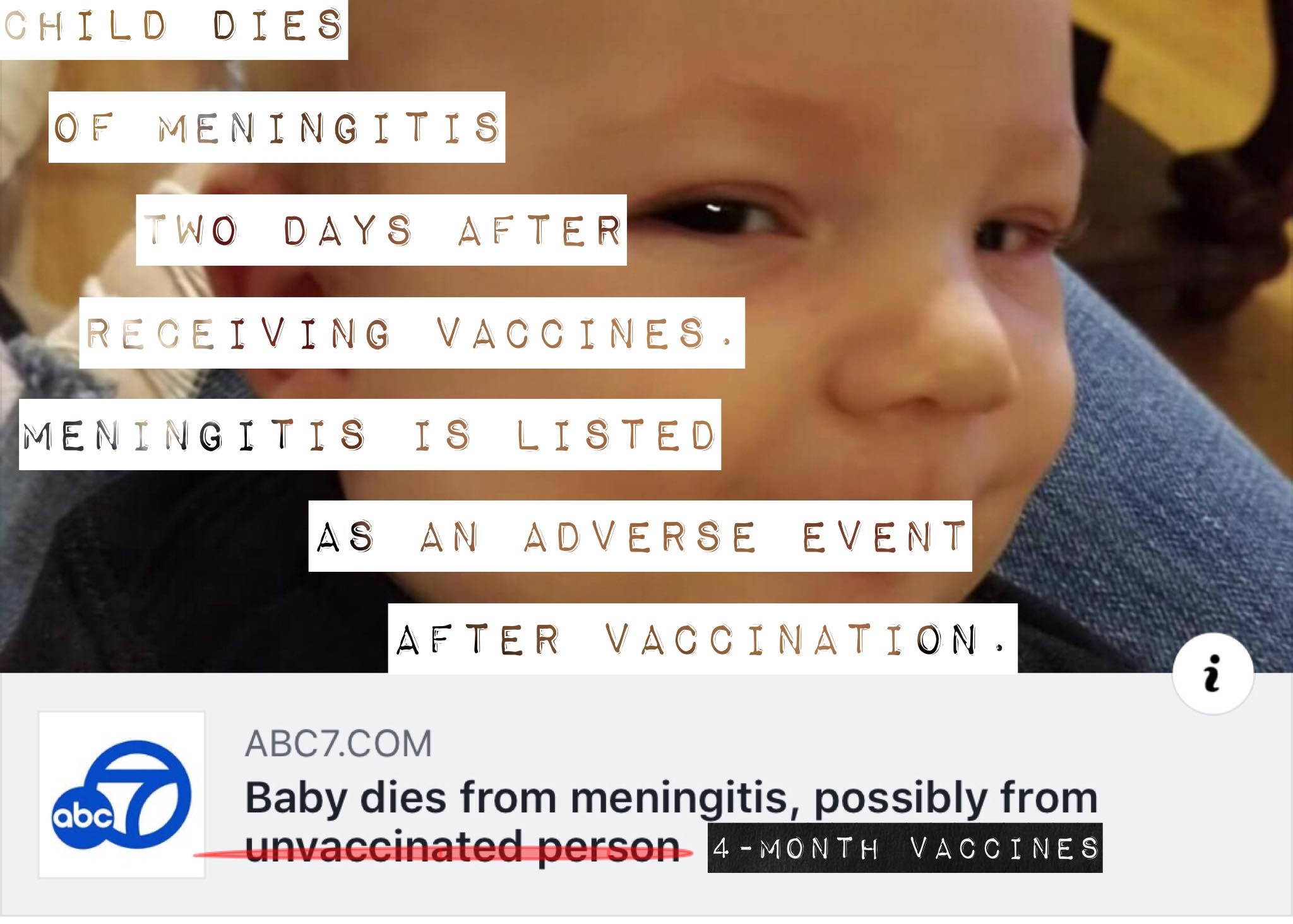
    A sweet child died. Our hearts ache for his parents and beat furiously against the media spin. This child received four month vaccinations two days prior to his death. It is so easy to blame this on some anonymous, alleged villain running around spreading meningitis into the air. The media is gleefully using this story to sell vaccines, to elicit fear, and point the finger at the unvaccinated, that is just robbing people of the truth.

    Here’s the story in summary:

    Healthy 4 month old child is taken to the doctor for well-baby visit.
    Baby receives vaccines to protect against meningitis, pertussis, tetanus, etc.
    Two days after receiving vaccines, baby dies of meningitis.
    Meningitis is listed on vaccine inserts as an adverse event reported to occur after vaccination.
    Medical professionals recommend vaccinating to prevent meningitis and blame the unvaccinated for the death of the child.

    ———————————–

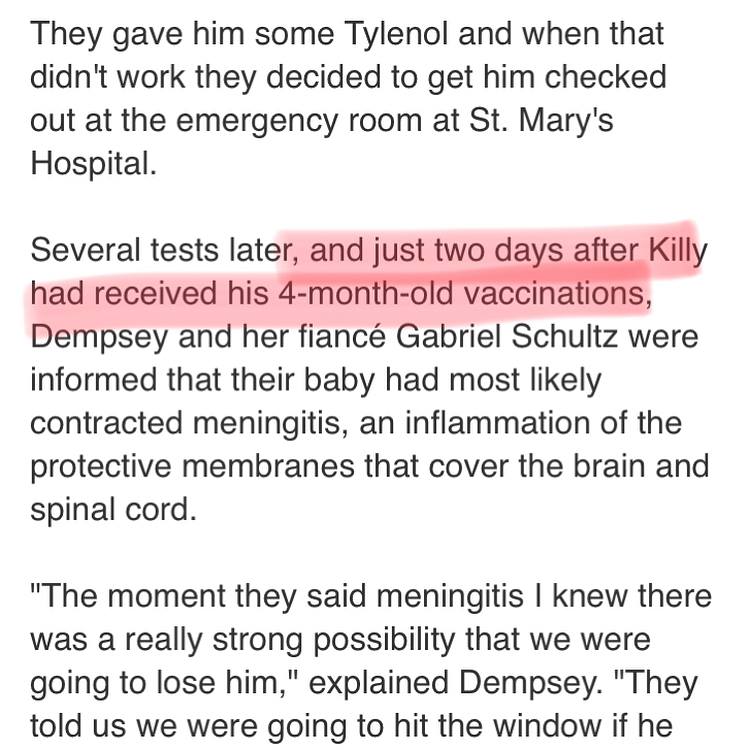
    “…just two days after Killy had received his 4-month-old vaccinations, Dempsey and her fiancé Gabriel Schultz were informed that their baby had most likely contracted meningitis, an inflammation of the protective membranes that cover the brain and spinal cord.”

    ———————————–

    The CDC recommended vaccines the vaccine inserts for each of these can be found: http://www.immunize.org/fda/

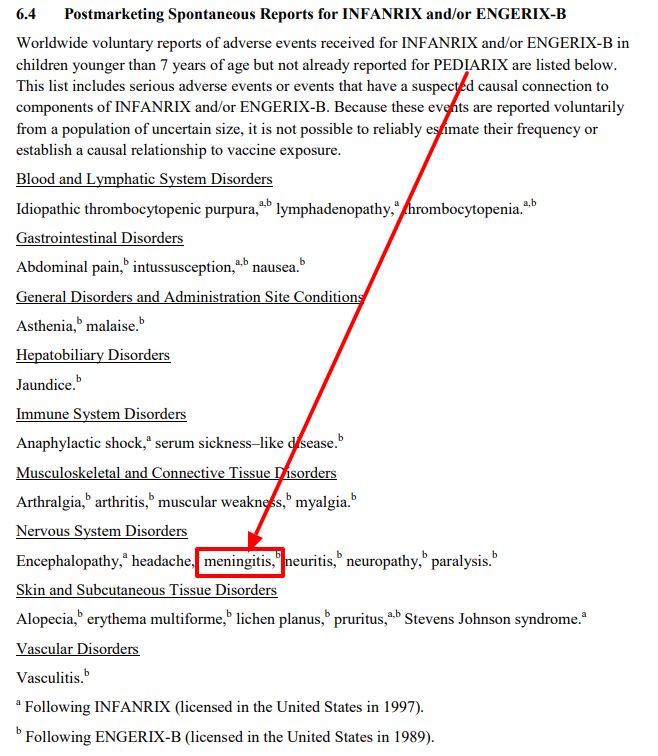
    The following information/package inserts list meningitis as an adverse event which has been reported after receiving the Pentacel and Pedarix vaccines. When your child is given vaccines at 4 months of age, your pediatrician will typically give one of these (in addition to other vaccines).

    Pentacel [DTaP, Hib, Polio]:
    https://www.vaccineshoppe.com/image.cfm?doc_id=13799&image_type=product_pdf

    Pediarix [DTaP, Hep B, Polio]:
    https://www.gsksource.com/pharma/content/dam/GlaxoSmithKline/US/en/Prescribing_Information/Pediarix/pdf/PEDIARIX.PDF
    ———————————–
    The huge holes in the story are obvious to someone looking:

    • Does that mean he is known to have come in contact with a current or recent meningitis patient? All cases of meningitis are tracked by the CDC.
    • Was the patient and baby infected with a viral meningitis (there are no vaccines for that kind) or bacterial? Was it even a ‘vaccine preventable meningitis? OR perhaps was it a vaccine – induced meningitis!

    This baby’s immune system was working overtime. The vaccines that CDC recommends at four months: a HIB, PCV, and Rotavirus, DTaP, Polio and Hep B – which could have caused meningitis.

    Meningitis

    Meningitis is an inflammation of the membranes (meninges) surrounding your brain and spinal cord.

    Many viruses and bacterias could cause meningitis—it’s a rare reaction to an infection. Strep pneumoniae, Neisseria meningitidis (of which around 10% of the population is a natural carrier of, walking around with it in the back of their nose and throat), Haemophilus influenzae, Listeria, and viruses like enteroviruses, herpes simplex, HIV, mumps, West Nile Virus, rotavirus, etc. can all cause meningitis.

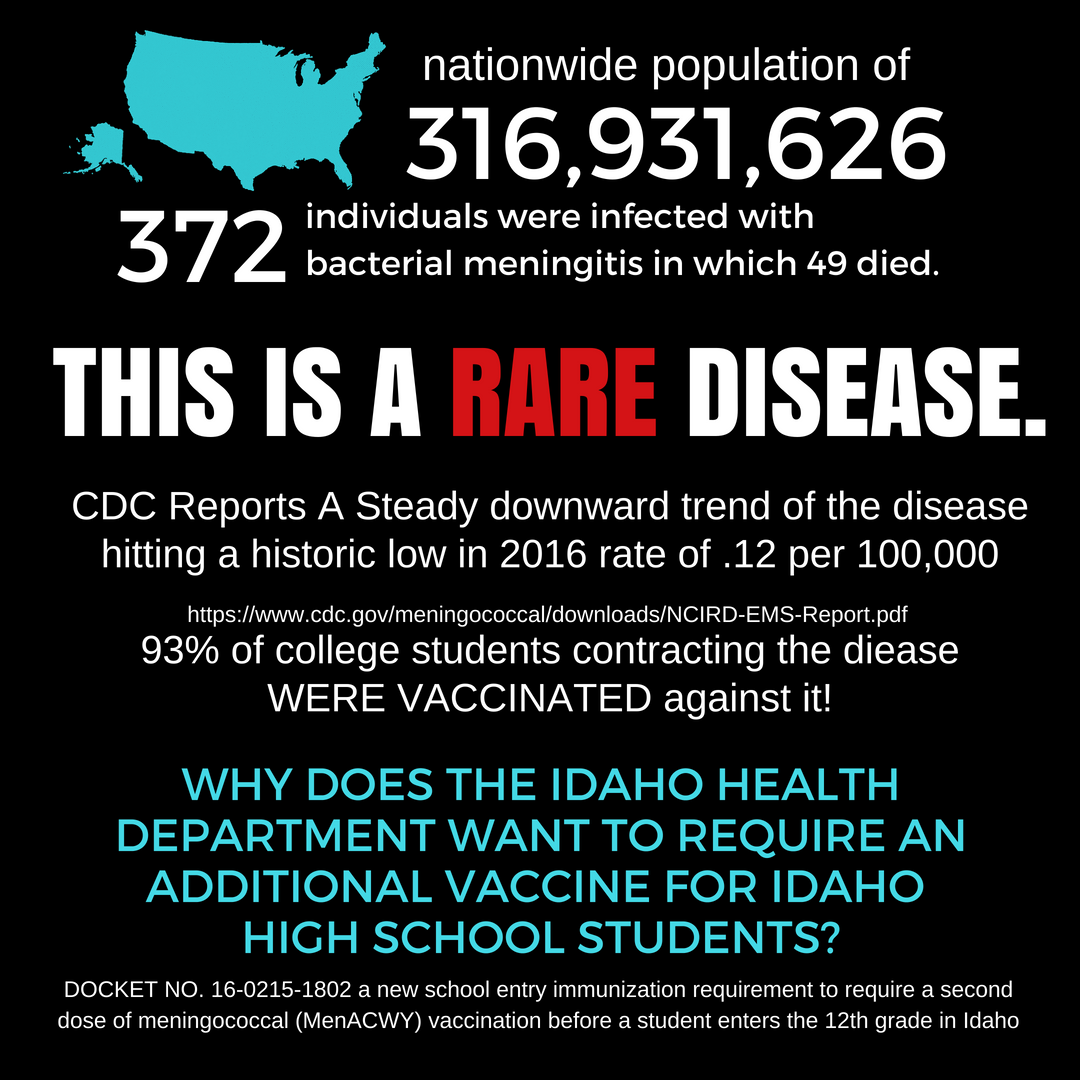
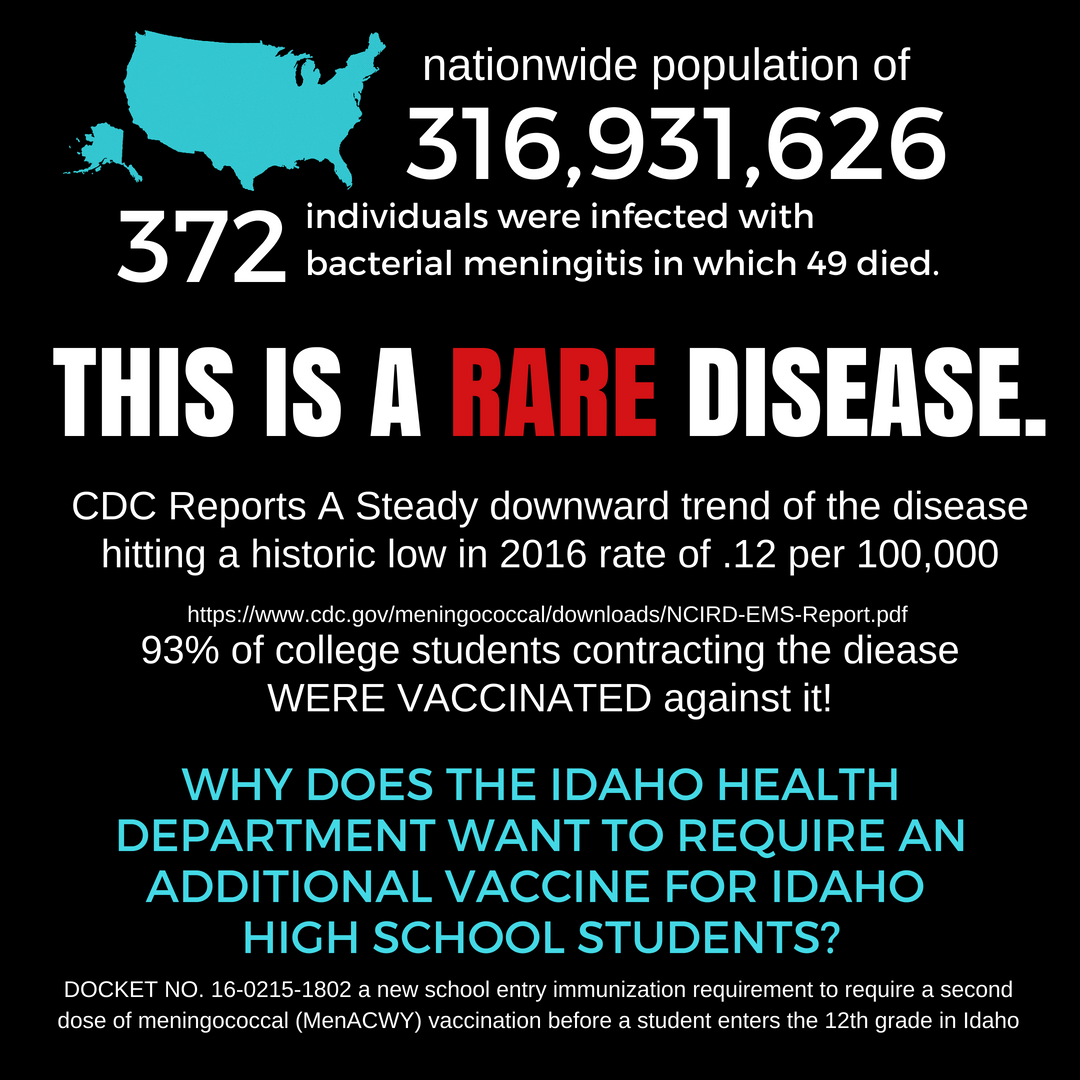
    Menegitis cause by neisseria meningitidis is VERY RARE with a one in a million chance of getting the disease. CDC reports its at an all time low. 372 cases in 2016. Less than 3 people a year average get bacterial or viral meningitis in Idaho. Death from the disease is VERY VERY RARE. Idaho health department recently decided to add a booster shot of meningitis to the high school requirements. Here’s an article showing you how rare and ineffective the vaccine is.
    There is no vaccine that covers all these types of meningitis. There are two Meningococcal vaccines in the USA, and each covers only a few strains of Neisseria meningitidis.

    For someone to develop Meningitis, bacteria needs to enter the bloodstream and travel to the brain and spinal cord to cause acute bacterial meningitis. Or bacteria directly invade the meninges. This may be caused by an ear or sinus infection, a skull fracture, or, rarely, after some surgeries. Or…What about vaccines? Bacterial and viral components are injected directly into a tiny infants muscle, then are processed by the immune system via the blood stream. A vaccine also suppresses your immune system even further. Infants often present with other infections after vaccinations, because their immune system is working overtime.

    Learn More about Meningitis. Don’t be robbed of truth and informed consent by media spin.

    Vaccine reactions include meningitis as reported from vaccine inserts on the recommended 4th month old vaccine schedule.

    “Other serious adverse events that occurred within 30 days following DAPTACEL include three cases of pneumonia, two cases of MENINGITIS and one case each of sepsis, pertussis (post-dose 1), irritability and unresponsiveness.” https://www.vaccineshoppe.com/image.cfm?doc_id=11179&image_type=product_pdf

    “In addition to reports in clinical trials, worldwide voluntary reports of adverse events received for ENGERIX-B since market introduction (1990) are listed below. This list includes SAEs or events that have a suspected causal connection to components of ENGERIX-B. Infections and Infestations: Herpes zoster, MENINGITIS.” https://www.gsksource.com/pharma/content/dam/GlaxoSmithKline/US/en/Prescribing_Information/Engerix-B/pdf/ENGERIX-B.PDF

    “Worldwide voluntary reports of adverse events received for INFANRIX and/or ENGERIX-B in children younger than 7 years of age, but not already reported for PEDIARIX, are listed below. This list includes serious adverse events or events that have a suspected causal connection to components of INFANRIX and/or ENGERIX-B. Nervous System Disorders: Encephalopathy, headache, MENINGITIS, neuritis, neuropathy, paralysis.”
    https://www.gsksource.com/pharma/content/dam/GlaxoSmithKline/US/en/Prescribing_Information/Pediarix/pdf/PEDIARIX.PDF

    “The following additional adverse events have been spontaneously reported during the post-marketing use of PENTACEL worldwide, since 1997. Infections and infestations: MENINGITIS, rhinitis, viral infection.” https://www.vaccineshoppe.com/image.cfm?doc_id=13799&image_type=product_pdf

    Read about this shots function, efficacy and reactions here:
    https://schaabling.wordpress.com/2016/01/01/meningococcal-vaccine-meningitis/

    [1]. Meningococcal Disease and Vaccination. Fear-Mongering? YES!! (2011 – disease incident rates have DECREASED since)

    [3] https://www.facebook.com/groups/gentleinformants/permalink/1004672592923652/

    [4] http://femsre.oxfordjournals.org/content/31/1/52.long?view=long&pmid=17233635

    [5] http://www.whale.to/vaccines/meningitis5.html

    New Proposed Rule:

    https://adminrules.idaho.gov/bulletin/2018/07.pdf#page=91

    https://www.millioninsights.com/industry-reports/meningococcal-vaccines-market

    Idaho Infectious Disease Reporting:
    http://healthandwelfare.idaho.gov/Health/Epidemiology/IdahoDiseaseSummary/tabid/202/Default.aspx

    Disease Trends in Idaho:

    http://healthandwelfare.idaho.gov/Portals/0/Health/Epi/Disease%20Summaries/ID%20DZ%20Trends_2016_FINALv2.pdf
  • Public Comment Needed: Idaho to Add Second Shot of Meningitis Vaccine for High School

    Public Comment Needed: Idaho to Add Second Shot of Meningitis Vaccine for High School

    The Health Department wants to add a second required shot for meningitis to the high school schedule. Here’s the key points. Meningitis is a rare disease, the most serious cases are caused by bacteria. The disease been on a downward trend with historic lows in 2016. Around 300 people in the US and an average 3 in Idaho contract bacterial Meningococcal meningitis each year. The meningococcal vaccine is intended to protect against only 4 strains of bacteria and hasn’t proven very effective. CDC reports findings that 93% of the college students contracting the disease were vaccinated! Even in the light of these facts, IDHW proposes a new requirement for high school students receive another dose of an ineffective vaccine for a rare disease. Time is of the essence – public comments will only be received until FRIDAY SEPTEMBER 17 is the last day for public comment!

    E-mail: Rafe.Hewett@dhw.idaho.gov

    TESTIFY IN PERSON! September 17 – 9:30 a.m.

    Courtyard by Marriott
    Balboa Meeting Room
    1789 S Eagle Road Meridian, ID 83642
    CALL IN 877-820-7831 Participant #137508

    Meningitis.

    A rare disease that has an annual death rate in the U.S. of approximately 1 in 1,000,000; literally “one in a million.” [1]

    Neisseria meningitidis, the meningococcal bacteria, is passed by coughing or contact with saliva and is normally present in the respiratory tracts of healthy people without causing disease [3, 4, 5]. In fact, probably no one escapes infection. Symptomatic disease is quite rare for N. meningitidis. As such, 100% of the population, vaccinated or not, are asymptomatic carriers at some point in their lives. In fact, at any time, 5-35% of the population is silently carrying the bacteria, though the numbers often rise to nearly 100% in close quarters, such as military barracks and college campuses [4].

    Is meningitis scary? Yes. But, with only 4 strains of bacterial meningitis and 0 strains of viral meningitis in the vaccine, it’s a guessing game, similar to the flu shot, on which strain you’d even be exposed to. The vaccine, in creating an artificial immune response, actually leaves you more vulnerable to the more virulent strains of meningitis, not covered in the vaccine.

    Idaho infectious disease reports shows the following for Neisseria meningitidis, often referred to as meningococcus. Which causes cause meningitis and other forms of meningococcal disease such as meningococcemia, a life-threatening sepsis.

    2016: 3 cases
    2015: 0 cases
    2014: 5 cases
    2013: 4 cases

    According to the CDC’s Enhanced Meningococcal Disease Surveillance Report, 2016 the rare disease has been on a downward trend since the late 1990’s. 372 people in 2016 got the disease nationwide. (Incident rate of .12 of 100,000).

    DOCKET NO. 16-0215-1802 (pg 91) The Health Department wants to “require a second dose of meningococcal (MenACWY) vaccination before a student enters the 12th grade in Idaho, starting with school year 2020-2021. If a student received their first dose of meningococcal (MenACWY) vaccine at 16 years of age or older, they will not be required to receive the second dose before entry into the 12th grade.”

    The vaccine they are requiring only covers 50% of the strains and is less than 10% effective. Is this about the health of Idaho’s children?

    How can you, as a parent, best protect your child from meningococcal infection?

    Answer: Improve your child’s immune system by providing a healthy diet of whole foods that are rich in nutrients. Give supplements that are high in antioxidants, balanced B-vitamins, minerals and essential fatty acids. Give extra vitamin D3 during cold and flu season. Heal the gut if your child has gastrointestinal problems. Stress the importance of getting enough sleep and fresh air. Help your child learn to relax. And, just say NO to vaccines that damage your child’s innate immune system.

    Read about this shots function, efficacy and reactions here:

    https://schaabling.wordpress.com/2016/01/01/meningococcal-vaccine-meningitis/


    [1]. Meningococcal Disease and Vaccination. Fear-Mongering? YES!! (2011 – disease incident rates have DECREASED since)

    [3] https://www.facebook.com/groups/gentleinformants/permalink/1004672592923652/

    [4] http://femsre.oxfordjournals.org/content/31/1/52.long?view=long&pmid=17233635

    [5] http://www.whale.to/vaccines/meningitis5.html

    New Proposed Rule:

    https://adminrules.idaho.gov/bulletin/2018/07.pdf#page=91

    https://www.millioninsights.com/industry-reports/meningococcal-vaccines-market

    Idaho Infectious Disease Reporting:
    http://healthandwelfare.idaho.gov/Health/Epidemiology/IdahoDiseaseSummary/tabid/202/Default.aspx

    Disease Trends in Idaho:

    http://healthandwelfare.idaho.gov/Portals/0/Health/Epi/Disease%20Summaries/ID%20DZ%20Trends_2016_FINALv2.pdf
  • How Can They Just Change The Rules Like That?!

    How Can They Just Change The Rules Like That?!

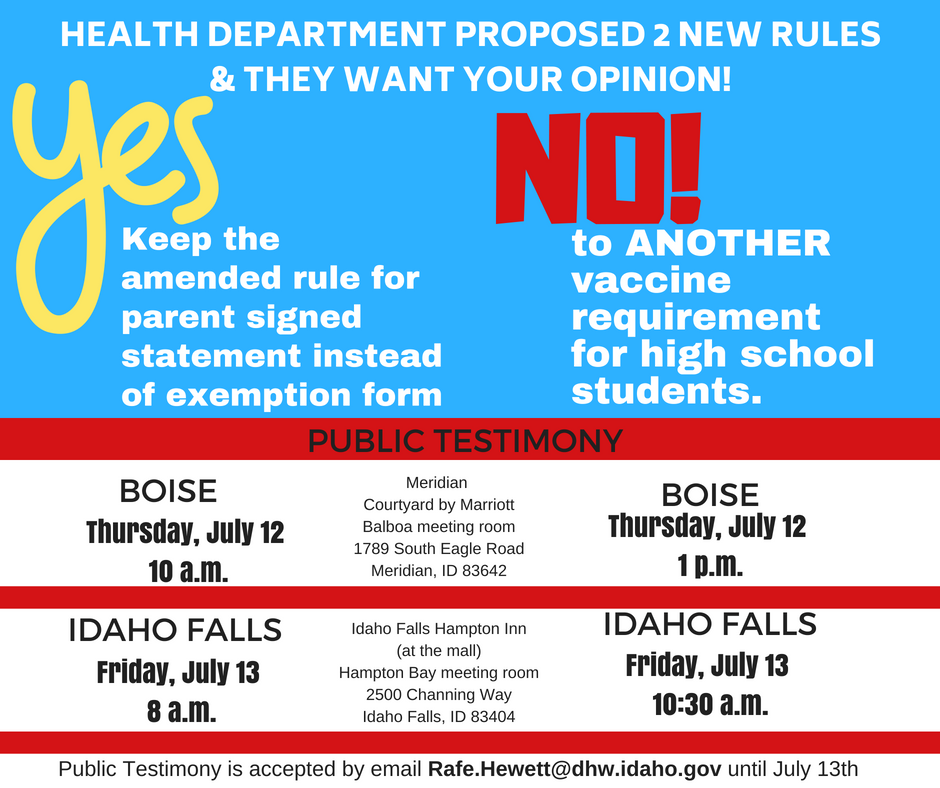
    Did you see the new rules? The Health Department is busy this summer and your IMMEDIATE ATTENTION NEEDED! This Thursday and Friday, you the citizen, has the opportunity to use voice and direct the outcome of the rules that affect your family. Our state government is structured in a way that the statutes are voted upon by the Legislature from January to March of each year. The rules (application of those statutes) are directed by the individual state departments throughout the rest of the year. These rules are made up by the departments, but they require public meetings. However, when the public doesn’t attend and our concerns aren’t voiced, the rule changes can seriously impact our daily lives of the citizens. There are two rules they are proposing. One we can get behind and the other needs strong opposition. Please join us! Be Prepared to Testify for 3 minutes. Public speaking IS NOT REQUIRE! Just come support those who are testifying, you submit your written testimony. You can do so Anonymously if you wish!

    How to Testify
    STEP 1: WRITE UP YOUR TESTIMONY and e-mail: Rafe.Hewett@dhw.idaho.gov

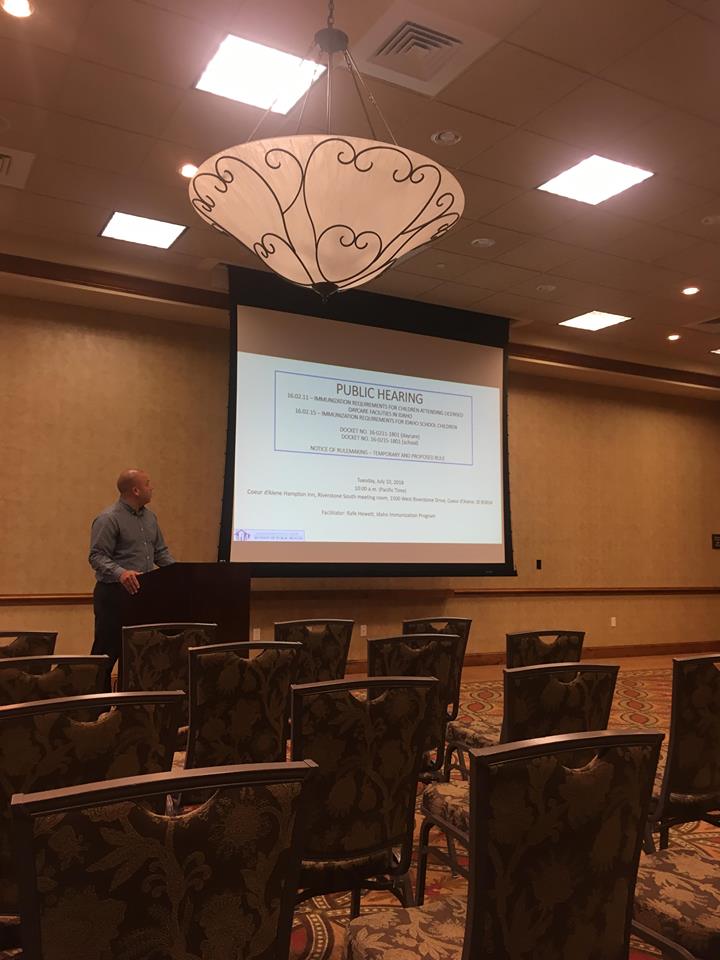
    STEP 2: ATTEND THE RULEMAKING MEETING this Thursday and Friday the Health Department will be hosting a rule making meeting. They held one yesterday, and look how empty it was. It’s time to change that!

    Join Us!
    BOISE AREA RESIDENTS:

    THIS Thursday, July 12, 2018
    10 a.m. Exemption form discussion
    <they break for lunch>
    1 p.m. (new vaccine requirement discussion)
    BOISE AREA: Meridian Courtyard by Marriott Balboa meeting room 1789 South Eagle Road Meridian, ID 83642

    IDAHO FALL AREA RESIDENTS:
    THIS Friday, July 13, 2018
    8 a.m. Exemption Form Discussion
    10:30 New Vaccine Requirement Discussion
    Idaho Falls Hampton Inn(at the mall)Hampton Bay meeting room 2500 Channing Way Idaho Falls, ID 83404

    THE NEW RULES:
    1.
    Voice your approval for the temporary rule that clarifies the use of a parental written statement for vaccine exemptions for school and daycare. Changes to IDAPA 16.02.15 Immunizations

    Idaho legislators and interested stakeholders have identified the need to clarify this rule to ensure that the immunization exemption/opt-out language therein is consistent with Section 39-4802, Idaho Code, and legislative intent.This rulemaking adds language clarifying that parents requesting an immunization exemption may do so either on the Department’s standard form or in a written, signed statement indicating their choice to exempt their child from immunization requirements.
    See our article about the vaccine exemption form problems

    *This rule has been added temporarily in order to help parents enroll in school and daycare programs. We must still voice our approval so that it will remain.

    2.
    Voice Your Disapproval for the increased vaccine requirements for high schools students.

    NEW IMMUNIZATION REQUIREMENT FOR SCHOOLS
    The Department invites interested stakeholders to participate in negotiated rulemaking for this chapter, IDAPA16.02.15, “Immunization Requirements for Idaho School Children.” The purpose of this rulemaking is to add a new school entry immunization requirement to require a second dose of meningococcal (MenACWY) vaccination beforea student enters the 12th grade in Idaho, starting with school year 2020-2021. If a student received their first dose ofmeningococcal (MenACWY) vaccine at 16 years of age or older, they will not be required to receive the second dosebefore entry into the 12th grade.

    Learn More about the Ineffectiveness of the Vaccine
    In 2015 there were a total of 375 cases NATIONWIDE. In 2016 it reached a historic low rate of .12 per 100,000 people a total of 370 cases nationwide.
    https://www.cdc.gov/meningococcal/surveillance/index.html

    CDC reports that those in College who had meningitis 92% were vaccinated.
    CDC reports that adverse reactions to the vaccine .3%.
    https://www.cdc.gov/meningococcal/downloads/NCIRD-EMS-Report.pdf

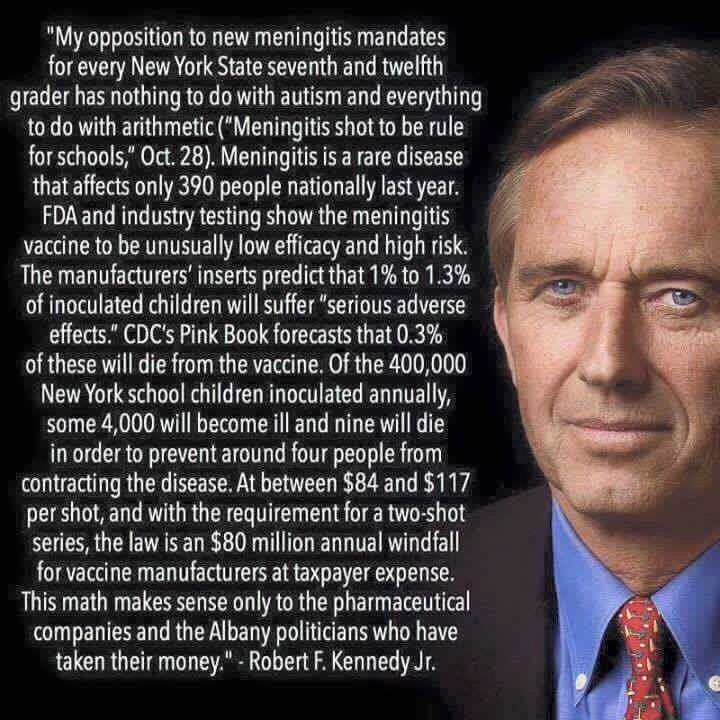
    These are the figures for New York, doing the math – how would they compare to Idaho?

    ______________________

    REMEMBER THERE ARE SEVERAL METHOD OF PARTICIPATION:

    Persons wishing to participate in the negotiated rulemaking may do any of the following:

    1. Attend or call in to the negotiated rulemaking meetings as scheduled above;

    2. Provide oral or written recommendations, or both, at the negotiated rulemaking meetings; or

    3. Submit written recommendations and comments to this address on or before Friday, July 13, 2018:

    Send to: Hand deliver to:Idaho Department of Health and Welfare Idaho Department of Health and Welfare
    Division of Public Health Division of Public Health

    Attn: Rafe Hewett, Health Program Manager
    P.O. Box 83720 450 West State Street, 4th Floor Boise, ID 83720-0036

    E-mail: Rafe.Hewett@dhw.idaho.gov
    Rafe Hewett at (208) 334-5942

    Freedom requires self-discipline, and it begins with our understanding of how our State and Federal Government are structured and becoming involved in the statutes and rules that are created by them. We hope to make it easy to participate and protect your health freedoms in Idaho.

  • Hidden Sources of Gluten

    Hidden Sources of Gluten

    Dr McQueen of Red Mountain Natural Medicine in Boise shares with HFI some common hidden sources of gluten in food, personal products and household products. If you or one of your loved ones have been diagnosed with Celiac disease or non-Celiac gluten sensitivity (NCGS), hopefully you are already well-aware of the common gluten-containing foods to be avoided in your diet. Complete avoidance of gluten, a protein found in many cereal grains, is an absolute necessity in those with Celiac disease since ingestion of gluten in these individuals is associated with autoimmune-mediated damage to the small intestine. Untreated, Celiac disease can lead to nutritional deficiencies and increase the risk of all kinds of serious health problems, some of which include other autoimmune disorders like Type I diabetes and multiple sclerosis, anemia, osteoporosis, infertility, miscarriage, neurological conditions, and even cancers of the digestive tract. 1,2

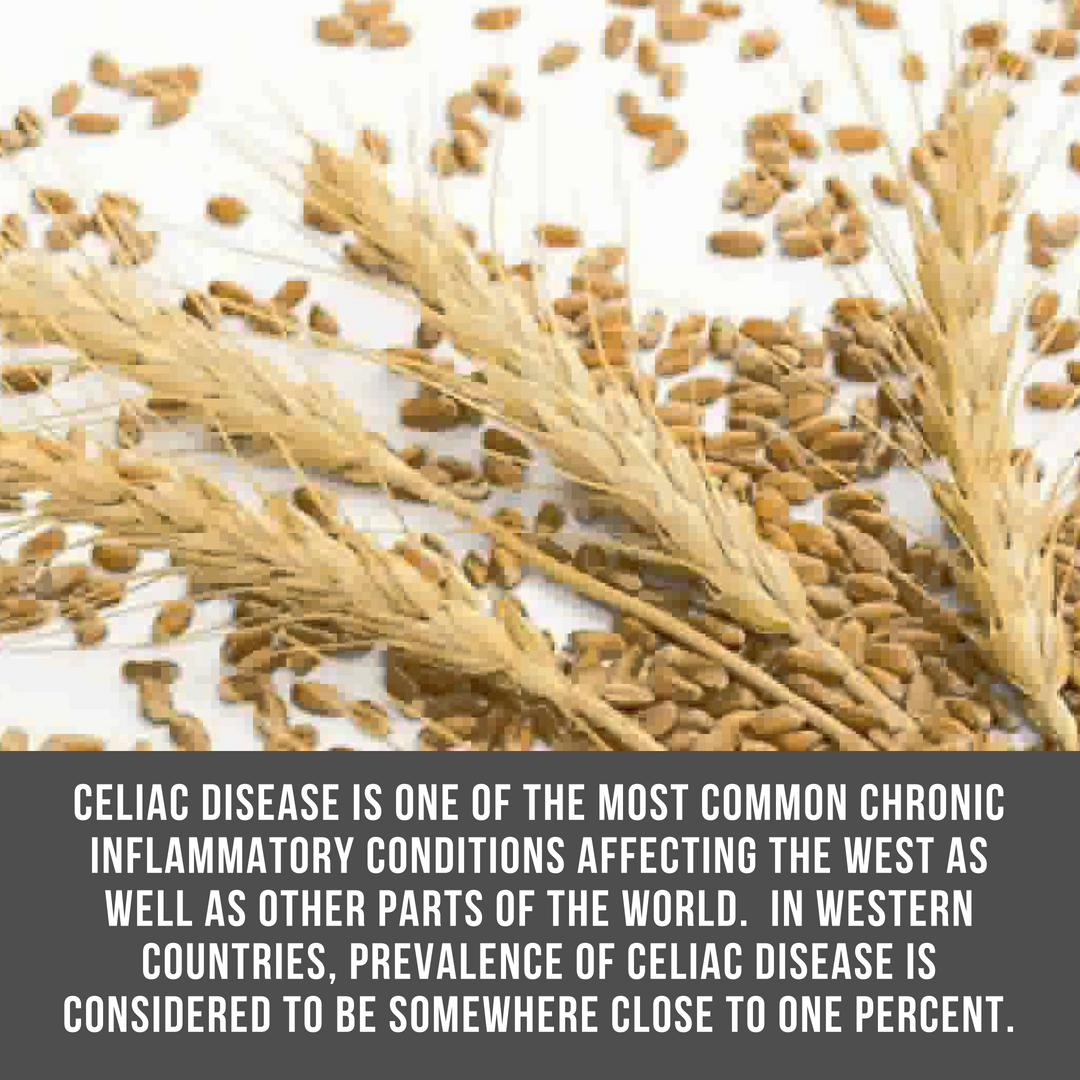
    Celiac disease is one of the most common chronic inflammatory conditions affecting the West as well as other parts of the world. In Western countries, prevalence of Celiac disease is considered to be somewhere close to one percent. 3,4

    Prevalence of NCGS is still widely debated, but estimates in Western populations are significant, varying somewhere between 0.6 to 6%. 5 NCGS has been described as a non-allergic and non-autoimmune condition in which the consumption of gluten can lead to symptoms similar to those seen in Celiac disease. 6 In cases of NCGS, gluten exposure in the diet can lead to the development of symptoms in or outside of the gastrointestinal tract from hours to days. These symptoms then improve or disappear after the withdrawal of gluten from the diet. NCGS differs from Celiac disease in that it is not considered an autoimmune condition and does not typically cause significant damage to the intestines. That being said, some individuals that are non-Celiac are highly sensitive to even the tiniest amounts of gluten exposure.

    With growing awareness of the gluten problem that impacts so many individuals, it has become progressively easier to find gluten-free options when grocery shopping or going out to dine. What remains a challenge is avoiding contact with the laundry list of hidden gluten-containing ingredients in packaged and processed foods, personal care products, and even medications.

    GLUTEN-CONTAINING FOODS TO AVOID

    In the case of Celiac disease or NCGS (especially the former!) care must be taken to avoid the following gluten-containing foods:

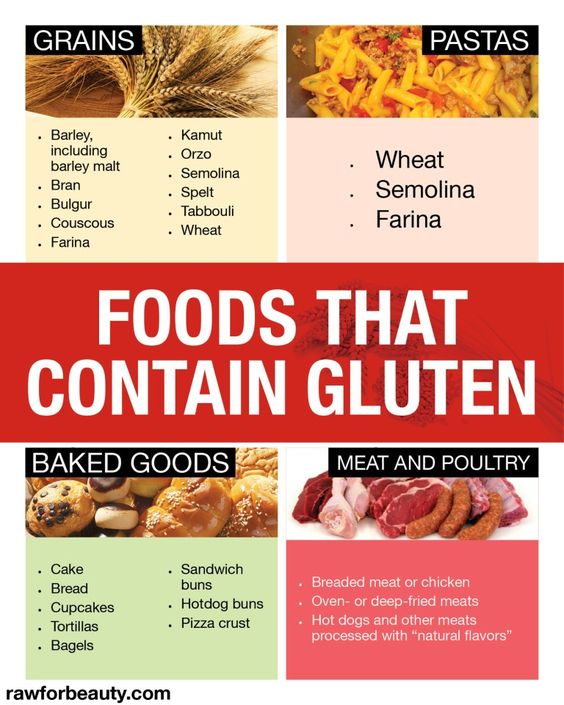
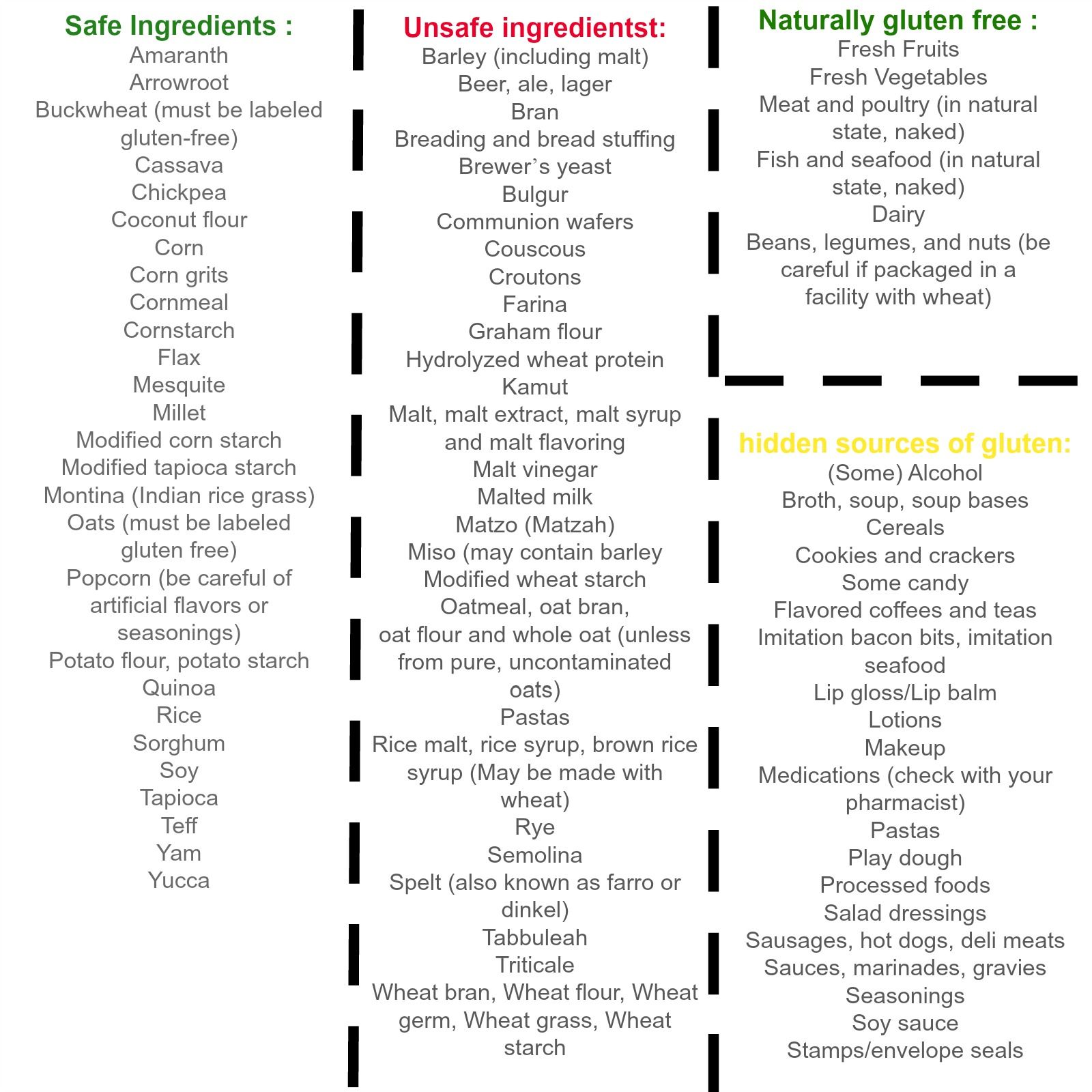
    Barley, Brewer’s Yeast, Bulgur, Couscous, Einkorn, Kamut, Oats (also available gluten-free, but this MUST be from pure, uncontaminated oats), Rye, Semolina, Spelt, Triticale, Wheat, and Wheat Germ/Flour/Bran/Starch

    HIDDEN SOURCES OF GLUTEN IN COMMON FOOD ITEMS

    Even if you are well-versed in identifying and staying away from the specific grains that contain gluten, it’s important to know about the food items that may commonly contain hidden gluten-containing ingredients. In order to avoid gluten exposure, you need to become comfortable reading food labels. This may seem daunting, but it’s really something we should all be doing anyway to support our health! Here are some of the common food items that contain gluten:

    • Malt vinegar (or any product containing malt, since this is derived from barley)
    • Salad dressings, marinades
    • Seasonings
    • Condiments (mustard, ketchup, mayonnaise, etc.)
    • Soy and teriyaki sauces (most contain wheat)
    • Sushi rice (often contains malt vinegar)
    • Broths/stocks/bouillon cubes
    • Miso soups that are barley-based
    • Prepared/canned soups and beans
    • Processed meats (deli meats, sausages, hot dogs, etc.)
    • Fish sticks
    • Coffee creamers, flavorings, or instant coffee
    • Some alcohols (beers, wine coolers, some vodkas – here is a link for more information on gluten-free alcoholic beverages)
    • Chewing gum
    • Candies and candy bars
    • Energy bars, granola bars
    • Gravies, sauces of all kinds
    • Meat substitutes (veggie burgers, veggie sausage, seitan)
    • Breads, pastries, baked goods, croutons
    • Pastas, noodles
    • Crackers, chips, French fries

    INGREDIENTS THAT MAY INDICATE HIDDEN SOURCES OF GLUTEN

    After you have read over the list above, you might be feeling a little overwhelmed. And justifiably so. What in the heck is being added to all these food items above that can make them gluten-containing? To be honest, a whole lot of different ingredients can contain hidden gluten! Here is a link to a site that lists some of these hidden ingredients.

    Fortunately, more and more gluten-free food items are becoming available all the time to meet the growing demands for these products. This certainly provides some benefits and conveniences for those following a gluten-free diet, but unfortunately it also has a major downside. Many of the gluten-free food substitutes out there are touted as being healthy options or perceived this way by the public. But in reality, many gluten-free products are absolute junk since they are still highly processed and contain way too many non-pronounceable ingredients. Many of these products are highly refined and contain added sugars, starches, or other additives to help mimic the highly desirable texture of gluten.

    You should also be aware that current FDA standards allow products that are labeled as “gluten free” to contain up to 20 ppm (parts per million) of gluten. For these reasons packaged foods and food items should, as a general rule, always be minimized in the diet, even if they are labeled gluten-free. I can say from personal experience and in working with my patients that this makes it so much simpler to stay gluten-free!

    Emphasize a diet rich in whole unprocessed foods that require no or little processing.
    This can include the following:

    • Healthy Fats – Extra virgin olive oil, coconut and MCT oil, organic/pastured butter and/or ghee, raw nuts/seeds/nut and seed butters, avocado, olives
    • Healthy Proteins – Whole eggs, low mercury fish (especially wild salmon, sardines), grass-fed meats/poultry, wild game
    • Vegetables – Leafy greens and lettuces, broccoli, kale, cabbage, cauliflower, onions, garlic, mushrooms, Brussels sprouts, squashes/zucchini, green beans, bok choy, lots more!
    • Fruits – Eat a variety, but emphasize those higher in fiber and lower in sugar (apples, pears, dark berries, avocados, tomatoes, lemons, limes)
    • Herbs, Seasonings, Condiments – Enjoy whatever you like, but just make sure any pre-prepared products are free of gluten, sugar, and preservatives.
    • Legumes, Beans, and Lentils
    • Gluten-Free Grains – Amaranth, buckwheat, brown rice, white rice, wild rice, millet, quinoa, and teff.

    HIDDEN SOURCES OF GLUTEN IN YOUR COSMETICS AND OTHER NON-FOOD ITEMS

    While there is plenty of debate over how strict one must be in avoiding gluten from non-food (non-ingested) sources, it makes sense that individual sensitivity should guide this decision. Some individuals find that they do much better avoiding gluten containing products altogether; others have no need to be so strict. Here is a list of non-food items that commonly contain gluten:

    Personal Care Products:

    Examples include shampoo, conditioner, hairspray, hair dye and other hair products, lip balm, lipstick, lotion/cream, makeup, mouthwash, soap, moisturizer, deodorant, sunscreen, toothpaste.*NOTE: Keep in mind that lip balms and lipsticks are more likely to be ingested to some degree, especially if used regularly. Extra caution should be taken with these products. Here is a link for resources on gluten-free skin care products and cosmetics. Another link here.

    Household Items:

    Examples include laundry detergent, glues on stamps/envelopes

    Products in Dentistry:

    Examples include sealants and various plastics

    Medications:

    Many medications are not gluten-free because they contain added fillers or excipients derived from wheat or gluten, or they are manufactured in facilities not dedicated gluten free. It can be a challenge to determine whether they are or not. When in doubt, call the manufacturer. Also, keep in mind that manufacturers change ingredients all the time, so you must periodically check for any changes in ingredients. Here is some further information to read on gluten in medications.

    Vitamins/Supplements:

    Many of the lower quality vitamins and supplements available on the market will contain common allergens, fillers, and binders including wheat and/or gluten. It’s absolutely worth paying a bit more for brands that care about making cleaner, higher quality products that are free of common allergens. There are a number of great professional brand companies out there to choose from. Look for companies that are GMP-certified to assure purity and quality. Some of the brands that I trust are Metagenics, Thorne Research, Seeking Health, Pure Encapsulations, and Allergy Research Group. Keep in mind that not every product from these stated companies will be gluten free – Make sure to check for yourself and/or healthcare practitioner before using a specific product.

    Playdough:

    Since kids playing with playdough are known for ingesting some at least every now and then, you should know that it contains gluten. There are resources online for making your own gluten-free playdoughs if you prefer!

    Food Containers and Food Preparation Equipment:

    Whether you are eating at home or at a restaurant, it’s important to know that exposure to gluten can occur via strainers, cutting boards, cookware, grills, and toasters that have previously come into contact with breads or other gluten-containing foods.

    Pet Food:

    Many pet foods contain wheat or oats. The dust particles from these can get inhaled or transferred to the mouth, creating a problem for some sensitive individuals.

    THE BOTTOM LINE

    Gluten is found is all kinds of foods and non-food products that we unintentionally come into contact with every day. Avoiding gluten exposure takes some real diligence and effort, but it can be done! If you are on the gluten-free path, know that you are not alone and there are lots of great people, support groups, and resources out there to help you be successful. Hopefully this article is a stepping stone for helping you with that success.

    In Health,

    Dr. Shana McQueen of Red Mountain Natural Medicine

    this article originally appeared at: http://redmountainclinic.com/meet-dr-mcqueen/

    REFERENCES:

    • Serena G, Camhi S, Sturgeon C, Yan S, Fasano A. The Role of Gluten in Celiac Disease and Type 1 Diabetes. Nutrients. 2015;7(9):7143-7162. doi:10.3390/nu7095329.
    • Rodrigo L, Hernández-Lahoz C, Fuentes D, Alvarez N, López-Vázquez A, González S. Prevalence of celiac disease in multiple sclerosis. BMC Neurology. 2011;11:31. doi:10.1186/1471-2377-11-31.
    • Ciccocioppo R, Di Sabatino A, Corazza GR. The immune recognition of gluten in coeliac disease. Clinical and Experimental Immunology. 2005;140(3):408-416. doi:10.1111/j.1365-2249.2005.02783.x.
    • Gujral N, Freeman HJ, Thomson AB. Celiac disease: Prevalence, diagnosis, pathogenesis and treatment. World Journal of Gastroenterology : WJG. 2012;18(42):6036-6059. doi:10.3748/wjg.v18.i42.6036.
    • Igbinedion SO, Ansari J, Vasikaran A, et al. Non-celiac gluten sensitivity: All wheat attack is not celiac. World Journal of Gastroenterology. 2017;23(40):7201-7210. doi:10.3748/wjg.v23.i40.7201.
    • Capili, B, Chang, M, et al. A Clinical Update: Nonceliac Gluten Sensitivity—Is It Really the Gluten? The Journal for Nurse Practitioners. 2014;10(9):666-673. doi.org/10.1016/j.nurpra.2014.07.036

  • Why I Won’t Be Missing This Important Event

    Why I Won’t Be Missing This Important Event

    For 5 years I have been suffering from numerous autoimmune diseases and Lyme. My symptoms started before I was 30 years old and progressed each year. Despite being the healthiest I have ever been at that time, I was plagued with chronic fatigue, joint pain, mild depression, digestive issues, new food allergies, just to name a few. Having three children, meant that I didn’t have time to be down and out because of my symptoms…but that doesn’t mean my symptoms didn’t try. I kept getting worse, and allopathic medicine only wanted to prescribe medication for the symptoms.

    I knew enough about natural based healing to know this was the route I needed to take to actually begin my healing. I inherently knew my body had everything it needed to help me heal if given the right environment. So I researched… First, I started by eliminating inflammatory foods from my diet (gluten, dairy) and lowered my rheumatoid levels into the high normal range! Just from food alone! What was a great start! I started to feel a little better but was devastated when I had an autoimmune “flare up” a few months later…I thought I was in the clear because I had gone so long in between flare-ups! My shoulders ached so bad, it hurt to turn my steering wheel, I was too tired to play with my kids, and it took everything I had to continue to get through my master’s program and do what I needed to do as a mother, wife, student, and employee. Giving up was never an option. I wouldn’t let these unknown illness keep me down.

    It was at this point I knew I needed more than just a diet change; I knew I needed more help in fighting these diseases. Fall of last year, I began seeing a naturopathic doctor and a chiropractor. Both were focused on detoxing and treatment through targeted and personalized means; both services were very complimentary to each other. And the most fantastic part??? We got to the root of my issues! I’m still in my healing journey, but I am happy to report, I haven’t had a full-blown flare in a long time (since before I started treatment)…the longest span yet to be exact. I have more energy and significantly less pain. But the best part? My kids have their mom back!
    I’m getting my life back.

    I hope you will join me at this event. It could be life changing. I know the “natural route” I took was – for me.

  • Be Part Of Health Freedom Idaho

    Be Part Of Health Freedom Idaho

    Safeguarding parental authority, individual health freedom are the key founding principles of Health Freedom Idaho. We are preserving health freedoms and protecting parental rights for the citizens of Idaho.

    Health Freedom Idaho is a volunteer organization that was formed by concerned citizens in response to a bevy of policy and philosophy shifts happening in our nation, and in particular, the great state of Idaho. Be a part of something big! https://hfi2.designbyparrish.com/join

    Mission Statement:

    Given our belief that each person, parent or guardian should be free to choose how to get and stay well, we are committed to promote and preserve for the people of Idaho the right to access the healing and health care treatment, information, and services of their choice which they determine are necessary for their own health and survival; protect practitioners’ right to practice; develop state laws, statutes, and codes that honor our inalienable human right to self determination in all aspects of our own and our children’s health; and empower the citizens of Idaho by advocating understanding of the laws and factors impacting their right to access.

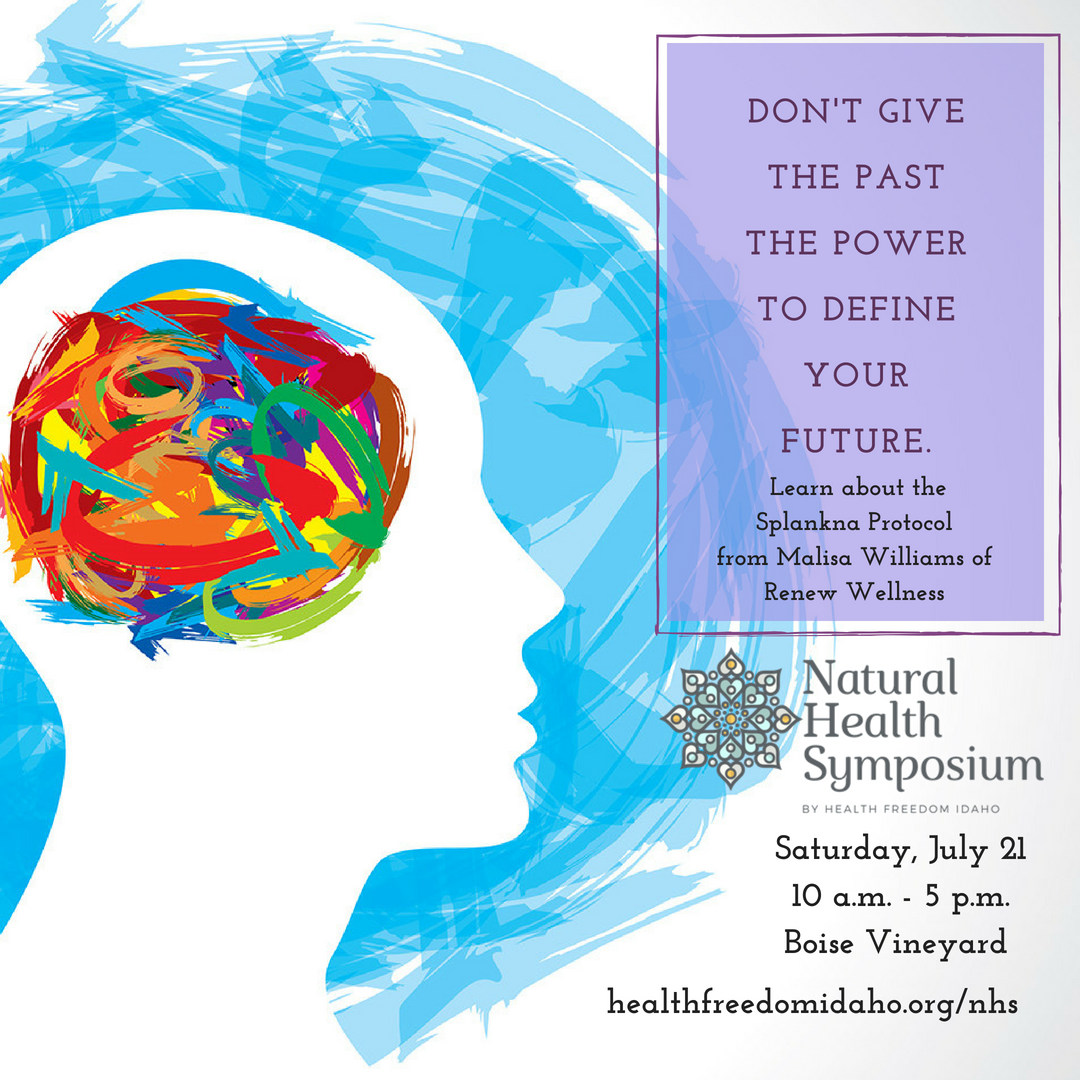
  • Mental Health Matters: Introduction to the Splankna

    Mental Health Matters: Introduction to the Splankna

    In promoting wellness, mental health is one of your most significant assets. It helps you focus at work, overcome obstacles, get along with the people around you it is the critical component of getting and staying well. Malisa Williams of Renew Wellness LLC, provides a unique approach to wellness combining Spirit, Soul, and Body. Splankna is a unique protocol that brings together the best aspects from different energy psychology approaches and complementary protocols of deep awareness. The treatment protocol taps into the subconscious root of symptoms. Learn how clients utilizing Splankna receive benefits of eliminating negative patterns or habits they have recognized that are negatively impacting their lives; client’s eliminate blocks to healing they are already receiving from other practitioners; client’s clear stored emotions and are enabled to thrive in new ways.

    Malisa Williams has been practicing in the Mental Health Field since 2003. Malisa is a Mental Health Counselor and has worked with a variety of populations including Adoption; In-Patient &amp; Out-Patient Substance Abuse Treatment; Adult, Youth &amp; Child Mental Health and more. Malisa’s business Renew Wellness provides Splankna Protocol to client’s in the Treasure Valley. Malisa is the only Masters Level Splankna Practitioner in Idaho and Renew Wellness is the only business that provides Splankna in the Treasure Valley.

    For more information visit

    website: malisawilliams.com

    fb page: https://www.facebook.com/RenewWellnessLLC/

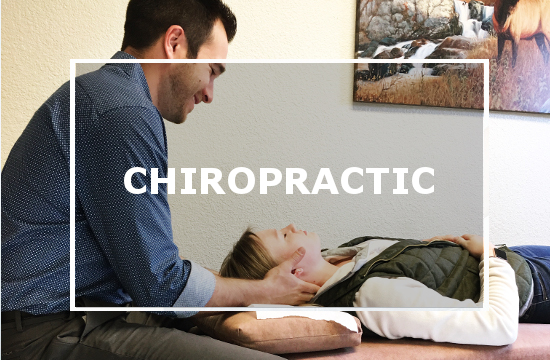
  • You Might Think Chiropractors Are “Bone” Doctors, But In Fact They Are More Like “Nerve” Doctors

    You Might Think Chiropractors Are “Bone” Doctors, But In Fact They Are More Like “Nerve” Doctors

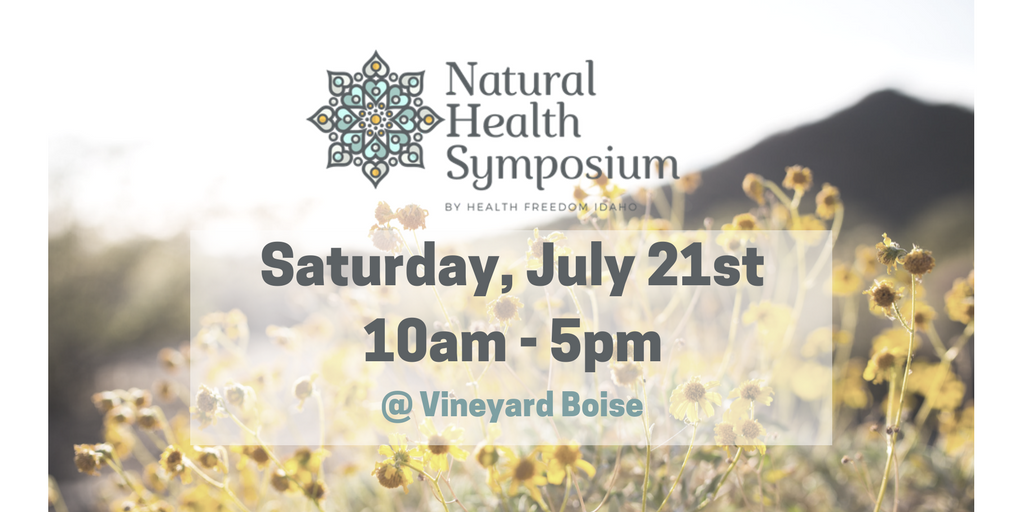
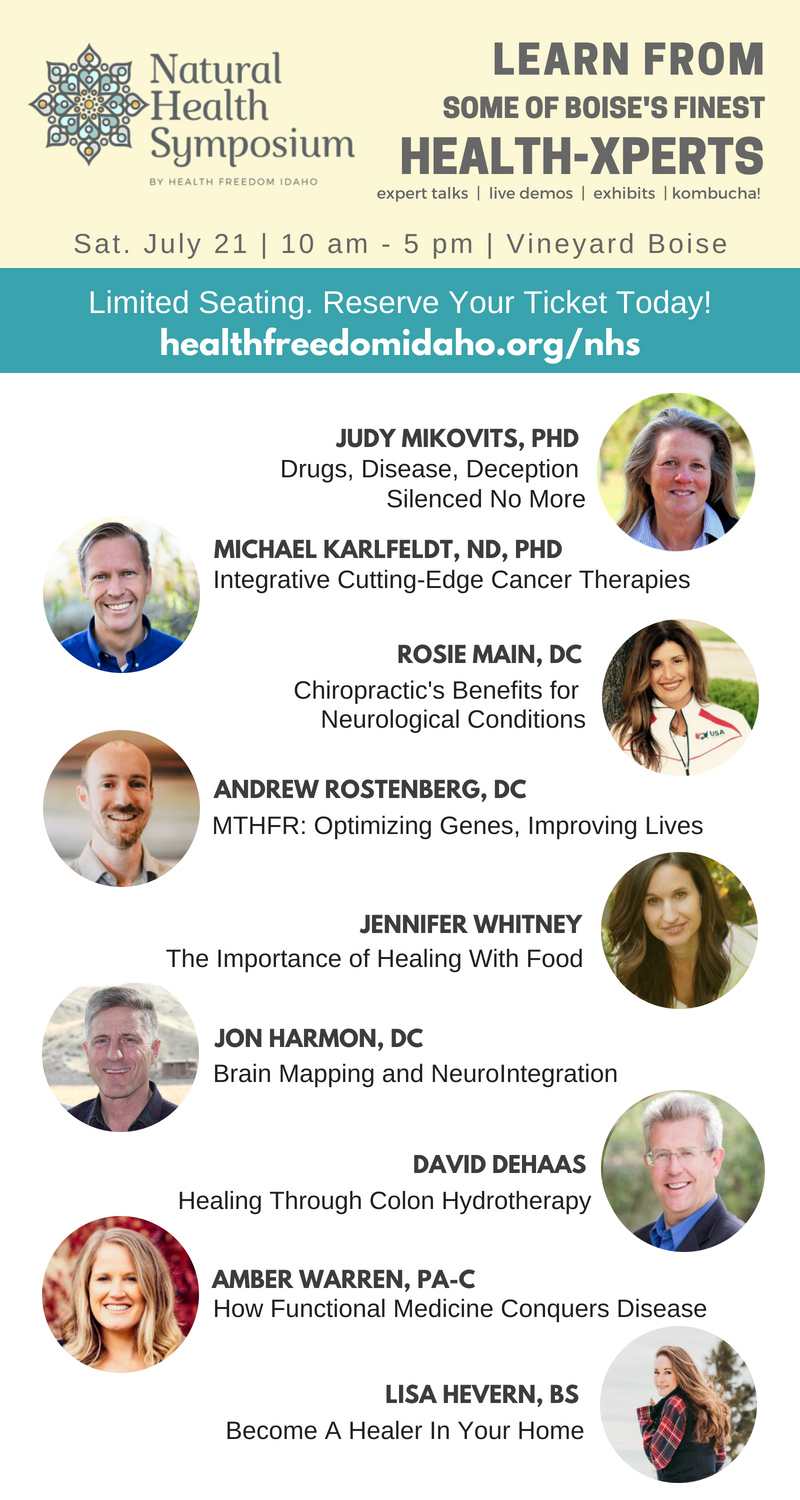
    Natural Health Symposium July 21 we have a exciting line of up speakers and vendors who will share their expertise in health and wellness. One such vendor is Dr. Collin Struble of the Wellness Center of Boise at the Natural Health Symposium. Dr Struble provides us some insight to the importance of chiropractic.

    When someone tells you that they are a chiropractor, what do you think? What probably comes to mind is “a bone cracker”. Well, just as there are many types of surgeons, each with their own specialty, there are also many types of chiropractors, each with their own specialty and techniques.

    You might think that chiropractors are “bone” doctors, but in fact they are actually “nerve” doctors. The body naturally heals itself through our central nervous system. The body knows what it needs to be healthy, and when there is proper nerve flow, the body can better diagnose and heal itself through the nervous system. The spinal cord is th

    e channel through which all of our nerves run. The only way to keep the nerves free of interference is by realigning the bones that cause the interference. Chiropractors are uniquely trained to locate and remove the nerve interference so the body has the capacity to do what it has been made to do – heal itself – naturally – without drugs – without surgery.

    After years of study at Palmer College of Chiropractic in Davenport, Iowa, I was trained and certified in many different chiropractic techniques, including the ability to be a “bone cracker” through manual adjustments. However, I feel that our bodies experience enough trauma from the daily activities of our life, and though I will perform low force manual adjustments and utilize many techniques to aid in the healing of the body, I prefer to utilize one particular technique. This technique, called the Blair Upper Cervical Technique, focuses on the “power of the upper neck”. It is a subtle, passive adjustment that is extremely powerful. Many healthcare providers do not recognize or understand the power, and if they did, they may refer their patients to a chiropractor instead of prescribing medication or surgery.

    Through years of study, clinical practice and research, I have compiled key points into a handout to help my patients understand how they can achieve health through this very specific technique. To start, it’s important to understand the anatomy of the spine. The spine is technically divided into 3 major regions, the cervical or neck region, the middle or thoracic region and the lower or lumbar region, followed by 2 additional lower regions, called the sacrum and coccyx. Each region is distinguished by a specific curve. The cervical and lumbar regions have a lordotic or forwards curve, and the thoracic region has a kyphotic or backwards curve. There are seven vertebrae in the neck numbered from C1 through C7. Your skull sits directly on the C1 vertebra, named the atlas. Derived from Greek mythology, Atlas had the weight of the celestial spheres on his shoulders, just like your atlas vertebra has the weight of your head on it.

    Your head, which typically weighs around 10 or 11 pounds, rests upon the two-ounce atlas vertebra. The atlas is also often called the “yes” bone because your head rocks back and forth on its two articulations when you nod your head to indicate “yes”. That is why, when your skull slips partially off one of these atlas joints in one direction or another, pressure is applied to the brain stem.

    Your second vertebra (C2) is called the axis. The axis is the vertebra that allows you to turn your head left and right. It’s referred to as the “no” bone because it allows your head to rotate left and right as you shake your head “no”. Your atlas and axis are the only two vertebrae which do not have inter-vertebral discs between them like the rest of the vertebrae in your spine. In addition, they are the two most freely moveable vertebrae; and as a result, are the ones that are most susceptible to becoming misaligned.

    Your brainstem extends down into the atlas and axis cavity so your spinal cord basically begins with the C3 vertebra. If your top two vertebrae are out of alignment, they put pressure on the base of your brainstem. This, in turn, interferes with the free flow of signals back and forth to your brain and the entire nervous system. This is termed subluxation and can cause serious consequences in the body. When the upper neck is out of its proper position, it can irritate, constrict or disrupt vital nerve signals to any portion of your body. This can cause many ailments, such as joint pain, organ dysfunction, lowered immune system and countless other conditions and dis-ease that you would not ordinarily relate to a problem originating in your neck. As Dr. Burcon explains, “Five of the twelve cranial nerves originate in the brainstem. The base of the brain controls many important bodily functions, such as breathing, blood pressure, the sleep center, and balance.” In addition, if the atlas is subluxated, the spine cannot maintain its proper curves, causing issues like scoliosis.

    When a C1 or C2 subluxation occurs, the weight of your head is no longer balanced or positioned correctly on your atlas, causing your head to tilt. This causes the rest of your body to compensate for that tilt and shift of weight. Our bodies response is for one shoulder to drop down, one hip to come up, hence, bringing that leg up with it. This creates imbalance in your body which we call a functional short leg. One leg appears relatively shorter than the other and you are not walking with a normal gait. The impact of this is often realized as headaches, neck, back and extremity pain.

    This head-neck misalignment is where upper cervical chiropractic treatment comes in. Adjusting the atlas (and axis) can take this pressure off your brainstem, alleviating many problems by allowing your brain to send its healing messages throughout your body and allowing your spine and nervous system to revert to its proper alignment and function.

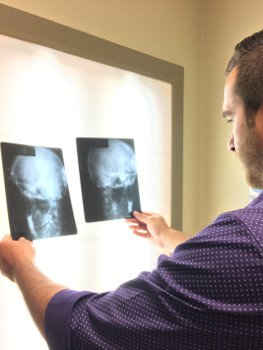
    This is why I practice the Blair Upper Cervical Technique. Dr. William G. Blair began to develop this distinct method because he was concerned with the accuracy of the traditional adjustments. By analyzing the vertebrae for asymmetry, he calculated margins of misalignment that revealed different effects on the movement between the head and neck. He found that through imaging he could arrive at calculations tailored to each misalignment. I was impressed by the results of this technique and wanted my patients to benefit from the accuracy of this method. With this technique, I take a special set of x-rays to look at and analyze the C1 vertebrae. With these x-rays, I am able to determine exactly how the C1 has misaligned and at what angle, realizing every person’s unique anatomy. By analyzing the x-rays, I am able to measure out and generate a “listing” or calculation which tells me at which angle to adjust the patient in order to return the C1 back to its proper position. I utilize a special drop table for this adjustment, have the patient lie down on their side, then use a protractor to line up at the exact angle of the joint. It takes these elements together with a proper stance and specific motion to deliver the perfect adjustment. It’s an accurate, mathematic adjustment that gets precise results every time.

    Through this very scientific method of chiropractic care, the body is able to function as it was designed, like a super highway of information, with the innate ability to keep itself healthy and happy…naturally.

    Listen to more insight from Dr. Collin Struble at

    July 21 from 10 a.m .to 5 pm
    Vineyard Boise
    Seating is limited. Purchase Tickets Today

  • 80% of Supermarket Meat Contains Antibiotic-Resistant Bacteria

    80% of Supermarket Meat Contains Antibiotic-Resistant Bacteria

    New analysis from the Environmental Working Group (EWG) shows that the latest tests by federal scientists found almost 80 percent of supermarket meat to contain antibiotic-resistant bacteria. The so-called superbugs were discovered to be resistant to at least one of 14 antibiotics they were tested for by the National Antimicrobial Resistance Monitoring System (NARMS).

    Superbugs were found on 79 percent of ground turkey, 71 percent of pork chops, 62 percent of ground beef, and 36 percent of chicken breasts, wings, and thighs sampled, EWG reports in a news release. The meats were tested in supermarkets by NARMS in 2015, which was the latest year for which such data is available.

    “Consumers need to know about potential contamination of the meat they eat, so they can be vigilant about food safety, especially when cooking for children, pregnant women, older adults or the immune-compromised,” said Dawn Undurraga, EWG’s nutritionist and author of the report.

    The World Health Organization warns that antibiotic resistance is a serious threat to global health and food security. Antibiotics are routinely given to animals within the meat industry in order to help them survive the challenging conditions in which they are forced to live and cope with, like stress, overcrowding, unsanitary environment, as well as to make them grow faster. In spite of the threat this practice presents, in the U.S., the federal government still allows healthy animals to be given antibiotics by meat producers. In fact, according to a report from 2013, of all antibiotics distributed in the U.S., a shocking 80 percent were given to livestock.

    “Bacteria transfer their antibiotic resistance genes to other bacteria they come in contact with in the environment and in the gastrointestinal tract of people and animals, making it very difficult to effectively treat infections,” said Dr. Gail Hansen, a public health consultant and veterinarian.

    With these findings in mind, it is more pertinent than ever to consider removing your support from the factory farming industry. Considering 99 percent of animals raised for food in the U.S. come from factory farms, your best bet to steer clear of animal abuse and superbugs is to opt for plant-based sources of protein. Around one-third of Americans are leaving meat off their plates due to concerns like antibiotic resistance, but we can only hope to see a decrease in the number of germ-spewing factory farms if more people join in and take action to build a better food system.

    Do you believe that locally sources pasture raise foods are safer? Where do you choose to purchase your meat? Share in comments below.

  • What Types of Toxins Are In Your Sunscreen?

    What Types of Toxins Are In Your Sunscreen?

    An investigation by the Environmental Working Group found that 60% of sunscreens currently on the market are not as safe and effective as you may think. Most of them actually contain harmful chemicals that can damage your skin and even cause cancer. Have you read your sunscreen label? Did you read any of these ingredients? Oxybenzone, AVO benzo, Paraben/Propylparaben/methylparaben butyl even fragence -they are TOXIC.Even the best of intentions require diligence and effort, so when you reach for that skin lotion “with SPF,” this summer make sure you’re getting the protection you need and not leaving yourself exposed.

    • Oxybenzone is an endocrine-disrupting chemical now that means it’s a chemical that disrupts your hormones in your body and acts almost like an estrogen. It’s responsible for increased risks and increased rates of melanoma. It’s been found to lower the birth weight of girls. That’s also been linked to allergies, hormone disruption, cell damage and skin cancer.
    • AVO benzo is used to absorb the UVB rays now the research suggests AVO benzon degrades in the sun and resulting in the release of free radicals on your skin. That increases the risk of skin cancer. AVO benzene has been linked to severe allergic responses on the surface. I noticed this I see people spray sunscreen all over the place. I try to stand downwind because one of the worst sunscreens is the aerosol ones where you breathe the chemicals in too. Then all of a sudden at 30 minutes later, I’ll see people breaking out with rashes, or they’ll have like pimples like things all over their skin.
    • Paraben/Propylparaben/methylparaben butyl Parabens are commonly used as preservatives in sunscreens and a variety of personal care and beauty products as well. They are also endocrine and estrogen disruptors. Parabens in clinical trials have been associated with infertility sterility abnormal development of the testes and kids obesity asthma allergies benign tumors of the uterus and digestive tract cancer as well as breast cancer so make sure that you always use paraben free beauty products and sunscreens.
    • Fragrance, now that sounds like a real natural. They must extract these from rose or jasmine or something like. NO! The reason why is the FDA actually allows chemical companies to use the word fragrance to hide their proprietary blend of chemicals. If you see the word fragrance just know that it can have up to 1500 toxic chemicals hidden behind that name including petroleum. So they’re all grouped together under the term “fragrance” it almost assures you that the product is toxic.

      Be in the sun responsibly cover up with a hat.
      An organic long sleeve cotton shirt is breathable and provides 20 SPF
      Raspberry seed oil and carrot seed oil (even blended together) provide an SPF of about 26

    Learn More about 5 Dangerous Chemicals in Sunscreen:
    https://ghc.us/1r5

    Learn More about Natural Sunscreen Alternatives:
    https://ghc.us/15-

    ——-

    Dr. Edward Group III, DC, NP, DACBN, DCBCN, DABFM is the founder and CEO of Global Healing Center. He assumes a hands-on approach to producing new and advanced life changing products and information to help you maintain a clean body and live a healthy lifestyle. It’s our mission to bring back good health, positive thinking, happiness, and love.

    This article originally appeared at: https://youtu.be/zlTeazx00kQ.