Author: Health Freedom Idaho

  • Michael Snyder Interview with Natural News About Liberty, Health Freedom and Smaller Government

    Michael Snyder Interview with Natural News About Liberty, Health Freedom and Smaller Government

    HFI’s Notes: Michael Snyder has been an advocate locally for health freedom and parental rights throughout Idaho. Michael was first on the scene in Boise, when Sara’s son was denied access to kindergarten after the school refused to accept her parental statement of vaccine exemption per Idaho code. (See the video here). He also took time to alert the public about the newborn removed from parents at the hospital after they refused the HepB vaccine for their son.

    Idaho congressional candidate Michael Snyder is founder of The Economic Collapse Blog, among other sites. In a recent interview with Mike Adams of Natural News, he shared his stances on liberty, health freedom and small government. Michael also shared why he is running for Congress: to ensure that current and future generations of Americans can live in freedom and prosperity.

    Excerpts from the Natural News interview and from a Health Freedom News article about the interview are below.

    Snyder said that one of his biggest influences was then-Rep. Ron Paul, a Texas Republican with very strict limited-government views (an early advocate for ‘draining the swamp’ before it became popularized by President Donald J. Trump).

    Once a D.C. lawyer, Snyder moved with his wife, Meranda, to Idaho six years ago, where he began focusing on writing. After rising to the top of the so-called “alternative media,” in which he focused exclusively on the promotion of individual liberty, health freedom and small government, he decided it was time to take his game to the next level — especially after Donald J. Trump shocked the GOP and Washington establishments to beat Hillary Clinton in November 2016.

    Though he supported Trump, “I didn’t think he’d win,” Snyder admits. That makes sense, given the force arrayed against him: A $1 billion Clinton war chest, the entire mainstream media, and the fact that — as we now know — there were unseen forces working behind the scenes to undermine his candidacy (and now his presidency).

    “[Trump] showed if we work together, if we fight, that literally, anything is possible,” Snyder said. “So I believe we have a window to potentially take our government back.”

    On his radar, if he makes it to D.C.: Fights against “the vaccine industry, GMOs, the Federal Reserve — all the things the liberty movement” supports.

    To the issue of vaccines and, in particular, the dangers they pose, the Health Ranger noted that during Trump’s candidacy, he spoke out regarding the safety of giving so many vaccines to children so quickly, which he intimated could be linked to the rising epidemic of autism. He even spoke to Robert F. Kennedy, Jr. about a commission to investigate “vaccine safety” shortly before being inaugurated.

    But, as Adams pointed out, both men — along with every other ‘vaccine safety advocate’ — has been savagely attacked by the Centers for Disease Control and Prevention, physicians’ groups, the “mainstream” media and Big Pharma for their views, and he says Snyder should be ready for that.

    Asked how one lawmaker who would immediately come under siege for his or her views can make a meaningful difference, Snyder said it is possible for anyone to educate the public and raise awareness about vaccine dangers or any issue, given the national platform of Congress.

    Besides, Snyder says, he’s trying to be realistic about how he’d be viewed in D.C. should he win.

    “I’m very rapidly going to become the most hated member of the House of Representatives by the mainstream media, I understand that in advance,” said Snyder. “It’s going to be [like] going into a war zone,” politically speaking.

    He’s right about that. Trump has been under constant assault by the Deep State and the D.C. Swamp creatures featuring the media in a starring role since he had the bad taste to actually beat the most corrupt presidential nominee ever. And he’s the president.

    That reality doesn’t phase Snyder.

    “We’re not going to Washington to be part of ‘the club,’ we’re not going to be accepted or make friends with anyone else,” he said. “We’re going there to fight for the things that we believe in.” And, presumably, that would be the things voters want him to fight for.

    “In order to ultimately get what we want, we’re going to have to get more like-minded people with us in Washington,” said Snyder.

    No truer words.

    But he’ll be in good company: Trump has already broken down the barrier, so now in the breach must charge good men and women of character and honor to fill in the ranks behind him.

    Like Michael Snyder.

    Check out his campaign website for more information, where you can also donate: www.MichaelSnyderForCongress.com.

  • Senators to vote on H393. Tell them Vote NO. Stop the Waste!

    Senators to vote on H393. Tell them Vote NO. Stop the Waste!

    This program was developed in response to the original Affordable Care Act (ACA). If the portion of the ACA impacting the program is repealed and/or replaced then there may not be mandated coverage for immunizations. Allowing this section of code to sunset will be a part of the solution to the health insurance crisis that our state is facing. There is so much waste. You can see in their meeting minutes that they have been audited every single year because of poor accounting practices. They had to outsource the accounting which costs even more money. Vaccines for children are already covered by a federal program. We need to illuminate the waste of overbuying vaccines.

    UPDATE FEB 5, 2018:

    H 393 passed the house — Remember these names for future reference.

    AYES – Amador, Anderson, Anderst, Armstrong, Barbieri, Bell, Blanksma, Burtenshaw, Chaney, Chew, Clow, Collins, DeMordaunt, Erpelding, Gannon, Gibbs, Hartgen, Holtzclaw, Horman, Jordan, Kauffman, Kerby, King, Kingsley, Kloc(Chilcote), Loertscher, Luker, Malek, Manwaring, McCrostie, McDonald, Miller, Monks, Moyle, Packer, Palmer, Perry, Raybould, Redman, Rubel, Smith, Syme, Thompson, Toone, Troy, VanOrden, Vander Woude, Wagoner, Wintrow, Wood, Youngblood, Mr. Speaker
    NAYS – Boyle, Cheatham, Crane, Dayley, Dixon, Ehardt, Gestrin, Giddings, Hanks, Harris, Mendive, Moon, Nate, Scott, Shepherd, Stevenson, Zito, Zollinger ! Contact the Representatives and tell them to Vote NO on H 393. Feb 5, 2018 in the morning H 393 will have a final vote in the HOUSE of Representatives. Tell the Representatives to please vote NO to extending this board until 2024.

    Next the bill will go to the Senate for voting.

    Contact all the SENATORS regarding a NO VOTE on this bill, tell them to STOP THE WASTE! It needs to sunset July 2019!!! This is the section of code that needs to sunset
    https://legislature.idaho.gov/statutesrules/idstat/Title41/T41CH60/

    Here are some of the main talking points:

    *Health insurance is in crisis in Idaho and this program has caused health insurance premiums to go up.

    *The Immunization Assessment Board is unnecessary – many other sources for funding additional vaccines for poor families that actually want them.

    *Vaccines for Children (VFC), a federally funded program, already provides vaccines considered essential.

    *Plenty of waste in this program with excessive purchases of vaccines that are not used OR worse, forced on families who do not want them.

    Excessive funds for excessive purchases and poor accounting practices
    From the 9/25/17 Minutes

    Total Collections April through August: $8,260,447
    DHW Cash Balance as of 7/1/2017: $7,884,391
    SFY 2018 DHW Received Transfers: $6,348,917
    Orders and Obligations: $3,166,780
    Cash Expenditures: $2,398,728

    Fund Cash Balance: $11,834,579

    1. Create several identical emails.

    2. Copy a group list for each individual email.

    3. Send the emails separately to each group.

    Senate Group 1

    jagenbroad@senate.idaho.gov, kanthon@senate.idaho.gov, sbair@senate.idaho.gov, cbayer@senate.idaho.gov, bbrackett@senate.idaho.gov, cbucknerwebb@senate.idaho.gov, gburgoyne@senate.idaho.gov, ccrabtree@senate.idaho.gov, ldenhartog@senate.idaho.gov, dforeman@senate.idaho.gov, jguthrie@senate.idaho.gov,

    Senate Group 2

    mhagedorn@senate.idaho.gov, mharris@senate.idaho.gov, lheider@senate.idaho.gov, bhill@senate.idaho.gov, djohnson@senate.idaho.gov, mjordan@senate.idaho.gov, skeough@senate.idaho.gov, tlakey@senate.idaho.gov, alee@senate.idaho.gov, palodge@senate.idaho.gov, fmartin@senate.idaho.gov, dmortimer@senate.idaho.gov

    Senate Group 3

    bnonini@senate.idaho.gov, mnye@senate.idaho.gov, jpatrick@senate.idaho.gov, tpotts@senate.idaho.gov, jrice@senate.idaho.gov, jsiddoway@senate.idaho.gov, msouza@senate.idaho.gov, mstennett@senate.idaho.gov, sthayn@senate.idaho.gov, sjvick@senate.idaho.gov, jwardengelking@senate.idaho.gov, cwinder@senate.idaho.gov


    Learn More:

    It all started in 2010 – the year before Idahoans health insurance rates went up about 20%. You’ve probably seen the headlines as to the problem of making too much for Medicaid but not enough to afford health insurance. This is because those who can afford health insurance are paying for ALL the additional vaccines that are not covered by the Vaccines for Children program. The Immunization Assessment Board and IDHW are purchasing large lots of non-essential and provably dangerous vaccines — perishable biological products that are dated and need refrigeration so of course they have reason to push their product.

    They are using IRIS – Idaho’s Immunization Reminder Information System – to determine the number of eligible children in Idaho which further determines the amount purchased. So the assumption is that all eligible children will be administered these vaccines.

    Vaccines for Children (VFC) is a federal program and federally funded. The Board is purchasing additional vaccines not covered by VFC but are recommended by the Advisory Committee on Immunization Practices (ACIP).

    See detail here as to what children are eligible http://healthandwelfare.idaho.gov/Health/IdahoImmunizationProgram/HealthcareProviders/IIPVaccineEligibility/tabid/3793/Default.aspx

    Most of these vaccines are not proven effective in the prevention of the disease they were designed to prevent but actually cause the disease (see VAERS report ), such as Gardasil that was licensed without ever proving it prevents cervical cancer.

    • Large lots of Gardasil that are now recommended for both young girls and boys 11-12 (mentioned in January 2011 minutes here -scroll down the page)
    There is plenty of vaccines that go to waste with this kind of system, and much pressure to make sure all eligible children receive all of the recommended vaccines.

    Here is an exact quote from the minutes of the 6/26/17 Assessment Board mtg:

    “Just a reminder that if someone goes to a pharmacy for their vaccines the carrier pays that directly vs no cost to the carrier if they go through their physician.
    Dr. Hahn noted that if the DHW purchased vaccines beforehand and sent them to the family physician, but the children go to the pharmacy, that family physician will have to throw away those
    vaccines. So basically, there has been a double payment. But she noted that there is a self-check in the next year. The discussion continued noting this is fairly de minimis. Norm asked for
    more information on the self-correcting process and Dr. Epperly stated that we can look into this if it becomes a greater concern. Christ Pickford added that the Boise School District also double pays since they purchase a supply to vaccine internally.”

    Effectiveness of Vaccines isn’t proven (in fact the opposite has been true in outbreaks of measles, mumps in primarily vaccinated individuals and with the ineffective 2018 Flu vaccine.)

    Some of these vaccines are not proven effective in the prevention of the disease they were designed to prevent but have actually caused the disease (see VAERS report below), such as Gardasil that was licensed without ever proving it prevents cervical cancer. Think of large lots of Gardasil that are now recommended for both young girls and boys 11-12 (mentioned in January 2011 minutes here https://doi.idaho.gov/Company/ImmuneAssess/immune_board -scroll down the page) See the large numbers of injuries AND deaths reported to VAERS in the USA from HPV vaccines (Gardasil and Cervarix) including abnormal PAP smears, cervical dysplasia AND cervical cancer .

    http://sanevax.org/vaers-report/

    Contract RFP

    For the administrative services, Director Cameron reported that the DOI put the contract out to bid and one response was received. Director Cameron noted that River 9 did not respond. The Department will review the response to determine if it meets the criteria established by the RFP. To achieve maximum efficiency at minimal cost, the Department is considering bringing the administrative services back to the Department of Insurance.

    Director Cameron reported there was a recent audit of the program. This was the second CAFR audit that included findings. The recent audit included findings of mathematical errors and interest not being charged for delinquent accounts, as per statute. The board discussed the possibility of requesting removal of the interest section of the statute since the Department already has the ability to assign penalties.

    What happens if the Immunization Assessment Board sunsets?

    Repeal/replace changes

    This program was developed in response to the original Affordable Care Act (ACA). If the portion of the ACA impacting the program is repealed and/or replaced then there may not be mandated coverage for immunizations. Dr. Hahn reminded the board that this program allows the purchase of vaccines at a better price. The discussion continued that even if the ACA is repealed we may want to modify the Immunization Program, but not eliminate it for Idahoans.

    If the Immunization Assessment Board were to sunset in July 2019, can the IDHW still purchase the number of vaccines needed based on the previous year’s voluntary uptake? Apparently so — see www.idahoimmune.org/donors-and-supporters/ Please note that IDHW donated over $100,000 with the balance of large donations given by vaccine manufacturers.

    _______

    History of the Childhood Immunization Policy Commission and Idaho’s Immunization Assessment Board

    Article from Vaclib.org
    Increasing Vaccine Uptake Costs Idaho More Than Money

    In 2010, two new agencies were created by law in Idaho: The Childhood Immunization Policy Commission and Idaho’s Immunization Assessment Board (1). Although the Childhood Immunization Policy Commission appeared to be unfunded, a rider to the original bill provided $1.8 million for the board’s stated purpose – improving Idaho’s immunization rates.

    Questioning if these new laws violate Idaho’s Constitution, I asked an opinion from Idaho’s Attorney General:
    Where in our state Constitution does it empower the state to form a commission whose express purpose is the promotion of a corporation’s product, and also form an insurance assessment board for forcing insurance companies to purchase large lots of the corporation’s products to target a specific age group of Idaho’s citizens even if the product is promoted as a wonder drug, cancer cure, or essential to life?

    Assistant Chief Deputy to the AG Brian Kane’s response was telling. Kane refers to the police powers and authority of the state “to provide for the safety, health, and welfare of the citizens. Reviewing Idaho’s Constitution, it appears that this authority flows from several points within the Constitution (2). The State legislature, under the broad concept of police power, may enact laws concerning the health, safety and welfare of the people so long as the regulations are not arbitrary or unreasonable. See Jones v. State Board of Medicine, 97 Idaho 859, 555 P.2d 399 (1976).”

    It is clear these two new agencies are operating outside of the boundaries set forth in Idaho’s Constitution in light of the fact that vaccines have never been proven in scientifically conducted, independently funded studies, to be necessary, safe, or even effective.(3) Article IV, Sec. 20 of Idaho’s Constitution allows temporary agencies to exercise power for no longer than two years, thus both the Childhood Immunization Policy Commission and the Immunization Assessment Board must legally sunset long before the currently scheduled July 1, 2014.

    Kane explains the justification for the new laws that create these two agencies as follows:
    “Prior to the creation of the immunization assessment mechanism, childhood vaccines were provided free to health care providers through a combination of federal funds (from the Centers for Disease Control and Prevention (CDC) and State general funds. When, due to budget cuts, the State general fund monies were eliminated, health care providers faced the prospect of having two classes of children to provide immunizations for: certain low income children would continue to receive free vaccines funded through the CDC, while others would have to pay for vaccines purchased on the open market, or covered by their insurance companies. In order to overcome this challenge and to take advantage of the State’s ability to purchase vaccines at a substantially discounted rate, the insurance companies joined with the Department of Health and Welfare in creating the immunization assessment system. This allows the insurance companies to assure that children insured by them would receive their vaccinations without additional cost, and the insurance company would pay the discounted cost available to the State instead of having to purchase the vaccine on the open market at higher cost.”

    As a result, immunization insurance assessment funds transferred to the Idaho Dept. of Health and Welfare in 2010 totaled $10,101,099. If you are wondering why your health insurance premiums have increased, wonder no more.

    Another result of these laws is that all vaccines recommended by the CDC’s Advisory Committee on Immunization Practices (ACIP) will now be recommended for children in daycare and schools in Idaho, including controversial vaccines such as Varicella and Gardasil. Idaho Code, 39-4804, states clearly that before an immunization is administered to a child in this state, the parent or legal guardian must be notified that immunizations are not mandatory in Idaho. Yet this law is not being enforced and daycare operators, school officials and pediatricians do not apprise parents of this fact. Due to 2011 ACIP recommended schedule increases, children in Idaho from birth to age 18 are slated to receive a minimum of 52 vaccine injections. The parent who knows enough to claim an exemption, receives a form to sign that was created by the CDC in conjunction with the for-profit, vaccine-promoting American Academy of Pediatrics. State law does not require this particular form in order to claim an exemption to required vaccines. However, most daycares and school districts tell parents that they MUST fill out this objectionable form in order to qualify. A parent who signs this form is admitting to child neglect for not vaccinating their child and thus leaves the parent vulnerable to Child Protective Services should their child contract a “vaccine-preventable” disease.

    During the 2011 legislative session, House Bill H0130 passed which gives even more power to the Immunization Assessment Board and clarifies that assessments will be based on the purchase of all ACIP recommended vaccines for program eligible children. This Board is anticipating that the ACIP will add the HPV vaccine to the recommended list for boys nine years and older. According to their January 14, 2011 meeting minutes, Gardasil is the Board’s HPV vaccine of choice due to lower costs for buying in large quantities.

    The board is apparently ignoring the numerous deaths and disabilities in teenage girls from the Gardasil vaccine. As of March 1, 2011 there were 93 deaths and 21,000 adverse events reported to the National Vaccine Adverse Event Reporting System (VAERS) following Gardasil injections. These horrific numbers have occurred despite estimates that less than 10 percent of doctors and other care givers reporting vaccine adverse events. Angry parents of once vibrant, healthy teenage girls have banded together to share their stories through yahoo health groups such as “Let’s Talk About Gardasil” and websites such as TruthAboutGardasil.org. A new documentary, “One More Girl”, was released in January 2011 about this one vaccine, Gardasil.

    On February 22, 2011, the Supreme Court ruled in favor of vaccine manufacturers in the case of Bruesewitz v. Wyeth, forcing all vaccine injury claims to go through the Vaccine Injury Compensation Program (VICP) even for vaccine design defects. As Attorney Mary Holland so eloquently stated at a press conference opposing the SCOTUS ruling:

    [The Vaccine Injury Compensation Program] doesn’t work, … it’s broken, and it’s not remotely a court. There are no rules of evidence or procedure, or discovery, or a jury of one’s peers. It’s a program that is stacked against families…because vaccine injuries make vaccines look bad. Children in the U.S. are conscripted into a war against infectious disease but without real consent and without adequate information. With this Supreme Court decision, many more children are likely to be injured and left dead on the battlefield. The government and doctors assert that vaccines are safe and effective, but the Supreme Court acknowledges that they are indeed, unavoidably unsafe. With this decision, the Supreme Court grants almost blanket immunity from lawsuits to an entire industry for compulsory products. If vaccines are really so safe and effective, why does industry need so much protection? And why are children left so defenseless by law with no access to any court?

    Parents nationwide must rethink who is going to accept medical liability for vaccine injuries. Since less than 10 percent of claims filed with the VICP result in any semblance of just compensation due to the continual narrowing of the definitions of what constitutes a vaccine injury, parents and legislators need to be educated now more than ever regarding the growing problem of adverse reactions to industry dominated ACIP recommended vaccines and how such reactions are impacting families in this state.

    1. I.C. 39-4805 and I.C. 41, Chapter 60.

    2. See Art. I, sec. 1, sec. 2; Art. II, sec. 1; Art. III, sec. 1; & Art. IV sec. 20.

    3. A Special Report from the International Medical Council on Vaccinations entitled “Vaccines: Get the Full Story” was released on February 1, 2011 and signed by 83 health professionals and scientists, including M.D.s and MPHs. The entire report is only six pages and is available at

    http://www.vaccinationcouncil.org/2011/02/13/vaccines-get-the-full-story/

  • Senators to vote on H393. Tell them Vote NO. Stop the Waste!

    Senators to vote on H393. Tell them Vote NO. Stop the Waste!

    This program was developed in response to the original Affordable Care Act (ACA). If the portion of the ACA impacting the program is repealed and/or replaced then there may not be mandated coverage for immunizations. Allowing this section of code to sunset will be a part of the solution to the health insurance crisis that our state is facing. There is so much waste. You can see in their meeting minutes that they have been audited every single year because of poor accounting practices. They had to outsource the accounting which costs even more money. Vaccines for children are already covered by a federal program. We need to illuminate the waste of overbuying vaccines.

    UPDATE FEB 5, 2018:

    H 393 passed the house — Remember these names for future reference.

    AYES – Amador, Anderson, Anderst, Armstrong, Barbieri, Bell, Blanksma, Burtenshaw, Chaney, Chew, Clow, Collins, DeMordaunt, Erpelding, Gannon, Gibbs, Hartgen, Holtzclaw, Horman, Jordan, Kauffman, Kerby, King, Kingsley, Kloc(Chilcote), Loertscher, Luker, Malek, Manwaring, McCrostie, McDonald, Miller, Monks, Moyle, Packer, Palmer, Perry, Raybould, Redman, Rubel, Smith, Syme, Thompson, Toone, Troy, VanOrden, Vander Woude, Wagoner, Wintrow, Wood, Youngblood, Mr. Speaker
    NAYS – Boyle, Cheatham, Crane, Dayley, Dixon, Ehardt, Gestrin, Giddings, Hanks, Harris, Mendive, Moon, Nate, Scott, Shepherd, Stevenson, Zito, Zollinger ! Contact the Representatives and tell them to Vote NO on H 393. Feb 5, 2018 in the morning H 393 will have a final vote in the HOUSE of Representatives. Tell the Representatives to please vote NO to extending this board until 2024.

    Next the bill will go to the Senate for voting.

    Contact all the SENATORS regarding a NO VOTE on this bill, tell them to STOP THE WASTE! It needs to sunset July 2019!!! This is the section of code that needs to sunset
    https://legislature.idaho.gov/statutesrules/idstat/Title41/T41CH60/

    Here are some of the main talking points:

    *Health insurance is in crisis in Idaho and this program has caused health insurance premiums to go up.

    *The Immunization Assessment Board is unnecessary – many other sources for funding additional vaccines for poor families that actually want them.

    *Vaccines for Children (VFC), a federally funded program, already provides vaccines considered essential.

    *Plenty of waste in this program with excessive purchases of vaccines that are not used OR worse, forced on families who do not want them.

    Excessive funds for excessive purchases and poor accounting practices
    From the 9/25/17 Minutes

    Total Collections April through August: $8,260,447
    DHW Cash Balance as of 7/1/2017: $7,884,391
    SFY 2018 DHW Received Transfers: $6,348,917
    Orders and Obligations: $3,166,780
    Cash Expenditures: $2,398,728

    Fund Cash Balance: $11,834,579

    1. Create several identical emails.

    2. Copy a group list for each individual email.

    3. Send the emails separately to each group.

    Senate Group 1

    jagenbroad@senate.idaho.gov, kanthon@senate.idaho.gov, sbair@senate.idaho.gov, cbayer@senate.idaho.gov, bbrackett@senate.idaho.gov, cbucknerwebb@senate.idaho.gov, gburgoyne@senate.idaho.gov, ccrabtree@senate.idaho.gov, ldenhartog@senate.idaho.gov, dforeman@senate.idaho.gov, jguthrie@senate.idaho.gov,

    Senate Group 2

    mhagedorn@senate.idaho.gov, mharris@senate.idaho.gov, lheider@senate.idaho.gov, bhill@senate.idaho.gov, djohnson@senate.idaho.gov, mjordan@senate.idaho.gov, skeough@senate.idaho.gov, tlakey@senate.idaho.gov, alee@senate.idaho.gov, palodge@senate.idaho.gov, fmartin@senate.idaho.gov, dmortimer@senate.idaho.gov

    Senate Group 3

    bnonini@senate.idaho.gov, mnye@senate.idaho.gov, jpatrick@senate.idaho.gov, tpotts@senate.idaho.gov, jrice@senate.idaho.gov, jsiddoway@senate.idaho.gov, msouza@senate.idaho.gov, mstennett@senate.idaho.gov, sthayn@senate.idaho.gov, sjvick@senate.idaho.gov, jwardengelking@senate.idaho.gov, cwinder@senate.idaho.gov


    Learn More:

    It all started in 2010 – the year before Idahoans health insurance rates went up about 20%. You’ve probably seen the headlines as to the problem of making too much for Medicaid but not enough to afford health insurance. This is because those who can afford health insurance are paying for ALL the additional vaccines that are not covered by the Vaccines for Children program. The Immunization Assessment Board and IDHW are purchasing large lots of non-essential and provably dangerous vaccines — perishable biological products that are dated and need refrigeration so of course they have reason to push their product.

    They are using IRIS – Idaho’s Immunization Reminder Information System – to determine the number of eligible children in Idaho which further determines the amount purchased. So the assumption is that all eligible children will be administered these vaccines.

    Vaccines for Children (VFC) is a federal program and federally funded. The Board is purchasing additional vaccines not covered by VFC but are recommended by the Advisory Committee on Immunization Practices (ACIP).

    See detail here as to what children are eligible http://healthandwelfare.idaho.gov/Health/IdahoImmunizationProgram/HealthcareProviders/IIPVaccineEligibility/tabid/3793/Default.aspx

    Most of these vaccines are not proven effective in the prevention of the disease they were designed to prevent but actually cause the disease (see VAERS report ), such as Gardasil that was licensed without ever proving it prevents cervical cancer.

    • Large lots of Gardasil that are now recommended for both young girls and boys 11-12 (mentioned in January 2011 minutes here -scroll down the page)
    There is plenty of vaccines that go to waste with this kind of system, and much pressure to make sure all eligible children receive all of the recommended vaccines.

    Here is an exact quote from the minutes of the 6/26/17 Assessment Board mtg:

    “Just a reminder that if someone goes to a pharmacy for their vaccines the carrier pays that directly vs no cost to the carrier if they go through their physician.
    Dr. Hahn noted that if the DHW purchased vaccines beforehand and sent them to the family physician, but the children go to the pharmacy, that family physician will have to throw away those
    vaccines. So basically, there has been a double payment. But she noted that there is a self-check in the next year. The discussion continued noting this is fairly de minimis. Norm asked for
    more information on the self-correcting process and Dr. Epperly stated that we can look into this if it becomes a greater concern. Christ Pickford added that the Boise School District also double pays since they purchase a supply to vaccine internally.”

    Effectiveness of Vaccines isn’t proven (in fact the opposite has been true in outbreaks of measles, mumps in primarily vaccinated individuals and with the ineffective 2018 Flu vaccine.)

    Some of these vaccines are not proven effective in the prevention of the disease they were designed to prevent but have actually caused the disease (see VAERS report below), such as Gardasil that was licensed without ever proving it prevents cervical cancer. Think of large lots of Gardasil that are now recommended for both young girls and boys 11-12 (mentioned in January 2011 minutes here https://doi.idaho.gov/Company/ImmuneAssess/immune_board -scroll down the page) See the large numbers of injuries AND deaths reported to VAERS in the USA from HPV vaccines (Gardasil and Cervarix) including abnormal PAP smears, cervical dysplasia AND cervical cancer .

    http://sanevax.org/vaers-report/

    Contract RFP

    For the administrative services, Director Cameron reported that the DOI put the contract out to bid and one response was received. Director Cameron noted that River 9 did not respond. The Department will review the response to determine if it meets the criteria established by the RFP. To achieve maximum efficiency at minimal cost, the Department is considering bringing the administrative services back to the Department of Insurance.

    Director Cameron reported there was a recent audit of the program. This was the second CAFR audit that included findings. The recent audit included findings of mathematical errors and interest not being charged for delinquent accounts, as per statute. The board discussed the possibility of requesting removal of the interest section of the statute since the Department already has the ability to assign penalties.

    What happens if the Immunization Assessment Board sunsets?

    Repeal/replace changes

    This program was developed in response to the original Affordable Care Act (ACA). If the portion of the ACA impacting the program is repealed and/or replaced then there may not be mandated coverage for immunizations. Dr. Hahn reminded the board that this program allows the purchase of vaccines at a better price. The discussion continued that even if the ACA is repealed we may want to modify the Immunization Program, but not eliminate it for Idahoans.

    If the Immunization Assessment Board were to sunset in July 2019, can the IDHW still purchase the number of vaccines needed based on the previous year’s voluntary uptake? Apparently so — see www.idahoimmune.org/donors-and-supporters/ Please note that IDHW donated over $100,000 with the balance of large donations given by vaccine manufacturers.

    _______

    History of the Childhood Immunization Policy Commission and Idaho’s Immunization Assessment Board

    Article from Vaclib.org
    Increasing Vaccine Uptake Costs Idaho More Than Money

    In 2010, two new agencies were created by law in Idaho: The Childhood Immunization Policy Commission and Idaho’s Immunization Assessment Board (1). Although the Childhood Immunization Policy Commission appeared to be unfunded, a rider to the original bill provided $1.8 million for the board’s stated purpose – improving Idaho’s immunization rates.

    Questioning if these new laws violate Idaho’s Constitution, I asked an opinion from Idaho’s Attorney General:
    Where in our state Constitution does it empower the state to form a commission whose express purpose is the promotion of a corporation’s product, and also form an insurance assessment board for forcing insurance companies to purchase large lots of the corporation’s products to target a specific age group of Idaho’s citizens even if the product is promoted as a wonder drug, cancer cure, or essential to life?

    Assistant Chief Deputy to the AG Brian Kane’s response was telling. Kane refers to the police powers and authority of the state “to provide for the safety, health, and welfare of the citizens. Reviewing Idaho’s Constitution, it appears that this authority flows from several points within the Constitution (2). The State legislature, under the broad concept of police power, may enact laws concerning the health, safety and welfare of the people so long as the regulations are not arbitrary or unreasonable. See Jones v. State Board of Medicine, 97 Idaho 859, 555 P.2d 399 (1976).”

    It is clear these two new agencies are operating outside of the boundaries set forth in Idaho’s Constitution in light of the fact that vaccines have never been proven in scientifically conducted, independently funded studies, to be necessary, safe, or even effective.(3) Article IV, Sec. 20 of Idaho’s Constitution allows temporary agencies to exercise power for no longer than two years, thus both the Childhood Immunization Policy Commission and the Immunization Assessment Board must legally sunset long before the currently scheduled July 1, 2014.

    Kane explains the justification for the new laws that create these two agencies as follows:
    “Prior to the creation of the immunization assessment mechanism, childhood vaccines were provided free to health care providers through a combination of federal funds (from the Centers for Disease Control and Prevention (CDC) and State general funds. When, due to budget cuts, the State general fund monies were eliminated, health care providers faced the prospect of having two classes of children to provide immunizations for: certain low income children would continue to receive free vaccines funded through the CDC, while others would have to pay for vaccines purchased on the open market, or covered by their insurance companies. In order to overcome this challenge and to take advantage of the State’s ability to purchase vaccines at a substantially discounted rate, the insurance companies joined with the Department of Health and Welfare in creating the immunization assessment system. This allows the insurance companies to assure that children insured by them would receive their vaccinations without additional cost, and the insurance company would pay the discounted cost available to the State instead of having to purchase the vaccine on the open market at higher cost.”

    As a result, immunization insurance assessment funds transferred to the Idaho Dept. of Health and Welfare in 2010 totaled $10,101,099. If you are wondering why your health insurance premiums have increased, wonder no more.

    Another result of these laws is that all vaccines recommended by the CDC’s Advisory Committee on Immunization Practices (ACIP) will now be recommended for children in daycare and schools in Idaho, including controversial vaccines such as Varicella and Gardasil. Idaho Code, 39-4804, states clearly that before an immunization is administered to a child in this state, the parent or legal guardian must be notified that immunizations are not mandatory in Idaho. Yet this law is not being enforced and daycare operators, school officials and pediatricians do not apprise parents of this fact. Due to 2011 ACIP recommended schedule increases, children in Idaho from birth to age 18 are slated to receive a minimum of 52 vaccine injections. The parent who knows enough to claim an exemption, receives a form to sign that was created by the CDC in conjunction with the for-profit, vaccine-promoting American Academy of Pediatrics. State law does not require this particular form in order to claim an exemption to required vaccines. However, most daycares and school districts tell parents that they MUST fill out this objectionable form in order to qualify. A parent who signs this form is admitting to child neglect for not vaccinating their child and thus leaves the parent vulnerable to Child Protective Services should their child contract a “vaccine-preventable” disease.

    During the 2011 legislative session, House Bill H0130 passed which gives even more power to the Immunization Assessment Board and clarifies that assessments will be based on the purchase of all ACIP recommended vaccines for program eligible children. This Board is anticipating that the ACIP will add the HPV vaccine to the recommended list for boys nine years and older. According to their January 14, 2011 meeting minutes, Gardasil is the Board’s HPV vaccine of choice due to lower costs for buying in large quantities.

    The board is apparently ignoring the numerous deaths and disabilities in teenage girls from the Gardasil vaccine. As of March 1, 2011 there were 93 deaths and 21,000 adverse events reported to the National Vaccine Adverse Event Reporting System (VAERS) following Gardasil injections. These horrific numbers have occurred despite estimates that less than 10 percent of doctors and other care givers reporting vaccine adverse events. Angry parents of once vibrant, healthy teenage girls have banded together to share their stories through yahoo health groups such as “Let’s Talk About Gardasil” and websites such as TruthAboutGardasil.org. A new documentary, “One More Girl”, was released in January 2011 about this one vaccine, Gardasil.

    On February 22, 2011, the Supreme Court ruled in favor of vaccine manufacturers in the case of Bruesewitz v. Wyeth, forcing all vaccine injury claims to go through the Vaccine Injury Compensation Program (VICP) even for vaccine design defects. As Attorney Mary Holland so eloquently stated at a press conference opposing the SCOTUS ruling:

    [The Vaccine Injury Compensation Program] doesn’t work, … it’s broken, and it’s not remotely a court. There are no rules of evidence or procedure, or discovery, or a jury of one’s peers. It’s a program that is stacked against families…because vaccine injuries make vaccines look bad. Children in the U.S. are conscripted into a war against infectious disease but without real consent and without adequate information. With this Supreme Court decision, many more children are likely to be injured and left dead on the battlefield. The government and doctors assert that vaccines are safe and effective, but the Supreme Court acknowledges that they are indeed, unavoidably unsafe. With this decision, the Supreme Court grants almost blanket immunity from lawsuits to an entire industry for compulsory products. If vaccines are really so safe and effective, why does industry need so much protection? And why are children left so defenseless by law with no access to any court?

    Parents nationwide must rethink who is going to accept medical liability for vaccine injuries. Since less than 10 percent of claims filed with the VICP result in any semblance of just compensation due to the continual narrowing of the definitions of what constitutes a vaccine injury, parents and legislators need to be educated now more than ever regarding the growing problem of adverse reactions to industry dominated ACIP recommended vaccines and how such reactions are impacting families in this state.

    1. I.C. 39-4805 and I.C. 41, Chapter 60.

    2. See Art. I, sec. 1, sec. 2; Art. II, sec. 1; Art. III, sec. 1; & Art. IV sec. 20.

    3. A Special Report from the International Medical Council on Vaccinations entitled “Vaccines: Get the Full Story” was released on February 1, 2011 and signed by 83 health professionals and scientists, including M.D.s and MPHs. The entire report is only six pages and is available at

    http://www.vaccinationcouncil.org/2011/02/13/vaccines-get-the-full-story/

  • CBS: Cell phone radiation linked to cancer in rats in first-ever large government-funded study

    CBS: Cell phone radiation linked to cancer in rats in first-ever large government-funded study

    CBS reports the scientific link between cell phones and cancer any longer. Other countries have already adopted laws because the fact radiation from cell phones, wireless, and wireless devices can cause cancer. Cell phone radiation could pose a risk of certain cancers to some, the preliminary findings of two new major studies from the National Institutes Health suggest. Six percent of male rats exposed to the same kind of radiation our cell phones emit – though in much larger quantities – developed a type of cancer called a schwannoma in their hearts. The pair of studies are the largest the National Toxicology Program has ever conducted about the carcinogenic effects of cell phone radiation. The authors caution that while much more research is needed to find out whether or not the ways that average people use cell phones could raise cancer risks, the findings highlight an ‘area of concern’.

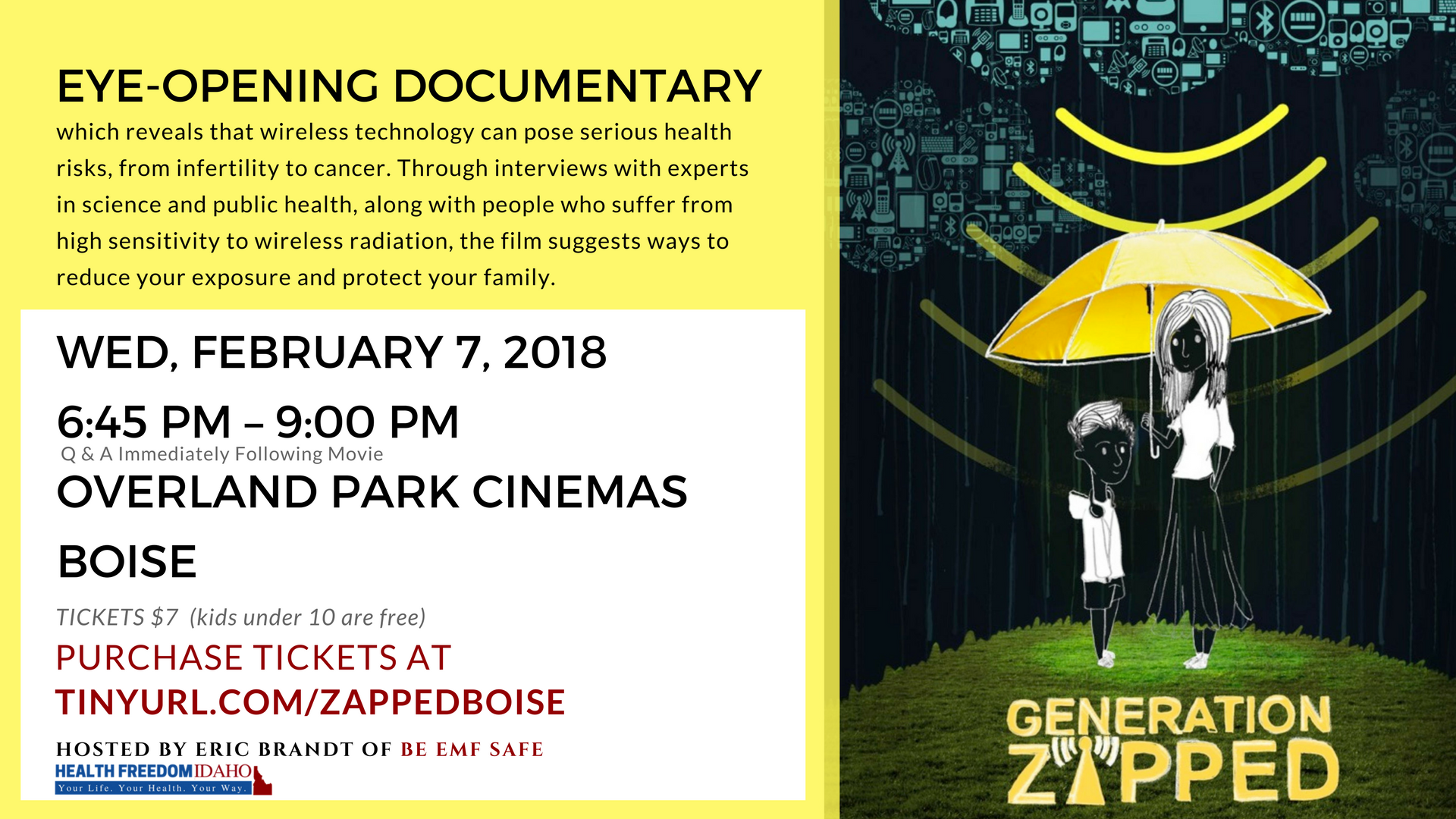
    HEALTH FREEDOM IDAHO is hosting a screening of Zapped Generation and eye-opening documentary that explores the health problems and ways to protect your family. BUY TICKETS TODAY!

    The NIH published the preliminary findings from its first-ever large study on cell phone radiation and cancer on Friday, finding an increased risk at least one kind of cancer in rats

    Over the course of the last two years, researchers at the National Toxicology Program (NTP) of the National Institutes of Health (NIH) have been exposing rats and mice to varying levels of cell phone radio frequency radiation.

    In 2016 – early days in the research timeline – the NIH scientists released preliminary data warning that it seemed there was a very possible link between cell phone radiation and cancer.

    That early release prompted a spate of related research, which, in turn, prompted the state of California and former NIH toxicologists, among others, to issue warnings in the last year.

    Smartphones and other wireless devices put out small amounts of low frequency microwave radiation when they connect networks and transmit information.

    This energy is not nearly as strong as ultraviolet radiation or X-ray energy, but the new studies add to the mounting evidence that even microwave radiation, in high doses, can pose some health risks.

    In their multi-million dollar study, the NTP researchers exposed rats and mice to high levels of radiation over the course of 18 hours each day, alternating 10-minute exposures with 10-minute periods without exposures.

    Radiation surges when cell phones are trying to connect to faint network signals or transmit large amounts of information’Our ultimate findings are about the same as we put out in 2016,’ says study co-author Dr John Bucher. What they found, both early on and at the end of the study, was that there were ‘statistically significant’ differences in the incidence of heart schwannoma tumors in rats.

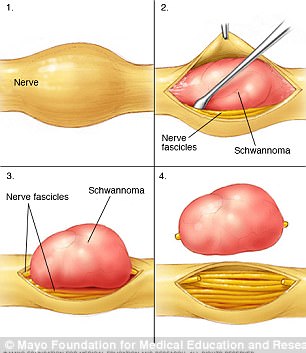
    chwannomas are tumors that begin to grow around nerves, inside their protective sheaths

    The incidences of other cancers were not higher, statistically speaking, than the researchers would have expected to see in rats as they aged in general. Schwannomas develop from peripheral nervous cells, called Schwann cells. They develop inside the sheath that covers nerves, wrapping and interfering with nerves themselves.

    In humans, these tumors are usually benign. These noncancerous schwannomas are most common in the vestibular nerve that connects the brain and the ear.

    Malignant schwannomas can start anywhere, but seem to be most common in the leg, arm or lower back, sometimes causing a bump, pain, muscle weakness or tingling.

    Though they are not common in human hearts, cardiac tissue is a good target for cell phone radiation, Dr Bucher says.

    The new research linked high levels of cell phone radiation exposure to schwannomas in the hearts of male rats, a rare condition in humans

    Microwave radiation works by heating water. Muscle tissue – like the heart – is 75 percent water, while fat, for example, is only about 10 percent water.

    That means that muscular tissues are especially affected by cell phone radiation, which my explain why the nerve tumors were most likely to form in a highly muscular organ.

    Counter-intuitively, bigger animals are more sensitive to radiation.

    So, the higher rate of tumors in males ‘was probably due to the fact that male rats simply absorb more radiation than females as a function of the size of the animal,’ Dr Bucher explained.

    Similarly, cancer risks for mice were negligible, and female rats that were pregnant – and therefore larger – were also more sensitive to radiation.

    Though Dr Bucher says the levels of microwave radiation the animals were exposed to were much higher than we encounter from our cell phones, humans are, of course, considerably larger than rats.

    It is also worth note that radiation exposures in the study would still comply with federal regulations on heat microwave heat generated by cell phones, and still there were increased risks of at least one cancer for rats.

    Dr Joel Moskowitz, director of the Center for Family and Community Health at the University of California, Berkeley said that ‘the federal radio frequency radiation limits should be re-assessed and strengthened in light of these findings.’

    The NTP findings have not been peer-reviewed yet, but Dr Bucher said that they are ‘important because they give us an area of concern, and we now have a starting place where we might know where to look’ for potential cancer risks from cell phones.

  • Idaho Legislature 2018 Email Contact List

    Idaho Legislature 2018 Email Contact List

    Elected officials view their constituents as “resources” and want to hear from them. They need input from their constituents to gauge positions on a piece of legislation and determine how it will impact their district. It also assists in how a legislator will vote on an issue. Here is the 2018 email lists for the Senators and Representatives in Idaho.


    Tips for effectively writing your state Senators and Representatives

    • Use your own words.
    • If possible, give an example of ways the relevant legislation will impact you personally. Make your position clear and state what you would like your legislator to do. Be brief and to the point.
    • Identify a bill by number and title.
    • Form letters or postcards are not as effective as an original letter.
    • Be courteous.
    • Even if you disagree, never be angry, threatening or rude.
    • Ask the legislator to reply and explain his or her position on the issue.
    • After you send your letter Keep track of how your legislator votes.
    • Follow up with a thank you note or a letter expressing disappointment depending on how he or she votes.

    Remember to contact your legislator in support of their actions when appropriate. Often, legislators only hear from individuals and organizations opposed to legislation. It is refreshing for them to receive positive messages from the constituents they are working to represent.

    CALL TO ACTION! Email all Legislators.

    Often times, a call-to-action will be requested from Health Freedom Idaho to email ALL Senators or ALL Representatives as they prepare for their final vote on a bill. We have discovered that its not possible to send one single email to everyone due to the spam filters. You can still send an email to each Senator/Representative it will require that you

    1. Create several identical emails.

    2. Copy a group list for each individual email.

    3. Send the emails separately to each group.

    YOUR SENATORS FOR 2018
    Senate Group 1

    jagenbroad@senate.idaho.gov, kanthon@senate.idaho.gov, sbair@senate.idaho.gov, cbayer@senate.idaho.gov, bbrackett@senate.idaho.gov, cbucknerwebb@senate.idaho.gov, gburgoyne@senate.idaho.gov, ccrabtree@senate.idaho.gov, ldenhartog@senate.idaho.gov, dforeman@senate.idaho.gov, jguthrie@senate.idaho.gov,

    Senate Group 2

    mhagedorn@senate.idaho.gov, mharris@senate.idaho.gov, lheider@senate.idaho.gov, bhill@senate.idaho.gov, djohnson@senate.idaho.gov, mjordan@senate.idaho.gov, skeough@senate.idaho.gov, tlakey@senate.idaho.gov, alee@senate.idaho.gov, palodge@senate.idaho.gov, fmartin@senate.idaho.gov, dmortimer@senate.idaho.gov

    Senate Group 3

    bnonini@senate.idaho.gov, mnye@senate.idaho.gov, jpatrick@senate.idaho.gov, tpotts@senate.idaho.gov, jrice@senate.idaho.gov, jsiddoway@senate.idaho.gov, msouza@senate.idaho.gov, mstennett@senate.idaho.gov, sthayn@senate.idaho.gov, sjvick@senate.idaho.gov, jwardengelking@senate.idaho.gov, cwinder@senate.idaho.gov

    YOUR REPRESENTATIVES FOR 2018
    Email each group of Representatives separately to avoid the spam filters.

    REPRESENTATIVES GROUP 1

    pamador@house.idaho.gov , nanderson@house.idaho.gov, randerst@house.idaho.gov , armstrong@house.idaho.gov, vbar@house.idaho.gov , sbedke@house.idaho.gov, mbell@house.idaho.gov, mblanksma@house.idaho.gov, jboyle@house.idaho.gov, vburtenshaw@house.idaho.gov,

    REPRESENTATIVES GROUP 2

    gchaney@house.idaho.gov , dcheatham@house.idaho.gov, schew@house.idaho.gov , clow@house.idaho.gov, gcollins@house.idaho.gov , bcrane@house.idaho.gov , tdayley@house.idaho.gov , gdemordaunt@house.idaho.gov, sdixon@house.idaho.gov, behardt@house.idaho.gov ,

    REPRESENTATIVES GROUP 3

    merpelding@house.idaho.gov, jgannon@house.idaho.gov , tgestrin@house.idaho.gov , mgibbs@house.idaho.gov , pgiddings@house.idaho.gov , khanks@house.idaho.gov , sharris@house.idaho.gov , shartgen@house.idaho.gov , jholtzclaw@house.idaho.gov , WendyHorman@house.idaho.gov ,

    REPRESENTATIVES GROUP 4

    pjordan@house.idaho.gov, ckauffman@house.idaho.gov , rkerby@house.idaho.gov , pking@house.idaho.gov , mkingsley@house.idaho.gov, hkloc@house.idaho.gov , tloertscher@house.idaho.gov, lluker@house.idaho.gov, lmalek@house.idaho.gov, dmanwaring@house.idaho.gov,

    REPRESENTATIVES GROUP 5

    jmccrostie@house.idaho.gov, pmcdonald@house.idaho.gov, rmendive@house.idaho.gov , smiller@house.idaho.gov jmonks@house.idaho.gov, dmoon@house.idaho.gov, mmoyle@house.idaho.gov, nater@house.idaho.gov , kpacker@house.idaho.gov , jpalmer@house.idaho.gov,

    REPRESENTATIVES GROUP 6

    cperry@house.idaho.gov , draybould@house.idaho.gov, eredman@house.idaho.gov , irubel@house.idaho.gov , hscott@house.idaho.gov , pshepherd@house.idaho.gov , esmith@house.idaho.gov , tsevenson@house.idaho.gov , ssyme@house.idaho.gov , jthompson@house.idaho.gov ,

    REPRESENTATIVES GROUP 7

    stoone@house.idaho.gov, cntroy@house.idaho.gov , jvanderwoude@house.idaho.gov , jvanorden@house.idaho.gov , jwagoner@house.idaho.gov , mwintrow@house.idaho.gov , fwood@house.idaho.gov , ryoungblood@house.idaho.gov , czito@house.idaho.gov , bzollinger@house.idaho.gov

    Did you hear back from a Senator or Representative. SHARE with Health Freedom Idaho. You can either forward the email to info@healthfreedomidaho.com or comment on the Call To Action page their response on a specific bill.

    Remember, this is your opportunity to actively participate in the statutes created that will effect your family’s health freedom.

  • Idaho Legislature 2018 Email Contact List

    Idaho Legislature 2018 Email Contact List

    Elected officials view their constituents as “resources” and want to hear from them. They need input from their constituents to gauge positions on a piece of legislation and determine how it will impact their district. It also assists in how a legislator will vote on an issue. Here is the 2018 email lists for the Senators and Representatives in Idaho.


    Tips for effectively writing your state Senators and Representatives

    • Use your own words.
    • If possible, give an example of ways the relevant legislation will impact you personally. Make your position clear and state what you would like your legislator to do. Be brief and to the point.
    • Identify a bill by number and title.
    • Form letters or postcards are not as effective as an original letter.
    • Be courteous.
    • Even if you disagree, never be angry, threatening or rude.
    • Ask the legislator to reply and explain his or her position on the issue.
    • After you send your letter Keep track of how your legislator votes.
    • Follow up with a thank you note or a letter expressing disappointment depending on how he or she votes.

    Remember to contact your legislator in support of their actions when appropriate. Often, legislators only hear from individuals and organizations opposed to legislation. It is refreshing for them to receive positive messages from the constituents they are working to represent.

    CALL TO ACTION! Email all Legislators.

    Often times, a call-to-action will be requested from Health Freedom Idaho to email ALL Senators or ALL Representatives as they prepare for their final vote on a bill. We have discovered that its not possible to send one single email to everyone due to the spam filters. You can still send an email to each Senator/Representative it will require that you

    1. Create several identical emails.

    2. Copy a group list for each individual email.

    3. Send the emails separately to each group.

    YOUR SENATORS FOR 2018
    Senate Group 1

    jagenbroad@senate.idaho.gov, kanthon@senate.idaho.gov, sbair@senate.idaho.gov, cbayer@senate.idaho.gov, bbrackett@senate.idaho.gov, cbucknerwebb@senate.idaho.gov, gburgoyne@senate.idaho.gov, ccrabtree@senate.idaho.gov, ldenhartog@senate.idaho.gov, dforeman@senate.idaho.gov, jguthrie@senate.idaho.gov,

    Senate Group 2

    mhagedorn@senate.idaho.gov, mharris@senate.idaho.gov, lheider@senate.idaho.gov, bhill@senate.idaho.gov, djohnson@senate.idaho.gov, mjordan@senate.idaho.gov, skeough@senate.idaho.gov, tlakey@senate.idaho.gov, alee@senate.idaho.gov, palodge@senate.idaho.gov, fmartin@senate.idaho.gov, dmortimer@senate.idaho.gov

    Senate Group 3

    bnonini@senate.idaho.gov, mnye@senate.idaho.gov, jpatrick@senate.idaho.gov, tpotts@senate.idaho.gov, jrice@senate.idaho.gov, jsiddoway@senate.idaho.gov, msouza@senate.idaho.gov, mstennett@senate.idaho.gov, sthayn@senate.idaho.gov, sjvick@senate.idaho.gov, jwardengelking@senate.idaho.gov, cwinder@senate.idaho.gov

    YOUR REPRESENTATIVES FOR 2018
    Email each group of Representatives separately to avoid the spam filters.

    REPRESENTATIVES GROUP 1

    pamador@house.idaho.gov , nanderson@house.idaho.gov, randerst@house.idaho.gov , armstrong@house.idaho.gov, vbar@house.idaho.gov , sbedke@house.idaho.gov, mbell@house.idaho.gov, mblanksma@house.idaho.gov, jboyle@house.idaho.gov, vburtenshaw@house.idaho.gov,

    REPRESENTATIVES GROUP 2

    gchaney@house.idaho.gov , dcheatham@house.idaho.gov, schew@house.idaho.gov , clow@house.idaho.gov, gcollins@house.idaho.gov , bcrane@house.idaho.gov , tdayley@house.idaho.gov , gdemordaunt@house.idaho.gov, sdixon@house.idaho.gov, behardt@house.idaho.gov ,

    REPRESENTATIVES GROUP 3

    merpelding@house.idaho.gov, jgannon@house.idaho.gov , tgestrin@house.idaho.gov , mgibbs@house.idaho.gov , pgiddings@house.idaho.gov , khanks@house.idaho.gov , sharris@house.idaho.gov , shartgen@house.idaho.gov , jholtzclaw@house.idaho.gov , WendyHorman@house.idaho.gov ,

    REPRESENTATIVES GROUP 4

    pjordan@house.idaho.gov, ckauffman@house.idaho.gov , rkerby@house.idaho.gov , pking@house.idaho.gov , mkingsley@house.idaho.gov, hkloc@house.idaho.gov , tloertscher@house.idaho.gov, lluker@house.idaho.gov, lmalek@house.idaho.gov, dmanwaring@house.idaho.gov,

    REPRESENTATIVES GROUP 5

    jmccrostie@house.idaho.gov, pmcdonald@house.idaho.gov, rmendive@house.idaho.gov , smiller@house.idaho.gov jmonks@house.idaho.gov, dmoon@house.idaho.gov, mmoyle@house.idaho.gov, nater@house.idaho.gov , kpacker@house.idaho.gov , jpalmer@house.idaho.gov,

    REPRESENTATIVES GROUP 6

    cperry@house.idaho.gov , draybould@house.idaho.gov, eredman@house.idaho.gov , irubel@house.idaho.gov , hscott@house.idaho.gov , pshepherd@house.idaho.gov , esmith@house.idaho.gov , tsevenson@house.idaho.gov , ssyme@house.idaho.gov , jthompson@house.idaho.gov ,

    REPRESENTATIVES GROUP 7

    stoone@house.idaho.gov, cntroy@house.idaho.gov , jvanderwoude@house.idaho.gov , jvanorden@house.idaho.gov , jwagoner@house.idaho.gov , mwintrow@house.idaho.gov , fwood@house.idaho.gov , ryoungblood@house.idaho.gov , czito@house.idaho.gov , bzollinger@house.idaho.gov

    Did you hear back from a Senator or Representative. SHARE with Health Freedom Idaho. You can either forward the email to info@healthfreedomidaho.com or comment on the Call To Action page their response on a specific bill.

    Remember, this is your opportunity to actively participate in the statutes created that will effect your family’s health freedom.

  • Elderberry syrup is better than a shot to avoid the flu

    Elderberry syrup is better than a shot to avoid the flu

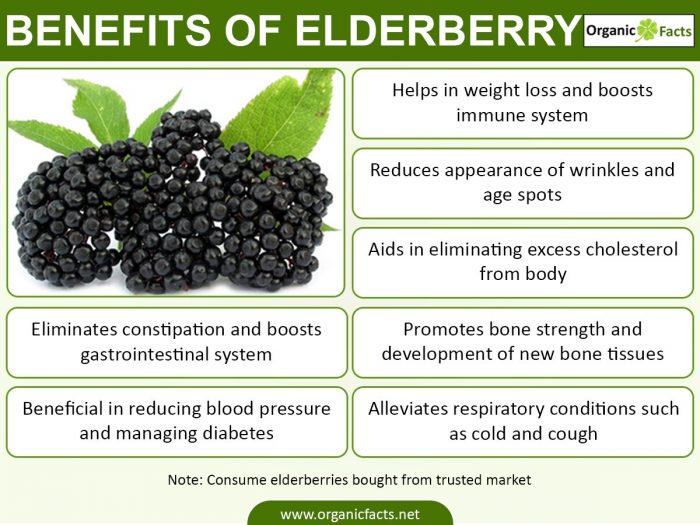
    Logic and evidence-based proof that elderberry syrup is the better choice to boost immunity against the flu. That’s right! Elderberries have been proven to both boost the immune system and shorten the duration of cold and flu symptoms significantly.

    What Are Elderberries?

    Black elderberry extract (Sambucus species) has been reported to have been used for years by native Americans, mostly against rheumatism and fever. Sambucol is a natural remedy with antiviral properties, especially against the human influenza virus. Elderberry is used for its antioxidant activity, to lower cholesterol, to improve vision, to boost the immune system, to improve heart health and for coughs, colds, flu, bacterial and viral infections and tonsillitis. Bioflavonoids and other proteins in the juice destroy the ability of cold and flu viruses to infect a cell.

    Elderberry Evidence

    Believe it or not (Believe it, buddy!) elderberries have been studied in REAL labs! In fact, they have been studied in double-blind, placebo-controlled, randomized studies. (That’s more than we can say for some vaccine studies!). Elderberries have been proven to both boost the immune system and shorten the duration of cold and flu symptoms significantly.

    At the Bundesforschungsanstalt Research Center for Food in Karlsruhe, Germany, scientists conducting studies on Elderberry showed that elderberry anthocyanins enhance immune function by boosting the production of cytokines. These unique proteins act as messengers in the immune system to help regulate immune response, thus helping to defend the body against disease.

    Study #1

    A double-blind, placebo-controlled, randomized study.

    Results:

    1. Sambucol was shown to be effective in vitro against 10 strains of influenza virus
    2. Sambucol reduced the duration of flu symptoms to 3-4 days
    3. Convalescent phase serum showed a higher antibody level to influenza virus in the Sambucol group, than in the control group.
    4. Sambucol is beneficial to immune system activation and in the inflammatory process in healthy individuals or in patients with various diseases.
    5. The results of this study show that all Sambucol elderberry formulations have a strong stimulatory effect on inflammatory cytokine production by human normal monocytes.
    6. The study was not funded in any way by the company which produces and markets the product of Sambucol in Israel.The study can be found here

    Study #2

    Here is another randomized, double-blind, placebo-controlled study conducted in Norway. Patients received 15 ml of elderberry or placebo syrup four times a day for 5 days, and recorded their symptoms using a visual analogue scale.

    Results:

    1. Symptoms were relieved on average 4 days earlier and use of rescue medication was significantly less in those receiving
      elderberry extract compared with placebo.
    2. Elderberry extract seems to offer an efficient, safe and cost-effective treatment
      for influenza.
    3. None of the patients reported any adverse reactions related to the medication. (The same can NOT be said for the flu shot!)
    4. A complete cure was achieved within 2 – 3 days in nearly 90% of the elderberry-treated group compared with at least 6 days in the placebo group.
    5. The results of our study show that elderberry syrup is also effective against influenza A virus infections.
    6. In view of its in vitro and in vivo efficacy on influenza A and B viruses, elderberry extract offers an efficient, safe and cost-effective supplement to the present armamentarium of medications for the prophylaxis and treatment
      of influenza.This study can be viewed here

    DIY Elderberry Syrup

    Hippocrates Is Said To Have Called This Plant . . .
    His “medicine chest,” and for thousands of years it’s been revered in folk medicine for its healing properties. (source) Now studies are starting to confirm what tradition has long held: elderberries are a delicious and effective way to support immune function during cold and flu season.

    Unlike fire cider, which supports the immune system through an infusion of pungent and spicy herbs, this elderberry syrup recipe uses a sweet and simple decoction of berries and honey. Learn HOW TO from easy video tutorial from mommypotomus

    Study # 3

    Here is a placebo-controlled, double blind study was carried out on a group of individuals living in an agricultural community (Kibbutz) during an outbreak of influenza B in Panama in 1993.

    Results

    1. A significant improvement of the symptoms, including fever, was seen in 93.3% of the cases in the SAM-treated group within 2 days, whereas in the control group 91.7% of the patients showed an improvement within 6 days.
    2. A complete cure was achieved within 2 to 3 days in nearly 90% of the SAM-treated group and within at least 6 days in the placebo group.
    3. Considering the efficacy of the extract in vitro on all strains of influenza virus tested, the clinical results, its low cost, and absence of side-effects, this preparation could offer a possibility for safe treatment for influenza A and B.
    4. Sambucol Elderberry Extract and its formulations activate and boost the healthy immune system by increasing inflammatory cytokine production.
    5. The most striking increase was noted in TNF-alpha production (44.9 fold).
    6. Sambucol was shown to be effective in vitro against 10 strains of influenza virus.This study can be viewed here

    Conclusion: The Flu Vaccine Just Doesn’t Measure Up
    10% ‘effective’ flu shot in 2018 and the CDC and Health Department campaigns still encourage people to load up on the toxic shot.

    The evidence speaks for itself.

    • The elderberry has no known harmful side effects, but the flu shot does
    • The elderberry syrup works with your natural immune response system, the flu shot does not
    • Elderberries have been proven to be effective against 10 strains of the flu
    • Elderberries have been proven to shorten the duration of colds and flu
    • Elderberry syrup is safe for pregnant women and children over 1 year of age (due to the honey content) (Check with your doc before starting/stopping any health regimen)
    • The flu shot is even less effective in senior citizens and children under 2 years of age (Those who need it the most! Read more here)
    • The flu shot has never been tested in pregnant women
    • There have been reported deaths and serious injuries proceeding the flu shot (Seizures, narcolepsy, convulsions, encephalomyelitis, facial palsy, facial paresis, Guillain-Barré syndrome, hypoesthesia, myelitis, neuritis, neuropathy, paresthesia and syncope just to name a few) Read more here.
    • The flu mist is a live virus and can spread the flu to others up to 21 days following the application (Isn’t that what we’re trying to avoid!?)
  • Avoiding Aluminum tainted products

    Avoiding Aluminum tainted products

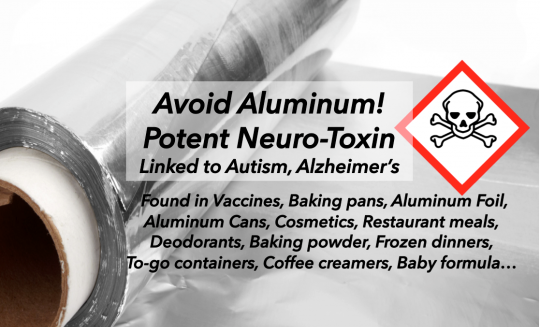
    Aluminum is the most widely distributed metal on the planet and it’s used in the production of many every-day products. Cookware is made from aluminum, soda cans are aluminum, and aluminum foil is found in most kitchens. Aluminum is also in antacids, aspirin, vaccines, and even flour. This overwhelming infestation of aluminum means that your risk of exposure is through the roof, which is also made of aluminum. This is a great resource guide that addresses Aluminum-Tainted Everyday Products.

    Unlike vitamins, minerals, and trace elements, the body does not need aluminum. And aluminum is no innocent or benign participant. Aluminum accumulates in the kidneys, brain, lungs, liver, and thyroid where it competes with calcium for absorption and can affect skeletal mineralization. In infants, this can slow growth. Animal models have linked aluminum exposure to mental impairments. [1]

    Many of the symptoms of aluminum toxicity mimic those of Alzheimer’s disease and osteoporosis. Colic, rickets, gastrointestinal problems, interference with the metabolism of calcium, extreme nervousness, anemia, headaches, decreased liver and kidney function, memory loss, speech problems, softening of the bones, and aching muscles can all be caused by aluminum toxicity. To minimize the risk of degenerative brain, bone and other diseases, reductions in oral and topical exposure to aluminum and aluminum compounds are highly recommended. Download your free copy of Aluminum Tainted Everyday Products from the CHILDREN’S MEDICAL SAFETY RESEARCH INSTITUTE

    Read your labels:
    Key to Aluminum Compounds: FD&C — Federal Drug Administration designation for dyes approved for food (F), drugs (D) and/or cosmetics (C).

    Lake — pigments or dyes that are precipitated with metal salts such as aluminum, calcium, barium, or others.

    Alumina (aka aluminum oxide) — white granular chemical compound of aluminum (derived from refined bauxite ore) and oxygen.

    Aluminum Hydroxide — antacid used to treat heartburn and indigestion.

    Aluminum Sucrose Octasulfate Magnesium Aluminum Silicate, Aluminum Tristearate — thickening agent to prevent liquid makeup from separating or becoming runny.

    Aluminum Stearate — a colorant and emulsifier in cosmetics.

    Aluminum Starch Octenylsuccinate, Aluminum Dimyristate, Sodium AluminoSilicate — anti-caking agents.

    Calcium Aluminum Borosilicate — a glass-type material used as a bulking agent.

    Aluminum Chlorohydrate, Aluminum Zirconium Octachlorohydrex, Aluminum Sesquichlorohydrate — antiperspirant and astringent agents.

    Other antiperspirant agents: • Aluminum Chloride — alters sweat-producing cells • Aluminum Zirconium Tetrachlorohydrex — obstructs pores in the skin to prevent sweat from leaving body • Aluminum Zirconium Tetrachlorohydrex Glycerine Complex — obstructs pores and absorbs moisture • Sodium Silver Aluminum Silicate — inhibits growth of skin bacteria produced by sweat • Potassium Alum – agent used in processing cheese, pickling and as an oral health astringent • Sodium Aluminum Phosphate – stabilizer agent in processed food

    Learn more about the toxicity of aluminum and health concerns

    Fact: Aluminum leads to neurodegenerative or autoimmune disease
    Aluminum in Vaccines: History and Toxicity
    Aluminum eliminating the bad and ugly
    New HPV vaccine with DOUBLE the aluminum

  • Problems with peanuts, in a nutshell

    Problems with peanuts, in a nutshell

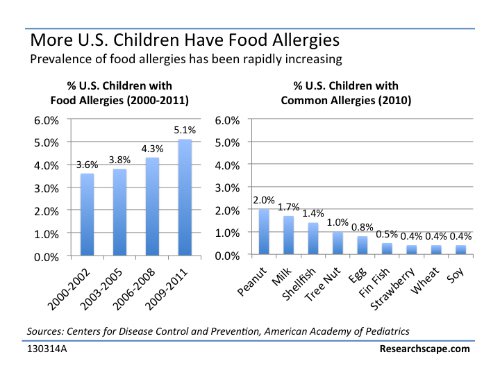
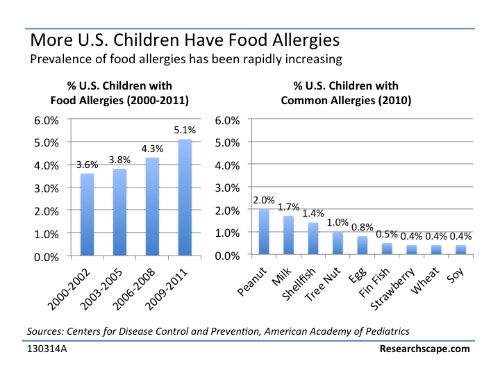
    The peanuts contained a toxin-producing fungus called Aspergillus flavus, from which the name, aflatoxin, comes. New research suggests that peanut allergy in children has increased 21 percent since 2010, and that nearly 2.5 percent of US children may have an allergy to peanuts.1

    Aflatoxins are found not only in peanuts, but also in many other foods, including corn, milk, eggs, meat, nuts, almonds, figs and spices. In fact, corn may be the crop with the greatest risk worldwide, because it’s grown year-round in climates ideal for fungal growth; it’s also a staple food in many countries. Cottonseed is another crop that poses a high risk of fungal contamination. Aflatoxins are also sometimes detected in milk, cheese, eggs and meat when animals ingest contaminated feed.

    A few years ago, Consumers Union looked into the question of aflatoxins 2 in peanut butter and found that the amounts detectable varied from brand to brand. The lowest amounts were found in the big supermarket brands such as Peter Pan, Jif and Skippy. The highest levels were found in peanut butter ground fresh in health food stores.

    Health Effects of Peanut Aflatoxins

    Aflatoxins are labeled as a human carcinogens that have been found to cause liver cancer in animals and humans, according to the Environmental Health Trust website. Severe aflatoxin poisoning has been reported in many poor countries around the world. Acute aflatoxicosis, the syndrome resulting from exposure to aflatoxins, is characterized by vomiting, abdominal pain, pulmonary edema, convulsions, coma and death, notes the Cornell University website.

    The U.S. government tests crops for aflatoxin and doesn’t permit them to be used for human or animal food if they contain levels over 20 parts per billion. While we don’t know much about the dangers of long-term exposure to low levels of aflatoxin, my colleague Kathleen Johnson, a dietician here at the Arizona Center for Integrative Medicine, points out that there hasn’t been an outbreak of liver cancer among U.S. kids, who as you know, consume enormous amounts of peanut butter.

    Aflatoxins are not considered a problem in the United States, according to the Berkeley Wellness website. The U.S. Food and Drug Administration allows low levels of aflatoxins in foods because it considers them as unavoidable contaminants. In many developing countries, aflatoxins pose a more serious risk, but in the United States, peanuts, peanut butter and other foods that may contain aflatoxins undergo rigorous testing. FDA guidelines allow no more than 20 ppb, or parts per billion, of aflatoxin in human foods. Still, there is concern about the possible long-term effects of low-level aflatoxin contamination. You can limit your exposure by purchasing peanuts and peanut butter from large, brand name manufacturers and by discarding any moldy, shriveled or discolored nuts, notes MedlinePlus./

    Causes of exponentially increased allergens

    VACCINES: Could Peanut oil in vaccines triggers autoimmune response to peanuts?

    The real shame, though, is the history of peanut allergy itself. In her new book The Hi?story of the Peanut Allergy Epidemic, Heather Fraser explains how peanut allergy has its roots in mass vaccinations foisted on the general public by the very same industry that is now trying to profit from treating it.

    Vaccines have long been known to trigger anaphylaxis — this is the basic premise, after all, behind how they work — bearing evidence that they are, in fact, the primary cause of many food allergies. In the case of peanut oil, refined versions that may still contain peanut proteins are still being injected into children, in many cases triggering an allergic reaction to the food itself.

    “Peanut is an excellent adjuvant as it is potentially highly allergenic and therefore very good at priming the immune system — although its use must also risk not just priming the immune system but sensitizing it,” explains Foods Matter.

    “Although it was little publicized, the medical profession had always been aware that vaccination by injection carried the risk of inducing allergy but, as in the early days of cow pus vaccination and serum sickness, the risk was felt to be outweighed by the benefits.”

    GMOS: Could the presence of GMO increase food allergens?

    The huge jump in childhood food allergies in the US is in the news often[1], but most reports fail to consider a link to a recent radical change in America’s diet. Beginning in 1996, bacteria, virus and other genes have been artificially inserted to the DNA of soy, corn, cottonseed and canola plants. These unlabeled genetically modified (GM) foods carry a risk of triggering life-threatening allergic reactions, and evidence collected over the past decade now suggests that they are contributing to higher allergy rates.

    Food safety tests are inadequate to protect public health

    Scientists have long known that GM crops might cause allergies. But there are no tests to prove in advance that a GM crop is safe.[2] That’s because people aren’t usually allergic to a food until they have eaten it several times. “The only definitive test for allergies,” according to former FDA microbiologist Louis Pribyl, “is human consumption by affected peoples, which can have ethical considerations.”[3] And it is the ethical considerations of feeding unlabeled, high-risk GM crops to unknowing consumers that has many people up in arms.

    HERBICIDES: Could increased herbicides on GM crops may cause reactions?

    By 2004, farmers used an estimated 86% more herbicide on GM soy fields compared to non-GM.[9] The higher levels of herbicide residue in GM soy might cause health problems. In fact, many of the symptoms identified in the UK soy allergy study are among those related to glyphosate exposure. [The allergy study identified irritable bowel syndrome, digestion problems, chronic fatigue, headaches, lethargy, and skin complaints, including acne and eczema, all related to soy consumption. Symptoms of glyphosate exposure include nausea, headaches, lethargy, skin rashes, and burning or itchy skin. It is also possible that glyphosate’s breakdown product AMPA, which accumulates in GM soybeans after each spray, might contribute to allergies.]
    read more about GMOs and herbicides and their possible impact on our children’s allergens at http://www.responsibletechnology.org

    RESOURCES;

    1. www.sciencedaily.com/releases/2017/10/171027085541.htm

    2. drweil.com

    3. You can learn more about peanut allergy and vaccines here:FoodsMatter.com.
    4. GMOs and allergens http://www.responsibletechnology.org

  • Problems with peanuts, in a nutshell

    Problems with peanuts, in a nutshell

    The peanuts contained a toxin-producing fungus called Aspergillus flavus, from which the name, aflatoxin, comes. New research suggests that peanut allergy in children has increased 21 percent since 2010, and that nearly 2.5 percent of US children may have an allergy to peanuts.1

    Aflatoxins are found not only in peanuts, but also in many other foods, including corn, milk, eggs, meat, nuts, almonds, figs and spices. In fact, corn may be the crop with the greatest risk worldwide, because it’s grown year-round in climates ideal for fungal growth; it’s also a staple food in many countries. Cottonseed is another crop that poses a high risk of fungal contamination. Aflatoxins are also sometimes detected in milk, cheese, eggs and meat when animals ingest contaminated feed.

    A few years ago, Consumers Union looked into the question of aflatoxins 2 in peanut butter and found that the amounts detectable varied from brand to brand. The lowest amounts were found in the big supermarket brands such as Peter Pan, Jif and Skippy. The highest levels were found in peanut butter ground fresh in health food stores.

    Health Effects of Peanut Aflatoxins

    Aflatoxins are labeled as a human carcinogens that have been found to cause liver cancer in animals and humans, according to the Environmental Health Trust website. Severe aflatoxin poisoning has been reported in many poor countries around the world. Acute aflatoxicosis, the syndrome resulting from exposure to aflatoxins, is characterized by vomiting, abdominal pain, pulmonary edema, convulsions, coma and death, notes the Cornell University website.

    The U.S. government tests crops for aflatoxin and doesn’t permit them to be used for human or animal food if they contain levels over 20 parts per billion. While we don’t know much about the dangers of long-term exposure to low levels of aflatoxin, my colleague Kathleen Johnson, a dietician here at the Arizona Center for Integrative Medicine, points out that there hasn’t been an outbreak of liver cancer among U.S. kids, who as you know, consume enormous amounts of peanut butter.

    Aflatoxins are not considered a problem in the United States, according to the Berkeley Wellness website. The U.S. Food and Drug Administration allows low levels of aflatoxins in foods because it considers them as unavoidable contaminants. In many developing countries, aflatoxins pose a more serious risk, but in the United States, peanuts, peanut butter and other foods that may contain aflatoxins undergo rigorous testing. FDA guidelines allow no more than 20 ppb, or parts per billion, of aflatoxin in human foods. Still, there is concern about the possible long-term effects of low-level aflatoxin contamination. You can limit your exposure by purchasing peanuts and peanut butter from large, brand name manufacturers and by discarding any moldy, shriveled or discolored nuts, notes MedlinePlus./

    Causes of exponentially increased allergens

    VACCINES: Could Peanut oil in vaccines triggers autoimmune response to peanuts?

    The real shame, though, is the history of peanut allergy itself. In her new book The Hi?story of the Peanut Allergy Epidemic, Heather Fraser explains how peanut allergy has its roots in mass vaccinations foisted on the general public by the very same industry that is now trying to profit from treating it.

    Vaccines have long been known to trigger anaphylaxis — this is the basic premise, after all, behind how they work — bearing evidence that they are, in fact, the primary cause of many food allergies. In the case of peanut oil, refined versions that may still contain peanut proteins are still being injected into children, in many cases triggering an allergic reaction to the food itself.

    “Peanut is an excellent adjuvant as it is potentially highly allergenic and therefore very good at priming the immune system — although its use must also risk not just priming the immune system but sensitizing it,” explains Foods Matter.

    “Although it was little publicized, the medical profession had always been aware that vaccination by injection carried the risk of inducing allergy but, as in the early days of cow pus vaccination and serum sickness, the risk was felt to be outweighed by the benefits.”

    GMOS: Could the presence of GMO increase food allergens?

    The huge jump in childhood food allergies in the US is in the news often[1], but most reports fail to consider a link to a recent radical change in America’s diet. Beginning in 1996, bacteria, virus and other genes have been artificially inserted to the DNA of soy, corn, cottonseed and canola plants. These unlabeled genetically modified (GM) foods carry a risk of triggering life-threatening allergic reactions, and evidence collected over the past decade now suggests that they are contributing to higher allergy rates.

    Food safety tests are inadequate to protect public health

    Scientists have long known that GM crops might cause allergies. But there are no tests to prove in advance that a GM crop is safe.[2] That’s because people aren’t usually allergic to a food until they have eaten it several times. “The only definitive test for allergies,” according to former FDA microbiologist Louis Pribyl, “is human consumption by affected peoples, which can have ethical considerations.”[3] And it is the ethical considerations of feeding unlabeled, high-risk GM crops to unknowing consumers that has many people up in arms.

    HERBICIDES: Could increased herbicides on GM crops may cause reactions?

    By 2004, farmers used an estimated 86% more herbicide on GM soy fields compared to non-GM.[9] The higher levels of herbicide residue in GM soy might cause health problems. In fact, many of the symptoms identified in the UK soy allergy study are among those related to glyphosate exposure. [The allergy study identified irritable bowel syndrome, digestion problems, chronic fatigue, headaches, lethargy, and skin complaints, including acne and eczema, all related to soy consumption. Symptoms of glyphosate exposure include nausea, headaches, lethargy, skin rashes, and burning or itchy skin. It is also possible that glyphosate’s breakdown product AMPA, which accumulates in GM soybeans after each spray, might contribute to allergies.]
    read more about GMOs and herbicides and their possible impact on our children’s allergens at http://www.responsibletechnology.org

    RESOURCES;

    1. www.sciencedaily.com/releases/2017/10/171027085541.htm

    2. drweil.com

    3. You can learn more about peanut allergy and vaccines here:FoodsMatter.com.
    4. GMOs and allergens http://www.responsibletechnology.org