Author: Health Freedom Idaho

  • What is Organic Farming

    What is Organic Farming

    The USDA defines organic agriculture as “a production system that is managed to respond to site-specific conditions by integrating cultural, biological, and mechanical practices that foster cycling of resources, promote ecological balance, and conserve biodiversity.”

    More specifically, organic farming entails:

    • Use of cover crops, green manures, animal manures and crop rotations to fertilize the soil, maximize biological activity and maintain long-term soil health.
    • Use of biological control, crop rotations and other techniques to manage weeds, insects and diseases.
    • An emphasis on biodiversity of the agricultural system and the surrounding environment.
    • Using rotational grazing and mixed forage pastures for livestock operations and alternative health care for animal
      wellbeing.
    • Reduction of external and off-farm inputs and elimination of synthetic pesticides and fertilizers and other materials, such as hormones and antibiotics.
    • A focus on renewable resources, soil and water conservation, and management practices that restore, maintain and enhance ecological balance.

    Many organic farmers, including Wende Elliott and Joe Rude of Colo, Iowa, view organic production as a means to work with the environment and maintain the balance of their ecosystem. “Natural systems work hard if you incorporate biodiversity into your operation instead of fighting it,” said Rude, who co-farms 125 acres of pastured poultry, corn, hay and alfalfa.

    Using nature as a model for the agricultural system – recycling nutrients, encouraging natural predators to manage pests, increasing plant densities to block weeds – organic farmers don’t merely substitute non-toxic materials for pesticides and fertilizers, but rather consider the farm as an integrated entity, with all parts interconnected.

    When livestock and poultry are incorporated into organic systems, the potential for diversification and integration is even greater: Livestock feed on grasses and mixed forages, both of which help improve soil structure. At the same time, livestock provide manure to fertilize soil, and can be used to “cull” any non-harvestable crops.

    Elliott and Rude, like many organic farmers, want to raise food free of hormones, antibiotics and pesticides. For many years, organic producers and proponents have claimed that organic farming is gentler on the environment. Research now confirms this:

    The Sustainable Agriculture Farming Systems (SAFS) project at the University of California-Davis, a 12-year research station experiment comparing conventional and organic systems, showed water infiltration rates to be 50 percent higher in the organic system. The project, supported by a grant from USDA’s Sustainable Agriculture Research and Education (SARE) program, also showed that the organic system had one-third the amount of water movement into surface and groundwater as the conventional system. The organic system was more efficient at storing nitrogen and had positive effects on soil quality, including higher biological activity and a doubling of organic matter in 10 years.

    • An organic cropping system consumed three to four times less energy than a conventional system, while also producing six times more biomass per unit of energy consumed in a South Dakota State University comparative trial at the Northeast Research Station near Watertown.
    • A SARE-funded study evaluating pesticide and nutrient loads in subsurface drainage on organic and conventional farms in Illinois found less nitrate, chloride and atrazine in the water draining from the organic fields.
    • More recent research also shows that organic farming systems can be equally productive and economically competitive with conventional systems, and in some cases, more resilient. Consider that:
    • A study comparing long-term established organic and conventional tomato farms in California’s Central Valley found comparable yields.
    • An article published in the Organic Farming Research Foundation Bulletin reviewing data from seven universities and two research station experiments verified that organic corn, soybean and wheat yielded, on average, 95 percent of conventional.
    • Many studies have shown that organic systems perform better than conventional ones under drought conditions.

    What Makes a Successful Organic Farmer?

    The old image of an organic farmer as a small “back-to-the-land” type is long gone. Some organic operations have been so successful that they have been gobbled up by large multinationals such as Kraft and General Mills, which have recognized the powerful market potential for organic goods. Other organic farmers have organized into successful cooperatives. The largest organic cooperative in the country, Organic Valley, has more than 500 organic farmer-members across 13 states and successfully markets organic dairy products, beef, pork and poultry.

    For many farmers, a driving force to convert to organic production is economic: Organic crops can fetch a price premium of anywhere from 25 percent to 200 percent or more over conventionally grown products, according to USDA’s Economic Research Service.

    However, most organic farmers produce crops and livestock organically because they believe their methods are better for the environment. Many seek a safer food supply. “The main motivation for us going organic is out of a certain stewardship ethic toward the soil, the earth and ultimately, for mankind,” said Altfrid Krusenbaum, a Wisconsin farmer who began the transition to organic corn, soybeans, wheat and alfalfa in 1990. Krusenbaum was profiled in the University of Wisconsin’s College of Agriculture and Life Sciences Quarterly.

    In fact, switching to organic farming requires a major philosophical shift. Said Joe Rude, an Iowa poultry and crop farmer, “It’s about trying to get the ecological system harmonious and working with it, rather than overriding it.” Farmers who turn to organic farming solely to capture market premiums often fail because it does not mean simply substituting one type of inputs for another, such as replacing a synthetic pest control with Bacillus thuringiensis or applying organic fertilizers in place of synthetic ones.

    “In organic farming, a mind shift is essential,” agreed Brad Brummond, North Dakota State University extension agent from Walsh County, who specializes in organic production. “You must go from treating problems to treating the causes of the problems and recognize that every decision you make will affect other aspects of your system.”

    When deciding if organic farming might be right for you, consider the list of characteristics shared by successful organic farmers:

    • A commitment to a safer food supply and protection of the environment
    • Patience and good observation skills
    • An understanding of ecological systems
    • Good marketing skills and motivation to spend time seeking out markets
    • A willingness to share stories of successes and failures and to learn from others (information networks are often underdeveloped for organic farmers).
    • Flexibility and eagerness to experiment with new techniques and practices

    Adapted from a North Dakota Extension publication written by Brummond available at: www.ext.nodak.edu/extpubs/plantsci/crops/a1181w.htm


  • CBD Oil. The Bill and Its Unintended Consequences

    CBD Oil. The Bill and Its Unintended Consequences

    Well intended bills can have unintended consequences.

    Rep. Dorothy Moon’s bill HB410 is just that. Rep. Dorothy Moon is a wonderful legislator and a freedom fighter. She has heard the voice of her constituents that are asking for CBD oil to be legalized in our great state. She attempted several version of the bill, none of which the Attorney General would support. Understandably, Rep. Moon wanted to bring a bill that would be successful, but in so doing the proffered legislation has lost the liberty that she intended to provide. You see, the Attorney General has a compelling interest for the state, while legislators should have a compelling interest for the people.

    After days of study I have come to the conclusion that some of the unintended consequences of this bill are the following:

    • The citizen (who must be 18 years of age) is required to go to an MD. The MD will have to indicate that the individual suffers from an illness and may benefit from treatment with cannabidiol. Do you want the decision to use CBD products taken out of your hands and put into the hands of a medical doctor?
    • Once you submit to the authority of the MD, you will then have to submit to the authority of the state by providing your name, address, photo identification, along with any other information the board considers necessary in order to obtain a registration card.
    • What if you want to use CBD oil for your child? Well, the rules are a bit different. You, the parent, will then have to acquire a signed statement from a neurologist indicating that a minor in the parent’s care suffers from an illness and may benefit from treatment of cannabidiol oil. Parents, do you want this decision taken out of your hands and placed into the hands of a neurologist who may or may not have education in CBD oil at all? You will then have to continue the process of applying to the state for your registration card.
    • Keep in mind that the card is only good for ONE YEAR so you will have to repeat this rigmarole YEARLY.
    • A board will have to be created to oversee these registration cards. This costs the taxpayers’ money. This board will maintain a database of records including the name of each registrant and the name of each minor receiving care from the registrant. Do you want you or your child’s personal health information kept and overseen by a state run board?

    The police will then have to start enforcing this new law. I can see it now. The police officer pulls over the soccer mom on her way to taking her kids to school. He discovers her smoothie is made from hemp milk! Gasp! “I’m sorry Ma’am but do you have a registration card for that hemp milk?” Hopefully she didn’t add the hemp hearts from Costco to her smoothie that morning. That’s right! Your hemp products such as shirts, twine, purses, cooking oil, and milk will come under the authority of this law. What a waste of taxpayer money!

    The registration card is really the crux of this issue and is what the Attorney General required in order to support the bill. Now why do you suppose that it is important to the Attorney General that a registration card be required? MORE REGULATION and BUREAUCRACY!

    There are some pretty scary consequences to having the state tracking the method you choose for healing. Most do not understand the marijuana plant nor the properties that provide healing without enough THC to bring the high that most people associate with the plant. Most do not understand that when a product has less than .3% THC that it is considered food according to the federal definition. (See https://hfi2.designbyparrish.com/cbd-oil-from-hemp).

    Do we really want to be begging the state for permission to use the products that we see fit to use? According to my research, it wouldn’t be a stretch to say that refined sugar is more dangerous than hemp products.

    In other states that require a registration card for marijuana we see that the state is denying the citizen’s right to gun ownership.

    Could the government potentially require gun owners to turn in their firearms?

    An Oregon mother had her child taken by CPS and put into foster care for months. The mother was using marijuana recreationally which is allowed in the state of Oregon. The boyfriend had a registry card as both a grower and a patient but the child was still taken into shelter care because he was growing the plants. The mother did eventually win in court and got her daughter back but at what cost both financially and emotionally?

    You see, the medical marijuana card may protect the right to obtain and use a substance but it is being used to target other rights. I think that we should learn from what is happening in that other states and not open the door here.

    There are more possible unintended consequences to consider about this registration card. How will this record affect a truck driver’s CDL, a practitioner’s medical license, the cosmetologist’s license or any other occupational licensing for that matter?

    We should never expect our legislators to hand out laws like candy. They are to uphold their oath of office which is to support the constitution. Each legislator takes this oath when sworn into office, “I do solemnly swear (or affirm, as the case may be) that I will support the constitution of the United States and the constitution of the state of Idaho, and that I will faithfully discharge the duties of senator (or representative, as the case may be) according to the best of my ability.”

    I believe that the citizens should be asking for a better path that would Rep. Moon to both uphold her oath and also make CBD oil available to all who would like to use it.

    We will have more information coming out soon for those looking to understand the multiple factors surrounding this issue. Idaho’s attorney general interprets Idaho law to mean that any amount of THC is a controlled substance and the DEA has overstepped their bounds.

    There is a lot to learn here in order to be prepared to defend your rights to access something as benign as CBD oil with less than .3% THC. When we see such a desire to control something with proven useful, nourishing, and healing properties we must ask the all-important question, “WHY?”


    UPDATE on the status of the bill.

    Dorthy Moon removed the tracking portion and the bill got a new name – HB 577.

    It passed Idaho State Affairs Committee with a solid 12-0 vote.

    House voted in favor of the bill with a whopping 59-11 vote ‘Aye’.

    The Bill stalled in the Senate Health and Welfare Committee as Chairman Heider refused to allow the bill to be heard.

  • CBD Oil. The Bill and Its Unintended Consequences

    CBD Oil. The Bill and Its Unintended Consequences

    Well intended bills can have unintended consequences.

    Rep. Dorothy Moon’s bill HB410 is just that. Rep. Dorothy Moon is a wonderful legislator and a freedom fighter. She has heard the voice of her constituents that are asking for CBD oil to be legalized in our great state. She attempted several version of the bill, none of which the Attorney General would support. Understandably, Rep. Moon wanted to bring a bill that would be successful, but in so doing the proffered legislation has lost the liberty that she intended to provide. You see, the Attorney General has a compelling interest for the state, while legislators should have a compelling interest for the people.

    After days of study I have come to the conclusion that some of the unintended consequences of this bill are the following:

    • The citizen (who must be 18 years of age) is required to go to an MD. The MD will have to indicate that the individual suffers from an illness and may benefit from treatment with cannabidiol. Do you want the decision to use CBD products taken out of your hands and put into the hands of a medical doctor?
    • Once you submit to the authority of the MD, you will then have to submit to the authority of the state by providing your name, address, photo identification, along with any other information the board considers necessary in order to obtain a registration card.
    • What if you want to use CBD oil for your child? Well, the rules are a bit different. You, the parent, will then have to acquire a signed statement from a neurologist indicating that a minor in the parent’s care suffers from an illness and may benefit from treatment of cannabidiol oil. Parents, do you want this decision taken out of your hands and placed into the hands of a neurologist who may or may not have education in CBD oil at all? You will then have to continue the process of applying to the state for your registration card.
    • Keep in mind that the card is only good for ONE YEAR so you will have to repeat this rigmarole YEARLY.
    • A board will have to be created to oversee these registration cards. This costs the taxpayers’ money. This board will maintain a database of records including the name of each registrant and the name of each minor receiving care from the registrant. Do you want you or your child’s personal health information kept and overseen by a state run board?

    The police will then have to start enforcing this new law. I can see it now. The police officer pulls over the soccer mom on her way to taking her kids to school. He discovers her smoothie is made from hemp milk! Gasp! “I’m sorry Ma’am but do you have a registration card for that hemp milk?” Hopefully she didn’t add the hemp hearts from Costco to her smoothie that morning. That’s right! Your hemp products such as shirts, twine, purses, cooking oil, and milk will come under the authority of this law. What a waste of taxpayer money!

    The registration card is really the crux of this issue and is what the Attorney General required in order to support the bill. Now why do you suppose that it is important to the Attorney General that a registration card be required? MORE REGULATION and BUREAUCRACY!

    There are some pretty scary consequences to having the state tracking the method you choose for healing. Most do not understand the marijuana plant nor the properties that provide healing without enough THC to bring the high that most people associate with the plant. Most do not understand that when a product has less than .3% THC that it is considered food according to the federal definition. (See https://hfi2.designbyparrish.com/cbd-oil-from-hemp).

    Do we really want to be begging the state for permission to use the products that we see fit to use? According to my research, it wouldn’t be a stretch to say that refined sugar is more dangerous than hemp products.

    In other states that require a registration card for marijuana we see that the state is denying the citizen’s right to gun ownership.

    Could the government potentially require gun owners to turn in their firearms?

    An Oregon mother had her child taken by CPS and put into foster care for months. The mother was using marijuana recreationally which is allowed in the state of Oregon. The boyfriend had a registry card as both a grower and a patient but the child was still taken into shelter care because he was growing the plants. The mother did eventually win in court and got her daughter back but at what cost both financially and emotionally?

    You see, the medical marijuana card may protect the right to obtain and use a substance but it is being used to target other rights. I think that we should learn from what is happening in that other states and not open the door here.

    There are more possible unintended consequences to consider about this registration card. How will this record affect a truck driver’s CDL, a practitioner’s medical license, the cosmetologist’s license or any other occupational licensing for that matter?

    We should never expect our legislators to hand out laws like candy. They are to uphold their oath of office which is to support the constitution. Each legislator takes this oath when sworn into office, “I do solemnly swear (or affirm, as the case may be) that I will support the constitution of the United States and the constitution of the state of Idaho, and that I will faithfully discharge the duties of senator (or representative, as the case may be) according to the best of my ability.”

    I believe that the citizens should be asking for a better path that would Rep. Moon to both uphold her oath and also make CBD oil available to all who would like to use it.

    We will have more information coming out soon for those looking to understand the multiple factors surrounding this issue. Idaho’s attorney general interprets Idaho law to mean that any amount of THC is a controlled substance and the DEA has overstepped their bounds.

    There is a lot to learn here in order to be prepared to defend your rights to access something as benign as CBD oil with less than .3% THC. When we see such a desire to control something with proven useful, nourishing, and healing properties we must ask the all-important question, “WHY?”


    UPDATE on the status of the bill.

    Dorthy Moon removed the tracking portion and the bill got a new name – HB 577.

    It passed Idaho State Affairs Committee with a solid 12-0 vote.

    House voted in favor of the bill with a whopping 59-11 vote ‘Aye’.

    The Bill stalled in the Senate Health and Welfare Committee as Chairman Heider refused to allow the bill to be heard.

  • Real Food Heals Chronic Health Issues

    Real Food Heals Chronic Health Issues

    Did you know 85%+ of our food supply is contaminated with GMOs (genetically-modified organisms)? Consumption of GMOs has been linked to infertility, food allergies, cancer, liver failure and other health conditions.

    Did you know there are local food producers right here in the Treasure Valley who raise and produce food without pesticides, herbicides, antibiotics, hormones, chemical fertilizers and GMOs?


    Resources:

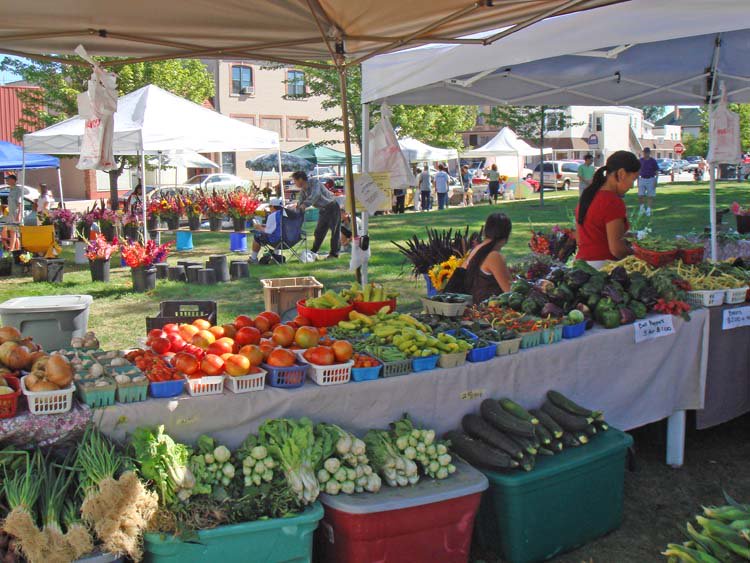
    Boise Farmer’s Market, on Grove Street between 10th and 11th Streets, Saturdays from 9 a.m. -1 p.m. (April – December)

    Boise Farmer’s Mobile Market: https://www.facebook.com/BFMMobileMarket

    Meridian farmer’s market: https://www.facebook.com/Meridian-Area-Farmers-Market-123902790978848/

    Nampa Farmer’s Market: https://www.facebook.com/nampa.farmersmarket/

    CSAs (Community Supported Agriculture), subscriptions for produce and other food delivery

    Peaceful Belly https://peacefulbelly.com/

    Earthly Delights http://earthlydelightsfarm.com/csa-program/

    Brown Box Organics http://www.brownboxorganics.com/

    Ohana No-till Farm http://www.ohananotillfarm.com/

    Morning Owl Farm http://www.morningowlfarm.com/csa-program.html

    Cunningham Pastured Meats https://cunninghampasturedmeats.com/

    True Roots Organics https://www.localharvest.org/true-roots-organics-M63482

    References:

    https://hfi2.designbyparrish.com/foods-reduces-brain-inflammation

    https://hfi2.designbyparrish.com/diy-goat-milk-keifer-amp-goat-milk-yogurt

    https://hfi2.designbyparrish.com/preservatives-are-the-real-hidden-danger-in-fast-food

  • HFI Brings Generation Zapped to Boise

    HFI Brings Generation Zapped to Boise

    Concerns about electromagnetic fields (EMF) are branded pseudoscientific conspiracy theories and relegated to the realm of tin-hat wearing quackery. However, a recent publication in the peer-reviewed journal Immunologic Research entitled “Electrosmog and Autoimmune Disease,” sheds new light on the validity of concerns about this so-called electrosmog with which we are constantly inundated.

    Although we encounter natural microwave electromagnetic radiation in the form of cosmic radiation from outer space, the aurora borealis, and thunderstorms, the vast majority of electrosmog that we encounter is largely manmade (1). These atmospheric phenomena, however, emit electromagnetic radiation at lower radio frequencies and are negligibly weak in comparison to manmade sources, which have increased exponentially due to the emergence of television, cellular phone technologies, and WiFI, all of which utilize microwave frequency bands (1).

    According to researchers Marshall and Heil (2017), for instance, “The recent release of WiGig and anti-collision vehicle radars in the 60 GHz region embody a 1000-fold increase in frequency, and photon energy, over the exposures mankind experienced up until the 1950s” (1).

    The World Health Organization (WHO) classified radio frequencies as a class 2B carcinogen, same as DDT and lead in its press release of May 2011.

    Electromagnetic radiation such as Electromagnetic Fields (EMF) and Radio Frequencies (RF) are generated by: Cell phones, Wi-Fi routers, cordless phones, baby monitors, cell phone antennas, smart meters, smart boards, Bluetooth devices, and any wireless transmission.

    With increased exposure comes increased concerns about the health and safety of such technology. What could its impact be on our bodies? Is there a way to reduce exposure and still maintain connectivity in the world around us?

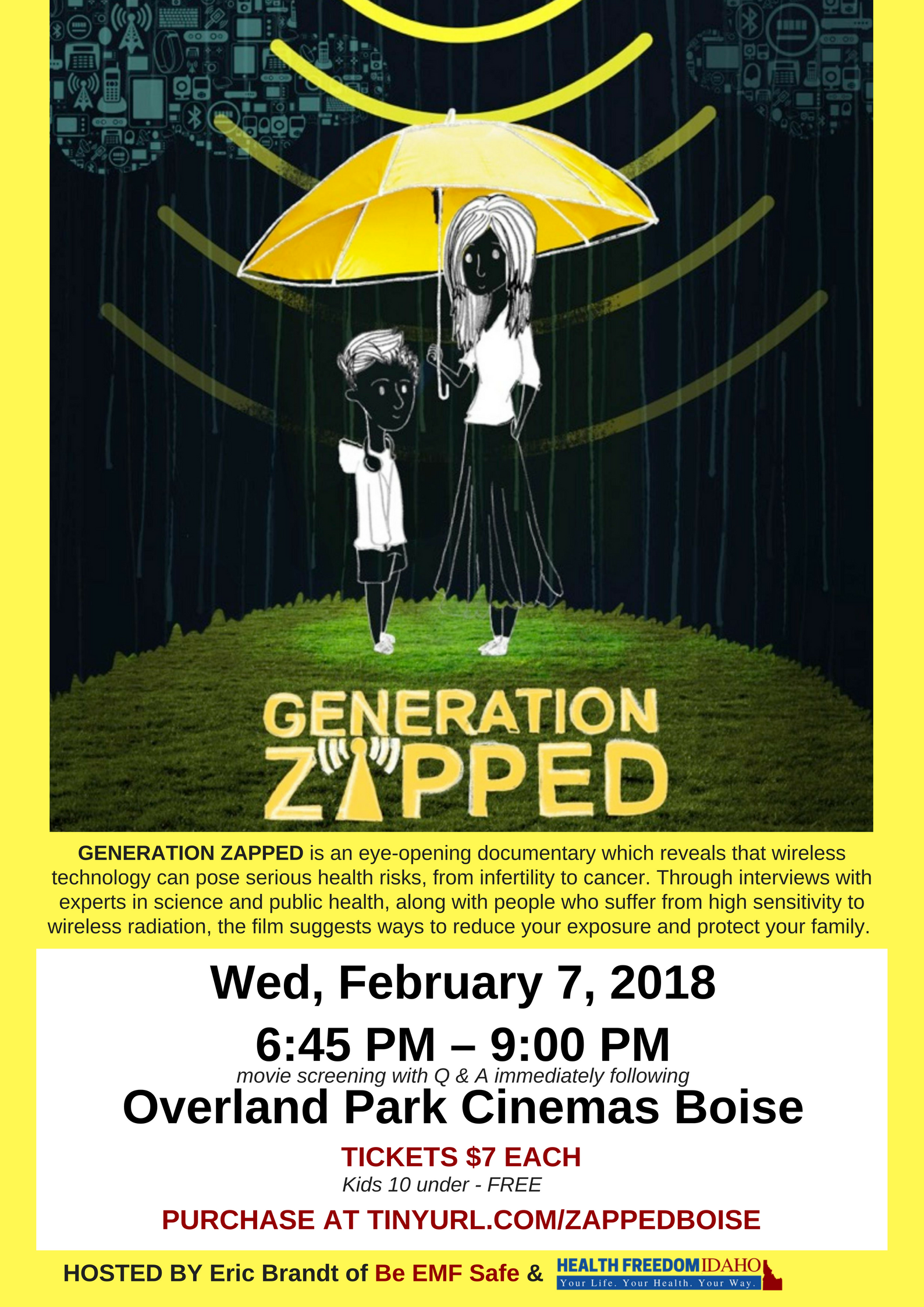
    Join Health Freedom Idaho and Be EMF Safe as they host a screening of GENERATION ZAPPED, an eye-opening documentary about the true cost of living in the wireless age. Click here (or copy link into your browser) to watch the trailer: https://youtu.be/h7R4gKs8ViI

    GENERATION ZAPPED reveals evidence of the health risks from our ubiquitous use of cell phones and digital devices and the prevalence of wireless radiation. Children and teens are especially susceptible and yet they have some of the highest daily exposure.

    Documentary films have a unique power to raise awareness and spark action on topics like this one. This is a film that provides important information on how to protect yourselves and will lead to a vital discussion about our wireless lives.

    Immediately following the event there will be a brief QA with local practitioners, discussing ways to protect yourself and heal from damaged already done. Stay tuned for more info!

    PURCHASE YOUR TICKETS TODAY!

  • VACCINE SAFETY Part 3: The 100 fold increase of vaccine adverse reactions when reporting was automated

    VACCINE SAFETY Part 3: The 100 fold increase of vaccine adverse reactions when reporting was automated

    Vaccine reactions are known and hardly reported. When a system was developed to automatically report adverse reactions to vaccines it proved that they occur in rates greater than 1 in a million (as claimed by the CDC). Why would an organization that claims to be dedicated to the protection of health eliminate the opportunity to identify vaccines that cause harm to a large portion of the population?

    ICAN spent months researching the state of vaccine safety in the United States. The shocking result of this effort was presented to the heads of the National Institutes of Health with Robert F. Kennedy, Jr. in May of 2017.

    The information contained in that presentation has been distilled into an easy to read, thorough white paper that goes through many of the shortcomings and failures of the vaccine safety program. This is PART III of that paper. A U.S. House Report similarly stated: “Former FDA Commissioner David A. Kessler has estimated that VAERS reports currently represent only a fraction of the serious adverse events.”31 X

    VAERS (the U.S. vaccine adverse event reporting system) is that it is a passive reporting system, relying on voluntary, rather than mandatory, reporting. Assuming VAERS captures 1 percent of adverse events (which is more than is estimated),
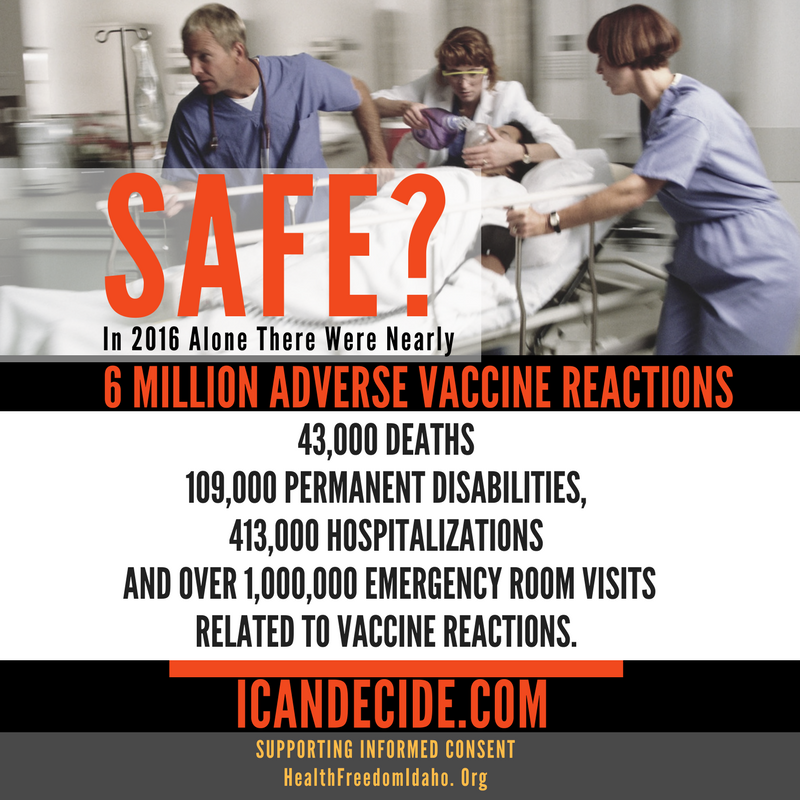
    then the number of adverse events reported to VAERS in 2016 would reflect for that year
    5,911,700 adverse events,
    43,200 deaths
    109,100 permanent disabilities
    413,200 hospitalizations
    and 1,028,400 emergency room visits related to vaccines.

    Capturing “fewer than 1% of vaccine adverse events” thirty years after the passage of the 1986 Act is unacceptable – and potentially deadly.
    Did you know an automated system was developed and the CDC refused to implement it?

    Numerous reviews of VAERS have found that only a tiny fraction of vaccine adverse events are reported. For example, an HHS-funded review of vaccine adverse events over a three-year period by Harvard Medical School involving 715,000 patients found that “fewer than 1% of vaccine adverse events are reported.”30

    It would be far better if adverse events reports were automatically created and submitted to VAERS to avoid the issue of under-reporting. Automated reporting would provide invaluable information that could clarify which vaccines might cause harm and to whom, potentially allowing us to avoid these injuries and deaths. The idea of automating adverse event reporting to VAERS is not new or even difficult to achieve.32

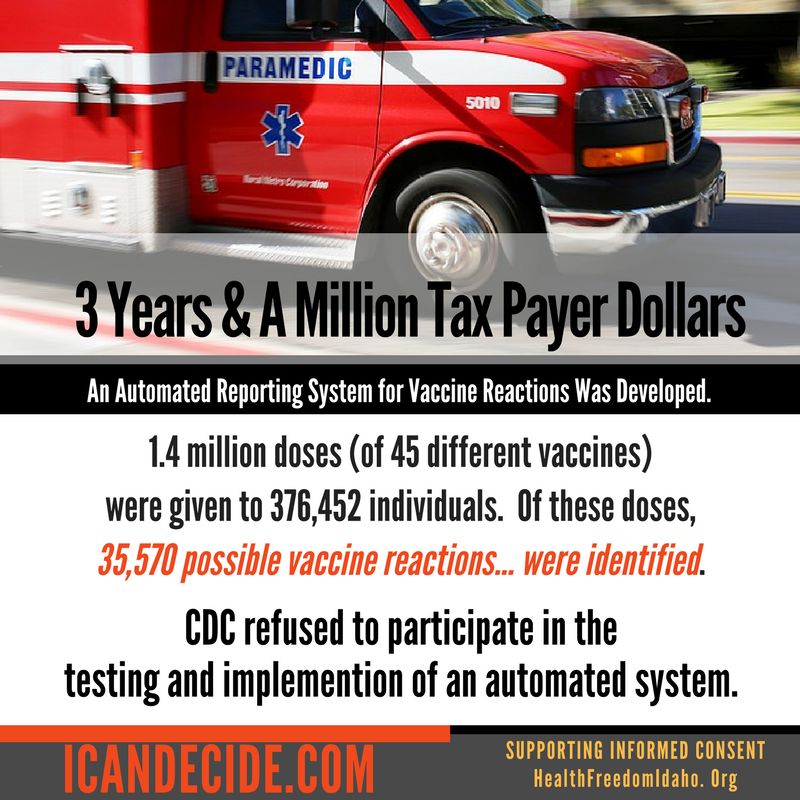
    The Agency for Healthcare Research and Quality, an agency within HHS, sought to do exactly that in 2007 when it provided an approximately $1 million grant to automate VAERS reporting at Harvard Pilgrim Health Care.33 The result was the successful automation of adverse event reports at Harvard Pilgrim: Preliminary data were collected from June 2006 through October 2009 on 715,000 patients, and 1.4 million doses (of 45 different vaccines) were given to 376,452 individuals. Of these doses, 35,570 possible reactions … were identified.34 These results should have been startling to HHS since they show that over only a three-year period, there were 35,570 reportable reactions in just 376,452 vaccine recipients. Given HHS’s statutory mandate to assure safer vaccines, it should have rushed forward with automating VAERS reporting. However, this is not what happened.

    After automating adverse event reports at Harvard Pilgrim, the developers of this system asked the CDC to take the final step of linking VAERS with the Harvard Pilgrim system so that these reports could be automatically transmitted into VAERS. Instead, the CDC refused to cooperate.

    As the Harvard grant recipients explained: Unfortunately, there was never an opportunity to perform system performance assessments because the necessary CDC contacts were no longer available and the CDC consultants responsible for receiving data were no longer responsive to our multiple requests to proceed with testing and evaluation.35

    After three years and spending $1 million of taxpayers’ money, the CDC refused to even communicate with the HHS’ Harvard Medical School grant recipients. While HHS generally strongly supports automating public health surveillance systems, when it comes to vaccine safety, the CDC has only supported projects that would limit VAERS to passive surveillance.36

    Automation would improve safety and address many of the long-standing issues and limitations raised by CDC regarding VAERS.37

    Find out more at Vaccine Safety Paper fromIcandecide.com

    Only 1% of vaccine injury is reported to VAERS https://healthit.ahrq.gov/sites/default/files/docs/publication/r18hs017045-lazarus-final-report-2011.pdf

  • Become a 5-Minute Activist

    Become a 5-Minute Activist

    Do you feel motivated to help bring attention to a topic of interest, or speak out against something you don’t believe in, but find it difficult to know how to help or to find the time? We get it! That’s why we’ve created the HFI 5-Minute Activist Program.

    This is a non-obligatory opportunity to receive notifications about ways to help in the areas you’re most interested in. Some people are prolific sharers, while others prefer to help more behind-the-scenes. There are options on both sides and in between. You can opt-in, opt-out, do more or do less at any time, but you’re showing your support just by signing up for the program and helping propel health freedoms whenever you can.

    Please subscribe via this form to get involved. We’ll send you timely notifications when there is something you can potentially do to help. We genuinely THANK YOU for your support and appreciate every action you take to help!

    READY TO TAKE ACTION?!

    * indicates required


    +5 Minute Activist Area of Interest

  • The Healing Journey: Essential Oils

    The Healing Journey: Essential Oils

    Hi, Friend! My name is Amy, and I am a wife and mama to four beautiful children. I am here to share with you my story and how I became passionate about people and wellness.

    About eight years ago my husband and I were forced into a position where we no longer had health insurance. With a new baby and being first-time parents in our early twenties, I found myself panicked and overwhelmed. All I had ever known was standard health care. Get sick, go to the doctor, get meds, get better. And so the cycle went.

    The crisis

    Now we were in a whole new ballpark. I was discovering what it meant to be a mom, while reexamining all that I knew to be true. I began learning that our bodies were beautifully created and designed to heal themselves, and that God had given us all the tools we needed within food and nature, to live above the wellness line. Turns out our grandparents’ generation had it right – there truly are amazing healing powers in rest, hydration, sunshine, and real food.

    The research

    For the last eight years I have devoted myself to learning all I can about the various ways to assist the body holistically. I was up to my ears in research. I discovered there was a great deal of information on health that I had never learned while visiting the doctor’s office. From the occasional glance at naturally-minded mom blogs to deeper research into scholarly papers and medical journals, I found all of this new information fascinating, and it truly felt as if a million neurons were firing at once.

    The Culprit

    As I researched, I found that many of the health issues we face today result from a clogged liver and a destroyed gut flora. My family was struggling to function and I felt powerless to help.

    The change

    I slowly started moving towards a holistic approach. We changed our diets, began filtering our water, utilizing Epsom salt baths – anything I could do to help our bodies detox and teach our immune systems to fight properly. Over the course of this journey, we added more children to our family and became even more natural-minded.

    Essential Oils: Helpers In Our Healing

    That’s when I was introduced to essential oils. I love telling my children that essential oils are our helpers. They “teach and encourage” our body to do what it is designed to: heal. The oils alone do not heal us. They are a piece to the puzzle. Their molecular structure is similar to ours, and therefore our bodies view them as allies, rather than harmful antagonists. Our bodies welcome the help and support essential oils offer.

    I was fascinated to learn that essential oils are adaptogenic, meaning they never push the body beyond what it needs. Unlike what we are used to in the “over the counter” and pharmaceutical world, where medicines can help prevent symptoms through working against the body, at the terrible cost of causing greater harm – essential oils are different. They work with the body.

    Integrity and Purity: My Young Living Story

    About four years into our journey we were introduced to Young Living. Previously, I was buying essential oils from our local health food store. I was stunned to find out that the labeling of these oils was not regulated, and that manufacturers could put “100% essential oil” on their bottles but in reality only needed to legally have 5% of the oil in the actual finished product. They also did not need to disclose the other 95% of the ingredients contained within. Because of this, I made the decision to try Young Living, as they are the only essential oil company that actually has certified therapeutic essential oils through the ISO (International Organization for Standardization). I am passionate about integrity and purity, and because of that I decided to work alongside Young Living. I chose to take the time to personally visit their farms and have been a part of the distillation process. Young Living owns, co-ops, and partners with farms to bring the highest quality essential oils to homes of families all over the world. The plants we harvest have never encountered herbicides, pesticides, or other harmful contaminants.

    One Drop Can Actually Make An Impact

    As for our personal experience with the switch from store-bought to Young Living oils, my husband and I noticed immediate benefits. We no longer needed to use oils constantly to accomplish our wellness goals. With Young Living, we typically use one drop or even just a touch of the reservoir to support us and keep us above the wellness line. As our family has journeyed through this life and come to experience various common health ailments, we have been amazed at how essential oils support our body systems. In our home we use essential oils daily (primarily aromatically to support our respiratory and endocrine systems).

    Empowered to heal

    Lavender, affectionately known as the “swiss army knife” of essential oils, brings greater clarity and focus, and makes for a peaceful and calm environment. We also use it along with tea tree to support healthy skin. As a mom, I find great pleasure in my littles and their antics along with lots and lots of chaos – can any other parent relate? Therefore, I love supporting our limbic systems with blends like Stress Away which bring about feelings of peace and tranquility, and Joy, which is uplifting and grounding – all at the same time.

    One of our very favorites is Peppermint. Historically, it was a valuable herb. We have found that using Peppermint Vitality helps our digestive systems and promotes healthy bowel function.

    My personal favorite essential oil is Frankincense. I encourage everyone to have one bottle on hand, as it supports every single body system from the immune system to the endocrine system. These oils have been such a vital addition to our health routine and we feel so empowered by the knowledge of how these oils work with our bodies we no longer fear a lot of things we normally would in the realm of health, because of our confidence in plant based materials supporting our bodies!

    Recently I had a bout with strep throat and was so blessed to use Thieves Cough Drops, which has a powerful menthol agent derived from peppermint. I loved that I could use a product free from dyes, artificial flavors, and sweeteners, to bring comfort to my throat. It was truly the only thing that eased the pain enough for me to swallow at all!

    Of course, every individual is unique, and what works for my family may not work for yours. That being said, my heart in all of this is to empower and equip people to take their health back.

    We must get away from the fear and doubt in our ability to heal, and replace it with a confident hope that we are fearfully and wonderfully made. My most fervent prayer is that you are moved in a way that you feel confident and empowered. My hope is that you can come away having learned that essential oils can be a radical blessing in your health arsenal. And, with an open mind to accept these benefits, they will make an undeniable impact in your life, as you continue seeking health freedom.

    This post was sponsored by Amy DeBois, a Young Living Distributor and health passionista. You can learn more about her story, the power of essential oils and purchase options at her website

  • VACCINE SAFETY Part 1: Responsibility for Vaccine Safety lies SQUARELY On the Shoulders of US Department of Health and Human Services

    VACCINE SAFETY Part 1: Responsibility for Vaccine Safety lies SQUARELY On the Shoulders of US Department of Health and Human Services

    Unlike nearly every other company in America, pharmaceutical companies have almost no liability for injuries caused by their vaccine products.

    By granting immunity from actual or potential liability from injuries caused by vaccines, Congress eliminated the market forces that are generally relied upon to assure the safety of all other products. As the 1986 Act expressly provides: “No person may bring a civil action … against a vaccine administrator or manufacturer in a State or Federal court for damages arising from a vaccine-related injury or death.” Every pediatric vaccine recommended by the CDC creates for its manufacturer a liability-free captive market of 78 million children with guaranteed payment. So, who is there making sure vaccines are SAFE since manufacturers have no financial incentive do to so.


    ICANspent months researching the state of vaccine safety in the United States. The shocking result of this effort was presented to the heads of the National Institutes of Health with Robert F. Kennedy, Jr. in May of 2017.

    The information contained in that presentation has been distilled into an easy to read, thorough white paper that goes through many of the shortcomings and failures of the vaccine safety program. This is PART 2 of that paper.

    In 2016, the IOM formally changed its name to the National Academies of Sciences, Engineering, and Medicine. Explained by the Institute of Medicine (IOM) 1, by 1986, the “litigation costs associated with claims of damage from vaccines had forced several companies to end their vaccine research and development programs as well as to stop producing already licensed vaccines.”2

    Instead of letting market forces compel vaccine makers to create safer vaccines, Congress granted pharmaceutical companies, financial immunity from injuries caused by vaccines recommended by the CDC. 3 Congress did so by passing the National Childhood Vaccine Injury Act (the 1986 Act). 4

    By granting immunity from actual or potential liability from injuries caused by vaccines, Congress eliminated the market forces that are generally relied upon to assure the safety of all other products.

    As the 1986 Act expressly provides: “No person may bring a civil action… against a vaccine administrator or manufacturer in a State or Federal court for damages arising from a vaccine-related injury or death.”5

    The 1986 Act even shields vaccine makers from liability where it is clear and unmistakable that the vaccine in question could have been designed safer. 6As recently explained in a U.S. Supreme Court opinion: [N]o one—neither the FDA nor any other federal agency, nor state and federal juries—ensures that vaccine manufacturers adequately take account of scientific and technological advancements. This concern is especially acute with respect to vaccines that have already released and marketed to the public. Manufacturers… Will often have little or no incentive to improve the designs of vaccines that are already generating significant profit margins.7

    Recognizing that the 1986 Act eliminated the incentive for vaccine makers to assure the safety of their vaccine products, the 1986 Act explicitly places this responsibility in the hands of the United States Department of Health & Human Services (HHS).8

    As provided in the 1986 Act, HHS is responsible for “research … to prevent adverse reactions to vaccines,” “develop[ing] the techniques needed to produce safe … vaccines,” “safety … testing of vaccines,” “monitoring … adverse effects of vaccines,” and “shall make or assure improvements in … the licensing, manufacturing, processing, testing, labeling, warning, use instructions, distribution, storage, administration, field surveillance, adverse reaction reporting, … and research on vaccines in order to reduce the risks of adverse reactions to vaccines.”9

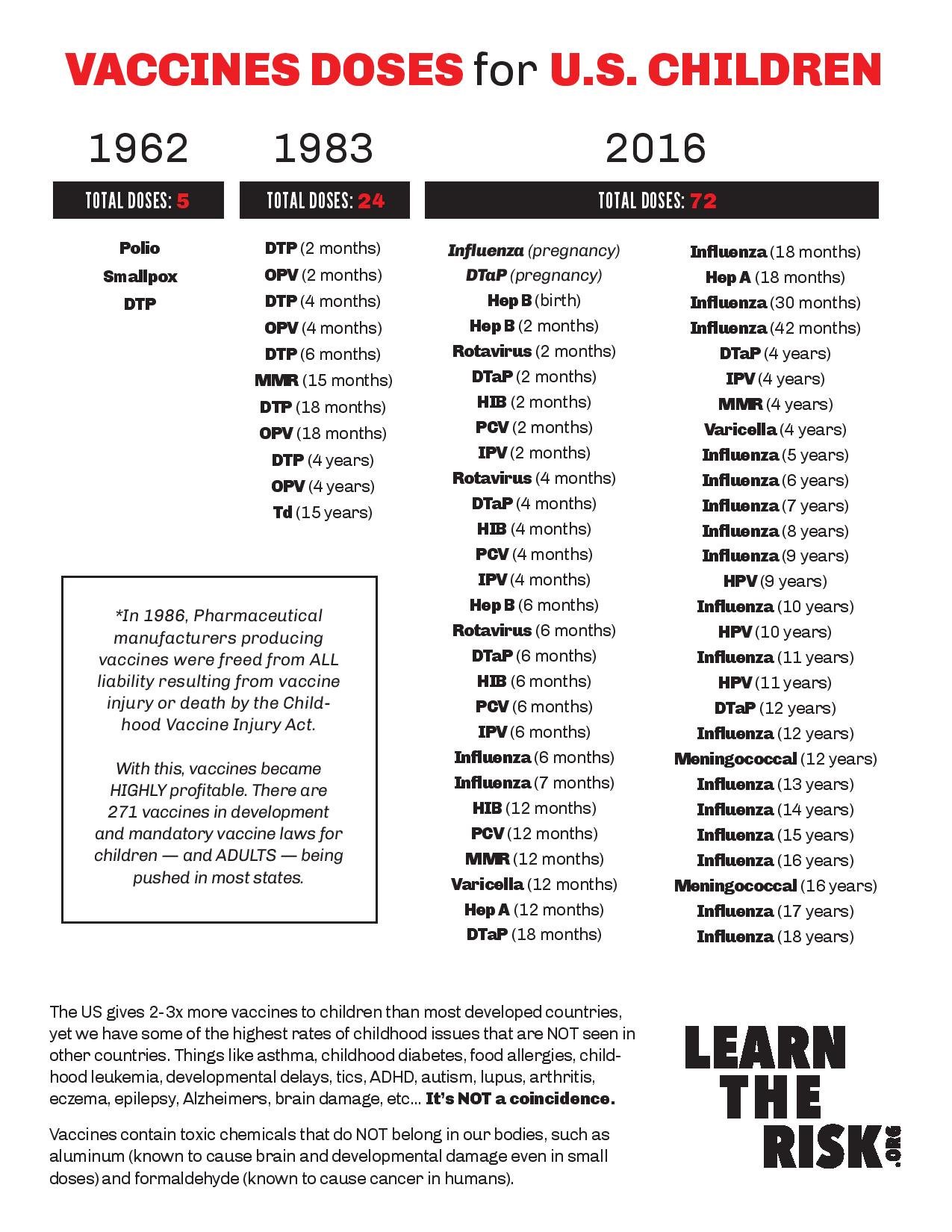
    Since passage of the 1986 Act, the number of required pediatric vaccines has grown rapidly. In 1983, the CDC’s childhood vaccine schedule included 11 injections of 4 vaccines.10

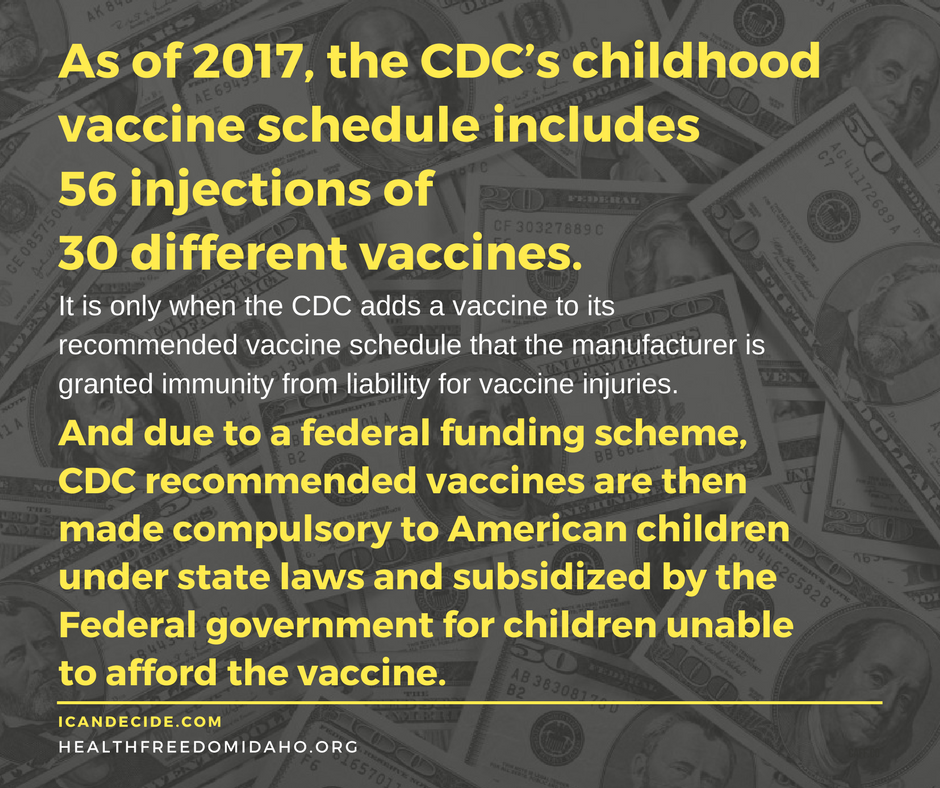
    As of 2017, the CDC’s childhood vaccine schedule includes 56 injections of 30 different vaccines. It is only when the CDC adds a vaccine to its recommended vaccine schedule that the manufacturer is granted immunity from liability for vaccine injuries.

    And due to a federal funding scheme, CDC recommended vaccines are then made compulsory to American children under state laws and subsidized by the Federal government for children unable to afford the vaccine.13

    The end result is that under the 1986 Act, every pediatric vaccine recommended by the CDC creates for its manufacturer a liability-free captive market of 78 million children with guaranteed payment. This incentive structure is unequal in the marketplace and eliminates the normal market forces driving product safety. Hence the 1986 Act’s transferred essentially all responsibility for vaccine safety from the pharmaceutical companies to HHS.


    Read this important letter putting Health and Human Services on notice for failing to conduct proper science to demonstrate vaccine safety. “ICAN lays out the provisions of the (1986 Act) that legally require HHS to conduct science that reduces the risk of all vaccine injury. Failure to do so could result in legal action against HHS on behalf of the American public.”
    http://www.icandecide.com/white-papers/ICAN-HHS-Notice.pdf

    READ MORE ABOUT VACCINE SAFETY IN OUR SERIES PART 1 | PART 2 | PART 3


    2 https://www.nap.edu/read/2138/chapter/2#2
    3 42 U.S.C. § 300aa-1 et seq.
    4 Ibid.
    5 42 U.S.C. § 300aa-11
    6 Bruesewitz v. Wyeth LLC, 562 U.S. 223 (2011)
    7 Ibid.
    8 42 U.S.C. § 300aa-2; 42 U.S.C. § 300aa-27
    9 Ibid.
    10 https://www.cdc.gov/vaccines/schedules/images/schedule 1983s.jpg
    11 https://www.cdc.gov/vaccines/schedules/hcp/imz/child-adol escent.html (note that the influenza vaccine is different every year)
    12 The rapid growth of CDC’s vaccine schedule is excepted to accelerate since there were 271 new vaccines under development in 2013 and far more currently under development. http://www.phrma.org/press-release/medicines-in-developme nt-vaccines (listing 2,300 trials in search for “vaccines” between 2013 and 2017)
    13 See Section IV below.
    14 https://www.accessdata.fda.gov/drugsatfda_docs/label/2012/103795s5503lbl.pdf
    15 https://www.accessdata.fda.gov/drugsatfda_docs/label/2009/020702s056lbl.pdf
    16 https://www.accessdata.fda.gov/drugsatfda_docs/label/2017/103000s5302lbl.pdf

  • What Happened To the Notion, “Parents Know Best”

    What Happened To the Notion, “Parents Know Best”

    We are witnessing a drastic erosion of public support for the idea that ordinary parents are the people most likely to know what is best for their children. Sadly we live in a time in which it is argued that, to protect the human rights of kids, we must take away the rights of their parents to raise them. Could this thought come from a society in which children are objects that impede our career success and prosperity? Is our offspring to merely be tolerated until that magic number 18 when they are considered an adult? The Government tells us that Doctors and school teachers know better how to care and educate our children than parents. There are many examples of the attempt to legally reduce authority and control of parents in medical and educational decisions.

    We’ve all heard about folks who call the authorities because a neighbor has allowed children to play in their own fenced-in backyard without adult supervision. More examples abound. For instance, if your child is older than 12, it is illegal for your child’s doctor to tell you if your child is receiving mental health care, being treated for drug or alcohol abuse, or being given contraception or an abortion unless your child agrees to share this information with you. It is startling to realize that we assume children are more likely to be harmed by fear of parental interference than by making important decisions about mind and body-altering drugs without parental guidance.

    In the realm of education, parents who want to control or at least influence the values taught to their children—especially in health and literature classes—often meet accusations of censorship and bigotry. Discussions of young adult literature regularly affirm the idea that parents must stop trying to protect their children from a violent and sexually explicit material. The tension can even reach heights of comic proportion, as when the Idaho School Board Association issued a resolution plaintively calling on the state legislature to stop increasing “parental rights in regard to education,” lest parental demands interfere with schools’ attempts to comply with state and federal mandates. Resolution from the ISBA came just months after Idaho lawmakers passed House Bill 113a, a measure inserting parental rights into the state code.


    Parents have Responsibilities to their children, not “rights” over them.

    Opponents of traditional parental rights claim the old ideas treat children as parental property instead of free human beings. The practical implication is that the state is a more trustworthy guardian than parents—or, at least, that state intervention can place parent and child on equal footing with each other. This is in stark contrast to a 1925 Supreme Court declaration that parents have the right to direct the education and upbringing of their offspring because children are not “the mere creature[s] of the state.”

    Parents know best. It’s State agencies that are the primary cause abuse to families and children.

    Forty years ago a landmark piece of legislation passed by Congress and signed into law by President Richard M. Nixon in 1974 called the Child Abuse Prevention and Treatment Act (CAPTA) formed what we now call Child Protective Services. The Government was to create an agency to
    1)Protect Children;
    2)Strengthen Families.

    CAPTA’s mandates encompassed all kinds of known and suspected child maltreatment, including physical abuse, sexual abuse, physical neglect, and psychological and emotional maltreatment. CAPTA never defined these terms, however, and there has not been and is not today any widely accepted definition of them even among professionals working in the field. What results are unsubstantiated claims of child abuse. Statistics reveal that throughout almost the entire time that the Mondale Act has been in existence, much more than a majority of child maltreatment reports around the country have been unfounded, and recently there is no question that the percentage has spiked upward even further.

    We now have a situation where a massive state bureaucracy with sweeping coercive power is having millions upon millions of dollars being poured into it each year even though perhaps 85% of its actions are completely unnecessary. The government does not know HOW to parent. This agency can not clearly identify nor resolve child abuse.

    The massive incidence of false abuse/neglect allegations shows that current law and public policy on child abuse and neglect and the routine actions of the CPS are a major threat to the American family today.

    Shouldn’t there be a law to protect parental authority?
    Idaho statute now defines parental authority under this legal statute 32-1010. PARENTAL RIGHTS PROTECTED with the passage of the bill 113a.

    (1) Parents and legal guardians who have legal custody of minor children have a fundamental right to make decisions concerning the care, custody, education and control of their children.

    (2) The legislature hereby codifies these fundamental rights. Parents and legal guardians shall retain the fundamental rights listed in this section regardless of whether they continue to be recognized or articulated as constitutional rights by federal or state courts.

    (3) This section’s codification of parents’ and legal guardians’ fundamental rights as now recognized by law shall not be construed to limit any parent or guardian from exercising additional rights under the constitution and laws of the United States or of Idaho.

    This bill (that was eventually voted into law) was sponsored by Representative Janet Trujillo and Senator Sheryl Nuxoll

    We must now be ever watchful and make sure that this statute is not modified or manipulated to infer that the Civil Government has lawful authority over our families, our parenting style or our children.

    We must NOT allow laws to be passed that undermine the value and authority that parents have in our society and on our children. We need to reject the idea that an institution can replace the love and nurturing of a parent in the life of a child. Their value and worth doesn’t come from the state. I would argue, they need to be protected FROM the state.

    read about Why the Parental Rights Amendment is VERY DANGEROUS


    This article is based on the ideas of author Anna Mussmann from an article for The Federalist, And from commentary from https://demmelearning.com/learning-blog/trust-parents/?trk_msg=PPH651SVVD2KP We Need to Trust Parents to Parent Their Children

    https://www.faithandreason.com/wp-content/uploads/2012/08/Mondale-Act-After-Forty-Years_-True.pdf