Author: Health Freedom Idaho

  • VACCINE SAFETY Part 2: failure of pre licensing safety testing

    VACCINE SAFETY Part 2: failure of pre licensing safety testing

    HHS, through the FDA, licenses all vaccines used by the American public. All non-vaccine drugs licensed by the FDA undergo long-term multi-year doubleblind safety studies during which the rate of adverse reactions in the group receiving the drug under review is compared to the rate of adverse reactions in a group receiving an inert placebo, such as a sugar pill or saline injection.

    For example:

    • Enbrel’s pre-licensure trials followed subjects up to 80 months and controls received a saline injection.14
    • Lipitor’s pre-licensure trials lasted a median of 4.8 years and controls received a sugar pill.15
    • Botox’s pre-licensure trials lasted a median of 51 weeks and controls received a saline injection.16

    And even with these long-term studies, drugs are still often recalled.

    While most drugs, like the ones above, are given to sick adults, pediatric vaccines are typically given universally to babies and toddlers. And while pharmaceutical companies remain liable for injuries caused by their non-vaccine drugs, as discussed above, they have no liability for injuries caused by their vaccines.

    One would therefore expect that pre-licensure safety testing for vaccines would be more rigorous than that conducted for drugs.

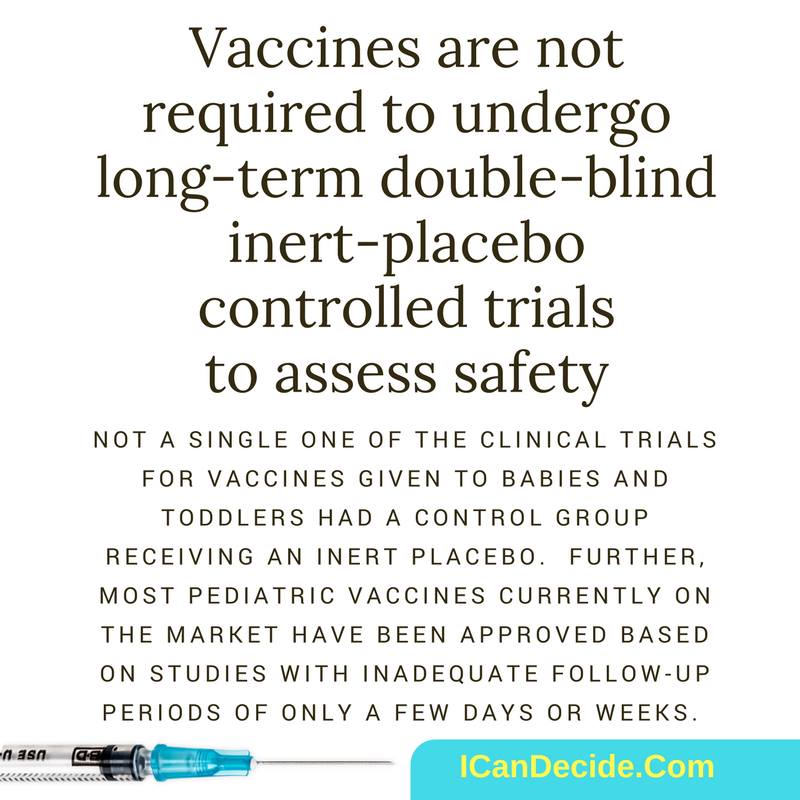
    Unfortunately, unlike all non-vaccine drugs licensed by the FDA, vaccines are not required to undergo long-term double-blind inert-placebo controlled trials to assess safety. In fact, not a single one of the clinical trials for vaccines given to babies and toddlers had a control group receiving an inert placebo.

    Further, most pediatric vaccines currently on the market have been approved based on studies with inadequate follow-up periods of only a few days or weeks.

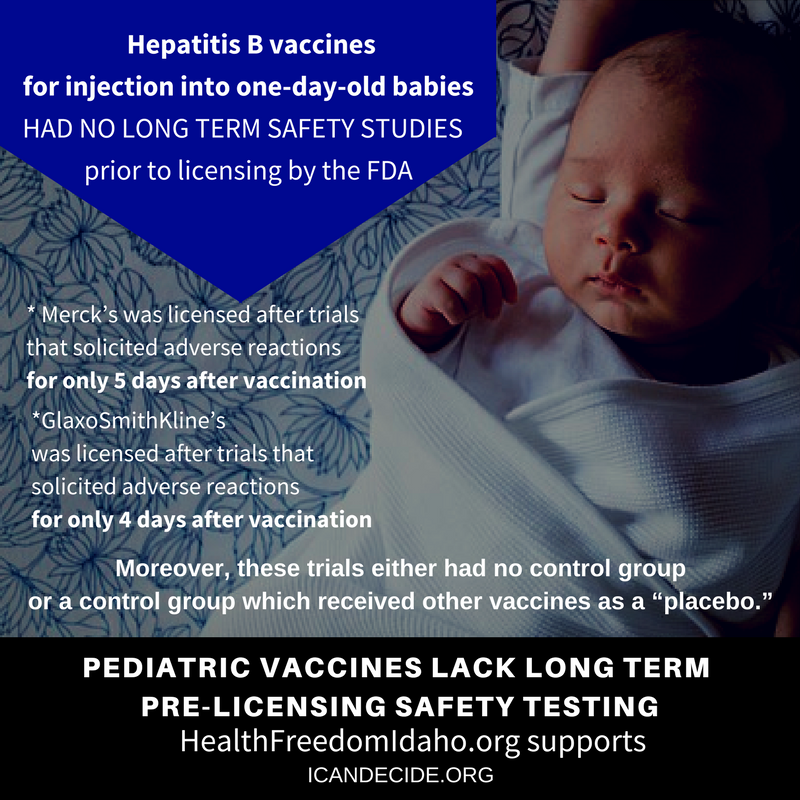
    For example, there are two Hepatitis B vaccines licensed for one day old babies in the United States – one manufactured by Merck and the other by GlaxoSmithKline. Merck’s Hepatitis B vaccine was licensed by the FDA after trials which solicited adverse reactions for only five days after vaccination.17

    Similarly, GlaxoSmithKline’s Hepatitis B vaccine was licensed by the FDA after trials which solicited adverse reactions for only four days after vaccination.18

    Follow-up periods of 4 or 5 days are not nearly long enough to detect possible adverse effects such as autoimmune or neurological disorders, seizures, or death. Worse is that since neither of these clinical trials used a control group, it was impossible to scientifically determine if any adverse reaction in the limited four or five day safety review period was even caused by the Hepatitis B vaccine being evaluated.

    Similarly, the HiB vaccines manufactured by Merck and GlaxoSmithKline were licensed by the FDA based on trials in which adverse reactions were monitored for only three days and four days, respectively, after vaccination.19

    The only stand-alone polio vaccine in the United States was licensed after a mere 48-hour follow-up period. 20

    Even more amazing is that unlike every drug licensed by the FDA, the control groups in these vaccine trials did not receive an inert placebo. 21

    Rather, the control group was given one or more previously licensed vaccines as the “placebo.”22

    This means each new vaccine need only be roughly as safe as one (or in some cases numerous) previously licensed vaccines. Such flawed and unscientific study designs cannot establish the actual safety profile of any vaccine. The real adverse event rate for a vaccine can only be determined by comparing subjects receiving the vaccine with those receiving an inert placebo.

    Yet, this study design, required for every drug, is never required before or after licensing a vaccine. It is unacceptable that the FDA licensing process for vaccines fails to assess the safety profile of each vaccine. It is also unacceptable that the FDA does not require the use of inert placebo controls to assure the integrity of even the minimal safety review conducted. As HHS’s own paid experts, the IOM, explains: “Because [vaccine] trials are primarily … for determination of efficacy, conclusions about vaccine safety derived from these trials are limited.”23

    READ MORE ABOUT VACCINE SAFETY IN OUR SERIES PART 1 | PART 2 | PART 3

    http://icandecide.com/white-papers/VaccineSafety-Version-1.0-October-2-2017.pdf

    12 The rapid growth of CDC’s vaccine schedule is expected to accelerate since there were 271 new vaccines under development in 2013 and far more currently under development. http://www.phrma.org/press-release/medicines-in-developme nt-vaccines (listing 2,300 trials in search for “vaccines” between 2013 and 2017)
    13 See Section IV below.
    14 https://www.accessdata.fda.gov/drugsatfda_docs/label/2012/103795s5503lbl.pdf
    15 https://www.accessdata.fda.gov/drugsatfda_docs/label/2009/020702s056lbl.pdf

    16 https://www.accessdata.fda.gov/drugsatfda_docs/label/2017/103000s5302lbl.pdf

    17 https://www.fda.gov/downloads/BiologicsBloodVaccines/Vaccines/ApprovedProducts/UCM110114.pdf

    18 https://www.fda.gov/downloads/BiologicsBloodVaccines/Vaccines/ApprovedProducts/UCM224503.pdf

    19 https://www.fda.gov/downloads/BiologicsBloodVaccines/Vaccines/ApprovedProducts/UCM253652.pdf

    https://www.fda.gov/downloads/BiologicsBloodVaccines/Vaccines/ApprovedProducts/UCM179530.pdf

    20 https://www.fda.gov/downloads/BiologicsBloodVaccines/Vaccines/ApprovedProducts/UCM133479.pdf

    21 Ibid. (prior two footnotes)
    22 Ibid.

    UPDATE: HHS Never Reviewed A Single Vaccine Study in the 32 Years Charged with Monitoring Vaccine Safety

  • CDC reports 1 in 36 boys are autistic

    CDC reports 1 in 36 boys are autistic

    Nearly 4 years ago, CNN blasted this headline: “Autism rates now 1 in 68 U.S. children: CDC“.

    At a special panel discussion about GMOs in 2014, MIT Researcher Dr. Stephanie Seneff, PhD predicted 1 in 2 children would be diagnosed with Autism by 2025. Seneff is a respected scientist who has published over 170 peer-reviewed articles.

    Last week, the National Health Center for Health Statistics (NCHS) released its latest incidence for autism spectrum disorders (ASDs) in American children. Their document, based on information collected in the National Health Information Survey (NHIS), reveals an ASD rate of 2.76%, or 1 in 36 American children for 2016.

    Source: Zablotsky B, Black LI, Blumberg SJ. Estimated prevalence of children with diagnosed developmental disabilities in the United States, 2014–2016. NCHS Data Brief, no 291. Hyattsville, MD: National Center for Health Statistics. 2017.) https://www.cdc.gov/nchs/data/databriefs/db291.pdf

    The breakdown:

    1 in 35 children (8-12 years of age) have autism.

    1 in 28 boys (3-17 years of age) have autism.

    More than 6% of our children have a developmental disability (1 in 16).

    More than 8% of our boys have a developmental disability (1 in 12).

    The current projected rate of increase in autism to 1 in 2 by 2025 is clearly unsustainable!

    Why normalizing autism is not the answer

    Conventional recommendations call for “normalizing” autism. Examples of this are provided in this paper published on the NCBI database in the scholarly journal Front Psychology, a Washington Post article centered upon the importance of autism-friendly characters on the PBS children’s show Sesame Street, and an op ed piece featured in the New York Times from an English professor proclaiming how this change in PBS characters will help enable the normalization of autism to benefit her autistic daughter.

    We highlight this situation not to make light of the condition of ASD nor to imply that autistic individuals aren’t worthy of the same rights, treatment and consideration that others receive. We want to impress that ASD is indeed a condition of which we should all be paying attention; not to merely accept it as “just the way it is”, but to recognize it for what it is: a progressive syndrome that is on the rise, and which there is an identifiable cause and solution.

    Individuals diagnosed with ASD do not have to be sentenced to a life of disability and handicap. There are verifiable ways to heal from this illness that the conventional health and medical communities continue to ignore and refuse to employ for the betterment of our population.

    The result of this patent dismissal is a continued increase in the incidence of ASD. Can our society sustain this alteration? As its effects become more acute, we continue to be affected by its impact on our familial and social structures, and economic stability. Marcella Piper-Terry expounds upon this in her paper: Autism and Families: Stress and Divorce, and the Economic Considerations. A Review of the Literature from 2012. Read more in The Financial Impact of an Autism Diagnosis.

    Another result is that anyone opposing this narrative is considered uninformed and discreditable.

    Credible support for finding the root cause of autism

    There are a growing number of health professionals who acknowledge this fact. Some include Dr. Natasha Campbell McBride, author of Gut and Psychology Syndrome (The GAPS Diet). Others include Dr. Ray Sahelian. M.D., Dr. Suruchi Chandra,M.D., Joette Calabrese, HMC, CCH, RSHom(Na), Dr. Kelly Brogan, M.D., author of A Mind Of Your Own and presenter of Autism Intensive HD video interviews, and Kim Schuette, CN, Certified GAPS Practitioner. These are just a few pioneers in the health communities working to heal the explosion of ASD and related syndromes, caused by unnatural conditions in our food supply, soil, water, air and all environments.

    These professionals contend that autism is NOT normal. And it is an epidemic. It’s time we did something concrete to acknowledge what’s causing it. It’s time we stop saying “we don’t know what causes autism”. It’s time the medical and health communities rallied together, despite their differences, and look for something beyond genetic causes. This is because it has been demonstrated scientifically, beyond reasonable doubt, that genetics CANNOT modify that quickly.

    This is not new information, it has simply been censored. For example, in 2011, Joachim Hallmayer, MD, leading author of a paper published in the July 4 issue of Archives of General Psychiatry from Stanford University of Medicine. Read more from Stanford University.

    “Our work suggests that the role of environmental factors has been underestimated.” Hallmayer is an associate professor of psychiatry and behavioral sciences at Stanford. The study’s senior author is Neil Risch, PhD, professor of biostatistics at UC-San Francisco and director of the UCSF Institute for Human Genetics.

    Here’s why we need not accept the current trajectory of autism increase: only 4 years ago 1 in 68 children were being diagnosed as autistic.

    Today it’s 1 in 36. It doesn’t take a large leap to understand that this scenario is not due to “heightened diagnostics”. Clearly, this situation is due to a case of epigenetics.

    What are epigenetics? It is happening everywhere we look these days.

    Definition of epigenetics: relating to or arising from nongenetic influences on gene expression.

    These changes are not genetic in origin. In short, our genes are being altered in every imaginable way possible: our food, soil, water, air, personal care products, beverages, clothing, furniture, and essentially everything we touch. Each of these factors, added in, can cause changes around the genes that are capable of turning those genes off or on, as time passes. As a result, certain diseases including autism, Alzheimer’s, and other auto-immune conditions, various genes will be thrown into the opposite state, away from the normal/healthy state.

    Only something environmental would cause a change like this, so rapidly.

    We encourage research, cleaning up the diet, removing environmental factors, and seeking out like-minded folks in our communities, both parental, medical, health and scientific. There is a WEALTH of support for those who want to heal themselves and their children of ASD and related issues.

    Additional reading:

    15 year old autistic teen has 10x amount of aluminum in brain than elderly person

    Why diet, environment, toxin exposure and lifestyle MATTERS

    Scientific study confirms DTP vaccination increases risk of allergies

    Organic baby foods test positive for dangerous contaminants

    The impact of toxic exposure to aluminum

    Glyphosate contaminated “all natural” bread and breakfast cereals

    KBOI 2 interviews with a toxicologist on vaccines

  • Idaho Health Dept recommends untested vaccine for pregnant women claiming its SAFE

    Idaho Health Dept recommends untested vaccine for pregnant women claiming its SAFE

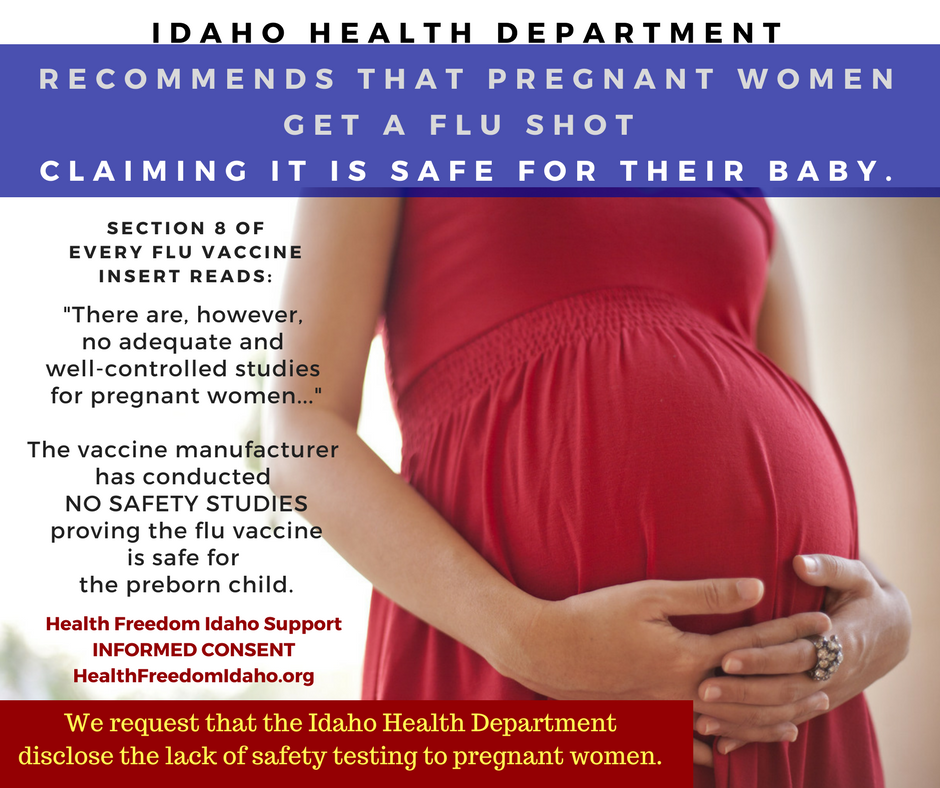
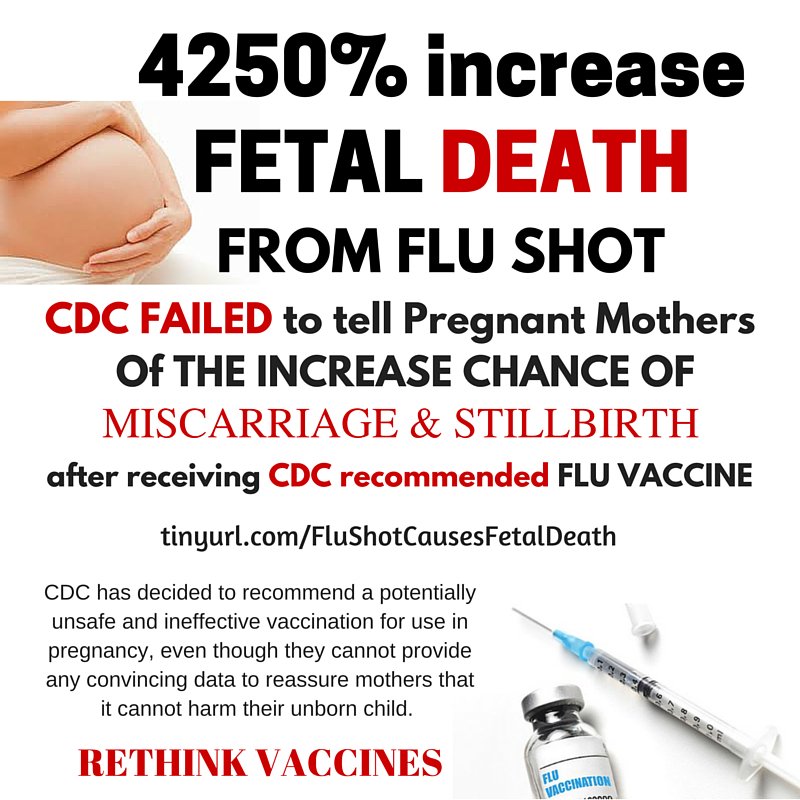
    Are Vaccines SAFE in Pregnancy? Contrary to the Idaho Health and Welfare’s assurance and the CDC ‘recommendation’ vaccines HAVE NOT BEEN TESTED safe in pregnancy. The vaccine inserts, created by the vaccine manufacturers state the fact clearly “there are no adequate well controlled studies in pregnant women.” In fact, vaccine manufacturers request that doctors register pregnant patients in their database so they can track the outcome and chart vaccine reactions. Pregnant moms and their unborn babies are the TEST SUBJECTS. The CDC is well aware vaccines pose a risk, there has been proven as much as 4250% increase in the death of the unborn baby after mother was vaccinated. Why does the CDC continue to push vaccine recommendations claiming safety for mother and child? The vaccine manufacturers cannot be held liable for injury or death if the CDC recommends the vaccine. They can continue to push the shots on moms, claiming safety, while actually conducting the experiment with liability free guaranteed payments.

    HOW can the CDC claim that “There is a lot of evidence that flu vaccines can be given safely during pregnancy, though these data are limited to the first trimester..” and yet each and every flu shot and TDaP vaccine insert says specifically there are no adequate and well-controlled studies in pregnant women. Some inserts go as far to say, “available data for vaccine administered to pregnant women are insufficient to inform vaccine associated risks in pregnancy.

    Download the Vaccine Inserts and read for yourself look at sections 8

    TDaP Vaccine. FLU SHOT.
    – Fetal deaths caused by vaccinations – the horrendous reality of vaccine-induced so-called “fetal demise” – by Marcella Piper-Terry

    RELATED: CDC hides fact that 2012 Flu Shot Spikes Fetal Death by 4250%

    Learn More From Marcella Piper Terri posts this VaxxedTruth.org

    DTaP Vaccine Pushed on Pregnant Women despite Fetal Risks July 6, 2012

    Vaccination Madness: Vaccine Pushed On Pregnant Women 5 October 2013

    ———-
    Chelsea Nichole Smith I received the TDaP, against my instincts, March 17, 2015. My daughter was stillborn April 11, 2015 at 35 6/7 weeks. It is likely she was dead a few days before I found out on April 10, 2015. There was no known cause of death, and no flags or warning signs. We were a low risk pregnancy, with no abnormal prenatal clinical or lab findings. If you need my information for anything, you let me know.
    ———-
    Lisa Duvendack Not only do I have a vaccine injured child I have also lost a baby girl when I was 7.5 months pregnant after receiving the flu shot. My trust in doctors is GONE!
    ———-

  • When It’s Not Just the Holiday Blues: Teen Depression

    When It’s Not Just the Holiday Blues: Teen Depression

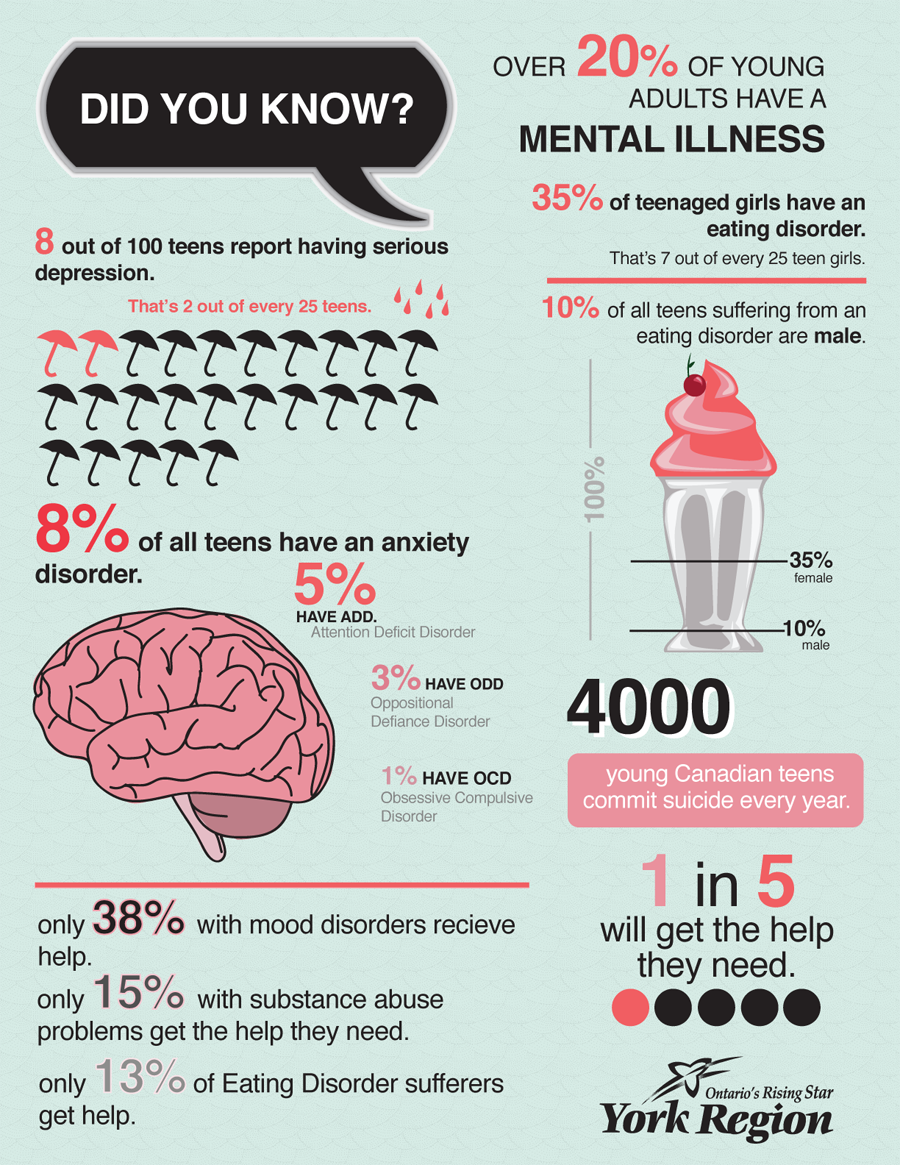
    The prevalence of teenage anxiety and depression continues to rise with more and more teenagers turning to “cutting”. About 30% of girls and 20% of boys–totaling 6.3 million teens–have had an anxiety disorder, according to data from the National Institute of Mental Health. Experts believe there are many factors contributing to this mental health crisis we are seeing, a few of which include social media, school pressures, online bullying, and an overall disconnect from family and friends despite the deceptive connectedness provided through technology. “Some of the treatments for self-harm are similar to those for addiction, particularly in the focus on identifying underlying psychological issues–what’s causing the anxiety and depression in the first place–and then teaching healthy ways to cope. Similarly, those who want to stop needing a strong level of internal motivation”.

    The first time Faith-Ann Bishop cut herself, she was in eighth grade. It was 2 in the morning, and as her parents slept, she sat on the edge of the tub at her home outside Bangor, Maine, with a metal clip from a pen in her hand. Then she sliced into the soft skin near her ribs. There was blood–and a sense of deep relief. “It makes the world very quiet for a few seconds,” says Faith-Ann. “For a while I didn’t want to stop, because it was my only coping mechanism. I hadn’t learned any other way.”

    The pain of the superficial wound was a momentary escape from the anxiety she was fighting constantly, about grades, about her future, about relationships, about everything. Many days she felt ill before school. Sometimes she’d throw up, other times she’d stay home. “It was like asking me to climb Mount Everest in high heels,” she says.

    It would be three years before Faith-Ann, now 20 and a film student in Los Angeles, told her parents about the depth of her distress. She hid the marks on her torso and arms, and hid the sadness she couldn’t explain and didn’t feel was justified. On paper, she had a good life. She loved her parents and knew they’d be supportive if she asked for help. She just couldn’t bear seeing the worry on their faces.

    For Faith-Ann, cutting was a secret, compulsive manifestation of the depression and anxiety that she and millions of teenagers in the U.S. are struggling with. Self-harm, which some experts say is on the rise, is perhaps the most disturbing symptom of a broader psychological problem: a spectrum of angst that plagues 21st century teens.

    Adolescents today have a reputation for being more fragile, less resilient and more overwhelmed than their parents were when they were growing up. Sometimes they’re called spoiled or coddled or helicoptered. But a closer look paints a far more heartbreaking portrait of why young people are suffering. Anxiety and depression in high school kids have been on the rise since 2012 after several years of stability. It’s a phenomenon that cuts across all demographics–suburban, urban and rural; those who are college bound and those who aren’t. Family financial stress can exacerbate these issues, and studies show that girls are more at risk than boys.

    In 2015, about 3 million teens ages 12 to 17 had had at least one major depressive episode in the past year, according to the Department of Health and Human Services. More than 2 million report experiencing depression that impairs their daily function. About 30% of girls and 20% of boys–totaling 6.3 million teens–have had an anxiety disorder, according to data from the National Institute of Mental Health.

    Experts suspect that these statistics are on the low end of what’s really happening, since many people do not seek help for anxiety and depression. A 2015 report from the Child Mind Institute found that only about 20% of young people with a diagnosable anxiety disorder get treatment. It’s also hard to quantify behaviors related to depression and anxiety, like nonsuicidal self-harm, because they are deliberately secretive.
    Still, the number of distressed young people is on the rise, experts say, and they are trying to figure out how best to help. Teen minds have always craved stimulation, and their emotional reactions are by nature urgent and sometimes debilitating. The biggest variable, then, is the climate in which teens navigate this stage of development.

    They are the post-9/11 generation, raised in an era of economic and national insecurity. They’ve never known a time when terrorism and school shootings weren’t the norm. They grew up watching their parents weather a severe recession, and, perhaps most important, they hit puberty at a time when technology and social media were transforming society.

    “If you wanted to create an environment to churn out really angsty people, we’ve done it,” says Janis Whitlock, director of the Cornell Research Program on Self-Injury and Recovery. Sure, parental micromanaging can be a factor, as can school stress, but Whitlock doesn’t think those things are the main drivers of this epidemic. “It’s that they’re in a cauldron of stimulus they can’t get away from, or don’t want to get away from, or don’t know how to get away from,” she says.

    In my dozens of conversations with teens, parents, clinicians and school counselors across the country, there was a pervasive sense that being a teenager today is a draining full-time job that includes doing schoolwork, managing a social-media identity and fretting about career, climate change, sexism, racism–you name it. Every fight or slight is documented online for hours or days after the incident. It’s exhausting.

    “We’re the first generation that cannot escape our problems at all,” says Faith-Ann. “We’re all like little volcanoes. We’re getting this constant pressure, from our phones, from our relationships, from the way things are today.”

    Steve Schneider, a counselor at Sheboygan South High School in southeastern Wisconsin, says the situation is like a scab that’s constantly being picked. “At no point do you get to remove yourself from it and get perspective,” he says.

    It’s hard for many adults to understand how much of teenagers’ emotional life is lived within the small screens on their phones, but a CNN special report in 2015 conducted with researchers at the University of California, Davis, and the University of Texas at Dallas examined the social-media use of more than 200 13-year-olds. Their analysis found that “there is no firm line between their real and online worlds,” according to the researchers.

    Phoebe Gariepy, a 17-year-old in Arundel, Maine, describes following on Instagram a girl in Los Angeles whom she’d never met because she liked the photos she posted. Then the girl stopped posting. Phoebe later heard she’d been kidnapped and was found on the side of a road, dead. “I started bawling, and I didn’t even know this girl,” says Phoebe. “I felt really extremely connected to that situation even though it was in L.A.”

    That hyperconnectedness now extends everywhere, engulfing even rural teens in a national thicket of Internet drama. Daniel Champer, the director of school-based services for Intermountain in Helena, Mont., says the one word he’d use to describe the kids in his state is overexposed. Montana’s kids may be in a big, sparsely populated state, but they are not isolated anymore. A suicide might happen on the other side of the state and the kids often know before the adults, says Champer. This makes it hard for counselors to help. And nearly 30% of the state’s teens said they felt sad and hopeless almost every day for at least two weeks in a row, according to the 2015 Montana Youth Risk Behavior Survey. To address what they consider a cry for help from the state’s teens, officials in Montana are working on expanding access to school-based and tele-based counseling.

    Megan Moreno, head of social media and adolescent health research at Seattle Children’s Hospital, notes a big difference between the mobile-social-tech revolution of the past 15 years and things like the introduction of the telephone or TV. In the olden days, your mom told you to get off the family phone or turn off the TV, and you did it. This time, kids are in the driver’s seat.

    Parents are also mimicking teen behavior. “Not in all cases, obviously, but in many cases the adults are learning to use their phones in the way that the teens do,” says Moreno. “They’re zoning out. They’re ignoring people. They’re answering calls during dinner rather than saying, ‘O.K., we have this technology. Here are the rules about when we use it.’”

    She cautions against demonizing technology entirely. “I often tell parents my simplest analogy is it’s like a hammer. You know, you can build a house that’s never existed before and you can smash someone’s head in, and it’s the same tool.” Sometimes phones rob teens’ developing brains of essential downtime. But other times they’re a way to maintain healthy social connections and get support.

    Nora Carden, 17, of Brooklyn, who started college in upstate New York this fall, says she’s relieved when she goes on a trip that requires her to leave her phone for a while. “It’s like the whole school is in your bag, waiting for an answer,” she says.

    School pressures also play a role, particularly with stress. Nora got counseling for her anxiety, which became crushing as the college-application process ramped up. She’d fear getting an answer wrong when a teacher called on her, and often felt she was not qualified to be in a particular class. “I don’t have pressure from my parents. I’m the one putting pressure on myself,” she says.

    “The competitiveness, the lack of clarity about where things are going [economically] have all created a sense of real stress,” says Victor Schwartz of the Jed Foundation, a nonprofit that works with colleges and universities on mental-health programs and services. “Ten years ago, the most prominent thing kids talked about was feeling depressed. And now anxiety has overtaken that in the last couple of years.”

    Tommy La Guardia, a high-achieving 18-year-old senior in Kent, Wash., is the first college-bound kid in his family. He recently became a finalist for prestigious scholarships, all while working 10 to 15 hours a week at a Microsoft internship and helping to care for his younger brothers.

    His mom, Catherine Moimoi, says he doesn’t talk about the pressure he’s under. They don’t have a lot of resources, yet he manages everything himself, including college tours and applications. “He’s a good kid. He never complains,” she says. “But there are many nights I go to sleep wondering how he does it.”

    Tommy admits that the past year was tough. “It’s hard to describe the stress,” he says. “I’m calm on the outside, but inside it’s like a demon in your stomach trying to consume you.” He deals with those emotions on his own. “I don’t want to make it someone else’s problem.”

    Alison Heyland, 18, a recent high school graduate, was part of a group in Maine called Project Aware, whose members seek to help their peers manage anxiety and depression by making films. “We’re such a fragile and emotional generation,” she says. “It’s tempting for parents to tell kids, ‘Just suck it up.’” But, says Alison, “I feel like it really is less realistic for you to go after your dream job today. You’re more apt to go do a job that you don’t really like because it pays better and you’ll be in less debt.”

    Meanwhile, evidence suggests the anxiety wrought by school pressures and technology is affecting younger and younger kids. Ellen Chance, co-president of the Palm Beach School Counselor Association, says technology and online bullying are affecting kids as early as fifth grade.

    The strain on school counselors has increased since No Child Left Behind standardized testing protocols were implemented in the past decade. Tests can run from January through May, and since counselors in Chance’s county are often the ones who administer the exams, they have less time to deal with students’ mental-health issues.

    “I couldn’t tell you how many students are being malicious to each other over Instagram or Snapchat,” she says of the elementary school where she’s the sole counselor for more than 500 kids. “I’ve had cases where girls don’t want to come to school because they feel outcasted and targeted. I deal with it on a weekly basis.”

    Conventional wisdom says kids today are oversupervised, prompting some parenting critics to look back fondly to the days of latchkey kids. But now, even though teens may be in the same room with their parents, they might also, thanks to their phones, be immersed in a painful emotional tangle with dozens of their classmates. Or they’re looking at other people’s lives on Instagram and feeling self-loathing (or worse). Or they’re caught up in a discussion about suicide with a bunch of people on the other side of the country they’ve never even met via an app that most adults have never heard of.

    Phoebe Gariepy says she remembers being in the backseat of a car with her headphones on, sitting next to her mom while looking at disturbing photos on her phone on social-media feeds about cutting. “I was so distant, I was so separated,” she says. She says it was hard to get out of that online community, as gory as it was, because her online life felt like her real life. “It’s almost like a reality-TV show. That’s the most triggering part of it, knowing that those real people were out there.” It would be hard for most people to know that the girl sitting there scrolling through her phone was engaged in much more than superficial selfies.

    Josh, who did not want his real name published, is a high school sophomore in Maine who says he remembers how his parents began checking on him after the Sandy Hook shooting that killed 20 children and six adults. Despite their vigilance, he says, they’re largely unaware of the pain he’s been in. “They’re both heterosexual cis people, so they wouldn’t know that I’m bisexual. They wouldn’t know that I cut, that I use red wine, that I’ve attempted suicide,” he says. “They think I’m a normal kid, but I’m not.”

    In the CNN study, researchers found that even when parents try their best to monitor their children’s Instagram, Twitter and Facebook feeds, they are likely unable to recognize the subtle slights and social exclusions that cause kids pain.

    Finding disturbing things in a child’s digital identity, or that they’re self-harming, can stun some parents. “Every single week we have a girl who comes to the ER after some social-media rumor or incident has upset her [and then she cut herself],” says Fadi Haddad, a psychiatrist who helped start the child and adolescent psychiatric emergency department at Bellevue hospital in New York City, the first of its kind at a public hospital. Teens who end up there are often sent by administrators at their school. When Haddad calls the parents, they can be unaware of just how distressed their child is. According to Haddad, this includes parents who feel they’re very involved in their children’s lives: they’re at every sports game, they supervise the homework, they’re part of the school community.

    Sometimes when he calls, they’re angry. One mother whose child Haddad treated told him that she found out her daughter had 17 Facebook accounts, which the mother shut down. “But what good does that do?” says Haddad. “There will be an 18th.”

    For some parents who discover, as Faith-Ann’s parents Bret and Tammy Bishop did a few years ago, that their child has been severely depressed, anxiety-ridden or self-harming for years, it’s a shock laden with guilt.

    Bret says Faith-Ann had been making cuts on her legs and ribs for three years before she got the courage to tell her parents. “You wonder, What could I have done better?” he says. Looking back, he realizes that he was distracted too much of the time.

    “Even for us as adults, you’re never away from work now. Before, there wasn’t anything to worry about till I got back on Monday. But now it’s always on your phone. Sometimes when you’re home, you’re not home,” Bret says.

    When Bret and Tammy joined a group for parents of kids with depression, he discovered that there were many girls and some boys who were also depressed and hurting themselves, and that few parents had any idea of what was going on.

    Tammy said she wishes she’d followed her gut and taken Faith-Ann for counseling earlier. “I knew something was wrong, and I couldn’t figure it out,” she says.

    Self-harm is certainly not universal among kids with depression and anxiety, but it does appear to be the signature symptom of this generation’s mental-health difficulties. All of the nearly two dozen teens I spoke with for this story knew someone who had engaged in self-harm or had done it themselves. It’s hard to quantify the behavior, but its impact is easier to monitor: a Seattle Children’s Hospital study that tracked hashtags people use on Instagram to talk about self-harm found a dramatic increase in their use in the past two years. Researchers got 1.7 million search results for “#selfharmmm” in 2014; by 2015 the number was more than 2.4 million.

    While girls appear more likely to engage in this behavior, boys are not immune: as many as 30% to 40% of those who’ve ever self-injured are male.

    The academic study of this behavior is nascent, but researchers are developing a deeper understanding of how physical pain may relieve the psychological pain of some people who practice it. That knowledge may help experts better understand why it can be hard for some people to stop self-harming once they start. Whitlock, the director of the self-injury research program at Cornell, explains that studies are pretty consistent in showing that people who injure themselves do it to cope with anxiety or depression.

    It’s hard to know why self-harm has surfaced at this time, and it’s possible we’re just more aware of it now because we live in a world where we’re more aware of everything. Whitlock thinks there’s a cultural element to it. Starting in the late 1990s, the body became a kind of billboard for self-expression–that’s when tattoos and piercings went mainstream. “As that was starting to happen, the idea of etching your emotional pain into your body was not a big step from the body as a canvas as an idea,” she says.

    The idea that self-harm is tied to how we see the human body tracks with what many teens told me when I interviewed them. As Faith-Ann describes it, “A lot of value is put on our physical beauty now. All of our friends are Photoshopping their own photos–it’s hard to escape that need to be perfect.” Before the dawn of social media, the disorders that seemed to be the quintessential reflection of those same societal pressures were anorexia or bulimia–which are still serious concerns.

    Whitlock says there are two common experiences that people have with self-harm. There are those who feel disconnected or numb. “They don’t feel real, and there’s something about pain and blood that brings them into their body,” she says.

    On the other end of the spectrum are people who feel an overwhelming amount of emotion, says Whitlock. “If you asked them to describe those emotions on a scale of 1 to 10, they would say 10, while you or I might rate the same experience as a 6 or 7. They need to discharge those feelings somehow, and injury becomes their way,” she explains.

    The research on what happens in the brain and body when someone cuts is still emerging. Scientists want to better understand how self-harm engages the endogenous opioid system–which is involved in the pain response in the brain–and what happens if and when it does.

    Some of the treatments for self-harm are similar to those for addiction, particularly in the focus on identifying underlying psychological issues–what’s causing the anxiety and depression in the first place–and then teaching healthy ways to cope. Similarly, those who want to stop need a strong level of internal motivation.

    “You’re not going to stop for somebody else,” explains Phoebe, the teenager from Maine. Even thinking about how upset her mother was about the self-harm wasn’t enough. “I tried making pacts with friends. But it doesn’t work. You have to figure it out for yourself. You have to make the choice.”

    Eventually, Phoebe steered herself out of the dark, destructive corners of the Internet that reinforced her habit by romanticizing and validating her pain. She’s now into holistic healing and looks at positive sites populated by people she calls “happy hippies.”

    Faith-Ann remembers the day her mother Tammy noticed the scars on her arms and realized what they were. By then she was a junior in high school. “I normally cut in places you couldn’t see, but I had messed up and I had a cut on my wrists. I lifted my arm to move my hair, and she saw it. It was scary because the cuts were in a place that people associate with suicide.” That was not what she was attempting, however.

    “If she’d asked me before that if I was cutting, I would have said no. I wouldn’t have wanted to put that pain on her,” says Faith-Ann. But that night she said, “Yes, I am cutting, and I want to stop.” Tammy cried for a bit, but they moved on. She didn’t ask why, she didn’t freak out, she just asked what she could do to help. “That was the exact right thing to do,” says Faith-Ann.

    The family got counseling after that. Her parents learned that they weren’t alone. And Faith-Ann learned breathing techniques to calm herself physically and how to talk to herself positively. Recovery didn’t happen all at once. There were relapses, sometimes over tiny things. But the Bishops were on the right road.

    One of the most powerful things Faith-Ann did to escape the cycle of anxiety, depression and self-harm was to channel her feelings into something creative. As part of the Project Aware teen program in Maine, she wrote and directed a short film about anxiety and depression in teens called The Road Back. More than 30 kids worked on the project, and they became a support system for one another as she continued to heal.

    “I had a place where I could be open and talk about my life and the issues I was having, and then I could project them in an artistic way,” she says.

    Bellevue’s Fadi Haddad says that for parents who find out their children are depressed or hurting themselves, the best response is first to validate their feelings. Don’t get angry or talk about taking away their computers. “Say, ‘I’m sorry you’re in pain. I’m here for you,’” he says.

    This straightforward acknowledgment of their struggles takes away any judgment, which is critical since mental-health issues are still heavily stigmatized. No adolescent wants to be seen as flawed or vulnerable, and for parents, the idea that their child has debilitating depression or anxiety or is self-harming can feel like a failure on their part.

    Alison Heyland’s dad Neil says that initially, it was hard to find people to confide in about his daughter’s depression. “I see everyone putting up posts about their family, they look so happy and everyone’s smiling, everything is so perfect and rosy. I kind of feel less than,” he says.

    For both generations, admitting that they need help can be daunting. Even once they get past that barrier, the cost and logistics of therapy can be overwhelming.

    Faith-Ann still struggles at times with depression and anxiety. “It’s a condition that’s not going to totally disappear from my life,” she says over the phone from Los Angeles, where she’s thriving at film school. “It’s just learning how to deal in a healthy way–not self-harming, not lashing out at people.”

    Of course Bret and Tammy Bishop still worry about her. They now live in Hampstead, N.C., and at first Bret didn’t like the idea of Faith-Ann’s going to school in California. If she was having trouble coping, he and Tammy were a long plane ride away. How can you forget that your child, someone you’ve dedicated years to keeping safe from the perils of the world, has deliberately hurt herself? “It’s with you forever,” says Tammy.

    These days, she and Bret are proud of their daughter’s independence and the new life she’s created. But like a lot of parents who’ve feared for their child’s health, they don’t take the ordinary for granted anymore.

    For more on help for teen mental-health issues, visit time.com/teenmentalhealth

    This article originally appeared at: http://time.com/4547322/american-teens-anxious-depressed-overwhelmed/?xid=fbshare.

  • Nurses Fired over flu shot shown to be only 10% effective

    Nurses Fired over flu shot shown to be only 10% effective

    This year’s flu vaccine is only 10% effective… Get your shot anyway, they say (got to use up that stockpile they have)… Worse part is that a number of nurses are losing their job for not getting the flu shot, and those that don’t lose their job have to wear a mask for the entire winter… Not to forget all the pregnant women who are being bullied to get the flu shot… This is beyond ridiculous.

    “The flu vaccine used this year in Australia — which has the same composition as the vaccine used in the U.S. — was only 10 percent effective […]”

    “Is anyone paying attention? WHO EXACTLY BENEFITS FROM MANDATORY FLU SHOTS? <Hint: they have no a liability if you have an adverse reaction to the shot. They are anticipated to make $1.6 billion annually with their less than effective flu shots>”

    Idaho has a medical and religious exemption for flu shots. <See Sample Letter for Religious Exemption>

    SOURCES:
    http://abcnews.go.com/Health/years-flu-season-bad-medical-experts-warn/story?id=51473025

    https://nurse.org/articles/nurses-fired-decline-flu-vaccine/

    https://www.cnbc.com/2015/10/19/the-16-billion-business-of-flu.html

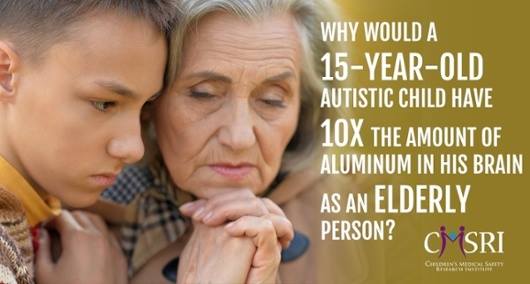
  • 15 year old autistic teen has 10x times amount of aluminum in brain than elderly person

    15 year old autistic teen has 10x times amount of aluminum in brain than elderly person

    Breaking news: A new study, just published in the peer-reviewed Journal of Trace Elements in Medicine and Biology has found, via brain autopsies, that there are unusually high amounts of aluminum in the brains of autistic children.

    Here’s an excellent post about this new science from the Children’s Medical Safety Research Institute:

    For my science nerd geek friends out there, here’s the abstract from the study in its entirety:

    “Autism spectrum disorder is a neurodevelopmental disorder of unknown aetiology. It is suggested to involve both genetic susceptibility and environmental factors including in the latter environmental toxins. Human exposure to the environmental toxin aluminium has been linked, if tentatively, to autism spectrum disorder. Herein we have used transversely heated graphite furnace atomic absorption spectrometry to measure, for the first time, the aluminium content of brain tissue from donors with a diagnosis of autism. We have also used an aluminium-selective fluor to identify aluminium in brain tissue using fluorescence microscopy. The aluminium content of brain tissue in autism was consistently high. The mean (standard deviation) aluminium content across all 5 individuals for each lobe were 3.82(5.42), 2.30(2.00), 2.79(4.05) and 3.82(5.17) μg/g dry wt. for the occipital, frontal, temporal and parietal lobes respectively. These are some of the highest values for aluminium in human brain tissue yet recorded and one has to question why, for example, the aluminium content of the occipital lobe of a 15 year old boy would be 8.74 (11.59) μg/g dry wt.? Aluminium-selective fluorescence microscopy was used to identify aluminium in brain tissue in 10 donors. While aluminium was imaged associated with neurones it appeared to be present intracellularly in microglia-like cells and other inflammatory non-neuronal cells in the meninges, vasculature, grey and white matter. The pre-eminence of intracellular aluminium associated with non-neuronal cells was a standout observation in autism brain tissue and may offer clues as to both the origin of the brain aluminium as well as a putative role in autism spectrum disorder.”

    And here’s where to watch JB Handley and Del Bigtree break it all down and call out the scientists who refuse to tell the truth and who perpetuate public health policy that is harming our kids: https://www.facebook.com/jbhandleyjr/videos/1924798020893677/

    Our own toxicologist has a through write up that’s easy to read, about the dangers of aluminum <here>

    Even as U.S. Food and Drug Administration showed years ago that aluminum is neurotoxic, the CDC maintained that the cumulative amounts of aluminum injected intramuscularly via vaccines was not. This kind of magical thinking categorizes otherwise smart scientists who cannot or will not pay attention to what is right in front of them when it goes against their belief system. Now we have even more scientific proof that something is amiss with #aluminum and it is implicated in autism.

    Amount of aluminum in vaccines include:

    • Hib (PedVaxHib brand only) – .225 mg per shot
    • Hepatitis B – .25 mg
    • DTaP – depending on the manufacturer, ranges from .17 to .625 mg
    • Pneumococcus – .125 mg
    • Hepatitis A – .25 mcg
    • HPV – .225 mg
    • Pentacel (DTaP, HIB and Polio combo vaccine) – .33 mcg
    • Pediarix (DTaP, Hep B and Polio combo vaccine) – .85 mcg

    I propose we all rip the blinders off our eyes and figure this out together. Leave your egos at the door, doctors, researchers, vaccine injury deniers, and brain damage deniers. Cigarettes cause cancer. DES is not safe for pregnant women. Vaccines are harming some children. We all care about the same thing: children’s health. Can we please remember that and move forward already?

    “Yet, while the aluminium content of each of the five brains was shockingly high it was the location of the aluminium in the brain tissue which served as the standout observation.

    The majority of aluminium was identified in non-neuronal cells, which are involved in maintaining a constant internal environment.

    “Aluminium was also found in inflammatory cells in the brain, alongside clear evidence of inflammatory cells heavily loaded with aluminium entering the brain via the surrounding membranes and those that separate the brain from circulating blood.

    “The fact that the majority of aluminium found in brain tissues in ASD was within cells and associated with tissues that maintain the body’s internal environment is, at least for now, unique to ASD and may begin to explain why young adolescents had so much aluminium in their brains.”

    (Via Daily Mail)

    -from Jennifer Margulis https://www.facebook.com/photo.php?fbid=10215128147545356&set=p.10215128147545356&type=1&theater

  • Hearty Stew

    Hearty Stew

    Nothing says comfort like a hearty stew. Mental health is just as important as physical health. Busy holiday seasons can often mean a change in diet (quick snacks and sugar tempations). Treat your body right and keep your immune system strong with a heart stew.This quick and simple soup recipe will help you use them up..and heat you up as we enter into winter!

    Ingredients
    1 lb grass fed ground beef
    2- 32 oz containers of organic vegetable broth
    2 tbsp butter
    5 stalks celery, chopped
    1/2 large onion, chopped
    1/2 – 1 tsp italian seasoning (to taste)
    1/4 – 1/2 tsp black pepper (to taste)
    sea salt to taste (about 2 tsp)
    2 tomatoes (preferably blanched and peeled – check notes below)
    1 bunch spinach, coarsely chopped
    3 large carrots,
    1 cup frozen peas

    Melt butter in a stockpot and add celery, onions, and ground beef. When beef is browned through, add the vegetable broth, italian seasoning, black pepper, sea salt and tomatoes. Let cook for about 10-15 minutes. Add spinach. Serve.

    Additional notes/suggestions:
    To blanch and peel tomatoes just boil a pot of water and drop the tomatoes in for a few minutes. When you see the skins begin to split apart, remove them from the water. Then they are very easy to peel. Once peeled, cut the tomato in half and remove as many seeds as possible then chop.

    This soup is even better re-heated the next day.

    For more great recipes visit https://www.doctormain.com/healthy-recipe.html

  • Cuddling your infant changes their genetics, study says

    Cuddling your infant changes their genetics, study says

    Baby wearing doesn’t just keep our babies warm, snug, and loved. a new study shows it changes their very genetics. As part of my adoptive parent training, I learned of the many studies showing the psychological brain benefits of close consistent contact with my children. I am THRILLED to see science is still expanding our knowledge of physical contact focusing on the biological effect. A new study says cuddling can actually affect babies at the molecular level, and the effects can last for years. Based on the study, babies who get less physical contact and are more distressed at a young age, end up with changes in molecular processes that affect gene expression.

    The team from the University of British Columbia in Canada emphasises that it’s still very early days for this research, and it’s not clear exactly what’s causing the change.

    But it could give scientists some useful insights into how touching affects the epigenome – the biochemical changes that influence gene expression in the body.

    During the study, parents of 94 babies were asked to keep diaries of their touching and cuddling habits from five weeks after birth, as well as logging the behaviour of the infants – sleeping, crying, and so on.

    Four-and-a-half years later, DNA swabs were taken of the kids to analyse a biochemical modification called DNA methylation. It’s an epigenetic mechanism in which some parts of the chromosome are tagged with small carbon and hydrogen molecules, often changing how genes function and affecting their expression.

    The researchers found DNA methylation differences between “high-contact” children and “low-contact” children at five specific DNA sites, two of which were within genes: one related to the immune system, and one to the metabolic system.

    DNA methylation also acts as a marker for normal biological development and the processes that go along with it, and it can be influenced by external, environmental factors as well.

    Then there was the epigenetic age, the biological ageing of blood and tissue. This marker was lower than expected in the kids who hadn’t had much contact as babies, and had experienced more distress in their early years, compared with their actual age.

    “In children, we think slower epigenetic ageing could reflect less favourable developmental progress,” says one of the team, Michael Kobor.

    In fact, similar findings were spotted in a study from 2013 looking at how much care and attention young rats were given from a very early age.

    Gaps between epigenetic age and chronological age have been linked to health problems in the past, but again it’s too soon to draw those kind of conclusions: the scientists readily admit they don’t yet know how this will affect the kids later in life.

    We are also talking about less than 100 babies in the study, but it does seem that close contact and cuddles do somehow change the body at a genetic level.

    Of course it’s well accepted that human touch is good for us and our development in all kinds of ways, but this is the first study to look at how it might be changing the epigenetics of human babies.

    It will be the job of further studies to work out why, and to investigate whether any long-term changes in health might appear as a consequence.

    “We plan to follow up on whether the ‘biological immaturity’ we saw in these children carries broad implications for their health, especially their psychological development,” says one of the researchers, Sarah Moore.

    “If further research confirms this initial finding, it will underscore the importance of providing physical contact, especially for distressed infants.”

    The research has been published in Development and Psychopathology.

    Human relationships, interaction and touch. Photo by Sabine van Straaten on Unsplash

  • When Parental Choice Ends in CPS Taking Your Child

    When Parental Choice Ends in CPS Taking Your Child

    In Idaho, lawmakers are reviewing legislation to be debated in the upcoming 2018 session that would greatly infringe upon rights of parental choice and protections. In 2016, an interim committee was created at Governor Butch Otter’s request to research “faith healing”. This belief is practiced among some Idaho residents, including some followers of Christ Church in Canyon County. Parents in this group rely upon the power of prayer, accepting whatever results as “God’s will”. The state argues that “treatable illness” such as pneumonia that might result in the child’s death due to lack of “proper medical treatment” are of concern.

    However, when the legislature targets a specific group of people to say their beliefs are unacceptable and that lack of compliance can be punishable by law, we have to ask whether this is rational given the fact that medical errors are now in the 3rd leading cause of death nationwide, as reported by John’s Hopkins University in 2016. The U.S. also has the world’s highest infant mortality rate according to the CDC’s own data.

    It is discriminatory at least and un-Constitutional at best to create any legislation directed at a specific group. If the legislature or Congress were considering such a bill which targeted any other minority group, there would be citizens, politicians, special interest groups and lobbyists protesting and up in arms. Why are we not outraged by the idea that this specific group is being called out for their beliefs? And can we truthfully say this is only directed at one group – or is it actually a means to control and criminalize all those whose beliefs and practices fall outside the spectrum of “accepted” methods to treat medical conditions, the allopathic religion of modern, conventional science and medicine; medical practice and “science” sponsored by large, powerful corporations that take their cues from and which are the recipients of financial incentives from these corporations?

    This is what is defined as a conflict of interest!

    When will the leaders of the modern medical industry stop insisting that conventional medical treatments are not a “gold-standard” or a one-size fits all treatment that results in 100% success? Patients suffer and die regularly when following conventional medical recommendations. And yet these practitioners and scientists endorsing these practices, drugs, and biologics have been given a pass while those pursuing holistic or “alternatives” are thrown under the bus. Those same practitioners and scientists blatantly ignore the science and evidence that their practices result in these consequences.

    Holistic health treatment may sometimes result in illness or death, but the point is that the same results occur with conventional medical treatment and the choice to refuse any type of medical treatment is the parent’s sovereign right, not the state’s right. The Declaration of Independence explicitly states we “are endowed by our Creator with certain unalienable rights, that among these are Life, Liberty and the Pursuit of Happiness.” Who is to say that your choice to decline medical treatment, vaccines, or any procedure is denying your child those unalienable rights when people die every day from allopathic (conventional) care?

    Legislation sets a dangerous precedent

    We’ve already seen the damage done in CA with SB277 (mandatory vaccine legislation which went into effect on July 1, 2016) and subsequent legislation, SB18 (children’s “protection”) from Senator Richard Pan, which according to the No On SB18 site “opens your front door and invites the government in to stay, not only as a spectator, but as a dictator”. The so-called “faith healing” bill is dangerous for Idaho, and similar pieces of legislation are dangerous for other states. If more states begin to graft this type of legislation into their system of laws, more parents and families will face discrimination. We believe the language and intent of these types of legislation are dangerous and will erode parental choice and rights. This kind of legislation is fundamentally harmful and disintegrating to one of the most important foundations of our society. When we surrender our personal sovereignty to any government, we have little left to lose as a society. We also believe corporations are responsible for fueling these kinds of scenarios, with greed and control at the helm of incentives to pass sponsored legislation.

    Parental choice

    Why do parents question vaccines and decide to opt out? Is it because some parents are hysterical, irrational beings that make knee-jerk reactions based simply on social media conversations and hearsay that causes them to decline vaccination?

    Instead of jumping to conclusions about the pro-education vaccine parents, let’s look at the facts and attempt to understand the reasoning and research behind these discerning, educated individuals’ mindset who may be concerned and seeking answers, or who may have found themselves with a vaccine-injured or deceased child.

    Pharmaceutical immunity from lawsuits

    While we’re on the topic of medical errors being in the Top 3 leading causes of death being revealed by some of our leading and respected experts in medical and health fields, here’s another issue: the vaccine-industry’s not-so transparent history and actions. In the 1980s, use of pharmaceutical products was actually causing lawsuits by consumers and the pharmaceutical industry threatened to discontinue manufacturing of vaccines. After the federal government stepped in and granted immunity to these corporations, pharmaceutical companies were no longer liable for any damages incurred to consumers using their products, for any kind of vaccine injury.

    From the National Vaccine Information Center:

    “On February 22, 2011 the U.S. Supreme Court shielded drug companies from all liability for harm caused by vaccines mandated by government when companies could have made a safer vaccine.

    From now on, drug companies selling vaccines in America will not be held accountable by a jury of our peers in a court of law if those vaccines brain damage us but could have been made less toxic.

    To understand how this happened, we have to turn the clock back to 1982. That is when four big drug companies (Merck, Wyeth, Lederle, Connaught) blackmailed Congress by threatening to stop selling vaccines in America unless a law was passed giving them complete immunity from prosecution.

    The pharmaceutical industry knew they were in big trouble because the old, crude whooping cough vaccine in the DPT shot was causing brain inflammation and death in many children; the live oral polio vaccine was crippling children and adults with vaccine strain polio; and Americans were filing lawsuits to hold drug companies responsible for the safety of their products.”

    So, if a parent allows a child to be vaccinated and the child becomes injured or dies, the parent has essentially no recourse. The “vaccine court” set up by the federal government, the VICP (Vaccine Injury Compensation Program) via Health and Human Services which deals with vaccine court cases is funded by tax payer dollars. What does this mean? Essentially, a surcharge is applied to every vaccine sold. Over 300 million Americans pay for the damages when children are vaccine-injured, not the pharmaceutical industry. This is the only instance where a manufacturer remains free from liability for damage from their own products. Shouldn’t the industry that damages be held accountable?

    CDC database contains a list of reported vaccine-injuries

    VAERS is a joint database maintained by the CDC and FDA. On the VAERS site, you can read the following statement: “”Underreporting” is one of the main limitations of passive surveillance systems, including VAERS.” The term “underreporting” refers to the fact that VAERS receives reports for only a SMALL FRACTION of actual adverse events.”

    For example, in 2010 alone, the Vaccine Adverse Event Reporting System (VAERS), a voluntary reporting system, catalogued 30,000+ reports of possible vaccine injury or death. 4,000+ were categorized “serious” where an ER visit/hospitalization, professional care, death or permanent injury was necessary. To access data for a specific year, visit the VAERS Database.

    Here’s an explanation of what “small fraction” actually means:

    Let’s say that “small fraction” equates to 1-5%, that means the actual vaccine-related injuries and deaths are 600,000 – 3,000,000. Serious incidents fall inbetween 80,000 – 400,000. Actual deaths linked to the immunization program in 2010? 4,600 – 23,300

    In that same year, 54%+ of reported fatalities occurred in children younger than the age of 3. It’s no coincidence that children under 3 receive more vaccines than all other age groups combined.

    So, if these numbers are accurate – based on the CDC/FDA approximations (“small fraction”), then there is a much higher number of injuries and fatalities linked to vaccines!

    The numbers of vaccine-injuries and deaths are not insignificant. A search for “vaccine-injury” on Youtube will yield dozens and dozens of testimonials by parents and more discussions of this by medical doctors and other professionals.

    Adverse reactions on vaccine product inserts

    Here are a few examples of Adverse Reactions or Adverse Events listed in some vaccine package inserts:

    The MMR vaccine insert lists encephalopathy in its “Adverse Reactions”, which has been correlated in scientific studies to autism here, here, and here. Hear Gladys’s story about her son’s autism diagnosis after receiving the MMR vaccine.

    The DTaP (Diphtheria, Tetanus, Pertussis) vaccine Kinrix lists dehydration and hypernatremia; cerebrovascular accident; dehydration and gastroenteritis under “Serious Adverse Events”. Hear the story of 19-month old Lauren’s vaccine reaction to the DTaP.

    The Heptatitis B Pedvax vaccine insert lists Lymphadenopathy and Febrile seizures as well as unusual high-pitched crying, prolonged crying, diarrhea, vomiting, crying, pain, otitis media, rash, and upper respiratory infection. Kimberly speaks out about her baby’s reaction to the HiB vaccine.

    The HPV Gardasil (human papillomavirus) vaccine insert lists the following: “headache, fever, nausea, and dizziness; and local injection site reactions (pain, swelling, erythema, pruritus, and bruising) occurred after administration with GARDASIL. Syncope [temporary loss of consciousness], sometimes associated with tonic-clonic movements and other seizure-like activity, has been reported following vaccination with GARDASIL and may result in falling with injury; observation for 15 minutes after administration is recommended. Anaphylaxis has been reported following vaccination with GARDASIL.” See this CNN report on Gardasil vaccine adverse events and Gardasil vaccine-injury from a mother’s perspective.

    More information on vaccine reactions:

    Modern Alternative Health – Vaccine reactions

    Health Impact News – Have you or your child been damaged by vaccines?

    Parents and consumers have the right to know what could happen, and the right to Informed Consent! Are they receiving accurate, forthcoming information from their care providers?

    Most parents don’t receive the package inserts when they take their children in to be vaccinated. The majority of nurses and doctors hand parents a colorful piece of paper that provides minimal descriptions of what could happen when their child receives a vaccine. This is not the same as a package insert.

    Informed Consent is the law, and this information is typically not upheld by medical and health professionals!

    What if a child has a weakened immune system, vaccine-injury, allergy, intolerance or life-threatening reaction to a drug or biologic (vaccine)? What if the parent relays this information to the doctor and the doctor administers the medication or vaccine regardless? Should we simply ignore symptoms and damage caused by medications and vaccines? Ignore the biological reasons why children’ become ill and need treatment that heals (not drugs or vaccines, in numerous cases) so that we can say we are “making children safe”, when in reality we are actually causing much more harm, and irreparable damage that could compromise them for a lifetime, or worse … kill them?

    Right now, there is a family in northern ID who needs everyone’s support (November 2017): Baby Elijah was taken by authorities shortly after birth when the parents, a disabled mother with non-progressive Cerebral Palsy and the baby’s father decided against vaccination at Kootenai Health in Coeur d’Alene, ID. Hospital staff were not concerned about the parent’s ability to care for the child until the vaccination declination was given. It was shortly after this event that CPS workers came in to take the newborn infant from his family. Read more and donate here.

  • Baby Elijah UPDATE: Where’s the Line?

    Baby Elijah UPDATE: Where’s the Line?

    On Wednesday, November 22nd, after the parents refused vaccination for the baby, the state became involved and took this beautiful newborn, Elijah, from his loving parents, claiming the mother to be unfit due to a diagnosis of cerebral palsy (a non progressive movement disorder).

    They are keeping everything close to the vest, per attorney instruction. I’m actually going to be at the hearing on Fri. I’m looking forward to meeting everyone and hopefully hearing that the court decides to reunite this family.

    I’m sure that we don’t know everything. We do know that she is disabled. This would require accommodation and assistance. Didn’t they have plenty of time to work through that during the pregnancy? They couldn’t have figured out accommodations and assistance where needed? I’m sure, since this didn’t take place, hospital staff had concerns when they saw a disabled mother struggling to care for her son. Wouldn’t that have been the perfect time to bring in help, maybe someone that has experience with parents that have cerebral palsy. Hospitals do have such people, I checked.

    There is no indication of drug abuse or criminal activity of any kind. I get asked this question a lot.

    The mother lives with the father and the baby’s grandfather. She has plenty of hands to help her but family doesn’t count. As if anyone hired would would deliver the same kind of attentive care as a loved one.

    One of the reasons that I was drawn to this case is that on top of having 2 capable adults she has a church family that is very close. I heard from folks that knew people that went to school with her and knew her for years. By all accounts they didn’t think she was a harm to the baby and would be happy to help if needed. It sounds like she is beloved and the community supports her tremendously. This is not something I believe the state should intervene with as this kind of devotion comes from love NOT tax payer dollars.

    I would like to remind you that parental rights are GRANTED to us by neither the hospital nor the state. These are our God given rights with which you should not interfere. If a government department is given the absurd right to determine that a mother is not fit because she has an illness, where would you stop asserting that control? What if the parent is blind? What if the parent has cancer? What if the parent breaks an arm in a car crash? Would they deem these scenarios appropriate to remove ones own child from a loving home? I’m sure that you see the slippery slope that this can become when an entity determines that it can dictate the appropriate physical condition of a parent.

    We also know that the entire tone of hospital staff changed the minute that the parents made it clear that they were not going to vaccinate baby Elijah. CPS arrived shortly after.

    I hope that helps to bring understanding. I’m sure that more facts will come out as they move through the case. Given that our human and parental rights come from God, we should exhaust all possible remedies before even considering taking a child from his own parents. From my observations and discussions, that did not happen here. ~Miste