Author: Health Freedom Idaho

  • Protecting Idaho’s Parental Rights.

    Protecting Idaho’s Parental Rights.

    In a world where profit and influence is putting science, truth, and health in jeopardy, Health Freedom Idaho is fighting to protect your Rights as a parent to Choose or refuse medical treatments, and Informed Consent. Thank you for supporting us as we hold the line to keep Idaho family’s safe from the overreach of government. Join Today.

  • Herd Immunity

    Herd Immunity

    Why Herd Immunity Does not Work

    If a vaccine produces any immunity at all, why on earth does it matter if anyone else is vaccinated? If vaccines produce “immunity” to the diseases for which they are given; it should not make a bit of difference who you are around or how many in the community are vaccinated. That’s like saying my bug spray won’t work unless you wear yours.

    Furthermore, if I take antibiotics for an illness, it will not affect your immune system a bit.

    True immunity is only granted through natural exposure to a disease. Artificial exposure through vaccination is not true immunity. Any questionable immunity gained through vaccination inevitably wanes over time. Thus, the need for booster shots later.

    We actually have no proof that vaccines even work because the Centers for Disease Control, (CDC) refuses to vaccinate individuals and subsequently expose them to a disease.

    The Herd Immunity Myth

    Vaccine-induced herd immunity is a myth. This can be proven quite simply. Here’s why: Did you know they used to teach doctors in medical school that childhood vaccines lasted a lifetime? This was believed for over 70 years.

    It was not until relatively recently that it was discovered that immunity from vaccination is not permanent. What this means is that at least 1/2 the population, have had no vaccine-induced immunity against any of these diseases for which they were vaccinated for very early in life. In essence, at least 50% or more of the population has been “unprotected” for decades.

    Over half of us are NON-VACCINATED! We’ve been going to churches, schools, parks, and swimming pools for years with non-vaccinated people and yet somehow we are all still alive!

    read more at Herd Immunity

  • Vaccine Safety and Freedom Of Medical Choice

    Vaccine Safety and Freedom Of Medical Choice

    The National Vaccine Information Center (NVIC.org) and Dr. Joseph Mercola (Mercola.com) are sponsoring Vaccine Awareness Week Nov. 1-6, 2017 to raise public consciousness about important vaccine issues affecting Americans and their families.

    The weeklong series of articles about vaccination published on Mercola.com includes the launch of NVIC’s Advocacy Portal, which is a free online interactive database and communications network that empowers citizens to protect and enhance vaccine exemptions in all 50 states.

    Think Globally, Act Locally

    Join Health Freedom Idaho today.

    Last year Health Freedom Idaho helped educate legislators and defeated three bills that threatened our medical choice freedoms. This year, greater challenges are expected. Your support keeps our legislative volunteers at the capitol tracking potential threats to your family’s freedom of choice, informed consent and parental rights.

  • Local Food Sources. Farmer Direct Connections

    Local Food Sources. Farmer Direct Connections

    We believe that locally grown and organic products provide a significant variety of benefits. Studies have shown that locally sourced and organic foods have more nutrients, including antioxidants, than traditionally grown foods.

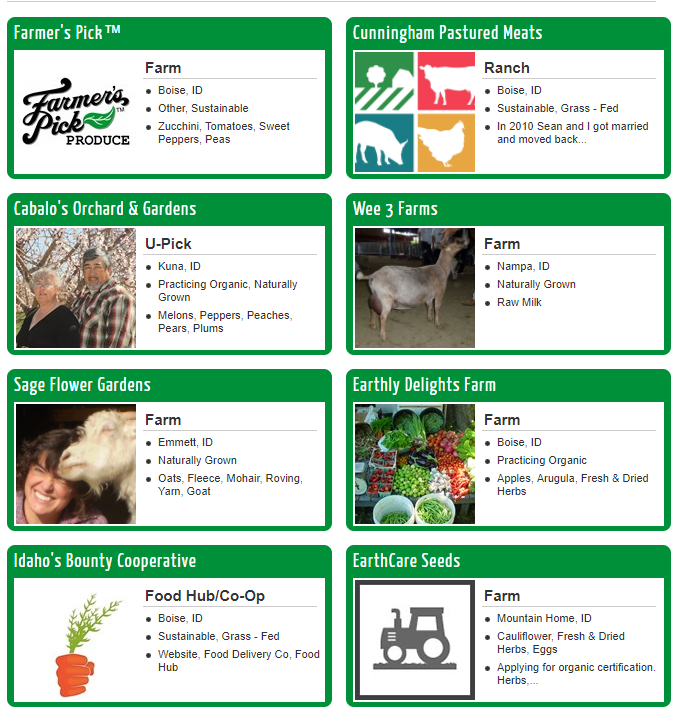
    Find locally sourced farm fresh foods and you pick farms in Boise area Farms today at Agrilicious.org.

    What are YOUR favorite farmers? Share in the comments!

  • Spermicide in the Flu Vaccine

    Spermicide in the Flu Vaccine

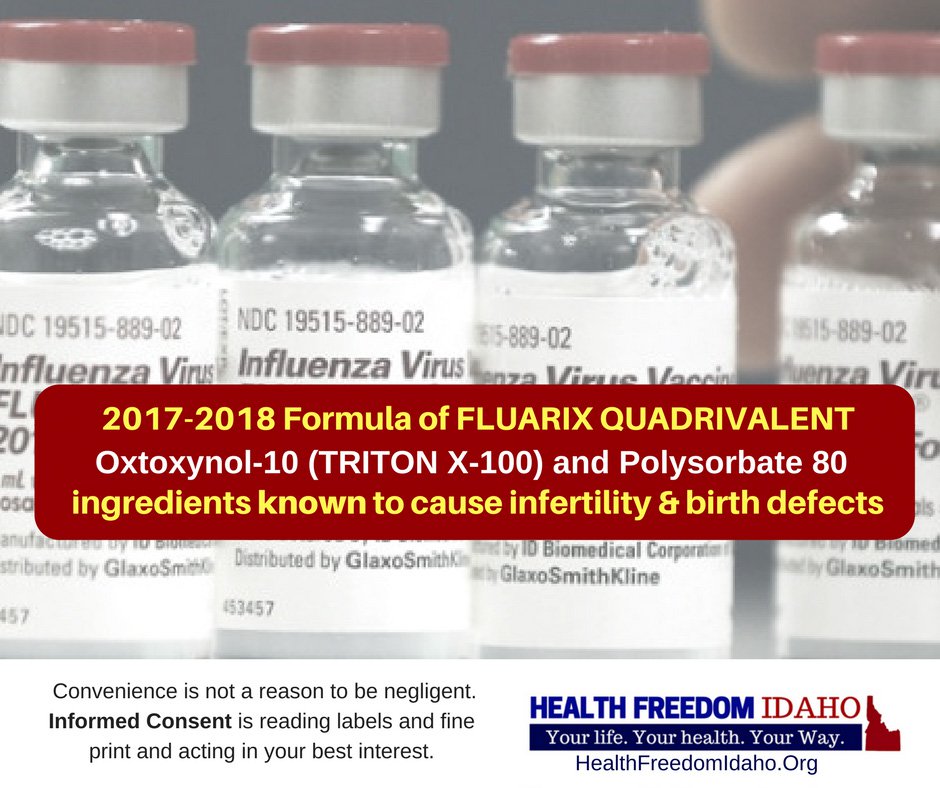
    Oxtoxynol-10 (TRITON X-100) and Polysorbate 80 are two of the ingredients in 2017 flu shot! Both can cause infertility! Read for yourself the package insert for FLUARIX: FLUARIX package insert link. In their vaccine insert under section 13.1 we read, “FLUARIX QUADRIVALENT has not been evaluated for carcinogenic or mutagenic potential or male infertility.” Makers admit, the flu shot doesn’t work all the time. The manufacturer’s site. Remember these pharmaceutical companies are not liable for any damages their vaccines might cause. In 2017, they are expected to profit 4.97 billion for the flu vaccine alone.

    https://www.fda.gov//Vaccin/ApprovedProducts/UCM220624.pdf


    Triton X100 and Octoxynol -9 and Octoxynol-10 are the same thing. The CDC shows it in the ingredients listing. You will get arguments about whether they are spermacides or not, however the CDC itself lists both Octoxynol-9 and 10 as Triton X 100.

    Octoxynol-9 — Teratogenic Agent: There is evidence to indicate that exposure to Octoxynol-9 during pregnancy may have a teratogenic effect on the fetus.
    A teratogen is a substance that can cause birth defects. The likelihood and severity of defects may be affected by the level of exposure and the stage of pregnancy that the exposure occurred at. More detailed information about the symptoms, causes, and treatments of Octoxynol-9 — Teratogenic Agent is available below.

    Octoxynol 9 is also a vaginal spermicide, designed to “strip” sperm so they are no long able fertilize an egg. It is used in the following vaginal spermicide products: Koromex Cream and Ortho-Gynol. Another name for this is Triton X 100 which is listed below with more MSDS and information. Used in several flu vaccines. http://www.rightdiagnosis.com/o/oct

    Pub Chem shows that Triton X and Octoxynol-9 are the same thing
    https://pubchem.ncbi.nlm.nih.gov/compound/Triton_X-100…

    The Dangers of Spermacide (but perfectly safe to inject)
    https://www.condom-sizes.org/…/nonoxynol-9-and-stds-the-dan…

    Safety Data from Manufacturer. Acute toxicity listed http://www.sigmaaldrich.com/catalog/product/sial/x100…

    Material Safety Data Sheet http://www.sigmaaldrich.com/MSDS/MSDS/PleaseWaitMSDSPage.do…

    Triton x-100 used as transport agent to cross blood brain barrier;ncbi.nlm.nih.gov/pmc/articles/PMC4504453/ April 10, 2017

    The CDC Ingredients pdf shows it like this:
    Influenza (Fluarix) Trivalent & Quadrivalent
    octoxynol-10 (TRITON X-100), α-tocopheryl hydrogen succinate, polysorbate 80 (Tween 80), hydrocortisone, gentamicin sulfate, ovalbumin, formaldehyde, sodium deoxycholate, sodium phosphate-buffered isotonic sodium chloride
    You can see that they show oxtoxynol-10 as TritonX-100.

    Another is here from the CDC list
    Influenza (Fluzone) Intradermal
    egg protein, octylphenol ethoxylate (Triton X-100), sodium phosphate-buffered isotonic sodium chloride solution, sucrose
    octylphenol Ethoxylate is also Triton X 100.

    Other names
    1.Octoxinol
    2.Octoxinols
    3.Octoxynol
    4.Octoxynol 9
    5.Octoxynol-9
    6.Octoxynols
    7.Octylphenoxy Polyethoxyethanol
    8.Octylphenoxypolyethoxyethanols
    9.Polyethoxyethanol, Octylphenoxy
    10.Triton X 100
    11.Triton X 305
    12.Triton X 45
    13.Triton X-100
    14.Triton X-305
    15.Triton X-45
    16.Triton X100
    17.Triton X305
    18.Triton X45

    Lots of good info about the flu and the flu shot:
    http://www.nvic.org/Vaccines-and-Diseases/Influenza.aspx

    The latest report offers comprehensive analysis of the global influenza vaccines market. The key player assesses that this market will generate revenues of $4.97 billion in 2017.

  • The Neglected Mineral We Cannot Live Without

    The Neglected Mineral We Cannot Live Without

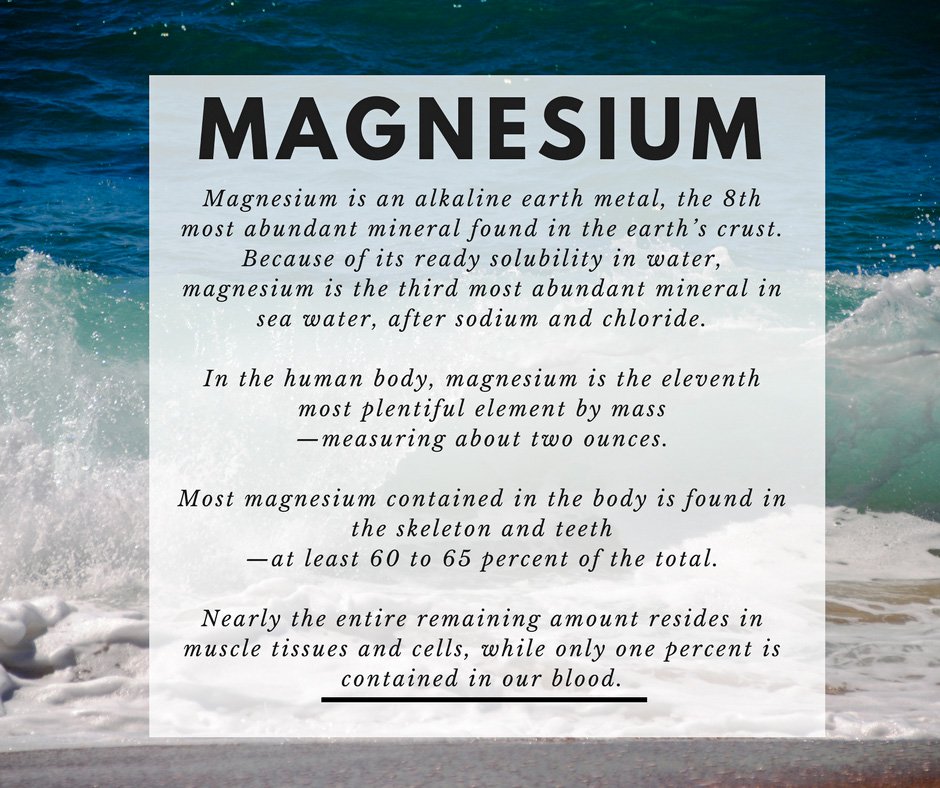
    Every single cell in the human body demands adequate magnesium to function, or it will perish. Magnesium is so important to so many vital body functions, and its deficiency is integrally involved in so many diseases, that more than one researcher has dubbed magnesium a miracle in its ability to resolve or improve numerous disorders. Unfortunately, it is difficult to reliably supply our bodies with sufficient magnesium, even from a good, balanced whole foods diet. Even with organic foods, a magnesium deficient soil creates magnesium deficient crops.

    Magnesium and other nutrients are diminished or lost in produce after harvest, through handling, refrigeration, transport and storage, even if all these steps were done “properly.” Buying produce and then storing it for days in your own refrigerator continues the nutrient loss, whether the produce is from the supermarket or your local farmers’ market.

    The importance of magnesium ions for all life itself, as well as for overall vibrant health, is hard to overstate. Magnesium is required to give the “spark of life” to metabolic functions involving the creation of energy and its transport (ATP, the body’s fundamental energy currency), and the creation of proteins—the nucleic acid chemistry of life—RNA and DNA, in all known living organisms. In plants, a magnesium ion is found at the center of every chlorophyll molecule, vital for the creation of energy from sunlight. Magnesium is an essential element for both animals and plants, involved in literally hundreds of enzymatic reactions affecting virtually all aspects of life.

    Every single cell in the human body demands adequate magnesium to function, or it will perish. Strong bones and teeth, balanced hormones, a healthy nervous and cardiovascular system, well-functioning detoxification pathways and much more depend upon cellular magnesium sufficiency. Soft tissue containing the highest concentrations of magnesium in the body include the brain and the heart—two organs that produce a large amount of electrical activity, and which can be especially vulnerable to magnesium insufficiency.

    Magnesium works in concert with calcium to regulate electrical impulses in the cell—magnesium concentration inside healthy cells is ten thousand times greater than calcium, and there are crucial reasons for this safeguard. Cellular calcium channels allow that mineral to enter the cell only as long as needed to conduct an impulse; it is ushered out immediately by magnesium once its task is fulfilled. This vigilance is necessary to prevent calcium accumulation in the cell, which could cause dangerous hyper-excitability, calcification, cell dysfunction and even cell death. When excess calcium enters the cells because of insufficient magnesium, muscle contraction is sustained for too long, and we suffer, for example, twitches and tics in mild cases. When magnesium deficiency becomes chronic, we suffer the symptoms of heart disease such as angina pectoris, hypertension and arrhythmia, or the spasms and contractions characteristic of asthma, migraine headache or painful menstrual cramping.

    Magnesium operates as a natural calcium channel blocker and is responsible for relaxation—counter to calcium’s contraction. Thus magnesium is pivotally important to the healthy functioning of our parasympathetic nervous system. It may be hard to believe, but our bodies were actually designed to operate for the most part in a calm, relaxed parasympathetic state, rather than in the heart-pounding, stress- and adrenaline-driven mode of sympathetic nervous system dominance that is nearly constant for many of us today, and which uses up great quantities of magnesium.

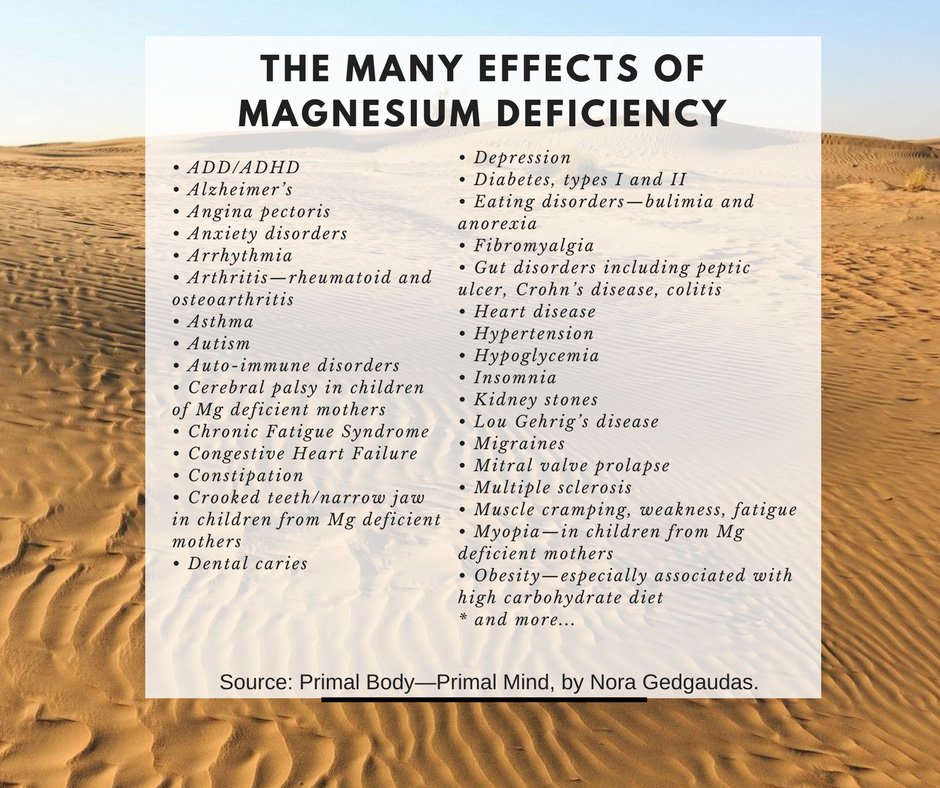
    Magnesium is so important to so many vital body functions, and its deficiency is integrally involved in so many diseases, that more than one researcher has dubbed magnesium a miracle in its ability to resolve or improve numerous disorders. The current list of disorders with direct and confirmed relationships to chronic and acute magnesium deficiency is long, and includes many diseases whose conventional medical treatment does not commonly address magnesium insufficiency (see below). Ongoing research promises to uncover further associations between magnesium deficiency and other illnesses.

    MAGNESIUM DEFICIENCY IS WIDESPREAD

    Unfortunately, it is difficult to reliably supply our bodies with sufficient magnesium, even from a good, balanced whole foods diet. First of all, modern agricultural methods favor the universal use of NPK fertilizers (nitrogen, phosphorus, and potassium). Both potassium and phosphorus are antagonists of magnesium in the soil, and on calcareous soils create a relative magnesium deficiency (the magnesium present is bound and therefore unavailable to the crop). On sandy or loamy soils that are slightly acid, an actual magnesium deficiency often exists, as the magnesium leaches from the soil and is also unavailable to the crop. This leaching also occurs in response to acid rain. Magnesium, in fact, is one of the most depleted minerals in farm soils. To add insult to injury, new plant hybrids are continually introduced that have been bred to survive on these mineral-depleted soils. Of course, when mineral-depleted crops are eaten by animals or by us, they will sooner or later cause disease. Even though organically raised crops should be a better bet nutritionally, this isn’t always the case, and it pays in terms of your health to learn how your farmer replenishes the minerals on his fields.

    “Do you know that most of us today are suffering from certain dangerous diet deficiencies which cannot be remedied until depleted soils from which our food comes are brought back into proper mineral balance? The alarming fact is that foods (fruits, vegetables, grains) now being raised on millions of acres of land that no longer contain enough of certain minerals are starving us—no matter how much of them we eat. The truth is that our foods vary enormously in value, and some of them aren’t worth eating as food.” These words of warning are from the 74th Congress, 2nd session, Senate document number 264, of 1936. It is truly sobering to learn that the decline in soil mineral balance was a topic of serious national concern more than seventy years ago, and the deficit has been affecting us—while steadily getting worse— since our grandparents’ generation.

    Magnesium and other nutrients are diminished or lost in produce after harvest, through handling, refrigeration, transport and storage, even if all these steps were done “properly.” Buying produce and then storing it for days in your own refrigerator continues the nutrient loss, whether the produce is from the supermarket or your local farmers’ market.

    Food processing causes enormous loss of magnesium in foods that are commonly fairly good sources of it, such as leafy greens, nuts, seeds and whole grains. Most of the magnesium in grain— found in the bran and germ—is lost in milling whole grains for white flour, which is used nearly exclusively for hundreds of devitalized processed food items. When nuts and seeds are roasted or their oils extracted, magnesium is lost. Cooking greens causes whatever magnesium they might contain to leach into the cooking water. Foods tend to lose less calcium than magnesium through these processes, adding to a troublesome dietary calcium overload that we will discuss shortly.

    Fluoride in drinking water binds with magnesium, creating a nearly insoluble mineral compound that ends up deposited in the bones, where its brittleness increases the risk of fractures. Water, in fact, could be an excellent source of magnesium—if it comes from deep wells that have magnesium at their source, or from mineral-rich glacial runoff. Urban sources of drinking water are usually from surface water, such as rivers and streams, which are low in magnesium. Even many bottled mineral waters are quite low in magnesium, or have a very high concentration of calcium, or both.

    A diet of processed, synthetic foods, high sugar content, alcohol and soda drinks all “waste” magnesium, as a lot of it is required for the metabolism and detoxification of these largely fake foods. According to Dr. Natasha Campbell-McBride, the body requires at least twenty-eight molecules of magnesium to metabolize a single molecule of glucose. Phosphates in carbonated drinks and processed meats (so-called “luncheon meats” and hot dogs) bind with magnesium to create the insoluble magnesium phosphate, which is unusable by the body.

    Tannins, oxalates, and phytic acid all bind with magnesium, making it unavailable to the body unless extra care is taken to neutralize some of these compounds during food preparation. It is interesting to note that foods commonly containing magnesium (provided they were grown in mineral-rich soil) also contain lots of these anti-nutrients, such as spinach (oxalates) and whole grains (phytates).

    Many commonly prescribed pharmaceutical drugs cause the body to lose magnesium via the urine, such as diuretics for hypertension; birth control pills; insulin; digitalis; tetracycline and some other antibiotics; and corticosteroids and bronchodilators for asthma. With the loss of magnesium, all of the symptoms being “treated” by these drugs over time inevitably become worse.

    Magnesium absorption is impeded with the use of supplemental iron. If you take calcium supplements, your need for magnesium increases, and in fact calcium will not be properly absorbed or metabolized if adequate magnesium is missing, and will mostly end up dangerously deposited in soft tissues. Magnesium is responsible for converting vitamin D to the active form that allows calcium to be absorbed, and also regulates calcium’s transport to hard tissues where it belongs. Lactose is another inhibitor of magnesium absorption (and milk is not a good source of the mineral to begin with), along with excess potassium, phosphorus and sodium.

    Mental and physical stress, with its related continuous flow of adrenaline, uses up magnesium rapidly, as adrenaline affects heart rate, blood pressure, vascular constriction and muscle contraction— actions that all demand steady supplies of magnesium for smooth function. The nervous system depends upon sufficient magnesium for its calming effects, including restful sleep. Hibernating animals, by the way, maintain very high levels of magnesium. Magnesium deficiency will accelerate a vicious cycle and amplify the effects of chronic stress, leading to more anxiety, irritability, fatigue and insomnia—many of the symptoms of adrenal exhaustion—as well as to hypertension and heart pains—symptoms of heart disease.

    Depression is related to stress and magnesium deficiency as well. Serotonin, the “feel good” hormone, requires magnesium in its delicate balance of release and reception by cells in the brain. Only when adequate levels are present can we enjoy mental and emotional equilibrium.

    For reasons not fully understood, the body does not retain magnesium very well; certainly not as well as it holds onto calcium or iron, for example. Heavy sweating from endurance sports such as marathon running or strenuous exercise workouts can dangerously deplete magnesium stores and other electrolytes—although calcium is not wasted, by the way— resulting in trembling, faintness and even seizures and death. The drenching sweats that some menopausal women suffer cause magnesium loss as well, and their diminishing magnesium levels worsen their jagged nerves, sleep disturbances, panic attacks, body aches and depression. If these women have been tempted to consume modern soy products in a misguided attempt to moderate their symptoms, they will in fact lose even more magnesium because it will be bound to the abundant phytates in these concoctions.

    A healthy gut environment is necessary for proper absorption of magnesium from the diet. Irritable bowel syndrome, leaky gut, candidiasis and other gut disorders can severely limit the amount of magnesium that the body will be able to absorb. Older adults often experience decreased stomach hydrochloric acid production, which can impair mineral absorption in general. And with so many treating their “heartburn” with antacids, a healthy digestive environment is hard to maintain.

    CALCIUM AND MAGNESIUM PARTNERSHIP

    Both calcium and magnesium are necessary for the healthy body—in proper balance to one another, as well as to other necessary minerals. Considered biochemical antagonists, one cannot act without eliciting the opposite reaction of the other. Yet calcium and magnesium must both be present in balanced amounts for either one to function normally in the body. Some researchers suggest that the healthy ratio of calcium to magnesium in the diet should be 2:1. Others consider 1:1 to reflect ratios that we evolved with based on our diet prior to the advent of agriculture. In modern industrialized countries the ratio from diet is from 5:1 to as much as 15:1. The imbalance of these two very important minerals produces many dire consequences in the body that are often overlooked by medical practitioners when treating the disease states they cause.

    Aside from the intricate electrical dance that calcium and magnesium perform together, magnesium is necessary to keep calcium in solution in the body, preventing its inappropriate deposition in soft tissues. As long as we have sufficient hydrochloric acid in our stomachs we can dissolve calcium from the foods we eat. After calcium leaves the acidic environment of the stomach and enters the alkaline milieu of the small intestine however, it is magnesium that is necessary to keep calcium soluble. Without sufficient magnesium, a whole host of physiological aberrations can occur with serious health consequences.

    As Dr. Carolyn Dean, author of The Magnesium Miracle, explains, “In the large intestine it [precipitated calcium] interferes with peristalsis, which results in constipation. When calcium precipitates out in the kidneys and combines with phosphorus or oxalic acid, kidney stones are formed. Calcium can deposit in the lining of the bladder and prevent it from fully relaxing, and therefore from filling completely with urine. This leads to frequent urination problems, especially in older people. Calcium can precipitate out of the blood and deposit in the lining of the arteries, causing hardening (arteriosclerosis). . . It can coat and stiffen. . . plaque in the arteries. . . [and] can cause blood pressure to rise as well as increase the risk of heart attack and stroke. Calcium can even deposit in the brain. Many researchers are investigating it as a possible cause of dementia, Alzheimer’s and Parkinson’s disease. Calcium can deposit in the lining of the bronchial tubes and cause asthma symptoms. Calcium in extracellular fluid. . . can decrease the permeability of cell membranes. This makes it increasingly difficult for glucose (a large molecule) to pass through the cell membrane to be converted to ATP in the cells’ mitochondria. High glucose levels created by excess calcium may be misdiagnosed as diabetes.”

    MAGNESIUM IS A POTENT DETOXIFIER

    Magnesium is utilized by the body for all sorts of detoxification pathways and is necessary for the neutralization of toxins, overly acidic conditions that arise in the body, and for protection from heavy metals. It plays a vital role in protecting us from the onslaught of man-made chemicals all around us. Glutathione, an antioxidant normally produced by the body and a detoxifier of mercury, lead and arsenic among others, requires magnesium for its synthesis. According to Mark Sircus, in Transdermal Magnesium Therapy, a deficiency of magnesium increases free radical generation in the body and “causes glutathione loss, which is not affordable because glutathione helps to defend the body against damage from cigarette smoking, exposure to radiation, cancer chemotherapy, and toxins such as alcohol and just about everything else.”

    When our bodies are replete with magnesium (and in balance with the other essential minerals) we are protected from heavy metal deposition and the development of associated neurological diseases. As Dr. Carolyn Dean explains, “Research indicates that ample magnesium will protect brain cells from the damaging effects of aluminum, beryllium, cadmium, lead, mercury and nickel. We also know that low levels of brain magnesium contribute to the deposition of heavy metals in the brain that heralds Parkinson’s and Alzheimer’s. It appears that the metals compete with magnesium for entry into the brain cells. If magnesium is low, metals gain access much more readily.

    “There is also competition in the small intestine for absorption of minerals. If there is enough magnesium, aluminum won’t be absorbed.”

    MAGNESIUM DEFICIENCY IN TOOTH DECAY AND OSTEOPOROSIS

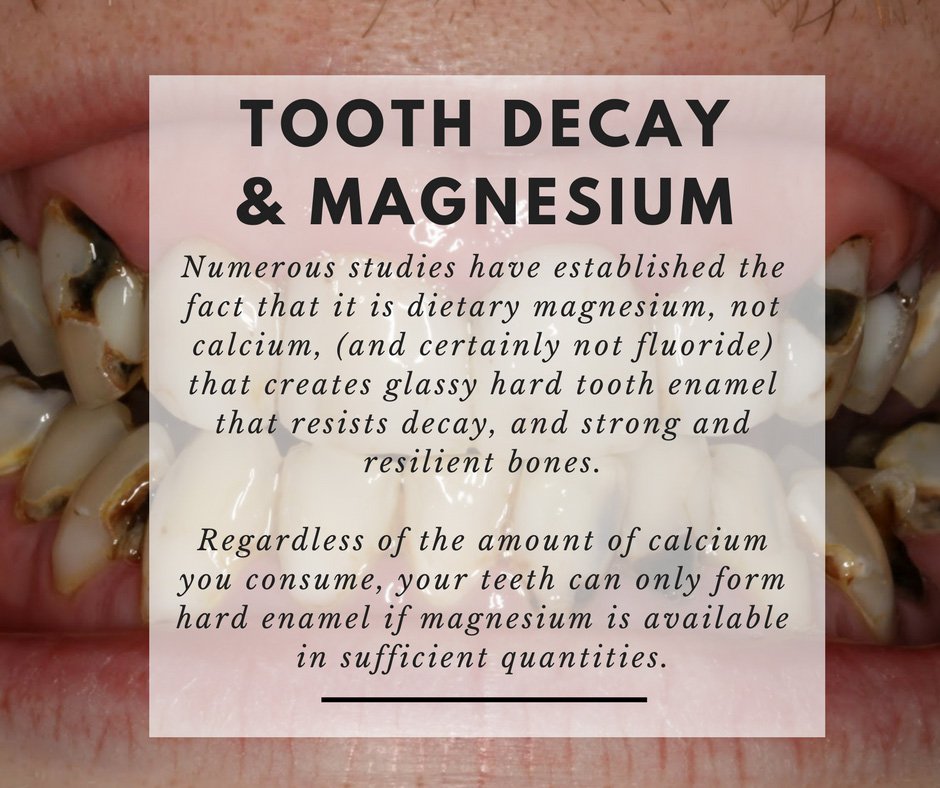
    Ask anyone—your neighbor or even your dentist or doctor—what bones and teeth require to be strong and healthy, and you will undoubtedly hear the response, “Plenty of calcium.” Bones and teeth certainly do require calcium—as well as phosphorus and magnesium, but without adequate amounts of the latter, calcium will not be deposited in these hard tissues, and the structures will not be sound. “When you load up your system with excess calcium,” writes William Quesnell, in Minerals: the Essential Link to Health, “you shut down magnesium’s ability to activate thyrocalcitonin, a hormone that under normal circumstances would send calcium to your bones.” Instead of providing benefits to the body, the displaced calcium actually becomes toxic, causing trouble in soft tissues of the kinds we’ve already discussed.

    According to J. I. Rodale, in Magnesium: the Nutrient that Could Change Your Life, “For years it was believed that high intakes of calcium and phosphorus inhibited decay by strengthening the enamel. Recent evidence, however, indicates that an increase in these two elements is useless unless we increase our magnesium intake at the same time. It has even been observed that dental structures beneath the surface can dissolve when additional amounts of calcium and phosphorus diffuse through the enamel at different rates. Thus milk, poor in magnesium, but high in the other two elements, not only interferes with magnesium metabolism, but also antagonizes the mineral responsible for decay prevention.”

    To revisit Deaf Smith County, Texas, and the justly famous residents whose teeth refused to succumb to decay, Rodale quotes the observations of Dr. Lewis Barnett, presented in a paper before the Texas Medical Association in Dallas, 1952. Dr. Barnett, an orthopedic surgeon, remarked on the low incidence of tooth decay and rapid healing of broken bones among these residents, and offered this explanation: “[The local] water and foods have a very high magnesium and iodine content and recently we have proven that all of the trace minerals known to be essential are present in the water and foods grown in that area.” Further, Dr. Barnett had found that the magnesium bone content of the average Deaf Smith County resident was up to five times higher than that of a resident of Dallas, while the concentrations of calcium and phosphorus were about the same in both groups. His observations led him to state that “[o]ne of the most important aspects of the disease osteoporosis has been almost totally overlooked. That aspect is the role played by magnesium.”

    Rodale emphasizes the fact that Dr. Barnett gave much of the credit for these health benefits to the high magnesium content of the local water, and noted many signs of superior bone development among people in the area: “Dr. Barnett makes mention of the fact that people in older years frequently have fracture of the cervical neck of the femur and these are very difficult to heal in many localities. However, he noted that this fracture rarely occurs in Deaf Smith County, whereas it was common in Dallas County, Texas, where he also practiced. When a fracture did occur in Deaf Smith, healing was easy and rapid even in people eighty to one hundred years old. In contrast, fractures in Dallas were common and very difficult to heal, if not impossible.”

    Over fifty years ago Dr. Barnett tested the magnesium levels of five thousand people and found sixty percent of them to be deficient. How much more of the population is deficient today, when all of the negative conditions contributing to that deficiency have been certainly amplified?

    FOOD SOURCES OF MAGNESIUM

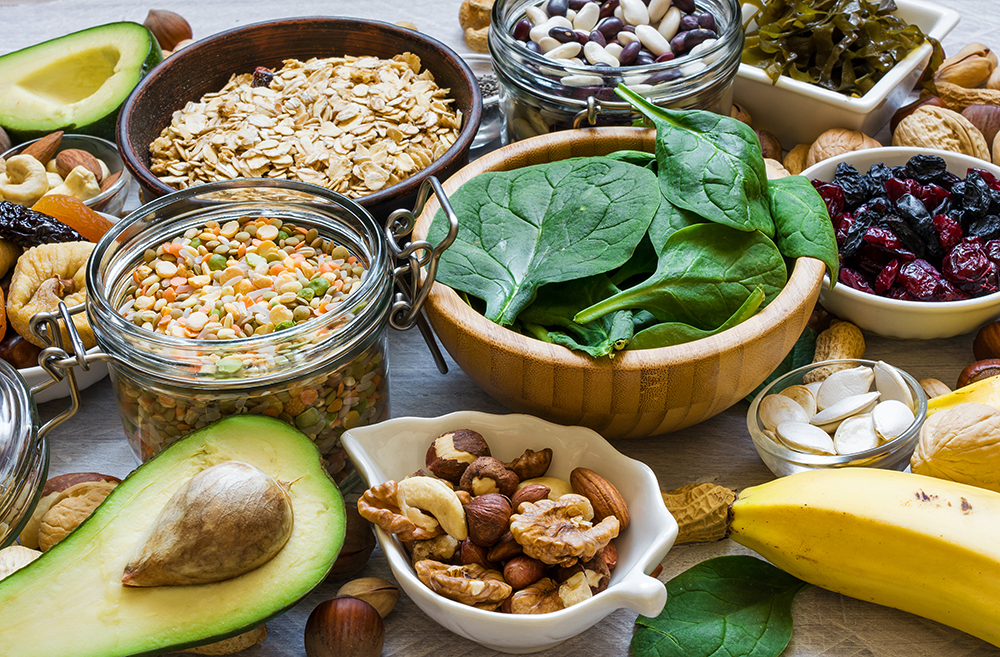
    As we’ve mentioned, if farm soils are well-mineralized, leafy green vegetables, seeds, tree nuts and whole grains are fairly good sources of magnesium. Certain wild-crafted forage foods really stand out, however, such as nettles (860 mg per 100 grams) and chickweed (529 mg per 100 grams), and add many tonic and nutritive benefits to both human and livestock diets largely due to their high mineral content. Kelp, ancient denizen of the sea, contains spectacular levels, as do most sea vegetables. Remember that they are continually bathed in a solution whose third most abundant mineral is magnesium. And authentic, unrefined sea salt is a very good source of magnesium, along with trace minerals. Utilizing bone broths on a daily basis will provide another excellent source of minerals, including magnesium, in a highly assimilable form.

    -and more includes:
    • Osteoporosis
    • Parkinson’s disease
    • PMS—including menstrual pain and irregularities
    • PPH (Primary pulmonary hypertension)
    • Reynaud’s syndrome
    • SIDS (Sudden Infant Death Syndrome)
    • Stroke
    • Syndrome X
    • Thyroid disorders

    Source: Primal Body—Primal Mind, by Nora Gedgaudas.

    FOOD SOURCES OF MAGNESIUM
    In milligrams per 100 grams

    Kelp 760 Pecan 142 Beets 25 Wheat bran 490 Walnut 131 Broccoli 24 Wheat germ 336 Rye 115 Cauliflower 24 Almonds 270 Tofu curdled by Mg nigiri 111 Carrot 23 Cashews 267 Coconut meat, dried 90 Celery 22 Blackstrap molasses 258 Collard greens 57 Beef 21 Nutritional yeast 231 Shrimp 51 Asparagus 20 Buckwheat 229 Corn, sweet 48 Chicken 19 Brazil nuts 225 Avocado 45 Green pepper 18 Dulse 220 Cheddar cheese 45 Winter squash 17 Filberts 184 Parsley 41 Cantaloupe 16 Peanuts 175 Prunes 40 Eggplant 16 Millet 162 Sunflower seeds 38 Tomato 14 Wheat whole grain 160 Sweet potato 31 Milk 13

    MAGNESIUM SUPPLEMENTATION CAN BE TRICKY
    learn more here…https://www.westonaprice.org/health-topics/abcs-of-nutrition/magnificent-magnesium/#.WfD8Hf5BIQU.facebook

    REFERENCES

    The Magnesium Miracle, by Carolyn Dean, M.D., N.D., Ballantine Books, 2007.

    Transdermal Magnesium Therapy, by Mark Sircus, Ac., O.M.D., Phaelos Books, 2007.

    Magnesium Therapy, by Patricia Ann Braun, M.D. http:// pbraunmd.org/magnesium.htm.

    Magnesium: The Nutrient that Could Change Your Life, by J.I. Rodale http://www.mgwater.com/rod06.shtml.

    Leaky gut and magnesium deficiency: http://magnesiumforlife.com/medical-application/magnesium-and-autism/.

    The dangers of magnesium deficiency in endurance athletes: http://findarticles.com/p/articles/mi_m0FDL/is_4_14/ai_n24940334/.

    Primal Body-Primal Mind, by Nora Gedgaudas, Primal Body-Primal Mind Publishing, 2009.

    Healing Wise: Wise Woman Herbal, by Susun S. Weed, Ash Tree Publishing, 1989.

    Put Your Heart in Your Mouth, by Dr. Natasha Campbell- McBride, Medinform, 2007.

  • Home “medicine cabinet” for flu, colds, injuries, and other ailments

    Home “medicine cabinet” for flu, colds, injuries, and other ailments

    Increasingly, we are seeing media reports that drugs and vaccines have side-effects and risks. These facts are easily verifiable simply by reading the package inserts on products. There are testimonials of those who have trusted these products and experienced harmful side-effects.

    Here are just a few of these stories:

    Colton, Utah; Gardasil injury.

    Gunnar, 2-month old boy death from vaccine-injury.

    Recovering from brain-damage, vaccine-injury at 3 months old.

    Doctor of primary care and psychiatry speaks about her daughter’s death from vaccine-injury.

    Medical errors are now in the Top 3 leading causes of mortality:

    U.S. News & World Report

    British Medical Journal

    Washington Post

    There are ways to maintain health naturally without drugs and vaccines, and prevent illness or provide healing and recovery when illness occurs. This is a list of items I keep in my kitchen, pantry, and bathroom on a regular basis. My family has used these during times when we were beginning to show signs of feeling unwell or full-blown illness. I am happy to say that none of us has seen a conventional doctor in over 10 years. We manage our health with nourishing, real food and natural remedies, and with no side-effects and successful results.

    “Medicine cabinet” staples:

    Activated charcoal

    Natural detoxifier and waste removal for digestive issues. Charcoal is used to carry out toxins from the digestive tract. Look for a variety that does not include petroleum and is “food grade” such as sourced from bamboo or coconut. Effective for bloating, abdominal cramps, gas, nausea or diarrhea. Optimal when taken one to three times successively, and depending on symptom severity. Also useful as a compress (poultice) or in baths for swelling, infection, pain, or detoxification. Try Nature’s Way activated charcoal or Solaray’s Activated Coconut Charcoal. Child-safe.

    Aloe vera

    Useful for detoxification, digestive and immune support. Can be taken daily between (two hours after) or before a meal. Recommended dose for maintenance: 1 to 2 ounces daily. It is also soothing and nourishing for skin (both externally and internally) and as a base in homemade cosmetics (think lotions, body balms, deodorant, toothpaste, soaps, shampoo). Try George’s addes to juice or water, smoothies or consume plain.

    Apple cider vinegar

    Besides a great natural cleaning agent (dilute with water and use anywhere in your home), ACV is helpful as a daily supplement added to salads, water, or juice. When you have flu or cold symptoms, take several times daily to support immunity and to add essential amino acid compounds and friendly bacteria. Try drinking through a straw since continued consumption of ACV can wear away tooth enamel. Recommended: non-processed / pasteurized raw apple cider vinegar. Bragg’s is an excellent brand which contains the “mother”, a gelatinous combination of bacteria and yeast formed during the final stage of fermentation. Contains valuable nutrients, minerals and enzymes.

    Arnica

    Perennial species belonging to the sunflower family. Useful for bruising and pain. This plant has been observed in clinical settings to reduce inflammation by dilating blood vessels and capillaries, and assist in transporting fluids and blood accumulations. In cream form, apply full strength topically to heal wounds and cuts, and reduce swelling. Avoid use internally unless recommended from a homeopathic / herbal practitioner.

    Castor oil

    Used for detoxification (liver and other organs including lymphatic), sprains, sore muscles, strains, bruising and PMS. Versatile, natural oil used for a variety of needs. Castor oil packs are widely recommended by practitioners for patients, and are especially helpful for complimentary care in treating cancer. Castor oil packs have been used for shrinking cysts and tumors and cysts, and are applied directly to affected areas. Refrigerate castor oil when not in use. When the solution becomes cloudy or discolored, discard.

    Use a small piece of fabric (wool or cotton flannel is best); cut a square, tripled or quadrupled over – can be as small as 4 x 4 inches or larger, depending on the area you are treating. In a small, wide dish (such as a bowl or casserole) and pour castor oil over the fabric and saturate. Use caution not to allow castor oil to soak into other fabrics, clothing and upholstery.

    Fill a water bottle with hot water (not above 120 degrees). Apply fabric pack directly to skin and place the water bottle on top of pack. Use an old towel, sheet or t-shirt to ensure castor oil does not spread to bed, clothing or furniture. Optimal time for a castor oil pack is evening before bedtime. Leave pack on for 30 minutes to an hour. Try to remain quiet and in a resting state, without interruption. When you wake up, whether the middle of the night or closer to morning, wipe away excess oil and place your pack back in bowl or casserole dish. For ease of storage, place castor oil pack in a non-BPA plastic bag or other eco-friendly container in the freezer for multiple uses.

    Cayenne pepper

    Remedy for sore throats, flus, colds, and respiratory infections. Rich in minerals and vitamins, and also a helpful digestive and cardiovascular support. Usefu lfor digestive ailments such as constipation, bloating, gas stomach cramping, allergies, poor circulation, headaches, chronic pain, and toothaches. Cayenne works to expand blood vessels to enable the carrying of nutrients contained in pepper and other foods to the body’s cells. Cayenne is effective in stabilization of blood sugar and cholesterol levels, and is known to prevent and stop heart attacks. Powerful natural detoxifying agent for the whole body. Dr. John R. Christopher’s School of Natural Healing (book) and web site covers various effective herbal remedies, including cayenne pepper.

    Use of cayenne pepper internally: add 1/4 to a 1/2 teaspoon to a cup of about 6 ounces or more of warm water. Use caution as mixture will be spicy. Sip or drink until gone. For added detoxification benefit and taste, you can add some Grade B maple syrup and lemon juice. Use topically to wounds or cuts. Apply pepper directly to wound or use 1/4 cayenne in a home-made solution with salt water. Use a small amount of water and salt to make a paste and apply. Cover with bandages or gauze if necessary.

    Coconut oil

    Natural antifungal and antiviral oil that can kill yeast (for example, in those experiencing candida). Use on skin for body moisturizing, abrasions, sunburn, chapping or chaffing, bruises, cuts, scrapes, diaper rash, conditioner for hair; in cooking as a healthy, medium chain triglyceride fat, and also digestive aid. Due to its caprylic acid content, is useful for control of candida (yeast overgrowth) issues.. Also useful as deodorant when mixed with essential oils.

    Colloidal silver

    Colloidal silver has many uses. Can be taken internally as well as applied topically for cuts and wounds. Apply a small amount and cover with bandage or gauze. Some have used successfully as a nasal spray or in a neti pot preparation for sinus and respiratory issues and allergies. Recommended: Natural -Immunogenics Sovereign Silver.

    Cranberry juice (unsweetened, concentrated)

    Can be taken daily for lymphatic health, detoxification and general health support. Use roughly eight ounces juice to 64 ounces of filtered water . Drink throughout the day. If desired, you can add fresh squeezed lemon or orange juice to the mixture, and Stevia or raw honey if taste is too tart. Useful for kidney health. Contains trace minerals and vitamins.

    Bone broth

    Home made broth from the bones of animals and birds raised on pasture is nourishing and supporting for almost anything that come your way: colds, flus, sore throats, headaches, and general health. Aboundant source of minerals and amino acids. Drink some every day! Add filtered water to bones, just to the level they rise in the pot, and soak with a splash of apple cider vinegar for about a 1/2 hour. Then turn on the heat, the lowest setting possible, cover, and leave for 5-7 hours (poultry) or longer (12-24 hours for beef). Some prefer to leave bones on longer, but in some cases, the broth can start to smell “off’ and the liquid can become too hot, even on a lower setting. Avoid boiling your bones as this can damage the delicate fats and proteins in bones. For best results, cook slow and low for no more than 24 hours. Avoid boiling your bones as this can damage the delicate fats and proteins in bones.

    Carrier oils

    Pressed from the fatty portion of a plant or food such as nuts, kernels, and seeds, and used with essential oils (see below). These oils do not impart odors as strongly as essential oils. Used to carry, spread and dilute more potent oils which used alone can cause irritation or burning. Examples of carrier oils: sweet almond, avocado, borage, apricot kernel, jojoba, hemp seed, sunflower, sesame, pecan, macadamia, olive, or coconut oil.

    Carrier oils can spoil quickly (except for coconut oil) and should be used up and/or replaced frequently. Use approximately a 5 to 1 ratio of carrier to essential oil mixture for topical use on the skin, or follow label directions. Therapeutic grade oils are optimal.

    Essential oils

    EOs are distilled from the bark, roots, and other aromatic components of botanicals, herbs, and plants. Recommended: Hopewell Essential Oils. See this web site for a wealth of information on using essential oils for health support.

    Some essential oil combos:

    Digestion: ginger, tarragon, peppermint, anise, fennel, caraway, and coriander. Helpful for nausea or indigestion; use a carrier oil and a few drops of these oils and gently massage into abdominal area and on the bottoms of the feet. Use great caution when taking essential oils internally. Consult with a knowledgeable essential oils professional for advise.

    Respiratory/Allergies: eucalyptus, lavender, lemon, melaleuca, laurel leaf, and tea tree oil. Use a few drops in hot steam as aromatherapy (breathing preparation) or neti pot or saline spray wash with a home-made saline solution and/or add contents of a probiotics capsule as well. Use about 1/2 probiotic capsule to a solution that is not hot to preserve friendly probiotics.

    Headache/stress/tension: lavender, lemon, peppermint, or melaleuca are all effective – combined or alone. Use 2 – 3 drops essential oil to 3-4 drops carrier on a cotton ball and apply to affected area. Use on foreheads and temples for headaches. Make certain you are consuming enough minerals with bone broth, nettles infusions, fermented foods and beverages, or filtered water with sea salt or trace minerals (liquid). Or, add some unsweetened cranberry juice or lemon to water and drink throughout the day. Minerals are essential in staying hydrated. Nettles infusions and bone broths are effective for reducing / eliminating headaches and re-hydration during stress and exertion.

    Immune Boosting/Prevention of flus/colds, and other illnesses: wild orange, clove bud, rosemary, eucalyptus, and cinnamon. Dilute and use as a gargle for prevention or when you feel a cold, flu, or sore throat coming on. Dilute in spray bottles with purified water to clean doorknobs, floors, countertops, and other public-use surfaces. Use with carrier oils on the bottoms of feet, on wrists, neck, throat and lymphatic areas throughout the day and before bedtime.

    Respiratory/sinus: Oil of oregano, one of the most powerful, natural antibiotics is useful for various health issues: stomach upset, diarrhea, colds, flus, and respiratory / sinus infections. Look for good quality wild, Mediterranean oregano from health food stores or online. Oil of oregano is commonly contained in a carrier such as olive oil. Or, mix your own saline at home with sea salt and filtered water and a combination of oil of oregano and clove bud oil, bay leaf, and sage for use in a neti pot or a nasal spray (in a bottle) with a nozzle.

    Another way to clear congestion and mucous from sinus and nasal passages: place a few drops of eucalyptus and tea tree oil on a cotton ball. Put the cotton ball in a clean, empty bottle such as an old vitamin or mineral supplement container. Plug one nostril at a time and breathe deeply from the bottle multiple times. Keep bottle around and use throughout day. Add a few drops of oil when the potency starts to lessen. Tea tree oil is a natural antifungal, antiseptic, and disinfectant and its fumes are powerful enough to ward off an infection in your respiratory tract if started quickly enough.

    Taken orally, add Oil of Oreganol P73 by North American Herb & Spice to filtered water (read bottle directions, usually no more than 3 -5 drops) and drink it down. It has a strong, spicy flavor. Use a slice of lemon to remove the taste in your mouth, if desired, afterward.

    Garlic

    Natural antifungal, immune booster, and detoxifier. Eat raw (if tolerated). Or, crush a few cloves of garlic and add to 4 cups water, bring to simmer and then sip. Garlic is helpful for bacterial and viral infections. Also effective for sinus infections and digestive supportive. Garlic oil is effective mixed with with essential oils such as eucalyptus, tea tree echinacea and a carrier oil such as coconut oil for ear infections or blocked ear canals.

    Goldenseal
    root

    This herb is bitter tasting, potent and useful for digestion, healing infections and inflammation. Can be purchased in powder form from health food stores or online. Can be healing for canker sores and used as an earwash. Try adding to warm water as a gargle or washing agent or apply topically to cuts, bruises, and infected skin. Goldenseal is concentrated and expensive so you only need a little at a time. Also useful for conjunctivitis. Use this preparation: (for multiple uses, about a 1/4 teaspoon to about 16 ounces (half a quart) of boiling water, and then strain out the powder with a cheesecloth. The remaining “tea” can be used as a wash for eyes, ears or skin, or for sipping multiple times daily. The “tea” can develop mold within a day or two, so be sure to keep in refrigerator and use quickly. Prepare new batches and use until infection is gone.

    Magnesium oil

    Extremely beneficial for the body. Magnesium is a mineral most of us are deficient in due to stress, exertion, and exposure to toxins. Depletion of magnesium can cause a variety of symptoms: headaches, brain fog, depression, memory issues, heart palpitations and coronary heart failure, bone and joint issues, and many others. Can be sprayed multiple times daily, on various parts of the body. Spray on arms, legs, abdominal, neck, chest and back areas. Rub in with arms and legs to keep magnesium on applied areas. Recommended: 12foru magnesium oil made with non-GMO grain alcohol. Comes premade or in a kit with magnesium flakes to prepare at home. Magnesium is essential for the body to be able to use other nutrients including Vitamin A, D, E and K2, calcium, phosphorus, iodine, and other minerals.

    Olive oil

    Use on skin and body for soothing or moisturizing, consume on salads and light cooking (low temperature heat), and oil pulling. Oil pulling is a useful way to detoxify your body and remove dangerous substances. First thing in the a.m.: use 2 tablespoons of oil before a meal, drinking, or brushing teeth. Swish oil in your mouth for 10 minutes and then spit into garbage can. Oil pulling should be done numerous times (2-5 times a week, for weeks or months, depending on the severity of the problem) for maximum effect. Oil pulling is extremely effective for tooth, mouth or gum disease, chronic infections and many other health disorders. Recommended is small-batch produced and organic olive oil.

    Probiotics

    If you regularly consume fermented foods such as yogurt, kefir (raw dairy from pasture-raised cows or goats), sauerkraut, and lacto-fermented vegetables, you are probably getting a good supply of beneficial bacteria from your diet, which is essential for health. When we become compromised, we may need extra support. Therapeutic-grade probiotics kept in your cupboard can be very useful for these instances. These can be used daily or for when illness strikes: common cold, sore throat, flu, nausea, or diarrhea, or simply low immune function. Recommended: BioKult, GutPro, and Prescript-Assist, and Klaire Labs. Ideal: switch brands every few weeks to ensure diversity of bacteria in the digestive tract.

    Quality probiotics are essential for health; don’t skimp on quality as the majority of products on the market do not actually contain the strains nor numbers of bacteria declared on the label. Many now also contain genetically-modified material.

    For sinus and upper respiratory infections or issues, break open a capsule and add some of the content to your neti pot or to a sinus spray bottle. Make sure the water is not too hot to avoid killing friendly bacteria and to ensure the temperature is not too intense for delicate sinus passages.

    Probiotics are safe for children, but you may want to start a child out on a lesser dosage than an adult. Try a 1/4 capsule with any new probiotic and gradually work up from there over a period of days or a week. If your child has a reaction, this may be die-off from toxins in the body. Taper back on dosage and support with healthy diet, eliminate sugars and junk food, remove environmental toxins, allow for extra rest, provide filtered water, and outdoor time if posssible.

    Raw honey

    Honey is a uesful as a natural dietary supplement and a topical application for infections, flus, and colds. Supportive of digestion and immune function. Dissolve1 tablespoon of raw honey in warm water with 1/8 teaspoon of cinnamon or consume straight several times daily for coughs, colds, and related ailments. Also recommended: consume raw honey and cinnamon with lemon in water for health. For burns and wounds: apply topically and allow to sit for a a few minutes and then apply bandage or gauze. Combine with garlic to create a “tonic” by mincing garlic into small. Pour honey over garlic and allow to sit for 10-15 minutes. After the mixture has infused, remove the garlic and eat the honey. Effective for a variety of infections and general immune boosting. Best recommendation is to be sourced in your local area and from bees that are not exposed to pesticides, herbicides, and genetically-modified organisms. Ask your local farmer or at a farmer’s market.

    Sesame oil

    Useful for massage into the skin and for oil pulling (see olive oil above) to remove impurities and toxins. Look for small-batch produced organic sesame seed oil. Discard when oil begins to appear cloudy.

    Vitamin C

    Vitamin C is an immune boosting/supportive necessity! An important antioxidant and essential for connective tissue/bones, teeth/gums, cells, blood vessels and skin.

    If you have been exposed to a cold or flu or other illness, or your immune system is low, high doses of Vitamin C are essential, especially during the fall and winter months. Recommended: Liposomal Vitamin C from 12foru. Comes in a kit or premade. This is one of the most potent and effective Vitamin C products on the market! Completely natural, chelated and highly absorbable.

    Diet

    Make certain you avoid processed and packaged foods. Conventional animal foods contain residues of hormones, antibiotics, genetically-modified organisms (from the feed they consume: soy, wheat, corn, and others). Conventional produce, grains, legumes and other foods are grown without sustainable and traditional farming practices and are typically lower in nutrients than their organic counterparts. Some are also genetically-modified or treated with commercial herbicides (soy, corn, canola, cottonseed oil, wheat that is sprayed with Roundup) and have been linked to chronic health issues including digestive, liver, infertility, food allergies, and cancer.

    Look for pasture-raised animal foods: grassfed meats and pastured poultry and eggs, organic raw dairy foods, and organic or spray-free fruits, vegetables, raw sprouted nuts and legumes and seeds. If you consume grains: avoid commercially packaged grain products. Look for organic, sprouted wheat and other grain foods or buy organic and soak and sprout your own.

    More healing ideas?

    Detoxification 101.

    No vaccine needed: natural & effective protocols for disease

  • Time to connect the dots

    Time to connect the dots

    In a world where profit and influence is putting science, truth, and health in jeopardy, Health Freedom Idaho is fighting to protect your Right to Choose or refuse medical treatments, and Informed Consent. Right now, in the U.S., parents are having their children taken by CPS for exercising their right to choose or refuse medical treatments for conditions such as ADHD. When a family found an alternative yet successful means of controlling their daughter’s SEIZURES she was taken from her home by force late in the evening October 29, 2017. It was all live streamed via Facebook the streamed video was removed by Facebook after 1000’s of shares by concerned parents.

    Summary of the video from Jen Colleen of OUR KIDS OUR CHOICE
    more information on this family’s situation can be seen here

    Police arrive to take 1 of this family’s 3 children. Dad speaks with the Police through the door and asks them to present a warrant, they do not. They then state they’re performing a welfare check, Dad then asks them to explain to him what that means. The officer gives him a general explanation of what a welfare check means, but won’t tell him why they’re performing a welfare check at his house. Dad then tells them that they (he and the Mom) will step outside and speak with them (the officers), when Dad opens the door the Police enter the doorway and refuse to leave, then corner the father and put him in hand cuffs. The parents are both amazingly calm throughout (like really amazingly composed, I would’ve gone postal if people were attempting to kidnap my child).

    Towards the end of the video we find out why their daughter is being taken away: the daughter being taken into custody has epilepsy, they told the Doctor they are treating their daughter with CBD oil and aren’t comfortable putting her on the meds he’s suggesting. He responds by telling they that “she’s going to die” without them (where have we all heard this before?!). They suspect this prompted the Dr to call CPS. CPS dispatched three employees to the children’s school where they interviewed all of them, without parental knowledge and without a known school staff member to sit in with the kids during the interrogations.

    This is medical kidnapping.
    This is the gross power the medical-industrial complex has over us.
    This is Police state.

    2 weeks ago my friends children were all seized. There’s no allegation of abuse against my friend. There’s no charges pressed. They claim she’s a DV victim (even though she’s not) and have said because of that she can’t be trusted to protect her children. They kidnapped her kids, the baby was exclusively breastfed and now he’s without Mothers Milk. It’s been two weeks and she’s only seen 2 of her 4 kids for the time period of a Drs visit.

    This isn’t ok. Is it sinking in for everyone yet?

    My daughter has a vaccination induced seizure disorder. During her childhood we were able to predict when her seizures were coming on and prevent them, we opted not to medicate her, instead we used natural supplements to support her system. We stopped vaccinating. She’s now 22.

    This could have been my family. This could have been my daughter being kidnapped by the state because the “good Dr” insisted my refusal of powerful, potentially dangerous medications were my only option. This could have been me being accused of medical neglect.

    This could be any of us.

    Are you paying attention yet?

    https://www.facebook.com/maria.selva.50/…/10154794911616836/

    More medical kidnapping: https://www.facebook.com/drelizabeth/posts/10215101385719144
    updates for Autumn’s case can be viewed here: you can read through the last week to get the full picture

    Belsy is facing a similar situation as Autumn in California.

    $30 a will enable us to protect you and liberty for all! Donate here or make a larger gift: https://hfi2.designbyparrish.com/join

  • Why Informed Consent Matters in the 21st Century – NVIC Newsletter

    Why Informed Consent Matters in the 21st Century – NVIC Newsletter

    By Barbara Loe Fisher

    To activate and view hyperlinked references, please click here once and then click any superscripted number below to access a hyperlinked reference, or scroll down to the bottom of the article to view all hyperlinked references.

    Since I was asked to make a presentation about vaccine exemptions in 1997 at the Department of Health and Human Services in Washington, D.C., I have publicly defended the informed consent principle, which was defined as a human right at the Doctors Trial at Nuremberg in 1947. 1 Informed consent means you have the right to be fully informed about the benefits and risks of a medical intervention and the freedom to make a voluntary decision about whether or not to accept those risks without being coerced or punished for the decision you make. Informed consent applies not just to risks taken by participants in scientific experiments, but also to risks taken by patients under the care of physicians. 2 3 4 5

    Informed Consent Principle Applies to All Medical Risk-Taking

    Today, when a person publicly advocates for informed consent protections in vaccine laws, an “anti-vaccine” label is usually immediately applied to shut down any further conversation. 6 7 Perhaps because a conversation about ethics opens up a wider conversation about freedom.

    The right and responsibility for making a decision about risk taking rightly belongs to the person taking the risk. When you become informed and think rationally about a risk that you or your minor child may take – and then follow your conscience – you own that decision. And when you own it, you can defend it. And once you can defend it, you will be ready to do whatever it takes to fight for your freedom to make it, no matter who tries to prevent you from doing that.

    Never Do Anything Against Conscience

    Albert Einstein, who risked arrest in Germany in the 1930’s when he spoke out against censorship and persecution of minorities, said, “Never do anything against conscience even if the State demands it.” 8

    There is no liberty more fundamentally a natural, inalienable right than the freedom to think independently and follow our conscience when choosing what we are willing to risk our life or our child’s life for.

    Because the journey we take on this earth is defined by the choices we make. If we are not free to make choices, the journey is not our own. The choices we make that involve risk of harm to our physical body, which houses our mind and spirit, those are among the most profound choices we make in this life.

    Vaccine Risks Not Being Borne Equally By Everyone in Society

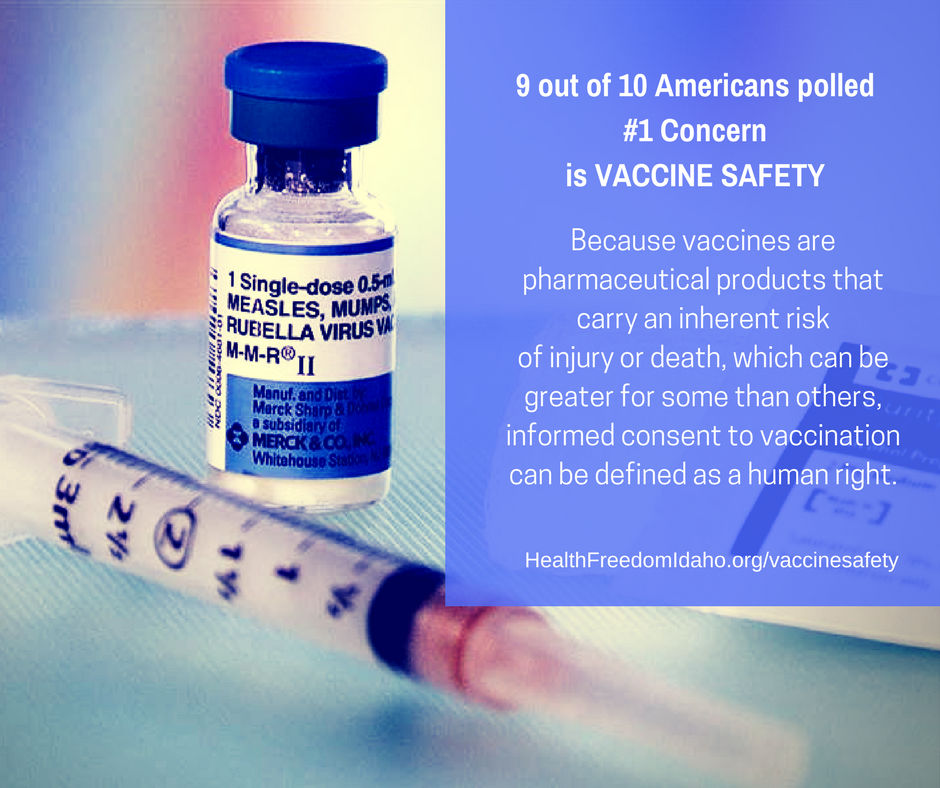
    So, vaccination must remain a choice because it is a medical intervention performed on the body of a healthy person that carries a risk of injury or death. 9 10 And while we are all born equal, with equal rights under the law, we are not born all the same. Each one of us is born with different genes and a unique microbiome influenced by epigenetics that affects how we respond to the environments we live in. 11 12

    We do not all respond the same way to pharmaceutical products like vaccines, so vaccine risks are not being borne equally by everyone in society.

    Why should the lives of those vulnerable to vaccine complications be valued any less than those vulnerable to complications of infections? And why should people not be free to choose to stay healthy in ways that pose far fewer risks?

    Vaccines Carry Risks and Do Not Guarantee Protection

    The act of vaccination involves the deliberate introduction of killed live attenuated or genetically engineered microbes into the body of a healthy person, along with varying amounts of chemicals, metals, human and animal RNA and DNA and other ingredients 13 that atypically manipulate the immune system to mount an inflammatory response that stimulates artificial immunity. 14

    But there is no guarantee that vaccination will not compromise biological integrity or cause the death of a healthy or vaccine vulnerable person either immediately or in the future. There is also no guarantee that vaccination will protect a person from getting an infection with or without symptoms and transmitting it to others. 15

    Vaccine Science Gaps, Doctors Cannot Predict Who Will React

    Reports published by physician committees at the Institute of Medicine confirm that vaccines, like infections, can injure and kill people but that:

    • very little is known about how vaccines or microbes act at the cellular and molecular level in the human body; 16 17 18 and
    • the Institute of Medicine confirms that an unknown number of us have certain genetic, biological and environmental susceptibilities that make us more vulnerable to being harmed by vaccines, but doctors cannot accurately predict who we are; 19 20 and
    • that clinical trials of experimental vaccines are too small to detect serious reactions before they are licensed; 21 22 and
    • that the U.S. recommended child vaccine schedule through age six has not been adequately studied to rule out an association with allergies, autoimmunity, learning and behavior disorders, seizures, autism and other brain and immune dysfunction. 23

    Yet, with these large gaps in scientific knowledge, government health officials direct physicians to vaccinate 99.99 percent of children regardless of known or unknown risks. 2425

    Government Licensed Vaccines “Unavoidably Unsafe”

    Therefore, vaccination is a medical procedure that can be termed experimental each time it is performed on a person. By extension, “no exceptions” mandatory vaccination laws create a de facto uncontrolled, population based scientific experiment that enrolls every child at birth and never ends, sacrificing an unknown number of vaccine vulnerable children.

    Further, the US Congress and Supreme Court have declared federally licensed vaccines to be “unavoidably unsafe,” removing civil liability from doctors who give vaccines and drug companies that sell vaccines in what has become a very lucrative multi-billion dollar business in the U.S. 26 27 At the same time, the federal vaccine injury compensation program created by Congress in 1986 that was supposed to be a no-fault alternative to a lawsuit – not instead of a lawsuit – has been gutted by federal agencies so that, today, almost no child receives compensation when they are hurt by vaccines. 28

    Now, a global vaccine injury compensation program is being created to shield multinational corporations from liability for injuries caused by the hundreds of new genetically engineered vaccines governments will mandate in the future. 29 30 31 32 33 34

    All this, while medical trade groups affiliated with industry and government join forces to lobby for removal of flexible medical, conscientious and religious belief exemptions from state health laws, 35 as was done in California in 2015, 36 so that those who refuse government endorsed vaccines for themselves or their minor children can be denied an education, employment, health care and other civil rights.

    Utilitarianism Should Not Be Foundation of Public Health Law

    In 1996, when I was in the Holocaust Museum in Washington, D.C. attending a conference on the role of physicians and scientists implementing public health policy during the Third Reich, I looked up and saw an inscription that took my breath away. It said, “the first to perish were the children…from these a new dawn might have risen.”

    This commentary, which I originally presented in March 2017 at the inaugural meeting of Physicians for Informed Consent in California, 37 is dedicated to mothers and fathers, whose children died or became brain injured when the risks of vaccination turned out to be 100 percent.

    I am arguing that the consequentialist theory of utilitarianism 38 39 40 is a pseudo-ethic that must be rejected as the moral foundation of public health policy and law so it can be replaced with a compassionate ethic grounded in respect for the human right to autonomy and informed consent to medical risk taking, including vaccine risk taking.

    Pediatrician Censored for Reporting Infant Deaths After DPT Shots

    I remember the day in the spring of 1982, when I was a young mother with a four year-old son struggling with the effects of a serious DPT vaccine reaction. I had just seen the NBC television documentary DPT: Vaccine Roulette 41 and was networking with parents of DPT vaccine injured children in the Washington, D.C. area when I decided to attend a press conference at the American Academy of Neurology to hear a young pediatric neurologist talk about his study in which two thirds of the babies, whose deaths were classified sudden infant death syndrome, had died within three weeks of a DPT shot.

    This pediatrician was concerned that DPT vaccine may be a major unrecognized cause of early childhood death, including SIDS, and he suggested that more research be done. As soon as he finished, his physician colleagues launched a vicious attack on his professional expertise and personal integrity that left him physically trembling in a cold sweat. I had never seen anything like it.

    During the break, I was approached by a PhD scientist who, at the time, worked for the National Academy of Sciences. This scientist asked me why I was there and I told him I wanted to know more about DPT vaccine because, when I was taking my baby to be vaccinated, I had no idea that vaccines – which were supposed to keep children healthy – could actually kill them.

    He got this quizzical look on his face and said something to the effect that it only happens once in a million kids. And instinctively I said, but if a vaccine kills even one, how can all children be legally required to get it? He looked surprised, uncomfortable, and walked away mumbling something about vaccine benefits far outweigh the risks, and sometimes we have to make sacrifices for the greater good.

    And I thought to myself, but the benefits didn’t outweigh the risks for my child or for the babies who died after DPT shots in the study that young doctor tried to talk about before he was figuratively lynched for suggesting that DPT vaccine benefits might not outweigh the risks.

    And why was my child’s health sacrificed without my knowledge or permission, and what is “the good” that is made greater by child sacrifice, and who defines it as “good”?

    Playing DPT Vaccine Roulette with My Son’s Life

    When I became a Mom in 1978, my son, Chris, was the light of my life. Happy, healthy and precocious, he was saying words at seven months,

    speaking in full sentences by age two and identifying words in the books we read together every day. One doctor told me he was cognitively gifted.

    But everything changed in 1980 when, within hours of his fourth DTP shot, I witnessed the eyes of my two and a half year old son roll back in his head and his head fall to his shoulder as if he had fallen asleep sitting up. I carried him, pale and limp, to his bed, where he did not move for hours. I thought to myself, oh, he is tired and just taking a really long nap, or maybe he is coming down with a cold.

    And when I finally was able to wake him but he couldn’t sit up or walk or speak coherently, when he had terrible diarrhea and only stayed conscious for a few minutes before falling into 12 more hours of deep sleep, I did not understand that I had witnessed a classic post-DPT vaccine convulsion and “hypotonic/hyporesponsive reaction and brain inflammation. 42 43 44 45 Chris was not just taking a really long nap, he was unconscious in his bed and could have died that day.

    dpt-roulette.jpg
    Image credit Lea Thompson, WRC-TV, Washington D.C. 1982

    I did not know because my pediatrician had told me nothing about how to recognize a vaccine reaction, including symptoms of encephalitis – brain inflammation that has been a well-documented complication of vaccination for two centuries. 46 47 48 49 I did not know that the unusual local reaction after his third DPT shot was a warning sign or that our family history of severe allergies and autoimmune disorders could increase vaccine risks. 50 51 52 53 54 55 56

    Even though I came from a family of doctors and nurses, had a college degree and had worked at a teaching hospital – like most parents back then I believed that vaccines were 100 percent safe and effective.

    And in the following days and weeks, when Chris could no longer concentrate or do what we could do before, when his personality changed and he was constantly sick with ear and respiratory infections, diarrhea, new food allergies and severe weight loss, my family and I could not understand why Chris had regressed physically, mentally and emotionally and become a totally different child. His doctors told us there was no explanation and said I should take him home and love him.

    Eighteen months later, when I, and millions of other parents in America, watched the Emmy award winning “DPT Vaccine Roulette,” 57 I called the TV station and asked if I could have copies of the medical literature used to anchor the documentary.

    And it was in my living room as I read case history descriptions of DPT vaccine injury and death in the pages of Pediatrics 58 59 60 and the British Medical Journal 61 62 63 and New England Journal of Medicine 64 that exactly matched the symptoms of brain inflammation I witnessed my son suffer that day, it was then I knew that physicians had been talking in medical journals for more than 50 years about the fact that pertussis vaccine could brain damage children, but no one had informed the mothers dutifully bringing their children for DPT shots legally required to go to school.

    As I tried to help my son cope with multiple learning disabilities that included dyslexia, fine and gross motor skill delay, auditory processing and attention deficit, and short term memory delays so severe they confined him to a special ed classroom throughout his public school education, and as I interviewed hundreds of mothers for the book DPT: A Shot in the Dark, I came to know many families whose children had died or were much more severely vaccine injured than my child. 65 66

    Chris has worked hard to compensate for his learning disabilities and he is a productive member of society today; but many vaccine injured children, tragically, are not. 67

    My son is among the walked wounded in what has become an unprecedented and still unexplained chronic disease and disability epidemic now plaguing millions of children and young adults in America. 68 It is an epidemic of learning disabilities, ADHD, asthma, seizures, autism, diabetes, depression, and other types of brain and immune dysfunction marked by chronic inflammation in the body that has perfectly coincided with the tripling of the numbers of vaccines given to children – from 23 doses of seven vaccines starting at two months through age six in the early 1980s – to the current 69 doses of 16 vaccines starting on the day of birth with 50 doses given before age six. 69 70

    In 1982, it was my curiosity about the truth of the matter that pushed me to research the science, policy, law, ethics, history and politics of vaccination and spend two decades participating in public engagement projects at the Institute of Medicine and Department of Health and Human Services, where I served as a consumer member on vaccine advisory committees at the FDA and CDC, 71 a journey that has now spanned half my life.

    So, I offer you my perspective from that vantage point.

    Philosophy: Love of Wisdom

    Here we are in the 21st century, where the electronic communications revolution has created a virtual global public square on the World Wide Web,

    where more than three billion people are talking to – and sometimes yelling at – each other about ideas, values and beliefs, just like they did in the public squares of ancient Athens and Rome, and in universities, newspapers, and on radio and television since then.

    Throughout recorded history, people have disagreed with each other about how to answer big questions, like:

    • Where do we come from?
    • Are we only physical matter or do we have an immortal soul, a consciousness that survives physical death?
    • What is truth and how can we know it?
    • What is ethical behavior and how can we define it?

    Most of the formal debates about these questions have been described in the history of philosophy, 72 which the ancient Greeks defined as “love of wisdom,” that included study of knowledge; reasoning; nature of being or metaphysics; aesthetics; and ethics.

    The philosophy of science emerged as a separate discipline in the 18th and 19h centuries after mathematicians and astronomers mounted a successful challenge to the authority of organized religion.

    Science Now Dominates, Affect Cultural Values & Laws

    Since then, science has invaded and dominated every other branch of philosophy. As we are reminded every day in so many ways, science and math rule, and scientific evidence determines what is true and what is not. In fact, those who practice and submit to the authority of science insist that not only must science be used to define all truth, but leaders in science and medicine are authorities who should define “the good,” that is, define moral behavior and what kind of cultural values we should have, and what kind of beliefs we should be allowed to hold and teach our children, and what kind of laws should be passed in order to limit the ability of individuals to make “unscientific” choices that presumably endanger the public health and welfare. 73

    That’s a whole lot of pressure for many physicians, who do not want to be put on a pedestal and required to exercise that kind of authority over the lives of fellow human beings because – first and foremost – it interferes with developing a relationship with patients based on mutual respect, trust and shared decision making.

    But, the stark reality is that the scientification of every branch of philosophy has elevated prominent scientists and physicians promoting “consensus science” into positions of authority, whose judgment should never be questioned. Long held cultural values, such as respect for freedom of thought, speech, conscience and religious belief are being called into question, which, in turn, affects court decisions and the making of laws.

    No where is this more visible than in public health law using the materialist philosophy of utilitarianism to legally require all Americans to use an increasing number of vaccines without their voluntary informed consent.

    So how did we get here? How did science come to dominate how we define what is true and good for the individual and society in the 21st century?

    Old Arguments About What Is True and Good

    Although conversations about the meaning of life and what is good started before written history and is embedded in tenets of five surviving major religions – Hinduism, Buddhism, Islam, Judaism, and Christianity – it was the classical Greek philosophers who began recording the debate.

    Socrates, Plato and Aristotle believed that we are physical matter animated by a vital spirit, and we can use innate knowledge and reason to perceive what is good.

    Epicurus disagreed and said humans are only physical matter and have no spirit or innate knowledge and that seeking pleasure and avoiding pain is the highest good and guide to moral behavior.

    For 1500 years following the birth of Christ, the highest good was defined as knowing and loving God in western cultures adopting Judeo-Christian moral values – until the Scientific Revolution when 15th and 16th century scientists Copernicus, Galileo, Newton and Francis Bacon developed methods for determining what is true that put the existence of God on trial, along with the definition of what is good.

    Although between the 16th and 19th centuries, Descartes, Locke, Kant, Hegel and other philosophers argued that humans are both physical matter and spirit and can use reason to understand scientific truth, as well as to perceive the natural law that serves as a guide to what is good, the materialist philosophers Hobbes, Hume, Bentham, Comte, Marx and Nietzsche argued that science proves there is no God or human spirit because we are only physical matter, and there are no absolute moral values but, rather, science can be used to define what is true and good.

    This included the idea that a mathematical equation can be used to judge whether or not an individual action, government policy or law is moral.

    The authors of the U.S. Declaration of Independence agreed with the philosophers who argued that humans have a physical body animated by a soul or spirit, and that we can use reason given to us by God to perceive the natural law, which includes natural rights, that belong to all individuals and limit the authority of government.

    The Bill of Rights in the US Constitution contains strong language protecting exercise of natural rights. 74 These have been defined internationally as human rights, including freedom of thought, speech, conscience and religious belief. 75 76

    Utilitarianism: Mathematics, Vaccination & Public Health Rising

    But today, it is not respect for natural rights that guides public health policy in the U.S., it is the philosophy of utilitarianism, created by Jeremy Bentham, a 19th century British attorney and social reformer. 77 78 Bentham mocked the U.S. Constitution for mentioning God and affirming natural rights protected in the First Amendment.

    Like Comte, Marx and Nietzsche who followed him, Bentham did not believe that man has a soul or innate intelligence, so he returned to the hedonistic Epicurean philosophy of maximizing pleasure and minimizing pain to define what is good.

    Bentham’s utilitarianism uses a mathematical equation that judges the rightness or wrongness of an action by its consequences. Bentham said that an action is only moral or ethical if it results in the greatest happiness for the greatest number of people. With its emphasis on numbers of people, Bentham created utilitarianism primarily as a guide to state legislative policy, and vaccine cost-benefit analyses are rooted in utilitarianism.

    Bentham was a contemporary of British physician Edward Jenner, who took pus from a cowpox lesion and scratched it onto the arm of a young boy in an effort to prevent smallpox. Jenner’s experiment, repeated over and over again in lots of people, created a live human-cow hybrid virus called vaccinia. 79

    The new chemical industry took that vaccinia virus, added some chemicals and bottled it, selling it to doctors and governments. The mass smallpox vaccine campaigns that followed expanded the authority of a new branch of medicine focusing on population-based disease control, called public health. 80

    19th century physicians were enlisted by government to give infants and children smallpox vaccine and were persuaded to look the other way when some of them died or were left permanently disabled after developing raging vaccinia virus infections and inflammation of the brain. Fully embracing the utilitarian rationale, public health officials viewed individual smallpox vaccine casualties as necessary losses to achieve the greatest good for the greatest number of people.

    Utilitarianism Codified Into US Law: Jacobson v. Massachusetts (1905)

    At the turn of the 20th century, utilitarianism was fashionable in intellectual and political circles. It was the philosophical argument used by attorneys in 1905 to persuade the U.S. Supreme Court to issue a utilitarian ruling in Jacobson vs. Massachusetts. 81

    Lutheran Pastor Henning Jacobsen and his son had suffered severe reactions to previous smallpox vaccinations and Jacobsen argued that genetic predisposition placed him at high risk for dying or being injured if he was forced to get revaccinated. The court dismissed Jacobsen’s concern for his own health and life.

    In a split decision with one dissenting vote, the Court that included Oliver Wendell Holmes, issued an opinion that would affirm the legal right for U.S. state legislatures to assign police powers to public health officials to restrict or eliminate individual liberty in order to “secure the general comfort, health and prosperity of the state.” 82

    The Court maintained that all citizens can be compelled to receive smallpox vaccinations because the happiness and welfare of the majority outweighs the happiness and welfare of a minority. In other words, individual human sacrifice is ethical and legal if it is done for the common good.

    Georgetown law professor and mandatory vaccination proponent Lawrence Gusting has described it as the most important Supreme Court opinion in the history of American public health law. 83

    Eugenics: Eradicating the “Unfit” in Buck v. Bell (1927)

    In 1927,

  • Learning About Herbs

    Learning About Herbs

    Herbs. I wanted to know more. Was overwhelmed with the SHEER amount of information (some contradictory) about herbs, remedies and healing. I learn by doing. Rosalee was a WONDERFUL teacher as she encourages us to do as we learn. She shares a brief lesson. The nettles experiment. Try it and grow your confidence in the power of herbs and your own understanding of natural means of healing.

    There are many different layers to learning about plants and herbalism. There’s learning about the plants themselves, the gifts they offer, where they grow, when to harvest, how to harvest, and so on. There’s learning how to choose the right herb for the right situation. And there’s learning how to prepare that herb.

    When you are starting out, it can easily feel like information overload. Trying to memorize all those layers of information can seem impossible.

    I want herbs to be accessible for everyone and I believe that learning about herbs should be fun and illuminating, filled with “aha!” moments.

    That’s why I am passionate about hands-on experiences with herbs. Of course books or lectures are great ways to begin to learn about herbs, but when it comes to really getting it, learning by doing is often what facilitates deeper understanding of all those layers.

    Today I want to show you how to use your sense of taste to tell the difference between two different herbal preparations. This will help you figure out the best herbal remedies for your situation.

    But first, tell me: does this sound familiar? Have you ever been excited to use an herb, but you get stuck because you don’t know exactly how to prepare it?

    How To Figure Out the Best Herbal Remedies

    Let’s use nettles as an example.

    You’re interested in learning about stinging nettle (Urtica dioica) so you reach for a few books on the subject or do a search on the internet.

    You start reading about nettle and see that it is amazing. It strengthens our hair, bones, and teeth. It modulates inflammation and can address signs of chronic inflammation such as arthritis and eczema. It can address insulin resistance and type 2 diabetes by reducing blood glucose levels and by modulating inflammation. Many people rely on nettle to get them through their seasonal allergies. And, you don’t need a reason to enjoy nettle, as it makes a delicious and nutrient-dense food.

    With all these reasons to enjoy nettle, you are excited to use the herb yourself.

    So where to start? How do you prepare nettle?

    One website recommends making a nettle tea by steeping a bit of leaves in a small amount of just-boiled water.

    Another source recommends making a nourishing herbal infusion by steeping a handful or two of stinging nettle in a lot more water and for a lot longer.

    Which is best?

    Let’s try them both, and then use our senses to figure out the best herbal remedies with nettle!

    A Nettle Experiment

    Even if you think you have a pretty good idea of the differences between these preparations, I recommend doing this exercise. It is by physically doing something that we really learn. If you simply read this article and then move on to the 1,001 other things in your life today, it’s unlikely you are going to remember or gain deeper insights. Involving our senses in the learning process is the best way to truly learn something.

    How To Figure Out the Best Herbal Remedies

    How To Figure Out the Best Herbal Remedies

    How To Figure Out the Best Herbal Remedies

    Step 1: Make a Nourishing Herbal Infusion with Stinging Nettle Leaf

    A nourishing herbal infusion is a type of water based extraction made popular by herbalist Susun Weed. This method uses a lot more herbs and a longer steeping time than you typically use in a tea.

    Here’s how to make it.

    Weigh out 28 grams of dried stinging nettle leaf. If you have finely cut leaf, this is about two cups of material. (It’s always best to weigh plants to get the best sense of how much you are using.)

    Place the leaves in a quart canning jar. Fill the jar with just-boiled water. Stir well, add more water if necessary. Cover and let sit for 4 to 8 hours or overnight.

    Strain.

    Move on to Step 2.

    How To Figure Out the Best Herbal Remedies

    How To Figure Out the Best Herbal Remedies

    How To Figure Out the Best Herbal Remedies

    Step 2: Make a Tea with Stinging Nettle Leaf

    Place 1 teaspoon of dried nettle leaf into a half-pint glass jar or lidded mug.

    Pour 1 cup of just-boiled water over the leaves. Stir well. Cover and let steep for 10 minutes.

    Strain. Let it cool.

    Move on to Step 3.

    Step 3: Let’s Taste!

    Now that you have both of your herbal preparations we can use our senses to look at and taste the differences between them.

    Okay, let’s begin…

    First start with how the two preparations look. Is there a difference in color?

    Next smell the two. Do they smell different?

    Take a sip of your tea. Spend some time with it to really get a sense of its varying tastes, as well as how it feels in your body.

    Now take a sip of the nourishing herbal infusion. Take some time with this to really get a sense of their different qualities.

    You could note your personal preferences, but also spend time observing without judgement to simply notice what each preparation is like.

    I recommend focusing solely on the experience at first, then, take some time to write down your observations.

    You’ll get the most out of this article by tasting these preparations yourself. And while I don’t want to give you all the answers, here are some things to consider.

    Nettle is considered to be a salty herb. You may have noticed that neither of these preparations taste like table salt or even like salty seaweed. Instead, this salty classification refers to its mineral-like taste. Nettle is high in many nutrients including minerals like magnesium and potassium. Now here’s a hint: vitamins and minerals are best extracted with prolonged hot water.

    Keeping your nettle tasting experience in mind, which nettle preparation do you think would be best for building strong hair, bones and teeth? What preparation would be best for serving an afternoon tea to a friend?

    How To Figure Out the Best Herbal Remedies

    This Is Just the Beginning…..learn more: https://learningherbs.com/remedies-recipes/best-herbal-remedies/