Author: Health Freedom Idaho

  • FREE Truth About Vaccines 7-Day Docu-Series Starting Again on August 17

    Exciting news!! Are you ready to watch The Truth About Vaccines for FREE?! http://bit.ly/TTAVTrailerttavfb

    We are showing the ENTIRE series again starting August 17!

    Some Say Vaccines are Essential. Some Say They’re Evil.

    If you have children or grandchildren, you deserve the FACTS to make your own informed choices…

    To watch this groundbreaking documentary, please make sure you are signed up here: http://bit.ly/TTAVTrailerttavfb

    Friends, we need your help getting the word out about this life-saving docuseries. Please spread the word by sharing this link with your friends and loved ones. It could save their life or the life of their loved ones.

    Thank you!

    This article originally appeared at: https://www.youtube.com/watch?v=THC-9dqjJ7U.
  • Herbs Gardens and Grow Lights

    Herbs, we all use them in our daily lives, one way or the other, whether for their pleasant flavor, for their healing power, or in lovely recipes. Herbal benefits are many; be it for spiritual reasons or to spice up your taste buds, or as a home remedy for ailments like cold, or a sore throat; herbs can be handy for each one’s need! Growing them in the shorter growing season in Idaho can pose a challenge that some gardeners have remedied with grow lights.

    mediterranian basil aloe-vera plant
    Mediterranean sweet basil Aloe vera plant

    Growing Basil in a Grow Light and the in the Garden

    Basil can be a great herb to include in your cooking. My wife makes Thai Chicken with Basil that is very delicious. One issue with basil is that it can be fairly expensive, especially in a basil-intensive meal. The Thai Chicken meal that my wife makes takes $2-$3 worth of basil each time she makes it. However, basil seeds are really cheap and growing basil can be pretty easy.

    I’ve had great success growing basil under a grow light and then transferring it to the garden. Basil is sensitive to frost, so if you want to get an early start you’ll need to use a grow light. You can plant the seeds directly in your garden soil if you prefer, but not until after the last frost. I plant basil under the grow light in early February, at the same time I plant onions. I plant 6-8 seeds in a ~3″ deep baking tin, so the seeds have 3″ – 5″ between them. You can probably get away with planting them even closer. Plant them in good potting soil if possible as they will be in there for a while. Keep the soil fairly moist and they should germinate in about a week. I continue to water every 2-3 days. If you start getting moss-type growth on the soil, then water less.

    It takes about two months for the basil to be ready for it’s first harvesting. If you only need a few leaves you can harvest prior to two months. About 45 days after planting, the basil plants start to grow very rapidly and can double in size in two or three weeks. The picture above shows my basil after about 55 days.

    You can harvest basil without killing the plant. Just cut the main stem about an inch below the lowest set of good leaves. The basil will keep growing and you’ll get several good leaves that you can cook with.

    Basil before cutting:Basil in grow light - Before Cutting


    Basil after cutting:Basil in grow light - After Cutting 

    Harvested Basil:

    Harvested Basil

    Once all danger of frost has passed (about mid-May where I live), you can transfer the basil to your garden. Let the tin you planted in dry out a little bit (not completely). Then just dig a little indentation in your garden that will fit the tin. Try to take the whole chunk of dirt and basil plants out of the tin in one group and stick it in your little hole. Now just water it with the rest of your garden, and pretty soon you’ll have more basil than your family can possible use. Basically those 6-8 little plants will grow into a basil bush. When the basil tries to make seeds, just clip off the buds so that the plant keeps growing. As long as you do this, your basil should last until the fall frost. Basil can be used to make tomato sauce, so if you’ve grown some tomatoes you might use your basil when you’re canning.

    You can even dry basil leaves if you’d like. By the end of the summer, our family is usually sick of basil so we just let the plants die and then start the process again the following year.

    Thai chicken with Basil:

    Thai Chicken with Basil

    This article originally appeared at: http://www.idahogardening.com/2013/growing-basil-in-a-grow-light-and-the-in-the-garden/#comment-13176.

  • How Does Your Garden Grow?

    By Suzanne at GrowOrganic.com on July 31, 2017

    blog-lead1280x720.jpg

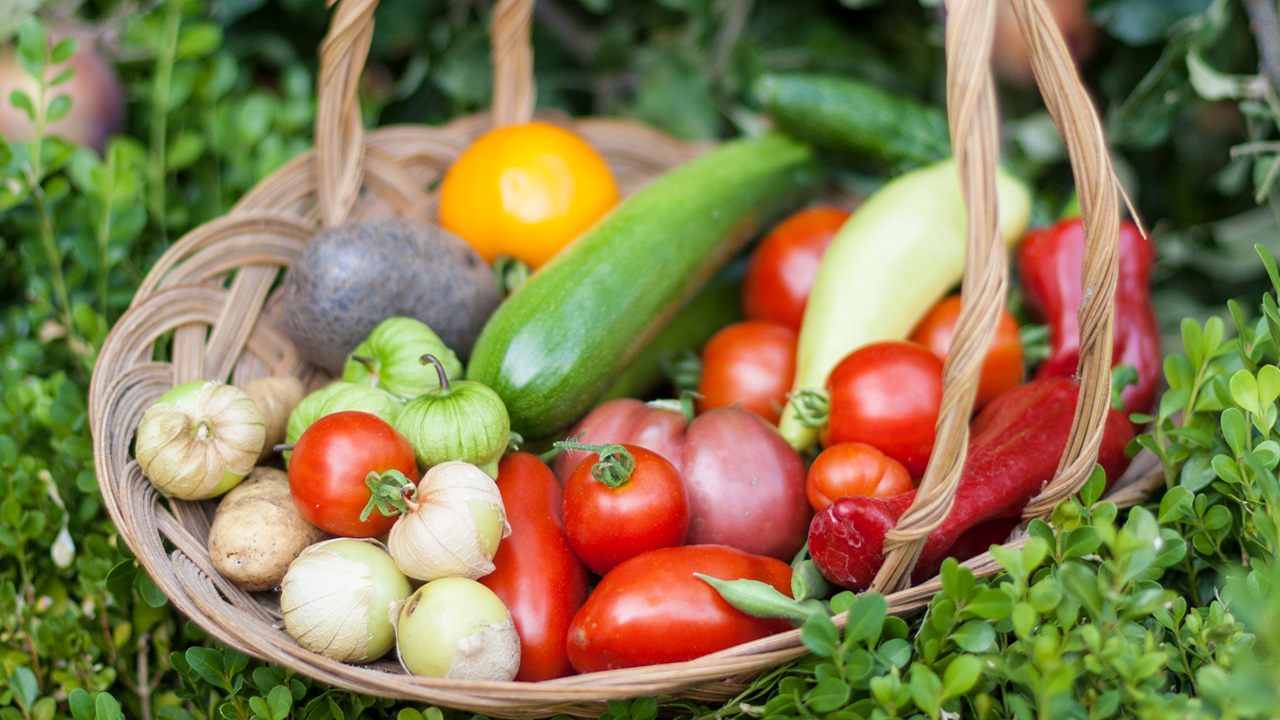
    Yummy summer veggies waiting for the table

    The dog days of summer are here! The garden is in full swing and the squash, beans, tomatoes, peppers and more overflowing our harvest basket. Here is a handy list to help you through the month of August and prepare for the fall and winter garden. Tricia shows you what she is doing in her garden in our video, August Gardening Checklist.
    1. Keep up on the Harvest
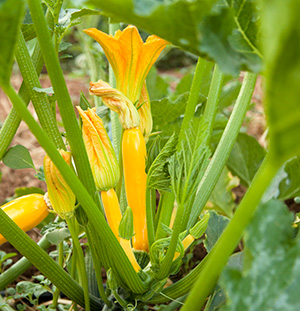
    Your garden does not take a vacation when you do. If you are leaving for an extended vacation, make sure that someone comes over and harvests your cucumbers, summer squash, and fresh snap beans. They will stop or slow down on new fruit production if not picked regularly. If you have too many cucumbers, make some pickles. If you are not into canning, then refrigerator pickles are easy, quick and require no canning. Check out recipes for a refrigerator pickles at our blog site under Recipes and Preserving.

    2. Check Your Fruit Trees
    August is a month for fresh fruit like peaches, plums, pluots, apricots and nectarines. Pick your fruit at the peak of ripeness. Peaches will smell, well like a peach, they will give slightly when squeezed and no longer have any green undertones. Same holds true for nectarines, except they will smell like a nectarine. Ripe plums and pluots will have a sweet, fruity smell and give slightly when squeezed.

    If you have more fruit than you can eat, think about preserving them by freezing, making jams, jelly or compotes.

    3. Seed a New Lawn or Fix Bare Spots
    Now through September is a good time to seed new lawns or fix any bare spots in the existing lawn. Watch our video, Organic Lawn Care for helpful information on caring for your lawn and reseeding it.

    4. Check Your Irrigation Lines for Leaks
    August is a hot month and the garden still needs regular watering. Check your irrigation lines for leaks, rodent damage or low flow due to clogs or kinks.

    5. Pinch off Flowers from Your Herbs
    Keep the flowers pinched off your herb plants to encourage more growth. It is especially important to remove the flowers from your basil plants. This will encourage bushier plants which will translate into more leaves for making pesto or to use fresh or dried.

    6. Remove Squash Flowers
    If you want less fruit but bigger winter squash or pumpkins, remove any new female flowers and new fruit.

    7. Prune the Tall Blackberry Canes
    Continue pruning the tall primocanes of your blackberries (this encourages lateral branches, which is where next years berries will be born). Prune them to the height of the support or fence. Floricanes can be cut back after berries have been harvested.

    8. Divide your Iris Plants
    If your bearded iris plants have slowed down on flower production or it seems that the plants are really crowded, then it is time to divide them. Watch our video, Dividing Perennials for helpful information.

    9. Remove Spent Flowers
    Deadhead existing flowers, you may get a second flush of flowers. Sow seed for winter pansies and violas and plant sunflower seed for fall display.

    10. Weed Control
    Weeds continue to grow and should be removed before they go to seed.

    11. Pick Your Sweet Corn at Its Peak
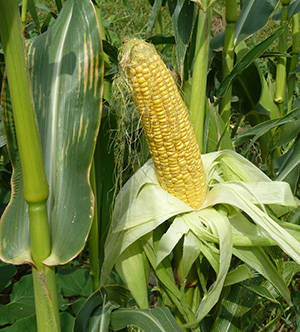
    Sweet corn might be ready to harvest. To pick at the peak of sweetness and flavor, harvest early in the morning when the sugar content is at its highest. Also the corn is ready to be picked when the silks have turned brown and drying up, and the ear feels full. You can peel back the husk on one ear to check the kernel size.

    12. Monitor Plants for Heat Stress and Sunburn
    If you see sunscald on your tomatoes or peppers, put up some shade cloth to protect from the intense sun. For any signs of heat stress, try giving your plants a little compost tea or kelp.

    13. Feed Your Heavy Feeding Plants
    Cucumbers, squash or corn will benefit from a feeding with a balanced fertilizer.

    14. Pre-order Your Garlic
    Garlic planting time will be here before you know it and now is the time to pre-order your garlic. Some varieties sell out quickly, so for the best selection, reserve your favorite variety.

    15. Plant Some of Your Fall/Winter Harvest Seeds
    Plant some seeds for your fall/winter garden. Veggies like turnips, beets, carrots, kale, greens, broccoli, radish or cabbage can be planted now for a fall or winter harvest. 

  • Orofino Farmers Market Celebrates National Farmers Market Week


    Orofino Farmers Market joins markets across the country in celebrating National Farmers Market Week, August 6-12. Vendors at the market on Tuesday, Aug. 8 will be giving away Idaho Preferred farmers market tote bags to the first 120 customers, one per family please. Kid’s coloring pages will also be available.

    Farmers markets help preserve America’s rural lifestyle and farmland by stimulating local economies, increasing access to fresh, nutritious food, supporting healthy communities, and promoting sustainability.

    This article originally appeared at: http://www.clearwatertribune.com/news/community_news/orofino-farmers-market-celebrates-national-farmers-market-week/article_265aa332-77a3-11e7-9f1d-8744f1a3fbb8.html.
  • How Its Made: Would You Eat THAT?

    Before you bite into that apple or pick up an extra loaf of supermarket bread, you should know where your food comes from. A quick warning, however—it’s not pretty.
    by R.J. Wilson

    1. Apples are covered with ground-up bug resin.

    It’s called “shellac,” and it’s a waxy resin secreted by the lac bug. That’s what gives apples their shine.

    “But wait,” you’re probably saying while chewing on a Red Delicious, “I picked an apple off of a tree, and it still looked shiny.”

    That’s because apples create their own natural wax to prevent premature decomposition. Of course, food companies usually remove that wax during the cleaning process. Consumers want their apples to shine, so manufacturers apply a coat of shellac. All better, right?

    So, just to recap: Food distributors remove the wax from your apple to “clean” it, then apply the resin from the lac bug, then sell it to you. Oh, and here’s what that shellac looks like before it’s processed.

    Shellac is also commonly used on lemons, oranges, and Jelly Belly jelly beans, and it’s not just a resin—many of the bugs are processed along with the resin scrapings. Yes, that means that your apple is covered in ground-up bug bodies. Enjoy.

    2. Bread often contains L-cysteine, which is made from duck feathers.

    L-cysteine is an amino acid, and it’s an essential preservative; it’s one of the reasons that your store-bought bread lasts for more than a week, while your grandma’s home-cooked loaf starts to turn green after a few days (incidentally, “Grandma’s Home-Cooked Loaf” would be a great band name).

    It’s often made from duck feathers, cow horns, hog hair, and even human hair. Of course, by the time it’s added to your bread, it just looks like a nondescript liquid, but still—you’ll probably wish that you didn’t know about L-cysteine the next time you make a sandwich.

    There is such a thing as synthetic L-cysteine, by the way, and you can often find it by looking for Kosher-friendly foods.

    3. Vanilla flavoring is sometimes made from the scent glands of beavers.

    The scent glands of beavers—and we’re being very, very careful with our language here—are used to make castoreum. Trust us, you really don’t want to know the process.

    In any case, castoreum was a common food additive and generally recognized as safe. It was sometimes used in vanilla and raspberry flavorings, although that’s much less common now. Why? Well, “harvesting” the castoreum is more expensive than growing vanilla.

    In any case, castoreum is still widely used in perfumes, although it’s fallen out of favor in the food industry. The Vegetarian Resource Group asked five vanilla manufacturers whether they used castoreum, and all of them denied using the additive.

    4 Your favorite strawberry-flavored products may contain more bugs than berries.

    Recently, some Starbucks customers became seriously upset when they learned that the company had been using an ingredient called cochineal to color some strawberry-flavored products. These included Frappucinos, smoothies, birthday cake pops, miniature donuts, and a red velvet Whoopee pie.

    The source of concern was the strange-sounding cochineal, which is produced from a bug that feeds on cacti. When the bug is crushed, it yields a bright pink color, which works well for food dyes and makeups. Of course, it’s a little gross for people who don’t like eating insects (or at least don’t know  that they like eating insects).

    Starbucks succumbed to pressure to remove this product from some of their products, but if you like eating processed foods that have a pink hue to them, you’re probably consuming bugs. Cochineal is found in various meats, coffees, cookies, marinades, and even some juices.

    5. Many cheeses use rennet, which isn’t exactly vegetarian-friendly.

    Cheeses are made by coagulating milk, and that requires rennet, which is often made from the stomachs of newly born calves, according to the Vegetarian Society. Rennet’s key component is chymosin, which is necessary for the cheese-making process.

    However, modern cheese technology (another great band name) has provided several alternatives, including vegetable rennet and microbial rennet. Vegetarians have to be careful, unfortunately, while omnivores typically don’t realize that they’re eating a product made with calf stomachs.

  • Its Almost “Flu Shot Season”

    It’s almost the beginning of ‘flu season’ or as I like to call it ‘flu shot season’. Viruses don’t know what time of year it is, but the pharmaceutical companies and the CDC certainly do.

    Watch for the dire warnings to begin any day now: it’s the worst flu season yet, supplies of flu vaccines are low this year, deaths have started already, etc.
    Fear sells flu shots, because if you look at the facts getting a flu shot makes no sense…even if you truly believe in the popular Germ Theory where invisible viruses and bacteria are trying to kill us, yet to protect ourselves we need to inject ourselves with viruses and bacteria !! 

    In which reality does it make sense to fear flu viruses, yet in order to protect ourselves from the more than 100 types of influenza viruses we must inject ourselves with only 3 strains of influenza type A and B, and one strain of H1N1 (swine flu). Did you know the swine flu virus is in all flu shots now since the ’09/10′ season? 

    If you say, ‘but I get a flu shot every year and don’t get the flu’! I must respectfully say that correlation does not equal causation.

     What is keeping you healthy is your own body and immune system. Health can NEVER come from the outside, it is created within.
    What can you do to stay healthy this fall and winter? (aka SUGAR season?):
    – get enough sleep each night
    – keep stress under control
    – exercise (we sit around a lot during the winter due to loss of daylight and cold weather)
    – expose your body to sunlight (we get little to no sun during the winter, which is a primary cause of disease)
    – supplement with vitamin D3 (at least 2,000 iu’s and up to 5,000 iu’s in areas with less light if you’re not getting enough sun)
    – supplement with vitamin C, at least 1,000 mg daily (and at least 3,000 mg 1-3 times daily when not feeling well)
    – eat healthy and organic, unprocessed food
    – drink more water (instead of coffee, soda and alcohol)
    – limit your processed sugar intake during the party season of October-April
    – limit your toxic intake from junk food, unfiltered water, and the environment 

    – stay away from flu shots! (you are injecting a cocktail of immune compromising substances and a weakened immune system is more susceptible to the diseases you’re trying to avoid; ever wonder why you don’t get the actual flu, but are sick with a cold, stomach bug, strep throat, ear infections, etc.? Your immune system is now ‘down’)

    More on the risks of the FLU SHOT. 

  • Guerrilla Gardeners. Rebuilding Communities Growing Independence.

    The most effective change-makers in our society aren’t waiting around for a new president to make their lives better, they’re planting seeds, quite literally, and through the revolutionary act of gardening, they’re rebuilding their communities while growing their own independence.

    Every four years when the big election comes around, millions of people put their passion for creating a better world into an increasingly corrupt and absurd political contest. What if that energy was instead invested in something worthwhile, something that directly and immediately improved life, community, and the world at large?

    The simple act of growing our own food directly challenges the control matrix in many authentic ways, which is why some of the most forward-thinking and strongest-willed people are picking up shovels and defiantly starting gardens. It has become much more of a meaningful political statement than supporting political parties and candidates.

    Take, for example, Ron Finley, the ‘Guerrilla Gardener’ from Los Angeles who inspires the world with no-nonsense truth about how the corporate food system enslaves us, while proving to us that the most effective weapon in this fight is fertile soil. He makes growing veggies cool again, as it should be, because food sovereignty is the very foundation of personal independence.

    I live in a food prison.. It’s all by design just like prisons are by designed. I just got tired of being an inmate. So I figured, let me change this paradigm, let me grown my own food. This is one thing I can do to escape this predestined life that I have unwillingly subscribed to. – Ron Finley

    Think about it. Creating your own food supply challenges the status quo in a number of important ways. Growing your own food:

    -Decreases dependence on a polluted corporate food system

    -Improves health and wellness by providing exercise and nutritious food, freeing us from dependence on a for-profit medical system

    -Undermines Monsanto and the agro-chemical industry that is polluting our world and killing bees

    -Highlights issues of political control by pitting homeowners and gardeners against government and ordinance makers

    -Builds and heals community by providing a place and activity worth coming together over

    -Works to repair the damage we are doing to the environment with our consumer lifestyles

    -Protects us against insecurity and food unrest

    -Facilitates a greater awakening by setting an example for others to follow

    When united, awareness and action create the kind of changes that a rigid control system cannot tolerate, and when extraordinary people like Ron Finley take the lead, a meaningful movement can take hold. This is real action, it is very effective, and as it becomes more mainstream to set up gardens in your yard and on your block, we will witness the re-emergence of the kind of society we just cannot create by playing by the rules of a rigged system.

    What happens when you transform yourself by deepening your connection to nature?
    What happens when you then transform your community by bringing your neighbors together in the goal of providing something of immense value to all?
    What happens then when a nation of transformed communities sees their world without the boundaries of and limitations imposed on us by a corrupt system?

    The four-year cycle of presidential politics in the US is far more effective at stealing the constructive energy of motivated people than it is at bringing about meaningful change to our lives, communities and to the nation as a whole. Time to try something far more effective and rewarding. Let’s overgrow the system, and transform our health and communities in the process.

    For a sign that this movement is spreading across the nation, check out this homegrown music video, ‘Gardening is Gangsta,’ by Mark Jankins and Sifu Paul Davis.

    I don’t rely on new food stamps. Cuz’ every season got me harvesting some new plants.

  • Give Up Round Up Organic Alternative For Sale in Boise

    Hey, did you know you DO NOT NEED TO USE ROUND UP to kill the weeds? Round-up contains cancer causing toxins and it breaks down into even scary toxins left in the environment causing harm to children, animals, and plants alike. Vinegar- it didn’t have that sort of track record! But it DOES KILL WEEDS!! Visit North End Organic Nursery. Buy the product. Use it on a HOT DAY (we have had plenty of those in the Boise area)! #giveuproundup #eliminateglyphosate

    On facebook this morning North End Organic Nursery announced:

    GREAT NEWS! We now have 20% acidity horticultural vinegar that KILLS WEEDS! I mean it just destroys em! AND it’s safe for kids, pets, the environment, etc. $29 for 1 gallon and $60 for 2.5 gallons. You can increase the effectiveness of this vinegar with all natural orange oil, only 1-2oz per gallon of vinegar is needed. The orange oil works as a sticking agent to help the vinegar adhere to the leaves of your weeds. It can also be used to kill insects and as an all natural cleaning product!

    We are so grateful for the support we have received from our customers over the last few weeks. Thank you! We would be nothing without all of you!

    The support they are reffering to is the fact that several weeks ago, the State of Idaho banned the sale of a natural alternative to Round-up. North End Organic Nursery posted their concerns on facebook and the people reacted. After calls to the State Agricultural Office, the ban was lifted, contingent on the removal of the label that 20% vinegar CAN KILL WEEDS. 

    The vinegar in question had not been registered as an herbicide. This vinegar is the same percentage acidity (20%). It is registered as an herbicide in Idaho, meaning it can be labeled and advertised as a product that kills weeds. This new product does not contain the yucca extract (sticking agent) that the old product contained, but that can be substituted with orange oil.

  • Top 10 Toxic Chemicals Used in Makeup

    Many beauty and skin care products on the market are full of hidden chemicals, and makeup products may be the worst. If you want to be healthy and still use foundation and eyeliner, you may be wondering: Is it possible to wear makeup without harming your body with toxic chemicals?

    Yes, just like you can swap out harsh cleaning products and get rid of toxic food, you can change out your makeup.

    Swapping your regular makeup products for natural versions can seem like the scariest step in the transition. You found mascara that takes your eyelashes to new heights, a lipstick that makes your pout pop, and a foundation that makes your skin look like it traveled back in time. Why would you give those things up?

    Under current law, the FDA doesn’t require cosmetics companies to conduct safety assessments on their products. Harmful ingredients can be easily masked under confusing or deceptive titles like “fragrance.” They may even be listed, plain and simple, on the label, but with no messages to inform consumers of their potentially harmful effects.

    If makeup is a part of your daily routine, it’s vital to think about what you’re putting on your skin. Your pores absorb what you put on them—they don’t know any better! That lipstick on your teeth? You ate that.

    So let’s talk about some toxic chemicals in the makeup and how to get healthy with our beauty routines!

    1. Phthalates

    Phthalates are a group of chemicals that may be disruptive to the endocrine system, which is responsible for hormone production. Such interference can lead to developmental, reproductive, and neurological damage.

    The effects of phthalates may be related to their ability to mimic human hormones. A study by the University of Maryland reported that exposure to phthalates could cause reproductive abnormalities and decreased production of testosterone in males, as well as decreased male fertility. Other studies show a link between phthalates and premature delivery and endometriosis in women.

    Where would you find phthalates? They’re used to plasticize products, making them more flexible or better able to hold in color and scent. From deodorantto nail polish to scented lip balm, the catch here is that these chemicals can be grouped under and listed as “fragrance.” Companies claim their fragrance formulas as “trade secret,” and thus don’t have to specify on the label which ingredients are included.

    Your best bet is to avoid products that list “fragrance” and choose ones that use plant oils and essences to give them the “yum” factor.

    2. Lead

    We know that lead is bad for us. We stopped putting it in our paint, right? So why is it showing up in our foundation, lipsticks, and even whitening toothpaste?

    Lead is a proven neurotoxin linked to miscarriage, reduced fertility, and delays in the onset of puberty for females. About seven years ago, the Campaign for Safe Cosmetics found lead in over half of the 33 brands of lipstick they tested. A more recent study by the FDA tested popular brands and found 400 that contained up to 7.19ppm of lead.

    It is inevitable that some lipstick ends up making it past the target area and into your belly. For those who wear it regularly, this could harm your health in the long run.

    How does lead make it into cosmetics? It isn’t added as an ingredient, but rather makes its way in through contamination. Color additives are some of the most common sources.

    The best way to avoid lead is to buy makeup from companies that make products in small batches and avoid contamination, or to buy products colored with fruit and other natural pigments.

    3. Quaternium-15 and Other Formaldehyde-Releasing Preservatives

    You may already know that treated wood, such as particleboard, can release formaldehyde, but did you know to watch out for it in your makeup?

    When some chemicals break down, they release harmful formaldehyde gas, classified as a known human carcinogen by the U.S. Department of Health and Human Researchers and the International Agency for Research on Cancer.

    The main risk is through inhalation. The European Union (E.U.) mandates that formaldehyde-releasing preservatives in cosmetics be labeled as such if they exceed .05%. For those outside the E.U., we have to get savvy with our ingredient vetting.

    Look for:

    • DMDM hydantoin
    • BHUT (butylated hydroxytoluene)
    • bronopol
    • diazolidinyl urea
    • sodium hydrozymethylglycinate
    • imidazolidinyl urea
    • methenamine
    • quarternium-15, Quaternium-18, Quaternium-26

    Quaternium-15 is one of the more common ones, used in mascara, pressed powders, and eyeliners. In addition to potentially causing cancer, this ingredient can cause skin sensitivities and irritation. It belongs to a class of compounds called quaternary ammonium compounds, or “quats.”

    Quats have many uses—as preservatives, surfactants, germicides and conditioning agents. Choose products that use natural alternatives that perform similar functions such as rosemary, honey, tea tree oil, grapefruit seed extract, and vitamin E.

    4. PEG Compounds

    Polyethylene glycols, or PEGs, are petroleum-based compounds that are used to thicken, soften, and gelatinize cosmetics, making them a common ingredient in cream-based products. The main issue with PEGs is that they are often contaminated with ethylene oxide and 1,4-dioxane.

    Ethylene oxide is a known human carcinogen, potentially harmful to the nervous system and human development. 1,4-dioxane is a possible human carcinogen that can remain in the environment for long periods of time without degrading.

    PEG compounds also enhance the penetration of other ingredients into your skin, which is great if these other ingredients are healthy, but not so much if they are harmful. The number next to PEG indicates how many units of ethylene glycol they comprise, such as PEG-4 or PEG-150. The lower the number, the more easily the product absorbs into your skin.

    5. Butylated Compounds (BHT, BHA)

    This is another unhealthy ingredient that’s thrown into our products so we can keep them on our shelves for a longer period of time. BHA and BHT are used as preservatives in dozens of products.

    In food:

    • chips
    • baked goods
    • butter
    • meats, sausage, poultry
    • chewing gum
    • vegetable oils
    • beer

    In your makeup and skin care products:

    • eyeliners, eye shadows
    • lipsticks, lip glosses,
    • blushes, foundations
    • perfumes
    • moisturizers
    • skin cleansers
    • diaper creams

    These chemicals are endocrine disruptors, may induce skin allergies, and are linked to organ, developmental, and reproductive toxicity.

    The E.U. prohibits the use of BHA as a fragrance and the European Commission on Endocrine Disruption lists it as a Category 1 priority substance due to evidence that it interferes with hormonal function. No thank you!

    There’s evidence that suggests that BHT mimics estrogen, which can throw off hormonal function in both men and women. In some situations, this additive can promote the growth of tumors.

    Both BHT and BHA bioaccumulate. Given the wide variety of food and cosmetic products they are used in, accumulation over time could lead to serious health consequences. Avoid these ingredients, and turn to products with natural preservatives instead, like aspen bark extract and vitamin E.

    6. Parabens

    They’re practically famous. If you’ve heard of one class of ingredients you should avoid in your makeup, it’s parabens. They’re the most widely used preservatives in cosmetics, and they have no troubles penetrating your skin.

    The European Commission on Endocrine Disruption lists parabens as Category 1 priority substances because of evidence they interfere with hormone function. I only let one thing toy with my hormones, and that’s the moon!

    Parabens can mimic estrogen, and have been detected in human breast cancer tissue. They also interfere with reproduction, the nervous system, and the immune system—all things we would like to keep in well-working order.

    Because parabens have gained such a bad rep, some companies now use phenoxyethanol, but phenoxyethanol is not the good witch of the north! It has many of the same harmful effects. Japan recently banned phenoxyethanol in cosmetics, and the U.S. Food and Drug Administration put out a consumer alert warning that it can “depress the central nervous system and may cause vomiting and diarrhea” in infants. Avoid both parabens and phenoxyethanol in your skin care!

    We’ve already talked your ear off, so we’ll keep these last ones short. Put these ingredients on your radar:

    7. Octinoxate: Found in foundations, this is an unstable chemical linked with endocrine disruption and thyroid disorders.

    8. p-Phenylenediamine: A type of coal tar dye sometimes listed as CL followed by a five-digit number. It’s a respiratory toxicant and can be contaminated with heavy metals.

    9. Carbon black: An ingredient found in eyeliners, it’s linked to cancer and organ toxicity. Look for its other names: channel black, pigment black 6, pigment black 7, acetylene black, froflow, arogen, arotone, arovel, arrow, atlantic, and black pearls.

    10. Siloxanes: Used in cosmetics to soften, smooth, and moisten, they disrupt the endocrine system and are toxic to the reproductive system. Look for ingredients that end in -siloxane or -methicone and avoid these products!

    We’re not here to scare you! We don’t want you to have nightmares that your future offspring will be jeopardized all because you wanted to sport a red lip, or that your loved one will get sick because you bought her an eye shadow palette for her birthday. But we have options when it comes to what we put on our faces and bodies. If the makeup industry isn’t going to make transparency a priority, we have to take it upon ourselves to do our research so we can make healthy choices.

  • FREE STREAMING AMAZON PRIME

    Vaxxed is trending #1 on Amazon Prime…FREE to watch now! If you still haven’t seen this documentary, I urge you to. It’s based on fact and I stand 100% behind it. There is so much information at our fingertips and everyone deserves to hear all of it to make the best educated choices for themselves and families. 

    Watch it here: https://www.amazon.com/Vaxxed-Cover-Up-Catastrophe-Del-Bigtree/dp/B01LZPZJMC/ref=sr_1_1?ie=UTF8&qid=1501811392&sr=8-1&keywords=vaxxed. 

    #vaxxed

    #parentsdothework