Category: Healthy Food

Because access to healthful and uncontaminated food ​should be a human right.

  • Two More Countries Say No to GMOs!

    Europe is Rejecting Monsanto’s GMOs! Two More Countries Say No to GMOs!

    Two more European countries are rejecting genetically modified organisms (GMOs).

    Lativia and Greece have specifically said no to growing Monsanto’s genetically modified maize, or MON810, that’s widely grown in America and Asia but is the only variety grown in Europe.

    Scotland and Germany were the first countries that booted GMOs. They feared that GMO crops would contaminate the food  and beverage and in this order put these industries in dangerous.

    A tipping point just became evident through the actions of two additional European countries who have had enough of the Biotech strong arm. Latvia and Greece have also opted out of GMOs according to the allowances indicated in EU legislation.

    The Monsanto’s MON810 GM Maize is currently the only genetically modified crop that is allowed to be grown in the EU. The countries that are part of the EU may accept or refuse to grow it according to the legislation.

    As Sustainable Pulse explains, “while the European Commission is responsible for approvals, requests to be excluded also have to be submitted to the company making the application i.e. Monsanto for MON810.”

    If this habit of denying Monsanto and its’ GMOs crop continues, this company will sure find a way to put on force their crops all over the world (e.g. the Trans Pacific Trade partnership). The only solution is to say NO, all countries together united against this danger to humanity.

    This article originally appeared at: http://www.alternativenewsnetwork.net/europe-rejecting-monsantos-gmos-two-countries-say-no-gmos/.
  • Sunday Brunch Paleo Sweet Potato Hash

    This Paleo Sweet Potato Hash has only 4 ingredients, but is loaded with flavor! Easy, delicious, and healthy! Whole30, gluten free, dairy free, and a great way to start the day!  This skillet serves two, for for family sized add a couple more eggs and have it feed more. I love that it’s an all-in-one breakfast, no sides needed! You have your carbs, protein, fat, and so much flavor!!

    The crispy salty bacon, soft onion, the slight sweetness from the sweet potato and the runny egg make for the perfect bite! You’ll be hooked once you try it! You will also love how easy it is.

    The sweet potato needs to be cooked since it won’t be in the pan long enough to cook from raw. I like to make mine a day ahead, just baked for an hour in the oven. You could even bake a few potatoes and eat this skillet all week. The bacon needs to be cut small in order to get crispy and I find that scissors work best for this. Just chop into little pieces as even as possible. I usually bake my bacon, this is the one exception I make. Cooking the bacon first means no other fat is needed. Everything is just cooked in the bacon fat making it extra delicious!!

    Paleo Sweet Potato Hash

    Ingredients

    • 8oz uncured bacon, cut into small pieces
    • 1/2 large onion, diced
    • 1 large cooked sweet potato, chopped
    • 4 eggs
    • salt and pepper to taste

    Instructions

    1. In a 10 inch skillet (I love cast iron) over medium heat, cook the bacon until crispy.
    2. Add the onion and cook until softened- about 5 minutes.
    3. Add the sweet potato and cook for another 5 minutes until the potato is warmed through.
    4. Make 4 little spaces in the mixture and crack an egg into each one.
    5. Cover and continue to cook until desired doneness. About 5-7 minutes for eggs that are still runny.
    6. Sprinkle a little salt and pepper over each egg.
    7. Serve straight from the skillet.

    http://www.jaysbakingmecrazy.com/2016/02/01/paleo-sweet-potato-hash/

    wordpress-plugin.png?url=http%3A%2F%2Fwww.jaysbakingmecrazy.com%2F2016%2F02%2F01%2Fpaleo-sweet-potato-hash%2F


    This article originally appeared at: http://www.jaysbakingmecrazy.com/2016/02/01/paleo-sweet-potato-hash/.
  • Herbs Gardens and Grow Lights

    Herbs, we all use them in our daily lives, one way or the other, whether for their pleasant flavor, for their healing power, or in lovely recipes. Herbal benefits are many; be it for spiritual reasons or to spice up your taste buds, or as a home remedy for ailments like cold, or a sore throat; herbs can be handy for each one’s need! Growing them in the shorter growing season in Idaho can pose a challenge that some gardeners have remedied with grow lights.

    mediterranian basil aloe-vera plant
    Mediterranean sweet basil Aloe vera plant

    Growing Basil in a Grow Light and the in the Garden

    Basil can be a great herb to include in your cooking. My wife makes Thai Chicken with Basil that is very delicious. One issue with basil is that it can be fairly expensive, especially in a basil-intensive meal. The Thai Chicken meal that my wife makes takes $2-$3 worth of basil each time she makes it. However, basil seeds are really cheap and growing basil can be pretty easy.

    I’ve had great success growing basil under a grow light and then transferring it to the garden. Basil is sensitive to frost, so if you want to get an early start you’ll need to use a grow light. You can plant the seeds directly in your garden soil if you prefer, but not until after the last frost. I plant basil under the grow light in early February, at the same time I plant onions. I plant 6-8 seeds in a ~3″ deep baking tin, so the seeds have 3″ – 5″ between them. You can probably get away with planting them even closer. Plant them in good potting soil if possible as they will be in there for a while. Keep the soil fairly moist and they should germinate in about a week. I continue to water every 2-3 days. If you start getting moss-type growth on the soil, then water less.

    It takes about two months for the basil to be ready for it’s first harvesting. If you only need a few leaves you can harvest prior to two months. About 45 days after planting, the basil plants start to grow very rapidly and can double in size in two or three weeks. The picture above shows my basil after about 55 days.

    You can harvest basil without killing the plant. Just cut the main stem about an inch below the lowest set of good leaves. The basil will keep growing and you’ll get several good leaves that you can cook with.

    Basil before cutting:Basil in grow light - Before Cutting


    Basil after cutting:Basil in grow light - After Cutting 

    Harvested Basil:

    Harvested Basil

    Once all danger of frost has passed (about mid-May where I live), you can transfer the basil to your garden. Let the tin you planted in dry out a little bit (not completely). Then just dig a little indentation in your garden that will fit the tin. Try to take the whole chunk of dirt and basil plants out of the tin in one group and stick it in your little hole. Now just water it with the rest of your garden, and pretty soon you’ll have more basil than your family can possible use. Basically those 6-8 little plants will grow into a basil bush. When the basil tries to make seeds, just clip off the buds so that the plant keeps growing. As long as you do this, your basil should last until the fall frost. Basil can be used to make tomato sauce, so if you’ve grown some tomatoes you might use your basil when you’re canning.

    You can even dry basil leaves if you’d like. By the end of the summer, our family is usually sick of basil so we just let the plants die and then start the process again the following year.

    Thai chicken with Basil:

    Thai Chicken with Basil

    This article originally appeared at: http://www.idahogardening.com/2013/growing-basil-in-a-grow-light-and-the-in-the-garden/#comment-13176.

  • How Does Your Garden Grow?

    By Suzanne at GrowOrganic.com on July 31, 2017

    blog-lead1280x720.jpg

    Yummy summer veggies waiting for the table

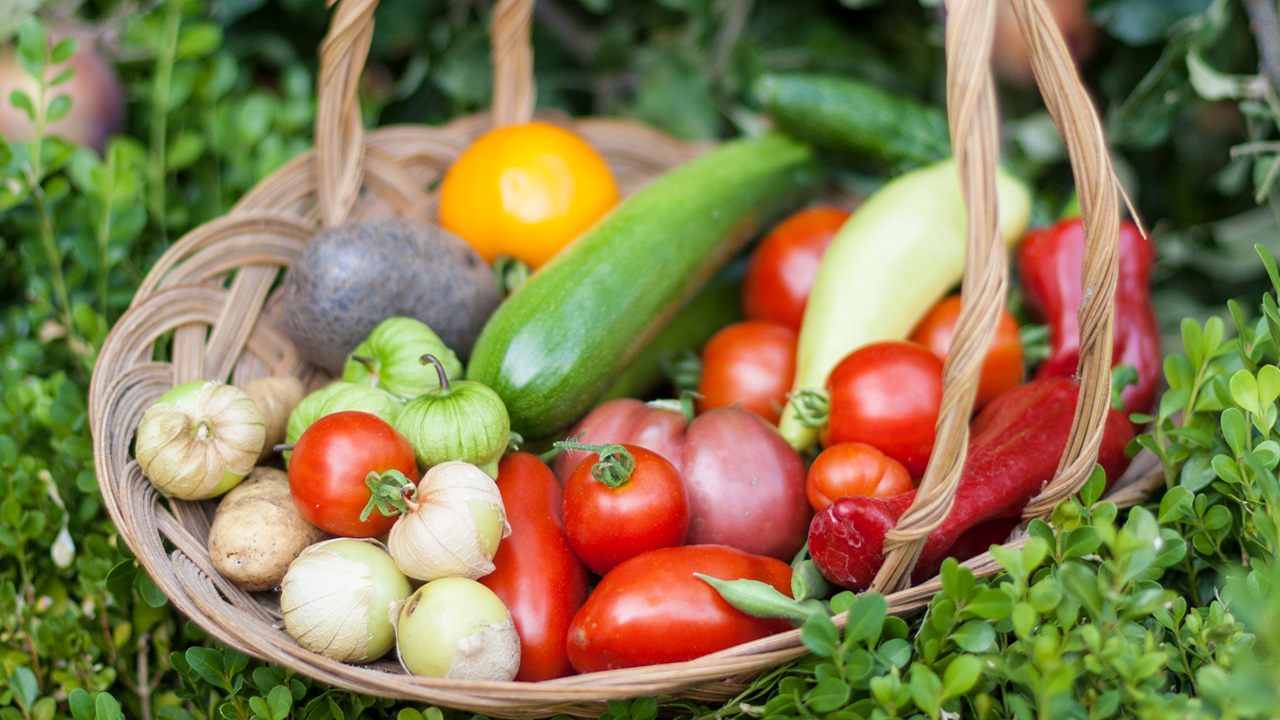
    The dog days of summer are here! The garden is in full swing and the squash, beans, tomatoes, peppers and more overflowing our harvest basket. Here is a handy list to help you through the month of August and prepare for the fall and winter garden. Tricia shows you what she is doing in her garden in our video, August Gardening Checklist.
    1. Keep up on the Harvest
    Your garden does not take a vacation when you do. If you are leaving for an extended vacation, make sure that someone comes over and harvests your cucumbers, summer squash, and fresh snap beans. They will stop or slow down on new fruit production if not picked regularly. If you have too many cucumbers, make some pickles. If you are not into canning, then refrigerator pickles are easy, quick and require no canning. Check out recipes for a refrigerator pickles at our blog site under Recipes and Preserving.

    2. Check Your Fruit Trees
    August is a month for fresh fruit like peaches, plums, pluots, apricots and nectarines. Pick your fruit at the peak of ripeness. Peaches will smell, well like a peach, they will give slightly when squeezed and no longer have any green undertones. Same holds true for nectarines, except they will smell like a nectarine. Ripe plums and pluots will have a sweet, fruity smell and give slightly when squeezed.

    If you have more fruit than you can eat, think about preserving them by freezing, making jams, jelly or compotes.

    3. Seed a New Lawn or Fix Bare Spots
    Now through September is a good time to seed new lawns or fix any bare spots in the existing lawn. Watch our video, Organic Lawn Care for helpful information on caring for your lawn and reseeding it.

    4. Check Your Irrigation Lines for Leaks
    August is a hot month and the garden still needs regular watering. Check your irrigation lines for leaks, rodent damage or low flow due to clogs or kinks.

    5. Pinch off Flowers from Your Herbs
    Keep the flowers pinched off your herb plants to encourage more growth. It is especially important to remove the flowers from your basil plants. This will encourage bushier plants which will translate into more leaves for making pesto or to use fresh or dried.

    6. Remove Squash Flowers
    If you want less fruit but bigger winter squash or pumpkins, remove any new female flowers and new fruit.

    7. Prune the Tall Blackberry Canes
    Continue pruning the tall primocanes of your blackberries (this encourages lateral branches, which is where next years berries will be born). Prune them to the height of the support or fence. Floricanes can be cut back after berries have been harvested.

    8. Divide your Iris Plants
    If your bearded iris plants have slowed down on flower production or it seems that the plants are really crowded, then it is time to divide them. Watch our video, Dividing Perennials for helpful information.

    9. Remove Spent Flowers
    Deadhead existing flowers, you may get a second flush of flowers. Sow seed for winter pansies and violas and plant sunflower seed for fall display.

    10. Weed Control
    Weeds continue to grow and should be removed before they go to seed.

    11. Pick Your Sweet Corn at Its Peak
    Sweet corn might be ready to harvest. To pick at the peak of sweetness and flavor, harvest early in the morning when the sugar content is at its highest. Also the corn is ready to be picked when the silks have turned brown and drying up, and the ear feels full. You can peel back the husk on one ear to check the kernel size.

    12. Monitor Plants for Heat Stress and Sunburn
    If you see sunscald on your tomatoes or peppers, put up some shade cloth to protect from the intense sun. For any signs of heat stress, try giving your plants a little compost tea or kelp.

    13. Feed Your Heavy Feeding Plants
    Cucumbers, squash or corn will benefit from a feeding with a balanced fertilizer.

    14. Pre-order Your Garlic
    Garlic planting time will be here before you know it and now is the time to pre-order your garlic. Some varieties sell out quickly, so for the best selection, reserve your favorite variety.

    15. Plant Some of Your Fall/Winter Harvest Seeds
    Plant some seeds for your fall/winter garden. Veggies like turnips, beets, carrots, kale, greens, broccoli, radish or cabbage can be planted now for a fall or winter harvest. 

  • Orofino Farmers Market Celebrates National Farmers Market Week


    Orofino Farmers Market joins markets across the country in celebrating National Farmers Market Week, August 6-12. Vendors at the market on Tuesday, Aug. 8 will be giving away Idaho Preferred farmers market tote bags to the first 120 customers, one per family please. Kid’s coloring pages will also be available.

    Farmers markets help preserve America’s rural lifestyle and farmland by stimulating local economies, increasing access to fresh, nutritious food, supporting healthy communities, and promoting sustainability.

    This article originally appeared at: http://www.clearwatertribune.com/news/community_news/orofino-farmers-market-celebrates-national-farmers-market-week/article_265aa332-77a3-11e7-9f1d-8744f1a3fbb8.html.
  • How Its Made: Would You Eat THAT?

    Before you bite into that apple or pick up an extra loaf of supermarket bread, you should know where your food comes from. A quick warning, however—it’s not pretty.
    by R.J. Wilson

    1. Apples are covered with ground-up bug resin.

    It’s called “shellac,” and it’s a waxy resin secreted by the lac bug. That’s what gives apples their shine.

    “But wait,” you’re probably saying while chewing on a Red Delicious, “I picked an apple off of a tree, and it still looked shiny.”

    That’s because apples create their own natural wax to prevent premature decomposition. Of course, food companies usually remove that wax during the cleaning process. Consumers want their apples to shine, so manufacturers apply a coat of shellac. All better, right?

    So, just to recap: Food distributors remove the wax from your apple to “clean” it, then apply the resin from the lac bug, then sell it to you. Oh, and here’s what that shellac looks like before it’s processed.

    Shellac is also commonly used on lemons, oranges, and Jelly Belly jelly beans, and it’s not just a resin—many of the bugs are processed along with the resin scrapings. Yes, that means that your apple is covered in ground-up bug bodies. Enjoy.

    2. Bread often contains L-cysteine, which is made from duck feathers.

    L-cysteine is an amino acid, and it’s an essential preservative; it’s one of the reasons that your store-bought bread lasts for more than a week, while your grandma’s home-cooked loaf starts to turn green after a few days (incidentally, “Grandma’s Home-Cooked Loaf” would be a great band name).

    It’s often made from duck feathers, cow horns, hog hair, and even human hair. Of course, by the time it’s added to your bread, it just looks like a nondescript liquid, but still—you’ll probably wish that you didn’t know about L-cysteine the next time you make a sandwich.

    There is such a thing as synthetic L-cysteine, by the way, and you can often find it by looking for Kosher-friendly foods.

    3. Vanilla flavoring is sometimes made from the scent glands of beavers.

    The scent glands of beavers—and we’re being very, very careful with our language here—are used to make castoreum. Trust us, you really don’t want to know the process.

    In any case, castoreum was a common food additive and generally recognized as safe. It was sometimes used in vanilla and raspberry flavorings, although that’s much less common now. Why? Well, “harvesting” the castoreum is more expensive than growing vanilla.

    In any case, castoreum is still widely used in perfumes, although it’s fallen out of favor in the food industry. The Vegetarian Resource Group asked five vanilla manufacturers whether they used castoreum, and all of them denied using the additive.

    4 Your favorite strawberry-flavored products may contain more bugs than berries.

    Recently, some Starbucks customers became seriously upset when they learned that the company had been using an ingredient called cochineal to color some strawberry-flavored products. These included Frappucinos, smoothies, birthday cake pops, miniature donuts, and a red velvet Whoopee pie.

    The source of concern was the strange-sounding cochineal, which is produced from a bug that feeds on cacti. When the bug is crushed, it yields a bright pink color, which works well for food dyes and makeups. Of course, it’s a little gross for people who don’t like eating insects (or at least don’t know  that they like eating insects).

    Starbucks succumbed to pressure to remove this product from some of their products, but if you like eating processed foods that have a pink hue to them, you’re probably consuming bugs. Cochineal is found in various meats, coffees, cookies, marinades, and even some juices.

    5. Many cheeses use rennet, which isn’t exactly vegetarian-friendly.

    Cheeses are made by coagulating milk, and that requires rennet, which is often made from the stomachs of newly born calves, according to the Vegetarian Society. Rennet’s key component is chymosin, which is necessary for the cheese-making process.

    However, modern cheese technology (another great band name) has provided several alternatives, including vegetable rennet and microbial rennet. Vegetarians have to be careful, unfortunately, while omnivores typically don’t realize that they’re eating a product made with calf stomachs.

  • Guerrilla Gardeners. Rebuilding Communities Growing Independence.

    The most effective change-makers in our society aren’t waiting around for a new president to make their lives better, they’re planting seeds, quite literally, and through the revolutionary act of gardening, they’re rebuilding their communities while growing their own independence.

    Every four years when the big election comes around, millions of people put their passion for creating a better world into an increasingly corrupt and absurd political contest. What if that energy was instead invested in something worthwhile, something that directly and immediately improved life, community, and the world at large?

    The simple act of growing our own food directly challenges the control matrix in many authentic ways, which is why some of the most forward-thinking and strongest-willed people are picking up shovels and defiantly starting gardens. It has become much more of a meaningful political statement than supporting political parties and candidates.

    Take, for example, Ron Finley, the ‘Guerrilla Gardener’ from Los Angeles who inspires the world with no-nonsense truth about how the corporate food system enslaves us, while proving to us that the most effective weapon in this fight is fertile soil. He makes growing veggies cool again, as it should be, because food sovereignty is the very foundation of personal independence.

    I live in a food prison.. It’s all by design just like prisons are by designed. I just got tired of being an inmate. So I figured, let me change this paradigm, let me grown my own food. This is one thing I can do to escape this predestined life that I have unwillingly subscribed to. – Ron Finley

    Think about it. Creating your own food supply challenges the status quo in a number of important ways. Growing your own food:

    -Decreases dependence on a polluted corporate food system

    -Improves health and wellness by providing exercise and nutritious food, freeing us from dependence on a for-profit medical system

    -Undermines Monsanto and the agro-chemical industry that is polluting our world and killing bees

    -Highlights issues of political control by pitting homeowners and gardeners against government and ordinance makers

    -Builds and heals community by providing a place and activity worth coming together over

    -Works to repair the damage we are doing to the environment with our consumer lifestyles

    -Protects us against insecurity and food unrest

    -Facilitates a greater awakening by setting an example for others to follow

    When united, awareness and action create the kind of changes that a rigid control system cannot tolerate, and when extraordinary people like Ron Finley take the lead, a meaningful movement can take hold. This is real action, it is very effective, and as it becomes more mainstream to set up gardens in your yard and on your block, we will witness the re-emergence of the kind of society we just cannot create by playing by the rules of a rigged system.

    What happens when you transform yourself by deepening your connection to nature?
    What happens when you then transform your community by bringing your neighbors together in the goal of providing something of immense value to all?
    What happens then when a nation of transformed communities sees their world without the boundaries of and limitations imposed on us by a corrupt system?

    The four-year cycle of presidential politics in the US is far more effective at stealing the constructive energy of motivated people than it is at bringing about meaningful change to our lives, communities and to the nation as a whole. Time to try something far more effective and rewarding. Let’s overgrow the system, and transform our health and communities in the process.

    For a sign that this movement is spreading across the nation, check out this homegrown music video, ‘Gardening is Gangsta,’ by Mark Jankins and Sifu Paul Davis.

    I don’t rely on new food stamps. Cuz’ every season got me harvesting some new plants.

  • You’ll Never Eat McDonald’s French Fries Again After Watching This

    Here is a 3-minute video from a talk given by author and activist Michael Pollan, revealing the shocking truth about how McDonald’s french fries are made.

    Be sure to share this eye-opening video — everyone needs to be informed about what is being sold to us as food.

    ————————–

    Renowned activist and author Michael Pollan illustrates how McDonald’s insists on using Russet Burbank Potatoes, a potato in America that is unusually long and difficult to grow. They further insist that their potatoes have no blemishes at all, which is hard because these potatoes commonly suffer from what is referred to as Net Necrosis, which causes unwanted spots and lines on the potatoes. If they have this, McDonald’s won’t buy them and the only way to eliminate this is through the use of a pesticide called methamidophos (Monitor) “that is so toxic that the farmers who grow these potatoes in Idaho won’t venture outside and into their fields for five days after they spray.”

    When McDonald’s is ready to harvest their potatoes, they have to put them in giant atmospheric controlled sheds the size of football stadiums because they are not edible for six weeks. “They have to off gas all the chemicals in them.”

    2016 STILL NO GMO FRIES AT MCDONALD’S

    McDonald’s does not use genetically modified potatoes, including Simplot’s line of Innate-brand potatoes. The potatoes, which received regulatory approval, are designed to reduce bruising and black spots, which increases storage capacity, and reduce a chemical that can become a carcinogen when cooked.

    McDonald’s does not plan to adopt use of genetically modified potatoes, said Dell Thornley, the chain’s director of global supply chain and sustainability.

    “That’s because of consumer acceptance, and, globally, because we need to be able to move products, and there are areas where genetically modified products aren’t allowed,” Thornley said.

    Simplot has said Innate potatoes were designed for the fresh-pack market and, because they don’t brown when cut, they will be perfect for restaurants, caterers and large-scale food preparers who can save time by using precut spuds.

    http://www.ipmcenters.org/CropProfiles/docs/IDpotatoes.pdf

  • Chicken Farmer

    1. Whole Eggs Are Among The Most Nutritious Foods on Earth

    One whole egg contains an amazing range of nutrients.

    Just imagine… the nutrients in there are enough to turn a single fertilized cell into an entire baby chicken.

    Eggs are loaded with vitamins, minerals, high quality proteins, good fats and various other lesser-known nutrients.

    One large egg contains (1):

    • Vitamin B12 (Cobalamin): 9% of the RDA.
    • Vitamin B2 (Riboflavin): 15% of the RDA.
    • Vitamin A: 6% of the RDA.
    • Vitamin B5 (Pantothenic Acid): 7% of the RDA.
    • Selenium: 22% of the RDA.
    • Eggs also contain small amounts of almost every vitamin and mineral required by the human body… including calcium, iron, potassium, zinc, manganese, Vitamin E, Folate and many more.

    A large egg contains 77 calories, with 6 grams of quality protein, 5 grams of fat and trace amounts of carbohydrates.

    It’s very important to realize that almost all the nutrients are contained in the yolk, the white contains only protein.

    Bottom Line: Whole eggs are incredibly nutritious, containing a very large amount of nutrients compared to the calorie load. The nutrients are found in the yolks, while the whites are mostly protein.

    2. Eggs Improve Your Cholesterol Profile and do NOT Raise Your Risk of Cardiovascular Disease

    Egg

    The main reason people have been warned about eggs is that they’re loaded with cholesterol.

    One large egg contains 212 mg of cholesterol, which is a LOT compared to most other foods.

    However, just because a food contains cholesterol doesn’t mean that it will raise the bad cholesterol in the blood.

    The liver actually produces cholesterol, every single day. If you eat cholesterol, then your liver produces less. If you don’t eat cholesterol, then your liver produces more of it.

    The thing is, many studies show that eggs actually improve your cholesterol profile.

    Eggs tend to raise HDL (the “good”) cholesterol and they tend to change the LDL (the “bad”) cholesterol to a large subtype which is not associated with an increased risk of heart disease (2, 3, 4).

    One study discovered that 3 whole eggs per day reduced insulin resistance, raised HDL and increased the size of LDL particles in men and women with metabolic syndrome (5).

    Multiple studies have examined the effects of egg consumption on the risk of cardiovascular disease and found no association between the two (6, 7, 8).

    However, some studies do show an increased risk of cardiovascular disease in diabetic patients. This needs further research though and probably doesn’t apply on a low-carb diet, which can in many cases reverse type II diabetes (9, 10, 11).

    Bottom Line: Studies show that eggs actually improve the cholesterol profile. They raise HDL (the good) cholesterol and increase the size of LDL particles, which should lower the risk of heart disease.

    3. Eggs Are Loaded With Choline, an Important Nutrient For The Brain

    Woman smiling and holding an egg

    Choline is a lesser-known nutrient that is often grouped with the B-complex vitamins.

    Choline is an essential nutrient for human health and is needed for various processes in the body.

    It is required to synthesize the neurotransmitter acetylcholine and is also a component of cell membranes.

    A low choline intake has been implicated in liver diseases, cardiovascular disease and neurological disorders (12).

    This nutrient may be especially important for pregnant women. Studies show that a low choline intake can raise the risk of neural tube defects and lead to decreased cognitive function in the offspring (13).

    In a dietary survey in the U.S. from 2003-2004, over 90% of people ate less than the daily recommended amount of choline (14)!

    The best sources of choline in the diet are egg yolks and beef liver. One large egg contains 113 mg of Choline.

    Bottom Line: Choline is an essential nutrient that 90% of people in the U.S. aren’t getting enough of. Egg yolks are an excellent source of choline.

    4. Eggs Contain High Quality Proteins With a Perfect Amino Acid Profile

    Chicken and Egg, Smaller

    Proteins are the main building blocks of the body and serve both structural and functional purposes.

    They consist of amino acids that are linked together, kind of like beads on a string, then folded into complex shapes.

    There are about 21 amino acids that the body uses to build its proteins.

    The body can not produce 9 of these amino acids, which are deemed as “essential” and must be gotten from the diet.

    The quality of a protein source is determined by its relative amounts of these essential amino acids. A protein source that contains all of them in the right ratios is a good source of protein.

    Eggs are among the best sources of protein in the diet. In fact, the biological value (a measure of protein quality) is often evaluated by comparing it to eggs, which are given the perfect score of 100.

    Bottom Line: Eggs are an excellent source of protein, with all the essential amino acids in the right ratios.

    This article originally appeared at: https://youtu.be/zgVFmfibjeE.
  • Lemon Raspberry Zucchini Bars

    Just in time for you to use all the extra zucchini from the garden that you have no idea what to do with! 

    With all the talk about the dangers of coconut oil (from an organization that is supported by companies that profit from the consumption of grain oils aka vegetable oil) I share with you our summer abundance recipe..lemon raspberry zucchini bars. 

    You can use eggs (we have a chicken farm and a plethora of those..) but to my surprise, the vegan version was BETTER and the little chia seeds reminded me almost of a poppyseed muffin. 

    Lemon Raspberry Zucchini Bars

    Makes 28 servings

    • 3 tablespoons chia seed
    • 5 tablespoons water
    • 2 cups all purpose flour (we use a gluten free 1 to 1 blend)
    • ¼ teaspoon baking powder
    • 1 teaspoon baking soda
    • 1 teaspoon salt
    • ¾ cup sugar (we use coconut palm 1/2 cup, and 1/4 cup local honey)
    • ½ cup natural applesauce
    • ½ cup melted coconut oil
    • Juice and zest from one lemon
    • 1 ½ cups grated zucchini
    • ¼ cup raspberries (picked fresh from our local pesticide free u-pick farm)

    1. Mix the chia seeds and water together in a small bowl. Let sit for 5 minutes. Meanwhile, whisk together flour, baking powder and soda, salt. Set aside.

    2. Mix thoroughly together the sugar, applesauce, coconut oil, lemon juice and zest. Add the zucchini.

    3. Whisk the dry ingredients into the wet and fold in raspberries. Pour into a greased (with coconut oil) 9×13 inch pan and bake on 350 degrees for 25- 30 minutes or until toothpick comes out clean from center.

    We also use mini muffin tins to make quick BITES for summer snacks. 

    This article originally appeared at: http://meganwarerd.com/2014/08/22/lemon-raspberry-zucchini-bars-recipe-redux/.