Category: Healthy Food

Because access to healthful and uncontaminated food ​should be a human right.

  • Coconut Oil Kills!

    Formerly unheard of, coconut oil is becoming more of a staple cooking oil in many households. Manufacturers are using coconut oil in favor of other oils in packaged products, and there are claims that coconut oil can do everything from supporting weight loss to slowing the progression of Alzheimer’s disease. Nevertheless, many organizations such as the American Heart Association and the USDA continue to caution consumers against all tropical oils, including coconut oil.

    Recently the American Heart Association announced that coconut oil is bad for your heart. In this video I dissect exactly why this is all of a sudden the case.

    This article originally appeared at: https://youtu.be/I_j-tBJ3Kss.
  • Dirty Dairy Ben and Jerry’s

    The Vermont brand has been built on a bucolic image of cows grazing on endless pastures . . . Ben & Jerry’s ice cream and other Vermont companies have used this idyllic imagery to sell their products. Gone are the days, however, when most of Vermont’s cows were grazing in spectacularly scenic landscapes. Now a majority of Vermont’s cows are locked up in . . . ‘confined animal feeding operations’ or CAFOs . . . grazing on concrete with a diet rich in GMO corn and pesticides. – “Vermont’s GMO Addiction: Pesticides, Polluted Water and Climate Destruction,” Regeneration Vermont

    The most important thing we can do today as conscious consumers, farmers and food workers is to regenerate public health, the environment and climate stability. We can do this most readily by moving away from industrial, GMO and factory-farm food toward an organic, pasture-based, soil-regenerative, humane, carbon-sequestering and climate-friendly agriculture system.

    What’s standing in the way of this life-or-death transformation? Rampant greenwashing. The proliferation of $90 billion worth of fraudulently labeled or advertised “natural” and “socially responsible” food products in the U.S. confuses even the most well-intentioned of consumers and lures them away from purchasing genuine organic or grass-fed products.

    Perhaps no company personifies greenwashing more than Vermont-based Ben & Jerry’s.  Ben & Jerry’s history—a start-up launched by two affable hippies, from a renovated gas station in Burlington, Vt., —is legendary. Despite selling out to Unilever in April 2000, the brand’s handlers have preserved its quirky, homespun image, and masterfully convinced consumers that Ben & Jerry’s has never strayed from its mission: “to make the world a better place.”

    As the New York Times reports, the Organic Consumers Association (OCA) recently sent samples of Ben and Jerry’s top-selling ice cream brands to an independent testing lab for analysis. Ten out of 11 samples tested positive for Roundup (glyphosate and AMPA) herbicide contamination

    So much for making the world a better place.

    Compare the Ben & Jerry’s test results with the results of our testing of organic brands, brands that use organic milk from farms that are actually making the world a better place. Three out of four nationally distributed organic ice cream brands tested negative for Roundup contamination (only Whole Foods “365” brand was contaminated).

    A history of stalling on organic

    Twenty-four years ago, anti-GMO food activists, including the Pure Food Campaign (OCA’s predecessor), successfully pressured Ben & Jerry’s and a number of other leading dairies to prohibit the use of America’s first genetically engineered food product, Monsanto’s recombinant Bovine Growth Hormone (rBGH). Now marketed by drug giant Elanco (Eli Lilly), rBGH is linked to increased risk of human breast and colon cancer, a greater use of antibiotics in animal feed, and damage to cow’s health.

    Several groups, including the OCA, subsequently asked Ben & Jerry’s to move beyond just prohibiting their dairy cows from being injected with rBGH. We asked them to go 100 percent organic, which would have required the company to ban its dairy suppliers from feeding their cows GMO corn and grain, and to use only organic ingredients in its flavors. But even before Ben & Jerry’s was bought out by Unilever, company founder Ben Cohen told Vermont Food activist Michael Colby “that Ben & Jerry’s was not going to transition to organic because it wouldn’t allow them to ‘maximize profits.’ “ 

    Since 1994, Ben & Jerry’s, the $1.5-billion-per-year flagship brand of the second-largest multinational food corporation in the world, Unilever (annual sales $60 billion), has cashed in big time on its “rBGH-free” policy, advertising its brand, over and over again, as “all natural,” “GMO-free,” “fair trade,” “climate-just,” and “socially responsible.”

    Despite repeated calls from consumer groups to stop advertising its ice-cream as “natural” or “all natural,” given that it is derived from cows raised almost exclusively on GMO corn forage (grown with Roundup Ready, neonic-, and BT-spliced seeds), laced with non-organic ingredients, sprayed heavily with Roundup and other pesticides, Ben & Jerry’s continues to greenwash and lie. The company recently (June 18, 2017) described its mission as:

    To make, distribute and sell the finest quality and euphoric concoctions with a continued commitment to incorporating wholesome, ingredients and promoting business practices that respect the Earth and the Environment.

    After more than a decade of dodging consumer, farmer, animal welfare, environmental and farmworker pleas to stop greenwashing and to equitably source its milk from cows grazing on organic pasture, Ben & Jerry’s continues to stall. Instead, Ben & Jerry’s sources its milk from St. Alban’s, a 400-farmer dairy co-op that is increasingly dominated by large factory farm-type dairy operations. To feed their cows, farmers routinely spray tons of pesticides, including Roundup, atrazine and metolachlor, on fields of GMO corn grown from neonic-coated and BT toxin seeds. They also apply tons of soil-killing, climate-disrupting nitrogen fertilizers that pollute Vermont’s streams, rivers and lakes.

    Petitions and protests calling for Ben & Jerry’s to stop its suppliers from exploiting farmworkers, confining dairy cows and driving small dairy farmers into bankruptcy, have produced nothing more than vague promises of “respecting the Earth” and supporting rural economic justice.

    Enough is enough. Vermont and national public interest organizations have lost our patience. It’s time for Unilever and Ben & Jerry’s to move beyond greenwashing to decisive action. It’s time for Ben & Jerry’s to announce it will immediately begin transitioning to 100-percent organic. Otherwise conscious consumers have no choice but to launch a national and, if necessary, international protest campaign and boycott.

    Vermont activists demand major changes from Ben and Jerry’s

    Regeneration Vermont, a broad-based coalition of consumers and farmers, has repeatedly asked Ben & Jerry’s and Unilever to sign a six-point pledge to go 100-percent organic over a three-year transition period. Here’s what the groups want Ben & Jerry’s to pledge:

    1. A transition away from GMO crops and toxic pesticides/fertilizers and toward regenerative organic agricultural methods.
    2. Fair wages for farmers, including premiums based on regeneration benchmarks and assistance in the transition toward regenerative methods.
    3. Economic justice for farm workers, fair and livable wages, decent housing and social and cultural dignity.
    4. Adoption of climate remediation techniques, beginning with an emphasis on healthy soils and cover-cropping for carbon sequestration and erosion control.
    5. Humane treatment of farm animals, a phase-out of confinement dairies and a transition back to grassland grazing and grass-based feed for ruminants.
    6. Cleaning up and protecting our watersheds, streams, rivers, ponds, lakes, and groundwater.

    A trail of toxins

    Recent reports published by Regeneration Vermont reveal that Ben & Jerry’s suppliers, and Vermont and U.S. (non-organic) dairy farmers in general, have gone backward, rather than forward over the past 15 years in terms of environmental sustainability, food safety, nutrition, greenhouse gas pollution, water pollution, animal welfare, farmworker justice, and preservation of family farms.

    Chemical fertilizer use has also almost doubled in Vermont since GMOs began to dominate the market 15 years ago. 

    So much for Monsanto’s claims that GMO crops would reduce the use of toxic pesticides and water- polluting and climate-destabilizing nitrogen fertilizers. Not to mention Ben & Jerry’s claim that it is “non-GMO” and “environmentally responsible.”

    Among Regeneration Vermont’s finding are the following:

    • An astounding 97 percent of Vermont’s field corn, the major component of a non-organic dairy cow’s diet, is now GMO (Roundup Ready, Bt-spliced, neonic seeds). This is the highest percentage of any state in the U.S.

    • Herbicide use has increased over 100 percent-per-acre in Vermont since Monsanto’s GMO corn came on the market, with recent heavy use of atrazine, metholachlor, simazine, pendimethlin, glyphosate (Roundup), acetochlor, dicamba, and alachlor.

    As Regeneration Vermont states in its report:

    Regulators have determined that five of these eight most used herbicides [in Vermont] are possible or probable human carcinogens, the remaining three are suspected carcinogens. Seven of the eight are possible or probable endocrine disruptors (the other one is a suspected to be an endocrine disruptor). All eight have been determined by regulators and academics to cause birth or developmental defects and contaminate drinking water and public waters with dangerous chemicals that have long-term persistence. Atrazine, simazine, acetachlor, and alachlor have lost their registration in the EU, and are effectively banned.

    The threat of #DirtyDairy and factory farms

    Millions of health-minded Americans, especially parents of young children, now understand that cheap, non-organic, genetically engineered, industrial and factory farm food is hazardous. Not only does chemical- and energy-intensive factory farming destroy the environment, destabilize the climate, impoverish rural communities, exploit farm workers, inflict unnecessary cruelty on farm animals, and contaminate the water supply, but the end product itself is inevitably contaminated and inferior in nutritional terms, in this case in comparison to 100% grass-fed and organic milk and dairy.

    America’s green-minded consumers understand that industrial agriculture poses a terminal threat to the environment and climate stability. A highly conscious and passionate segment of the population is beginning to understand that converting to non-chemical, non-genetically engineered, energy-efficient, carbon-sequestering organic/regenerative farming practices, and drastically reducing food miles by re-localizing the food chain, are essential preconditions for stabilizing our out-of-control climate and preparing our families and communities for future energy and resource shortages.

    A critical mass of the global grassroots—consumers, farmers, activists—now realize that unless we act quickly, global warming and climate chaos will soon severely disrupt industrial agriculture and long-distance food transportation, leading to massive crop failures, food shortages, famine, war, and pestilence. Even more alarming, accelerating levels of greenhouse gases will soon push global warming to a tipping point that will melt the polar icecaps and possibly unleash a cataclysmic discharge of climate-destabilizing methane, now sequestered in the fragile arctic tundra.

    Thanks to this growing consumer awareness—and four decades of hard work—the organic community has built up a $50-billion “certified organic” and $5-billion 100% grass-fed food and products sector that prohibits the use of genetic engineering and pesticides. The rapidly expanding organic products sector now constitutes more than 5 percent of total retail grocery sales (and 15 percent of fruits and vegetables), with an annual growth rate of 10-15 percent.  Even taking into account a sluggish economy, the organic market, if we eliminate greenwashing and labeling fraud, could conceivably reach a “tipping point” of 20 percent of grocery sales in 2020.

    The myth of “natural” remains a threat

    As impressive as this $55 billion Organic and Grass-fed Alternative is, it remains overshadowed by an additional $90 billion in annual spending by consumers on products, such as B&J’s, fraudulently marketed as “natural,” “gmo-free,” “free range,” or “sustainable.”

    Consumer surveys indicate that the overwhelming majority of Americans believe that “natural” products are “almost organic,” yet at the same time, much cheaper; the majority believes that “all natural” actually means that it is better than organics. Ben & Jerry’s is not the only brand greenwashing its products and impeding the growth of organic, 100% grass-fed and regenerative foods. But it is certainly among the most shameless.

    In fact, all these “natural,” “all-natural” and “sustainable” products are neither backed up by rules and regulations, nor a third-party certifier. Most “natural” or conventional products—whether produce, dairy or canned or frozen goods—are produced on large industrial farms or in processing plants that are highly polluting, chemical-intensive and energy-intensive.  

    Perhaps fraudulently labeled “natural” foods such as Ben & Jerry’s wouldn’t matter so much if we were living in normal times, with a relatively healthy population, environment and climate. Conventional products sold as “natural” or “nearly organic” would be just one more example of chicanery or unethical business practices.

    But we are not living in normal times.

    Demanding that fake natural brands and producers, such as Ben & Jerry’s, make the transition to organic is a matter of life or death. We’re tired of pleading and politely asking Ben & Jerry’s, Unilever and other greenwashers to please change their ways. It’s time to step up the pressure. Please join the growing boycott of Ben & Jerry’s ice-cream by signing this petition and by volunteering to join a local campaign team in your local community.

    Ronnie Cummins is international director of the Organic Consumers Association.

    This article originally appeared at: https://www.organicconsumers.org/essays/dirty-dairy-why-consumers-need-force-ben-and-jerrys-go-organic.
  • Chocolate As Nutrition

    Chocolate isn’t just for guilt-trips anymore. It’s been shown in numerous studies to be a powerful performance-enhancing, happiness-triggering, mood-enhancing, appetite-reducing, inflammatory-nipping and good-bacteria-building substance. Yay for that! Side note though: GOOD chocolate must be consumed to make it all that it can be: preferably organic, super dark, low sugar and European, since you want as little mycotoxins as possible (since it is a fermented food).  

    Thanks to Bulletproof Executive for a great background on what chocolate actually contains and how it works to make us feel and look better, its caveats and for publishing the delicious keto chocolate mousse recipe below from Ryan Carter

    • High Pressure Mood Improver
    • Chocolate makes you eat less
    • Maintenance of a Healthy Cardiovascular System
    • Chocolate makes your skin glow…and may reduce sunburn
    • Healthy Inflammation Levels From Powerful Antioxidants (for mice!)
    • Chocolate is a prebiotic
    • Cellular Rejuvenation (Anti-Aging)

    Head on over to Bulletproof’s blog for the full spectrum of benefits and caveats, and then, enjoy your delicious health supplement! 

    Keto Chocolate Avocado Mousse

    Prep Time: 15 min.
    Total Time: 45 min.
    Makes: 3 servings

    Ingredients:

    Instructions:

    1. Chill ripe avocado for 1-2 hours prior. This step assures the blender stays cool, which helps maintain the temperature of your dessert just in case you want to consume it immediately.
    2. Add avocado to your blender, along with chocolate and protein powders, followed by the coconut milk.
    3. Add sweetener of choice (optional).
    4. Put the lid on and blend for 10 seconds then rest for 10 seconds in intervals until mousse reaches silky consistency. This helps to avoid overheating, which can destroy the protein in the powder as well as the consistency of the mousse.
    5. Transfer to bowls and add your favorite toppings!

    Optional toppings

    • Himalayan Sea Salt
    • Bulletproof Fuel Bar shavings
    • Blueberries
    • Chopped nuts (try macadamia or Brazil nuts)
    • Fresh ginger, chopped or shaved
    • Lightly toasted coconut

    Nutrition Facts

    Serving size: 100g

    Calories 198
    Total fat 15.6g
    Sat Fat 6.78g
    Cholesterol 0mg
    Sodium 27.8mg
    Total Carb 8.8g
    Dietary Fiber 5g
    Sugars 1.1g
    Protein 7.4g
    Vitamin A 2%
    Vitamin C 9%
    Calcium 1%
    Iron 6%

  • Processed Meat

    • WHO (World Health Organization) has revealed shocking studies showing that red processed meats are carcinogenic. Red meats include beef, lamb, pork, veal, mutton, horse, and goat not chicken, fish, or turkey. Carcinogenic is simply a big word for can cause cancer. Two chemicals in processed meats known as Sodium Nitrate and Amino Acids are responsible for cancer. Neither of these chemicals by themselves are substantially dangerous but when these two chemicals enter your body they form a chemical reaction with each other  which then creates carcinogenic compounds (cancer cells) in your body.

    Processed Meats

          First of all, what is processed meat? Processed meat is meat that has been modified by smoking, curing, or by adding preservatives such as salt. Examples include meals from fast food chains (McDonalds, KFC, etc.) and packaged meat such as bacon, sausages, bologna, and salami are all common processed meats.
     
        Processed meat is known to increase the risk of heart disease, heart failure, and the chance of type two diabetes. Also, because of the large amounts of sodium put into processed meat it can even cause stroke. But on a more serious tone, WHO (World Health Organization) has revealed shocking studies showing that red processed meats are carcinogenic. Red meats include beef, lamb, pork, veal, mutton, horse, and goat not chicken, fish, or turkey. Carcinogenic is simply a big word for  can cause cancer. Two chemicals in processed meats known as Sodium Nitrate and Amino Acids are responsible for cancer. Neither of these chemicals by themselves are substancially dangerous but when these two chemicals enter your body they form a chemical reaction with each other  which then creates carcinogenic compounds (cancer cells) in your body.

        Also, when meats are exposed to high tempratures, (e.g, smoking) the acids and sugars in the meat form to create heterocylic acids. Heterocylic acids are mutagenic (cause changes in the genes) and can lead to cancer. The only pro about Sodium Nitrates is that they help fight of harmful bacteria and help the meat sustain longer. Otherwise your meat  would spoil in a few days time.

       Many mainstream meat brands raise their cattle and poultry through growth antibiotics and sometimes drugs. These animals tend to be less healthy and their meat does not come out nearly as fresh and nutritious as it should. Some of the animals have not even set foot on grass! They are raised in small individual pens and are fed processed veggies such as canned corn and lettuce. Make sure that the brand your buying from is GMO free.

       The average adult eats approximately 71 grams of processed meat a day. Studies have shown that if you eat around 50 grams of processed meat a day that increases the chance of Colorectal cancer by 23 percent and the chance of Bowel cancer by 18 percent! 60 grams of processed meat a day can increase the chance of stomach cancer by 25 percent.

       In conclusion, processed meat is definitely not good for your body, sure it might last longer, look better and taste a whole lot better but the side effects are a no-brainer. It can cause diabetes,  stroke, heart problems, and even cancer. Scientist are searching form ways to replace Sodium Nitrates and reduce the amount of Heterocylic acids. But the simple solution to staying healthy is to cut down on the procesed meat! Try to stay below 250 grams of processed meat a week. An occasional meal of processed meat is ok but a daily dosage of it won’t keep you healthy. Also try eating more vegetables, which contain healthy substances which inhibit Sodium nitrates.

    Quantcast

    This article originally appeared at: http://processed-food.weebly.com/processed-meat.html.
  • Disturbing Toxin Test Results in Children and “healthy” food samples

    Use your buying dollar well. Show the food industry what is important to you and protect your family by buying organic and non-gmo food.

    #ChildrenAreOurFuture #SayNoToGMO #HFIdaho

    Surprising Impact for Gluten Free, Vegan, Vegetarian and Organic Consumers

    May 5, 2017 Mission Viejo, CA- Moms Across America releases their report on their recent findings of toxinsin 36 American children, tested at Great Plains Lab, along with results from the Canadian Food Inspection Agency(CFIA). The results are disturbing and have an important message for Gluten Free, Vegan and Vegetarian American consumers and food manufacturers.

     “100% of all the children tested positive for serious toxins. 79% of the children tested had ADHD or autism symptoms, 21% did not. Over 50% tested positive levels of 3X higher than the average. We expected the children who ate organic to have lower levels of toxins than the children who did not. This was not the case for the majority of the children. Upon the release of the CFIA glyphosate data we realized why, and we hope consumer and food manufacturers take note of these important findings.” – Zen Honeycutt of Moms Across America.

    Honeycutt focused primarily on glyphosate because scientists report that glyphosate increases the harmful impact of other environmental toxins, making the presence of the other 166 chemicals tested for, even more detrimental.

    The CFIA glyphosate testing data, compiled in the book “Poisoned Foods of North America” by Tony Mitra, showed that non-organic gluten free foods and non-organic foods which largely make up vegan and vegetarian foods such as wheat, garbanzo, white and black beans were very high in glyphosate, the world’s most widely used herbicide, up to 12,699 ppb. Health conscious parents who try to feed their children organic are much more likely to feed their children gluten-free, vegan and vegetarian foods whether or not they are also organic, thus unintentionally poisoning their children with higher levels of glyphosate. This shows that health-conscious consumers who are eating gluten-free, vegan and vegetarian foods must be sure those foods are also organic in order to avoid this toxic herbicide.

    However, some foods are contaminated whether they are organic or not. Particularly alarming was the finding that even organic garbanzo beans, organic chickpeas, and some organic lentils were highly contaminated with glyphosate. These foods should be avoided completely from North America if one wants to avoid consuming glyphosate herbicides. 

    Claims that glyphosate-based herbicides are safe are widely believed, as Roundup and other GBH brands have been used for 40 years. In the past ten years, there has been a significant increase of the use of glyphosate directly on nonorganic food as a drying agent in addition to GMO crops. Honeycutt and her organization assert this is unsafe, and a major contributing factor to the skyrocketing childhood illnesses in America today.

    “Proponents of GMO and chemical farming claim glyphosate-based herbicides are safe, according to the EPA. But the EPA policy is to require safety studies on one declared active chemical ingredient, not the final formulation of the herbicide. They have admitted to not having any long-term animal studies on the final formulation of Roundup. Therefore, any claims that Roundup and glyphosate-based herbicides (GBH) are safe are completely unfounded. We call on farmers to stop using harmful chemicals on all of our food and feed crops immediately. We must reduce the toxic burden on our children and protect the future of our country, “ says Honeycutt.


    Full report downloadable link.

    Link to press release pdf. 

    Contact 949-307-6695

    Zen Honeycutt, Executive Director

    zen@momsacrossamerica.org

    Moms Across America is a 501c3 nonprofit whose motto is “Empowered Moms, Healthy Kids.”

  • Boxed Mac N Cheese Contaminated With Harmful Chemicals

    HFI: It is CRITICAL to our children’s health to know what’s in our children’s food! The USDA approves of and encourages the use of boxed mac n cheese in the school and daycare food programs. Busy moms grab boxes from the shelves and whip up a ‘kid-friendly’ meal that is loaded with hormone disrupting chemicals.

    From KRON San Francisco: 

    Two million boxes of macaroni and cheese are sold every day here in the United States.

    But could serving up one of America’s favorite comfort foods be exposing you to harmful chemicals?

    The tried and true box of mac n cheese you feed your kids could be downright dangerous. The problem is in the powder.

    And it’s across the board in all types of the packaged stuff.

    Lab tests of 10 different varieties of macaroni and cheese have revealed toxic industrial chemicals known as phthalates.

    Those are hormone-disrupting chemicals that can affect developing brains and alter thyroid function and sex hormones.

    Now, DEHP, that’s the most widely banned phthalate around the world, was found in all 10 of the mac and cheese powders tested. 

    Outraged? You should be! Read the report and sign the petition at http://kleanupkraft.org/

    It’s urging mac n cheese makers to eliminate any and all phthalates.

    The good news is that there are healthier alternatives. You might have to make from scratch.

    This article originally appeared at: http://wric.com/2017/07/15/report-box-mac-and-cheese-contains-harmful-chemicals/.
  • Glyphosate Residue Free Food Label

    Chosen Foods and Heavenly Organics have started a wave of Glyphosate Residue Free certified brands in the U.S., in what is being described as a “consumer-based push for transparency”. I am excited to support this company! 

    Chosen Foods_GRF_00180

    The past week has seen the first wave of Glyphosate Residue Free brands entering the U.S. grocery market and many large brands including USDA organic and non-GMO certified brands have shown deep interest in the new certification.

    Why are brands interested in Glyphosate Residue Free certification?

    Glyphosate is the most used pesticide in the World and has the highest public profile of any chemical used in food production. It has been found in a range of popular American food products and in the urine of 93% of people tested by the University of California San Francisco (UCSF).

    The revelation from WHO’s International Agency for Research on Cancer (IARC) in 2015 that glyphosate is a ‘probable human carcinogen’ has led to consumers around the World asking for transparency regarding the levels of glyphosate in their food.

    Henry Rowlands, Director of The Detox Project (owner of the Glyphosate Residue Free label), stated on Tuesday that “Glyphosate Residue Free certification enables food manufacturers to give consumers what they really want – glyphosate residue free food.

    “Currently the toxic chemical testing standards for both non-organic and organic food are very weak but we aim to change this by certifying ingredients and food products – consumers have the right to know what toxic chemicals are in the food they buy at grocery stores across the U.S.”

    Information Box

    Verified Products

    Verification FAQs

    The Process

    The Standard

    Get Verified

    Chosen Foods

    The Adobe Flash Player is required for video playback.
    Get the latest Flash Player or Watch this video on YouTube.

    9 products certified Glyphosate Residue Free, including their famous 100% Pure Avocado Oil.

    Chosen Foods was founded by a well-traveled Naturopathic Doctor who discovered the powerful effect traditional foods were having in their native cultures. He was inspired to share these ancient superfoods with the rest of the world – and so their journey began.

    In the last 3 years, Chosen Foods has launched 15 cooking oils, condiments, ancient grains and snacks. They have gone from 5 to 30 employees and seen their products reach more then 24,000 grocery store shelves around the United States and Canada.

    Heavenly Organics

    The Adobe Flash Player is required for video playback.
    Get the latest Flash Player or Watch this video on YouTube.

    9 products certified Glyphosate Residue Free, including their Acacia, Neem and White Honey

    Heavenly Organics supports nearly 600 family farmers in India and produces 100% Organic Raw Honey, Chocolate Honey Patties and 100% Organic Whole Cane Sugar.

    Their work helps displaced people find markets to sell their goods and ensures them a reliable income.  Without it, their means of livelihood would be very limited.  For the past decade, Heavenly Organics has been leading the authentic fair trade movement and creating big change.  Their goal is to increase the number of farmers they work with to 5,000 in the next five years and to extend this business model into other countries to help create long-lasting sustainable economies in other isolated areas and conflict zones.

    This article originally appeared at: http://sustainablepulse.com/2017/07/12/glyphosate-residue-free-food-label-starts-wave-of-transparency-for-us-brands/#.WWfo_ogrKUk.
  • Award Winning Salsa Recipe

    Skip the store bought salsa with questionable ingredients. This easy homemade version has benefits of onion, garlic and cilantro (those great immunity boosters!) Support your local farmer and pick up all the ingredients at a farmer’s market! 

    This fresh and flavourful salsa makes the perfect summer dip. Great for party’s and BBQs, your guests are sure to enjoy this mouth-watering recipe as a dip, topper, or just on its own! We like to spoon it over chunks of avocados, and wrap it for a refreshing lettuce wrap. Getting our greens, good fats and some detoxing ingredients to keep us active throughout the summer. If only we could find a way to grow avocados locally!! 

    Ingredients

    • 6 Roma tomatoes, chopped
    • 4 garlic cloves, minced
    • 1 seeded and minced Scotch Bonnet Pepper
    • 1/2 Red, Yellow, Green Pepper diced fine
    • 1/2 red onion, fine chopped
    • 1/2 Bunch of fresh Cilantro Chiffonade (Very fine)
    • 2 Limes Juiced

    Optional: 1/4 up of Xylitol(or Spoonable Stevia)

    Directions

    1. In a bowl, combine all ingredients.
    2. Place in refrigerator for up to 12 hours for flavour infusion.

    This article originally appeared at: http://drhardick.com/award-winning-salsa.
  • Red, White and Broccoli

    Broccoli can be started in the summer to enjoy in the fall at least that’s what the old farmer’s almanac says. Are you an avid gardener willing to share your wisdom on planting times? Let food be they medicine – growing your own is the best way to know what’s on your food!! 

    When summer is in full swing and Independence Day is right around the corner, believe it or not, it’s time to turn your thoughts towards fall gardening. If you’re already missing those crunchy heads of broccoli, you can ensure a supply during the fall by sowing some broccoli directly or in trays. Plant broccoli for a fall crop in July, for short season areas, and September, for long season areas. If you’re wondering when, exactly, is a good time to plant your broccoli our Seed Planting Calculator is a great resource. Plug in your first frost date and the calculator will give you an estimated planting date for all of our cool season seeds.

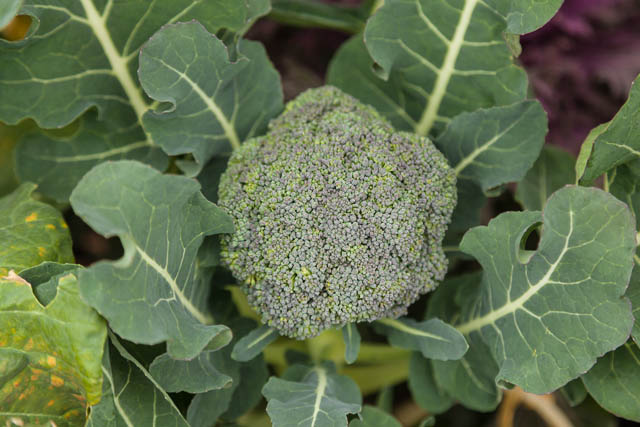
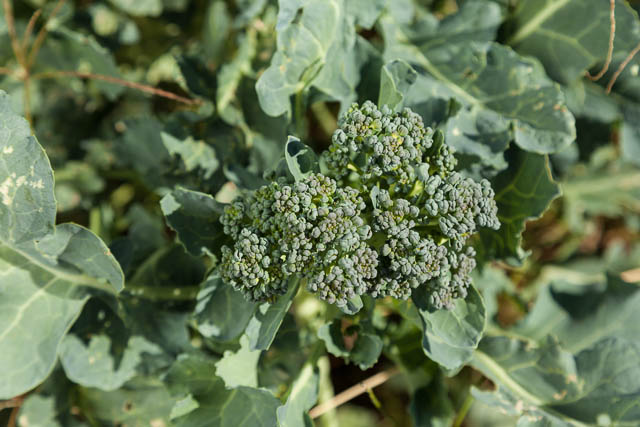
    There are several types of broccoli: large head, sprouting, romanesco, raab and Chinese broccoli. Tricia shows you how to plant, grow, and fend off common pests in our latest video on growing broccoli.

    Large Head

    Large Head Broccoli
    Like the name implies, these are the varieties to plant if you want one, big, tight central head. Large head broccoli is most likely what comes to your mind when someone says “broccoli”. These types need a lot of elbow room, or else they form smaller heads. After you’ve harvested the central head, don’t uproot the plant, keep it going and harvest the leaves and any possible side shoots that may form. Broccoli leaves can be used just like kale. Large head varieties include: ‘Arcadia’, ‘Belstar’, ‘Munchkin’, ‘Nutri-Bud’ and ‘Packman’. If you want a good blend try this mix from Renee’s Garden Seeds.

    Sprouting

    Spouting Broccoli
    This type of broccoli forms a smaller, looser central head than the large head types, but it also forms numerous smaller side shoots after the central head has been cut. Harvest the side shoots often to to keep the plant producing. Sprouting broccoli varieties are the favorites for growing in the fall. They typically preform much better in fall than in spring. Some delicious sprouting varieties are: ‘Calabrese’, ‘De Cicco’, ‘Purple Peacock’, and ‘Purple Sprouting’.

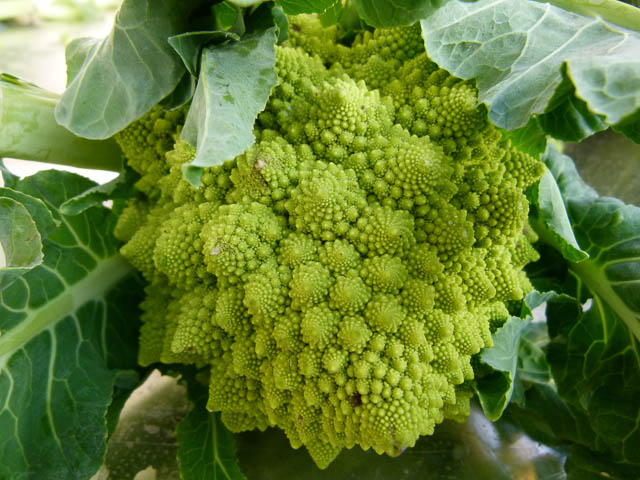
    Romanesco

    Romanesco
    Romanesco is the super model of broccoli types. Grow it for striking chartreuse heads that form mathematical spirals and mild, nutty taste. Romanesco requires a bit more fertilizer than other types of broccoli and benefits from a mid-growth side dressing of an organic vegetable fertilizer. Some delicious romanesco varieties are: ‘Natalino’, ‘Romanesco Italia’, and‘Veronica’

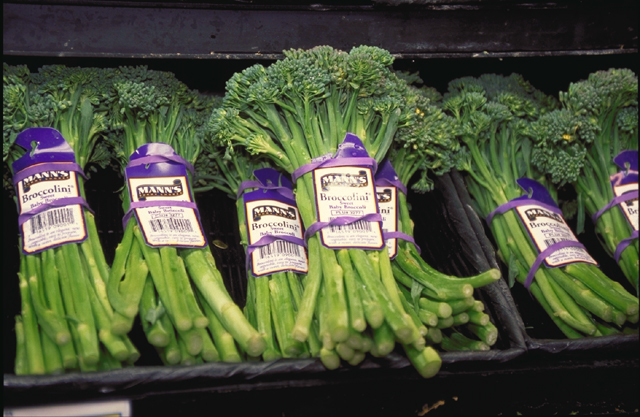
    Raab and Chinese Broccoli

    Broccolini
    These types form a multitude of small, loose, shoots and are enjoyed as much for the florets as for the tender stalks. Chinese broccoli is sometimes called “broccolini” and can be enjoyed like asparagus. Raab is not actually a broccoli, but a type of turnip grown for it’s shoots and stalks. Some raab varieties are bred specifically for either fall or spring performance, so read seed descriptions carefully. Try varieties such as: ‘Early Fall Rapini’, ‘Raab Spring Rapini’, ‘Sessantina’, ‘Sorrento’, ‘Zamboni’ and ‘Te You.’

    This article originally appeared at: https://www.groworganic.com/organic-gardening/articles/red-white-and-broccoli?utm_source=GrowOrganic+General+Newsletter+List&utm_campaign=1dce4e3197-Newsletter_broccoli_2017&utm_medium=email&utm_term=0_da906cf41d-1dce4e3197-201272445&mc_cid=1dce4e3197&mc_eid=bc67013f8c.
  • Strawberry Keifer Lemonade

    Its incredible. So refreshing. So healthy. So delicious. Its Strawberry Keifer Lemonaid!

    Its hot. The kids are thirsty and they feel like they are missing out as the ice cream truck passes by with its off key tunes beckoning the neighborhood to its sugar laden dye filled food products. 

    Ingredients

    • 4
      cups coconut water
    • 4
      cups filtered water
    • 2
      cups strawberries fresh or frozen
    • 1
      cup
      coconut kefir
    • 1/2
      cup lemon juice
    • 1/4
      cup
      raw honey

    Instructions

    1. Blend all the ingredients together in a high-speed blender. Start the blender on low and increase the speed so that it doesn’t spill over when you start it.
    2. Add ice to your glass, or chill in the fridge before serving. Enjoy 

    Find more great treats at: http://www.realyummyfood.com/recipe/strawberry-coconut-kefir-lemonade/