Category: Healthy Food

Because access to healthful and uncontaminated food ​should be a human right.

  • Hearty Stew

    Nothing says comfort like a hearty stew. Mental health is just as important as physical health. Busy holiday seasons can often mean a change in diet (quick snacks and sugar tempations). Treat your body right and keep your immune system strong with a heart stew.This quick and simple soup recipe will help you use them up..and heat you up as we enter into winter!

    Ingredients
    1 lb grass fed ground beef
    2- 32 oz containers of organic vegetable broth
    2 tbsp butter
    5 stalks celery, chopped
    1/2 large onion, chopped
    1/2 – 1 tsp italian seasoning (to taste)
    1/4 – 1/2 tsp black pepper (to taste)
    sea salt to taste (about 2 tsp)
    2 tomatoes (preferably blanched and peeled – check notes below)
    1 bunch spinach, coarsely chopped
    3 large carrots,
    1 cup frozen peas

    Melt butter in a stockpot and add celery, onions, and ground beef.  When beef is browned through, add the vegetable broth, italian seasoning, black pepper, sea salt and tomatoes.  Let cook for about 10-15 minutes.  Add spinach.  Serve.

    Additional notes/suggestions:
    To blanch and peel tomatoes just boil a pot of water and drop the tomatoes in for a few minutes.  When you see the skins begin to split apart, remove them from the water.  Then they are very easy to peel.  Once peeled, cut the tomato in half and remove as many seeds as possible then chop.

    This soup is even better re-heated the next day.

    For more great recipes visit https://www.doctormain.com/healthy-recipe.html

  • Help Make a Difference in Health and the Ecology By Supporting Holistic Land Management

    We hear frequently in the media that “meat is destroying the planet” by creating too much C02 in the atmosphere. But what if traditional, holistic land management using livestock was an effective way to address ecological degradation and solve these problems?

    One-third of the earth’s surface is grasslands. 70 percent of the earth’s grasslands have been degraded due to modern practices that have caused desertification and harmed our ecology. Holistic Land Management accomplishes something significant; it sequesters carbon and methane back into the soil where it belongs and lowers the CO2 in the atmosphere to create a drought-tolerant environment. When the soil holds more water, we see regeneration and thriving ecologies come to life. “The moisture is held longer in the soil, so the crops can grow for a longer period of time,” states Simon Garikayi, ACHM’s director of training (Africa Centre for Holistic Management in Zimbabwe). As for food, “they have a bit of reserves.”

    How does Holistic Land Management work? 

    Allan Savory, founder of the Savory Institute describes a process whereby livestock behavior is managed mimic wild herbivores that roamed the plains such as buffalos and antelope. These animals natural nibbling of grasses promotes growth of these plants while their waste provides nutrients to the soil. Then they trample action aerates soil and compresses dead plant matter which is decomposes by microorganisms into the soil. There is no over grazing because the animals are rotated to different areas, similar to the natural movement of these wild animal herds. Plant cover isn’t damaged and has ample time to regenerate. Read more from Utne and Regenerating Grasslands.

    Historically, animals have grazed on, fertilized and restored the soil and ecosystems. Animals and plants cannot exist without one another and Savory applies this knowledge putting practical experience to work in locations all over the world. The farmers who use holistic land management know and understand the essential, symbiotic relationship that has been observed and studied by stewards of the earth such Savory, historian and continuing student of land stewardship.

    Health benefits

    Supporting farmers that use traditional practices that keep and rotate animals on pasture and range land, and who strive to adhere to the principles of holistic land management such as those taught by Savory Institute is not only essential to maintaining these farmers’ efforts in preserving the land and environment, it is also preserving of human health. Nutritionally-balanced animal foods that contain the correct balance of Omega 3 essential fatty acids, CLA (conjugated linoleic acid), and fat-soluble Vitamins A and E are critical for:

    • Cancer and diabetes-reducing
    • Supporting every cell and system in the body
    • Heart-friendly, supportive of cardiovascular health 
    • Brain health. Omega 3s help deter conditions including ADD/ADHD, Alzheimer’s Diease, depression and schizophrenia

    Animals raised on industrially-confined facilities produce not only less-than optimal food from unhealthy animals, but confer those properties to those consuming them. Feedlot animal and bird products are nutritionally imbalanced with lower levels of Omega 3s, Vitamin E, and CLA and also contain residue from antibiotics, hormones, pesticide, herbicide and genetically-modified feed given to the animals (soy, corn, grain and other inappropriate feed including potato, bakery, and food starch waste, candy, and also animal by-products). Conventionally-raised meat is more likely to contain pathogenic bacteria such as E. coli and other antibiotic-resistant strains including MRSA.

    Read more about the nutritional benefits of grassfed beef and pasture-raised dairy and poultry foods from Eat Wild and The Fern.

    Support local farmers who raise animals and birds on pasture. Ask producers questions about whether antibiotics, hormones, or genetically-modified feed are used. Pasture-raising with minimal grain is optimal for cattle and other livestock. Chickens and turkeys are omnivores whose natural diet includes grains and vegetables, grasses, and roaming the land, hunting and pecking insects and small creatures such as mice.  

    Please donate to help keep these efforts goingFor more information, visit Savory Institute

  • Holiday Happiness: Pumpkin Truffles

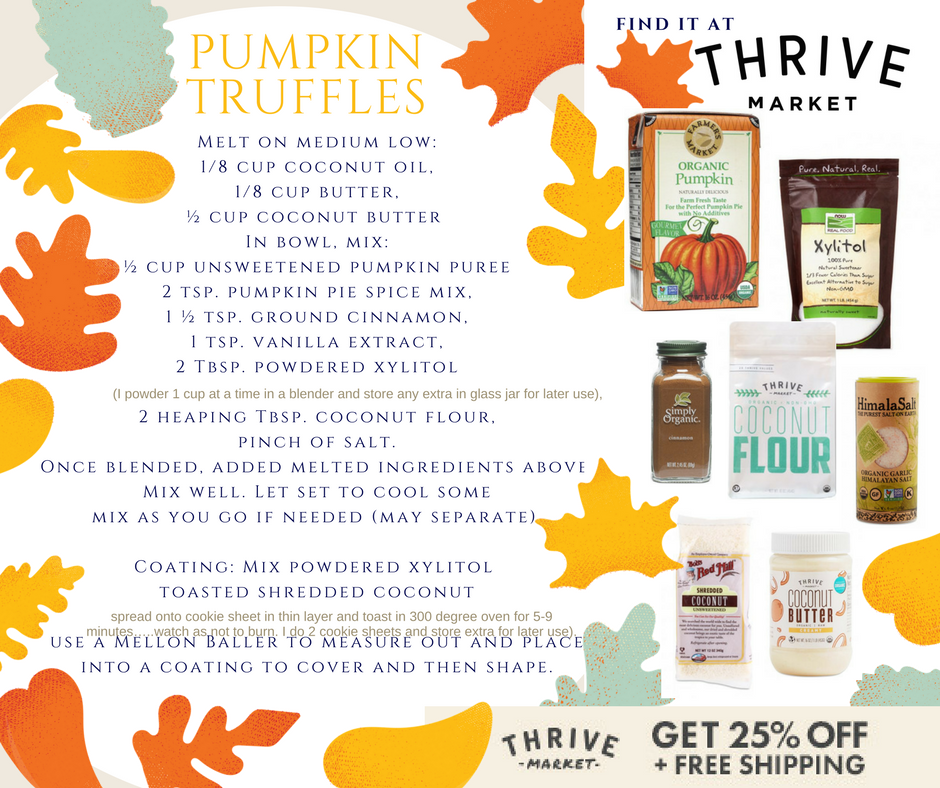
    Pumpkin Truffles Recipe:

    Melt on medium low: 1/8 cup coconut oil, 1/8 cup butter, ½ cup coconut butter (in Natural Food section by almond butter etc.).

    In bowl, mix: ½ cup unsweetened pumpkin puree
    2 tsp. pumkin pie spice mix,
    1 ½ tsp. ground cinnamon,
    1 tsp. vanilla extract,
    2 Tbsp. powdered xylitol 
    (I powder 1 cup at a time in a blender and store any extra in glass jar for later use), 
    2 heaping Tbsp. coconut flour,
    pinch of salt.

    Once blended, added melted ingredients above.
    Mix well. Let set to cool some and mix as you go if needed (may separate).

    Coating: Mix powdered xylitol and toasted shredded coconut (spread onto cookie sheet in thin layer and toast in 300 degree oven for 5-9 minutes…..watch as not to burn. I do 2 cookie sheets and store extra for later use).

    I use a Mellon Baller to measure out and place into coating to cover and than shape.

    Than sit back and enjoy the burst of Fall in your mouth!

    Make several batches and freeze. They freeze very nicely for up to about 3 months….if they last that long! 😀

    Visit my site for more healthy food recipes. DoctorMain.com

  • Holiday Happiness: Toasted Coconut Cheesecake

    The holidays tend to be filled with many food related gatherings. Doctor Rosie Main started the season off this past week when shared her keto cheesecake at a Thanksgiving Recipe exchange. It is beyond extra-ordinary. Our family loves to purchase fresh produce and perishables from the farmer’s market and local market store. We use Thrive Market for our pantry staples. Be sure to scroll down to see the Thrive Market offer for 25% off your first order. Thrive offers some of the best selection, quality and prices on healthy foods, and they have a great giving back ethos that you are sure to appreciate this holiday season. 

    SEE Doctor Rosie’s Step – by – step recipe video.

    Toast Coconut (unsweetened shredded and flaked): Spread thin layer on cookie sheet; toast in oven at 325 degree for 5-8 minutes. Left over, store in glass container in pantry for 1 month or can be frozen.
    Powder Xylitol: Can be done in a blender by giving it a few quick whirls until the consistency is like powdered sugar (I do extra and store for future use). Someone mentioned this can be done in a coffee grinder too. Give it a whirl.
    INGREDIENTS:
    CRUST
    •1 cup pecans
    •1 cup finely shredded coconut, unsweetened
    •3 tbsp powdered xylitol
    •1/4 tsp salt
    •2 tbsp melted butter
    FILLING
    •1 & 1/2 lbs cream cheese (3 8-ounce packages), softened
    •3/4 cup powdered xylitol
    •3 large eggs, room temperature
    •2/3 cup full fat coconut milk (canned), room temperature (I warm on stove to blend it, remove from stove measure and let cool before adding as not to “cook” the ingredients before going into oven)
    •1/2 tsp vanilla extract
    •1/2 tsp coconut extract

    INSTRUCTIONS:
    Crust:
    1. Preheat oven to 325F
    2. In a food processor, nuts on high until coarsely chopped. Add coconut, sweetener and salt and process until mixture resembles coarse crumbs
    3. Add melted butter. Stir to combine well. Press mixture firmly and evenly into the bottom a 9”springform pan
    4. •Bake 12 to 14 minutes, or until just beginning to brown around the edges. Remove and let cool.

    Filling:
    1. Reduce oven temperature to 300F.
    2. In a large bowl, beat cream cheese on medium until smooth. Beat in sweetener until well combined. Beat in eggs one at a time, scraping down sides of bowl and beaters as needed. Then beat in coconut milk, vanilla extract and coconut extract until smooth.
    3. Brush the sides of the springform pan with a little melted butter and then pour the filling over the cooled crust.
    4. Place springform pan on a cookie sheet and place on the center rack on the oven. On the rack below, place a large baking dish filled with water.
    5. Bake 1 hour 30 minutes to 1 hour 45 minutes, or until edges are set and center just barely jiggles when shaken. Remove and let cool completely. Run a sharp knife around the edges of the pan and remove sides. Cover with plastic wrap and refrigerate at least j3 or 4 hours.
    Add whip cream layer and toasted coconut flake topping

    Coupons

    Thrive Market offers the best-selling natural and organic products at wholesale prices through a $60/year membership. Think Costco meets Whole Foods online, and for every paid membership Thrive donates one membership to a low-income American family. Health Freedom Idaho members can sign up to receive 25% off and free shipping off their first order through this link.

    Amazon is showing off their Whole Foods acquisition with this offer. Until November 26th, Amazon Prime members can get 20% off their Thanksgiving turkey at Whole Foods markets. Our Boise store is a valued destination for natural food lovers.

    Jovial Foods is giving 25% off on Cyber Monday for their ancient heirloom non-hybridized Einkorn wheat products and gluten-free foods. (Code: CYBERMONDAY17)

  • A Nourishing Thanksgiving

    It’s one of our favorite holidays of the year. A day dedicated to giving thanks, practicing more gratitude, sharing and relishing the bountiful blessings that we have been afforded. Although Thanksgiving in America has migrated away from its Pilgrim roots and has turned into something of a feast-fest, the act of eating wholesome things with others, in gratitude, is still a meaningful tradition.

    Since we’re all about life, liberty and the pursuit of happiness here at Health Freedom Idaho, we have gathered some of our favorite Thanksgiving recipes for a cornucopia of nourishing epicurean delight.

    If you like pretty pictures to help motivate you, Food52’s Thanksgiving Menu Maker is a welcome distraction and idea-generator. 

    Be sure to scroll down to see the Thrive Market offer for 25% off your first order. Thrive offers some of the best selection, quality and prices on healthy foods, and they have a great giving back ethos that you are sure to appreciate this Thanksgiving. 

    The Turkey

    It’s not just the recipe, it’s the quality of your turkey that can make a world of difference. That’s why we recommend buying organic, heritage or humanely raised turkey for your family’s health and to support sustainable food sources. 

    The classic: Good Eats Roast Turkey is a wet-brining-and-scientifically-predicated-temperature-masterpiece. Pretty foolproof if you follow the directions to a T. 

    The newcomer/old-world technique: Dry-brining has gotten the attention lately, boasting more flavorful and tender meat, shorter cooking times and better protection from overcooking due to the use of coarse sea salt during the thawing / brining process. Healthy Home Economist’s “dry brine any meat” recipe may become your next staple turkey and meat recipe. Note that it takes days to achieve this result, so start accordingly! 

    Better Bone Broth

    We love a good bone broth to flavor our stuffing and gravy. Dr. Rosie’s recipe is nourishing and delicious. May as well make the Thanksgiving essentials more nourishing.

    Or, if you’re short on time, many brands have emerged with bone broth offerings. Epic Foods’ turkey cranberry sage bone broth is Thanksgiving in-a-jar. 

    Recipe: Cranberry Relish

    One of our favorite cranberry sauces is the simplest to make. Because the sauce is raw, the fruit and honey retain their natural enzymes, making this a great digestive aid and palette refresher. 

    • 1 bag of organic fresh cranberries (rinsed)
    • 1 whole organic orange (cubed, large seeds removed)
    • 1 teaspoon fresh grated ginger
    • 1/4 cup good quality raw honey

    Combine in a food processor bowl and pulse to desired consistency. Taste and add more sweetener, if desired. Chill until 30 minutes before the meal. This keeps well in the refrigerator for about a week. 

    Healthier Rolls

    Einkorn Rolls are a fantastic way to enjoy einkorn, a non-hybridized ancient wheat, this holiday. For those avoiding gluten, and this Paleo recipe are wonderful pillows of baked-good-ness for your sopping pleasure.

    Karina’s Gluten-Free Dinner Rolls feature nourishing flours like millet, buckwheat and hazelnut to amp up the nutrition and satisfaction. 

    Garlic Herb Paleo Dinner Rolls from Paleo Running Momma are full of flavor and feature almond flour and grass-fed butter or ghee

    Non-GMO Stuffing

    If you are looking for healthier stuffing cubes, consider Berlin Natural Bakery’s certified non-gmo spelt stuffing. These make more nourishing and flavorful stuffing. They tend to soak up a lot of broth (perhaps due to density?) so amp up your broth by at least 25%. 

    Elevated Potatoes

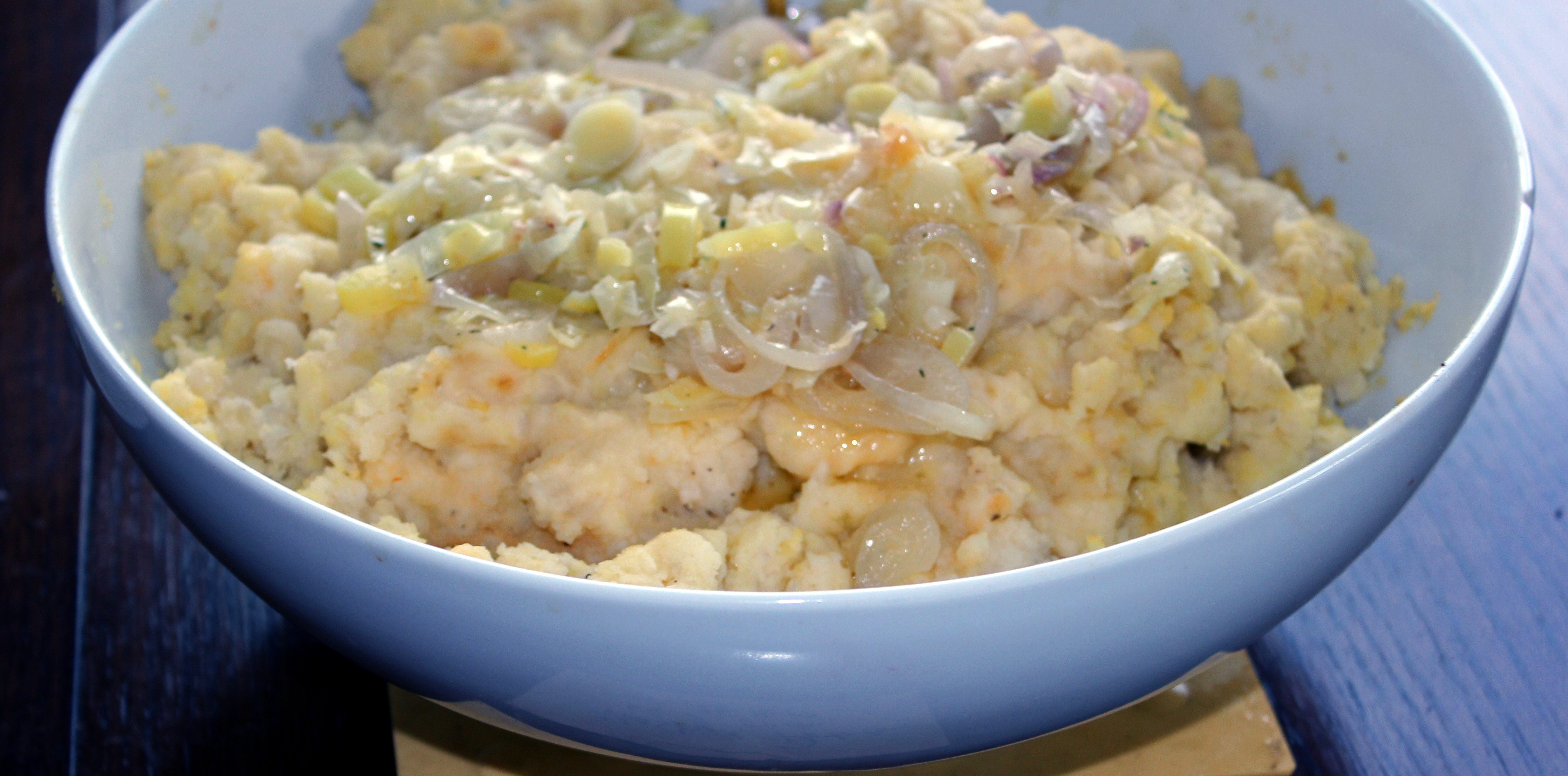
    Onions are a major boon to the standard mashed potatoes in this recipe: Whipped Potatoes with Three Onions. 

    Seasonal Veggies and Squash

    We have a lot of squash growing in local gardens here in Idaho. Butternut, acorn, kabocha and banana squash are common and seemed to grow really well this year. 

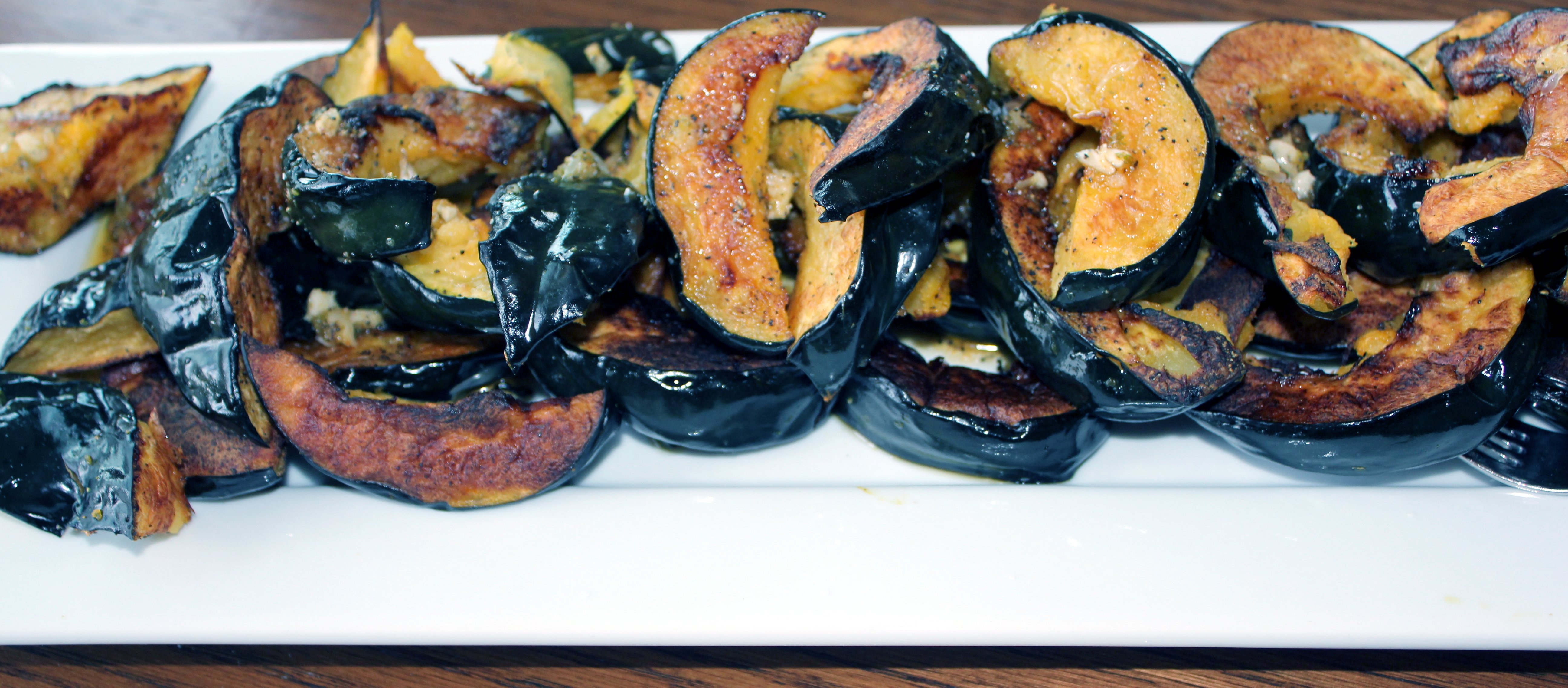
    Roasted acorn squash with chile vinaigrette is a very simple, yet palette-tingling shift out of traditional Thanksgiving flavors. 

    Thrive’s Hasselback squash recipe utilizes a large butternut squash and some quick but fancy knife techniques to transform the 1700’s potato recipe into something even prettier. 

    This Parnsip-Apple Puree is a sweet-light alternative to mashed potatoes. 

    We like sides from the garden like this fresh-tasting Shaved Fall Vegetable Salad with Cider Vinaigrette as a light compliment to the heavier traditional dishes. 

    Shaved Brussel Sprouts with Tangerines are one of our staff faves for texture and a sulfurous contrast to the rich and creamy vibes of Thanksgiving. 

    Pie, Of Course

    For most of us, pie is a must – no matter what diet you may be on. We’ve curated a few traditional and creative takes on the sweet tradition.

    Coupons

    Thrive Market offers the best-selling natural and organic products at wholesale prices through a $60/year membership. Think Costco meets Whole Foods online, and for every paid membership Thrive donates one membership to a low-income American family. Health Freedom Idaho members can sign up to receive 25% off and free shipping off their first order through this link.

    Amazon is showing off their Whole Foods acquisition with this offer. Until November 26th, Amazon Prime members can get 20% off their Thanksgiving turkey at Whole Foods markets. Our Boise store is a valued destination for natural food lovers.

    Jovial Foods is giving 25% off on Cyber Monday for their ancient heirloom non-hybridized Einkorn wheat products and gluten-free foods. (Code: CYBERMONDAY17)

    From Health Freedom Idaho’s volunteer team and their families, to you and yours: a very Happy Thanksgiving! 

  • Talking Turkey: Conventional vs Organic

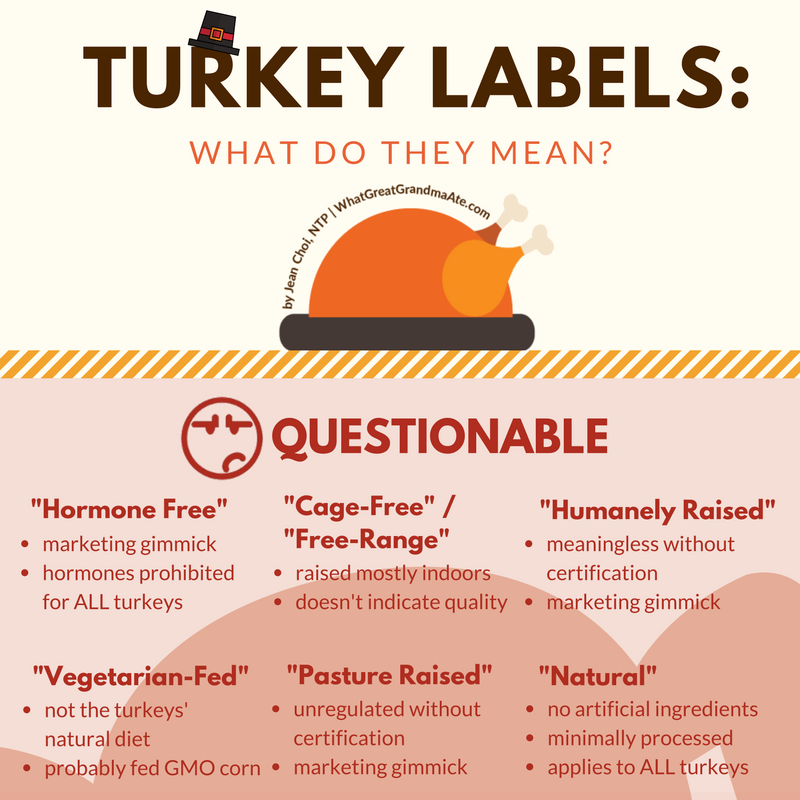
    When you choose your next turkey, what factors will you take into consideration? Do you want more meat or would you rather preserve an endangered breed? Do you know, understand the marketing gimmicks used by the industry to make you pay more? Organic turkeys are often in high demand; so if you choose to get one, you should order it now (if you haven’t already). Whole Foods/Amazon has a sale through November 26. <Click here >

    Hormones

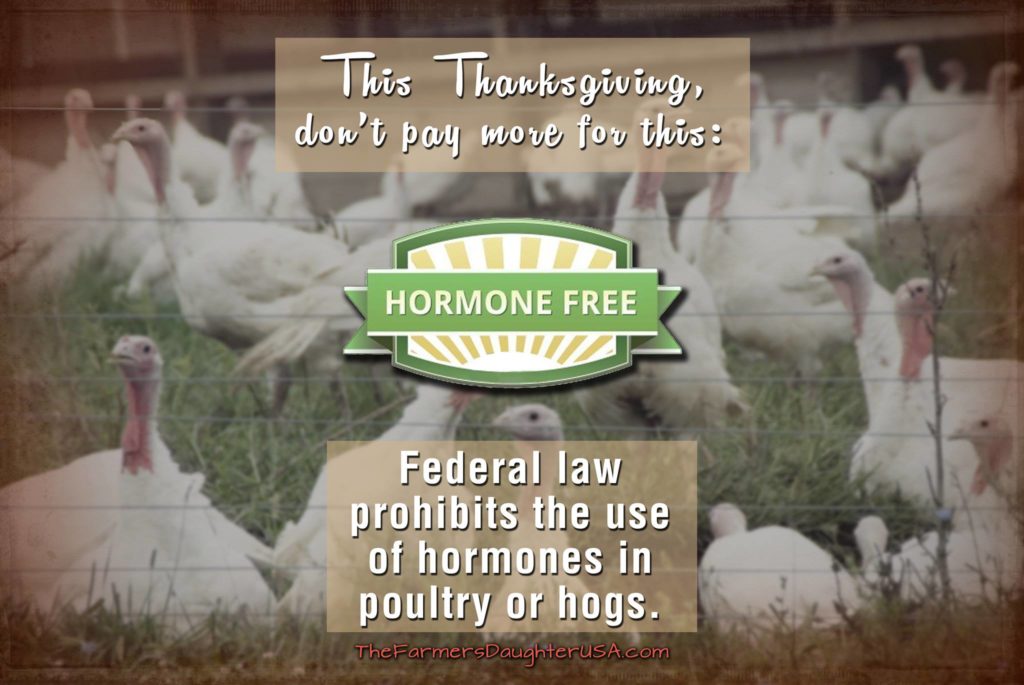
    Most of us are willing to pay more for a bird raised without added hormones, right? We want that thick, juicy breast meat, but don’t want biological repercussions within our own bodies.

    What most of us don’t realize it’s illegal in the US to add hormones to poultry. Added hormones within our poultry is something we will probably never have to worry about. The packaging that says ‘no added hormones’ is simply a marketing ploy.

    Antibiotics

    An organic turkey is antibiotic free.
    Organic turkey farms use neither antibiotics nor feed that has not been certified organic.

    Turkeys may start out antibiotic-free, but farmers may medicate an entire flock if a few birds get sick. Some growers keep separate flocks, raising turkeys without antibiotics until problems occur, then moving sick birds to another pen if they have to medicate. Others must euthanize sick birds to keep the rest of the flock safe.

    An ongoing argument exists regarding the ethics of using antibiotics. While many farmers have announced that they will stop adding medication to daily feed, they hold that treating sick animals is the most humane way to raise meat. Eschewing all antibiotics means suffering of the animal, spread of disease, and euthanasia of sick animals before the other livestock can contract the illness.

    Injected Additives

    Self-basting or injected birds have been treated with a brine and/or a flavored injection to increase moisture retention and flavor. The fresh turkeys are injected with a basting solution made of salt water and “common household spices,”. Manufacturers are not required to share the specific ingredients/spices of their basting formula.

    Don’t let the “Natural” label fool you

    Unlike the word “organic” the word “natural” does not have a specific meaning and can mean many different things. In general, “natural” food does not contain artificial colors, flavors, sweeteners, preservatives or other additives. When you see the word “organic” on a label or a package that means the product was grown or made according to the strict standards (i.e. Without the use of toxic, persistent chemicals, GMOs, antibiotics or hormones) as established by the USDA.

    Summary of Organic vs Conventional

    Organic birds, one would imagine fields of open space with birds freely moving around. The use of synthetic fertilizers, pesticides, herbicides, irradiation, sewage sludge, hormones, antibiotics and genetic engineering is strictly prohibited. However, being organic does not guarantee they are free ranged.The appeal of free-range turkeys is that they are raised with access to outdoor space so they can roam — many folks believe that this makes for better tasting meat.

    Conventional broad breasted turkeys are in most cases caged, eat genetically modified grain, never see the light of day, and are given antibiotics, and injected with unknown solutions.

    Free-range and organic turkeys are often in high demand; so if you choose to get one, you should order it now (if you haven’t already). Whole Foods/Amazon has a sale through November 26. <Click ad below>


    THROUGH NOV 26, 2017


    Have you eaten heritage or organic turkeys? Did you notice a flavor difference? 


    Deciphering the Label Online RESOURCES:

    USDA guidelines for conventional/organic turkey
    https://www.fsis.usda.gov/wps/wcm/connect/2a9bcae8-ae1e-4248-9ce7-4e752f2f91fc/Turkey_Raised_by_the_Rules.pdf?MOD=AJPERES

    Label Guide: Food Network http://www.foodnetwork.com/healthyeats/healthy-tips/2009/04/eco-friendly-food-label-decoder

  • Talking Turkey Labeling: Conventional Turkey or Heritage Turkey

    Thinking of purchasing a turkey for the holidays? Is a Heritage Turkey worth the cost? Many store-bought conventional turkeys are injected with salt, water and other preservatives during processing to assist with the extended shelf life and to make sure that they make it thousands of miles from the factory to your home (which could take days, if not longer) before going bad. Since heritage turkeys are not mass produced, the heritage breed turkeys are not injected with preservatives, which allow you to enjoy one hundred percent of the turkey’s true flavor. Taste is not the only factor to consider for the optimal experience. If you, like many others, are trying to be more mindful of the moral and environmental impact of your food choices, then Thanksgiving dinner is the perfect start.

    Commercially raised turkeys are the Broad-Breasted White turkey. However, there are also Broad-Breasted Bronze turkeys, and both BB breeds can be raised humanely, free range, organic and natural. Don’t make the assumption that all Broad-Breasted breeds are white, and all are raised in factory settings. They are HYBRIDS, they are NOT genetically modified.

    Heritage turkeys are an old-fashioned breed, but their popularity has shown a recent resurgence. Heritage turkeys are hard-to-find breeds such as Narragansett, Standard Bronze, Blue Slate and Bourbon Reds. They are similar to what the Pilgrims themselves enjoyed during holiday times.

    These breeds have smaller breasts, darker leg meat and a truer, gamier “turkey” flavor than the factory-farm raised turkeys. Heritage birds are also raised for longer periods than the conventional birds. These breeds have a slaughter age of 26 to 28 weeks, while the conventional bird is ready for slaughter in 14-18 weeks. Heritage birds are also raised in smaller flocks and are generally given access to fresh air, sunshine, and pasture, making them more humanely raised than their factory-farm raised counterpart. This extra grow time and freedom allows for sturdier and more flavorful meat; two things very important to the outcome of your holiday meal.

    Here are the different types of heritage turkeys available for your Thanksgiving feast:

    USDA Certified Organic turkeys are fed without pesticides, chemicals fertilizers, GMOs or synthetic ingredients—including antibiotics.

    Non-GMO turkeys are raised without GMO feed.

    Vegetarian-Fed birds live on a veggie diet.

    Cage-Free turkeys are allowed out of their cages for 51% of their lives—but there is no restriction on how large that “outdoor” area should be.

    Free-Range means the birds are not confined to cages—but that doesn’t mean they’re ranging on grass.

    Pastured turkeys are raised without cages on grass and insects.

    Day-Range means the birds are pastured during the day, and cooped at night without cages.

    Kosher turkeys don’t have to be raised in a certain way; the way that they are slaughtered makes them kosher or not.

    Simple, right? I know: Not so much. In my family, we go with a USDA Certified Organic, pastured, heritage turkey. It’s once a year, and to me it’s worth the investment to avoid antibiotics, pesticides, chemical fertilizers, GMOs and other synthetic ingredients. And yes it’s subjective, but we think it tastes better, too.

    Finding Your Heritage Turkey

    While conventional turkeys are found in abundance in every supermarket in the United States, heritage breed turkeys can be a little more work to find, but the effort is worth it. Heritage turkeys can generally be found at local specialty farms, organic markets and Amish or Mennonite farms if you are lucky enough to have some in your area at a local farm. The internet is an invaluable resource to finding your holiday bird. Websites such as heritageturkeyfoundation.org and agrilicious.org provide helpful information for families interested in farms currently raising heritage turkeys. Many turkey farms offer shipping throughout the United States.

    There is a price difference between the conventional and heritage turkey, but the reasons for the extra costs are justified, particularly once you spend a little time with the farmers to learn how exactly they raised a happy, healthy heritage turkey.

    Taste is not the only factor to consider for the optimal experience. If you, like many others, are trying to be more mindful of the moral and environmental impact of your food choices, then Thanksgiving dinner is the perfect start. If you are willing to pay more for a higher quality bird, the heritage breed provides you with the opportunity to support a local farm and enjoy your meal knowing the turkey got to enjoy its entire life like a true turkey should—without confinement and with all the fresh air it can breathe. Take the plunge for the holiday meal this year! You will never look at a conventional supermarket turkey the same way again.

    Find a Turkey from Your Local Farm

  • Grass-Fed Meat And Dairy: Better for Farmers, Animals, the Earth and Us

    Advocates of grass-grazing cattle say it’s better for the environment and the animals. Health experts herald it’s nutrient and heart-health benefits. But there’s another benefactor of the grass-fed movement: farmers and ranchers can become and stay financially viable. 
    “Living off the land” has amplified meaning when you consider that energy and wealth come from the sun: it’s energy gets converted via photosynthesis in plants, which becomes food for grass-feeding animals, which in turn gives food in the form of dairy and meat to humans. The shorter the distance between the sun and the end product, the higher the profit to the farmer.

    Grass-fed beef is seeing 25-30% annual sales growth. Grass-fed yogurt and kefir increased by more than 38% in 2016.

    Dairies like Maple Hill Creamery are experiencing more demand than they can supply. That’s why its founders Tim and Laura Joseph are partnering with nearby farmers to convert their conventional dairies to organic and grass-fed operations. In fact, the last 7 years, they have helped around 125 small dairy farms to grass-fed and have onboarded 80% of them into the Maple Hill brand in just the past two years. 

    For the farmers, the economics are driving change. Grass-fed milk can garner 2.5X the price of conventional milk, which is notable, but more than that, it’s the harbinger of a tighter belted future due to rapidly rising grain prices that enlighten farmers’ eyes to a sustainable future for themselves, the planet and the consumer. Grass-fed is a refuge from fluctuating milk prices on the international commodity market.

    Expensive grain feed is replaced with regenerative management practices, wherein animals graze on the renewable grass on pastureland, fertilized by the cow’s own nature, coaxed into production by the sun and watered by rains. It’s an insulated, independent, recyclable and healthy ecosystem.

    Animals are healthier, the earth’s ecosystem is maintained and the system is healthier for animals, making the product better for consumption. Grass-fed animals live longer, are healthier and actually benefit the microbial activity in the soil, which captures water better and thus reduces carbon

    Organizations like the Savory Institute advocate for “holistic planned grazing” as a solution to human-caused desertification. One of their goals is to change public perception that livestock causes the degradation of grasslands, and rather note that the way humans improperly manage livestock is the issue, but with education, can be readily changed. Ecosystems are incredibly responsive to such changes if behaviors are altered.  

    I read this Sunset article years ago (“Bringing the Bison Back“) and found the topic fascinating: restoring the prairie grasslands through bringing the bison back. Due to consumer demand, this grassland renewal has become economically viable. Sections of grazed prairies are becoming the diverse ecosystems they once were, all because bison are grazing on sun-grown and manure-fed grass (sprouted from latent grass seeds watered by rains). What an incredible solution to monocultured prairies stripped of their once-bountiful plant and animal life…just eat more bison. You’ll fund the ranchers who are humanely caring for these mighty creatures, that are helping to restore broken land. 

    kfAhFGDiSJufnjRW2eTS_hans-veth-385486.jpgPhoto by Hans Veth on Unsplash

    Of course, grass-fed products are priced higher at the grocery store, anywhere from 20-60 percent, in general. But considering it’s documented health benefits and its service to the ecosystem and planet, it’s an investment in our bodies, in sustainable farms and a healthier earth.

    Other brands like EPIC are changing the game for ranchers as well. As producers of grass-fed meat bars, they have learned firsthand the supply limitations of the industry. EPIC’s bison bacon bar was so popular that demand way outpaced supply for grass-fed buffalo meat. The company’s acquisition by General Mills in 2016 provided the capital injection the founders needed to purchase $2.5 million worth of bison (Northstar Bison) that would be raised according to its standards, and guarantee a purchase price. 

    The kind of innovation demonstrated by brands like Maple Hill Creamery and EPIC can provide encouragement to existing farmers and young people looking to get into the business. Forging partnerships with existing brands can result in near-term financial viability, longevity and the benefits of a purpose-driven business.  

    Grass-fed cattle photo by Ales Krivec on Unsplash

    This article originally appeared at: https://www.jennifergosse.com/grass-fed-better-for-farmers-animals-earth-and-us.
  • Local Food Sources. Farmer Direct Connections

    We believe that locally grown and organic products  provide a significant variety of benefits. Studies have shown that locally sourced and organic foods have more nutrients, including antioxidants, than traditionally grown foods.

    Find locally sourced farm fresh foods and you pick farms in Boise area Farms today at Agrilicious.org.

    What are YOUR favorite farmers? Share in the comments!

  • The Neglected Mineral We Cannot Live Without

    Every single cell in the human body demands adequate magnesium to function, or it will perish. Magnesium is so important to so many vital body functions, and its deficiency is integrally involved in so many diseases, that more than one researcher has dubbed magnesium a miracle in its ability to resolve or improve numerous disorders. Unfortunately, it is difficult to reliably supply our bodies with sufficient magnesium, even from a good, balanced whole foods diet. Even with organic foods, a magnesium deficient soil creates magnesium deficient crops. 

    Magnesium and other nutrients are diminished or lost in produce after harvest, through handling, refrigeration, transport and storage, even if all these steps were done “properly.” Buying produce and then storing it for days in your own refrigerator continues the nutrient loss, whether the produce is from the supermarket or your local farmers’ market.
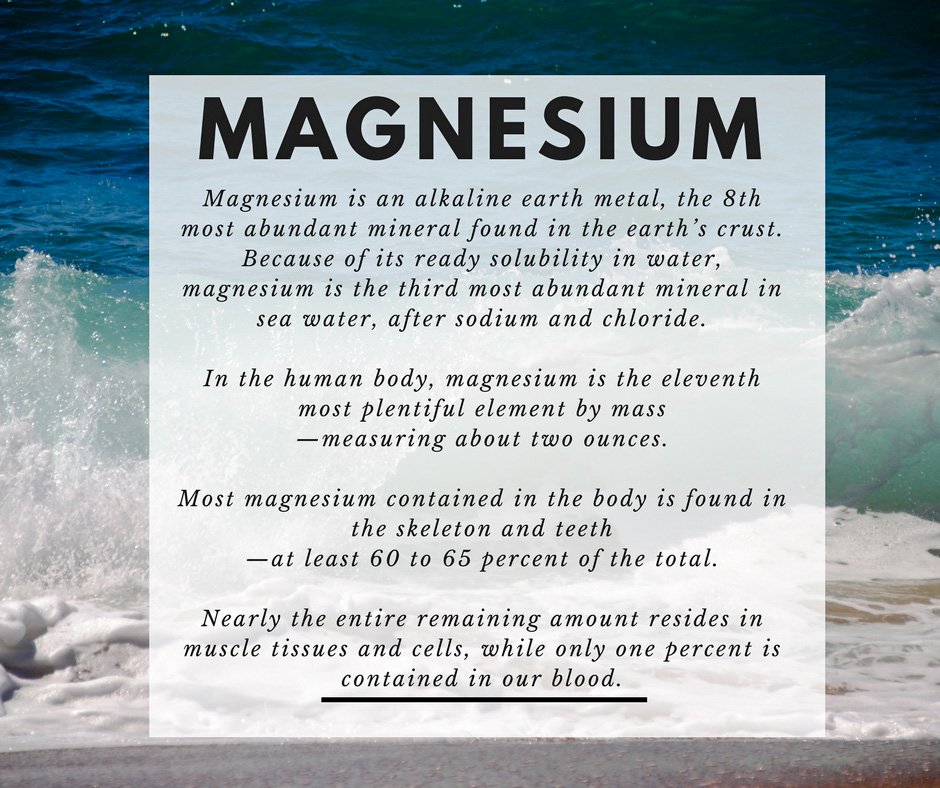
    The importance of magnesium ions for all life itself, as well as for overall vibrant health, is hard to overstate. Magnesium is required to give the “spark of life” to metabolic functions involving the creation of energy and its transport (ATP, the body’s fundamental energy currency), and the creation of proteins—the nucleic acid chemistry of life—RNA and DNA, in all known living organisms. In plants, a magnesium ion is found at the center of every chlorophyll molecule, vital for the creation of energy from sunlight. Magnesium is an essential element for both animals and plants, involved in literally hundreds of enzymatic reactions affecting virtually all aspects of life.

    Every single cell in the human body demands adequate magnesium to function, or it will perish. Strong bones and teeth, balanced hormones, a healthy nervous and cardiovascular system, well-functioning detoxification pathways and much more depend upon cellular magnesium sufficiency. Soft tissue containing the highest concentrations of magnesium in the body include the brain and the heart—two organs that produce a large amount of electrical activity, and which can be especially vulnerable to magnesium insufficiency.

    Magnesium works in concert with calcium to regulate electrical impulses in the cell—magnesium concentration inside healthy cells is ten thousand times greater than calcium, and there are crucial reasons for this safeguard. Cellular calcium channels allow that mineral to enter the cell only as long as needed to conduct an impulse; it is ushered out immediately by magnesium once its task is fulfilled. This vigilance is necessary to prevent calcium accumulation in the cell, which could cause dangerous hyper-excitability, calcification, cell dysfunction and even cell death. When excess calcium enters the cells because of insufficient magnesium, muscle contraction is sustained for too long, and we suffer, for example, twitches and tics in mild cases. When magnesium deficiency becomes chronic, we suffer the symptoms of heart disease such as angina pectoris, hypertension and arrhythmia, or the spasms and contractions characteristic of asthma, migraine headache or painful menstrual cramping.

    Magnesium operates as a natural calcium channel blocker and is responsible for relaxation—counter to calcium’s contraction. Thus magnesium is pivotally important to the healthy functioning of our parasympathetic nervous system. It may be hard to believe, but our bodies were actually designed to operate for the most part in a calm, relaxed parasympathetic state, rather than in the heart-pounding, stress- and adrenaline-driven mode of sympathetic nervous system dominance that is nearly constant for many of us today, and which uses up great quantities of magnesium.

    Magnesium is so important to so many vital body functions, and its deficiency is integrally involved in so many diseases, that more than one researcher has dubbed magnesium a miracle in its ability to resolve or improve numerous disorders. The current list of disorders with direct and confirmed relationships to chronic and acute magnesium deficiency is long, and includes many diseases whose conventional medical treatment does not commonly address magnesium insufficiency (see below). Ongoing research promises to uncover further associations between magnesium deficiency and other illnesses.

    MAGNESIUM DEFICIENCY IS WIDESPREAD

    Unfortunately, it is difficult to reliably supply our bodies with sufficient magnesium, even from a good, balanced whole foods diet. First of all, modern agricultural methods favor the universal use of NPK fertilizers (nitrogen, phosphorus, and potassium). Both potassium and phosphorus are antagonists of magnesium in the soil, and on calcareous soils create a relative magnesium deficiency (the magnesium present is bound and therefore unavailable to the crop). On sandy or loamy soils that are slightly acid, an actual magnesium deficiency often exists, as the magnesium leaches from the soil and is also unavailable to the crop. This leaching also occurs in response to acid rain. Magnesium, in fact, is one of the most depleted minerals in farm soils. To add insult to injury, new plant hybrids are continually introduced that have been bred to survive on these mineral-depleted soils. Of course, when mineral-depleted crops are eaten by animals or by us, they will sooner or later cause disease. Even though organically raised crops should be a better bet nutritionally, this isn’t always the case, and it pays in terms of your health to learn how your farmer replenishes the minerals on his fields.

    “Do you know that most of us today are suffering from certain dangerous diet deficiencies which cannot be remedied until depleted soils from which our food comes are brought back into proper mineral balance? The alarming fact is that foods (fruits, vegetables, grains) now being raised on millions of acres of land that no longer contain enough of certain minerals are starving us—no matter how much of them we eat. The truth is that our foods vary enormously in value, and some of them aren’t worth eating as food.” These words of warning are from the 74th Congress, 2nd session, Senate document number 264, of 1936. It is truly sobering to learn that the decline in soil mineral balance was a topic of serious national concern more than seventy years ago, and the deficit has been affecting us—while steadily getting worse— since our grandparents’ generation.

    Magnesium and other nutrients are diminished or lost in produce after harvest, through handling, refrigeration, transport and storage, even if all these steps were done “properly.” Buying produce and then storing it for days in your own refrigerator continues the nutrient loss, whether the produce is from the supermarket or your local farmers’ market.

    Food processing causes enormous loss of magnesium in foods that are commonly fairly good sources of it, such as leafy greens, nuts, seeds and whole grains. Most of the magnesium in grain— found in the bran and germ—is lost in milling whole grains for white flour, which is used nearly exclusively for hundreds of devitalized processed food items. When nuts and seeds are roasted or their oils extracted, magnesium is lost. Cooking greens causes whatever magnesium they might contain to leach into the cooking water. Foods tend to lose less calcium than magnesium through these processes, adding to a troublesome dietary calcium overload that we will discuss shortly.

    Fluoride in drinking water binds with magnesium, creating a nearly insoluble mineral compound that ends up deposited in the bones, where its brittleness increases the risk of fractures. Water, in fact, could be an excellent source of magnesium—if it comes from deep wells that have magnesium at their source, or from mineral-rich glacial runoff. Urban sources of drinking water are usually from surface water, such as rivers and streams, which are low in magnesium. Even many bottled mineral waters are quite low in magnesium, or have a very high concentration of calcium, or both.

    A diet of processed, synthetic foods, high sugar content, alcohol and soda drinks all “waste” magnesium, as a lot of it is required for the metabolism and detoxification of these largely fake foods. According to Dr. Natasha Campbell-McBride, the body requires at least twenty-eight molecules of magnesium to metabolize a single molecule of glucose. Phosphates in carbonated drinks and processed meats (so-called “luncheon meats” and hot dogs) bind with magnesium to create the insoluble magnesium phosphate, which is unusable by the body.

    Tannins, oxalates, and phytic acid all bind with magnesium, making it unavailable to the body unless extra care is taken to neutralize some of these compounds during food preparation. It is interesting to note that foods commonly containing magnesium (provided they were grown in mineral-rich soil) also contain lots of these anti-nutrients, such as spinach (oxalates) and whole grains (phytates).

    Many commonly prescribed pharmaceutical drugs cause the body to lose magnesium via the urine, such as diuretics for hypertension; birth control pills; insulin; digitalis; tetracycline and some other antibiotics; and corticosteroids and bronchodilators for asthma. With the loss of magnesium, all of the symptoms being “treated” by these drugs over time inevitably become worse.

    Magnesium absorption is impeded with the use of supplemental iron. If you take calcium supplements, your need for magnesium increases, and in fact calcium will not be properly absorbed or metabolized if adequate magnesium is missing, and will mostly end up dangerously deposited in soft tissues. Magnesium is responsible for converting vitamin D to the active form that allows calcium to be absorbed, and also regulates calcium’s transport to hard tissues where it belongs. Lactose is another inhibitor of magnesium absorption (and milk is not a good source of the mineral to begin with), along with excess potassium, phosphorus and sodium.

    Mental and physical stress, with its related continuous flow of adrenaline, uses up magnesium rapidly, as adrenaline affects heart rate, blood pressure, vascular constriction and muscle contraction— actions that all demand steady supplies of magnesium for smooth function. The nervous system depends upon sufficient magnesium for its calming effects, including restful sleep. Hibernating animals, by the way, maintain very high levels of magnesium. Magnesium deficiency will accelerate a vicious cycle and amplify the effects of chronic stress, leading to more anxiety, irritability, fatigue and insomnia—many of the symptoms of adrenal exhaustion—as well as to hypertension and heart pains—symptoms of heart disease.

    Depression is related to stress and magnesium deficiency as well. Serotonin, the “feel good” hormone, requires magnesium in its delicate balance of release and reception by cells in the brain. Only when adequate levels are present can we enjoy mental and emotional equilibrium.

    For reasons not fully understood, the body does not retain magnesium very well; certainly not as well as it holds onto calcium or iron, for example. Heavy sweating from endurance sports such as marathon running or strenuous exercise workouts can dangerously deplete magnesium stores and other electrolytes—although calcium is not wasted, by the way— resulting in trembling, faintness and even seizures and death. The drenching sweats that some menopausal women suffer cause magnesium loss as well, and their diminishing magnesium levels worsen their jagged nerves, sleep disturbances, panic attacks, body aches and depression. If these women have been tempted to consume modern soy products in a misguided attempt to moderate their symptoms, they will in fact lose even more magnesium because it will be bound to the abundant phytates in these concoctions.

    A healthy gut environment is necessary for proper absorption of magnesium from the diet. Irritable bowel syndrome, leaky gut, candidiasis and other gut disorders can severely limit the amount of magnesium that the body will be able to absorb. Older adults often experience decreased stomach hydrochloric acid production, which can impair mineral absorption in general. And with so many treating their “heartburn” with antacids, a healthy digestive environment is hard to maintain.

    CALCIUM AND MAGNESIUM PARTNERSHIP

    Both calcium and magnesium are necessary for the healthy body—in proper balance to one another, as well as to other necessary minerals. Considered biochemical antagonists, one cannot act without eliciting the opposite reaction of the other. Yet calcium and magnesium must both be present in balanced amounts for either one to function normally in the body. Some researchers suggest that the healthy ratio of calcium to magnesium in the diet should be 2:1. Others consider 1:1 to reflect ratios that we evolved with based on our diet prior to the advent of agriculture. In modern industrialized countries the ratio from diet is from 5:1 to as much as 15:1. The imbalance of these two very important minerals produces many dire consequences in the body that are often overlooked by medical practitioners when treating the disease states they cause.

    Aside from the intricate electrical dance that calcium and magnesium perform together, magnesium is necessary to keep calcium in solution in the body, preventing its inappropriate deposition in soft tissues. As long as we have sufficient hydrochloric acid in our stomachs we can dissolve calcium from the foods we eat. After calcium leaves the acidic environment of the stomach and enters the alkaline milieu of the small intestine however, it is magnesium that is necessary to keep calcium soluble. Without sufficient magnesium, a whole host of physiological aberrations can occur with serious health consequences.

    As Dr. Carolyn Dean, author of The Magnesium Miracle, explains, “In the large intestine it [precipitated calcium] interferes with peristalsis, which results in constipation. When calcium precipitates out in the kidneys and combines with phosphorus or oxalic acid, kidney stones are formed. Calcium can deposit in the lining of the bladder and prevent it from fully relaxing, and therefore from filling completely with urine. This leads to frequent urination problems, especially in older people. Calcium can precipitate out of the blood and deposit in the lining of the arteries, causing hardening (arteriosclerosis). . . It can coat and stiffen. . . plaque in the arteries. . . [and] can cause blood pressure to rise as well as increase the risk of heart attack and stroke. Calcium can even deposit in the brain. Many researchers are investigating it as a possible cause of dementia, Alzheimer’s and Parkinson’s disease. Calcium can deposit in the lining of the bronchial tubes and cause asthma symptoms. Calcium in extracellular fluid. . . can decrease the permeability of cell membranes. This makes it increasingly difficult for glucose (a large molecule) to pass through the cell membrane to be converted to ATP in the cells’ mitochondria. High glucose levels created by excess calcium may be misdiagnosed as diabetes.”

    MAGNESIUM IS A POTENT DETOXIFIER

    Magnesium is utilized by the body for all sorts of detoxification pathways and is necessary for the neutralization of toxins, overly acidic conditions that arise in the body, and for protection from heavy metals. It plays a vital role in protecting us from the onslaught of man-made chemicals all around us. Glutathione, an antioxidant normally produced by the body and a detoxifier of mercury, lead and arsenic among others, requires magnesium for its synthesis. According to Mark Sircus, in Transdermal Magnesium Therapy, a deficiency of magnesium increases free radical generation in the body and “causes glutathione loss, which is not affordable because glutathione helps to defend the body against damage from cigarette smoking, exposure to radiation, cancer chemotherapy, and toxins such as alcohol and just about everything else.”

    When our bodies are replete with magnesium (and in balance with the other essential minerals) we are protected from heavy metal deposition and the development of associated neurological diseases. As Dr. Carolyn Dean explains, “Research indicates that ample magnesium will protect brain cells from the damaging effects of aluminum, beryllium, cadmium, lead, mercury and nickel. We also know that low levels of brain magnesium contribute to the deposition of heavy metals in the brain that heralds Parkinson’s and Alzheimer’s. It appears that the metals compete with magnesium for entry into the brain cells. If magnesium is low, metals gain access much more readily.

    “There is also competition in the small intestine for absorption of minerals. If there is enough magnesium, aluminum won’t be absorbed.”

    MAGNESIUM DEFICIENCY IN TOOTH DECAY AND OSTEOPOROSIS

    Ask anyone—your neighbor or even your dentist or doctor—what bones and teeth require to be strong and healthy, and you will undoubtedly hear the response, “Plenty of calcium.” Bones and teeth certainly do require calcium—as well as phosphorus and magnesium, but without adequate amounts of the latter, calcium will not be deposited in these hard tissues, and the structures will not be sound. “When you load up your system with excess calcium,” writes William Quesnell, in Minerals: the Essential Link to Health, “you shut down magnesium’s ability to activate thyrocalcitonin, a hormone that under normal circumstances would send calcium to your bones.” Instead of providing benefits to the body, the displaced calcium actually becomes toxic, causing trouble in soft tissues of the kinds we’ve already discussed.
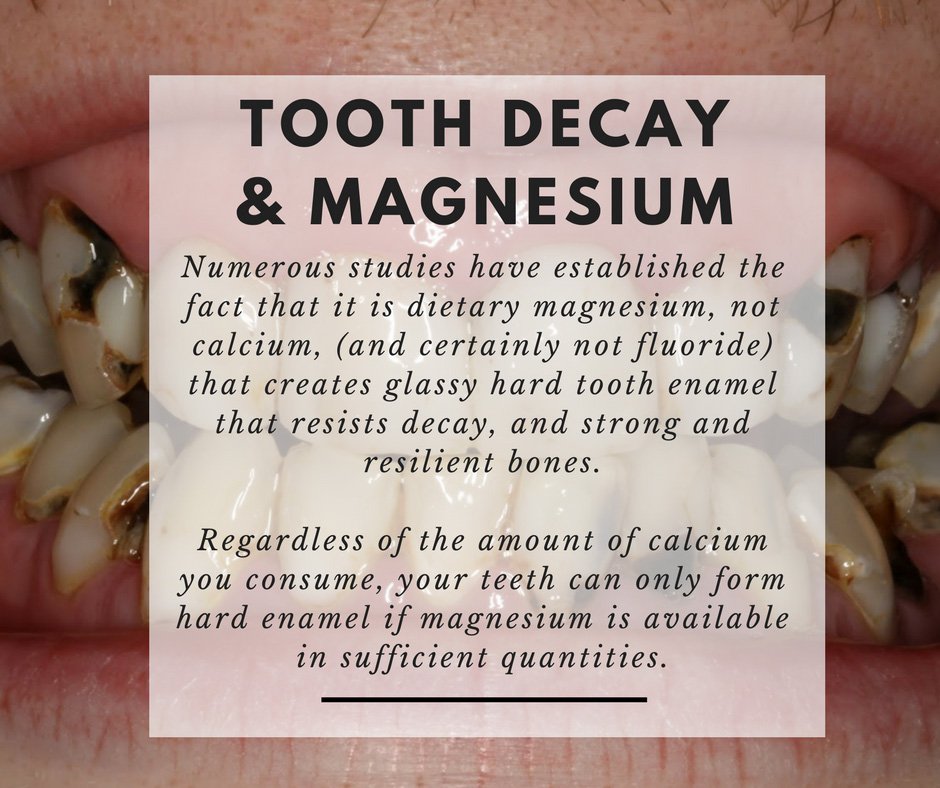
    According to J. I. Rodale, in Magnesium: the Nutrient that Could Change Your Life, “For years it was believed that high intakes of calcium and phosphorus inhibited decay by strengthening the enamel. Recent evidence, however, indicates that an increase in these two elements is useless unless we increase our magnesium intake at the same time. It has even been observed that dental structures beneath the surface can dissolve when additional amounts of calcium and phosphorus diffuse through the enamel at different rates. Thus milk, poor in magnesium, but high in the other two elements, not only interferes with magnesium metabolism, but also antagonizes the mineral responsible for decay prevention.”

    To revisit Deaf Smith County, Texas, and the justly famous residents whose teeth refused to succumb to decay, Rodale quotes the observations of Dr. Lewis Barnett, presented in a paper before the Texas Medical Association in Dallas, 1952. Dr. Barnett, an orthopedic surgeon, remarked on the low incidence of tooth decay and rapid healing of broken bones among these residents, and offered this explanation: “[The local] water and foods have a very high magnesium and iodine content and recently we have proven that all of the trace minerals known to be essential are present in the water and foods grown in that area.” Further, Dr. Barnett had found that the magnesium bone content of the average Deaf Smith County resident was up to five times higher than that of a resident of Dallas, while the concentrations of calcium and phosphorus were about the same in both groups. His observations led him to state that “[o]ne of the most important aspects of the disease osteoporosis has been almost totally overlooked. That aspect is the role played by magnesium.”

    Rodale emphasizes the fact that Dr. Barnett gave much of the credit for these health benefits to the high magnesium content of the local water, and noted many signs of superior bone development among people in the area: “Dr. Barnett makes mention of the fact that people in older years frequently have fracture of the cervical neck of the femur and these are very difficult to heal in many localities. However, he noted that this fracture rarely occurs in Deaf Smith County, whereas it was common in Dallas County, Texas, where he also practiced. When a fracture did occur in Deaf Smith, healing was easy and rapid even in people eighty to one hundred years old. In contrast, fractures in Dallas were common and very difficult to heal, if not impossible.”

    Over fifty years ago Dr. Barnett tested the magnesium levels of five thousand people and found sixty percent of them to be deficient. How much more of the population is deficient today, when all of the negative conditions contributing to that deficiency have been certainly amplified?

    FOOD SOURCES OF MAGNESIUM

    As we’ve mentioned, if farm soils are well-mineralized, leafy green vegetables, seeds, tree nuts and whole grains are fairly good sources of magnesium. Certain wild-crafted forage foods really stand out, however, such as nettles (860 mg per 100 grams) and chickweed (529 mg per 100 grams), and add many tonic and nutritive benefits to both human and livestock diets largely due to their high mineral content. Kelp, ancient denizen of the sea, contains spectacular levels, as do most sea vegetables. Remember that they are continually bathed in a solution whose third most abundant mineral is magnesium. And authentic, unrefined sea salt is a very good source of magnesium, along with trace minerals. Utilizing bone broths on a daily basis will provide another excellent source of minerals, including magnesium, in a highly assimilable form.
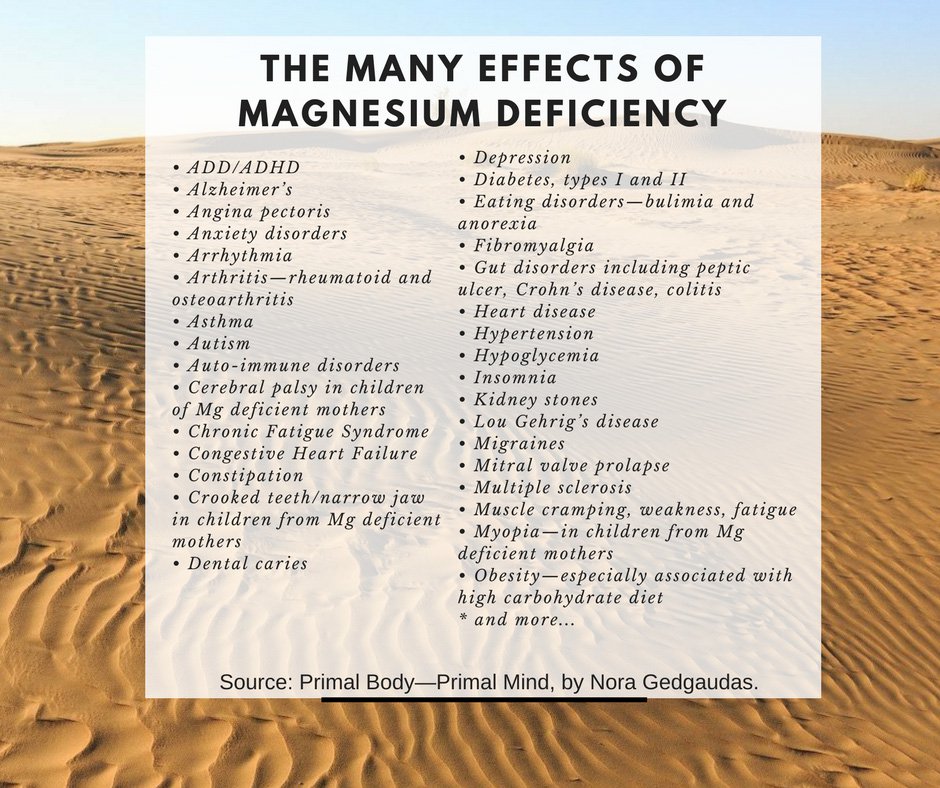
    -and more includes:
    • Osteoporosis
    • Parkinson’s disease
    • PMS—including menstrual pain and irregularities
    • PPH (Primary pulmonary hypertension)
    • Reynaud’s syndrome
    • SIDS (Sudden Infant Death Syndrome)
    • Stroke
    • Syndrome X
    • Thyroid disorders

    Source: Primal Body—Primal Mind, by Nora Gedgaudas.

    FOOD SOURCES OF MAGNESIUM
    In milligrams per 100 grams

    Kelp 760 Pecan 142 Beets 25 Wheat bran 490 Walnut 131 Broccoli 24 Wheat germ 336 Rye 115 Cauliflower 24 Almonds 270 Tofu curdled by Mg nigiri 111 Carrot 23 Cashews 267 Coconut meat, dried 90 Celery 22 Blackstrap molasses 258 Collard greens 57 Beef 21 Nutritional yeast 231 Shrimp 51 Asparagus 20 Buckwheat 229 Corn, sweet 48 Chicken 19 Brazil nuts 225 Avocado 45 Green pepper 18 Dulse 220 Cheddar cheese 45 Winter squash 17 Filberts 184 Parsley 41 Cantaloupe 16 Peanuts 175 Prunes 40 Eggplant 16 Millet 162 Sunflower seeds 38 Tomato 14 Wheat whole grain 160 Sweet potato 31 Milk 13

    MAGNESIUM SUPPLEMENTATION CAN BE TRICKY 
    learn more here…https://www.westonaprice.org/health-topics/abcs-of-nutrition/magnificent-magnesium/#.WfD8Hf5BIQU.facebook

    REFERENCES

    The Magnesium Miracle, by Carolyn Dean, M.D., N.D., Ballantine Books, 2007.

    Transdermal Magnesium Therapy, by Mark Sircus, Ac., O.M.D., Phaelos Books, 2007.

    Magnesium Therapy, by Patricia Ann Braun, M.D. http:// pbraunmd.org/magnesium.htm.

    Magnesium: The Nutrient that Could Change Your Life, by J.I. Rodale http://www.mgwater.com/rod06.shtml.

    Leaky gut and magnesium deficiency: http://magnesiumforlife.com/medical-application/magnesium-and-autism/.

    The dangers of magnesium deficiency in endurance athletes: http://findarticles.com/p/articles/mi_m0FDL/is_4_14/ai_n24940334/.

    Primal Body-Primal Mind, by Nora Gedgaudas, Primal Body-Primal Mind Publishing, 2009.

    Healing Wise: Wise Woman Herbal, by Susun S. Weed, Ash Tree Publishing, 1989.

    Put Your Heart in Your Mouth, by Dr. Natasha Campbell- McBride, Medinform, 2007.