Category: Toxins

The facts about chemicals, pesticides, and clean water.

  • West Nile Virus vs Naled Neurotoxin

    NALED Insecticide Fact Sheet

    Naled is an insecticide in the organophosphate pesticide family that is commonly used to kill adult (flying) mosquitoes.

    Naled has been registered for use in the U.S. since 1959 and is sold under the brand name Dibrom. AMVAC Chemical Corporation has been the major manufacturer of NALED since 1998.

    Use:

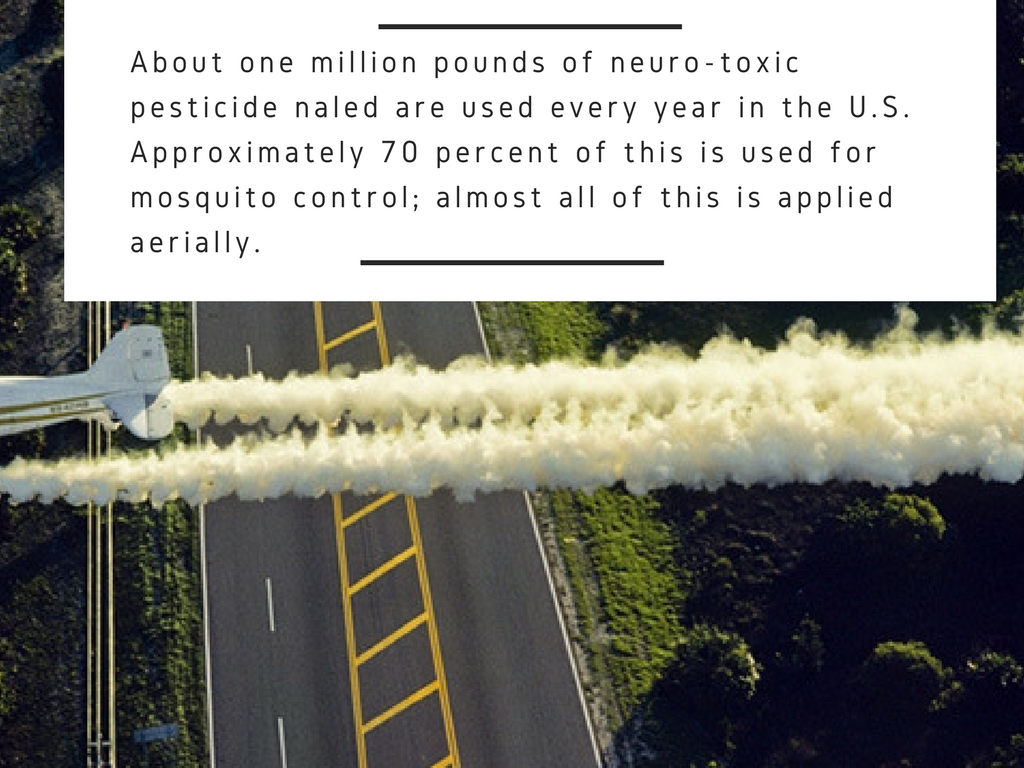
    About one million pounds of naled are used every year in the U.S. Approximately 70 percent of this is used for mosquito control; almost all of this is applied aerially.
    The remaining 30 percent is used in agriculture. Major agricultural uses are on cotton in California and Louisiana, on alfalfa in Idaho and Oregon, and on grapes in California.

    Efficacy of Mosquito Treatments

    The U.S. Centers for Disease Control and Prevention has written that “adulticiding, application of chemicals to kill adult mosquitoes by ground or aerial applications, is usually the least efficient mosquito control technique.

    Naled is no exception. For example, researchers from the New York Department of Health showed that 11 years of naled spraying was “successful in achieving short-term reductions in mosquito abundance, but populations of the disease-carrying mosquito of concern “increased 15-fold over the 11 years of spraying.

    Mode of Action

    Like all organophosphate insecticides, NALED (DIBROM) Naled is an insecticide in the organophosphate pesticide family used primarily for mosquito control. Dibrom is a common brand name for naled products. About one million pounds are used annually in the U.S. Like all organophosphates, naled is toxic to the nervous system. Symptoms of exposure include headaches, nausea, and diarrhea. Naled is more toxic when exposure occurs by breathing contaminated air than through other kinds of exposure. In laboratory tests, naled exposure caused increased aggressiveness and a deterioration of memory and learning.

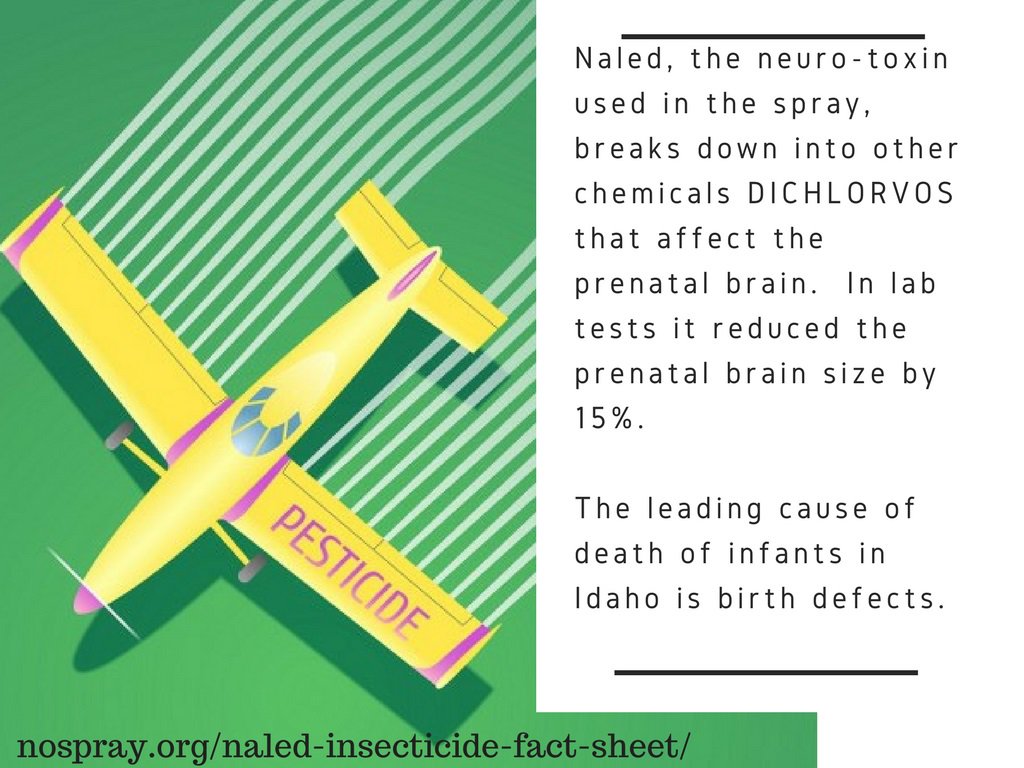
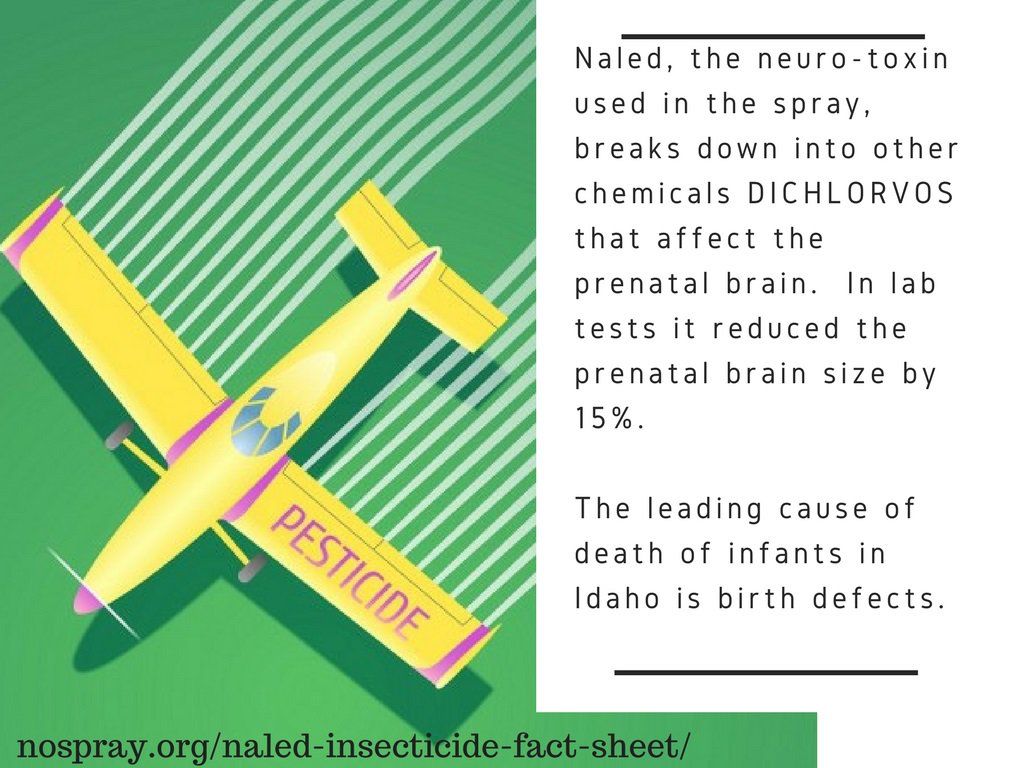
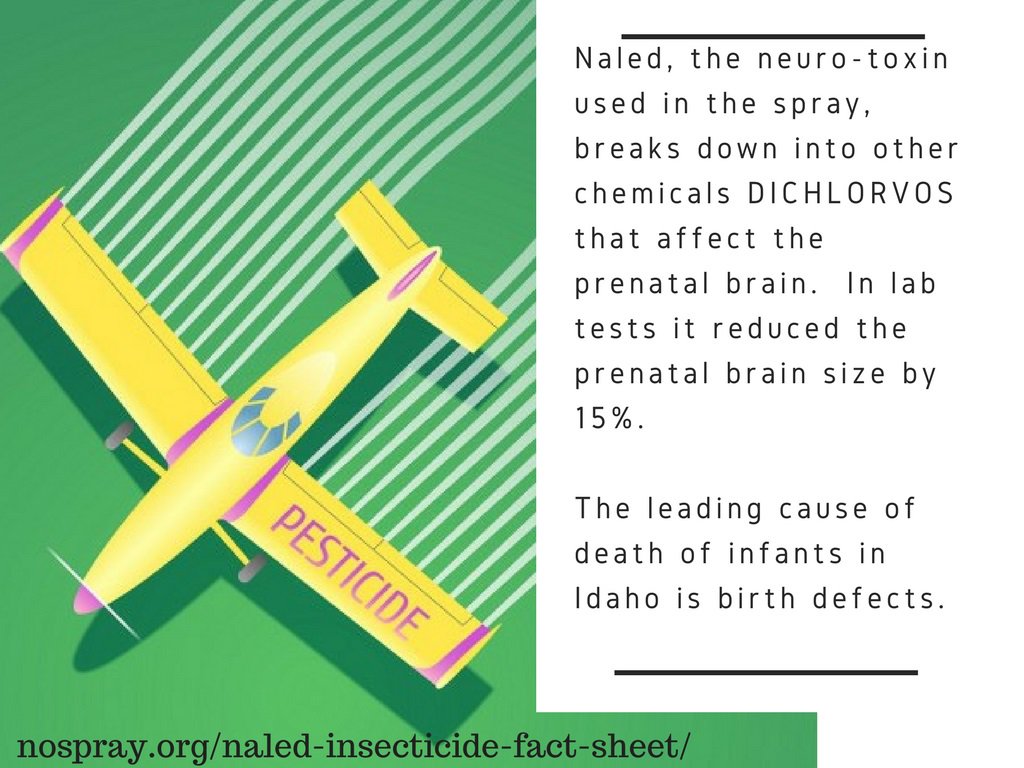
    Naled’s breakdown product DICHLORVOS (another organophosphate insecticide) interferes with prenatal brain development. In laboratory animals, exposure for just 3 days during pregnancy when the brain is growing quickly reduced brain size 15 percent.
    DICHLORVOS also causes cancer, according to the International Agency for Research on Carcinogens. In laboratory tests, it caused leukemia and pancreatic cancer. Two independent studies have shown that children exposed to household “no-pest” strips containing dichlorvos have a higher incidence of brain cancer than unexposed children.

    Aerial applications of naled can drift up to one-half mile. According to the U.S. Environmental Protection Agency, naled is moderately to highly toxic to birds and fish. It also reduced egg production and hatching success in tests with birds and reduced growth in tests with juvenile fish. convulsions, paralysis, and death.

    Breakdown Products

    ** Naled breaks down into dichlorvos **

    DICHORVOS
    another organophosphate insecticide, in animals and soil. THIS IS DANGEROUS!!!

    Effects on Behavior

    Exposure to naled has multiple effects on behavior. In a study conducted by naled’s manufacturer, naled caused reduced muscle strength, slow responses to stimulation, and reduced activity in rats.

    These behavioral changes occurred at all but the lowest dose level tested in males and all dose levels tested in females, suggesting that females are more sensitive than males to naled poisoning.
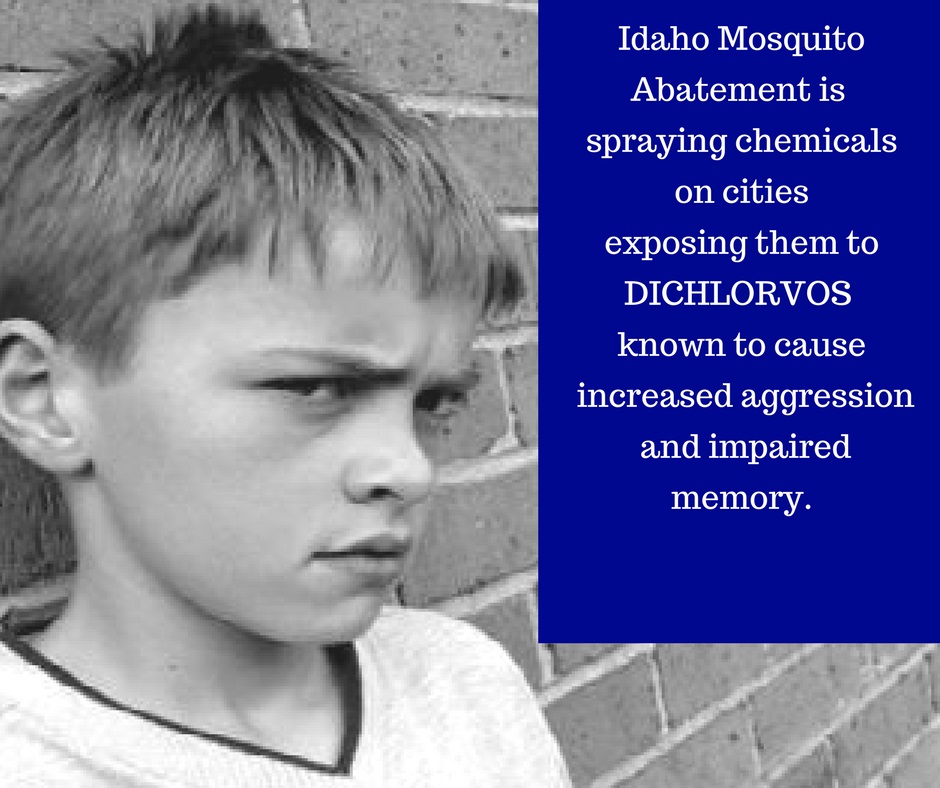
    Exposure to naled’s breakdown product dichlorvos causes increased aggression and impaired memory. The Indian biochemists mentioned above found that fighting aggression was increased about 5 times

    Inert Ingredients

    Like most pesticides, commercial naled-containing insecticides contain ingredients other than naled. Many of these ingredients, according to U.S. pesticide law, are called “inert.” Except for tests of acute effects, toxicology tests required for the registration of a pesticide are not conducted with the combination of ingredients found in commercial products.

    Most inert ingredients are not identified on product labels, and little information about them is publicly available.

    Symptoms of Exposure

    Symptoms of exposure to naled and all organophosphate insecticides include headaches, muscle twitching, nausea, diarrhea, difficult breathing, naled kills insects by inhibiting acetylcholinesterase (AChE), an enzyme involved in the transmission of nerve impulses from one nerve cell to another. This causes a “jam” in the transmission system, resulting in restlessness,depression, seizures, and loss of consciousness.

    Toxicity to the Nervous System

    A symptom of exposure to naled that occurs at low doses (whether by breathing, through the skin, or orally) is inhibition of acetylcholinesterase (AChE).

    In studies conducted by naled manufacturers, exposure of rats to naled in air at a dose of 0.3 milligrams per kilogram of body weight (mg/kg) per day for three weeks, skin exposures of 20 mg/kg per day for 4 weeks, and oral exposure of 10 mg/ kg per day for 4 weeks caused inhibition of AChE.

    Long-term exposure also caused AChE inhibition; reduced AChE activity occurred in dogs exposed orally to 2 mg/kg per day for 1 year and in rats exposed orally to the same dose for 2 years.

    In addition, the long-term study with dogs found that doses of 2 mg/kg per day also caused mineralization of the spinal cord.

    Naled’s breakdown product dichlorvos inhibits the activity in rats of a nervous system enzyme called neuropathy target esterase.

    In experiments conducted by biochemists at the Postgraduate Institute of Medical Education and Research (India), doses of 6 mg/kg per day reduced the enzyme’s activity by about 40 percent.

    Inhibition of this enzyme causes partial paralysis of the hind legs followed by incoordination.

    Toxicity Caused by Breathing Naled

    Naled is more potent when exposure occurs through breathing than when exposure occurs through eating contaminated food or drinking contaminated water.

    Toxicologists at the University of California found that inhalation was 20 times more toxic to rats than oral dosing (dosing through the mouth) of naled.

    The U.S. Environmental Protection Agency (EPA) came to a similar conclusion based on tests submitted to the agency by naled’s manufacturer: the dose required to cause cholinesterase inhibition through inhalation exposure was less than 1/6 of the lowest oral dose causing the same effect.

    An additional study by the University of California researchers mentioned above found that small droplets of naled (the size produced by ultra low volume sprayers often used in mosquito spraying) were about four times more acutely toxic than larger droplets.

    Dibrom Concentrate

    (EPA Registration No. 5481-480) contains the inert ingredient aromatic hydrocarbon solvent (Chemical Abstract Services number 64742-94-5), also called solvent naphtha.

    This solvent contains two aromatic hydrocarbons, naphthalene and 1,2,4- trimethylbenzene. Dibrom 8 Emulsive (EPA Registration No. 5481-479) contains naphthalene. Dibrom 8 Miscible (EPA Registration No. 34704-351) contains solvents4 whose ingredients can include naphthalene and trimethylbenzene.

    Naphthalene has been classified by EPA as a possible human carcinogen because it caused lung tumors in mice following inhalation.

    Naphthalene exposure also causes headaches, restlessness, lethargy, nausea, diarrhea, and anemia.

    Anemia in newborns can be caused by exposure during pregnancy.
    1,2,4-trimethylbenzene is irritating to eyes and skin. It can depress the central nervous system and cause headache, fatigue, nausea, and anxiety. It has also caused asthmatic bronchitis.

    Exposure to Naled’s Breakdown Product Increases Aggressiveness and Disrupts Learning
    In laboratory animals, exposure to naled’s breakdown product dichlorvos causes more frequent fighting and hinders learning. Number of fighting episodes (per minute, with standard deviations) ore common among exposed rats than among unexposed ones.

    Exposed animals also required more trials than unexposed ones to learn an avoidance behavior, indicating a “severe deterioration in their memory and learning functions.”

    Eye and Skin Irritation
    Naled is a “severe” eye irritant and is “corrosive” to skin. All three frequently used commercial Dibrom products pose similar hazards.

    Labels of two of the products warn “causes irreversible eye and skin damage and the third states that it is “corrosive” and “causes eye damage and skin damage.” Skin irritation was documented by physicians soon after naled’s use in the U.S. began.

    Effects on the Circulatory System

    In a long-term feeding study conducted by naled’s manufacturer, naled caused anemia in dogs at all but the lowest dose level tested. Exposures of 2 mg/kg per day reduced the number of red blood cells and the amount of hemoglobin (the oxygen-carrying pigment) in the blood.20

    Effects on Reproduction

    Dichlorvos, naled’s breakdown product, interferes with prenatal brain development.

    Biologists at the University of Oslo found that dosing guinea pigs with 15 mg/kg of dichlorvos twice daily for three days during pregnancy caused a significant (15 percent) decrease in the offspring’s brain size.

    The guinea pigs were dosed with dichlorvos between the 40th and 50th day of their pregnancy, a time when the fetal brain is undergoing a growth spurt.

    In addition, University of Michigan researchers showed that naled exposure causes delays in the development of rat embryos. For example, exposure of pregnant rats on the ninth day of their pregnancy caused a significant delay in the closing of the embryo’s neural tube.

    Naled and dichlorvos can be passed from mothers to their offspring through nursing. German researchers found both insecticides in milk from cows that had been treated with naled.

    Ability to Cause Genetic Damage (Mutagenicity)
    Naled damaged bacteria’s genetic material in laboratory tests conducted by geneticists at Monash University (Australia)24 as well as biologists at Texas Tech University.

    Naled’s breakdown product DICHLORVOS also causes genetic damage.

    A team of Greek and Dutch scientists found that injections of dichlorvos at weekly intervals in mice caused a 3-fold increase in the number of mutations in liver cells.

    A team of geneticists from the National Research Centre (Egypt) found that oral doses of dichlorvos given to mice, or feeding mice diclorvos-treated beans, increased the incidence of chromosome abnormalities in both spleen and sperm cells.

    Ability to Cause Cancer (Carcinogenicity)

    EPA classifies naled as a “Group E” chemical. Group E chemicals have demonstrated “evidence of noncarcinogenicity” in laboratory tests.

    Naled’s breakdown product DICHLORVOS however, is classified as “possibly carcinogenic to humans,” with “sufficient evidence in experimental animals” for its carcinogenicity by the International Agency for Research on Carcinogens. The agency gave dichlorvos this classification because it caused forestomach tumors, leukemia, and pancreatic tumors in laborators tests with rats and mice.

    In children, exposure to dichlorvos has been linked with increased cancer risks. Researchers at the University of North Carolina found an association between exposure to dichlorvos “no-pest” strips during pregnancy or during childhood and the incidence of three types of childhood cancer: leukemias, brain tumors, and lymphoma.

    Missouri Department of Health researchers found similar results for childhood brain cancer.

    Effects on the Immune System

    Both naled and its breakdown product DICHLORVOS inhibited an enzyme in white blood cells called monocyte esterase, according to a study conducted by researchers at the Technicon Science Center.

    Monocyte esterases are an “integral component”33 of the process by which white blood cells eliminate virus-infected cells from our bodies and monitor for precancerous cells.

    Synergy

    A study submitted to EPA by Shell Chemical Co. showed that “the toxic effects of naled were potentiated by co-administration of Ciodrin, malathion, and methyl parathion. All three are insecticides in the organophosphate family.

    Special Susceptibility

    Malnourished individuals may be particularly susceptible to naled poisoning. Researchers from the Institute of Hygiene and Occupational Health (Bulgaria) studied naled’s effects on rats that were fed a low-protein diet and found that naled was almost twice as toxic to them as it was to rats fed a normal diet. In addition, the rats fed a low-protein diet developed liver damage from their naled exposure.

    Contamination of Food

    The U.S. Department of Agriculture documented contamination of strawberries, peppers, and beans with naled’s breakdown product dichlorvos.

    Water Contamination

    Insecticides in naled’s chemical family, the organophosphates, are com-Malnutrition Increases Naled’s Toxicity Naled inhibits the activity of an immune system enzyme. It is also more toxic to malnourished animals than animals fed a normal diet.

    Median lethal dose

    (milligrams per kilogram of body weight in rats) mon contaminants of urban streams and rivers. However, neither naled or its breakdown product dichlorvos were included in the national water quality monitoring program currently being conducted by the U.S. Geological Survey.

    This means that no systematic information is available about naled contamination of U.S. streams, rivers, or wells.

    EPA also does not have monitoring data for naled or its breakdown products in ground or surface water.

    Air Contamination

    Naled can persist in air up to several days after treatment. University of California, Davis toxicologists measured both naled and its breakdown product dichlorvos in the air around a naledtreated orange grove for three days after application.

    Drift

    Aerial applications of naled drift (move from the target site during application) for significant distances. Entomologists from the University of Florida measured naled contamination 750 meters (2400 feet) downwind from sprayed areas. They suggest that nospray buffer zones greater than 750 meters in width “be placed around ecologically sensitive areas.

    Effects on Beneficial Insects
    Because it is a broad spectrum insecticide, it is not surprising that naled impacts beneficial insects, those that provide important economic benefits to farmers. In a study submitted as part of naled’s registration process, naled was “highly toxic”42 to honey bees. Follow-up studies found that this toxicity decreased rapidly during the first day after treatment.42 Naled’s toxicity to other species of bees (alfalfa leafcutting bees and alkali bees) is more persistent than for honey bees.43 It can “mimic long residual [persistent] materials,” reducing leafcutting bee numbers 48 hours after treatment.

    Parasitoid wasps (wasps that lay their eggs in juvenile stages of other insects, which then are killed as the wasps hatch and develop) can also be poisoned by low-level exposure to naled.

    Naled (and Dichlorvos)Inhibit the Immune System
    According to U.S. Department of Agriculture researchers, a wasp that parasitizes fruit flies was killed by a naled and protein bait mixture designed to kill fruit flies.

    Naled is also highly toxic to a predatory mite.

    A University of Florida zoologist studied areas in Florida where regular mosquito spraying occurred with Dibrom and another insecticide. He found a “major loss” in insect diversity in sprayed sites. Wasps showed “some of the most dramatic drops in species diversity.”47 Scale insects, whose populations are normally controlled by parasitic wasps, increased.

    Effects on Birds

    According to EPA, naled is moderately to highly toxic to birds. The most sensitive species tested by naled’s manufacturer during the registration process was the Canada goose, killed by 37 mg/kg of naled.

    According to tests conducted by naled’s manufacturer, this insecticide also affects bird reproduction. Mallard ducks eating food treated with naled laid fewer eggs, produced fewer viable eggs, and hatched fewer ducklings than unexposed mallards.

    Effects on Fish

    According to EPA, naled is very highly toxic to lake trout; highly toxic to rainbow trout, cutthroat trout, and catfish; and moderately toxic to sunfish, minnow, and bass. The most sensitive species in tests submitted to EPA by naled’s manufacturer was lake trout, with an LC50 (median lethal concentration; the dose required to kill 50 percent of test animals) of 87 parts per billion (ppb). Naled also causes effects on fish other than death. In a test conducted by naled’s manufacturer, a concentration of 15 ppb impaired the growth of fathead minnows

    Effects on Other Aquatic Animals

    Ecologically important insects are killed by naled. According to a naled manufacturer, a concentration of 8 ppb kills stoneflies.50 Research conducted by the Arctic Health Research Center (Alaska) showed that water striders were killed 300 feet from a naled fogger.

    Stoneflies are important nutrient cyclers in streams and water striders are scavengers and predators. Aquatic arthropods are also impacted by naled. Waterfleas are killed by less than 0.5 ppb of naled in tests conducted by naled’s manufacturer, and less than 0.2 ppb disrupts waterflea growth. Shrimp are killed by less than 10 ppb. According to EPA, naled is “very highly toxic” to oysters. Sea urchins are also sensitive to naled exposure. University of Miami researchers showed that concentrations of less than 4 ppb disrupt normal development of embryos.

    Effects on Endangered Species

    Evaluations by both EPA and the U.S. Fish and Wildlife Service have concluded that use of naled puts endangered mammals, fish, mussels, and other species at risk. In addition, there is field evidence of naled’s hazards for endangered species.

    Dibrom spraying (along with spraying of another insecticide) was “directly correlated with the precipitous decline in the Schaus Swallowtail populations on Key Largo [FL], according to a University of Florida zoologist. This swallowtail is listed as an endangered species under both Florida and federal law.

    A University of Florida entomologist studying a different rare butterfly, the Florida lacewing, found higher populations in unsprayed areas than in sprayed areas. (See Figure 7.) He concluded that “it is likely that chemical applications play an important role in affecting the population size and behavior of these species.

    Effects on Plants

    Insecticides are typically not expected to damage plants. However, University of California researchers showed that naled treatment caused brown lesions in celery and bronzing of strawberries.The strawberry damage was accompanied by reduced photosynthesis (using sunlight to produce sugars) and closing of leaf openings (stomata).60 Brazilian researchers found that naled also “drastically reduced” tomato pollen germination. In aquatic plants, naled reduces photosynthesis. In laboratory tests, a naled concentration of 1 ppm reduced photosynthesis by estuary algae by over 50 percent.

    *********************************
    http://www.pesticide.org/naled.pdf
    http://www.panna.org/
    http://www.panna.org/resources/gpc/gpc_200212.12.3.14.dv.html
    This article originally appeared at: http://nospray.org/naled-insecticide-fact-sheet/.
  • They Spray Us With Neurotoxins & Chemicals to PROTECT OUR HEALTH?

    A STATE OF EMERGENCY was declared by Mosquito Abatement so that they can spray us by plane with Naled (A chemical banned in other countries due to health concerns) They are working on keeping the fear factor alive with this article http://www.idahostatesman.com/n…/local/article163094138.html

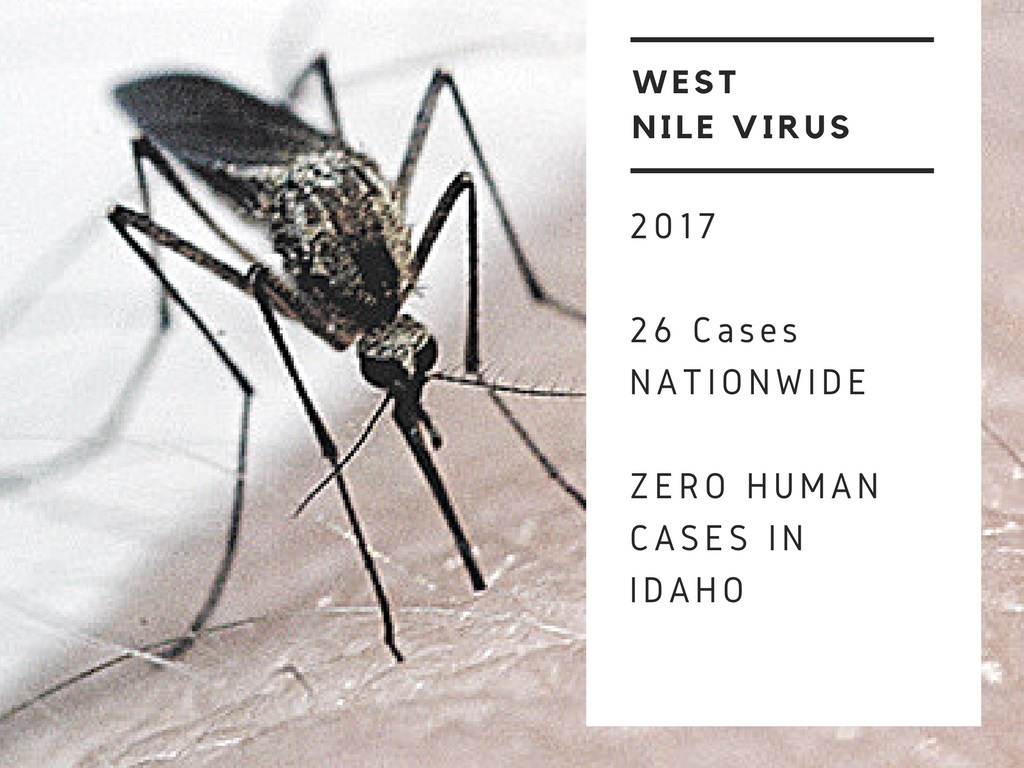
    How many people have been affected by West Nile Annually in the past 15 years? an average of 12 a year.
    https://www.cdc.gov/westnile/statsmaps/preliminarymapsdata2017/activitystate.html 

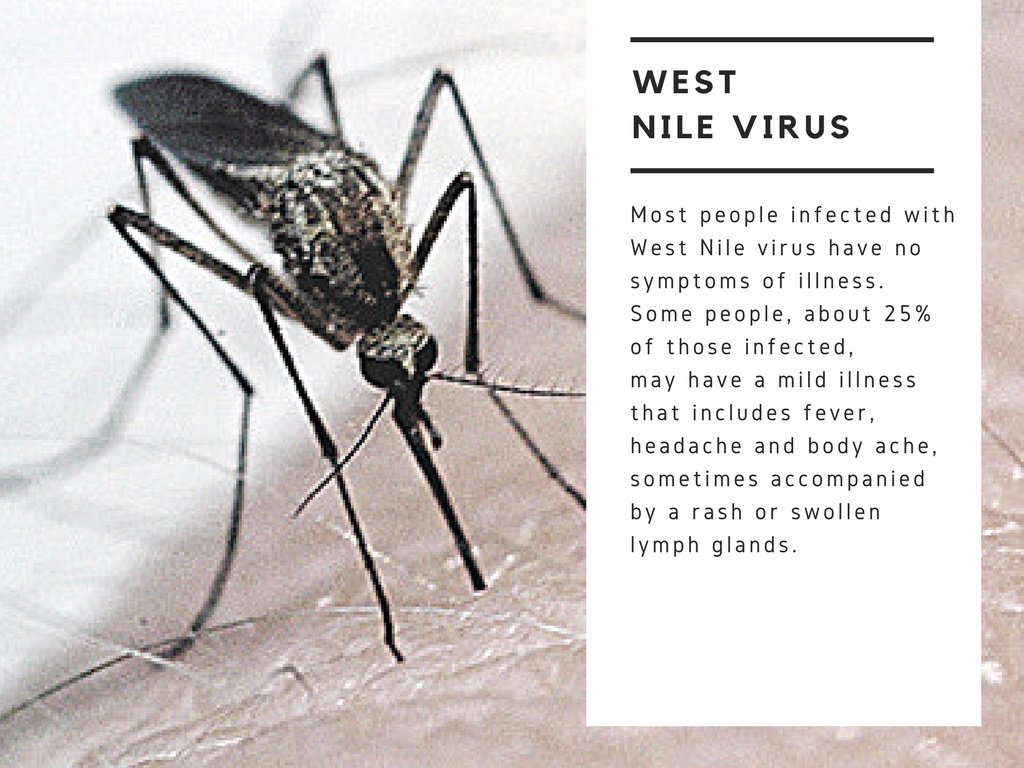
    2017 Idaho NO ONE has been affected. Almost 100% of the cases of West Nile are SO MILD people don’t know they have it, and others assume its a flu or cold.

    Less than 1% of 1% do people have serious reactions. According to the CDC, its primarily elderly people or those already in poor health.

    And yet, 100,000 of people are being bombarded with neurotoxic chemicals (that accumulate in our bodies) to protect the annual average of 12 people from a neurological reaction to a sickness that most people don’t even know they have when they contract it. http://www.idahopress.com/news/local/war-on-mosquitoes/article_09e9de1a-94bb-11e0-a1b9-001cc4c03286.html

    Naled and the chemical it breaks down into contain toxins known to pass through the placenta and affect brain size by as much as 15% in lab tests.  http://nospray.org/naled-insecticide-fact-sheet/


    The number one cause of death of infants in our great state? Birth Defects.

     IDHW numbers, Idaho’s infant mortality rate from birth defects has exceeded the national average 12 of the 16 years from 1999 to 2014, peaking in 2002 when the infant mortality rate of 241.3 per 100,000 births was nearly 100 deaths higher than the U.S. average. In 2014, the most recent data available, that number was 135.4 deaths per 100,000—16.4 higher than the average.

    https://www.boiseweekly.com/boise/the-kids-arent-alright-idaho-has-no-means-to-adequately-track-birth-defects/Content?oid=3827846

    Are they protecting us??? Or POISONING US? 

    It won’t stop..unless we demand it stops!!

    Learn More At: https://hfi.designbyparrish.com/no-spray-zone

  • What’s in Your Drinking Water?

    When most Americans drink a glass of tap water, they’re also getting a dose of industrial or agricultural contaminants linked to cancer, brain and nervous system damage, developmental defects, fertility problems or hormone disruption. That’s the disturbing truth documented by EWG’s Tap Water Database – the most complete source available on the quality of U.S. drinking water, aggregating and analyzing data from almost 50,000 public water utilities nationwide.
    What’s in YOUR WATER Idaho ?
    Idaho water systems added fluoride is approved of by City Councils. More than 35% of Idaho’s citizens are drinking fluoride contaminated water. A simple request from the city council could change that. 

    http://deq.idaho.gov/water-quality/drinking-water/pws-monitoring-reporting/contaminants/

    Drinking Water Program Manager
    Jerri Henry
    DEQ State Office
    Water Quality Division
    1410 N. Hilton
    Boise, ID 83706
    (208) 373-0471
    jerri.henry@deq.idaho.gov

    Safe Drinking Water Hotline

    1-800-426-4791

    More Information

    Drinking Water Contaminants

    National Primary Drinking Water Regulations

    SELECT YOUR STATE

    This article originally appeared at: https://www.ewg.org/tapwater/#.WXleoogrKUk.
  • Mosquito Spray 101

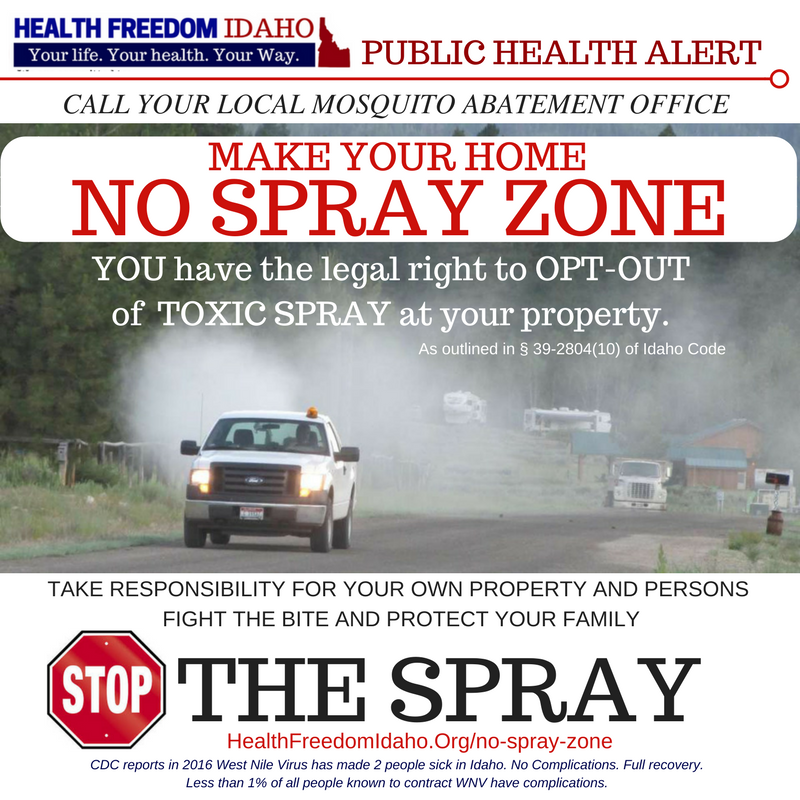
    HFI: The Mosquito Abatement Districts got together and declared a ‘state of emergency’ giving them the opportunity to spray large populations in Boise and the surrounding areas with chemical insecticides Dibrom/Naled to ‘protect us’ from mosquitoes carrying West Nile Virus. There is NO OUTBREAK of West Nile Virus even though we have an increase in mosquitos due to unusal flooding. In fact, the CDC reports ZERO cases of serious complications from west nile virus for the state. Considering that the spray they are using in these highly populated areas is BANNED in other countries due to its health risks. Its been proven that ariel spray is the LEAST EFFECTIVE MEANS to protect the population from mosquito borne diseases.

    Raine, from HFI explains the issues further:

    https://www.youtube.com/watch?v=raTMmjTktGI

    There are reports that have linked aerial spraying of insecticide for mosquitoes to autism. Check out this article from the Miami Herald about a doctor that is filing a lawsuit to stop mosquito spraying. 

    Two other sources, Science Daily and Newsweek discuss the connection between spraying for mosquitoes and autism. The results of this study, Published in Environmental Health Perspectives shows how exposure to several different types of insecticides are associated with autism spectrum disorders (ASD) or developmental delay (DD) in the Childhood Autism Risks from Genetics and  Environment (CHARGE) study during pregnancy. 

    I urge everyone to go and check those out. 

    Doctors’ report on Zika and the causes

    Zika threat fraud, Dr. Mercola.

    ABC News, West Nile Virus, a different opinion

    West Nile, a scam

    John Rappaport, independent investigative reporter, talks about the lack of hysteria over many other diseases that cause more deaths than WNV

    Here’s what the U.S. Health Works Medical Group has to say about WNV:

    “How do you get the West Nile disease? Only one way, get bit by a mosquito that has the virus. The West Nile virus mostly lives in birds. Some mosquitoes bite birds and pick up the virus that way. Who knew mosquitoes bite birds? Seems like a suicidal food choice. If one of these mosquitoes actually manages to catch and bite the infected bird, and survive the experience, he now can bite you. As you would expect there are not exactly swarms of infected mosquitoes.

    Now if one such infected mosquito manages to find you, you now have West Nile Virus. But you can’t give it to your family and friends. They have to find their own infected mosquito if they want the virus. In West Nile infected humans, the virus level is low enough that a mosquito biting you won’t likely get infected. So you can‘t pass it on, even with a mosquito’s help.”

  • They just voted to be fluoride free!

    Latest Fluoride-Free Victories

    • Battlefield, Missouri (June 21)– The water district board voted unanimously to end fluoridation for the town of 6,000 due to corrosion caused by the chemical, and because of the availability of safer and more effective alternatives to reduce decay.  The dental lobby and regional health officials who have received grants to promote the practice have vowed to fight the vote, despite the significant health risks to residents, the water infrastructure, and water employees.
    • Nipawin, Saskatchewan (July 13)– After months of consideration and a presentation by public health administrators, the Mayor and Council in Nipawin, Saskatchewan (pop. 4,401) voted 4-1 to reject a proposal by the Saskatchewan medical health officer to fluoridate the drinking water. As one councilor said, “It’s not our job to supply medication.”  The Mayor also voted against the proposal because she felt the decision should be made by residents via a ballot referendum, not by councilors.
    • Johnstown, Pennsylvania (July 21)– The Greater Johnstown Water Authority voted unanimously (11-0) to end the addition of fluoridation chemicals to the drinking water.  The vote was influenced by significant opposition to the practice by water consumers, which was highlighted by the results of a customer survey on the issue in which 70% of respondents opposed fluoridation. 

    The Greater Johnstown Water Authority serves an estimated population of 52,657. In Cambria County: the City of Johnstown (19,712), Brownstown Borough (700), Dale Borough (1,160), Ferndale Borough (1,600), Lorain Borough (714), Westmont Borough (4,876), East Conemaugh Borough (1,145), Franklin Borough (300), Southmont Borough (2,150), Conemaugh Township (2,000), Middle Taylor Township (800), Stonycreek Township (2,000), Lower Yoder Township (2,500), Upper Yoder Township (5,000) and West Taylor (6,000).  Also included is Conemaugh Township in Somerset County (2,000).

    FAN Senior Advisor and chemist, Paul Connett, PhD, was recently in Pennsylvania for a public debate against retired Florida dentist and fluoridation propagandist Johnny Johnson, DDS.  Click here to watch the 90-minute debate.

    Residents and campaigners in Pennsylvania have supplied steady wins for our movement, and have made it one of the most active states for fluoridation votes and decisions. Here are the additional Pennsylvania victories since 2011:

    In 2016, Guilford & Greene Township, with a combined population of 26,000

    In 2015, Bellefonte with a population of 6,224

    In 2015, Brackenridge Borough with a population of 3,240

    In 2015, Schuylkill Haven with a population of 5,340

    In 2014, Ford City with a population of 3,000

    In 2014, Bucks County with a population of 385,000

    In 2013, Tyrone with a population of 5,500

    In 2012, West Manheim with a population of 8,000

    In 2012, Myerstown with a population of 3,500

    In 2011, Pottstown with a population of 15,500

    In 2011, Schuylkill Haven with a population of 5,500

    New Fluorosis Video

    Do your teeth, or your child’s teeth have white spots, white streaks, cloudy splotches, brown stains, or pitting? If so, you or your child may be among the millions of Americans who now have a condition called dental fluorosis.

    Fluorosis is a defect of tooth enamel caused by too much fluoride intake during the first 8 years of life, and in the U.S. fluorosis rates have increased by 600% in just the last 60 years.  

    Watch this new short video to learn more, and please share our Facebook and Twitterposts on the video to help warn others via social media.  You can also visit our webpage on dental fluorosis to learn more. 


    2017 Chilean review: fluoridation is ineffective & harmful

    A team of experts from Chile–including doctors, biologists, a lawyer, a civil engineer, a toxicologist, an environmental expert, and a chemist–have published a damning review of water fluoridation in the Medical Journal of Chile, February 2017.  The review was financed by the Medical College of Chile.

    Chile is considered a pioneer in the fluoridation of drinking water, starting in 1953 when Curico was fluoridated.  By 1958, nearly 60% of the country was fluoridated, and constant expansion has led to a current rate of 82.5%.

    Despite the long history of national support for the practice, the article entitled, “Consequences of Fluoridation of Drinking Water on Human Health,” concludes that artificial fluoridation of drinking water and milk has not only been ineffective at reducing dental decay in children, but is likely harmful to health.  According to the researchers:

    “A) The effects of fluoride intake pose risks of various diseases in the asthmatic-skeletal, neurological, endocrine and skin systems. Dental and skeletal fluorosis are signs of chronic and excessive ingestion of fluoride.

    B) Infants, children and adolescents are at high risk of diseases due to over-intake of fluorides, through drinking water and / or fluoridated milk, as the deterioration of health is proportional to the dose and the time of exposure .


    C) The fluoridation of drinking water does not significantly impact on caries prevention. For their effectiveness is rather a topical and non-systemic effect, as demonstrated by countries that do not fluoride drinking water, and do not use milk or fluoride salts, decreasing dental deterioration at the same rate as those that fluoride drinking water.”

    The research team based their analysis on a review of all available studies that included control of confounding variables.  They discuss fluoride’s ability to cause bone, thyroid, neurological, and skin damage.  There is also in indepth analysis of WHO data that shows, “fluoridation of drinking water and salts have no incidence at all in reducing dental [decay].”

    There was also a brief discussion on the legal aspects of water fluoridation, which found the following:

    “The fluoridation of drinking water in Chile forces citizens to involuntarly consume a chemical they do not require.  For decade the majority of the Chilean population has been overexposed to this potentially unhealthy element, transgressing constitional guarantees.”

    In response to their findings the research team made the following recommendations:


    1. To amend Decree No. 735 of November 7, 1969, updating it with Supreme Decree No. 131 of 2006, and the Regulations for Services for Human Consumption of 2007, to avoid fluoridation of drinking water and avoid fluoridation Of milk, in all regions of the country.


    2. Prioritize the use of dental hygiene products containing the necessary, but minimal, amounts of fluoride to maintain dental health, strengthen education for better dental care and better nutrition.


    3. Educate health and education professionals about the adverse consequences of fluoride intake.


    4. To carry out epidemiological studies in Chile, to evaluate the adverse effects on health, through ingestion and use of fluorides, for decades.”

    READ THE FULL STUDY


    FAN’s Fluoride Conference in September

    If you missed July’s International Fluoride Free Teleconference, the audio is now available to download or stream.  During the call, Paul and Ellen Connett made some exciting announcements about the upcoming 6th Citizen’s Conference on Fluoride in Washington, D.C. from September 16th through 18th.

    The three-day Conference will focus on Science (Saturday, Sept 16), Strategy(Sunday, Sept 17), and Action (Monday, Sept 18), with two days of speakers followed by a day of lobbying and sightseeing on Capital Hill. 

    Hotel rooms are available at significantly discounted rates, but availability is limited and rooms will return to full price on August 24th, so CLICK HERE to make your arrangements before it’s too late.  


    To listen to July’s teleconference audio and register for next month’s call, CLICK HERE.


    Latest Fluoride News:

    Public Takes Out Fluoride Frustration at Meadville Council Meeting (Pennsylvania)

    Some Businesses and Individuals Plan to Remove Fluoride (Pennsylvania)

    Northern Tasmania: Fluoride Could Be Put to the People (Australia)

    Tasmanian Council Says Towns Should Decide What is Added to Water (Australia)

    Jonesborough Fluoride Battle Continues as Town Ends Addition (Tennessee)

    Lead, Arsenic, Fluoride Found in Water Under Memphis Power Plant (Tennessee)

    11.5 Million People in India at High Risk of Fluorosis Due to Water (India)

    In Some Areas, Fluoride Debate Rages (Indiana)

    Dentist: Water Fluoridation – Reduce or Eliminate? (Ohio)

    Port Angeles City Council Candidates Debate Fluoridation (Washington)

    Fluoride as a Ballot Measure in Sheridan (Wyoming)

    Fluoridation to Appear on Petersburg Ballot (Alaska)

    Kidney Calamity Caused by Fluoride in Water (Vietnam)

    Franklin, Windsor, and Courtland City Have High Fluoride Levels (Virginia)

    Actress Olivia Munn Cut Fluoride From her Diet to Clear Acne (USA)

    Eau Claire Fluoridation Debate (Wisconsin)

    Sheridan Still Mulling Fluoride Options (Wyoming)

    For more fluoride related media, please visit FAN’s News Archive.


    Sincerely,

    Stuart Cooper
    Campaign Director
    Fluoride Action Network

    See all FAN bulletins online

  • Ban Lifted For Sale of Natural Alternative To Toxic Round Up

    HFI:  North End Organic Nursery Boise, Idaho shared through social media, that Horticultural vinegar is a highly effective product to reduce/eliminate weeds that DOES NOT CONTAIN CANCER CAUSING GLYPHOSATE. That’s when the State decided they were not allowed to sell the natural alternative product. Within days, hundred of customers and citizens alike expressed outrage at the over step of power of the ISDA. An agreement was made, and the product will return to the stores, without the label that it can be used effectively against weeds. Moral of the story…the state is watching (yes, even social media) and they are listening, to our posts, our calls and our emails. Perhaps we should begin a dialogue to REDUCE the usage of glyphosate in our public spaces!

    July 14, 2017

    North End Organic Nursery Boise
    owner Lindsay Schramm, was SHOCKED with Kevin Kostka, an enforcement officer for State of Idaho, told her that a product known as horticultural vinegar — effective as a non-toxic alternative for battling weeds – could not be sold her her stores.

    This product, sold in her store for years, has been effective as an alternative to carcinogenic weed killers containing glyphosate – such as Roundup. The State realized its effectiveness in reducing weeds, after a popular time-lapse video was shared from youtube and facebook.

    Schramm shared on facebook, “This is food grade Horticultural vinegar, and just like salt, has many different uses, and we believe they are out of their jurisdiction and scope of power to tell us that we are not allowed to sell it.


    “Somebody at some point stumbled across the fact that, hey, if you put it full strength on a weed, the weed dies,” Schramm said. “With all of the terrible things that are out there right now, people got excited about the possibility of using something that’s very simple, nontoxic product.

    “It may not have been originally intended as an herbicide, but it just so happens to work great as an herbicide.” 


    HEALTH FREEDOM IDAHO ASKS: Is the State banning and limiting the sales of probably carcinogenic products containing glyphosate? 

    THE WIN!!!
    July 17 5:30 PM North End Organic Nursery Posted An Update: “we are desiring to work with the ISDA, not against them, and after some civil conversations we are working on a resolution. Thank you all for your support. Nothing has changed yet, but we are optimistic.”

    On Tuesday July 18, North End Nursery posted that they fround a place of agreement: Scramm will relabel the bottles, removing reference to use of horticultural vinegar as an herbicide, and then the department will allow the store to resume selling the vinegar.

    Soon you will be able to purchase your horticultural vinegar AGAIN from North End Organic Nursery. 

  • Round Up Toxicity: It’s NOT just the carcinogen glyphosate

    Monsanto’s Roundup is more toxic than what the majority believe

    More and more studies are revealing compelling evidence on the toxicity of Monsanto’s best selling weed-killer Roundup. In 2004, a study published in the Journal of Pesticide Reform, showed toxicity of “glyphosate” (active ingredient in Roundup) and how it’s designed to deprive plants from essential nutrients, kill useful insects and microorganisms and pollute the earth.

    However, as toxic as glyphosate is, the only problem with Roundup isn’t only glyphosate but the fact that Roundup has many other “insert” ingredients that are not properly labeled. Studies show that these insert ingredients increase the toxicity and harmful side effects of glyphosate.

    In a study published in the journal Chemical Research in Toxicology, the researchers tested Roundup on human’s cells and they found that one of the “insert” ingredients used as surfactant in Roundup called “polyethoxylated tallowamine, or POEA”, can significantly increase the toxic effect of “glyphosate”.

    There are also other toxic chemical compounds used in Roundup such as “5-Chloro-2-methyl 3(2H)-isothiazolone and 3-Iodo-2-propynyl butyl carbamate” and they are all linked to many health issues including infertility, allergies, genetic damage, cancer and thyroid problems. Check at the list of insert ingredients in glyphosate herbicide products.

    While governmental regulatory like Environmental Protection Agency (EPA) and FDA consider Roundup safe, independent scientists that are not funded by biotech companies like Monsanto suggest that Roundup is toxic to human’s health – including governments of nearly 50 other countries:

    According to rodale.com, in U.S. alone, homeowners and farmers use about 100 million pounds of Roundup herbicide every year. At the same time, weeds are becoming more resistant to Roundup, so farmers are using more and more chemicals to deal with super-pests and super-weeds. From 1994 to 2005, the use of glyphosate has increased by 1,500 percent.

    However, in 2009, an environmental group in Argentina filed a petition for banning glyphosate, after a study linked glyphosate to neurological problems and nervous system disorder. Also, the government of Argentina funded a research and discovered that the cancer rate was higher in areas that people used glyphosate. Also, many independent laboratory studies have linked glyphosate to genetic damage and recent studies have linked glyphosate exposure to a type of blood cancer known as lymphoma.

    According to foodandwaterwatch.org, a recent study shows how glyphosate damages the cytochrome P450 (CYP) gene pathway and creates enzymes that help to form and breakdown molecules in cells. Cytochrome P450 (CYP) gene pathway are essential for normal functioning of different organs in our bodies and even small changes in its expansion can lead to variety of health problems and complications.

    For example, exposure to glyphosate in humans can significantly lower the level of essential amino acids that’s necessary for neurotransmitter serotonin. Low serotonin levels are linked to depression, Alzheimer’s and obesity. All these side effects can work together and trigger other health problems including gastrointestinal problems, cardiovascular disease, autism and diabetes.

    Monsanto and its financial beneficiaries who discredit actual scientific studies about GMOs and call these studies “bad science” or “another bogus study” are just bunch of “opportunists” that are allergic to facts: 

    Monsanto and its thugs should know that “the cat is out of the bag” and there is no more hiding or pretending. We know that the majority of researches that claim safety of glyphosate are performed by scientists who are funded by Monsanto.

    Monsanto and its financial beneficiaries should be ashamed of themselves for blocking the rights of ordinary Americas to know what they are eating. If these crowds had some honor, they would jump off of a tall building instead of poisoning our nation with glyphosate residue found in soy, sugar, corn or wheat.

    Recently, the House of Representatives that are true representative of biotech companies like Monsanto voted against GMO labeling bill. Apparently, these so called “elected officials” do not believe in the right of every citizen in this country to know what they are eating, however, they apparently believe in the right of biotech companies to poison us. Click here to see who these so called representatives are.

    Sources:

    http://www.pesticide.org/get-the-facts/pesticide-factsheets/factsheets/glyphosate

    http://www.foodandwaterwatch.org/blogs/new-review-points-to-glyphosates-dangerous-health-effects/

    http://www.mdpi.com/1099-4300/15/4/1416

    http://www.rodale.com/roundup-weed-killer-more-toxic-originally-believed#.UeBxgtAosVA.twitter

    Related Articles:

    http://www.seattleorganicrestaurants.com/vegan-whole-food/Monsanto-pest-weed-resistant-crops.php

    http://www.seattleorganicrestaurants.com/vegan-whole-foods/monsantos-roundup-glyphosate/


  • Smart Attack!

    Take Back Your Power lays out some not-so-good reasons in this 4 minute animation. Your private data, lifestyle and behavioral
    choices can be amalgamated into a data-set that is monetized and sold to 3rd party companies. What are your thoughts and concerns about the implications laid out in this satirical animated short?

    Our usual
    satire of dark subjects aim to entertain and inform you.
    *WARNING – HEAVY IRONY AHEAD – USE CRITICAL THINKING*

    Ever wondered why your energy supplier and governments are so keen to give you a smart meter?

    We lay out some not-so-good reasons in this 4 minute animation. Your private data, lifestyle and behavioural
    choices can be amalgamated into a data-set that is monetised and sold to 3rd party companies. Our usual
    satire of dark subjects aim to entertain and inform you.

    Download and upload to your own channel. We ask you to not change, edit or cut it short in anyway.
    Please link back to our channel here and our website so others can grab it.

    Get it from: http://infomaticfilms.com/download.htm

    A UK company wants to “monetise” you https://goo.gl/RlXxQL

    Smart meters snooping on you? https://goo.gl/HX1qSZ

    Smart meter fire hazards: https://goo.gl/IsGIB6

    The Smart agenda: https://goo.gl/cd6ZaX

    Smart meter health concerns: https://goo.gl/PEsr78

    We’ve covered the costs of music, actors and given 9 months of work for free so consider donating $5/£5 towards our next animation here : https://goo.gl/6YmSwS Please donate to help us make more: https://goo.gl/6YmSwS

    https://takebackyourpower.net

  • How to Kill Weeds Naturally

    #elminateglyphosate How can we get rid of weeds WITHOUT adding carcinogenic toxins to our home environment. This video comes up with several easy and effective ways to keep down the weeds and keep out the cancer causing agents. 

    This article originally appeared at: https://youtu.be/uHAVo3jn5OY.
  • Aluminum Should Now Be Considered a Primary Etiological Factor in Alzheimer’s Disease

    Scientist reveal: In the majority of individuals, aging is perhaps the single most important risk factor for the development of Alzheimer’s disease and similarly, aging is also the most critical criterion in the accumulation of aluminum in human brain tissue. Neurons have been described as the ‘quintessential immortal cell line’, and it is their longevity which predisposes them to accumulate aluminum over time.
    The following paper was published by the Journal of Alzheimer’s Disease Reports.  References may be foundhere

    Abstract: In this paper, I have summarized the experimental and largely clinical evidence that implicates aluminum as a primary etiological factor in Alzheimer’s disease. The unequivocal neurotoxicity of aluminum must mean that when brain burdens of aluminum exceed toxic thresholds that it is inevitable that aluminum contributes toward disease. Aluminum acts as a catalyst for an earlier onset of Alzheimer’s disease in individuals with or without concomitant predispositions, genetic or otherwise. Alzheimer’s disease is not an inevitable consequence of aging in the absence of a brain burden of aluminum.

    EVIDENCE NOW POINTS TO ALUMINUM AS A CONTRIBUTORY FACTOR IN ALL FORMS OF ALZHEIMER’S DISEASE

    Aluminum is unquestionably neurotoxic and it is accepted as the cause of encephalopathies in, for example, individuals undergoing renal dialysis  and similarly in individuals who have received aluminum-based prostheses. There are myriad ways by which aluminum can exert toxicity; its Al3 + (aq)  ion is highly biologically reactive, but to do so and thereby bring about change in a biochemical system, the aluminum content of any compartment, such as a tissue, must achieve a toxic threshold or burden. However, aluminum-induced encephalopathies are not Alzheimer’s disease, though they may share some similar neuropathological hallmarks; they are acute conditions whereas Alzheimer’s disease might now be considered as an acute response to chronic intoxication byaluminum.

    WE DO NOT KNOW WHAT CAUSES ALZHEIMER’S DISEASE

    While the causes of Alzheimer’s disease remain unknown, we do know that the neuropathology of Alzheimer’s disease, if not the disease per se, and specifically in relation to the deposition of amyloid-α and tau can be reproduced in transgenic animal models. We also know that the addition of aluminum to feed or water exacerbates the many symptoms of Alzheimer’s disease in these animal models.

    WHAT ARE THE PERTINENT RISK FACTORS FOR ALZHEIMER’S DISEASE?

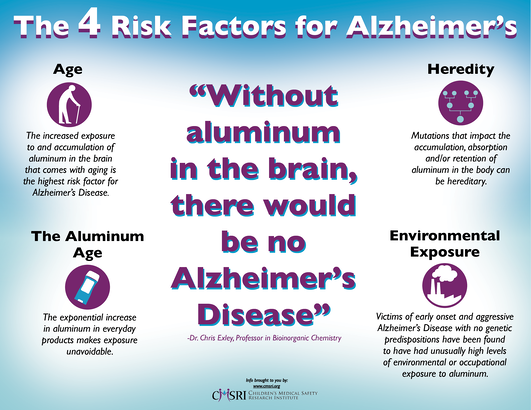
    CMSRI-Infographic-4 Risk Factors for Alzheimers-061317 Update.png

    In the majority of individuals, aging is perhaps the single most important risk factor for the development of Alzheimer’s disease and similarly, aging is also the most critical criterion in the accumulation of aluminum in human brain tissue. Neurons have been described as the ‘quintessential immortal cell line’, and it is their longevity which predisposes them to accumulate aluminum over time. There are various intraneuronal pools, for example, citrate, ATP, glutamic acid, and the nucleic acids of the nucleus, where aluminum could remain benign and accumulate over time before at some point the biologically-reactive Al3 + (aq)  exceeds a critical threshold and begins to exert toxicity.

    Mutations in the metabolism and processing of the amyloid-α protein precursor (AαPP) and related biochemistry are significant risk factors for Alzheimer’s disease. These genetic predispositions form the basis of a diagnosis of familial Alzheimer’s disease which is invariably an early onset form of the disease. We have recently completed the first ever study on the aluminum content of brain tissue from donors who died with a diagnosis of familial Alzheimer’s disease. The data, supported by complementary imaging using fluorescence microscopy, revealed some of the highest concentrations of aluminum ever measured in human brain tissue. These seminal findings suggest that AαPP and mutations associated with its metabolism and enzymatic processing predispose individuals to a more rapid accumulation and/or longer retention of aluminum in brain tissue. For example, one or more of these mutations may result in the enhanced absorption of aluminum across the gastrointestinal tract in individuals with familial Alzheimer’s disease, as has already been shown in individuals with Down’s syndrome (Trisomy 21) and individuals with late-onset or sporadic Alzheimer’s disease. We know that within the non-Alzheimer’s disease population that there can be an order of magnitude difference in the gastrointestinal absorption of aluminum. Similar differences may also exist in the excretion of aluminum from the body and these differences may be genetically determined and may even be related to the metabolism and/or processing of AαPP and its numerous metabolic products including amyloid-α.

    There are occasional cases of Alzheimer’s disease with an early onset, for example, individuals in their fifties, where there are no known genetic predispositions. We have described several such cases in which the affected individuals had been subjected to environmental or occupational exposure to high levels of aluminum over extended time periods. Postmortem analyses of their brain tissues revealed very high levels of aluminum. In these cases of early onset and particularly aggressive Alzheimer’s disease, without any known genetic predispositions, it was concluded that it was inevitable that aluminum contributed to disease etiology.

    WHAT PROTECTS AGAINST ALZHEIMER’S DISEASE?

    While we do not know the cause of Alzheimer’s disease and we do not have any effective therapies to treat the disease, there are a number of ‘environmental’ indices which are known to influence the incidence and progression of Alzheimer’s disease. For example, the incidence of Alzheimer’s disease is higher in females and the onset and progression of Alzheimer’s disease may be delayed by physical exercise. Aluminum as an etiological factor in Alzheimer’s disease links the two in that perspiration is a major route of excretion of aluminum from the body. In the absence of physical exercise, women produce only half the volume of perspiration as men and so may be predisposed to the retention of aluminum in their tissues. In both sexes, physical exercise can increase the perspiration volume many times and so improve the excretion of aluminum from the body. Could exercise-induced improvements in the excretion of aluminum from the body be significant in the benefits of exercise in Alzheimer’s disease?

    Epidemiological data have been equivocal in establishing a relationship between the aluminum content of drinking water and the incidence of Alzheimer’s disease. However, research has shown a significant protective effect of silicon in drinking water, irrespective of the aluminum content, with higher silicon reducing the incidence of Alzheimer’s disease . In addition, clinical trials involving only a small number of participants have shown that regular drinking of a silicon-rich mineral water helps to remove aluminum from the body of individuals with Alzheimer’s disease. For 20% of such individuals, the lowering of the body burden of aluminum following drinking a silicon-rich mineral water for just 12 weeks produced clinically significant improvements in their cognitive function  The potential benefits of silicon in Alzheimer’s disease can only be explained if aluminum has a role to play in the disease.

    CTA-age-of-aluminum   SUMMARY

    Aging is the major risk factor for Alzheimer’s disease though the advent of Alzheimer’s disease within a normal human lifespan is suggested to be brought about through human exposure to aluminum. Essentially without aluminum in brain tissue there would be no Alzheimer’s disease. There are a number of predispositions to the development of Alzheimer’s disease, involving both environmental and genetic factors, and each of these acts to increase the aluminum content of brain tissue at specific periods in an individual’s life. This interplay between environmental and genetic factors explains both early and late onset disease, in each case the catalyst for the disease is always the brain aluminum content and how robustly an individual’s brain responds or copes with this aluminum burden.


    This article originally appeared at: http://info.cmsri.org/aluminum-and-your-health-blog/aluminum-should-now-be-considered-a-primary-etiological-factor-in-alzheimers-disease?utm_campaign=Aluminum&utm_content=55921143&utm_medium=social&utm_source=facebook.