Category: Toxins

The facts about chemicals, pesticides, and clean water.

  • The Problem with Pesticides

    The Problem with Pesticides

    Pesticides

    Pesticides are the only toxic substances released intentionally into our environment to kill living things. This includes substances that kill weeds (herbicides), insects (insecticides), fungus (fungicides), rodents (rodenticides), and others.

    The use of toxic pesticides to manage pest problems has become a common practice around the world. Pesticides are used almost everywhere — not only in agricultural fields, but also in homes, parks, schools, buildings, forests, and roads. It is difficult to find somewhere where pesticides aren’t used — from the can of bug spray under the kitchen sink to the airplane crop dusting acres of farmland, our world is filled with pesticides. In addition, pesticides can be found in the air we breathe, the food we eat, and the water we drink.

    Pesticides and Human Health

    Pesticides have been linked to a wide range of human health hazards, ranging from short-term impacts such as headaches and nausea to chronic impacts like cancer, reproductive harm, and endocrine disruption.
    <pdf printable about pesticides and human health>

    Acute dangers – such as nerve, skin, and eye irritation and damage, headaches, dizziness, nausea, fatigue, and systemic poisoning – can sometimes be dramatic, and even occasionally fatal.

    Chronic health effects may occur years after even minimal exposure to pesticides in the environment, or result from the pesticide residues which we ingest through our food and water. A July 2007 study conducted by researchers at the Public Health Institute, the California Department of Health Services, and the UC Berkeley School of Public Health found a sixfold increase in risk factor for autism spectrum disorders (ASD) for children of women who were exposed to organochlorine pesticides.

    Pesticides can cause many types of cancer in humans. Some of the most prevalent forms include leukemia, non-Hodgkins lymphoma, brain, bone, breast, ovarian, prostate, testicular and liver cancers. In February 2009, the Agency for Toxic Substances and Disease Registry published a study that found that children who live in homes where their parents use pesticides are twice as likely to develop brain cancer versus those that live in residences in which no pesticides are used.

    Studies by the National Cancer Institute found that American farmers, who in most respects are healthier than the population at large, had startling incidences of leukemia, Hodgkins disease, non-Hodgkins lymphoma, and many other forms of cancer.

    There is also mounting evidence that exposure to pesticides disrupts the endocrine system, wreaking havoc with the complex regulation of hormones, the reproductive system, and embryonic development. Endocrine disruption can produce infertility and a variety of birth defects and developmental defects in offspring, including hormonal imbalance and incomplete sexual development, impaired brain development, behavioral disorders, and many others. Examples of known endocrine disrupting chemicals which are present in large quantities in our environment include DDT (which still persists in abundance more than 20 years after being banned in the U.S.), lindane, atrazine, carbaryl, parathion, and many others.

    Multiple Chemical Sensitivity (MCS) is a medical condition characterized by the body’s inability to tolerate relatively low exposure to chemicals. This condition, also referred to as Environmental Illness, is triggered by exposure to certain chemicals and/or environmental pollutants. Exposure to pesticides is a common way for individuals to develop MCS, and once the condition is present, pesticides are often a potent trigger for symptoms of the condition. The variety of these symptoms can be dizzying, including everything from cardiovascular problems to depression to muscle and joint pains. Over time, individuals suffering from MCS will begin to react adversely to substances that formerly did not affect them. (toxic buildup)

    For individuals suffering from MCS, the only way to relieve their symptoms is to avoid those substances that trigger adverse reactions. For some individuals, this can mean almost complete isolation from the outside world.

    Pesticides and Children

    Children are particularly susceptible to the hazards associated with pesticide use. There is now considerable scientific evidence that the human brain is not fully formed until the age of 12, and childhood exposure to some of the most common pesticides on the market may greatly impact the development of the central nervous system. Children have more skin surface for their size than adults, absorb proportionally greater amounts of many substances through their lungs and intestinal tracts, and take in more air, food and water per pound than adults.

    Children have not developed their immune systems, nervous systems, or detoxifying mechanisms completely, leaving them less capable of fighting the introduction of toxic pesticides into their systems.

    Pesticides and the Environment

    Since the publication of Rachel Carson’s landmark 1962 book Silent Spring, the impacts of pesticides on the environment have been well known. Pesticides are toxic to living organisms. Some can accumulate in water systems, pollute the air, and in some cases have other dramatic environmental effects. Scientists are discovering new threats to the environment that are equally disturbing.

    Pesticide use can damage agricultural land by harming beneficial insect species, soil microorganisms, and worms which naturally limit pest populations and maintain soil health;

    Weakening plant root systems and immune systems;

    Reducing concentrations of essential plant nutrients in the soil such nitrogen and phosphorous.

    The Solution to Pesticides

    We need to make our food, our air, our water, and our soil free from toxic chemicals.

    The real solution to our pest and weed problems lies in non-toxic and cultural methods of agriculture, not in pulling the pesticide trigger. Organically grown foods and sustainable methods of pest control are key to our families’ health and the health of the environment.

  • Action Alert: Tell the EPA “NO” more 2,4-D and glyphosate

    Action Alert: Tell the EPA “NO” more 2,4-D and glyphosate

    ACTION ALERT! Add your name to the petition here. 
    Excerpt of the proposal from the Center for Food Safety: 

    The EPA is proposing a dramatic expansion of the use of the toxic pesticide Enlist Duo. Enlist Duo is a mixture of glyphosate (the active ingredient in Monsanto’s Roundup®) and the even more toxic 2,4-D (part of the chemical mixture Agent Orange). If approved the pesticide cocktail could be used on corn, soy, and cotton in 34 states — up from 15 states where the product was previously approved for just corn and soy.

    The rush to expand the use of Dow AgroSciences’ toxic chemical concoction of glyphosate and 2,4-D for use on the next generation of genetically engineered crops comes only one year after the EPA asked a court to revoke its previous approval due to the unknown risks it posed, and now EPA suddenly wants to more than double the number of states where the pesticide can be used.

    Major news outlets are saying these crops are a serious cause for concern. According to the Los Angeles Times: “Just as the nation must stop overusing antibiotics if it hopes to slow the emergence of resistant infections, it must do the same with herbicides and genetically modified crops. The way to deal with so-called superweeds isn’t by escalating the arms race against them.”

    This GE crop system ensures a toxic spiral of ever-increasing chemical use on our land and food and poses a grave threat to our health. 2,4-D has been linked to major health problems including cancer, Parkinson’s disease, endocrine disruption, and reproductive problems. This approval would trigger millions of more pounds of toxic herbicides dumped onto our land. Even USDA admitted it could be as much as 176 million pounds per year!

    Tell the EPA to reject this massive expansion in the use of Enlist Duo!

  • Tree-killing herbicide pulled from market

    Tree-killing herbicide pulled from market

    Dupont’s new systemic herbicides, designed to keep turf grass free of troublesome weeds, seem to pose little direct danger to human health. But it turns out they do kill trees.

    After receiving more than 7,000 reports of damaged or killed trees in states throughout the midwest, last week EPA ordered Dupont to immediately “halt the sale, use or distribution” of the company’s herbicide Imprelis.

    EPA approved conditional registration of Imprelis in August 2010. New York and California chose not to register the herbicide because tests showed it failed to bind with soil, “raising a red flag for potentially contaminating groundwater and damaging non-target plants,” according to BioCycle Magazine.

    BioCycle also reports that a national law firm has organized a class action lawsuit targeting Dupont on behalf of homeowners in Ohio, Michigan, Indiana, Iowa, and Minnesota whose trees have been damaged or killed. Plans are underway for additional legal actions in Wisconsin, Illinois, Kansas and South Dakota.

    Norway spruce and white pine appear to be particularly susceptible to harm from the longlasting herbicide.

    Imprelis is one of dozens of Dupont products with the active ingredient aminocyclopyrachlor, most designed for use on turf grass or roadside brush control. All other products in this family, including the herbicides Perspective, Plainview, Streamline and Viewpoint, are still on the market.

    Growing trouble with herbicides

    Last week’s action by EPA and the pending lawsuits — with billions in potential liability — come on the heels of Dupont’s losses in a lawsuit around damage caused by the company’s herbicide Oust. Another longlasting, water-soluble herbicide (active ingredient: sulfometuron methyl), Oust was used by the Bureau of Land Management back in 2001 to control invasive weeds on more than 30,000 acres of public rangeland in Idaho.

    When the wind came, the herbicide was carried in dust onto more than 100 neighboring farms. Sugar beets wilted, corn was stunted and potatoes died; after years of crop failure, farmers suffered millions in losses, and some lost their land to creditors.

    One of the attorneys in the case described the herbicide as “very potent,” known to hurt crops in concentrations as low as parts-per-trillion.

    In a 2009 trial involving just 4 of the 118 farmers who have filed suit, a jury ordered Dupont to pay $17.8 million in damages, finding the company “responsible for selling a product that was defective, unreasonably dangerous and lacking adequate warnings” according to coverage in the MagicValley Times-News.

    Dupont has appealed the ruling, and the 114 other cases remain to be heard. Between dying trees and damaged crops, Dupont’s herbicides seem to be keeping the company lawyers very busy.

    This article originally appeared at: http://www.panna.org/blog/tree-killing-herbicide-pulled-market
  • CBS Miami: WHO ends Zika public health emergency | Health Nut News

    CBS Miami: WHO ends Zika public health emergency | Health Nut News

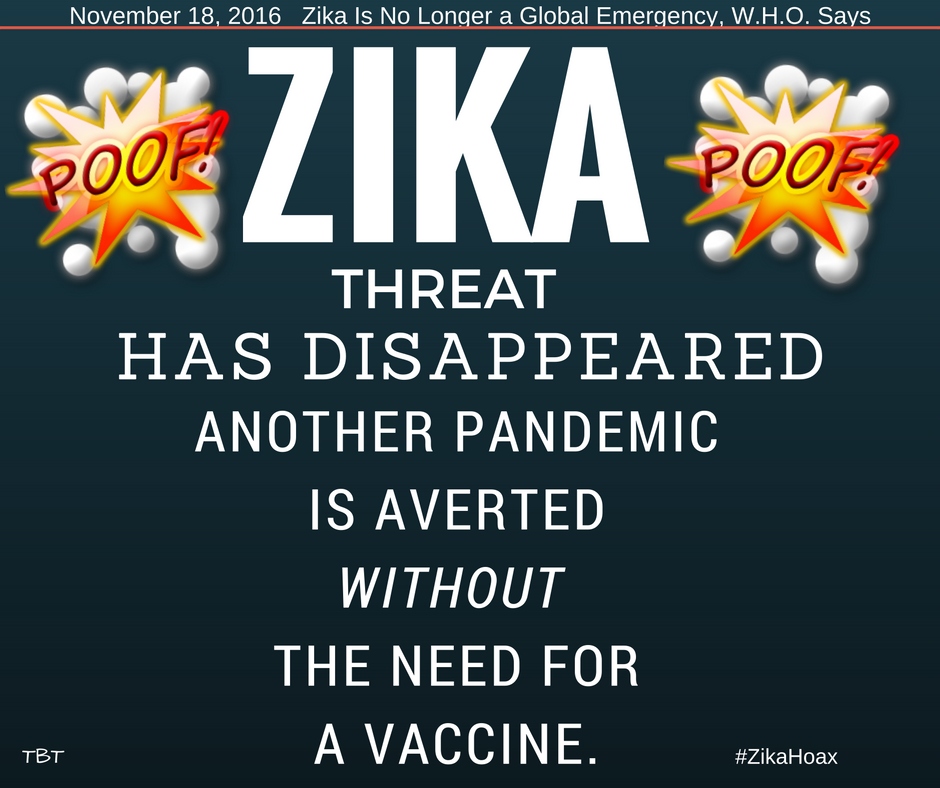
    November 18, 2016 the World Health Organization QUIETLY announced that Zika was no longer a global health emergency, instead acknowledging that Zika is here to stay (as it has been for decades). Since spring, the infection has been linked to severe birth defects (including microcephaly) in almost 30 countries. However, they still feel that complications from the virus are a significant public health challenge and therefore require intense action.

    So after million of acres and homes, people were sprayed with a known neurotoxin Naled- the name brand being Dibrom- which is morbid spelled backward. This neurotoxin already had a proven the link the spray has to microcephaly and birth defects.
    Add to that the fact that Naled and malathione threaten the lives of over 95% of endangered wildlife? I think we lost way more than the bees.

    Zika is not the birth defect culprit. It’s the chemicals they were using in Brazil that are banned in most other countries…
    Think about who profited from this “threat”??