Category: Toxins

The facts about chemicals, pesticides, and clean water.

  • Bees Attracted to Dangerous Fungicides

    Most people have heard that honey bee populations are struggling–and the affects that neonicotinoid pesticides are having on honey bee health are gradually becoming main-stream knowledge. Interestingly, what is coming to light as more research is done, fungicides may also have an adverse effect on honey bee health as well.

    Glorybee.com:

    We need bees. With 80% of food crops relying on honey bees for pollination, it has been found that one of every three bites of food we eat is pollinated by bees. Declines in honey bee populations have caused global concern for the world’s food supply and the uncertain future that would bring.

    This excerpt from an article in Science Daily details the findings of honey bees and fungicides.

    When given the choice, honey bee foragers prefer to collect sugar syrup laced with the fungicide chlorothalonil over sugar syrup alone, researchers report in the journal Scientific Reports.

    The puzzling finding comes on the heels of other studies linking fungicides to declines in honey bee and wild bee populations. One recent study, for example, found parallels between the use of chlorothalonil and the presence of Nosema bombi, a fungal parasite, in bumble bees. Greater chlorothalonil use also was linked to range contractions in four declining bumble bee species.

    To test whether foraging honey bees showed a preference for other chemicals they are likely to encounter in the wild, researchers set up two feeding stations in a large enclosure. Foraging honey bees could fly freely from one feeder to the other, choosing to collect either sugar syrup laced with a test chemical or sugar syrup mixed with a solvent as the control. Over the course of the study, they tested honey bee responses to nine naturally occurring chemicals, three fungicides and two herbicides at various concentrations.

    The trials revealed that honey bees prefer the naturally occurring chemical quercetin over controls at all concentrations tested.

    To the researchers’ surprise, the bees also preferred sugar syrup laced with glyphosate — the active ingredient in Monsanto’s Roundup herbicide — at 10 parts per billion, but not at higher concentrations.

    “The bees are not only not avoiding this fungicide, they’re consuming more of it at certain concentrations,” Berenbaum, the team’s research leader, said.

    Fungicides are among the most prevalent contaminants of honey bee hives, and it is likely the bees themselves are bringing these pesticides into the colony through their food-collecting activities. While perplexing, bees’ preferences for some potentially toxic chemicals may be the result of their distinct evolutionary history, Berenbaum said.

    The new findings are worrisome in light of research showing that exposure to fungicides interferes with honey bees’ ability to metabolize medications used by beekeepers to kill the parasitic varroa mites that infest their hives.

    To read this article in its entirety, please visit: Agricultural fungicide attracts honey bees.

    Learn more about simple steps to take to save the bees visit https://glorybee.com/blog/category/save-the-bee/

  • Toxic Plastic Food Storage

    Are your food containers dangerous to your health? Many chemical additives that give plastic products desirable performance properties also have negative environmental and human health effects.
    These effects include

    • Direct toxicity, as in the cases of lead, cadmium, and mercury
    • Carcinogens, as in the case of diethylhexyl phthalate (DEHP)
    • Endocrine disruption, which can lead to cancers, birth defects, immune system suppression and developmental problems in children. 

    In the news just this week,a report ranked Whole Foods the worst of five major grocery chains when it comes to chemicals found in food packaging. The studies found high levels of Fluorine in five of the 17 items tested at the store, four of which were containers for its salad and hot food bar. The company responded by removing all the coated paper products in question and is in search of a biodegradable replacement. This report should make us all pause and think about the toxicity of food containers in our own homes. 

    The reality is that plenty of products in grocery stores—and your kitchen cabinets—may still be leaching toxic chemicals into your food and drinks. 

    Hazardous Food Storage 

    1. Polyethylene terephthalate (PET or PETE)
    Polyethylene terephthalate (PET or PETE) is one of the most common types of plastic and is commonly found in bottles of soda, juice, water and cough syrup and jars of peanut butter. The bottoms of these containers are usually stamped with the chasing arrows symbol and the number 1, the code for PET.

    Other sources include: Water and soda bottles, carpet fiber, chewing gum, coffee stirrers, drinking glasses, food containers and wrappers, heat-sealed plastic packaging, kitchenware, plastic bags, squeeze bottles, toys. 

    HEALTH CONCERNS: Suspected Human Carcinogen
    3. Polyvinyl chloride (PVC)
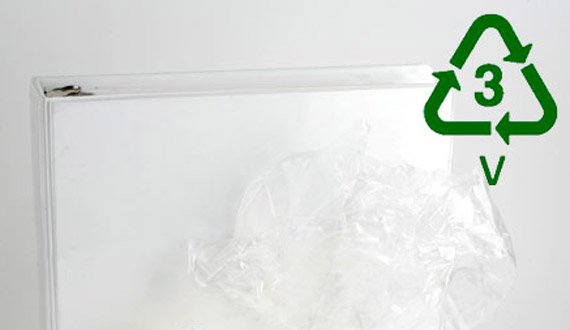
    Polyvinyl chloride, or No. 3 PVC, is found in shower curtains, meat and cheese wrappers, ring binders, some bottles, plumbing pipes and building materials. Commonly called vinyl, PVC and closely related PVDC differ from other vinyls, which lack the toxic chloride. PVC continues to be used in many toys.

    HEALTH CONCERNS: Can cause cancer, birth defects, genetic changes, chronic bronchitis, ulcers, skin diseases, deafness, vision failure, indigestion, and liver dysfunction

    6. Polystyrene, or Styrofoam
    Polystyrene, also known as Styrofoam, is used in disposable cups and take-out food containers, packing peanuts, trays and egg cartons. Most fast-food chains, including McDonald’s, phased out polystyrene for sandwich containers more than 20 years ago. 
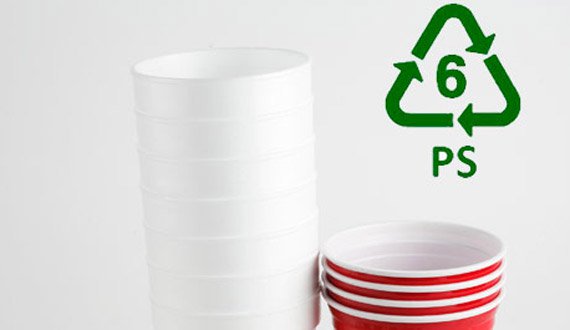
    Many food containers for meats, fish, cheeses, yogurt, foam and clear clamshell containers, foam and rigid plates, clear bakery containers, packaging “peanuts”, foam packaging, audio cassette housings, CD cases, disposable cutlery, building insulation, flotation devices, ice buckets, wall tile, paints, serving trays, throw-away hot drink cups, toys

    HEALTH CONCERNS: Can irritate eyes, nose and throat and can cause dizziness and unconsciousness. Migrates into food and stores in body fat. Elevated rates of lymphatic and hematopoietic cancers for workers.

    PFAS/PFCs

    Per- and polyfluoroalkyl substances (PFASs, also sometimes called PFCs) are synthetic chemicals that are used in a number of products to make them more grease, stain, and water-resistant. These substances, also called fluorinated chemicals, are found in grease-resistant food packaging, or fast-food wrappers, pizza boxes, and microwave popcorn bags.

    In a test of more than 400 fast-food wrappers, paperboard containers, and beverage containers, researchers found that almost half—46 percent—of the fast-food wrappers and papers and 20 percent of paperboard samples contained detectable amounts of these chemicals.

    PFASs are highly stable and highly persistent, which means they linger and don’t break down with heat or cold. They can also accumulate in the body. What’s more concerning is the many places in which you can come into contact with the chemicals. They are also found in carpet, waterproof apparel, non-stick cookware, and more.

    HEALTH CONCERNS: PFASs are associated with cancer, thyroid disease, and developmental problems, in addition to other health issues

    Phthalates

    Phthalates are a type of plasticizer added to plastics ingredients to make them soft and flexible. They are part of a group of plastics called polyvinyl chloride (PVC). They’re found in plastic wraps and some commercial food containers. They’re especially prominent in commercial plastic wraps.

    Phthalates can leach into foods that come into contact with the plastics. Fatty and oily foods are especially efficient at wicking the chemicals from food, and heating the plastic increases the rate at which the chemicals can transfer.

    HEALTH CONCERNS: Research is very limited, some studies suggest phthalates may lead to early onset of puberty, reproductive defects, lower sperm count, and other health issues. The effects are most troublesome for children, because their smaller bodies have a higher rate of exposure to the chemicals than larger adult bodies.

    7. Polycarbonate, with Bisphenol A BPA (#7)

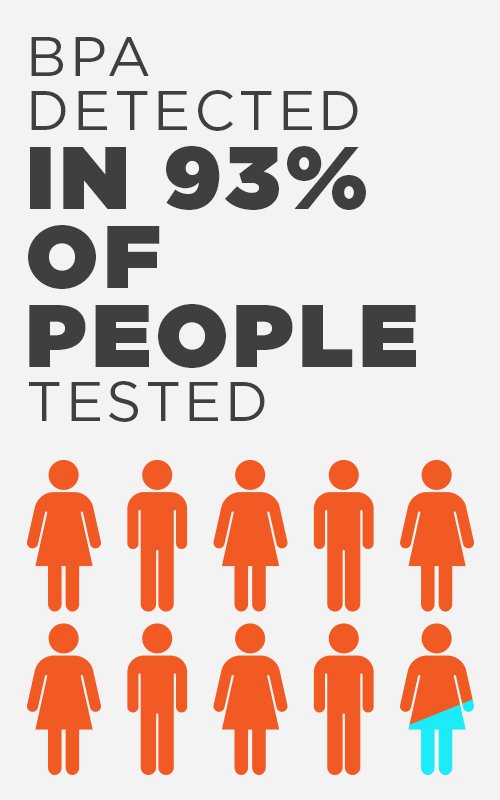
    BPA is now widely known toxin in recent years. EWG reported in an article in February 2018 of the damaging effects of BPA on people. The Centers for Disease Control and Prevention found BPA in the urine of more than 90 percent of Americans sampled. In 2009, tests commissioned by EWG were the first to find BPA in the umbilical cords of nine of 10 infants sampled.
    Because food packaging is the primary source of exposure, it stands to reason that BPA levels in our bodies are affected by what we eat and how that food is packaged. Even “microwave safe” plastics can leach BPA. Some migrate more of the chemicals into food when the plastics are heated, washed in the dishwasher, or cut/scratched, like what can occur when you use a fork or knife in the container.

    BPA, a type of polycarbonate, is a major ingredient in many plastics and can liners and was used widely in baby bottles and sippy cups for decades. In 2012, the U.S. Food and Drug Administration (FDA) banned the use of BPA in baby bottles, citing potential harm to the brains and reproductive development of infants and children.

    Researchers have known for decades, since 1936, that BPA mimics estrogens and binds with the same receptors as the hormone throughout the human body. The exposure to the chemicals has been associated with increased breast cancer risk, obesity, and reproductive abnormalities, in addition to other health effects. Still, the chemicals have been used widely since the 1950s.

    HEALTH CONCERNS:

    BPA acts like estrogen in the body. It disrupts hormones, affects brain development and metabolism, and harms the reproductive system. Evidence suggests the developing fetus and young child are most at risk, but adolescents also appear uniquely vulnerable. BPA has also been linked to cancer, heart disease and other serious disorders.

    Scientists  have linked very low doses of bisphenol A exposure to cancers, impaired  immune function, early onset of puberty, obesity, diabetes, and  hyperactivity, among other problems (Environment California)

    EWG continues in their article some startling concerns. 

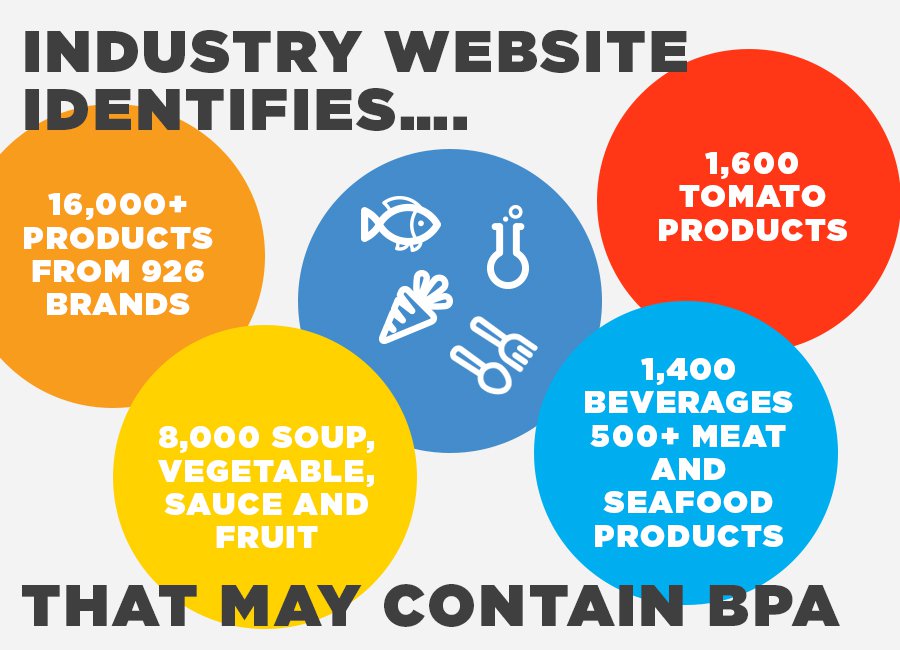
    In 2016, EWG created a database of about 16,000 processed foods and drinks that might be packaged in materials that contain BPA. In California, products packaged in materials with BPA must carry a warning label on the package or store shelves.

    As the food industry scrambles to find alternatives to BPA, concern has grown that without appropriate oversight, food companies will substitute similar chemicals or new chemicals that could be just as harmful or even more harmful. A National Toxicology Program study of 24 replacement chemicals found that many already in use are structurally and functionally similar to BPA, and, just like BPA, may harm the endocrine system.

    BPS is an endocrine disruptor that mimics hormones and blocks the action of other hormones. In short, it’s almost the same bad chemical with the same toxic results.
    5 Steps to reducing BPA and potentially reducing other plastic toxins:

    1. Substitute fresh, frozen or dried food for canned.
    2. Limit how many packaged foods you eat.
    3. For those who cannot avoid foods in BPA-lined cans, rinsing the food in water may help lower the level of BPA in the food. Bonus: Rinsing cuts back on other additives too, such as sodium on beans or sweet syrup on fruit.
    4. Never heat food in the can. Transfer it to a stainless steel pot or pan for stovetop cooking, or microwave in glass – not plastic.
    5. Search for your family’s favorite foods and beverages in EWG’s BPA product list. If they are packaged in containers made with BPA, look for alternative products in EWG’s Food Scores. Tip: Use the BPA-free filter function when searching.

    SOURCES:

  • Cell Tower at School

    Studies show that prolonged exposure to radiation from cell phone WiFi towers can cause illness and health damages in children and adults and yet the cities and counties keep placing cell towers on school property. There is no resistance from parents or students. Is it because we believe that the government has done long term studies determining that safety of eletromagnectic radiation? They haven’t. 

    With cell masts, there is no ability to turn them off. It’s 24/7/365. So if you work at or attend that school for many years, those people are exposed to the radiation that was measured. And the levels in some of the classrooms were higher than using a cell phone.

    EMF Radiation Proven to Increase Cancer Risk

    A post on facebook from Kate Bates So, now the “10 kids” has been raised to 16 kids & 9 adults within two blocks of a cell tower (AT THE SCHOOL) have cancer!

    In a German study, doctors examined close to 1000 patients to see if living at the same address close to a cell tower for 10 years affected cancer risk. The social and age differences within the study group were small, with no ethnic diversity.

    They discovered that the proportion of newly developed cancer cases was three times higher for those living within 1300 feet (a quarter of a mile) of a cellular transmitter compared to those living further away. In addition, they found that the patients became ill with cancer on average 8 years earlier.

    A distance of 1300 feet (400m) is of particular importance. This is because computer simulation and measurements used in the study indicated that the radiation at that distance or less (the “inner area”) is 100 times greater than emissions beyond that distance (the “outer area”).

    Another important observation from the research is that for the first 5 years of living near a cell phone tower, the risks were no different than someone living far away from one. However, in years 6-10, the cancer risks jumped more than threefold for those living a quarter of a mile or less from a mobile tower.

    Even more concerning, the average age of diagnosis was much younger. Risk for breast cancer, prostate, pancreas, bowel, melanoma, lung, and blood cancer all increased substantially.

    The risks for breast cancer were most significant for those living in the inner area, with an average age of 50.8 year for a cancer diagnosis compared with nearly two decades later (70 years of age) for those in the outer area.

    WEB CONFERENCE from 34 world-class experts on EMFs, 5G, WiFi December 9

    34 world-class experts about EMFs, 5G, Wifi, will discuss how to regain your health naturally. Each of them shares their best strategies to protect yourself from these digital toxins, which are causing chronic inflammation and a host of other conditions. December 9th.
     Register here today to guarantee you don’t miss it!  

  • DOES VACUUMING HELP ALLERGIES, OR MAKE THEM WORSE?

    Sneezing is not always the symptom of a cold. Sometimes,it is an allergic reaction to something in the air. Health experts estimate that 35 million Americans suffer from upper respiratory tract symptoms that are allergic reactions to airborne allergens. If you own a bagless vacuum cleaner, you may think you’re getting rid of the dust, dirt, and pet dander that trigger your allergies or asthma, but you are actually making them worse. 

    Dust mites are perhaps the most common cause of perennial allergic rhinitis. House dust mite allergy usually produces symptoms similar to pollen allergy and also can produce symptoms of asthma.House dust mites, which live in bedding, upholstered furniture,and carpets, thrive in summer and die in winter. In a warm, humid house, however, they continue to thrive even in the coldest months.The particles seen floating in a shaft of sunlight include dead dust mites and their waste products.These waste products, which are proteins,actually provoke the allergic reaction.

    Bagless vacuum cleaners are still very allergy unfriendly

    Studies, the dirty outside of a bagless vacuum cleaner after a few uses, (and our experience) show that bagless vacuum cleaners spew fine dust and germs back into the air and onto your furniture, where they can set off allergies and spread infections. YIKES!

    But there is good news! A good quality vacuum will suck up 99.9% of dust, dirt, and allergens and keep them in the bag where they can be cleanly and effectively disposed of.

    Allergy sufferer then the vacuum’s filtration system quality should also be a primary concern

    Vacuum, bag, and filter hepa technology has advanced so far that the newer bagged machines such as Riccar, Miele, and Lindhaus will nearly perfectly filter out every spec of dust, dust mites, mold spores, pollen, and pent dander and keep them in the bag.

    HEPA stands for high-efficiency particulate air. A HEPA filter is a type of mechanical air filter; it works by forcing air through a fine mesh that traps harmful particles such as pollen, pet dander, dust mites, and tobacco smoke.

    …when speaking of anti-allergy vacuums, the HEPA filtration technology is the most prevalent feature in the discussion. A high-quality filtration system such as HEPA prevents the dust and other foreign particles from being blown back into the air. HEPA has been designed support the suction at its best level, while filtering tiny air particles (which are sometimes even less than 0.3 microns).

    If you truly want as dust free a home as possible, clean top to bottom. 

    Vacuum at least once a week is good, more in the high traffic areas and if you have pets.

    1. Dust BEFORE you Vacuum

    Start with the top corners where dust and cobwebs collect, then move down to furniture, curtain rods, tops of door frames, and pictures. There are good vacuum cleaner attachments and electrostatic or microfiber dust cloths available that are very good for this thorough type of cleaning. Remember, dusting with just a regular cloth or a feather duster will also spread the dust around your home. There are also attachments for cleaning ceiling fans and attachments for cleaning mini-blinds; both inconvenient to clean, and both phenomenal dust magnets.

    2. Check your vacuum!

    Check to make sure your vacuum cleaner bag is not already full. Make sure there isn’t a lot of debris or hair wrapped around the brush roll. Remove any large debris that is in the cleaning path. 

    Don’t forget the stairs, corners, edges, and baseboards. Using slow movements, pass the vacuum cleaner at least four times (yes, even a very good one) over each area. This allows the vacuum cleaner to collect microscopic particles and allergens that are deeply embedded in your carpet. 

    3. For an even more thorough job, work the carpet fibers in both directions: first go east to west, then go north to south or vice versa. 

    We also recommend not using powders on your carpet as these are hard on the motor and will clog the filter. 

    For professional advice on choosing the best vacuum for allergies consider calling Abbott’s Vacuum Center in Nampa, Idaho. 

    Article Contributed by Michelle Abbott 

    MORE RESOURCES:

    National Institute of Health Publications: Airborne Allergens

    Vacuum Guide for allergies

  • Another Study Showing a Cell Phone-Cancer Link Downplayed by the FDA

    There’s an estimated 327.5 million cell phone subscriber in the United States. Recent worldwide studies have linked cell phone radiation to cancer. World Health Organization has labeled it a “possible human carcinogen.” In November 2018, The US National Toxicology Program — an inter-agency government group that’s a part of the National Institutes of Health — released a report that looked at what happened when rats and mice were exposed to cell phone radiation over a two-year period. The results from the $30 million NTP studies demonstrated that cell phone radiation caused Schwann cell cancers of the heart and brain gliomas in rats, as well as DNA damage in the brain.

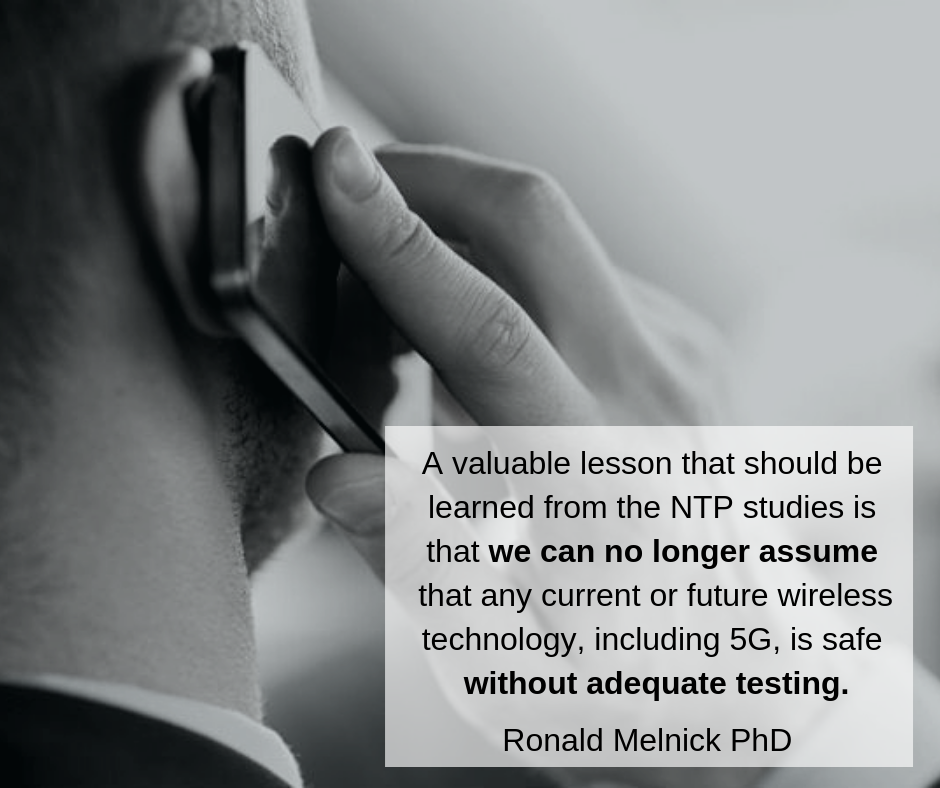
    “We cannot assume any current or future wireless technology is safe without adequate testing. In the interest of public health, government agencies must utilize results from these well-conducted health effects studies and issue clear recommendations to the public on how to reduce exposures to agents that are hazardous to our health. The NTP studies clearly shows that non-ionizing radiation can cause cancers and other adverse health effects.”

    The Link: radiation from cell phones and cancer

    Every cell phone emits radio frequency energy, which is also known as radio waves. “This is a form of non-ionizing radiation,” said the National Cancer Institute. Tissues in the human body may absorb this energy when being in contact with antennas. The NTP studies were conducted to test the widely-held assumption that cell phone radiofrequency radiation could not cause cancers or other adverse health effects (other than by tissue heating) because this type of radiation (non-ionizing) did not have sufficient energy to break chemical bonds.

    A theory suggests that exposure to ionizing radiation may increase the risk of developing cancer, said the NHI. Some studies have also evaluated the effects of x-rays, radars and microwave ovens. However, none of them have provided conclusive results.

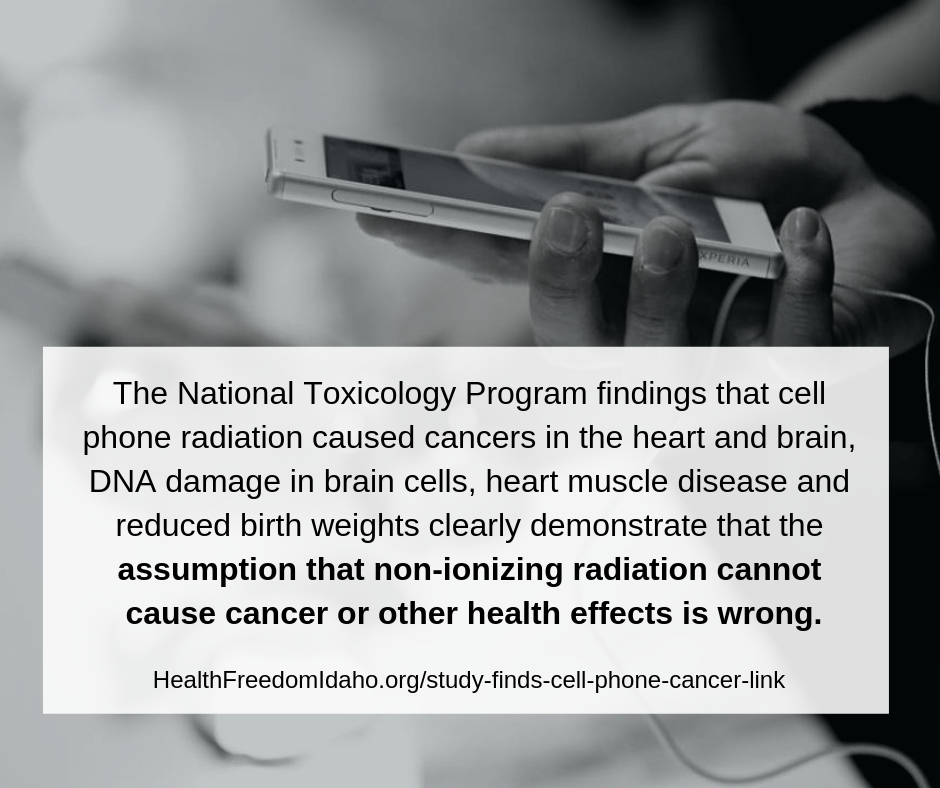
    The NTP findings that cell phone radiation caused cancers in the heart and brain, DNA damage in brain cells, heart muscle disease and reduced birth weights clearly demonstrate that the assumption that non-ionizing radiation cannot cause cancer or other health effects is wrong.

    The Findings: Clear Link to Cancer that FDA Ignores

    In NIH’s news release, NTP senior scientist John Bucher said, “We believe that the link between radio frequency radiation and tumors in male rats is real and the external experts agreed.” But, amazingly, the FDA says it disagrees with this carefully conducted, peer-reviewed study’s finding of clear evidence of carcinogenicity.

    According to Jeffrey Shuren, Director of the FDA’s Center for Devices and Radiological Health, “these findings should not be applied to human cell phone usage,” adding that “we believe the existing safety limits for cell phones remain acceptable for protecting the public health.”

    While expressing this opinion, Dr. Shuren neglects to note that the International Agency for Research on Cancer (IARC), a part of the World Health Organization, classified radio-frequency radiation from wireless devices as a “possible human carcinogen” based largely on findings of increased risks of gliomas and Schwann cell tumors in the brain near the ear in humans after long-term use of cell phones. Thus, the same tumor types are elevated in both animals and humans exposed to cell phone radiation.

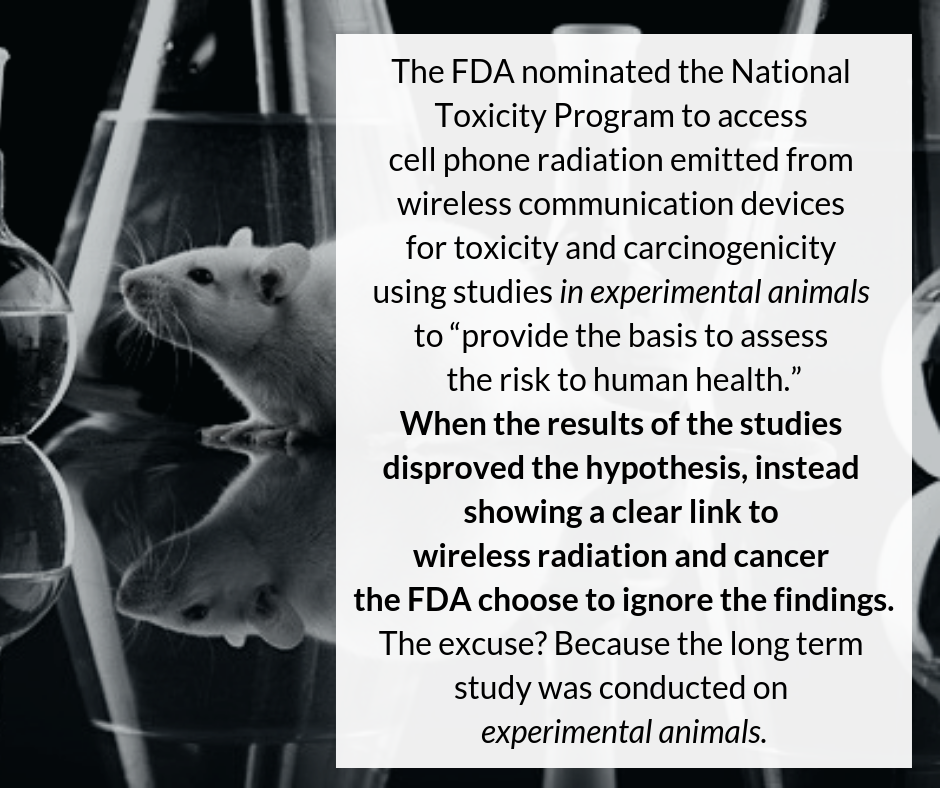
    This FDA’s position is quite unusual because it was this agency that nominated cell phone radiation emitted from wireless communication devices to the NTP for toxicity and carcinogenicity studies in experimental animals to “provide the basis to assess the risk to human health.”

    At that time, the FDA reasoned that “existing exposure guidelines are based on protection from acute injury from thermal effects of RFR [radiofrequency radiation] exposure and may not be protective against any non-thermal effects of chronic exposure.”

    By adopting this new position and ignoring the NTP’s results, the FDA is clearly shirking its responsibility of assessing the impact on human health of radio-frequency radiation.

    The Rats: Why are rat cancer models used in science?

    For more than 150 years, researchers have used rat models to conduct health research. Rat cancer models have provided “remarkable” information to understand better “cancer triggers, mechanisms, and therapeutics,” said the NCI.

    Within the last decade, investigators have added genetic mapping, gene expression, and computational analysis, to rat cancer models. For instance, genes associated with breast cancer in the creatures, are similar to those in humans.

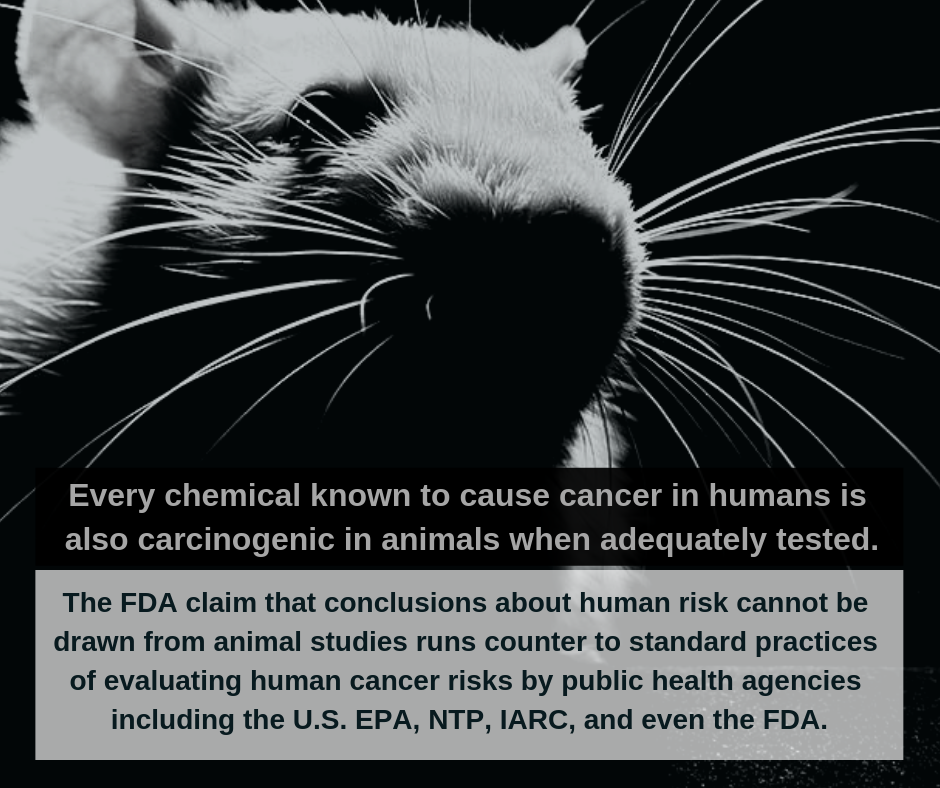
    Merely claiming that conclusions about human risk cannot be drawn from animal studies runs counter to standard practices of evaluating human cancer risks by public health agencies including the U.S. EPA, NTP, IARC, and even the FDA. –

    The Study: Exposure Limits in Study only Slightly Higher than FCC limits

    Exposure levels in the brains of rats in the NTP study were similar to or just slightly higher than the FCC’s limit for maximum permissible exposure to local tissue exposures from cell phones held next to the head. 

    This point is most important because, when an individual uses a cell phone, body tissues located nearest to the cell phone antenna receive much higher exposures than parts of the body that are located distant from the antenna.

    The selection of the highest exposure levels in the NTP studies was based on the same criterion used by the Federal Communications Commission (FCC) to establish exposure guidelines for radio-frequency radiation. Misleading statements by Dr. Shuren about the utility of the NTP studies for evaluating human cancer risk were debunked in my previous publication.

    The FDA needs to fulfill the intent of their nomination to the NTP and conduct a quantitative risk assessment so that the FCC can develop health-protective exposure standards. 

    For example, what is the level of exposure associated with the cancer risk of one per thousand or one per million people?

    Also, health concerns for children may be higher than that for adults due to increased penetration of cell phone radiation within the brains of children. Merely ignoring the cancer data from the NTP studies is not in the interest of public health. Because of the widespread use of cell phones among the general public, even a small increase in cancer risk would have a severe public health impact.

     “The NTP tested the hypothesis that cell phone radiation could not cause health effects and that hypothesis has now been disproved,” Ronald Melnick, “The experiment has been done and, after extensive reviews, the consensus is that there was a carcinogenic effect.”

    The Study: Duplicated Results of Cancer Development

    We also can no longer state that adverse effects of radiofrequency radiation are not replicated. Increases in tumors from cell phone radiation have indeed been replicated in several studies. The Ramazzini Institute large-scale rodent study found increased Schwannomas in the heart at lower radiation levels than in the NTP studies. The Lerchl et al., 2015 study also found radiofrequency radiation (at significantly lower doses than the NTP studies) promoted cancer development, with evidence for a heightened synergistic impact when combined with a known carcinogen. It should also be noted that the adverse health effects caused in rats exposed to GSM-modulated radiofrequency radiation were also observed in rats exposed to CDMA-modulated radiofrequency radiation. EHTrust.org

    Melnick recently published an article in the journal Environmental Research debunking widely circulated criticisms of the NTP study and also released a scientific criticism of the way the NTP study was treated by the International Commission on Non-Ionizing Radiation Protection (ICNIRP). 

    Ronald L Melnick, Ph.D., was a senior scientist for 28 years with National Institutes of Health leading studies on numerous industrial chemicals and directed the design of the National Toxicology Program/National Institute of Environmental Health Sciences’ Cell Phone Radiofrequency Radiation Studies. Melnick was Director of Special Programs in the Environmental Toxicology Program at the National Institute of Environmental Health Sciences (NIEHS), National Institutes of Health, USA and is now retired and Senior Advisor to Environmental Health Trust.

    Learn More About Cell Phone Radiation from the EHTrust website

    Ronald L Melnick, Ph.D. presenting to the National Institutes of Health National Toxicology Program Cell Phone Radiation Study Peer Review.

    Portions of this article originally appeared at: https://thehill.com/opinion/healthcare/416515-theres-a-clear-cell-phone-cancer-link-but-fda-is-downplaying-it and https://ehtrust.org/statement-by-ronald-melnick-phd-on-the-national-toxicology-program-final-reports-on-cell-phone-radiation/

    U.S. National Toxicology Program speaks: Cancer and cell …. https://www.pulseheadlines.com/u-s-national-toxicology-program-speaks-cancer-and-cell-phones/33046/

  • FCC Adopts New Regulations Severely Limiting State and City Right to Placement of 5G

    On September 26, 2018, the FCC adopted regulations that are intended to facilitate 5G technology by severely limiting the objections that states and cities can raise to small cell installations. The FCC’s press release stated that this was “another important step in its ongoing efforts to remove regulatory barriers that inhibit the deployment of infrastructure necessary for 5G and other advanced wireless services. This action, which builds upon those already taken by states and localities to streamline deployment, underscores the FCC’s commitment to ensuring that the United States wins the global race to 5G.”

    The FCC Chair described this action to “cut red tape for small-cell deployment” that will “mak[e] it cheaper and easier to string fiber optic lines on utility poles.” Agit Pai, “5G is in reach. But only if we set the right policies,” 

    The new rules passed with support from all four FCC commissioner’s with the agency’s sole Democrat, Jessica Rosenworcel, also dissenting in part. 

    Rosenworcel said the requirements would “run roughshod over state and local authority” and “[tell] state and local leaders all across the country what they can and cannot do in their own backyards.”


    EMF Scientist Appeal Advisers Call For Moratorium On 5G

    The health hazards of 5G technology have been intensely debated at the federal level, before Congress and the Federal Communications Commission (FCC). There does not appear to be any widely accepted definitive scientific study, however, that proves one way or the other whether small cell installations — emitting extremely high or “millimeter wave” frequencies above 24 GHz — may have an adverse health impact, although in 2011 the World Health Organization classified radio frequency radiation as a possible 2B carcinogen. 
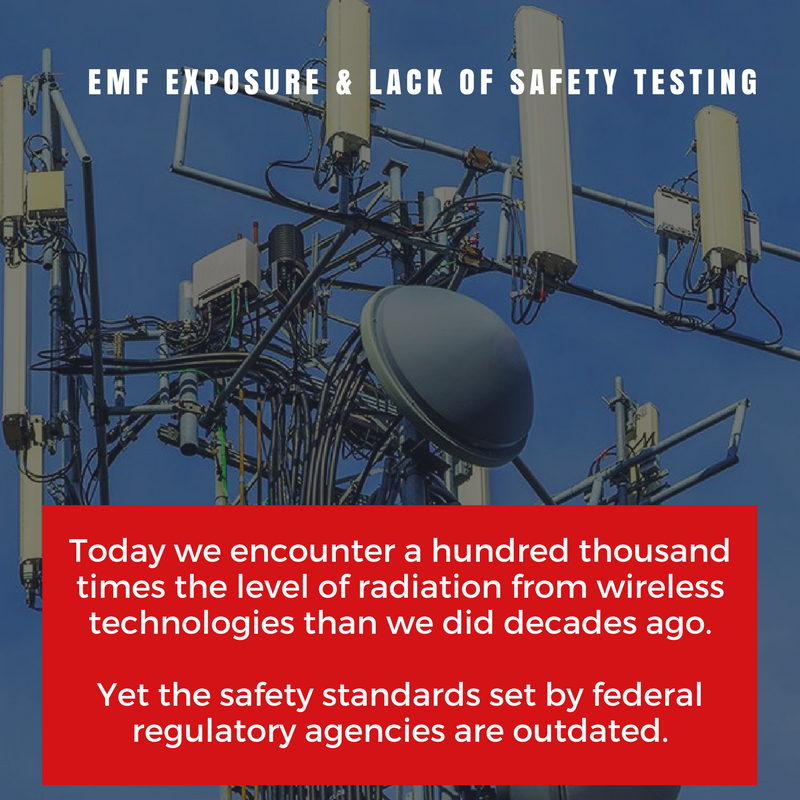
    Moreover, the only applicable FCC standards for radio-frequency radiation emissions were set in 1996, and did not consider the use of modern wireless equipment like small cells that will be located close to residences. Mere compliance with the FCC’s outdated standards does not assure safety.

    Concerns have been raised about the health risks of 5G technology, which includes these small cell installations. See, e.g., “EMF Scientist Appeal Advisors Call For Moratorium On Policies For 5G “Small Cell” Antennas,” and Doctors Letters on Cell Towers Near Schools

    20 Facts About 5G And Your Health 
    What You Need To Know About 5G Wireless And “Small” Cells

    Additionally, many studies have linked low-level wireless radio frequency radiation exposures to a long list of adverse biological effects, including: DNA single and double strand breaks; oxidative damage; disruption of cell metabolism; increased blood brain barrier permeability; melatonin reduction disruption to brain glucose metabolism; and, generation of stress proteins. This list certainly warrants additional scientific studies before District residents are put at risk.

    The FCC’s action and DDOT’s draft guidelines will give private cell providers the right to put antennas and transmission control boxes on District-owned streetlight poles and privately-owned utility wood poles subject to only minimal limitations. This means that a 5G antenna could be mounted on the streetlight or utility pole in front of a resident’s home, and there would be little the resident could do about it. 

    Relief from Wireless Impact Might Only Be Found in Rural Areas

    CNET and TechRepublic.com “5G won’t come to rural areas for quite some time.”
    The major carriers are planning US rollouts of 5G in late 2018 and early 2019, and they’re starting in major cities. Ted Rappaport, a professor of electrical and computer engineering at New York University’s Tandon School of Engineering who conducted some of the early research into 5G, told CNET that 5G might not make it to rural areas until 2022 or 2023. 

    FCC Press Release, “FCC Facilitates Deployment of Wireless Infrastructure for 5G Connectivity,” September 26, 2018, available at https://docs.fcc.gov/public/attachments/DOC-354283A1.pdf.

    Washington Post, September 26, 2018, available at https://www.washingtonpost.com/opinions/5g-is-in-reach-but-only-if-we-set-the-right-policies/2018/09/26/9d5c322e-c1c7-11e8-8f06-009b39c3f6dd_story.html?utm_term=.cbadc613d419Washington DC Advisory Neighborhood Commission 3/4G Opposes 5G Small Cells in New Resolution

  • Proximity to Cell Tower Increases Cancer Risk

    A mother is Eagle Idaho is fighting for her family’s health and those of her neighbors. <sign the petition> Can you imagine a cell tower being installed 25 feet from your organic garden and not far from your children’s playset? Interestingly, even the cell companies say that “safe distance” is 1/4 mile. Not 80 feet. This family moved here from CA to help their little girl recover from leukemia and years of chemo. She does not need to be bombarded by microwaves all day and night – nor does anyone. The fact that neighbors can sell out to a cellular company without consent from neighbors is deeply concerning. Cellular microwaves are proven to increase rates of cancer, damage cells and DNA, reduce sperm count, inhibit the heart and cardiovascular system and cause other health issues. This should not be allowed in neighborhoods. www.reactunite.org

    In a German study, doctors examined close to 1000 patients to see if living at the same address close to a cell tower for 10 years affected cancer risk. The social and age differences within the study group were small, with no ethnic diversity.

    They discovered that the proportion of newly developed cancer cases was three times higher for those living within 1300 feet (a quarter of a mile) of a cellular transmitter compared to those living further away. In addition, they found that the patients became ill with cancer on average 8 years earlier.

    A distance of 1300 feet (400m) is of particular importance. This is because computer simulation and measurements used in the study indicated that the radiation at that distance or less (the “inner area”) is 100 times greater than emissions beyond that distance (the “outer area”).

    Another important observation from the research is that for the first 5 years of living near a cell phone tower, the risks were no different than someone living far away from one. However, in years 6-10, the cancer risks jumped more than threefold for those living a quarter of a mile or less from a mobile tower.

    Even more concerning, the average age of diagnosis was much younger. Risk for breast cancer, prostate, pancreas, bowel, melanoma, lung, and blood cancer all increased substantially.

    The risks for breast cancer were most significant for those living in the inner area, with an average age of 50.8 year for a cancer diagnosis compared with nearly two decades later (70 years of age) for those in the outer area.

    Israeli Mobile Phone Tower Research

    Israeli research conducted by Tel Aviv University confirms a similar pattern.

    In this study, 622 people living 1148 feet (350m) or less from a cell phone transmission station for 3-7 years were compared to 1222 controls living further away.

    Out of the high exposure group, 8 cases of cancer were diagnosed within just one year. 3 cases of breast cancer and 1 case each of ovarian, lung, bone, kidney and lymphatic cancer.

    In the control group, only 2 cases of cancer occurred even though the control group was roughly twice as large as the highly exposed group.

    Based on these results, the researchers calculated the relative risk of cancer to be over four times higher for those living 350m or less (about one-fifth of a mile) from a cell phone transmitter.

    Want to research EMF more: CreateHealthyHome.com

    Cell Phone Tower Safety. What Should YOU Do?

    Check out antennasearch.com. Type in your address. Look up the existing towers AND the future towers in your area. 

    This site provides information on how many cell phone towers and mobile antennas are in your area. The exact distance of each from your home address is provided as well.

    Cell towers are increasingly disguised as trees, are placed on existing buildings and other structures. A typical mobile phone tower will hold 10 or more cellular antennas for various companies.

    If you are planning to buy a home in the near future, consideration of cellular phone infrastructure nearby is very important. It ranks right up there with schools and other positives and negatives about the neighborhood. (look for those RED tower symbols on the map on attennasearch.com)

    As more research concerning the effects of EMFs on human biology emerges, real estate prices will likely be affected by their relative proximity to cell phone towers and/or antennas.

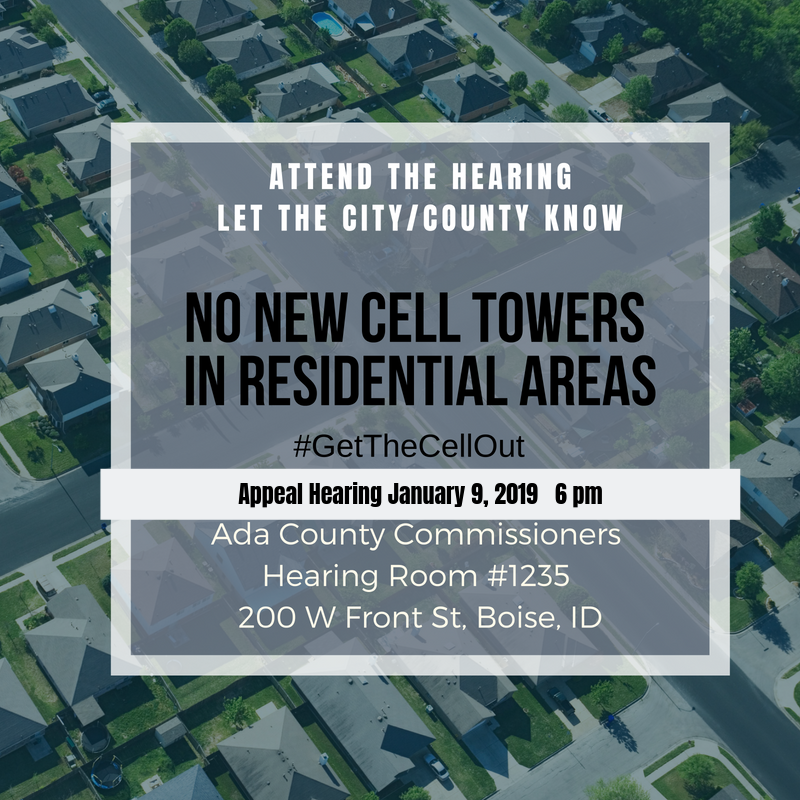
    How do we STOP a cell tower from being built in our residential communities? 

    The cell phone companies got a provision in the federal Telecommunications Act of 1996 that cell phone towers can not be denied placement due to health reasons alone. They have taken the power and control from States and local communities. Our leadership must now make decisions solely on property value and property rights without regard to health and safety. 

    MORE RESEARCH SOURCES:

    Basic and Advanced EMR (electromagnetic radiation) seminars 

    The links to research on the health effects of EMFs are found in the section entitled, “Extremely Low Frequency (ELF) Radiation”, accessed directly by clicking here

    Larry is an Electrical Engineer, Building Biology Environmental Consultant, Electromagnetic Radiation Specialist, and president of the Institute’s board of directors. He is based in Ventura, California, west of Los Angeles. Larry specifically mentions research that indicate adverse health effects from long term exposure to AC magnetic fields at levels as low as 1-3 milliGauss. The adverse effects are discussed in terms of elevated risk ratio levels that range from 2 to 3.8 (double or more then triple). Click here to see Larry’s article. www.gustenviro.com 

    Lloyd Burrell, a prominent EMF blogger who conducts numerous interviews with experts in the field of EMFs. The article contains links to research on the subject, accessed here. (www.electricsense.com).

    Articles and studies on magnetic field EMFs from the website of The Swedish Association for the Electrosensitive can be accessed here.

    Microwave News posted an article on August 27, 2017 entitled, “Hiding in Plain Sight, Neglected Low-Level EM (Electromagnetic) Effects”. The article reports on the unsung work of researcher Abe Liboff, PhD, formerly of the Naval Medical Research Institute, New York University and Oakland University in Rochester, Michigan. Dr. Liboff proved that weak magnetic fields below 1.0 milliGauss (mG) interfere with DNA synthesis. The article says, “The results raised questions about the safety of power lines.” Dr. Liboff subsequently went on to show that cellular harm occurs from low level exposure to magnetic fields from a biological mechanism, not a thermal (heating) mechanism. Read the article here.

    http://www.emf-health.com/PDFreports/Germanreport_celltower.pdf

  • Epigentics, Toxins and Autism Increase

    Autism genetic? If autism was purely a genetic problem then the numbers should be 1 in 100 from here until the dawn of time.  The autistic should be part of our culture, the stories we tell, the very fabric of our society.  But they’re not.  Instead we have stories about the tidal wave of adults with autism we can expect in the next few years and how poorly prepared we are for them.  Nobody saw this problem until it was first described in the 1940s.  From that time it’s gone from 1 in 10,000 to 1 in 100.  

    With that rate of increase, can it be long until it goes to 1 in 10?  We need to find answers.

    Contrary to the common thought, its NOT JUST the vaccines. Non-vaccinated children can get Autism because Autism is neurological damage, and there are various ways to inflict brain damage on children. (Learn More about Brain Damage and Autism: Read Vaccines Don’t Cause Autism) 

    Saying that, vaccines cause the most brain damage by far. Heavy metal and toxin exposure in the womb can also trigger Autism, even without vaccines. Fluoride in our water bonds with metal ions like aluminum from vaccines in our blood, ushers it across the blood brain barrier and deposits it in our neurons. Once there, the neurotoxic fluoroaluminate complex destroys the neuron. Yes, there are many synergistic effects between the contents of vaccines and other toxins in the environment. Fluoride gets into our blood from drinking and bathing water, food, pharmaceutical drugs, dental products and procedures, industrial air pollution , etc. Americans are receiving too much fluoride and the visible sign is the dental fluorosis in 41% of adolescents. And that’s just one toxin. The thing about vaccines is that the toxins are injected which makes them far more damaging. Vaccination and fluoridation programs are something we can stop. We can stop deliberately poisoning ourselves. 2

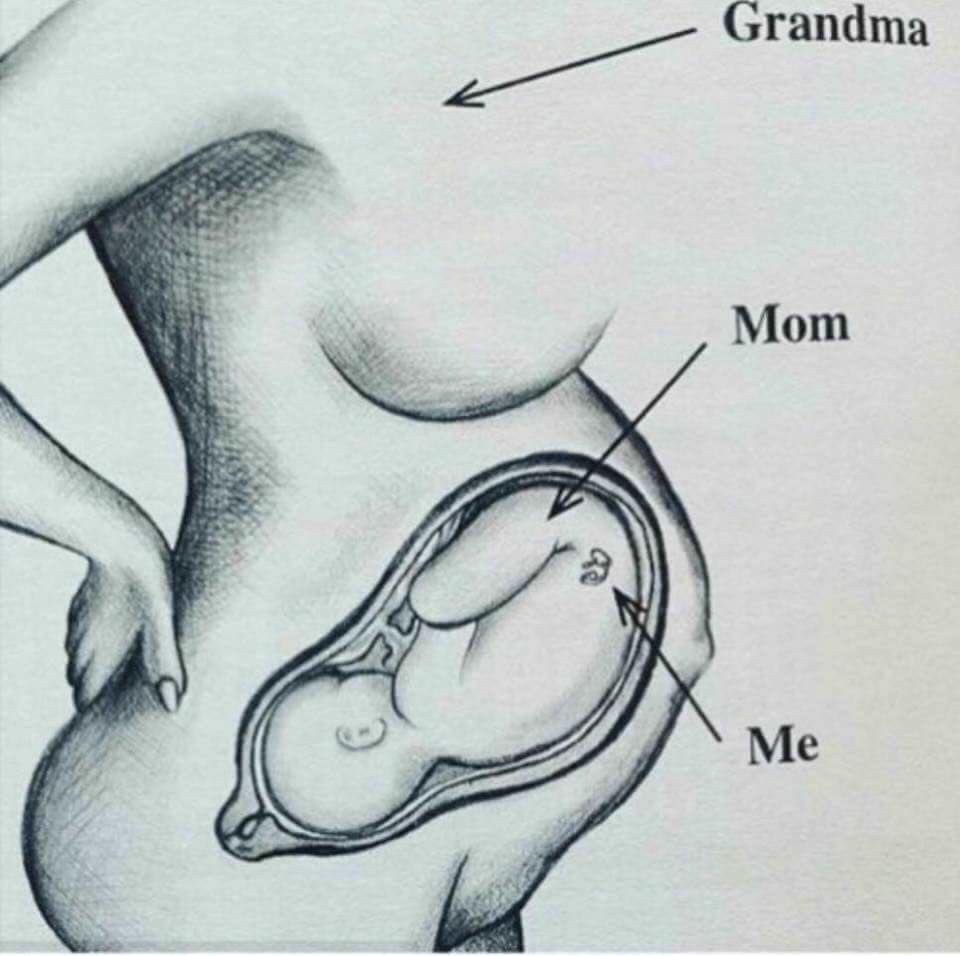
    (For one example, if the mother has a mouth full of mercury fillings, that mercury can be passed on to the baby in the womb, thus harming the baby’s brain before it’s even born). It’s important to remember that every human begins in their maternal grandmother.  A female fetus developed her ovaries and the eggs within at 4 months development within the womb.

    Epigenetics: The Science of Change

    Derived from the Greek, the word epigenetics literally means “above” genetics. Epigenetics is the study of chemical markers that modify genes but are not part of DNA itself. Like DNA, they can be passed on from cell to cell and from one generation to the next. These modifications are superimposed on top of our genes to tell them whether they should be active or inactive. For example, every cell in your body has the same DNA; however, some cells are specialized for use in the heart, the bones, the brain, the nerves, the stomach, etc. These cells become specialized because different sets of genes are turned on or off at different points in cell development, leading to differences in the types and amounts of proteins produced and determining how the cells look, grow, and act. This is epigenetics in action…

    Epigenetics is the theory that environmental factors, such as diet, lifestyle choices and pesticides can impact the health of people who are exposed to them and also their descendants. Human DNA, according to epigenetics, is not unchangeable; it can be altered by such environmental factors. Epigenetic changes can be imprinted on the DNA of a fetus during pregnancy according to Winchester.

    “If it is fixed then, it becomes inheritable and it becomes a trait that you can pass on to the next generation and the next and next.”

    Epigenetics is a fairly new concept that is slowly gaining acceptance.

    The accumulated evidence indicates that many genes, diseases, and environmental substances are part of the epigenetics picture. However, the evidence is still far too thin to form a basis for any overarching theories about which substances and which target genes are most likely to mediate adverse effects of the environment on diseases. 1

    Environmental Damage

    The synthetic Vitamin K shot given to infants at birth can be just as detrimental to newborn development as vaccines are.

    Epigentic Studies on rodents show that DNA methylation can be altered by many different kinds of exposures during the fetal as well as the adult life. 3

    Epigentic damage carries on for up to 4 generations. So it would take 4 generations of no vaccines to be totally clean genetically. 

    Research Epigenetics and Toxic Sources

    Pesticides

    Fluoride : http://www.fluoridealert.org 

    Vaccines: Toxic effects of injected aluminum, mercury and  other heavy metals 

    DNA in Vaccines

    Biological effects of 50 Hz ELF-EMF exposure

    Plastics/Toxins

    Parenting Nurturing

    RESEARCH RESOURCES:

    Portions of this article were found as a facebook post by Dayna Willar

    1 https://www.ncbi.nlm.nih.gov/pmc/articles/PMC1392256/

    2 Linda Martin – Facebook post comment

    3 https://www.hindawi.com/journals/bmri/2015/608054/

  • US Food Brands Petition EPA to Ban Pre-Harvest Glyphosate Spraying

    The Environmental Working Group, joined by food and nutrition companies including MegaFood, Ben & Jerry’s, Stonyfield Farm, MOM’s Organic Market, Nature’s Path, One Degree Organic Foods, National Co+op Grocers and Happy Family Organics, petitioned the Environmental Protection Agency on Thursday to sharply limit glyphosate residues allowed on oats and prohibit the pesticide’s use as a pre-harvest drying agent.

    Glyphosate, the active ingredient in Monsanto’s Roundup, is mostly used as a weedkiller on genetically modified corn and soybeans. But it is also increasingly sprayed on oats just before harvest as a drying agent, or desiccant. Glyphosate kills the crop, drying it out so that it can be harvested sooner than if the plant were allowed to die naturally. This allows easier harvesting but also increases the likelihood that the pesticide makes it into foods.

    In 2016, a testing project by Food Democracy Now! and The Detox Project found alarming levels of glyphosate in General Mills’ Cheerios and Honey Nut Cheerios, Kellogg’s Corn Flakes, Raisin Bran and Frosted Flakes and PepsiCo’s Doritos Cool Ranch, Ritz Crackers and Stacy’s Simply Naked Pita Chips, as well as many more famous products.

    In August, independent laboratory tests commissioned by EWG found glyphosate residues in popular oat-based foods marketed toward children. Almost three-fourths of the samples tested had glyphosate levels higher than what EWG scientists consider protective of children’s health with an adequate margin of safety.

    “No parent should worry whether feeding their children healthy oat-based foods will also expose them to a chemical linked to cancer,” said Scott Faber, EWG’s senior vice president for government affairs. “Using glyphosate as a desiccant is not necessary, but only a convenience for growers. That’s not worth taking a chance with our children’s health.”

    The EPA’s legal limit on glyphosate residues is 30 parts per million, or ppm. The petition, joined by 8 industry leaders asks the EPA to set a more protective standard of 0.1 ppm, which was the legal limit in 1993.

    Over the last 25 years, the EPA has increased the amounts of glyphosate residue allowed on oats 300-fold. The first increase, to 20 ppm, was granted in response to a 1997 petition from Monsanto, when farmers around the world first began using glyphosate widely as a late-season desiccant. It was increased to the current 30 ppm level in 2008.

    Since then, scientists have linked glyphosate to cancer and researchers around the world have called for stricter limits on glyphosate exposures.

    In 2015, 17 of the world’s top cancer researchers convened by the International Agency for Research on Cancer reviewed hundreds of studies on glyphosate and voted unanimously to classify the weedkiller as “probably carcinogenic to humans.” Last year, California added glyphosate to its official list of chemicals known to cause cancer.

    “The verdict is in – glyphosate use poses a significant threat to the health of our planet and the people on it.  As more and more consumers continue to raise valid concerns about the incredibly harmful effects of glyphosate, it’s high time that the EPA prohibits the pre-harvest use of glyphosate on every farm across the country,” said Robert U. Craven, CEO of MegaFood. “The federal government has a duty to protect its most vulnerable citizens, and today’s petition filing is a signal that it’s time to clean up the supply chain to improve overall health.”

    “The citizen petition submitted to EPA today is an important step in confronting the overuse of glyphosate in our food system,” said Matthew McCarthy, CEO of Ben & Jerry’s ice cream. “We call on EPA to quickly take the steps necessary to ensure that unwanted levels of pesticides don’t wind up the food Americans eat.”

    “As a mom of two young children and as a maker of organic baby food, I urge the EPA to protect us appropriately from this chemical glyphosate that may have serious consequences to our health and more importantly, the lifelong health of our children,” said Shazi Visram, Founder and ChairMom of Happy Family Brands. “Progress must always be made to ensure their safety and well-being. To me that means we are always strengthening our standards. So first and foremost we should maintain the standard that was 300 times stronger over 20 years ago.”

    The petition asks the EPA to prohibit the use of glyphosate as a pre-harvest desiccant on oats and set a stricter limit for imports coming from countries with less protective standards. This simple change could significantly reduce a source of the pesticide in Americans’ diets.

  • Grow a Detoxing 100-Year-Old Food Forest in Your Backyard in Just 10 Years

    Now surrounded by cities and agriculture, humans are no longer living in their “natural” habitat. Industrial engineer turned forest perma-agriculturalist  Shubhendu Sharma. His methods enable him to grow a 300-tree forest in the space of 6 parked cars. Amazingly, the cost of growing a forest is roughly the same as an iPhone.

    Not only do trees help to detox the air and the soil, they can block the new 5G emissions from those who are emf sensitive and studies show trees help to reduce stress levels naturally. (Study: The More Trees We’re Surrounded By, The Lower Our Stress Levels)

    Shubhendu Sharma was an industrial engineer for Toyota hired to offset some of the carbon emissions of the company’s factories. Sharma solution was to plant mini forests right next door. He uses the Miyawaki method, which was developed by Akira Miyawaki, “a Japanese botanist and expert in plant ecology, specializing in seeds and the study of natural forests. He is active worldwide as a specialist in the restoration of natural vegetation on degraded land. (Since 1993, he has been Professor Emeritus at Yokohama National University and Director of the Japanese Center for International Studies in Ecology. He received the Blue Planet Prize in 2006.”) 

    Since then his company Afforest has helped “build” 75 such forests in 25 cities across the world. Sharma’s forests grow 10 times faster, are 100 times more biodiverse and 30 times more lush than typical reforestation projects. He used his model for manufacturing as many cars as possible per square feet of factory space and applied it to growing trees. His methods enable him to grow a 300-tree forest in the space of 6 parked cars. Amazingly, the cost of growing a forest is roughly the same as an iPhone.

    “We discovered every single element needed to make a forest is right around us,” Sharma said. “All we have to do is bring these elements together and let nature take over.” 

    “We start with soil. We touch, feel and even taste it to identify what properties it lacks.” Next, his company mixes in local biomass — compost, manure, etc. — to help compacted soil become more porous and allow water to seep in. “If the soil is lacking nutrients, we don’t just add nutrients directly to the soil — that’s the industrial way,” he says.

    Instead, he adds microorganisms that feed on the biomass and convert it into more bioavailable nutrients. “As the number of microorganisms grows, the soil starts breathing again,” he says. “It becomes alive.” When planning a mini forest, Sharma’s company starts by determining which tree species were native to the area before human intervention.

    Then they decide whether they want a fruit forest, a flower forest, a forest that attracts a lot of birds or bees, or an evergreen forest, and chose different species for each layer — canopy, tree layer, sub tree layer and shrubs.

    Then, they collect the seeds, germinate the saplings, and plant them in a tight-knit pattern that intersperses the various species.

    Next, they spread a thick layer of mulch to hold in moisture during the summer and protect the soil from frost during the winter.

    This makes for extremely soft soil, allowing roots to penetrate and grow quickly. Within 3 months the roots reach one meter deep and form a mesh holding the soil together. Microbes and fungi make nutrients available to the roots. The forest is watered and weeded for two to three years, but as the forest grows it blocks the sunlight and weeds stop growing.

    Shortly after this, the canopy becomes so dense, the forest retains every drop of water, eliminating the need for watering. The forest floor remains moist and dark, enabling leaves to decay quickly and become food for the soil. As more and more leaves fall, creating more and more food for the soil, the forest starts growing exponentially, Sharma says.

    “If the tree species were planted independently, they wouldn’t grow so fast,” he says. “This is how we create a hundred year old forest in just ten years.” For more details on forest-scaping your yard, check out Sharma’s website Afforestt.com.

    Other successes in recreating forest environments include “Ernst Gotsch”. He has a +40 year old forest of his own, in Brasil, made on a 400 acres of what everyone said it was sterile land, dead land. Now 40 years later, that same patch of land already has 9 water springs that came back to life, and produces one of the best cocoa in the world.