Category: Toxins

The facts about chemicals, pesticides, and clean water.

  • Two Landmark Cases: Is the Toxic Tide Turning In Favor Of Our Kid’s Health?

    Our children are exposed to high levels of pesticides and herbicides ingested and inhaled daily, which is negatively impacting the health of an entire generation. Two significant court rulings today in favor of protecting our children and the environment from toxins. Over a decade ago an analysis of federal data by the Environmental Working Group (EWG) revealed that 1 million American children age 5 and under consume unsafe levels of a class of pesticides that can harm the developing brain and nervous system. Chlorpyrifos, a chemical sprayed on food crops, is a known neurotoxin, especially for children. It is one of the most widely used pesticides in the U.S. based on the results of three federally funded observational studies; the EPA was expected to phase out all remaining uses of the pesticide due to evidence that it caused long-term learning problems and IQ loss in children.
    EPA revoked the ban in 2017. The U.S. Court of Appeals for the Ninth Circuit has ordered the Environmental Protection Agency to ban chlorpyrifos, a widely used pesticide linked to learning disabilities in children, within 60 days.

     “EPA has no basis to allow continued use of chlorpyrifos, and its insistence in doing so puts all children at risk,” said Melanie Benesh, an attorney for the group Environmental Working Group. “By requiring the EPA to finally ban chlorpyrifos, the Ninth Circuit is ensuring that the agency puts children’s health, strong science and the letter of the law above corporate interests.”

    The risk for toxic exposure in our children increases due to high levels of pesticides sprayed in their homes, schools and day care centers, because the EPA’s current standards are based on levels considered safe for adults.  Children’s bodies are smaller, their systems still developing. It is outrageous that the agency’s tasked to protect our children ignore their responsibility.

    This week a jury agreed that Monsanto hid cancer danger of the weed-killer for decades. Labeled as a possible carcinogenic by the World Health Organization, Glyphosate is the number one product used for weed control in homes and schools. Johnson was a groundkeeper at a San Fransisco school district. He is said to have used Monsanto’s glyphosate weed killer on school grounds almost 30 times per year. He claims that two accidents caused him to be “doused” in the company’s weed killer. During the trial, the juror was presented with previously undisclosed information about how the body absorbs glyphosate and the dangers associated with the other ingredients that make up the Roundup formulated product. The jury agreed that Monsanto hid cancer danger of the weed killer awarding Mr. Johnson $289.2 million dollars.

    Could this be a sign of the toxic tide turning?

    Jury Orders Monsanto/Bayer to pay $289.2 million to Cancer-stricken Grounds Keeper. Jury agreed on all counts that Monsanto hid cancer danger of weed-killer for decades

    The jury awarded Johnson 289.2 million dollars! 4000 other plaintiffs are waiting to sue Monsanto and 10,0000 are expected by the end of the year. Surely this decision has Bayer, who now owns Monsanto, reconsidering whether or not to continue to sell glyphosate-based products.Thousands of individuals from across the country have filed lawsuits against Monsanto alleging exposure to Roundup weed killer caused them to develop non-Hodgkin lymphoma. In addition to the federal MDL in San Francisco, people from California, Nebraska, Delaware and Missouri have filed claims in state courts making similar allegations.

     The first trial in the Roundup cancer litigation is a state court case filed in San Francisco Superior by plaintiff DeWayne Johnson, who is represented by The Miller Firm, LLC. The Johnson case will begin on June 18, 2018. Another state court case will be heard in St. Louis, Missouri in October 2018.

    Since the beginning of the litigation against Monsanto, the law firm of Baum, Hedlund, Aristei & Goldman and the other firms leading the litigation have led the fight to declassify court documents that consist of internal Monsanto studies, company reports, emails, text messages, and other memoranda.

     These documents, known as The Monsanto Papers, include information that Monsanto does not want the public to see. They allow the public to look behind the curtain of secrecy that normally shrouds ongoing litigation and see firsthand how Monsanto has engaged in ghostwriting, scientific manipulation and collusion with regulatory agencies (including the EPA). The documents also include previously undisclosed information about how the body absorbs glyphosate and the dangers associated with the other ingredients that make up the Roundup formulated product.

    This week the jurors agreed with the plaintiff  and the scientific evidence to back their claims that glyphosate, the active ingredient in Roundup, causes non-Hodgkin lymphoma (NHL).

    Chlorpyrifos Court Decision

    HuffPost: Court Orders EPA To Ban Chlorpyrifos, A Pesticide Linked To Brain Damage In Kids

    In a joint letter to Pruitt in June, the American Academy of Pediatrics and Environmental Working Group, a nonprofit advocacy group, said they were “deeply alarmed” by his decision.  “EPA has no basis to allow continued use of chlorpyrifos, and its insistence in doing so puts all children at risk,” they wrote. Reprinted by AOL and Yahoo! News.

    Washington Examiner: Federal appeals court orders EPA to ban pesticide

    “Today’s court decision is huge victory for public health, especially that of children,” said Melanie Benesh, an attorney for the group Environmental Working Group. “By requiring the EPA to finally ban chlorpyrifos, the Ninth Circuit is ensuring that the agency puts children’s health, strong science and the letter of the law above corporate interests.” 

    Learn more about the 1998 report, Overexposed: Organophosphate Insecticides in Children’s Food, is in response to the Food Quality Protection Act, passed unanimously by Congress in 1996, that requires all pesticides to be safe for infants and children.  

  • I Got West Nile Virus. It Was Like a Case of The Flu.

    Today there is a report of the first positive mosquito for the West Nile Virus Trap located in Ada County for 2018. It is NOT a time for panic, nor should it be open opportunity for our state to spray our communities with known neurotoxins. The CDC reports that 8 out of 10 individuals won’t even know they have contracted the disease. Two of the ten will develop symptoms will be flu-like in nature. That’s right the West Nile Virus is a very rare disease that has very few long term affects on those living in Idaho. Yet, the propaganda has the general public nodding in agreement to be doused with chemicals for our ‘own protection’. 

    If we could pause the fear based narrative for a moment and see the facts – we might be able to protect ourselves from both the disease and to toxins they are dousing our families with to ‘protect us from the rare disease.’

    CDC reports that COMPLICATIONS from West Nile Virus are VERY, VERY RARE less than 1% of individuals actually experience complications from West Nile Virus. For West Nile virus, chronic illness and immunosuppression also appear to be risk factors for severe disease and death7,14,24-27

    IDAHO REPORTED West Nile Cases per CDC

    2017 out of a population of 1.83 million there were
    24 cases | 10 hospitalization | Zero fatalities from West Nile Virus

    2016 out of a population of 1.67 million there were
    9 cases | 3 hospitalization | Zero fatalities from West Nile Virus

    Don’t Fear the Disease Simply Protect Yourself and Your Family

    Supporting your immune system eating right would be a great first line defense against any illness. Protection and prevention are the keys to avoid being bitten during the hot summer months (mosquito season). 

    Don’t Let Fear of A Rare Disease Cause You to Expose Your Family to the Dangers of DEET

    DEET (chemical name, N,N-diethyl-meta-toluamide) is the active ingredient in many repellent products. It is widely used to repel biting pests such as mosquitoes and ticks. The CDC and EPA maintain that it is safe to use, which they follow up with a LONG list of “safe usage guidelines” that would appear to point to the contrary. This “safe” ingredient remains approved for use in the public despite countless reports of negative side effects after using products with this ingredient. The information given by these government agencies is conflicted. On one hand they will tell you there are no issues, and then on the other they will tell you not to get them in your mouth, eyes, lungs, not to put on too much, not to use too high of a concentration, not to spray it inside and various other restrictions. If it is so safe then why all the rules?

    Basically DEET is a game of toxic-roulette.

    Maybe your sweet little babes will suffer no harmful effects, or maybe they will have a severe reaction like neurotoxicity, encephalopathy, respiratory distress, seizures or even death. Or at best your child might be one of the one quarter of users who experience  rashes, skin irritation, numb or burning lips, nausea, headaches, dizzinessand difficulty concentrating.

    STOP!    Mosquito protection doesn’t have to be toxic ; Wear light-colored, loose-fitting clothing and footwear outdoors; avoid being outside during dusk and dawn; and dump and drain standing or stagnant water that can serve as a mosquito breeding habitat. And use NON TOXIC mosquito repellent.


    What’s it Like To Have West Nile Virus? 

    According to Jane R. of Eagle Hills who got West Nile Virus during an outbreak more than a decade ago, it was a bad headache and case of the flu lasting about two weeks.

    In 2007 there was an outbreak, I didn’t think it could possibly be a big threat since we have so few mosquitoes here in the middle of Eagle. Turns out, I GOT IT! I know for sure because I had my blood tested. The “good news” is that once you have it you have antibodies that are supposed to keep you from getting it again, so I’ve checked that off my list of things to worry about. I suppose the virus could mutate and that might change this, but I’m not sure.

    There’s nothing they can do to “cure” West Nile, they just treat the symptoms–they gave me medication to reduce pain/inflammation and fever. Here’s what my symptoms were–what I can remember anyway.I had a really bad headache that lasted for about 8 days before I went to the doctor, and a couple more days after that the headache settled into the base of my skull/back of my neck. By the time I went to the doctor, I felt like I hurt all over, probably muscle aches. I think I had some fever. I didn’t have any nausea or vomiting, may have experienced some fatigue. I think I remember the symptoms being gone within 10-14 days, but I may have been tired for a while afterwards, like you are after the flu or other illnesses.

    What the CDC says about West Nile Virus

    No symptoms in most people. Most people  (8 out of 10) infected with West Nile virus do not develop any symptoms.

    Febrile illness (fever) in some people. About 1 in 5 people who are infected develop a fever with other symptoms such as headache, body aches, joint pains, vomiting, diarrhea, or rash. Most people with this type of West Nile virus disease recover completely, but fatigue and weakness can last for weeks or months.

    Serious symptoms in a few people. About 1 in 150 people who are infected develop a severe illness affecting the central nervous system such as encephalitis (inflammation of the brain) or meningitis (inflammation of the membranes that surround the brain and spinal cord).

    • Symptoms of severe illness include high fever, headache, neck stiffness, stupor, disorientation, coma, tremors, convulsions, muscle weakness, vision loss, numbness and paralysis.
    • Severe illness can occur in people of any age; however, people over 60 years of age are at greater risk. People with certain medical conditions, such as cancer, diabetes, hypertension, kidney disease, and people who have received organ transplants, are also at greater risk.
    • Recovery from severe illness might take several weeks or months. Some effects to the central nervous system might be permanent.
    • About 1 out of 10  people who develop severe illness affecting the central nervous system die.

    Treatment

    • No vaccine or specific antiviral treatments for West Nile virus infection are available.
    • Over-the-counter pain relievers can be used to reduce fever and relieve some symptoms
    • In severe cases, patients often need to be hospitalized to receive supportive treatment, such as intravenous fluids, pain medication, and nursing care.

    Could we have a West Nile OUTBREAK!?

    Here’s what the U.S. Health Works Medical Group has to say about WNV:

    “How do you get the West Nile disease? Only one way, get bit by a mosquito that has the virus. The West Nile virus mostly lives in birds. Some mosquitoes bite birds and pick up the virus that way. Who knew mosquitoes bite birds? Seems like a suicidal food choice. If one of these mosquitoes actually manages to catch and bite the infected bird, and survive the experience, he now can bite you. As you would expect there are not exactly swarms of infected mosquitoes.”

    Now if one such infected mosquito manages to find you, you now have West Nile Virus. But you can’t give it to your family and friends. They have to find their own infected mosquito if they want the virus. In West Nile infected humans, the virus level is low enough that a mosquito biting you won’t likely get infected. So you can‘t pass it on, even with a mosquito’s help.”

    *There was an anomaly of almost one thousand people said to be infected with WNV in 2006. HFI couldn’t locate any research done by authorities to determine why there was such a HUGE spike in infection rates when there was an a total of 17 cases the previous seven years.

    Managing mosquitoes without poisoning people

    Efficacy of Mosquito Treatments

    The U.S. Centers for Disease Control and Prevention has written that “adulticiding, application of chemicals to kill adult mosquitoes by ground or aerial applications, is usually the least efficient mosquito control technique.

    Naled is no exception. For example, researchers from the New York Department of Health showed that 11 years of naled spraying was “successful in achieving short-term reductions in mosquito abundance, but populations of the disease-carrying mosquito of concern “increased 15-fold over the 11 years of spraying.

    We urge public officials everywhere to look at the safest, least toxic and most effective ways to control West Nile.Evidence from the U.S, and around the world shows there are safe and effective ways to control mosquitoes that do not rely on using pesticides that hurt human health and the environment. Instead of relying on pesticide spraying — whether by planes, through backpack sprayers in communities or inside homes — Integrated Vector Management stresses localized solutions. IVM can use a combination of the following methods to keep disease-carrying insect populations in check. We urge our local Mosquito Abatement Organizations to seek pesticides as a LAST RESORT not the first.

    See Health Freedom Idaho’s articles about West Nile Virus and Naled

    Watch West Nile Virus facts 


    Locations of Positive Mosquito Traps: August 2018, Ada County Mosquito Abatement District has confirmed the presence of West Nile virus (WNV) in mosquito populations for the first time in Ada County this year.  Two pools of mosquitoes tested positive for the virus. locations
    Ada County Mosquito Abatement District has detected West Nile virus in mosquito populations near the following locations:
    1.    S. Cloverdale Rd. & E. Deer Flat Rd.
    2.    S. Valley Heights Dr. & W. Raul St.
    3.    S. Columbia Rd. & Gantz Ave.

  • What Are Toxins Doing To Our Kids?

    We cannot assume that just because chemicals are in common trade and usage that they have been evaluated for safety by our government or any other scientific board, nor that they have been approved. Most are not and have not. We’re strong parents who can face the truth and do something strong and positive and powerful with it to protect our kids, our neighbor’s kids, and kids in other countries who are still getting exposed to those same chemicals that have been banned for use in our country.

    62,000 Toxic Chemicals & Failed Legislation

    The Toxic Substance Control Act (TCSA), passed in 1976, is the US federal law that regulates industrial and consumer chemicals – the thousands of synthetic chemicals in use that are not intended to be used in medication, cosmetics, foods, or pesticides. At the time this law was passed, the Environmental Protection Agency was charged with creating an inventory of all existing chemicals, which were then to the biomarker for safety. At that time there were already about 62,000 existing chemicals. Rather than being tested, however, they were “presumed safe” and were “grandfathered in.”

    Only 5 chemicals have been banned under the TSCA in over 35 years. Yes, 5! Do you find that as shocking as I do?

    The EPA has otherwise been entirely unable to require testing on, regulate, or remove any of the remaining chemicals from the marketplace. Only a few states in the US – California, New York, and Massachusetts among them – have state laws relevant to children’s environmental health. California put legislation in place so that by 2012, 1200 chemicals identified by the EPA were to be regulated; NY, MA, and CA require commercial pesticide applicators and farmers to report pesticide application to the state, and CT has banned BPA use in carbonless receipts from banks and retail stores due to its risk of absorption and potential harm to offspring when childbearing women who handle these regularly at work are exposed.

    Of the over 80,000 chemicals now in use in the US, it is clear that many are harmful to human physical and neurological development. Exposure at various vulnerable times during pregnancy, infancy, early childhood, and even though the teenage years when the lungs, endocrine, and nervous systems are still developing, can result in the same health problems increasing amongst our children including those I mentioned earlier. Because of their surface area-to-body weight ratio and immature detoxification abilities, most toxins impact children’s health harder than they do us grown-ups.

    https://hfi.designbyparrish.com/our-kids-are-so-very-sick

    What You Can Do to Protect Your Children from Environmental Toxins

    1. Optimize nutrition

    Great nutrition has two key benefits – eating natural foods with as little packaging and as few additives, colorings, pesticides, and herbicides as possible reduces chemical exposures for our kids (even after just 5 days of switching to mostly organic produce, kids’ blood levels of toxic agricultural chemicals go way down). Also, good nutrition boosts our natural ability to detoxify environmental toxins. I recommend that kids get at least two brightly colored fruits or vegetables at each meal (think carrots, blueberries, squash, for example). Healthy All Year has an entire section of lessons dedicated to teaching you how to use nutrition to boost your child’s immunity and support natural detoxification. You’ll also learn which supplements you can use to enhance detoxification naturally and safely, without breaking the bank!
    Teach your children about real foods Food Renegade has a new lesson book a great resource to learn together.

    2. Get Educated & Reduce Exposures

    Knowing which industrial, household and personal products (i.e., shampoos, lotions, sunscreens) are most toxic is key to protecting your child’s health. You also need to know which are the healthier alternatives. The Environmental Working Group, which has recently merged with Healthy Child, Healthy World, another of my favorite environmental advocacy groups. Other advocacy groups, Robyn O’Brien’s Allergy Kids, and Beth Lambert’s Epidemic Answers. Support the body’s ability to naturally detox. 

    3. Don’t be Afraid to be Called “Mean Mommy” and Other Names

    It’s our job to be parents and that means keeping our kids out of harm’s way when we can, even if it makes us temporarily unpopular. While we want our kids to live comfortably in the world, and not make life feel too restrictive, how comfortable is obesity or a hormone problem, really? 

    Yes, my kids called me “mean mommy” because I refused to let them wear the cool pajamas their friends were wearing – the ones treated with flame retardant chemicals. Now, 25 or so years later, the data is unequivocal. Flame retardants are seriously hazardous to our health, and more so to young children whose exposures far outweigh our own, and in whom exposures at critical times may have a detrimental impact on immunity, hormones (including those that impact obesity), and neurological health. 

    4. Join Together and Speak Up!

    It’s amazing what powerful mothers, fathers, grandparents, and citizens have accomplished in making policy changes in their children’s environments from toxic paints and toxic foods in schools to environmental dumping, fracking, and chemical waste plant leaks. Health Freedom Idaho is a coalition of moms (dads, grandparents, concerned citizens) who are speaking up. It is no small task, but clearly, the government isn’t going to clean this problem up for us, so we’ve got to be activists for our children’s health! 

    Will you join us!

    Impact of Toxins on Children’s Health:

    Aviva Romm https://avivaromm.com/government-failing-to-regulate-toxins-harming-kids/

    toxins and children

    ToxicFreeTribe: 16 ways to reduce toxic exposure

    Generation In Jeopardy: https://www.psr-la.org/PesticidesReport

  • FDA Allows Chemical Additives Known To Be Toxic To Kids

    Today, your body is dealing with more than 10,000 food additive chemicals, all of which are allowed to be added (directly or indirectly) to food. And that’s only the chemicals allowed to be in your food! Many of these chemicals have not been proven safe for children and in fact a significant loophole in our processed food system: Generally Recognized As Safe (GRAS) allows food companies to get a free pass to use whatever chemical additives they want in our food with little to no oversight. 

    Shockingly, due to the way new additives are reviewed the FDA simply cannot guarantee the safety of most ingredients, which we now know can affect our health at nanoparticle doses – much lower than was previously expected – and the FDA does not have authority to obtain data on or reassess the safety of chemicals already on the market. Additionally, conflicts of interest with industry, prevent adequate and accurate safety data from ever being acquired or seeing the light of day.

    Tweet: 67,000 of the country’s children’s doctors are calling for more rigorous testing and regulation of thousands of toxic chemicals used as food additives or indirectly added to foods when they are used in manufacturing or leach from packaging and plastics. #toxic https://ctt.ac/4Ga1D+

    American Academy of Pediatrics issued the guidelines in a statement and scientific-technical report on Monday,. The group joins other medical and advocacy groups that have expressed concern about the growing body of scientific evidence indicating that certain chemicals that enter foods may interfere with the body’s natural hormones in ways that may affect long-term growth and development.

    Food Additives in your food, on your food, leeching into your food.

    This term, food additives, is the whole set of artificial colorings, flavorings, and chemicals added to food during processing, which are known as “direct food additives”, but there’s also a whole category of “indirect food additives” we tend to forget about: think adhesives, dyes, coatings, paper, paperboard, plastic, and other polymers, which are introduced to foods during the manufacturing process and through food packaging. Some food additives of concern are bisphenols  phthalates, PFCs, food colors, nitrates, and nitrites – but there are obviously a lot more.

    AAP called out these chemicals of increasing concern:

    • bisphenols, which are used in the lining of metal cans to prevent corrosion45;

    • phthalates, which are esters of diphthalic acid that are often used in adhesives, lubricants, and plasticizers during the manufacturing process17;

    • nonpersistent pesticides, which have been addressed in a previous policy statement from the American Academy of Pediatrics and, thus, will not be discussed in this statement46;

    • perfluoroalkyl chemicals (PFCs), which are used in grease-proof paper and packaging47; and

    • perchlorate, an antistatic agent used for plastic packaging in contact with dry foods with surfaces that do not contain free fat or oil and also present as a degradation product of bleach used to clean food manufacturing equipment.48

    Additional compounds of concern discussed in the accompanying technical report include artificial food colors, nitrates, and nitrites.

    This issue is of great importance and concern for chemicals approved decades ago on the basis of limited and sometimes antiquated testing methods. For instance, some compounds, such as styrene and eugenol methyl ether, remain approved for use as flavoring agents, although they have been subsequently classified as reasonably anticipated to be human carcinogens by the US National Toxicology Program.67  -AAP

    READ MORE https://www.nytimes.com/2018/07/23/well/chemicals-food-children-health.html

    Groups Sue FDA to Protect Food Safety Seek to Ensure Food Additives Are Found Safe Before Being Marketed to American Consumers

    Chemical and food manufacturers often seek to add chemicals to processed food, typically to enhance flavor, add nutrients, or prevent spoilage. Chemicals also often leach into foods from processing equipment and packaging. While Congress has required that FDA itself determine that chemical additives are safe before they can be used in food, the FDA rule allows manufacturers to decide for and by themselves—in secret—what can be added to processed foods. The groups assert this rule is unconstitutional and illegal. READ MORE https://cspinet.org/news/groups-sue-fda-protect-food-safety-20170522

    How are Food Additives Affecting Children?

    According to a recent paper by the American Academy of Pediatrics, common food additives (in concentrations most of us deal with in daily life) are linked with: endocrine disruption, insulin resistance, reduced immune response, thyroid hormone alterations, and neonatal hypothyroidism. Here’s what we know: the health dangers of food additives are especially high during pregnancy, infancy, early childhood, and even through the teenage years when the lungs, endocrine, and nervous systems are still developing.

    Children are naturally more vulnerable to the effects of food additives because of their surface area-to-body weight ratio and immature detoxification abilities. The potential for endocrine system disruption from food additives and chemical exposure is bigger in children than for us grown ups, and carries a risk of permanent and lifelong imbalances.

    No wonder we’ve seen such a spike in health concerns in children and women over the three decades during the time our volume of our exposure has also escalated. I certainly see it reflected in my medical practice: children suffering from anxiety, depression, obesity, autoimmune diseases, early puberty, and so much more, all of which was mostly unheard of only a few decades ago!

    Watch this important interview with Dr. Philip Landrigan, a pediatric environmental medicine pioneer.

    What Can I Do Today to Protect My Kids?

    Here’s what you can do starting right now to avoid food additives to support your children’s health. The encouraging news is that previous studies have shown that these changes can make a difference in children’s blood levels of environmental toxins in as little as three days. 

    1. Eat Healthy

    This first tip might seem like a no-brainer, but what do we really mean when we say “Eat Healthy?” In the context of food additives and their effects on children, it means prioritizing fresh or frozen fruits and veggies, and choosing local and organic as much as possible to avoid contaminants, or at least avoiding all processed animal products (meat, dairy). The Environmental Working Group Clean 15 and Dirty Dozen is an easy chart for making choices when it comes to organic vs. conventional produce.

    Encourage hand-washing before handling foods and/or drinks, and wash all fruits and vegetables that cannot be peeled.

    Keep in mind, good nutrition boosts your child’s immunity and supports natural detoxification.

    Avoid processed meats, which are heavy in nitrates and nitrites, as well as canned foods (metal cans are lined with bisphenols to prevent corrosion… except then you’re left with contaminated food).

    2. Invest in better food storage containers

    Some lifestyle habits can help reduce exposure to food additives and other harmful chemicals involved with food preparation and handling. Mostly, it all comes down to avoiding plastic as best you can. Most plastic containers leach endocrine-disrupting chemicals into your food and beverages. Replace plastic containers with stainless steel or glass alternatives as much as possible. The same goes for plastic water bottles – I personally use Mason jars or Kleen Canteen bottles which are practically unbreakable (I’ve had the same one for over a decade and have dropped it onto concrete several times!). They make kids drinking bottles with sippy spouts in fun colors!


    If you do use plastic containers and bottles, follow these simple steps to minimize their health risk: don’t use them to heat foods or liquids in the microwave, and wash them by hands rather than in the dishwasher.

    Finally, check out the recycling codes on your plastic containers before you purchase food items, to find the plastic type, and avoid plastics with recycling codes 3 (phthalates), 6 (styrene), and 7 (bisphenols) unless plastics are labeled as “biobased” or “greenware,” indicating that they are made from corn and do not contain bisphenols.

    https://www.nytimes.com/2018/07/23/well/chemicals-food-children-health.html

    https://avivaromm.com/food-additives/

    http://pediatrics.aappublications.org/content/142/2/e20181408

    http://thegreendivas.com/2014/06/11/chemical-additives-in-our-food-tested/

    Do you still trust the FDA whose core mission to protect and promote public health for our nation’s consumers? 

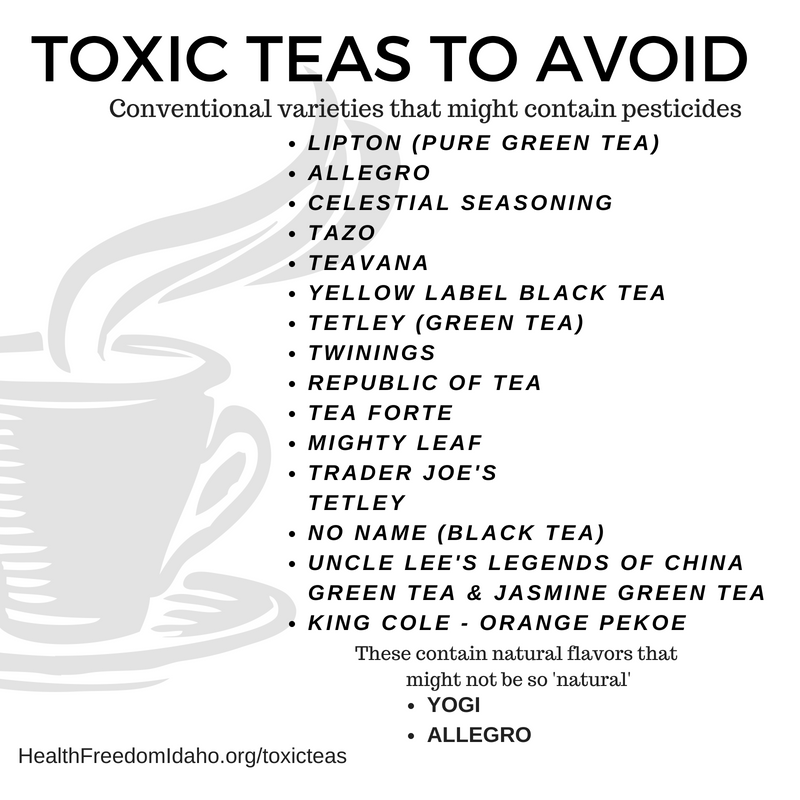
  • Toxic Teas To Avoid

    Although tea is widely thought to be a healthier source of caffeine than coffee, soda or energy drinks, conventional tea brands have been shown to contain high levels of toxic substances such as fluoride and pesticides, artificial ingredients, added flavors and GMOs(modified corn starch and soy lecithin).The levels found in these products are so high that they are considered unsafe for consumption. As with most products, all tea is not created equal. Opting to save a few dollars on cheaper tea can cost you a lot more when it comes to your health.

    Conventional Teas May Contain Fluoride and Pesticides

    Most tea isn’t washed before it is distributed into bags. If the tea was sprayed with pesticides, those pesticides will wind up directly in your cup. Many non-organic tea brands have been found to contain pesticides that are known carcinogens. Popular tea brands often get away with listing “natural flavors” as an ingredient, causing many consumers to think they are buying better, cleaner ingredients. But there is a whole list of what “natural flavors” could mean.

    Reports from India and China find high levels of banned pesticides in tea products, pointing to a lack of enforcement on pesticide use in major tea exporting countries. In the U.S., the Food and Drug Administration (FDA) consistently finds high levels of illegal residues on imported Tea that eventually finds its way to the American consumer. These include permethrin (a synthetic pyrethroid, linked to cancer and endocrine system disruption), DDE (a metabolite of DDT, banned in the U.S. in 1972), heptachlor epoxide (a derivative of the pesticide heptachlor, which was banned in the U.S. for use in agriculture and as a termiticide due to its carcinogenicity and persistence in the environment) and acetamiprid (a bee-toxic neonicotinoid). These issues increase consumer exposure to a dangerous blend of pesticides in conventional tea.

    Where Does The Fluoride Come From?

    Tea plants absorb fluoride from soil and accumulate it as they grow, so older leaves contain the most fluoride. Cheaper quality teas are often made from older tea leaves, which contain more fluoride. These teas also contain the least amount of anti-oxidants, lessening the health benefits associated with drinking tea.  See our full article on the dangers of neurotoxic Fluoride

    Which Brands Contain The Most Toxins?

    The Canadian Broadcasting Corporation actually conducted an investigation on several popular international tea companies, including:

    1. Tetley
    2. Lipton
    3. Twinnings
    4. No Name
    5. Uncle Lee’s Legends of China
    6. King Cole
    7. Signal

    Alarmingly, the CBC found that half of the tea brands contained a level of toxins that exceeded the legal limit. The worst offenders were:

    • King Cole, which contained the monocrotophos – a chemical that is currently in the process of being banned, as it causes irregular heartbeat and even coma.
    • Uncle Lee’s Legends of China, which contained more than 20 types of pesticides. One was endosulfan, which causes nervous system damage.
    • No Name, which contained more than 10 pesticide types.

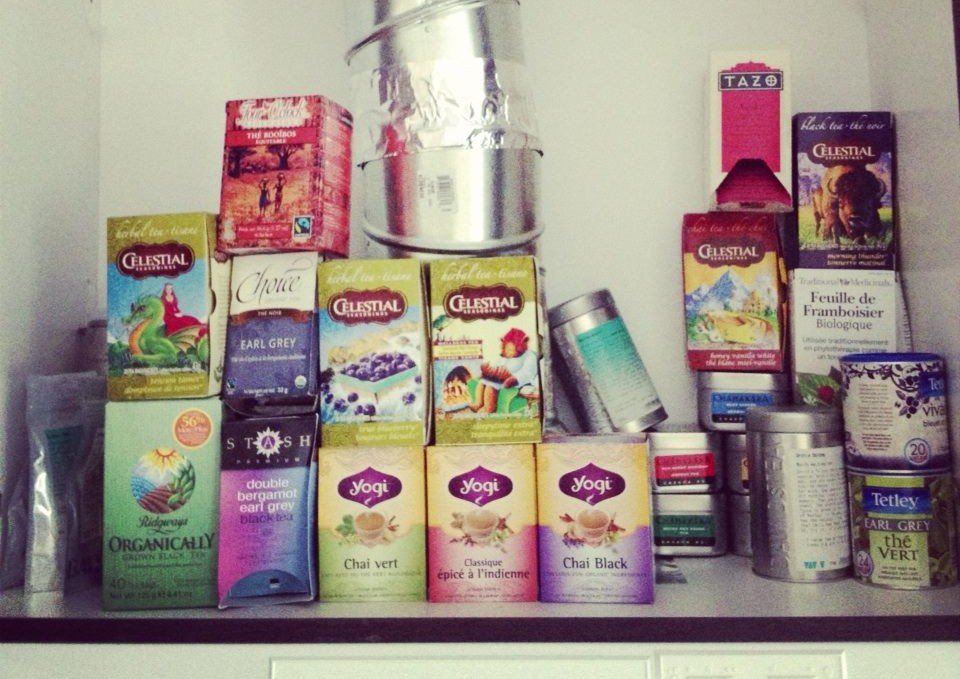
    A study conducted by EuroFins (a worldwide analytic testing company) 91% of Celestial Seasonings teas contained levels of pesticides that exceed the US federal limits. Considering all of the other toxins and poisons that the FDA lets slide by, this is very alarming. When Celestial Seasonings started in 1969, it was “founded on the belief that all natural teas could help people live healthier lives.” Maybe that was the case in 1969 because there weren’t as many pesticides being sprayed, but in this day and age we have to be wary of the products we are consuming. <source>

    How To Avoid Toxic Chemicals in Tea

    You don’t need to stop drinking tea altogether to keep yourself safe from harmful toxins or pesticides that may be lurking in your cup. After all, tea is the source of some amazing health benefits. So what’s the solution?

    • Try switching to white tea. It has the least amount of fluoride because it’s made from young leaves.
    • Be sure to buy loose leaf tea or brew your own tea from scratch.
    • Buy organic! Choose a non-GMO certified brand of tea.
    • Check the ingredient list to make sure there are no added flavors or GMO ingredients added to the tea leaves.
    • Many restaurants use tea brands that are known to be full of pesticides, so be careful about ordering tea while out to eat.
    • Know the correct brewing times for certain types of tea. Black or Pu-reh teas should be steeped for 3-5 minutes; white or green teas should be steeped for 2-3 minutes; Oolong teas should be steeped for 4-7 minutes; and herbal teas should be left to steep for five minutes at minimum, longer for a stronger tea.

    That doesn’t mean the other tea brands were totally safe, however. 
    In fact, only Red Rose tea was found to contain no pesticides at all.

    Here is a list of bagged tea that is safe!

    Sources:

    IS THE TEA YOU ARE DRINKING TOXIC AND THE TEA BAG IT IS IN …. https://www.bwellbhealthy.com/blog/2017/2/26/is-the-tea-you-are-drinking-toxic-and-the-tea-bag-it-is-in

    Most Brands of Tea Contain THESE Harmful Chemicals …. https://www.davidwolfe.com/tea-contain-harmful-chemicals/

    These Popular Tea Brands Possess Dangerously High Levels …. https://worldtruth.tv/these-popular-tea-brands-possess-dangerously-high-levels-of-pesticides/

    The hidden dangers of bagged tea | Body Unburdened. https://bodyunburdened.com/the-hidden-dangers-of-bagged-tea/

    Additional Information:
    CBC
    FluorideAlert.org
    Toxipedia.org
    FoodBabe.com

  • 3 Easy Ways to Reduce Your EMF Exposure

    Electromagnetic fields are areas of energy that surround electronic devices. EMFs are emitted from every device that plugs into an electrical outlet as well as from airplanes and power lines or transformers. Your laptop, iPod, cell phone or other small handheld electronic devices all emit EMFs when they’re in use. “Dirty electricity” refers to electro-magnetic fields contaminated by high frequency distortions.

    Are EMFs dangerous?

    This is the 10,000 dollar question. Unfortunately, there aren’t a ton of conclusive studies on this topic, which is a shame because we are literally bombarded with them daily. Most of us live in a home with our Wi-Fi on 24/7, a smart meter attached to the outside of our living room wall, and sleep with our iPhone by our heads. Our children play with our cell phones or use electronics to learn and play. This EMF-infused technology has become a way of life for many of us.

    But, we need to be careful.

    There is a growing body of scientific evidence showing that too much EMF exposure can be harmful to our health.

    The World Health Organization (WHO) put out a press release in May, 2011 that states that radiation from cell phones can be a carcinogen to humans and, with excessive use, could be linked to brain tumors. According to WHO, electromagnetic fields affect us because our human bodies have their own electric and biochemical responses (e.g., nervous system, digestion, brain function, heart function). These devices and their dirty electricity have been linked to four of the biggest inflammation diseases: cancer, diabetes, cardiovascular and neurological disorders.

    Where Do Electromagnetic Fields Come From?

    Simply put, EMFs come from electricity:

    • In your home – DECT cordless phones, hairdryers, vacuums, refrigerators, microwave ovens, irons, televisions (the flat panel TVs are much better than the old box-style TVs), main ring and lighting circuits, dimmer switches, electric blankets, electric razors, electric toothbrushes, WiFi, etc.
    • In your office – computers, fluorescent or halogen lighting, fax machines, photocopiers, scanners, cell phones and WiFi.
    • Outside – power lines (high voltage cables either overhead or buried in the ground), transformers (the gray cylinders raised up on poles that look like trash cans), electrical substations, cell phone towers, cities that provide citywide wireless Internet (WiFi) and electromagnetic radiation from near neighbors’ electronic equipment.
    • Airplanes – to learn more, read:  The Health Risks of Airplanes Going Wireless and How to Protect Yourself

    Scientific studies have listed the following as possible effect from EMF’s: mood disorders, cancer clusters in places with high voltage power lines, allergies, stress, and fatigue. From a variety of sources, evidence points to the supported conclusion that this radiation is very harmful.

    Recent findings also show that electromagnetic frequencies emitted from cell phones can cause or speed tumors in the head. While it has not been thoroughly studied, more signs show that that EMF’s may be linked with Amyotrophic Lateral Sclerosis (ALS or Lou Gehrig’s Disease). The Cleveland clinic even announced that cell phone radiation is linked with lower sperm.

    The health implications are many, but there are a variety of ways you can protect yourself and family from EMF waves.

    Wireless routers – as well as Bluetooth and similar wireless systems – give off electromagnetic radiation in the low-gigahertz frequency. This level is considered potentially dangerous to people. And the danger is compounded by several factors:

    • Just like the wireless signals themselves, the EMFs can pass through walls.
    • Most routers are not turned off at night, so you are exposed 24/7.
    • You are not only exposed to EMFs from your own router. Did you ever search for a wireless signal and see not only your wireless network, but also your neighbor’s and the one from the business down the street? All of them emit EMFs.

    Increasingly, scientists and researchers are uncovering the health risks of EMFs. Depending on the level and the length of exposure, those risks can range from insomnia and headaches to tumors. For more information on the health risks of EMFs from Wi-Fi.

    Most of our modern-day conveniences emit EMFs, some stronger than others. So does this mean you have to go off the grid? Not at all! But if you are serious about achieving and maintaining your best health, there are several steps you can take to minimize the effect EMFs have on you and your family. It is not as difficult as one might imagine. 

    1. Reduce Wireless Router exposure while sleeping give your body a break. 

    • Turn off your wireless router
    • Turn off the wireless connection on your phone, computer and tablets 

    2. Distance yourself from devices. Don’t Wear Your Phone

    A better place for your phone is in your backpack, purse, or briefcase; electromagnetic radiation diminishes rapidly beyond 3 feet, making it a safer option. A cell phone is relatively neutral to carry on your person if in ‘flight’ mode or ‘off line; however, if that is not an option, favor keeping the keypad positioned towards your body and the battery facing outward. Another tip is to exchange the side of your head you normally talk on with the phone.

    3. Ground on Earth

    Until the last couple hundred of years, humans primarily walked barefoot and were outdoors most of the day. Science shows  that an actual energetic grounding occurs when one has contact on natural surfaces, even to a point where harmful EMF can travel over the body. It’s shown that through earth connection, one becomes more alkaline, less stressed, and has improved immune system, among other benefits.
    If you work in an office space in the concrete jungle of the city, make an effort to have natural plants indoors, spend a portion of your free time at home outside or on the grass during breaks, and make an effort to walk barefoot when possible. Learn more: Earthing – Are You Connected?

    You may not be able to escape from technological tools which, let’s face it, have transformed modern day living substantially, but you can alter the degree of electromagnetic radiation which targets your body. Utilizing the above tips, you can safeguard your health and future in a subtle, but surely important, way.

    In Boise and the surrounding areas, Eric Brandt from BeEMFSafe.com can detect, analyze, and correct the EMF exposure in your home. Contact him with questions or concerns about EMF and ‘dirty electricity’.

    RESOURCES:
    http://www.trueactivist.com/10-ways-to-protect-against-emf-emissions/

    https://bodyecology.com/articles/little-known-dangers-of-emf.php

    Sources:

    1. Electromagnetic Hypersensitivity. IEEE Eng. Med. Biol. Sept/Oct 173-175, 2002.
      http://ewh.ieee.org/soc/embs/comar/Hypersensitivity.htm
    2. Magnetic Field Exposure and Cancer: Questions and Answers. National Cancer Institute.
    3. http://www.cancer.gov/cancertopics/factsheet/risk/magnetic-fields

    4. What Are Electromagnetic Fields? World Health Organization.
      http://www.who.int/peh-emf/about/WhatisEMF/en/
  • How to Minimize Wireless Radiation Exposure while Pregnant

    Pregnancy is one of the most exciting times in a Mother’s life.  It can also be very overwhelming- you want to do everything right and give your baby the best possible start in life.  You might be reading a lot, or looking online for all kinds of tips and ideas about pregnant life.  One thing you might not encounter is how your EMF exposure might be affecting your baby.

    It has been well established that the health of our smallest family members are more affected by electromagnetic fields than adults (mostly due to a still-developing nervous system and thinner skulls and bone structure).

    According to researcher Ann Louise Gittleman in her book Zapped,

    When it comes to EMFs, studies have shown that [children’s] thinner skulls and bones allow them to absorb twice the amount of radiation as a grown-up. EMFs can more deeply penetrate their brain tissue, which is more conductive than an adult’s because it contains a higher concentration of fluid and ions. One study found that a cell pone call lasting only two minutes causes brain hyperactivity that persists or an hour in children.

    • Cell phones emit radio frequency radiation (RF). RF has been shown to damage cellular DNA, which may lead to cancerous mutations. Even low-level RF exposure causes the body to create heat stress proteins, a temporarily protective measure that is harmful if this stress response is chronic.
    • The World Health Organization (WHO) has classified cell phone radiation as a Class 2B Carcinogen – the same class as the pesticide DDT and lead!
    • According to the Environmental Working Group, childrens’ brains absorb twice the amount of cell phone radiation as adults’ brains (source)
    • Studies on the health effects of cell phone radiation have mixed results. But does funding bias contribute to the controversial results?  This study published in the Environmental Health Perspectives journal found that industry-funded research was vastly more likely to show no health effects (72% – no effect, 28% – effect) versus independently-funded research (67% – effect, 33% – no effect).
    • As recorded in the book Zapped, Dr. Ronald Herberman, M.D., a director of the University of Pittsburgh Cancer Institute, said, “Although the evidence is controversial, I am convinced that there are sufficient data to  warrant issuing an advisory to share some precautionary advice on cell phone use.” He counseled his staff to limit the amount of time they spend on their cell phones and to avoid making calls in public places “where you can passively expose others to your phone’s electromagnetic fields.”
    • The BioInitiative Report has compiled up-to-date research on the effects of EMFs and RFs. According to the document, which can be viewed here (PDF), “The great strength of the BioInitiative Report (www.bioinitiative.org) is that it has been done independent of governments, existing bodies and industry professional societies that have clung to old standards. Precisely because of this, the BioInitiative Report presents a solid scientific and public health policy assessment that is evidence-based.”
    • According to the BioInitiative report, “Roughly, 1800 new studies have been published [between 2007 and 2012] reporting effects at [radiation/EMF] exposure levels ten to hundreds or thousands of times lower than allowed under safety limits in most countries of the world.”

    During pregnancy you have a unique opportunity to protect your baby from these insults and to help them to have the safest start in life that they possibly can. You might be thinking, ‘But wifi and cell phones are everywhere!  I can’t avoid them all.’ And you would be correct, however, Given the research, it only makes sense to incorporate cell phone safety measures into your life. 

    Here are 3 ways to reduce your exposure to cell phone radiation: 

    1. When it comes to cell phone radiation, the vital factor is the proximity of the phone to your vital organs – particularly your brain. Distance yourself from the phone and/or wireless laptop.

    2. Did you know that you are most vulnerable to environmental toxins and radiation when you are sleeping? Turn it off at night.

    3.  Even when you aren’t making a call, the phone is emitting constant radiation to connect to the nearest antenna. Avoid “wearing” your phone, so keep it out of your pockets and don’t clip it onto your belt.

    It is not paranoia to exercise caution with your children and cell phone radiation – it is wisdom! 

    In 2013, a panel consisting of five leading experts on EMFs and children’s health gathered to give their safety recommendations (you can listen to the recording of the panel here). They urged that children should not use cell phones except in emergencies and should not play with radiating phones – even if the phone is on airplane mode, the battery is still emitting magnetic fields. Pregnant women and couples wishing to conceive should also exercise more extreme caution and should strictly follow the previous tips in this post.

    Here is an index of nearly 40 scientific studies looking at the health risks of pregnancy and EMF’s. If you’re pregnant, or know someone who is, please take a moment to consider the seriousness of this issue.   

    Some mother’s choose to invest in clothes that will shield the baby from this radiation exposure. Belly Armor is a company that makes blankets, women’s clothing, men’s clothing, baby gear, and other items that you can wear or use in your home to block EMF’s from the environment.  There are many other companies offering similar solutions. 

    It is well worth your time to do a little research on these products and change habits. The health of your child is worth it!

    Learn more about cell phone radiation and ways to reduce exposure contact Cathy Cooke of wholehomeandbodyhealth.com 


    Cathy participated in the Natural Health Symposium in Boise July 21, 2018. She has been working as an Integrative Health Coach since 2014 and is a Board Certified Holistic Nutritionist with the National Association of Nutritional Professionals.  Recognizing that many of her clients were ‘doing everything right’ yet still suffering from health issues, she realized that many home and work environments were contributing to illness.  

    Seeing dramatic improvements in her own health after limiting radio frequency exposure from wifi and cell phones, she received training from the International Institute of Building Biology and Ecology, affording her the expertise to evaluate all areas in a persons life that may be contributing to illness. Originally from Kansas City, Missouri, Cathy now lives in Boise, Idaho. 

    Learn more about wifi, EMF and cell phone radiation exposure contact Cathy at  9704855092 or by email  cathy@wholehomeandbodyhealth.com

    Selected Resources:

    1. Fetal Radiofrequency Radiation Exposure from 800-1900 mhz-rated Cellular Telephones Affects Neurodevelopment and Behavior in Mice. Aldad, et al. Science Reports 2:312 (2012).

    2. Autism-relevant social abnormalities in mice exposed perinatally to extremely low frequency electromagnetic fields. Alsaeed, et al. International Journal of Developmental Neuroscience 37:58-6 (2014).

    3. Influence of pregnancy stage and fetus position on the whole-body and local exposure of the fetus to RF-EMF. Varsier, et al. Physics in Medicine and Biology 59(17):4913-26 (2014).

    4. Dosimetric study of fetal exposure to uniform magnetic fields at 50 Hz. Liorni et al. Bioelectromagnetics 35(8):580-97 (2014).

    5. State of the reproductive system in male rats of 1st generation obtained from irradiated parents and exposed to electromagnetic radiation (897 MHz) during embryogenesis and postnatal development.  Radiats Biol Radioecol 54(2):186-92 (2014).

    6. Oxidative mechanisms of biological activity of low-intensity radiofrequency radiation. Yakymenko, et al. Electromagnetic Biology and Medicine 34(3):1-16 (2015).

    7. The effect of exposure of rats during prenatal period to radiation spreading from mobile phones on renal development. Bedir, et al. Renal Failure 37(2):305-9 (2015).

    There are a number of things you can do to help minimize your EMF exposure while you’re pregnant (and all the time).  The ‘Safe Baby Project‘ (https://www.babysafeproject.org/) has some good information for a basic place to start.  See their ‘5 Easy Ways to Reduce Exposure’ list.

  • Carcinogen Pollutes Mountain Home AFB Tap Water Supplies

    Drinking water supplies for 14 million Americans are contaminated with a cancer-causing industrial solvent made notorious by the book and film “A Civil Action,” according to a new EWG analysis of tests from public utilities nationwide.  Drinking TCE-contaminated (trichloroethylene) water has been linked to birth defects; damage to the brain and the nervous, reproductive and immune systems; and increased risk of cancer. The EPA’s legal limit for TCE in drinking water is 5 parts per billion, or ppb. That limit was set in 1987, but more recent research suggests TCE could be harmful at much lower levels. 

    In 2015, the latest year for which comprehensive data are available, TCE was detected in EPA-mandated tests by 321 public water systems in 36 states. EWG’s Tap Water Database, which aggregates test results from utilities nationwide, shows that in about half of those systems, average annual levels of TCE were above what some health authorities say is safe for infants and developing fetuses. EWG’s interactive map shows the location of all systems with TCE contamination in 2015.

    Mountain Home Air Force Base

    • Population served: 6,500
    • TCE average: 0.58 ppb

    In June 2018, the EPA released so-called problem formulation documents that refine the scope of the risk evaluations for the first batch of chemicals, including TCE, to be assessed under the recently updated TSCA law. But for TCE and three other chemicals, the EPA excluded key exposures from polluted air, water and soil from the scope of its safety assessments. This approach could dramatically underestimate the total number of Americans who are exposed to TCE and the other chemicals the agency is assessing.

    People whose water is polluted with TCE can inhale the chemical during bathing, showering, washing dishes and other everyday activities. The health risk from TCE is greatest for children because of their small size – on a body weight basis, they breathe in more air and drink more water each day than older children or adults.

    “The health risk from TCE is greatest for children because of their small size – on a body weight basis, they breathe in more air and drink more water each day than older children or adults.”

    Levels of pollutants in the water flowing from customers’ taps fluctuate during the year, so the annual averages shown on EWG map reflect the overall level of concern for TCE contamination in a given water supply. For our calculations, we treated samples reported as “no detection” as having no TCE contamination, even though TCE may have been detected in concentrations below the minimum reporting levels required by the EPA or state agencies.

    TCE exposure is particularly harmful during pregnancy and childhood. TCE exposure during pregnancy has been linked with heart malformations in the fetus. And it’s not just from drinking water: TCE volatizes from water into indoor air.

    Don’t Wait For Government Action – Protect Your Family 

    The EPA should include exposures from all TCE uses in its safety assessment, and take immediate steps to protect American workers and communities from this dangerous chemical. The EPA should also establish a new federal drinking water standard for TCE at a level that would protect children’s health. Getting government action can take time. Treating a single TCE-contaminated water source can cost between $100,000 and $200,000 a year. For a water utility, the costs add up quickly, because TCE-removing treatment may be needed at multiple wells, and the level of TCE in a well may rise as the contaminated groundwater plume spreads. Full remediation of contaminated groundwater and installation of modern water treatment plants that can tackle contamination in the long term can cost tens or hundreds of millions of dollars.Many people – especially pregnant women and families with infants or small children – may not want to wait until their public water system installs TCE treatment.

    Test and Treat at Home

    TCE contamination of tap water can be remedied. Granular activated carbon and air stripping or aeration are the two most common approaches for removing TCE. But it’s expensive and the cost depends on how much the source water is contaminated and the treatment method used.

    As an immediate, in-home solution, TCE can be removed from tap water with an inexpensive carbon-based filter. Minnesota health officials also recommend ventilating indoor air while bathing/showering, cooking, and while running the dishwasher or washing machine as an effective way to reduce the amounts of TCE in indoor air.

    Well Water Doesn’t Make You Safer

    TCE is also a serious health concern for those who depend on private wells for their drinking water supply. U.S. Geological Survey data from 2006 suggest that almost 3.5 percent of private domestic wells may be at risk of TCE contamination. Because more than 40 million Americans rely on private wells for their water, up to 1.5 million people may be affected. The actual number of private wells with TCE contamination is likely much higher because private wells aren’t tested regularly.

    EWG’s advice for families

    • If TCE is found in your water, even at levels below the federal legal limit, EWG highly recommends filtering your water. Look for a carbon-based filter that is certified to remove TCE.
    • All public water utilities are required to provide consumers with an annual Consumer Confidence Report, but these reports often don’t give the full results of tests for contaminants. You should contact your utility to learn about the full range of the most recent tests for TCE, and ask what the utility is doing to remove TCE from tap water if it is present.
    • If TCE is measured in your indoor air, contact your state health department about recommendations for ongoing monitoring or the need for a mitigation system.
    • If you have a private well, and suspect any sources of contamination or hear of TCE detections in your area, get your well tested. The  This information can be helpful in deciding for which other contaminants, in addition to TCE, you may need to test.


    ‘A Civil Action’ Carcinogen Pollutes Tap Water Supplies for 14 Million Americans Under Trump, EPA Retreats From Proposed Ban on Key Uses of TCE TUESDAY, JULY 24, 2018

    EWG mapped public water systems according to the information available in the EPA’s Safe Drinking Water Information System. The mapped locations may not exactly match the service area. Instead, they are intended to show the general location of a public water system. Information about the size of the population served also comes from the EPA’s Safe Drinking Water Information System. 

    National Library of Medicine ToxMap lets users look up hazardous and contaminated sites in their communities, and find out which chemicals have been found.

    Original Article By Tasha Stoiber, PhD, Senior Scientist and Olga Naidenko, PhD, Senior Science Advisor for Children’s Environmental Health

  • Teflon Chemicals Bigger Health Threat Than Previously Disclosed

    Chemicals used for decades in hundreds of consumer products – including DuPont’s Teflon and 3M’s Scotchgard – are hazardous for human health and for the environment. PFOA and its cousin, PFOS, never break down in the environment. They build up in people’s bodies, and can be passed from mother to child in the womb and though breast milk.By the 1970s, DuPont and 3M had used them to develop Teflon and Scotchgard, and they slipped into an array of everyday products, from gum wrappers to sofas to frying pans to carpets. Known as perfluoroalkyl substances, or PFAS, they were a boon to the military, too, which used them in foam that snuffed out explosive oil and fuel fires.

    It’s long been known that, in certain concentrations, the compounds could be dangerous if they got into water or if people breathed dust or ate food that contained them. Tests showed they accumulated in the blood of chemical factory workers and residents living nearby, and studies linked some of the chemicals to cancers and birth defects.

    Now two new analyses of drinking water data and the science used to analyze it make clear the Environmental Protection Agency and the Department of Defense have downplayed the public threat posed by these chemicals. Far more people have likely been exposed to dangerous levels of them than has previously been reported because contamination from them is more widespread than has ever been officially acknowledged.

    Moreover, ProPublica has found, the government’s understatement of the threat appears to be no accident. The EPA and DOD have quite deliberately chosen not to use the most advanced tools or to collect the most comprehensive data on contamination, researchers say.

    The EPA and the Department of Defense calibrated water tests to exclude some harmful levels of contamination and only register especially high concentrations of chemicals, according to the vice president of one testing company. Several prominent scientists told ProPublica the DOD chose to use tests that would identify only a handful of chemicals rather than more advanced tests that the agencies’ own scientists had helped develop which could potentially identify the presence of hundreds of additional compounds.  

    “If you were going to spend $200 million testing DoD sites across the country, wouldn’t you want to test for all of the chemicals you know you used?” asked Jane Williams, executive director of California Communities Against Toxics, who has been active on chemical cleanup issues at Defense sites.

    “It’s almost like a deliberate thing, where you’re going to tell people their water is safe to drink, and you know that you have a gap in your testing and you know that you haven’t found all of the chemicals in the water.” The new analyses suggest these findings likely represent just a fraction of the true number of people and drinking water systems affected.

    Scientists are only now beginning to understand the importance of the information the government is choosing to leave out. Field has found, for example, not only that there are more variations of PFAS compounds, but that some degrade over time into PFOS or PFOA, or, like PFBS, travel faster in the environment, making them predictors for other contaminants soon to come.

    “Widespread contamination may be harming the health of millions or even tens of millions of Americans and the government is intentionally covering up some of the evidence,” said Erik Olson, a senior director for health, food and agriculture initiatives at the Natural Resources Defense Council, in an interview. The EPA and Defense Department “have done all they can to sort of drag their feet and avoid meaningful regulatory action in making significant investment in cleanups.”

    Read More at: https://www.cnbc.com/2018/07/09/how-the-epa-and-the-pentagon-downplayed-a-growing-toxic-threat.html.

  • What Types of Toxins Are In Your Sunscreen?

    An investigation by the Environmental Working Group found that 60% of sunscreens currently on the market are not as safe and effective as you may think. Most of them actually contain harmful chemicals that can damage your skin and even cause cancer. Have you read your sunscreen label? Did you read any of these ingredients? Oxybenzone, AVO benzo, Paraben/Propylparaben/methylparaben butyl even fragence -they are TOXIC.Even the best of intentions require diligence and effort, so when you reach for that skin lotion “with SPF,” this summer make sure you’re getting the protection you need and not leaving yourself exposed. 

    • Oxybenzone is an endocrine-disrupting chemical now that means it’s a chemical that disrupts your hormones in your body and acts almost like an estrogen. It’s responsible for increased risks and increased rates of melanoma. It’s been found to lower the birth weight of girls. That’s also been linked to allergies, hormone disruption, cell damage and skin cancer.
    •  AVO benzo is used to absorb the UVB rays now the research suggests AVO benzon degrades in the sun and resulting in the release of free radicals on your skin. That increases the risk of skin cancer. AVO benzene has been linked to severe allergic responses on the surface. I noticed this I see people spray sunscreen all over the place. I try to stand downwind because one of the worst sunscreens is the aerosol ones where you breathe the chemicals in too. Then all of a sudden at 30 minutes later, I’ll see people breaking out with rashes, or they’ll have like pimples like things all over their skin.  
    • Paraben/Propylparaben/methylparaben butyl  Parabens are commonly used as preservatives in sunscreens and a variety of personal care and beauty products as well. They are also endocrine and estrogen disruptors. Parabens in clinical trials have been associated with infertility sterility abnormal development of the testes and kids obesity asthma allergies benign tumors of the uterus and digestive tract cancer as well as breast cancer so make sure that you always use paraben free beauty products and sunscreens.
    • Fragrance, now that sounds like a real natural. They must extract these from rose or jasmine or something like. NO! The reason why is the FDA actually allows chemical companies to use the word fragrance to hide their proprietary blend of chemicals. If you see the word fragrance just know that it can have up to 1500 toxic chemicals hidden behind that name including petroleum. So they’re all grouped together under the term “fragrance” it almost assures you that the product is toxic.

      Be in the sun responsibly cover up with a hat.
      An organic long sleeve cotton shirt is breathable and provides 20 SPF
      Raspberry seed oil and carrot seed oil (even blended together) provide an SPF of about 26

    Learn More about 5 Dangerous Chemicals in Sunscreen:
    https://ghc.us/1r5

    Learn More about Natural Sunscreen Alternatives:
    https://ghc.us/15-

    ——-

    Dr. Edward Group III, DC, NP, DACBN, DCBCN, DABFM is the founder and CEO of Global Healing Center. He assumes a hands-on approach to producing new and advanced life changing products and information to help you maintain a clean body and live a healthy lifestyle. It’s our mission to bring back good health, positive thinking, happiness, and love.

    This article originally appeared at: https://youtu.be/zlTeazx00kQ.