Category: Vaccines

The truth about vaccines risks and failures.

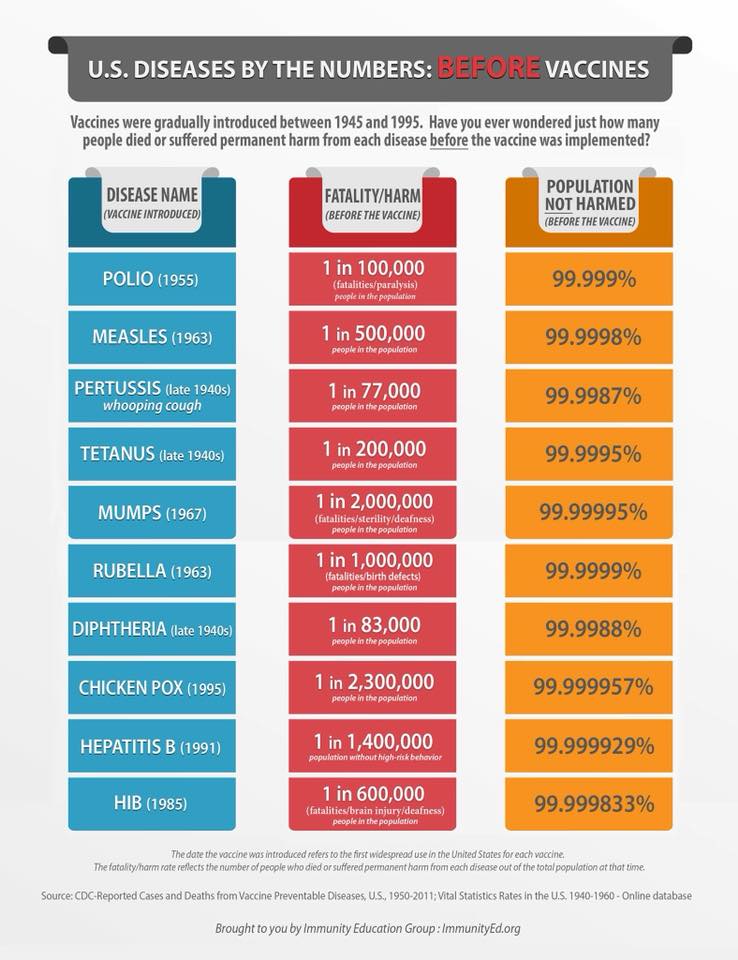
  • Stats: How Many People Died or Suffered Permanent Harm Before Vaccines

    Did you know? If not, you never had true informed consent prior to vaccinating your children. Sadly, policies are being made every day with the false assumption that vaccines are the magic that they claim to be and are completely safe. 99.9% of people who got the diseases we vaccinate our children against were not harmed by the illness. 

    The most important thing you can do for your child is to arm yourself with information and facts.  If you have already decided that as a parent you believe vaccinations are not right for your child, here is information on Idaho’s vaccine exemptions.   If you are currently researching vaccines and are unsure whether or not they are safe, or whether or not they make sense for your family, our best advice to you would be to hold off.

    Don’t continue vaccinating your child until you are 100% sure it is the right thing to do.  You can always continue vaccinating at a later date, but you can never, ever, take away the experience of injuring your child through dangerous chemicals and toxins being injected into their bloodstreams.   

    Here are some articles to start your research:

  • Meningitis Facts

    IDHW is set to add another vaccine to the required high school schedule. Meningitis. According to the IDHW website, meningitis refers to an inflammation of the tissues covering the brain and spinal cord. This inflammation can be caused by viruses and fungi, as well as bacteria. Viral meningitis is the most common type: it has no specific treatment but is usually not as serious as meningitis caused by bacteria. CDC mortality statistics reveal that there is a literal one in a million chance you will die from bacterial meningitis in the US. There are around 300 cases in the United States annually. CDC reflects a downward trend in the disease prior to vaccine recommendations. [1]Idaho has an average of 3 cases a year the past twelve years. Still, Idaho Health Department intends on requiring an additional dose of the MenACWY meningitis vaccine for a majority of the state’s high schoolers. 

    The CDC says there are two types of meningococcal vaccines available in the United States:

    • (MenACWY) Meningococcal conjugate vaccines targeting A, C, Y, and W-135 (Menactra® and Menveo®)
    • (MenB) Serogroup B meningococcal vaccines (Bexsero® and Trumenba®) 
      Serogroup B is now responsible for 60% of U.S. cases of meningococcal disease

    During public testimony July 2018, IDHW gave the reasoning for this new requirement of an additional dose of the MenACWY vaccine. The CDC added it to the recommended schedule. And, it’s to protect the students who decide to go to college. Yes, you might have you heard of the meningitis outbreaks on college campuses. 

    The flaw with this reasoning? The MenACWY vaccine is NOT the bacterial strain most commonly found on college campuses outbreaks.[2] According to the National Meningitis Association, the serogroup B bacteria accounts for more than one-third of the cases of the disease in the country and is only covered by the MenB vaccine. 

    It’s puzzling if the reason for adding an additional requirement is for the protection of future college students, then why not mandate the alternate MenB vaccine? 

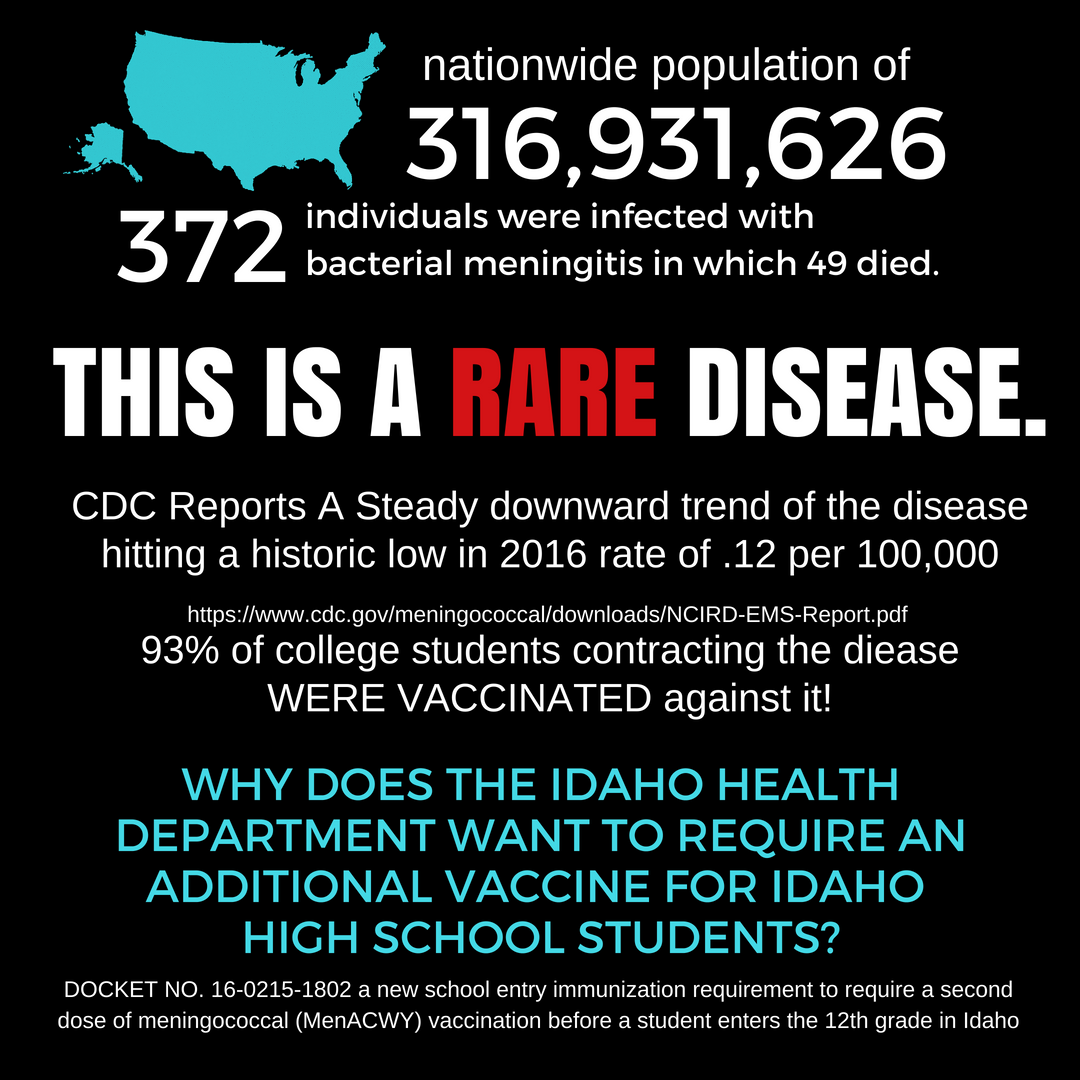
    Meningitis is a very rare disease.
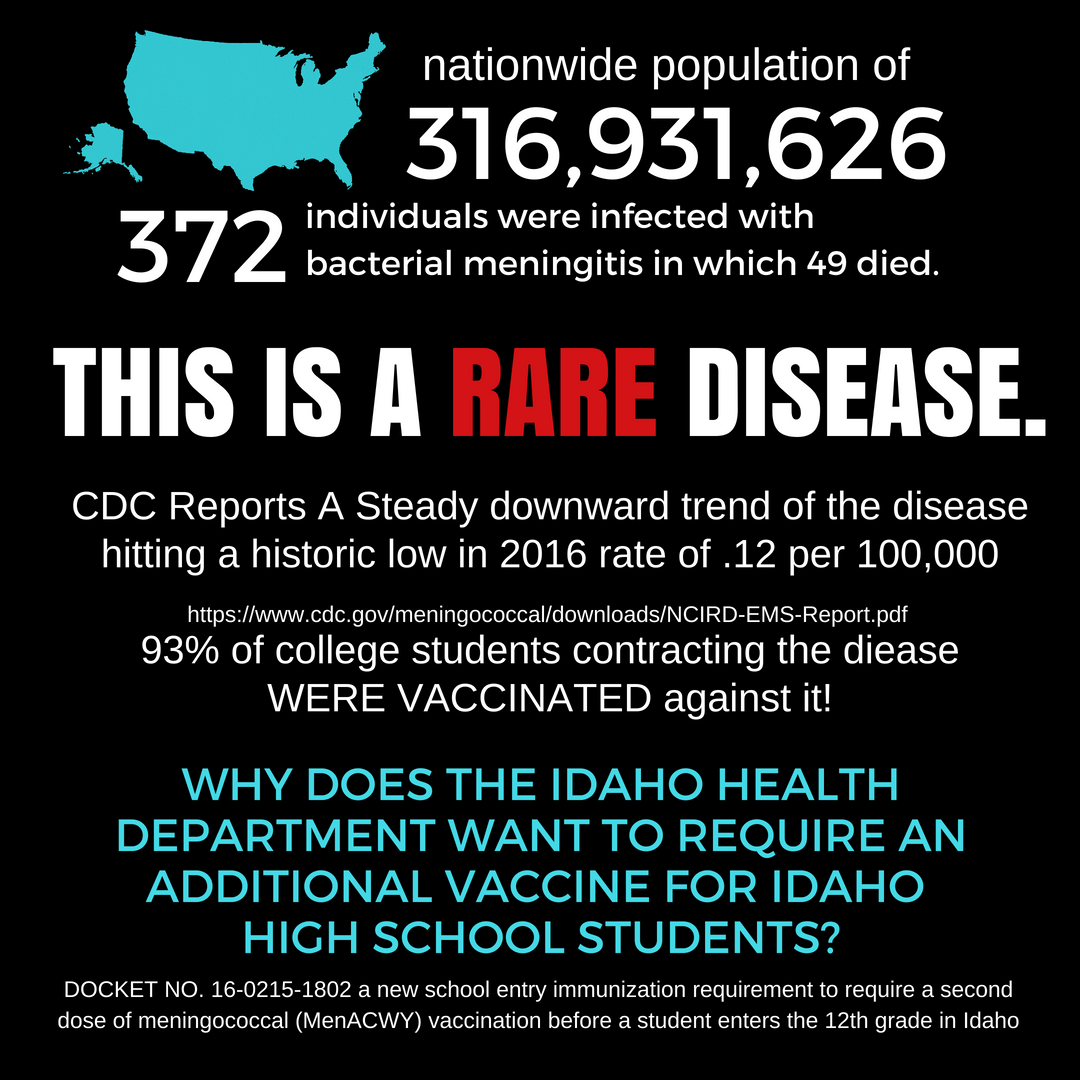
    In the United States last year there were 372 cases. 31 of cases aged 16 -23 of the strains covered by the MenACWY vaccine.

    • The MenACWY vaccine IDHW intends on requiring for high school covers 2/3rd of the bacterial strains of meningitis but NOT the bacteria of most serious concern for young adults. 
      • Serogroup B accounts for one-third of U.S. cases, and is the most common cause of disease in adolescents. The required vaccine doesn’t cover Serogroup B.
    • MenACWY has proven less than 58% effective two to five years after vaccination. In a college setting 91% of students who got meningitis were vaccinated with the MenACWY vaccine.

    Is meningitis serious? 

    Yes. But, with only 4 strains of bacterial meningitis and 0 strains of viral meningitis are in the recommended vaccine, it’s a guessing game, similar to the flu shot, on which strain you’d even be exposed to. The vaccine, in creating an artificial immune response, actually leaves you more vulnerable to the more virulent strains of meningitis, not covered in the vaccine. 

    Meningitis isn’t spread by standing next to a person. The bacteria doesn’t live very long outside the body. Transmission is spread exchange of saliva through kissing, sharing drinks or sharing toothbrushes.  

    Neisseria meningitidis, the meningococcal bacteria, is passed by coughing or contact with saliva and is normally present in the respiratory tracts of healthy people without causing disease [3, 4, 5]. In fact, probably no one escapes infection. Symptomatic disease is quite rare for N. meningitidis. As such, 100% of the population, vaccinated or not, are asymptomatic carriers at some point in their lives. In fact, at any time, 5-35% of the population is silently carrying the bacteria, though the numbers often rise to nearly 100% in close quarters, such as military barracks and college campuses [4]. 

    Is the meningococcal vaccine safe?

    • The meningococcal vaccine has been found to be about 58 percent effective within two to five years after adolescents have gotten the shot and, in 2011, CDC recommended that all 16-year-olds get a booster dose of meningococcal vaccine; 
    • The manufacturer product inserts for meningococcal vaccine list adverse events reported during clinical trials or post-licensure, including irritability, abnormal crying, fever, drowsiness, fatigue, injection site pain and swelling, sudden loss of consciousness (syncope), diarrhea, headache, joint pain, Guillain Barre Syndrome (paralysis), brain inflammation, convulsions, and facial palsy. 
    • Using the MedAlerts search engine, as of August 5, 2018, there were 24,344 cases of reported adverse reactions reported to the the federal Vaccine Adverse Events Reporting System (VAERS), for the MenACWY vaccines which includes only a small fraction of the health problems that occur after vaccination in the U.S., The vaccine caused 2477 serious health problems, hospitalizations and injuries following meningococcal shots, including 146 deaths

    Is the meningococcal vaccine effective? 

    GOT THE SHOT – STILL GOT THE DISEASE! 

    Not according to the CDC’s enhanced report on meningitis! Read the report: https://www.cdc.gov/meningococcal/downloads/NCIRD-EMS-Report.pdf
    92% of college students living onsite who contracted the meningitis were vaccinated against the disease with the MenACWY vaccine Idaho Health Department is requiring for high school students.


    Is the mandate of an additional vaccine necessary?

    The disease is on a downward trend, even without the ‘herd immunity rate’ of 95%. 

    Figure 1 shows incidence rates (per 100,000 persons) of meningococcal disease in the United States by year from 1970 to 2016. The incidence rate began declining in 1995; however, it has reached an historic low of 0.12 in 2016. View data for this chart.

    Idaho infectious disease reports shows the following for Neisseria meningitidis, often referred to as meningococcus. Which causes cause meningitis and other forms of meningococcal disease such as meningococcemia, a life-threatening sepsis. 

    Idaho’s rate of infection shows actual cases reported for the ACYW serogroups average 3 cases a year.  Nowhere is it reported that meningitis was transmitted in a school setting.
    Taking into account the vaccine effectiveness rate of 58% that’s recommending vaccines for a majority of high school students to prevent about 1 case of meningitis that does not even show transmitted in a school setting.

    There is no discussion here about the financial impact of requiring an ineffective vaccine for our high school students. Those who testified in favor of the new vaccine requirement would all financially benefit from the increased vaccine load. The individuals who spoke against the vaccine recommendations were parents of students who would be directly impacted by any adverse reaction their child would suffer. 

    How can you, as a parent, best protect your child from meningococcal infection?

    Answer:  Improve your child’s immune system by providing a healthy diet of whole foods that are rich in nutrients.  Give supplements that are high in antioxidants, balanced B-vitamins, minerals and essential fatty acids.  Give extra vitamin D3 during cold and flu season.  Heal the gut if your child has gastrointestinal problems.   Stress the importance of getting enough sleep and fresh air.   Help your child learn to relax.  And, just say NO to vaccines that damage your child’s innate immune system.

    Read about this vaccines function, efficacy and reactions here:

    https://schaabling.wordpress.com/2016/01/01/meningococcal-vaccine-meningitis/

    [1]. Meningococcal Disease and Vaccination.  Fear-Mongering?  YES!! (2011 – disease incident rates have DECREASED since)

    [2] https://www.nmaus.org/disease-prevention-information/serogroup-b-meningococcal-disease/outbreaks/

    [4] http://femsre.oxfordjournals.org/content/31/1/52.long?view=long&pmid=17233635

    [5] http://www.whale.to/vaccines/meningitis5.html

    Proposed Rule:

    https://adminrules.idaho.gov/bulletin/2018/07.pdf#page=91
    DOCKET NO. 16-0215-1802 (pg 91) The Health Department wants to “require a second dose of meningococcal (MenACWY) vaccination before a student enters the 12th grade in Idaho, starting with school year 2020-2021. If a student received their first dose of meningococcal (MenACWY) vaccine at 16 years of age or older, they will not be required to receive the second dose before entry into the 12th grade.”  

    https://www.millioninsights.com/industry-reports/meningococcal-vaccines-market

    Idaho Infectious Disease Reporting:
    http://healthandwelfare.idaho.gov/Health/Epidemiology/IdahoDiseaseSummary/tabid/202/Default.aspx

    Disease Trends in Idaho:

    http://healthandwelfare.idaho.gov/Portals/0/Health/Epi/Disease%20Summaries/ID%20DZ%20Trends_2016_FINALv2.pdf

    Rates of Vaccination: https://www.cdc.gov/vaccines/imz-managers/coverage/teenvaxview/data-reports/menacwy/trend/index.html

  • IDAHO 2018 School Enrollment: No Shots Mandated. No Form Necessary.

    As you begin to prepare for the new school year, remember that #parentscalltheshots. Contrary to the health and welfare generated school materials presented to parents at registration children CAN enroll in school without vaccines. Idaho has three vaccine exemptions religious, medical or philosophical. Idaho rules changed this year to line up with the statute a HUGE WIN for health freedom. Schools must accept a parent signed statement to invoke religious or philosophical exemptions. We repeat! The “immunization” exemption form is NOT REQUIRED! You can enroll your child in school as ‘exempt’ from the required school vaccines with a parental signed statement per Idaho statue 39-4802 -2.  

    Idaho Statute 39-4802(2) permits a parent/guardian:
     1. The right to choose whether to vaccinate their child
     2. The right to choose to participate or decline participation in the state vaccine registry system (IRIS).
     3. The right to opt out without explanation of objection.  

     OPT OUT OF ANY VACCINE. ANY TIME REASON WITH SIGNED PARENTAL STATEMENT.

    Here’s an example that a parent used for enrolling her elementary student. Printable PDF copy.

    Is you child’s vaccine status in the tri-state database? A child born in Idaho is automatically entered into Iris without written consent. At each doctor’s visit and school enrollment your child’s information is updated for government tracking. Prefer not to have your child’s information stored by the government? OPT OUT.

    What’s wrong with the form? Simply put they are using your child’s private medical information to drive their sales and increase their profit. When you allow your child’s vaccination exemption status to be tracked you are participating in the marketing campaign designed to target your family as ‘public health enemy’ number one.

    Superintendent confirms that vaccine exemption form is NOT REQUIRED for school enrollment

    If vaccines are safe and effective -Why are parents opting out?

    Parents have been empowered with information and truth. Reading vaccine inserts, reviewing ingredient lists and looking at scientific journals that accessible to the public. They are realizing that there are a lack of scientific studies for safety and effectiveness of vaccines. They are waking up to the truth that vaccines permanently damage, injure and cause death to children and adults. Families who suffered intense loss have NOTHING to gain by sharing their stories except the hope that their loss will prevent further destruction of the health and lives of other children.

  • Vaccine Injury and Death Can Happen with Just One Shot

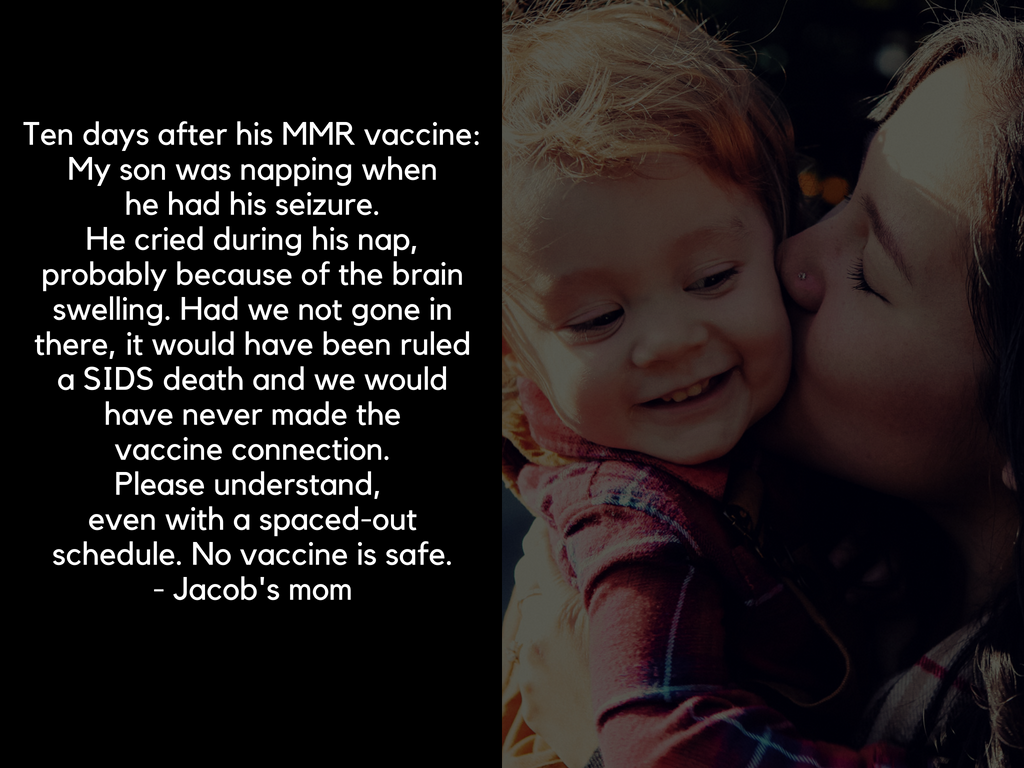
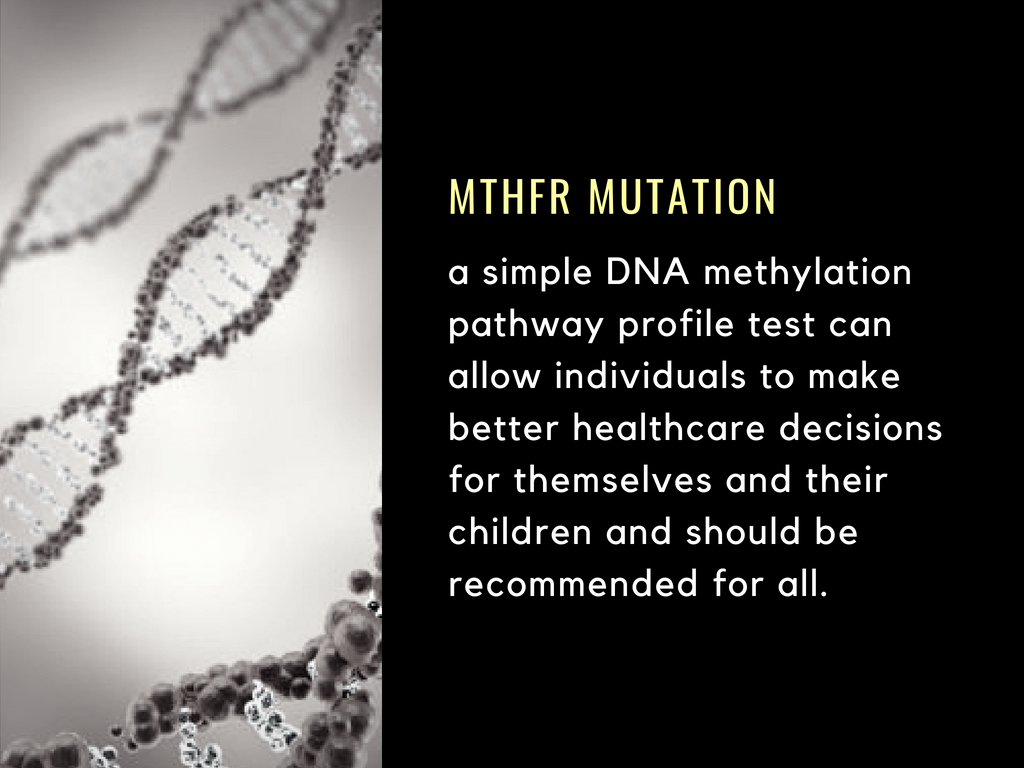
    Jacob’s mom tells the harrowing tale of the vaccine reaction that almost took the life of her son. Vaccines have been labeled by the US Supreme court as “unavoidably unsafe”. Parents are told that vaccine reactions are rare. They are told that infants who have a clean bill of health during a well-visit die for no apparent reason in weeks following their ‘routine vaccinations.’ Could there be a simple test that would screen for genetic susceptibility to adverse vaccine reactions? Possibly. However, since scientists and doctors want to avoid the discussion that some cases of SIDS could be triggered by a vaccine reaction, it is up to parents to be well informed. Health Freedom Idaho supports informed consent. 

    Learn more about vaccine reactions

    There is a wide spectrum of vaccine complications, which have been identified and acknowledged in the medical literature and by the Institute of Medicine (IOM), National Academy of Sciences, including:14 15 16 1718

    • Brain Inflammation/Acute Encephalopathy
    • Chronic Nervous System Dysfunction
    • Anaphylaxis
    • Febrile Seizures
    • Guillain Barre Syndrome (GBS)
    • Brachial Neuritis;
    • Acute and Chronic Arthritis
    • Thrombocytopenia
    • Smallpox, polio, measles and varicella zoster vaccine strain infection
    • Death (smallpox, polio and measles vaccine)
    • Shock and “unusual shock-like state”
    • Protracted, inconsolable crying
    • Syncope
    • Deltoid Bursitis

    Individual Susceptibility to Vaccine Reactions

    In 2012, the IOM published a report, Adverse Effects of Vaccines: Evidence and Causality,19  and acknowledged there are high risk factors not yet identified by medical science that can increase “individual susceptibility” to vaccine reactions:

    “Both epidemiologic and mechanistic research suggests that most individuals who experience an adverse reaction to vaccines have a pre-existing susceptibility. These predispositions can exist for a number of reasons – genetic variants (in human or microbiome DNA), environmental exposures, behaviors, intervening illness or developmental stage, to name just a few, all of which can interact. Some of these adverse reactions are specific to the particular vaccine, while others may not be. Some of these predispositions may be detectable prior to the administration of vaccine; others, at least with current technology and practice, are not.” – Institute of Medicine, 201220   

    Gaps in Knowledge About Individual Risks

    In 2013, the IOM published another report, The Childhood Immunization Schedule and Safety: Stakeholder Concerns, Scientific Evidence and Future Studies,21 and stated there are significant gaps in scientific knowledge about children, who are biologically at higher risk for suffering vaccine injury and death:

    “ The committee foundthat evidence assessing outcomes in subpopulations of children, who may be potentially susceptible to adverse reactions to vaccines (such as children with a family history of autoimmune disease or allergies or children born prematurely), was limited and is characterized by uncertainty about the definition of populations of interest and definitions of exposures or outcomes.” – Institute of Medicine, 201322

    Current Vaccine Schedule: More Testing Needed

    The IOM Committee, which examined the safety of the current federally recommended childhood vaccine schedule, found that it had not been fully scientifically evaluated:

    “Most vaccine-related research focuses on the outcomes of single immunizations or combinations of vaccines administered at a single visit. Although each new vaccine is evaluated in the context of the overall immunization schedule that existed at the time of review of that vaccine, elements of the schedule are not evaluated once it is adjusted to accommodate a new vaccine. Thus, key elements of the entire schedule – the number, frequency, timing, order and age at administration of vaccines – have not been systematically examined in research studies;” – Institute of Medicine (2013)23

    Outstanding Questions About Vaccines & Chronic Illness 

    Due to a lack of enough methodologically sound studies conducted and published in the medical literature, the IOM Committee examining the safety of the current childhood vaccine schedule was unable to determine if the schedule is or is notassociated with the development of the following chronic brain and immune disorders and disabilities in children:24

    • asthma;
    • atopy;
    • allergy;
    • autoimmunity;
    • autism;
    • learning disorders;
    • communication disorders;
    • developmental disorders;
    • intellectual disability;
    • attention deficit disorder;
    • disruptive behavior disorder;
    • tics and Tourette’s syndrome;
    • seizures;
    • febrile seizures and
    • epilepsy.

    Identifying Symptoms of Vaccine Reactions

    Not every serious health problem that occurs after vaccination is caused by a vaccine or vaccinations recently received. Different vaccines are associated with different vaccine reaction signs and symptoms that occur within different time periods following vaccination.

    If symptoms listed below occur in the hours, days or weeks following vaccination, it is very important to immediately contact a doctor:
    • pronounced swelling redness, heat or hardness at injection site that continues for days or weeks;
    • body rash or hives;
    • shock/collapse;
    • unresponsiveness, prolonged deep sleep;
    • high pitched screaming (may include arching of back);
    • hours of persistent, inconsolable crying;
    • high fever (over 103 F)
    • respiratory distress (difficulty breathing);
    • twitching or jerking of the body, arm, leg or head;
    • rolling or crossing of eyes;
    • severe head or neck pain;
    • joint pain or muscle weakness;
    • disabling fatigue;
    • loss of memory and mental skills;
    • paralysis of any part of body;
    • changes in sleep/wake pattern and dramatic personality changes;
    • lack of eye contact or social withdrawal
    • loss of ability to roll over, sit up or stand up
    • head banging or unusual flapping, rubbing, rocking, spinning;
    • onset of chronic ear or respiratory problems (including asthma);
    • severe/persistent diarrhea or chronic constipation;
    • excessive bruising, bleeding or anemia
    • other serious loss of physical, mental or emotional wellness

    Serious complications of vaccination can lead to permanent injury or death. Make sure that all health problems, hospitalizations and injuries that occur after vaccination are entered into permanent written and electronic medical records and written copies are kept by the person vaccinated or parent/guardian of that person.

    Learn more about how to recognize vaccine reaction symptoms and complications associated with the 17 different vaccines recommended by the CDC and medical trade associations.

    Additional Resources: vaccine ingredients, MTHFR

  • What Do Peanuts and Vaccines Have In Common?

    What do peanuts and vaccines have in common? Well, you’re probably thinking that some people have allergic reactions to both, and you are correct. Peanuts cause the most common severe food allergy reactions. 1.5 million children in our country are allergic to peanuts. New York Times reports “PEANUT OIL USED IN A NEW VACCINE; Product Patented for Merck Said to Extend Immunity.” For those with identified peanut allergies, this is a heart-stopping headline. However, that was 1964, and the vaccine additive was called Adjuvant 65. That excipient, though not approved in the US, became the model for subsequent vaccines. Oil in water vaccine adjuvants have always been controversial because they stimulate an abnormally strong immune response that may lead to immune disorders and yet, they are used increasingly in our vaccines. The CDC schedule has increased exponentially, the sheer number of vaccines with adjuvants that injected into the immature immune system of our children has quadrupled. Now decades later, it’s not hard to imagine where the food/peanut allergy epidemic came from. Due to the popular assumption that “vaccines are good” very little research has been conducted to see if there is a connection between the increased adjuvant laden vaccine schedule and the exponential increase in food allergens. However, a 2011 IOM report does affirm that vaccine ingredients do indeed lead to the development of allergies.15

    This study was largely ignored yet the escalating increase of children with food allergens cannot be ignored. The overall economic cost of childhood food allergies was estimated to be $24.8 billion per year (remember our cost is their profit). Is the rise of allergens ONLY linked to vaccinations? ABSOLUTELY NOT! Many un-vaccinated children suffer allergies. It is just one facet of the exponential increase in toxins our children’s systems that are becoming bombarded and overwhelmed. ( Two major laboratories found an average of 200 industrial chemicals and pollutants in umbilical cord blood)

    Introduction to Peanut Oil Adjuvant 65 & Highly reactive immune response adjuvants

    On January 12, 1967, The New England Journal of Medicine published another report evaluating Adjuvant 65 for “human use.”3 The authors of the report, led by Robert E. Weibel, MD and Allen F. Woodhour, PhD, described Adjuvant 65 as follows:

    The adjuvant preparation consisted of a water-in-peanut-oil emulsion of aqueous vaccine employing mannide mano-oleate (Arlacel A) as emulsifier and aluminum monostearate as stabilizer.3

    The desirability for maximal purity of antigens included in adjuvant formulations led to the development of a highly purified aqueous influenza-virus vaccine that has been tested both as aqueous material and incorporated into adjuvant 65 with excellent results.3

    The authors wrote that their report aimed to describe…

    the antibody responses in children and in older persons to a  highly purified bivalent influenza-virus vaccine in adjuvant 65 compared with those obtained with the purified and ordinary Sharples-concentrated aqueous vaccines. The vaccines were bivalent and contained only contemporary influenza A2 and B strains.3

    According to the report, the clinical trials with Adjuvant 65-containing vaccines were performed at the Pennhurst State School and St. Joseph’s Children’s and Maternity Home in Pennsylvania. Both of those institutions cared for “mentally retarded” individuals. The “investigations” were undertaken with the “concurrence of the medical and supervisory staffs of the institutions and with the approval of the Pennsylvania Association for Retarded Children.” The participants in “Study 55” at Pennhurst were mostly adults, while those in “Study 63” were children.3

    In her book The Peanut Allergy Epidemic: What’s Causing It and How to Stop It, Heather Fraser notes that Merck ultimately decided not to “pursue” Adjuvant 65 for use in vaccines licensed for use in the United States. She cites concerns about the emulsifier Arlacel A—that it “appeared to induce tumors in mice.”4

    That new excipient, though not approved in the US, became the model for subsequent vaccines. ([1] p 103)

    It was considered an adjuvant – a substance able to increase reactivity to the vaccine. This reinforced the Adjuvant Myth: the illusion that immune response is the same as immunity [2].

    The pretense here is that the stronger the allergic response to the vaccine, the greater will be the immunity that is conferred. This fundamental error is consistent throughout vaccine literature of the past century.

    According to a report by published in Clinical Microbiology Reviews by Sook-San Wong and Richard J. Webby of St. Jude Children’s Research Hospital in Memphis, TN:

    Currently licensed adjuvants for vaccine usage include aluminum salt (alum) and the squalene oil-in-water emulsion systems MF59 (Novartis) and AS03 (GlaxoSmithKline). MF59 has been licensed for use with seasonal vaccines in the elderly in some countries, while ASO3 has been used in conjunction with monovalent preparations of inactivated 2009 pandemic H1N1 and prepandemic H5N1 virus vaccines.5

    Oil in water vaccine adjuvants have always been controversial because they stimulate an abnormally strong immune response that may lead to immune disorders.6 Reports of squalene adjuvanted experimental anthrax vaccines were linked to autoimmune disorders in Gulf War veterans,7 although the U.S. Department of Defense continues to deny that squalene adjuvants were used in anthrax vaccines given to military personnel.

    GlaxoSmithKline’s ASO3 adjuvanted H1N1 pandemic influenza vaccine used in Europe and other parts of the world in 2009-2010 have been associated with narcolepsy, an autoimmune disorder.8 9In 2013, the FDA licensed the first squalene (AS03) adjuvanted H5N1 influenza A “bird flu” vaccine for national emergency stockpiles.10 In September 2015, the FDA Vaccines and Related Biological Products Advisory Committee voted to approve fast track licensure of a squalene (MF59) adjuvanted influenza vaccine for use in the elderly, but vaccine safety advocates voiced concern about lack of adequate scientific evidence the oily adjuvant has been proven safe for use in U.S. seniors.11 12

    The most commonly used adjuvant in vaccines in the United States is aluminum its neurotoxicity is has been researched and the impact is alarming.

    Childhood Food Allergies on the Rise

    A survey conducted by the National Center for Health Statistics highlights that prevalence of food allergies among children aged 0-17 years old increased from 3.4 percent in 1997-2011 to 5.1 percent in 2009-2011.2 Food allergies result in more than 300,000 ambulatory care visits a year among children under the age of 18.1 4 In fact, food allergies are the leading cause of anaphylaxis outside the hospital setting.1

    Today almost a 1.5 million children in this country are allergic to peanuts.

    Findings from a 2013 survey published in JAMA Pediatrics found that childhood food allergies result in significant direct medical costs for the U.S health care system and even larger costs for families with a child that suffers from it.3 The overall economic cost of childhood food allergies was estimated to be $24.8 billion per year. Direct medical costs amounted to $4.3 billion, costs incurred by the family totaled $20.5 billion and lost labor productivity costs totaled $0.77 billion annually.3  

    Our Cost is Their Profit.

    According to the U.S. Food and Drug Administration, eight foods account for 90 percent of food allergic reactions: peanuts, tree nuts, eggs, wheat, soy, fish, crustacean shellfish and milk.1 4 5Research has also shown that children with food allergies are two to four times more likely to have other related conditions such as asthma than their counterparts.2

    The Perfect Storm Brings A Wave of Peanut-Allergic Kinders in 1995

    According to The Peanut Allergy Epidemic: What’s Causing It and How to Stop It. There were four events happened all at once leading up to 1990 so that in 1995 a wave of peanut-allergic kindergartners was sent to school for the first time.

    The events of that perfect storm are:

    1. Vitamin K Shot
    The vitamin K1 shot became part of the general consent for treatment in hospital births in the mid-1980s. The injection was linked to leukemia in 1998, and the formula was changed in 2006. In both the new and the old versions, the popular brands of vitamin K1 contained a hefty dose of aluminum adjuvant to make a “depot” under the skin to slowly release the K1 over at least the next 2 months. The original formula contained castor oil, which is known to cross-sensitize immune systems to peanut oil. The 2006 reformulation of K1 replaced the castor oil with lecithin derived from soybean and egg. Due to the cross-reactivity molecular weights of soybean and peanut, soybean is sensitizing some babies to peanut and tree nut. That depot of aluminum is still in the infant body, churning out an IgE antibody response, at the time the baby receives the two-month vaccines. It is estimated that 4% of injected aluminum remains in the body for an indefinite period of years.

    hib vaccine2. Bacterial Hib Vaccine 

    The invention of the bacterial Hib vaccine and its subsequent licensing for use in two-month old babies arrived in 1990. Children under the age of two years were not responding to the Hib vaccine’s carbohydrate antigen, which led manufacturers to create the CDC schedule’s first “conjugate vaccine” which covalently bonded the bacterium to a toxic carrier protein that the infants’ bodies would recognize: either tetanus or diphtheria toxin. This new carrier toxin acted as an adjuvant, stimulating an immune response. Two vaccines hit the market in 1988-89 for 15 – 18-month-old babies. By 1990 the age of use had been dropped to two-month-old babies, and an additional two more vaccines were on the market, being administered at the same time as the DTP and polio vaccines. It is now known that the structure and weight of the Hib bacteria proteins are very similar to the structure and weight of the peanut protein, which leads to cross reactivity to peanuts and tree nuts. We are, essentially, creating anaphylactic babies in the same manner researchers create anaphylactic mice: administering a peanut-like protein fused to adjuvant bacterial toxin.

    3. Combination Vaccines 5 in 1 

    By 1995 the countries of the western world were giving five vaccines in one needle for the first time. In the next three years there were 5,000 adverse reports filed in Canada, which is assumed to be only 10% of the actual adverse reactions. The effects of combining five viruses with multiple adjuvants and preservatives in one needle are essentially unstudied, though the Canadian Department of Pediatrics’ sheet on a five-in-one vaccine listed brain inflammation, convulsion, anorexia, infections, anaphylaxis, inconsolable screaming, and death as side effects.

    4. Increased Vaccine Schedule Gov’t Demanded Compliance via statutes and marketing
    In 1992 the already-crowded CDC vaccination schedule added additional doses of combination vaccines, resulting in load upon load of aluminum and antigens being delivered to the bodies of two-month old babies. Prior to this time the vaccination rates for children four years old and under in the western world were between 55% and 65%. The 1994 National Vaccine Plan aimed for 90% compliance for all infants and spent $500M to achieve it. Vaccinations became a requirement for preschools and daycares for the first time. Canada, Australia, and the U.K. made the same changes at the same time as the United States. Vaccination rates were suddenly at a record high — all well over 90% — on a jam-packed schedule of aluminum-loaded combination vaccines.

    In the United States, emergency room records showed that from 1992-1994, 467 people per 100,000 were discharged from the ER after having experienced anaphylaxis.
    By 1995 that number had almost doubled to 876 per 100,000.
    By 2008 there were 1,000,000 peanut allergic children under 18 in the US and 2,000,000 adults.

    We are overwhelming the immature newborn immune system with this toxic soup. It is not difficult to take Ms. Fraser’s collection of data and extrapolate the effect those reckless changes had on the similar epidemics of autism spectrum disorder, ADHD, asthma, epilepsy, childhood diabetes, and more. This country needs to take a step back and learn from the gigantic elephant in the room, even at the expense of loosening the reins of public health policy and admitting the cost that the vaccination schedule has had in collateral damage.

    The most infuriating part of Ms. Fraser’s book is the light she shines into the dark corners of the “search for the cause” of the peanut allergy epidemic. She exposes the game of The Emperor Has No Clothes that has been played between pharmaceutical companies and the governments of the western world for at least the last 85 years. It is only acceptable — and, in fact, of utmost importance — to research a source of any epidemic as long as it is not vaccines, because the fact that vaccines are proven to be safe is unquestionable. Throughout her book she presents a painstakingly researched timeline and builds a convincing case of circumstantial evidence — the kind of facts that juries use to convict criminals every day of the week.

    ~ Robyn Charron

    Research Finds Vaccinations Linked to Development of Allergens 

    In 2009, the U.S. Department of Health and Human Services appointed the Institute of Medicine (IOM) to provide a review of medical and scientific evidence on the adverse effects of vaccines. The 2011 IOM report does affirm that vaccine ingredients do indeed lead to the development of allergies.15 The report states:

    Adverse events on our list thought to be due to IgE-mediated hypersensitivity reactions Antigens in the vaccines that the committee is charged with reviewing do not typically elicit an immediate hypersensitivity reaction (e.g., hepatitis B surface antigen, toxoids, gelatin, ovalbumin, casamino acids). However, as will be discussed in subsequent chapters, the above-mentioned antigens do occasionally induce IgE-mediated sensitization in some individuals and subsequent hypersensitivity reactions, including anaphylaxis.15

    The effect of vaccine adjuvants and multiple simultaneous vaccinations also contributes to the development of food allergies. A report published in the Journal of Developing Drugs explains:

    Pertussis toxin and aluminum compounds act as adjuvants. These adjuvants are known to bias for IgE synthesis. Injecting food proteins along with these adjuvants increases the immunogenicity of the food proteins that are present in the vaccines. With up to five shots administered simultaneously, numerous food proteins and adjuvants get injected at one time. This increases the probability of sensitization.12

    The 2011 IOM report does affirm that vaccine ingredients do indeed lead to the development of allergies.15 The report states:

    Adverse events on our list thought to be due to IgE-mediated hypersensitivity reactions Antigens in the vaccines that the committee is charged with reviewing do not typically elicit an immediate hypersensitivity reaction (e.g., hepatitis B surface antigen, toxoids, gelatin, ovalbumin, casamino acids). However, as will be discussed in subsequent chapters, the above-mentioned antigens do occasionally induce IgE-mediated sensitization in some individuals and subsequent hypersensitivity reactions, including anaphylaxis.15

    These findings are now almost a decade old. Current research and discussion on the cause of food allergies has not addressed the effects of vaccines. This is an important area of research to pursue, given that the number of vaccines recommended in the CDC’s childhood vaccine schedule has doubled since 1983. 

    The popular assumption that “vaccines are good” is more than likely the reason why vaccination is not considered to be a factor when examining in the cause of food allergies. It is crucial for public health agencies and officials to explore this angle and focus efforts on understanding the impact of vaccination on the development of childhood food allergies among other health conditions before it’s too late.

    • RESOURCES:
    • https://vactruth.com/2010/07/15/non-disclosed-hyper-allergenic-vaccine-adjuvant/
    • Are Peanut Adjuvants in Vaccines Responsible for the Peanut Allergy Epidemic?
    • http://thinkingmomsrevolution.com/whats-really-behind-peanut-allergy-epidemic/
    • NEW YORK TIME ARTICLE INFORMATION:
      The vaccine was developed by Allen F. Woodhour, PhD and Dr. Thomas B. Stim over the course of six years as part of a partnership between the Merck Institute for Therapeutic Research and the Children’s Hospital of Philadelphia, PA.1 According to the Times article, the vaccine was still under study at the time and had not been licensed for “general use,” although clinical trials had been conducted on 880 individuals, who had been given the killed influenza virus containing Adjuvant 65.1 A report published in The New England Journal of Medicine on September 3, 1964 described the “clinical and immunologic findings” of the trials on the participants, which resulted in the “development of a new and highly effective adjuvant, called adjuvant 65.”2 
    • ([1] p 103) 1. Fraser, H, The Peanut allergy epidemic, Skyhorse 2011
    • 2. O’Shea, T, Vaccination is not immunization, thedoctorwithin 2013
    • 9. Technical Report # 595, Immunological Adjuvants, World Health Org. 1976.

  • Chicken Pox Vaccine: the Fine Print and Informed Consent

    Statistics released by the CDC show that 11% of Idaho parents are choosing to opt-out of the chickenpox vaccine for their kindergartner. Idaho parents who choose to opt-out of the chicken pox vaccine have done so after careful risk versus benefit analysis. Research reveals that complications from the chicken pox disease are at a rate of 1.4 per 100,000 (.0014%). Injury or reaction from the vaccine is 1 out of 1,481. Clearly, informed parents realize that the vaccine is riskier than the disease. 

    Moral Objection To Injecting Children With DNA From Aborted Fetuses

    Moral opposition to this vaccine comes in light of the disclosure that the chickenpox vaccine is produced in lung tissue obtained from two surgically aborted human fetuses (Exp. Cell Res. 37:614-636, 1965; Nature 227:168-170, 1970). Merck’s own literature states the vaccine contains “residual components” of fetal lung cells from a fetus of 14 weeks old.
    Informed consent, a fundamental tenet of ethical medical practice, dictates that citizens should have a choice whether or not they are injected with another person’s body cells. [Or anything else.]

    fetus pictured above is between 14 – 16 weeks old the same age as the fetuses used as spare parts for the vaccines injected into our children.

    Chicken Pox Vaccine Designed to Save $$ Not Lives

    From the medical and health-care cost perspectives, chicken pox vaccine is a loser. Two studies, one funded by Merck, found that only if lost wages are included for a parent to stay home with a sick child is there cost advantage to using chicken pox vaccine (JAMA 271: 375-381, 1994; J. Ped. 124(6): 869-874, 1994).

    While providing lifelong immunity, chicken pox disease [not vaccine] carries a very low risk of complications and death. Writing in the British medical journal, the Lancet (343: 1363, 1994), a voice of reason, Dr. Arthur Lavin, Department of Pediatrics, St. Luke’s Medical Center in Cleveland, Ohio, presented concerns that “argue strongly against the licensure of varicella vaccine for healthy children.” Lavin asserted: “[Chicken pox] is not major in the sense of disease mortality or morbidity. Therefore, if healthy children were fully vaccinated it is unclear in what significant way the health of the children or the economic health of their families would be improved.

    Summary:

    1. The chicken pox is a benign, self limiting childhood illness. 99.9% of children suffer NO complications and gain life-time immunity. Not a single Idaho child has died from the disease (or complications) in more than a decade.
    2. CDC reports that the Chicken Pox vaccine is NOT effective long term adding a second dose due to waning immunization rates.
    3. Chicken Pox vaccines can cause serious injury or even death. 1 out of every 1,481 children administered the VACCINE suffered adverse reaction.
    4. Complications from the chicken pox disease are EXTREMELY RARE. Complication occur in 1.4 per 100,000 cases of chicken pox in normal children.

    1. Benign Childhood Illness experienced by the entire population as children PRIOR to 1995 vaccine introduction.

    CDC reports there were  3,700,000 cases of chicken pox cases EACH YEAR prior to the vaccine and that there were 100 U.S. deaths each year (50 children and 50 adults)* the majority of those deaths had compromised immune systems or other health problems 

    Before the vaccine the chance of complications resulting in death from chicken pox was .00002702 <source>1

    For 99.9 percent of healthy children, chickenpox is a mild disease without complications. However, up to 20 percent of adults who get chickenpox develop severe complications such as pneumonia, secondary bacterial infections, and brain inflammation (which is reported in less than one percent of children who get chickenpox). Most children and adults who develop these serious complications have compromised immune systems or other health problems.

    2. Chicken Pox Vaccine NOT effective long term with ‘immunity waning’ so that CDC now suggests a second dose. <source> 2

    We give our children the chicken pox vaccine. This vaccine required by many schools and daycares carries a limited protection from the illness and is not guaranteed effective. The vaccine itself contains a LIVE VIRUS which is KNOWN to spread chickenpox to others.
    How Effective is the chicken pox vaccine?

    • Chickenpox vaccine effectiveness is reported to be 44 percent for any form of the disease and 86 percent for moderate to severe disease;

    Consider this. 

    A close friend, has seven children at home. The teen was required to be ‘updated’ on his vaccines in Junior High because the CDC is now acknowledging that the vaccine ‘wears out’ over time. So, in order to continuing attending school activities, he received the chicken pox vaccine. Within days, his elder sibling came down with the illness. Unfortunately, she wasn’t aware that she was sick until she was away from home on her Senior Trip to Disneyland. The vaccine cause her to expose her entire class and those around her at Disneyland to the illness.  Arriving back home, contagious, she then spread the illness to younger siblings, many had already been vaccinated with chicken pox vaccine in the past several years.

    This one family’s story prove that:

    1. The chicken pox vaccine sheds and others do catch the chicken pox disease.

    2. The chicken pox vaccine is not always effective.

    3. Danger of complications from the chicken pox illness increased with age.

    Most concerning is that Chickenpox is much more serious when caught by previously unexposed adults, when it can lead to pneumonia.Mass use of chickenpox vaccine by children in the U.S. has removed natural boosting of immunity in the population, which was protective against shingles, and now adults are experiencing a shingles epidemic.

    From the story above its obvious, the vaccinated individual could spread the disease to the immuno-compromised, who can develop septicaemia or meningitis. 

    4. The vaccine is one of convenience, not about saving lives.

    Is chicken pox really dangerous? The current estimated death rate for chicken pox is only 1.4 per 100,000 cases (0.0014%) in normal children. It rises to 30.9 deaths per I00,000c ases (0.0309%) in adults.

    As you can see,the death rate is still quite small. Although, it is FAR better to contract chicken pox as a child, than to wait until the adult years.

    Its worth noting chickenpox illness is more of a concern of economics than of deadly outbreak. Children are banned from childcare during the long course of the contagious window of chickenpox, a parent has to take up to a week or more off work to look after their afflicted kids at home.  The CDC and local health departments use the ‘time from work’ reason to have children vaccinated.

    5. Is the Chicken Pox Vaccine itself dangerous? YES.
    Some children will have life long injury from the vaccine itself.

    Chickenpox vaccine is already associated with adverse effects in one in 1,481 vaccinations.1

    Using the MedAlerts search engine, as of September 30, 2015 there had been 3,358 serious adverse events reported to the Vaccine Adverse Events Reporting System (VAERS) in connection with chickenpox and varicella-containing vaccines since 1990. Over half of those serious chickenpox vaccine-related adverse events occurring in children six years old and under. Of these chickenpox-vaccine related adverse event reports to VAERS, 161were deaths, with over 60% of the deaths occurring in children under six years of age.
    visit NVIC for more important information about Chicken Pox Disease and Vaccine. 

    IDAHO PARENTS who choose to opt-out of the chicken pox vaccine have done so after careful risk verus benefit analysis. Idaho statue permits a parent’s choice, however, the Idaho Health and Welfare department chooses to attempt to harass and intimidate parents with letters sent home to parents with wording such as; “I also understand that it is my responsibility to provide the school with proof of the vaccines above and that failure to do so will result in exclusion of my child from school.”

    Vaccine Tracking and Exemptions.

    Contrary to the Health Department’s propaganda, Idaho has vaccine exemptions available to all children attending school and daycare. Parents have become educated and according to the CDC numbers, 11% of parents choose to opt-out of the chicken pox vaccine for their kindergarten-aged children. These statistics come from Idaho’s vaccine tracking database. Each child enrolled in school is entered into the database without a parent’s acknowledgement. Learn more about how to opt your child out of the tracking system. https://hfi.designbyparrish.com/iris-opt-out 

    Supporting a parents right to informed consent is a key concern of Health Freedom Idaho. Support us as we protect your right to choose medical procedures for your child. JOIN us!

    SOURCES:
    1. http://www.nvic.org/vaccines-and-diseases/Chickenpox/chickenpoxfacts.aspx as confirmed by CDC’s own number: https://www.cdc.gov/chickenpox/surveillance/monitoring-varicella.html
    2.0 https://academic.oup.com/jid/article/197/7/944/798673/Primary-Vaccine-Failure-after-1-Dose-of-Varicella
    failure rate of chicken pox vaccine: https://www.ncbi.nlm.nih.gov/pubmed/22659447

    1. http://jamanetwork.com/journals/jama/fullarticle/193060

    Conditional entry letter – does NOT provide information to parents that vaccine exemptions are available: https://healthandwelfare.idaho.gov/Portals/0/Health/Idaho%20Immunizations/School_Conditional_Admission_Form_English.pdf

  • Polio Vaccine

    Do you know the difference between non-polio acute flaccid paralysis (NPAFP) and polio paralysis? 

    “…while India has been polio-free for a year, there has been a huge increase in non-polio acute flaccid paralysis (NPAFP). In 2011, there were an extra 47,500 new cases of NPAFP. Clinically indistinguishable from polio paralysis, but twice as deadly, the incidence of NPAFP was directly proportional to doses of oral polio received.” 

    Research source: https://www.ncbi.nlm.nih.gov/m/pubmed/22591873/
    Image from: https://www.omsj.org/wp-cont…/…/Acute-Flaccid-Paralysis1.jpg

    Learn more about the Polio Vaccine here in the U.S.

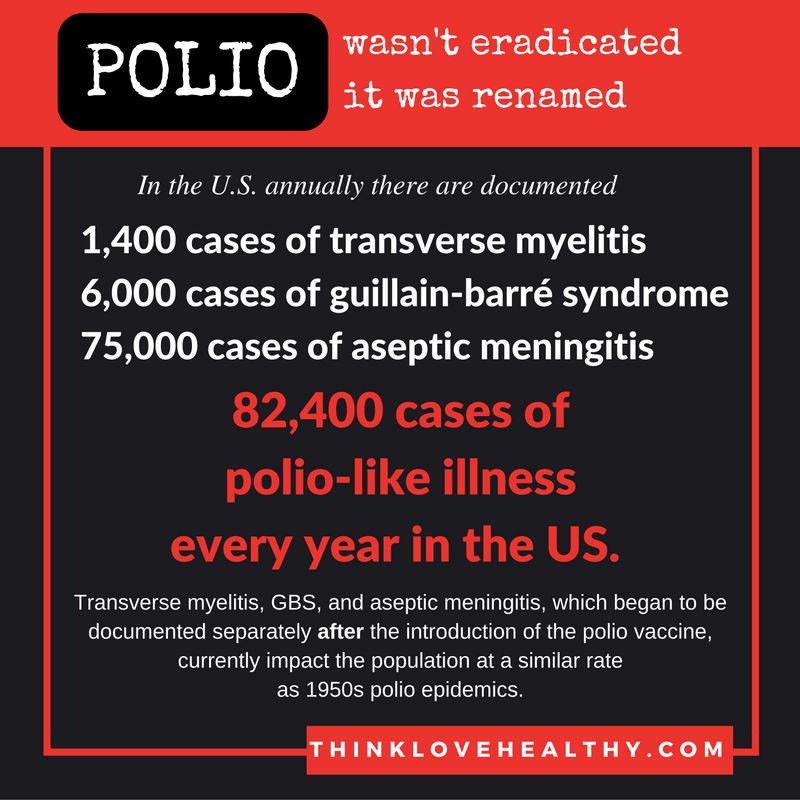
    POLIO not eradicated, just renamed.

  • Baby dies from “meningitis” 2 days after vaccinations. Was it vaccine-induced?

    A sweet child died. Our hearts ache for his parents and beat furiously against the media spin. This child received four month vaccinations two days prior to his death. It is so easy to blame this on some anonymous, alleged villain running around spreading meningitis into the air. The media is gleefully using this story to sell vaccines, to elicit fear, and point the finger at the unvaccinated, that is just robbing people of the truth.

    Here’s the story in summary: 

     Healthy 4 month old child is taken to the doctor for well-baby visit.
     Baby receives vaccines to protect against meningitis, pertussis, tetanus, etc.
     Two days after receiving vaccines, baby dies of meningitis.
     Meningitis is listed on vaccine inserts as an adverse event reported to occur after vaccination.
     Medical professionals recommend vaccinating to prevent meningitis and blame the unvaccinated for the death of the child.

    ———————————–

    “…just two days after Killy had received his 4-month-old vaccinations, Dempsey and her fiancé Gabriel Schultz were informed that their baby had most likely contracted meningitis, an inflammation of the protective membranes that cover the brain and spinal cord.”

    ———————————–

    The CDC recommended vaccines the vaccine inserts for each of these can be found: http://www.immunize.org/fda/ 

    The following information/package inserts list meningitis as an adverse event which has been reported after receiving the Pentacel and Pedarix vaccines. When your child is given vaccines at 4 months of age, your pediatrician will typically give one of these (in addition to other vaccines).

    Pentacel [DTaP, Hib, Polio]:
    https://www.vaccineshoppe.com/image.cfm?doc_id=13799&image_type=product_pdf

    Pediarix [DTaP, Hep B, Polio]:
    https://www.gsksource.com/pharma/content/dam/GlaxoSmithKline/US/en/Prescribing_Information/Pediarix/pdf/PEDIARIX.PDF

    ———————————–

    The huge holes in the story are obvious to someone looking:

    • Does that mean he is known to have come in contact with a current or recent meningitis patient? All cases of meningitis are tracked by the CDC. 
    • Was the patient and baby infected with a viral meningitis (there are no vaccines for that kind) or bacterial? Was it even a ‘vaccine preventable meningitis? OR perhaps was it a vaccine – induced meningitis! 

    This baby’s immune system was working overtime. The vaccines that CDC recommends at four months: a HIB, PCV, and Rotavirus, DTaP, Polio and Hep B – which could have caused meningitis. 

    Meningitis

    Meningitis is an inflammation of the membranes (meninges) surrounding your brain and spinal cord.

    Many viruses and bacterias could cause meningitis—it’s a rare reaction to an infection. Strep pneumoniae, Neisseria meningitidis (of which around 10% of the population is a natural carrier of, walking around with it in the back of their nose and throat), Haemophilus influenzae, Listeria, and viruses like enteroviruses, herpes simplex, HIV, mumps, West Nile Virus, rotavirus, etc. can all cause meningitis.

    Menegitis cause by neisseria meningitidis is VERY RARE with a one in a million chance of getting the disease. CDC reports its at an all time low. 372 cases in 2016. Less than 3 people a year average get bacterial or viral meningitis in Idaho. Death from the disease is VERY VERY RARE. Idaho health department recently decided to add a booster shot of meningitis to the high school requirements. Here’s an article showing you how rare and ineffective the vaccine is.

    There is no vaccine that covers all these types of meningitis. There are two Meningococcal vaccines in the USA, and each covers only a few strains of Neisseria meningitidis.

    For someone to develop Meningitis, bacteria needs to enter the bloodstream and travel to the brain and spinal cord to cause acute bacterial meningitis. Or bacteria directly invade the meninges. This may be caused by an ear or sinus infection, a skull fracture, or, rarely, after some surgeries. Or…What about vaccines? Bacterial and viral components are injected directly into a tiny infants muscle, then are processed by the immune system via the blood stream. A vaccine also suppresses your immune system even further. Infants often present with other infections after vaccinations, because their immune system is working overtime.

    Learn More about Meningitis. Don’t be robbed of truth and informed consent by media spin.

    Vaccine reactions include meningitis as reported from vaccine inserts on the recommended 4th month old vaccine schedule.

    “Other serious adverse events that occurred within 30 days following DAPTACEL include three cases of pneumonia, two cases of MENINGITIS and one case each of sepsis, pertussis (post-dose 1), irritability and unresponsiveness.”  https://www.vaccineshoppe.com/image.cfm?doc_id=11179&image_type=product_pdf

    “In addition to reports in clinical trials, worldwide voluntary reports of adverse events received for ENGERIX-B since market introduction (1990) are listed below. This list includes SAEs or events that have a suspected causal connection to components of ENGERIX-B. Infections and Infestations: Herpes zoster, MENINGITIS.”  https://www.gsksource.com/pharma/content/dam/GlaxoSmithKline/US/en/Prescribing_Information/Engerix-B/pdf/ENGERIX-B.PDF

    “Worldwide voluntary reports of adverse events received for INFANRIX and/or ENGERIX-B in children younger than 7 years of age, but not already reported for PEDIARIX, are listed below. This list includes serious adverse events or events that have a suspected causal connection to components of INFANRIX and/or ENGERIX-B. Nervous System Disorders: Encephalopathy, headache, MENINGITIS, neuritis, neuropathy, paralysis.” 
    https://www.gsksource.com/pharma/content/dam/GlaxoSmithKline/US/en/Prescribing_Information/Pediarix/pdf/PEDIARIX.PDF

    “The following additional adverse events have been spontaneously reported during the post-marketing use of PENTACEL worldwide, since 1997. Infections and infestations: MENINGITIS, rhinitis, viral infection.”  https://www.vaccineshoppe.com/image.cfm?doc_id=13799&image_type=product_pdf

    Read about this shots function, efficacy and reactions here:
    https://schaabling.wordpress.com/2016/01/01/meningococcal-vaccine-meningitis/

    [1]. Meningococcal Disease and Vaccination.  Fear-Mongering?  YES!! (2011 – disease incident rates have DECREASED since)

    [3] https://www.facebook.com/groups/gentleinformants/permalink/1004672592923652/

    [4] http://femsre.oxfordjournals.org/content/31/1/52.long?view=long&pmid=17233635

    [5] http://www.whale.to/vaccines/meningitis5.html

    New Proposed Rule:

    https://adminrules.idaho.gov/bulletin/2018/07.pdf#page=91

    https://www.millioninsights.com/industry-reports/meningococcal-vaccines-market

    Idaho Infectious Disease Reporting:
    http://healthandwelfare.idaho.gov/Health/Epidemiology/IdahoDiseaseSummary/tabid/202/Default.aspx

    Disease Trends in Idaho:

    http://healthandwelfare.idaho.gov/Portals/0/Health/Epi/Disease%20Summaries/ID%20DZ%20Trends_2016_FINALv2.pdf

  • Public Comment Needed: Idaho to Add Second Shot of Meningitis Vaccine for High School

    The Health Department wants to add a second required shot for meningitis to the high school schedule. Here’s the key points. Meningitis is a rare disease, the most serious cases are caused by bacteria. The disease been on a downward trend with historic lows in 2016. Around 300 people in the US and an average 3 in Idaho contract bacterial Meningococcal meningitis each year. The meningococcal vaccine is intended to protect against only 4 strains of bacteria and hasn’t proven very effective. CDC reports findings that 93% of the college students contracting the disease were vaccinated!  Even in the light of these facts, IDHW proposes a new requirement for high school students receive another dose of an ineffective vaccine for a rare disease. Time is of the essence – public comments will only be received until FRIDAY SEPTEMBER 17 is the last day for public comment!

    E-mail: Rafe.Hewett@dhw.idaho.gov  

    TESTIFY IN PERSON!  September 17 – 9:30 a.m.

    Courtyard by Marriott
    Balboa Meeting Room
    1789 S Eagle Road Meridian, ID 83642
    CALL IN 877-820-7831  Participant #137508

    Meningitis. 

    A rare disease that has an annual death rate in the U.S. of approximately 1 in 1,000,000; literally “one in a million.” [1]

    Neisseria meningitidis, the meningococcal bacteria, is passed by coughing or contact with saliva and is normally present in the respiratory tracts of healthy people without causing disease [3, 4, 5]. In fact, probably no one escapes infection. Symptomatic disease is quite rare for N. meningitidis. As such, 100% of the population, vaccinated or not, are asymptomatic carriers at some point in their lives. In fact, at any time, 5-35% of the population is silently carrying the bacteria, though the numbers often rise to nearly 100% in close quarters, such as military barracks and college campuses [4].

    Is meningitis scary? Yes. But, with only 4 strains of bacterial meningitis and 0 strains of viral meningitis in the vaccine, it’s a guessing game, similar to the flu shot, on which strain you’d even be exposed to. The vaccine, in creating an artificial immune response, actually leaves you more vulnerable to the more virulent strains of meningitis, not covered in the vaccine. 

    Idaho infectious disease reports shows the following for Neisseria meningitidis, often referred to as meningococcus. Which causes cause meningitis and other forms of meningococcal disease such as meningococcemia, a life-threatening sepsis. 

    2016: 3 cases
    2015: 0 cases
    2014: 5 cases
    2013: 4 cases

    According to the CDC’s Enhanced Meningococcal Disease Surveillance Report, 2016 the rare disease has been on a downward trend since the late 1990’s.  372 people in 2016 got the disease nationwide. (Incident rate of .12 of 100,000).

    DOCKET NO. 16-0215-1802 (pg 91) The Health Department wants to “require a second dose of meningococcal (MenACWY) vaccination before a student enters the 12th grade in Idaho, starting with school year 2020-2021. If a student received their first dose of meningococcal (MenACWY) vaccine at 16 years of age or older, they will not be required to receive the second dose before entry into the 12th grade.”

    The vaccine they are requiring only covers 50% of the strains and is less than 10% effective. Is this about the health of Idaho’s children? 

    How can you, as a parent, best protect your child from meningococcal infection?

    Answer:  Improve your child’s immune system by providing a healthy diet of whole foods that are rich in nutrients.  Give supplements that are high in antioxidants, balanced B-vitamins, minerals and essential fatty acids.  Give extra vitamin D3 during cold and flu season.  Heal the gut if your child has gastrointestinal problems.   Stress the importance of getting enough sleep and fresh air.   Help your child learn to relax.  And, just say NO to vaccines that damage your child’s innate immune system.

    Read about this shots function, efficacy and reactions here:

    https://schaabling.wordpress.com/2016/01/01/meningococcal-vaccine-meningitis/


    [1]. Meningococcal Disease and Vaccination.  Fear-Mongering?  YES!! (2011 – disease incident rates have DECREASED since)

    [3] https://www.facebook.com/groups/gentleinformants/permalink/1004672592923652/

    [4] http://femsre.oxfordjournals.org/content/31/1/52.long?view=long&pmid=17233635

    [5] http://www.whale.to/vaccines/meningitis5.html

    New Proposed Rule:

    https://adminrules.idaho.gov/bulletin/2018/07.pdf#page=91

    https://www.millioninsights.com/industry-reports/meningococcal-vaccines-market

    Idaho Infectious Disease Reporting:
    http://healthandwelfare.idaho.gov/Health/Epidemiology/IdahoDiseaseSummary/tabid/202/Default.aspx

    Disease Trends in Idaho:

    http://healthandwelfare.idaho.gov/Portals/0/Health/Epi/Disease%20Summaries/ID%20DZ%20Trends_2016_FINALv2.pdf

  • How Can They Just Change The Rules Like That?!

    Did you see the new rules? The Health Department is busy this summer and your IMMEDIATE ATTENTION NEEDED! This Thursday and Friday, you the citizen, has the opportunity to use voice and direct the outcome of the rules that affect your family. Our state government is structured in a way that the statutes are voted upon by the Legislature from January to March of each year. The rules (application of those statutes) are directed by the individual state departments throughout the rest of the year. These rules are made up by the departments, but they require public meetings. However, when the public doesn’t attend and our concerns aren’t voiced, the rule changes can seriously impact our daily lives of the citizens. There are two rules they are proposing. One we can get behind and the other needs strong opposition. Please join us! Be Prepared to Testify for 3 minutes. Public speaking IS NOT REQUIRE! Just come support those who are testifying, you submit your written testimony. You can do so Anonymously if you wish!

    How to Testify
    STEP 1: WRITE UP YOUR TESTIMONY and e-mail: Rafe.Hewett@dhw.idaho.gov 

    STEP 2: ATTEND THE RULEMAKING MEETING this Thursday and Friday the Health Department will be hosting a rule making meeting. They held one yesterday, and look how empty it was. It’s time to change that!

    Join Us!
    BOISE AREA RESIDENTS:

    THIS Thursday, July 12, 2018 
    10 a.m. Exemption form discussion 
    <they break for lunch>
    1 p.m. (new vaccine requirement discussion) 
    BOISE AREA: Meridian Courtyard by Marriott Balboa meeting room 1789 South Eagle Road Meridian, ID 83642

    IDAHO FALL AREA RESIDENTS:
    THIS Friday, July 13, 2018 
    8 a.m. Exemption Form Discussion
    10:30 New Vaccine Requirement Discussion
    Idaho Falls Hampton Inn(at the mall)Hampton Bay meeting room 2500 Channing Way Idaho Falls, ID 83404

    THE NEW RULES:
    1.
    Voice your approval for the temporary rule that clarifies the use of a parental written statement for vaccine exemptions for school and daycare. Changes to IDAPA 16.02.15 Immunizations

    Idaho legislators and interested stakeholders have identified the need to clarify this rule to ensure that the immunization exemption/opt-out language therein is consistent with Section 39-4802, Idaho Code, and legislative intent.This rulemaking adds language clarifying that parents requesting an immunization exemption may do so either on the Department’s standard form or in a written, signed statement indicating their choice to exempt their child from immunization requirements.
    See our article about the vaccine exemption form problems

    *This rule has been added temporarily in order to help parents enroll in school and daycare programs. We must still voice our approval so that it will remain.

    2.
    Voice Your Disapproval for the increased vaccine requirements for high schools students.

    NEW IMMUNIZATION REQUIREMENT FOR SCHOOLS
    The Department invites interested stakeholders to participate in negotiated rulemaking for this chapter, IDAPA16.02.15, “Immunization Requirements for Idaho School Children.” The purpose of this rulemaking is to add a new school entry immunization requirement to require a second dose of meningococcal (MenACWY) vaccination beforea student enters the 12th grade in Idaho, starting with school year 2020-2021. If a student received their first dose ofmeningococcal (MenACWY) vaccine at 16 years of age or older, they will not be required to receive the second dosebefore entry into the 12th grade.

    Learn More about the Ineffectiveness of the Vaccine
    In 2015 there were a total of 375 cases NATIONWIDE. In 2016 it reached a historic low rate of .12 per 100,000 people a total of 370 cases nationwide.
    https://www.cdc.gov/meningococcal/surveillance/index.html

    CDC reports that those in College who had meningitis 92% were vaccinated.
    CDC reports that adverse reactions to the vaccine .3%.
     https://www.cdc.gov/meningococcal/downloads/NCIRD-EMS-Report.pdf

     These are the figures for New York, doing the math – how would they compare to Idaho? 

    ______________________

    REMEMBER THERE ARE SEVERAL METHOD OF PARTICIPATION:

    Persons wishing to participate in the negotiated rulemaking may do any of the following:

    1. Attend or call in to the negotiated rulemaking meetings as scheduled above;

    2. Provide oral or written recommendations, or both, at the negotiated rulemaking meetings; or

    3. Submit written recommendations and comments to this address on or before Friday, July 13, 2018:

    Send to: Hand deliver to:Idaho Department of Health and Welfare Idaho Department of Health and Welfare
    Division of Public Health Division of Public Health

    Attn: Rafe Hewett, Health Program Manager
    P.O. Box 83720 450 West State Street, 4th Floor Boise, ID 83720-0036 

    E-mail: Rafe.Hewett@dhw.idaho.gov
    Rafe Hewett at (208) 334-5942

    Freedom requires self-discipline, and it begins with our understanding of how our State and Federal Government are structured and becoming involved in the statutes and rules that are created by them. We hope to make it easy to participate and protect your health freedoms in Idaho.