
Tag: benefits

  • 7 Wonderful Oregano Benefits

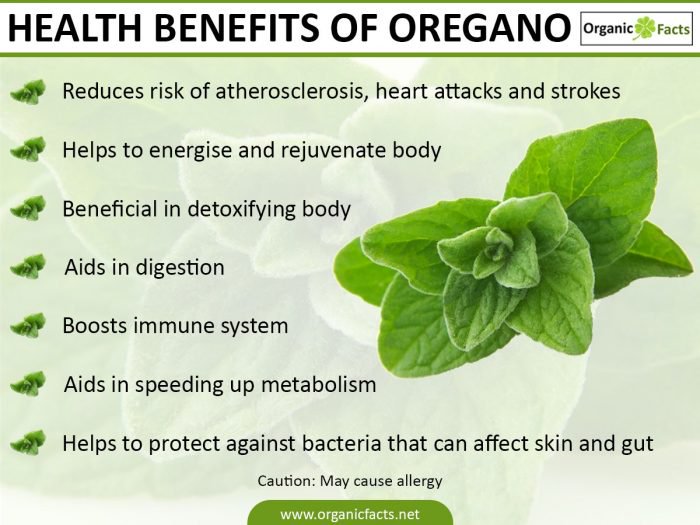
    The impressive health benefits of oregano include its ability to protect the immune system, prevent the onset of chronic disease, improve digestion, detoxify the body, strengthen the bones, improve heart health, increase energy levels, and even protect against diabetes. From adding flavor to dishes to killing antibiotic resistant infections, oregano has many uses in the kitchen and beyond.

    • Oregano is a popular herb that many people think of as merely a spice to improve or enhance the flavor of their food, but in reality, this perennial herb, with the scientific name of Origanum vulgare, has a treasure of health benefits that most people don’t realize at all. Native to southwest Eurasia and the Mediterranean area, oregano has been a valuable part of both culinary and alternative medicine treatments for thousands of years. Oregano is actually closely related to mint, and its genus is actually in the same family as Mentha. For this reason, the two share many similar organic components and have many of the same health benefits. The leaves of oregano are the most commonly used part of the plant, but strangely, the aroma and flavor of the leaves are far greater when the herb is dried than when the leaves are fresh, which is somewhat unusual for an herb.
    • Here are culinary use tips:

      • Add it toward the end of the cooking process for maximum flavor
      • The smaller you chop or grind it, the more flavor will be released
      • Start with a small amount, as too much can make the food bitter
      • One teaspoon of dried oregano is equivalent to one tablespoon of fresh oregano
    • It is available dried or fresh in grocery stores, or you can grow it in a pot on a windowsill or balcony or in the garden. It is a perennial, which means it can grow all year.

      In folk medicine and herbal remedies from Australia to Egypt, oregano has developed a popular following as a veritable cure for many health concerns, but the research to back up all of those claims is ongoing. However, there are some potent active ingredients in oregano that have been intensely studied, and their effects on the body are redundant.

    Oil of oregano is an extremely concentrated form of oregano and is used to treat some conditions, but it should always be diluted, as it is very potent. In culinary applications, where it is most commonly seen, it is used to flavor everything from soups, sauces, and curries to meat dishes, pizza, pasta, vegetables, and even salads. Now, let’s dig a little deeper into the diverse and impressive health benefits of oregano.

    Health Benefits of Oregano

    Health benefits of oregano include:

    Boosts Immunity

    Two of the most important components of oregano is rosmarinic acid and thymol, both of which are powerful antioxidant compounds that have been closely linked to reducing oxidative stress in the body. Free radicals are the destructive by-products of cellular metabolism that can cause cancer and other chronic diseases. Thus, adding oregano to your diet by sprinkling it on your meals can improve your immune health and keep your body safe from some of the most dangerous and silent killers.

    Oregano is an herb with an estimated 4 times the concentration of antioxidants as blueberries and offers a wealth of additional health benefits. – Natural Society.com

    In 2014, food scientists discovered that the popular culinary herbs oregano, rosemary, and marjoram contain compounds that may have the potential to manage type 2 diabetes in a similar way to some currently prescribed drugs.

    Antibacterial Activity

    On a more basic immune system note, oregano also has clear antibacterial properties, which is again due to the presence of thymol and carvacrol. These important organic compounds can defend the body against a wide range of bacteria that can affect the skin, the gut, and other parts of the body. Oregano is also a slightly stimulating agent, which can increase the production of white blood cells and speed up the metabolism, resulting in the faster recovery of common illnesses.

    The herb has shown antimicrobial activity in a number of studies. One group of researchers found that Origanum vulgare essential oils were effective against 41 strains of the food pathogen Listeria monocytogenes.

    Another team from India and the United Kingdom (U.K.) reported that the essential oil of Himalayan oregano has strong antibacterial properties that may protect against the hospital superbug, MRSA.

    “We have done a few preliminary tests and have found that the essential oil from the oregano kills MRSA at a dilution 1 to 1,000. The tests show that the oil kills MRSA both as a liquid and as a vapor and its antimicrobial activity is not diminished by heating in boiling water.”

    Prof. Vyv Salisbury, the University of the West of England, Bristol

    Aids Digestion

    Oregano is packed with fiber, so despite its small size, it can have a major impact on your digestive system. Fiber is an essential element of a healthy digestive system, as it can increase the bulk of your stool and stimulate peristaltic motion, which moves food through the digestive tract and excretes it efficiently. Also, fiber helps to maintain the health of the gut and increases nutrient uptake, so the food you eat does more for you!

    Improves Heart Health

    Oregano is a natural form of omega-3 fatty acids, the beneficial type of cholesterol that actually improves your heart health. Furthermore, omega-3 fatty acids help to re balance your cholesterol levels and reduce inflammation in the cardiovascular system, thereby helping to prevent atherosclerosis, heart attacks, and strokes! 

    Detoxifies the Body

    The nutrient-rich oregano, with a high content of manganese, calcium, iron, vitamin K, fiber, and a wide range of other organic compounds, makes this an ideal herb for detoxifying the body. Research has shown that oregano can help liver function and speed up the process of toxin elimination.

    Improves Bone Health

    As we get older, our bones begin to weaken and break down, so ensuring that we get enough vitamins and minerals in our early years is important. Calcium, iron, and manganese are some of the most crucial minerals for bone health, and oregano has significant amounts of all of them, making it great for people who want to protect themselves against osteoporosis later in life.
    oreganoinfo

    Increases Energy Levels

    By improving the functionality of the metabolism, thanks to B-vitamins and its unique organic composition, the body is rejuvenated and energized. The increase in circulation, due to the presence of iron and increased levels of hemoglobin, helps to fully oxygenate the cells and muscles of the body, thereby increasing energy and strength.

    Word of Caution

    Although some people who are allergic to mint and other herbaceous perennial plants may experience some discomfort while eating or touching oregano, it is not commonly known as an allergenic substance. Also, the symptoms of an allergic reaction to oregano are very mild. Toss some oregano into your next meal and see just how beneficial it can really be!

    Our Favorite Herb Resources:
    Organic Facts.net
    Learning Herbs.com
    BeHealthy.Today

     References

    1. http://www.ingentaconnect.com/content/ben/cmc/2004/00000011/00000011/art00008
    2. http://www.tandfonline.com/doi/abs/10.1080/10412905.1994.9698321
    3. http://onlinelibrary.wiley.com/doi/10.1111/j.1745-4514.2000.tb00715.x/abstract
    4. http://www.sciencedirect.com/science/article/pii/S0032959204001189
    5. http://www.pakbs.org/pjbot/PDFs/39(2)/PJB39(2)609.pdf
    6. http://www.apjcn.org/update%5Cpdf%5C2006%5C1%5C107%5C107.pdf
    7. http://onlinelibrary.wiley.com/doi/10.1111/j.1365-2621.2006.01259.x/abstract
    8. http://www.sciencedirect.com/science/article/pii/S0308814603002632
    9. http://onlinelibrary.wiley.com/doi/10.1046/j.1523-5408.2002.05503.x/abstract
    10. https://www.medicalnewstoday.com/articles/266259.php
    11. https://www.organicfacts.net/health-benefits/oregano.html
    12. http://naturalsociety.com/oregano-4-times-antioxidants-blueberries/#ixzz5LT2g94Br 
    13. https://behealthy.today/a-z-herbs-healthier-you/
  • Health Benefits of A Beautiful Flower

    Geranium plants repel mosquitoes!! Planted by doors and windows they can keep those pests from coming in the house. Geranium oil offers even more benefits. 

    Some of the most common geranium essential oil benefits are:

    • Balances hormones
    • Relieves stress
    • Reduces depression
    • Minimizes inflammation
    • Improves circulation
    • Alleviates the effects of menopause
    • Improves dental health
    • Reduces blood pressure
    • Benefits the health of your skin
    • Improves dental health

    When an essential oil like geranium oil can address serious health issues like these, then you need to try it! This is a natural and safe tool that will improve your skin, mood and internal health.

    5 Geranium Oil Uses

    1. Wrinkle Reducer – Because geranium oil is an astringent, it induces contractions in several parts of the body. It has the power to minimize the look of wrinkles because it tightens facial skin and slows down the effects of aging. Add two drops of geranium oil to your face lotion and apply it twice daily. After a week or two, you will see the look of your wrinkles begin to fade away.

    2. Muscle Toner – Geranium oil helps in tightening and contracting muscles – this is again due to its astringent properties. It can prevent your muscles and skin from sagging, and it can give you a more toned abdominal section. Create a massage oil by mixing five drops of geranium oil with one tablespoon of jojoba oil and massage it into your skin, focusing on your muscles.

    3. Infection Fighter – The antibacterial properties found in geranium oil help to protect your body from infection. Geranium oil can stop bacteria from growing on the skin, like on a wound. To do this, rub two drops of geranium oil onto the affected area and cover it with gauze; you can repeat this remedy twice a day until the wound or cut is healed. (2

    When you use geranium oil to fight external infection, your immune system can focus on your internal functions and keep you healthier. Athlete’s foot, for example, is a bacterial infection that can be cured with geranium oil. To do this, add give drops of geranium oil to a foot bath with warm water and sea salt; do this twice daily for the best results.

    4. Healing Helper – Geranium oil helps to speed up the healing process of cuts, wounds and incisions. It also helps in fading the look of scars and other spots on the skin quickly. Because geranium oil has powerful cicatrisant properties, it increases blood circulation right below the surface of the skin — this helps with the healing of spots caused by acne, cuts or wounds, surgical incisions or skin irritations.

    5. Blood Clot Inducer – Geranium oil causes the contraction of blood vessels and, therefore, helps to stop blood flow; it also speeds up the formation of blood clots. This helps in the healing of wounds or incisions, and it keeps toxins from entering the body. This health benefits will even help to prevent hemorrhoids. Try adding one drop of geranium oil to ice cream or frozen soy milk. You can also add the oil to a teaspoon of wheat germ or flaxseeds.

    Geranium Oil Benefits

  • Not Settled Nor Trustworthy?

    Science.

    by Ashley Cates.

    When you have studies on one side stating that vaccines do not cause autism, and studies on the other side stating there is a link, which scientific conclusion do you trust?

    In a 2009 meta-analysis of survey data on how many scientists fabricate and falsify research, it was found that almost 2% of scientists admitted to personally fabricating, falsifying, or modifying data or results at least once and almost 34% admitted other questionable research practices. In addition, 14% of scientists surveyed admitted that their colleagues falsified research and 72% admitted their colleagues participated in other questionable practices.

    The authors state:

    “…Misconduct was reported more frequently by medical/pharmacological researchers than others. Considering that these surveys ask sensitive questions and have other limitations, it appears likely that this is a conservative estimate of the true prevalence of scientific misconduct.”

    http://journals.plos.org/plosone/article…

    __________________________________________

    But, scientific research is peer-reviewed prior to acceptance and publication in prestigious medical journals. How can this be?

    “At the BMJ we did several studies where we inserted major errors into papers that we then sent to many reviewers. Nobody ever spotted all of the errors. Some reviewers did not spot any, and most reviewers spotted only about a quarter. Peer review sometimes picks up fraud by chance, but generally it is not a reliable method for detecting fraud because it works on trust.”

    – Peer review: a flawed process at the heart of science and journals.

    https://www.ncbi.nlm.nih.gov/pmc/articles/PMC1420798/

    __________________________________________

    Unfortunately, it’s more than just flawed, the entire system is corrupt:

    Nobel Prize winner Sydney Brenner (for Physiology or Medicine in 2002) spoke of the peer review system in an interview in 2014:

    “It’s corrupt in many ways, in that scientists and academics have handed over to the editors of these journals the ability to make judgment on science and scientists… it puts the judgment in the hands of people who really have no reason to exercise judgment at all. And that’s all been done in the aid of commerce, because they are now giant organizations making money out of it.”

    http://kingsreview.co.uk/…/how-academia-and-publishing-are…/

    __________________________________________

    Sadly, science is wrought with conflicts of interest.

    “The case against science is straightforward: much of the scientific literature, perhaps half, may simply be untrue. Afflicted by studies with small sample sizes, tiny effects, invalid exploratory analyses, and flagrant conflicts of interest, together with an obsession for pursuing fashionable trends of dubious importance, science has taken a turn towards darkness.”

    – Dr. Richard Horton, editor in chief of the Lancet, regarding a symposium on the reproducibility and reliability of biomedical research held by the Academy of Medical Sciences.

    http://www.thelancet.com/…/lancet/PIIS0140-6736%2815%296069…

    __________________________________________

    Unfortunately, the Centers for Disease Control, the American Medical Association, the American Academy of Pediatrics, etc. are all making recommendations and decisions based on this corrupt science:

    “It is simply no longer possible to believe much of the clinical research that is published, or to rely on the judgment of trusted physicians or authoritative medical guidelines. I take no pleasure in this conclusion, which I reached slowly and reluctantly over my two decades as an editor of the New England Journal of Medicine.”

    – Dr. Marcia Angell, physician and editor in chief of the New England Medical Journal.

    https://www.ncbi.nlm.nih.gov/pmc/articles/PMC2964337/

    __________________________________________

    In the end, always consider the source.
    Yes, it matters. No, it’s not a conspiracy theory.

    Ask the question: Who benefits from this research, and who funded it?

    The pharmaceutical industry maintains major influence over our most prized institution – unbiased discovery, education, and advancement, for the benefit of all.

    For the industry, science has become a business tool for increasing profit, rather than an unbiased exploratory process. We need REAL science. Unbiased science. Science that doesn’t seek to profit from the results.

    Do you put your faith in an industry which only profits when you are sick?

    #marchforscience #exvaxxer

    Original Article/Note found on Facebook @ https://www.facebook.com/ashleynelsoncates/posts/1371432082878424
    Post Script:
    Ashley Cates “My point has never been that we can’t trust science. It’s that we can’t trust industry-funded science. Anyone who seeks to profit off of the scientific results should not be funding any science whatsoever. Independent scientific research is usually pretty informative and I think much more trustworthy – there’s no financial incentive or pressure for a desired result. And this is the science I usually share.”

  • Benefits of Bee Pollen

    HFI: Honey is a popular superfood. Did you know that German Federal Board of Health officially recognizes bee pollen as medicine, not just a food.  Bee pollen also contains a large number of nutrients necessary for the human body to thrive, including minerals, vitamins, enzymes, fatty acids and lipids, and antioxidants like bioflavonoids and carotenoids. Bee pollen contains more amino acids than beef or eggs, and more protein than any animal source. Bee pollen nutrition may help reduce inflammation, boost immunity, protect the liver, relieve stress and menopausal symptoms, and promote natural healing.  WOW! That definitely sounds impressive.

    What is Bee Pollen?

    What is bee pollen exactly? The process of gathering pollen is quite complex for honeybees. Pollen is considered the male seed of flowers, and it is needed for fertilization of the plant. Bees will collect pollen from plant anthers, and mix it with small dose of the nectar secretion. It is then placed in specific baskets called corbiculae that are found at the tibia of their hind legs, which are known as pollen loads.

    After the collection of pollen, the honeybee brings it to the hive where it is packed within honeycomb cells. The pollen surface is then covered with wax and a thin layer of honey to create bee bread. It is the bee bread that serves as protein source for the bee colony.

    Most of the time bees collect pollen from the same plant, but sometimes pollen is collected from a variety of plant species. That is why the pollen grains will differ in color, size, weight, and shape. Bee pollen color ranges from bright yellow to black.

    Perhaps the most interesting fact about bee pollen is that it can’t be duplicated in a laboratory. That is because when researchers take away a bee’s pollen-filled comb and feed it manmade pollen instead, the bee dies even though all the known nutrients are in the lab-produced pollen. Some mysterious, unidentifiable elements may be the real reason why bee pollen is so powerful at fighting disease.

    Bee Pollen Nutrition Facts

    Dr. Naum Petrovich, chief scientist of the Soviet Academy in Vladivostok, said in 1975, “Long lives are stained by bee pollen uses; it is one of the original treasure-houses of nutrition and medicine. Each grain contains every important substance that is necessary to life.”

    What are the bee pollen nutrition facts? Bee pollen is considered one of nature’s most complete foods. It contains special bee-made compounds that are used as medicine. The chemical composition of bee pollen comprises approximately 250 substances, including enzymes, vitamins, minerals, lipids and fatty acids, and amino acids.

    Bee pollen contains about 23% protein, including 10% essential amino acids. It also contains 30% digestible carbohydrates, 26% sugars like glucose and fructose, 5 percent lipids like essential fatty acids, 2 percent phenolic compounds like flavonoids. Its other antioxidant flavonoids include bioflavonoids, carotenoids, quercetin, rutin, myricetin, and trans-cinnamic acid.

    It is also packed with vitamins such as vitamin A, vitamin C, vitamin E, vitamin D, and B vitamins like folate, vitamin B1, vitamin B2, and vitamin B6. From a mineral perspective, bee pollen also contains some magnesium, calcium, phosphorus, potassium, sodium, zinc, selenium, copper, iron, silicon, sulfur, and manganese.

    The History of Bee Pollen

    Bee pollen has a long and storied history, and like honey, it was written about in many well-known texts by various historical figures. The early Egyptians described bee pollen as “life giving dust.” Bee pollen is mentioned throughout the Bible, the Torah, the Talmud, the Koran, and also ancient writings of the Romans, Greek, and Orient. The father of Western medicine, Hippocrates, prescribed bee pollen for its health benefits.

    Native Americans even wore pouches of bee pollen around their necks to provide them with energizing food for long journeys. In China, bee pollen was described over 2,000 years ago for its neutral and sweet taste. Today, China is the world’s largest producer of bee pollen, followed by the U.S.

    Health Benefits of Bee Pollen

    What are the incredible health benefits of bee pollen? Studies have shown that enzymatic hydrolysates in bee pollen could potentially help treat various diseases like heart diseases, high blood pressure, cancer, and diabetes. Researchers have even suggested that the antioxidant activity of bee pollen is similar to that found in fermented foods like miso and natto. The following are five other reasons to consider using bee pollen on a regular basis.

    1. May Help Reduce Stress

    The tonic and nutritional properties in bee pollen make it an effective natural stress reliever that can boost mental capacity, strengthen the nervous system, and improves blood supply to nervous tissue. Bee pollen may also improve performance and physical endurance for athletes. It also improves mood and energy, which is especially useful for the elderly. Bee pollen also relieves stress-related pain or injuries common with athletes or active individuals.

    2. May Reduce Inflammation

    The anti-inflammatory properties of bee pollen are comparable to many drugs on the market today, including indomethacin, phenylbutazone, analgin, and naproxen. Research suggests that bee pollen is effective for liver disease or toxicity, degenerative conditions, and chronic or acute inflammatory conditions. A study published in the journal Pharmaceutical Biology in 2010 found that bee pollen displayed significant anti-inflammatory activities when treating acetaminophen-induced liver necrosis in mice.

    3. May Treat Malnutrition and Nutrient Deficiencies

    Various animal studies suggest that bee pollen can help animals with nutrient deficiencies. One study published in the Journal of Animal Physiology and Animal Nutrition in 2011 found that bee pollen significantly increased body weight, milk yield, conception rate, and litter size in female rabbits. The bee pollen also increased the growth rate of baby rabbits. Researchers indicated that bee pollen could be helpful for children with developmental delay or lack of appetite. Bee pollen may also help malnourished adults and children, especially when they’re under mental or physical stress, when recovering from alcohol addiction, or before and after surgery.

    4. May Boost Immunity

    The antiviral and antimicrobial properties of bee pollen are great for the immune system. A study published in the journal Food and Chemical Toxicology in 2014 examined the biological activity of eight commercial bee pollen products from the market, and all samples exhibited antimicrobial effects. Candida glabrata was the most resistance to bee pollen, and Staphylococcus aureus was the most sensitive. Bee pollen may also stimulate the immune system to produce antibodies for elimination of allergies and hay fever. Another study published in the Journal of Medicinal Food in 2008 found that bee pollen’s anti-allergic action is due to its ability to inhibit mast cell activation. Mast cells play a vital role in the early and late stages of an allergic reaction.

    5. May Relieve Menopausal Symptoms

    A study published in the journal Molecular and Clinical Oncology in 2015 found that bee pollen and honey both improved menopausal symptoms in breast cancer patients taking anti-hormonal treatment. Incredibly, more than two-thirds of the patients that finished the study reported an improvement of symptoms. The researchers suggested that bee pollen and honey may help women with postmenopausal symptoms when other alternatives have failed. Also, the flavonoids in bee pollen can also prevent breast cancer, and therefore can support menopausal women with a history of breast cancer.

    How to Use Bee Pollen

    Want to know where to buy bee pollen? This is where it is best to find a local beekeeper or a reputable company that may sell their products at health food stores or the local farmers’ market. You will want bee pollen that is pesticide-free and from chemical-free bee colonies. Bee pollen extract is also common in many natural skincare products. Refrigeration is recommended if you intend to store bee pollen for more than a few weeks after your purchase.

    Bee pollen is also very versatile, and can be used in a number of ways, especially when it’s ground and mixed with other foods. You can combine ground bee pollen with cottage cheese, yogurt, o honey in a 1:1 to 1:4 ratios. For people fighting allergies, stress, illness, inflammation, or nutritional deficiencies, the bee pollen dosage is about one teaspoon of mixed pollen for three times daily.

    For bee pollen capsules, you can take 500 milligrams to 1,000 milligrams daily, or as directed by your health practitioner. Bee pollen granules or extracts are also available, and can be added to baked goods, cereal, or yogurt. The granules can also be grounded, and added to salads or smoothies. Also, when bee pollen granules are added to warm water for two to three hours, they release their nutritional value. The liquid can then be enjoyed, or added to smoothies for optimal health benefits of bee pollen.

    Bee Pollen Precautions

    The health benefits of bee pollen nutrition are seemingly endless; however, there are a few things to keep in mind about the product. For starters, it is safe for most people when taken orally for a 30 to 60-day timeframe, but this depends on the bee pollen dosage. Lower doses can be taken with a bee pollen mixture, and are considerably safer.

    What are potential bee pollen side effects? An allergic reaction to bee pollen is considered the main concern of the product. You should stop using bee pollen and consult your doctor if you notice swelling, lightheadedness, shortness of breath, or itching after taking bee pollen supplementation. There is also some concern that bee pollen may threaten pregnancy by stimulating the uterus. As a result, pregnant women should avoid bee pollen or consult a natural health professional for guidance about the bee product.

    In summary, bee pollen is a super powerful food with antiviral, antibacterial, and antifungal properties that can potentially reduce inflammation, boost immunity, relieve stress, and much more. Research even suggests that bee pollen can prevent and reverse poor nutrition and malnourishment. Basically, we would be a lot worse off without bee pollen nutrition, and other bee products.


    Sources:
    “Top 8 Bee Pollen Benefits (No. 7 Is Remarkable),” Dr. Axe; https://draxe.com/bee-pollen/, last accessed March 30, 2017.
    “Benefits of Bee Pollen,” The Natural Shopper; http://thenaturalshopper.com/resources/bee-pollen/bee-pollen-benefits-and-history.html, last accessed March 30, 2017.
    “Bee Pollen History,” Bee Pollen; http://www.beepollen.com.au/history-of-bee-pollen, last accessed March 30, 2017.
    “Bee Pollen,” Mountain Rose Herbs; https://www.mountainroseherbs.com/products/bee-pollen/profile, last accessed March 30, 2017.
    “Bee Pollen,” VonnyBee; http://vonnybee.com/useful-stuff/bee-pollen-3/, last accessed March 30, 2017.
    “The Use of Bee Pollen as a Superfood,” Mercola; http://www.mercola.com/article/diet/bee_pollen.htm, last accessed March 30, 2017.
    “The effects of Bee Pollen on Energy and Weight Loss,” The Helix12Project; http://www.thehelix12project.org/bee-pollen-history–facts.html, last accessed march 30, 2017.
    “Bee Pollen Health Benefits Nature’s ‘Fountain of Youth,’” Underground Health Reporter; http://undergroundhealthreporter.com/bee-pollen-health-benefits/, last accessed March 30, 2017.
    “10 Amazing Health Benefits of Bell Pollen,” Food Matters, Jan. 29, 2013; http://www.foodmatters.com/article/10-amazing-health-benefits-of-bee-pollen.
    Komosinska-Vassev K., et al., “Bee Pollen: Chemical Composition and Therapeutic Application,” Evidence-based Complementary and Alternative Medicine : eCAM. 2015;2015:297425. doi:10.1155/2015/297425.
    Kupeli Akkol, E., et al., “In vivo activity assessment of a ‘honey-bee pollen mix,’” Pharmaceutical Biology, March 2010; 48(3): 253-259, doi: 10.3109/13880200903085482.
    Attia, Y.A., et al., “Effect of bee pollen levels on productive, reproductive and blood traits of NZW rabbits,” Journal of Animal Physiology and Animal Nutrition, June 2011; 95(3): 294-303, doi: 10.1111/j.1439-0396.2010.01054.x.
    Pascoal, A., et al., “Biological activities of commercial bee pollens: antimicrobial, antimutagenic, antioxidant and anti-inflammatory,” Food and Chemical Toxicology, January 2014; 63: 233-239, doi: 10.1016/j.fct.2013.11.010.
    Ishikawa, Y., et al., “Inhibitory effect of honeybee-collected pollen on mast cell degranulation in vivo and in vitro,” Journal of Medicinal Food, March 2008; 11(1): 14-20, doi: 10.1089/jmf.2006.163.
    Munstedt, K., et al., “Bee pollen and honey for the alleviation of hot flushes and other menopausal symptoms in breast cancer patients,” Molecular and Clinical Oncology, July 2015; 3(4): 869-874, doi: 10.3892/mco.2015.559.
    Yildiz, O., et al., “Hepatoprotective potential of chestnut bee pollen on carbon tetrachloride-induced hepatic damages in rats,” Evidence-Based Complementary and Alternative Medicine, 2013; 2013: 461478, doi: 10.1155/2013/461478.