
Tag: brain-development

  • EPA Scraps Scheduled Ban of Widely Used Pesticide Known to Harm Kids’ Brains

    In one of his first major decisions as U.S. Environmental Protection Agency (EPA) administrator, Scott Pruitt sided with the pesticide lobby over scientists Wednesday in an eleventh-hour decision to abort the agency’s proposal to ban chlorpyrifos—an insecticide that at small doses can harm children’s brains and nervous systems—from use on food crops.

    Pruitt and the Trump administration’s decision ignored overwhelming evidence that even small amounts of chlorpyrifos can damage parts of the brain that control language, memory, behavior and emotion. Multiple independent studies have documented that exposure to chlorpyrifos impairs children’s IQs and EPA scientists’ assessments of those studies concluded that levels of the pesticide found on food and in drinking water are unsafe.

    In October 2015, the EPA proposed to revoke all uses of chlorpyrifos on food. Late last year, Croplife America—the main trade and lobbying group for the pesticide industry—petitioned the EPA to block the expected ban. In its appeal, Croplife argued that the EPA should disregard the findings of epidemiological studies documenting that the pesticide impaired American children’s IQs and brain development.

    The EPA’s analysis of children’s sensitivity to chlorpyrifos drew upon studies by Columbia University, Mount Sinai School of Medicine and the University of California, Berkeley. In 2007 the Natural Resources Defense Council and the Pesticide Action Network petitioned the EPA to ban food uses of chlorpyrifos and they later sued the agency to compel a ruling on the petition. The EPA proposed the ban in October 2015 and was under court order to issue a final rule by the end of March.
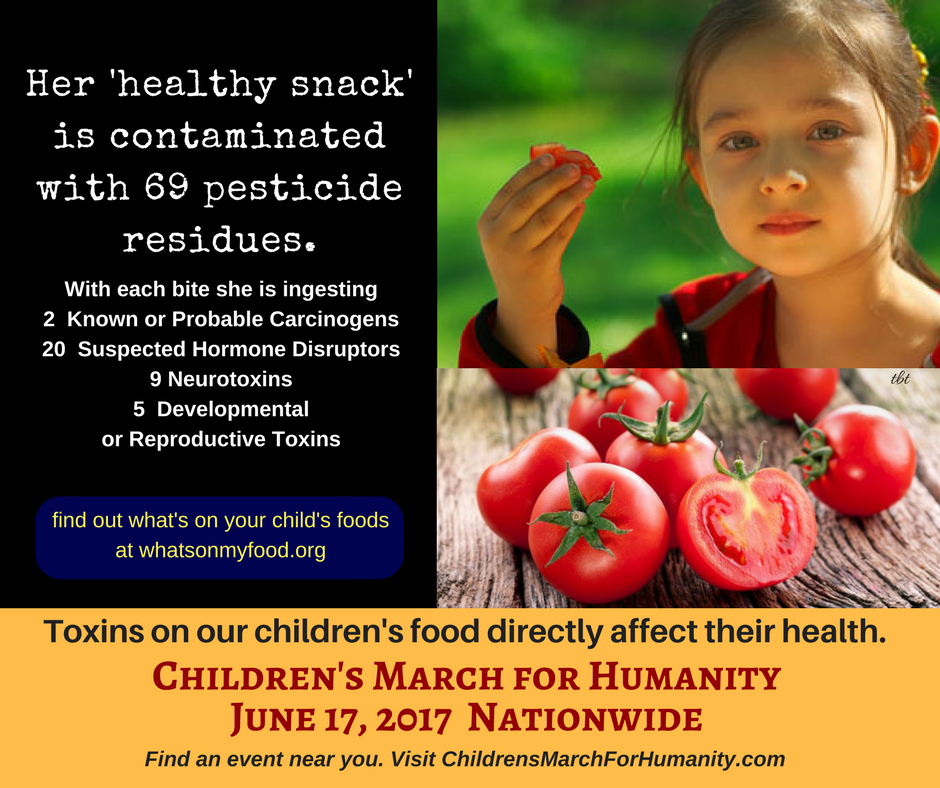
  • Let’s Talk About The Threat of Toxins On Our Children

    HFI: Toxins and Our Kids. Tiny amounts of lead, chemical flame retardants and organophosphate pesticides such as Round Up, among other toxins, course through the blood of nearly every American. But just how much worry is a little poison worth?


    A lot, especially when considering the cumulative effects of this chemical cocktail on children. 
    Our children are a sicker generation than their parents. Neurological issues, Allergies, Ecezma, ADD, Cancer, Delays, Autism, SIDS…could it be that its the toxic environment we created that is causes some or all these issues?  Experts agree on one big problem: We’re not really looking at the long term impact of chemicals on our children. The U.S. Environmental Protection Agency, for example, has only required toxicity testing for around 200 of the more than 80,000 chemicals permitted for use in the U.S. “By allowing children to be exposed to toxins or chemicals of unknown toxicity, we are unwittingly using our children in a massive experiment.

    Lanphear focused on six brain toxins in the 2014 video: lead, mercury, organophosphate (Round Up) pesticides, polychlorinated biphenyls (PCBs), bisphenol A (BPA) and polybrominated dipenyl ethers (PBDEs), a chemical flame retardant that his research team this year linked to IQ deficits and hyperactivity. This list of chemical brain-drainers, according to a study published in February, may be just the tip of the iceberg.

    While suggesting that the “ultimate solution” is to “revise how we regulate chemicals,” Lanphear offered a few suggestions for consumers navigating toxins: Eat fresh or frozen foods, choose fish low in mercury, avoid the use of pesticides in and around the home and check for lead in older homes.

    He also recommended writing government representatives and urging them to support regulation that reverses the burden of proof to require companies prove a chemical isn’t toxic before it enters the market. In the U.S., an overhaul of the Toxic Substances Control Act of 1976 remains hotly debated.

    “This emerging evidence that there is no threshold for some of the most well-established toxins strongly supports the urgent need to revise” the toxic substances act, Lanphear told HuffPost.

    And while the time is ripe for that federal move, Lanphear added that it is “exactly the wrong time to terminate the National Children’s Study.” The future of the U.S. study, long-planned to follow children from birth to adulthood, tracking factors such as exposure to toxic chemicals, now looks uncertain.

    “I firmly believe that until mothers and the public become more familiar with this science not much will happen,” said Lanphear. “The hope is that videos like this will help people understand this emerging pattern of toxicity.”

    The reaction from Woodruff’s son, Xavier Woodruff-Madeira, 16, to the video is just the kind Lanphear hopes to spark: “I didn’t know that tiny little amounts of chemicals can add up to make a big difference in kid’s attention — and affect all those kids.”