
Tag: epigenetics

  • Epigentics, Toxins and Autism Increase

    Autism genetic? If autism was purely a genetic problem then the numbers should be 1 in 100 from here until the dawn of time.  The autistic should be part of our culture, the stories we tell, the very fabric of our society.  But they’re not.  Instead we have stories about the tidal wave of adults with autism we can expect in the next few years and how poorly prepared we are for them.  Nobody saw this problem until it was first described in the 1940s.  From that time it’s gone from 1 in 10,000 to 1 in 100.  

    With that rate of increase, can it be long until it goes to 1 in 10?  We need to find answers.

    Contrary to the common thought, its NOT JUST the vaccines. Non-vaccinated children can get Autism because Autism is neurological damage, and there are various ways to inflict brain damage on children. (Learn More about Brain Damage and Autism: Read Vaccines Don’t Cause Autism) 

    Saying that, vaccines cause the most brain damage by far. Heavy metal and toxin exposure in the womb can also trigger Autism, even without vaccines. Fluoride in our water bonds with metal ions like aluminum from vaccines in our blood, ushers it across the blood brain barrier and deposits it in our neurons. Once there, the neurotoxic fluoroaluminate complex destroys the neuron. Yes, there are many synergistic effects between the contents of vaccines and other toxins in the environment. Fluoride gets into our blood from drinking and bathing water, food, pharmaceutical drugs, dental products and procedures, industrial air pollution , etc. Americans are receiving too much fluoride and the visible sign is the dental fluorosis in 41% of adolescents. And that’s just one toxin. The thing about vaccines is that the toxins are injected which makes them far more damaging. Vaccination and fluoridation programs are something we can stop. We can stop deliberately poisoning ourselves. 2
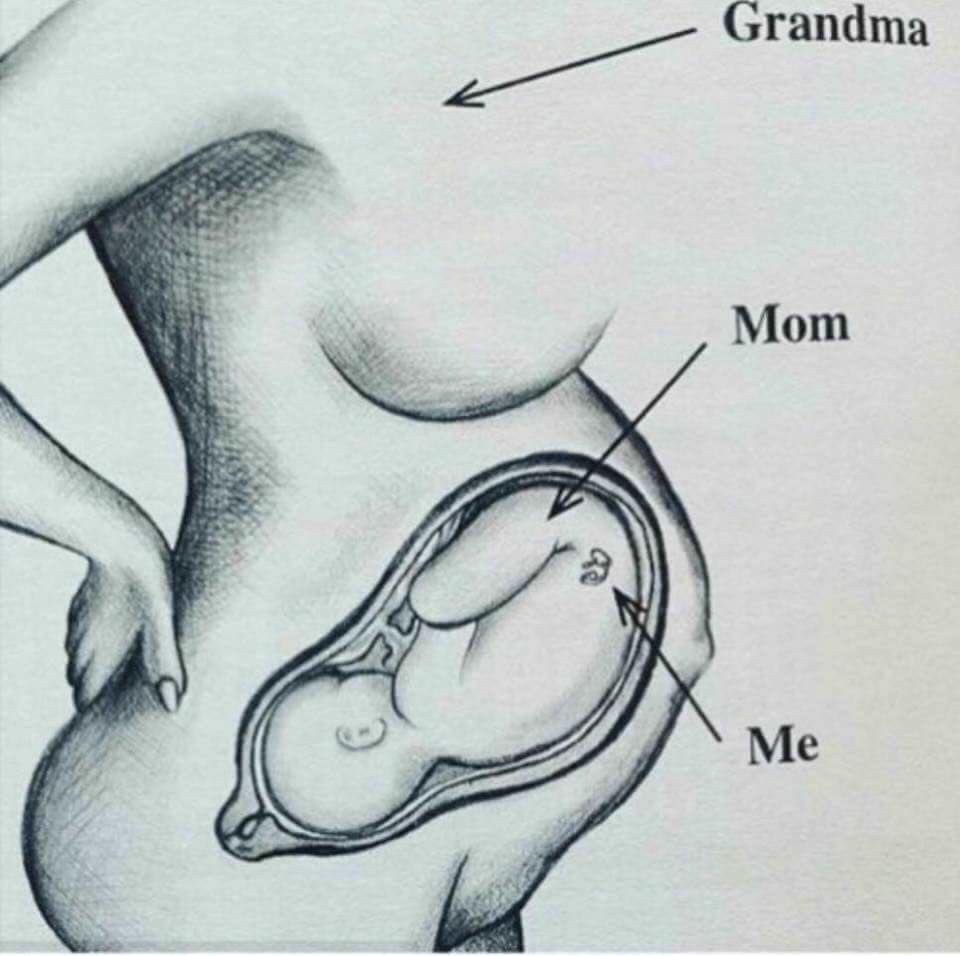
    (For one example, if the mother has a mouth full of mercury fillings, that mercury can be passed on to the baby in the womb, thus harming the baby’s brain before it’s even born). It’s important to remember that every human begins in their maternal grandmother.  A female fetus developed her ovaries and the eggs within at 4 months development within the womb.

    Epigenetics: The Science of Change

    Derived from the Greek, the word epigenetics literally means “above” genetics. Epigenetics is the study of chemical markers that modify genes but are not part of DNA itself. Like DNA, they can be passed on from cell to cell and from one generation to the next. These modifications are superimposed on top of our genes to tell them whether they should be active or inactive. For example, every cell in your body has the same DNA; however, some cells are specialized for use in the heart, the bones, the brain, the nerves, the stomach, etc. These cells become specialized because different sets of genes are turned on or off at different points in cell development, leading to differences in the types and amounts of proteins produced and determining how the cells look, grow, and act. This is epigenetics in action…

    Epigenetics is the theory that environmental factors, such as diet, lifestyle choices and pesticides can impact the health of people who are exposed to them and also their descendants. Human DNA, according to epigenetics, is not unchangeable; it can be altered by such environmental factors. Epigenetic changes can be imprinted on the DNA of a fetus during pregnancy according to Winchester.

    “If it is fixed then, it becomes inheritable and it becomes a trait that you can pass on to the next generation and the next and next.”

    Epigenetics is a fairly new concept that is slowly gaining acceptance.

    The accumulated evidence indicates that many genes, diseases, and environmental substances are part of the epigenetics picture. However, the evidence is still far too thin to form a basis for any overarching theories about which substances and which target genes are most likely to mediate adverse effects of the environment on diseases. 1

    Environmental Damage

    The synthetic Vitamin K shot given to infants at birth can be just as detrimental to newborn development as vaccines are.

    Epigentic Studies on rodents show that DNA methylation can be altered by many different kinds of exposures during the fetal as well as the adult life. 3

    Epigentic damage carries on for up to 4 generations. So it would take 4 generations of no vaccines to be totally clean genetically. 

    Research Epigenetics and Toxic Sources

    Pesticides

    Fluoride : http://www.fluoridealert.org 

    Vaccines: Toxic effects of injected aluminum, mercury and  other heavy metals 

    DNA in Vaccines

    Biological effects of 50 Hz ELF-EMF exposure

    Plastics/Toxins

    Parenting Nurturing

    RESEARCH RESOURCES:

    Portions of this article were found as a facebook post by Dayna Willar

    1 https://www.ncbi.nlm.nih.gov/pmc/articles/PMC1392256/

    2 Linda Martin – Facebook post comment

    3 https://www.hindawi.com/journals/bmri/2015/608054/

  • CDC reports 1 in 36 boys are autistic

    Nearly 4 years ago, CNN blasted this headline:   “Autism rates now 1 in 68 U.S. children: CDC“.

    At a special panel discussion about GMOs in 2014, MIT Researcher Dr. Stephanie Seneff, PhD predicted 1 in 2 children would be diagnosed with Autism by 2025. Seneff is a respected scientist who has published over 170 peer-reviewed articles. 

    Last week, the National Health Center for Health Statistics (NCHS) released its latest incidence for autism spectrum disorders (ASDs) in American children. Their document, based on information collected in the National Health Information Survey (NHIS), reveals an ASD rate of 2.76%, or 1 in 36 American children for 2016. 

    Source: Zablotsky B, Black LI, Blumberg SJ. Estimated prevalence of children with diagnosed developmental disabilities in the United States, 2014–2016. NCHS Data Brief, no 291. Hyattsville, MD: National Center for Health Statistics. 2017.)  https://www.cdc.gov/nchs/data/databriefs/db291.pdf

    The breakdown: 

    1 in 35 children (8-12 years of age) have autism. 

    1 in 28 boys (3-17 years of age) have autism. 

    More than 6% of our children have a developmental disability (1 in 16). 

    More than 8% of our boys have a developmental disability (1 in 12). 

    The current projected rate of increase in autism to 1 in 2 by 2025 is clearly unsustainable!

    Why normalizing autism is not the answer

    Conventional recommendations call for “normalizing” autism. Examples of this are provided in this paper published on the NCBI database in the scholarly journal Front Psychology, a Washington Post article centered upon the importance of autism-friendly characters on the PBS children’s show Sesame Street, and an op ed piece featured in the New York Times from an English professor proclaiming how this change in PBS characters will help enable the normalization of autism to benefit her autistic daughter. 

    We highlight this situation not to make light of the condition of ASD nor to imply that autistic individuals aren’t worthy of the same rights, treatment and consideration that others receive. We want to impress that ASD is indeed a condition of which we should all be paying attention; not to merely accept it as “just the way it is”, but to recognize it for what it is: a progressive syndrome that is on the rise, and which there is an identifiable cause and solution

    Individuals diagnosed with ASD do not have to be sentenced to a life of disability and handicap. There are verifiable ways to heal from this illness that the conventional health and medical communities continue to ignore and refuse to employ for the betterment of our population.  

    The result of this patent dismissal is a continued increase in the incidence of ASD. Can our society sustain this alteration? As its effects become more acute, we continue to be affected by its impact on our familial and social structures, and economic stability. Marcella Piper-Terry expounds upon this in her paper: Autism and Families: Stress and Divorce, and the Economic Considerations. A Review of the Literature from 2012. Read more in The Financial Impact of an Autism Diagnosis.

    Another result is that anyone opposing this narrative is considered uninformed and discreditable

    Credible support for finding the root cause of autism

    There are a growing number of health professionals who acknowledge this fact. Some include Dr. Natasha Campbell McBride, author of Gut and Psychology Syndrome (The GAPS Diet). Others include Dr. Ray Sahelian. M.D., Dr. Suruchi Chandra,M.D., Joette Calabrese, HMC, CCH, RSHom(Na), Dr. Kelly Brogan, M.D., author of A Mind Of Your Own and presenter of Autism Intensive HD video interviews, and Kim Schuette, CN, Certified GAPS Practitioner. These are just a few pioneers in the health communities working to heal the explosion of ASD and related syndromes, caused by unnatural conditions in our food supply, soil, water, air and all environments.

    These professionals contend that autism is NOT normal. And it is an epidemic. It’s time we did something concrete to acknowledge what’s causing it. It’s time we stop saying “we don’t know what causes autism”. It’s time the medical and health communities rallied together, despite their differences, and look for something beyond genetic causes. This is because it has been demonstrated scientifically, beyond reasonable doubt, that genetics CANNOT modify that quickly. 

    This is not new information, it has simply been censored. For example, in 2011, Joachim Hallmayer, MD, leading author of a paper published in the July 4 issue of Archives of General Psychiatry from Stanford University of Medicine. Read more from Stanford University.

    “Our work suggests that the role of environmental factors has been underestimated.” Hallmayer is an associate professor of psychiatry and behavioral sciences at Stanford. The study’s senior author is Neil Risch, PhD, professor of biostatistics at UC-San Francisco and director of the UCSF Institute for Human Genetics.

    Here’s why we need not accept the current trajectory of autism increase: only 4 years ago 1 in 68 children were being diagnosed as autistic. 

    Today it’s 1 in 36. It doesn’t take a large leap to understand that this scenario is not due to “heightened diagnostics”. Clearly, this situation is due to a case of epigenetics

    What are epigenetics? It is happening everywhere we look these days. 

    Definition of epigenetics: relating to or arising from nongenetic influences on gene expression. 

    These changes are not genetic in origin. In short, our genes are being altered in every imaginable way possible: our food, soil, water, air, personal care products, beverages, clothing, furniture, and essentially everything we touch. Each of these factors, added in, can cause changes around the genes that are capable of turning those genes off or on, as time passes. As a result, certain diseases including autism, Alzheimer’s, and other auto-immune conditions, various genes will be thrown into the opposite state, away from the normal/healthy state.

    Only something environmental would cause a change like this, so rapidly. 

    We encourage research, cleaning up the diet, removing environmental factors, and seeking out like-minded folks in our communities, both parental, medical, health and scientific. There is a WEALTH of support for those who want to heal themselves and their children of ASD and related issues. 

    Additional reading:

    15 year old autistic teen has 10x amount of aluminum in brain than elderly person

    Why diet, environment, toxin exposure and lifestyle MATTERS

    Scientific study confirms DTP vaccination increases risk of allergies

    Organic baby foods test positive for dangerous contaminants

    The impact of toxic exposure to aluminum

    Glyphosate contaminated “all natural” bread and breakfast cereals

    KBOI 2 interviews with a toxicologist on vaccines

  • Cuddling your infant changes their genetics, study says

    Baby wearing doesn’t just keep our babies warm, snug, and loved. a new study shows it changes their very genetics.  As part of my adoptive parent training, I learned of the many studies showing the psychological brain benefits of close consistent contact with my children. I am THRILLED to see science is still expanding our knowledge of physical contact focusing on the biological effect.   A new study says cuddling can actually affect babies at the molecular level, and the effects can last for years. Based on the study, babies who get less physical contact and are more distressed at a young age, end up with changes in molecular processes that affect gene expression.

    The team from the University of British Columbia in Canada emphasises that it’s still very early days for this research, and it’s not clear exactly what’s causing the change.

    But it could give scientists some useful insights into how touching affects the epigenome – the biochemical changes that influence gene expression in the body.

    During the study, parents of 94 babies were asked to keep diaries of their touching and cuddling habits from five weeks after birth, as well as logging the behaviour of the infants – sleeping, crying, and so on.

    Four-and-a-half years later, DNA swabs were taken of the kids to analyse a biochemical modification called DNA methylation. It’s an epigenetic mechanism in which some parts of the chromosome are tagged with small carbon and hydrogen molecules, often changing how genes function and affecting their expression.

    The researchers found DNA methylation differences between “high-contact” children and “low-contact” children at five specific DNA sites, two of which were within genes: one related to the immune system, and one to the metabolic system.

    DNA methylation also acts as a marker for normal biological development and the processes that go along with it, and it can be influenced by external, environmental factors as well.

    Then there was the epigenetic age, the biological ageing of blood and tissue. This marker was lower than expected in the kids who hadn’t had much contact as babies, and had experienced more distress in their early years, compared with their actual age.

    “In children, we think slower epigenetic ageing could reflect less favourable developmental progress,” says one of the team, Michael Kobor.

    In fact, similar findings were spotted in a study from 2013 looking at how much care and attention young rats were given from a very early age.

    Gaps between epigenetic age and chronological age have been linked to health problems in the past, but again it’s too soon to draw those kind of conclusions: the scientists readily admit they don’t yet know how this will affect the kids later in life.

    We are also talking about less than 100 babies in the study, but it does seem that close contact and cuddles do somehow change the body at a genetic level.

    Of course it’s well accepted that human touch is good for us and our development in all kinds of ways, but this is the first study to look at how it might be changing the epigenetics of human babies.

    It will be the job of further studies to work out why, and to investigate whether any long-term changes in health might appear as a consequence.

    “We plan to follow up on whether the ‘biological immaturity’ we saw in these children carries broad implications for their health, especially their psychological development,” says one of the researchers, Sarah Moore.

    “If further research confirms this initial finding, it will underscore the importance of providing physical contact, especially for distressed infants.”

    The research has been published in Development and Psychopathology.

    Human relationships, interaction and touch. Photo by Sabine van Straaten on Unsplash