Tag: exposure

  • Toxic PFAS Can Cross the Placenta Exposing Unborn Children

    Health effects of environmental exposures have been a growing concern all over the world in the last decades. Of particular concern is exposure to known endocrine-disrupting chemicals, which are found in personal care products, additives or contaminants in food, household products, including chemical coatings. Because of the endocrine system’s critical role in maintaining cell integrity, and in the regulation of a number of other biological processes, impairments in any part of the endocrine system can lead to cancerous tumors, birth defects, and other developmental disorders. 

    Laboratory tests commissioned by Environmental Working Group – a Washington, D.C.-based advocacy group, exposed the shocking truth that American babies are born pre-polluted with highly persistent perfluoroalkyl substances (PFAS). The PFAS group comprises thousands of man-made chemicals, which, thanks to their unique chemical and physical properties, are used in everything from frying pans and paper food packaging to clothes, cleaning agents and firefighting foams.

    Studies have shown how highly fluorinated chemicals pass through the placenta throughout pregnancy and deposit to the embryo and fetal tissue. Further research is now needed to ascertain the effect that these substances have on different fetal organs. 

    Maternal PFAS Exposure May Affect the Development of Unborn Babies and Breastfeeding Infants 

    People can be exposed to PFAS from a variety of different sources over time, including from today’s consumer products. However, ongoing exposure to PFAS in drinking water can substantially increase total exposure in humans and can lead to concentrations in the body high enough to potentially increase health risks. 

    The accumulation of PFAS in maternal tissue (e.g. placenta, umbilical cord blood, and mammary glands) is related to the growing incidence of endocrine-associated pediatric disorders. Endocrine-disrupting chemicals can alter a baby’s hormonal system by modifying or substituting natural hormones and interfering with cellular signaling. The weight of the evidence shows that prolonged exposure to certain contaminants can affect a baby’s well-being over time by causing subtle, but important changes in early development that can manifest later in childhood and adulthood, such as learning and cognitive disabilities, behavioral problems, and nervous system imbalances.

    Developmental effects affecting the infants and older children:

    • Reduced response to vaccines
    • Lung function impairment
    • Lower birth weight
    • Delayed mammary gland development
    • Obesity

    In recent years, special attention has also been focused on the toxic chemicals detected in breast milk since it’s consumed by infants. Researchers have found that protein-rich breast milk can be a major source of PFAS exposure, as these chemicals accumulate easily in human breast milk and can build up to worrying levels in breastfeeding babies. Prenatal exposure can affect immunity, hormonal functions, and the development of the nervous system.

    How Can Expectant Mothers Protect Their Future Children From Toxic PFAS Chemicals?

    Because PFAS chemicals have an important bioaccumulation potential, these chemicals are only very slowly eliminated from the body, which means even short-term exposure could be harmful. Reproductive health experts say that advice that preventing exposure to pregnant women or women trying to become pregnant is critical to prevent childhood neurological harm. FDA scientists confirmed that chemical contamination of PFAS has made its way into the U.S. food supply chain. The main sources of PFAS substances today are food, in the form of fish, milk, meat and eggs, or in the drinking water, if you happen to live near military bases, industrial plants, commercial airports or firefighting training sites. 

    During early development, the human fetus is vulnerable and relatively susceptible to impact from adverse conditions within the mother’s environment. As these persistent organic pollutants can be absorbed by the mother through food or water and subsequently by the unborn baby, who will absorb them via the placenta, pregnant women living in or near areas that have been identified as having been contaminated with PFAS should take steps to limit their exposure to these chemicals. 

    Decreased exposure to PFAS chemicals may be achieved by:

    • using consumer products from green labels;
    • avoid greasy or oily packed and fast foods, as the packages often contain grease-repellant coatings;
    • monitoring PFAS levels in drinking water and taking action as soon as possible if PFAS are discovered in the drinking water at concentrations that exceed the health advisory levels;
    • avoid eating fish, including fish caught in areas affected by PFAS; the exposure also comes from sources other than drinking water, such as fish, as long-chain PFAS has been shown to bioaccumulate in freshwater fish to concentrations that pose a threat to human health can accumulate in freshwater fish to concentrations that pose a threat to human health.

    While the potential magnitude of PFAS risk is daunting, public health advocacy organizations and environmental attorneys need to be proactively committed to strengthening drinking water protections and supporting community groups who are fighting for their community’s right to safe drinking water. Both persistence and prevalence of PFAS chemicals make it a simmering threat that should be mitigated to minimize the spread of adverse health outcomes in humans and negative environmental impacts.

    References:

    https://www.ncbi.nlm.nih.gov/pmc/articles/PMC4626367/

    https://www.ncbi.nlm.nih.gov/pmc/articles/PMC5322271/

    https://www.ncbi.nlm.nih.gov/pubmed/18497172

    https://www.ewg.org/research/body-burden-pollution-newborns

    https://www.ewg.org/research/minority-cord-blood-report/executive-summary

    https://www.atsdr.cdc.gov/pfas/pfas-exposure.html

    About the author:

    Treven Pyles is the administrative director at Environmental Litigation Group, P.C., a widely recognized law firm located in Birmingham, Alabama, with a distinguished record of helping victims of wrongful exposure to dangerous substances to cover the high medical costs of a serious illness, potentially lifelong and fatal. Treven is in charge of organizing complex operations that involve people and information and knows the importance of addressing the clients’ needs in complex cases like environmental litigation

  • Neurotoxin Aluminum Linked to Mental Impairments

    Our bodies are exposed to pollutants before we’re even born. Many pollutants, like the ones in our air, are unavoidable. But there are many toxins that we can choose to avoid. Aluminum is one of those toxins. Unlike vitamins, minerals, and trace elements, the body does not need aluminum. And aluminum is no innocent or benign participant. Aluminum accumulates in the kidneys, brain, lungs, liver and thyroid where it competes with calcium for absorption and can affect skeletal mineralization. In infants, this can slow growth. Animal models have linked aluminum exposure to mental impairments. [1]

    The scary truth about aluminum is that it is found in so many things in our world and it is toxic to our bodies, even in small amounts. From household products to vaccinations, aluminum pervades our lifestyle, and if not monitored closely, can easily make its way into our bodies causing lasting, harmful effects.

    ALUMINUM IS FOUND IN:

    THE DANGERS OF ALUMINUM

    • Why is Aluminum Exposure Harmful? Just as cigarette smoke damages lung function and overexposure to UV rays will degrade your skin, aluminum is an attacker and its target is your central nervous system. [2]Studies show that toxic metals contribute to brain diseases by producing oxidative stress and aluminum is one of the worst offenders. [1] The prevailing belief around the world is that aluminum is linked to degenerative brain diseases:
      • linked to Alzheimer’s
      • epilepsy
      • dementia
      • osteomalacia
      • ADD
      • chronic fatigue syndrome

    It makes sense, research shows aluminum can produce toxic, oxidative stress in the brain and a brain autopsy study of elderly persons found them to have aluminum levels 20+ times higher than a middle-aged group. [3] [4] The Agency for Toxic Substances and Disease Registry, part of the U.S. Department of Health and Human Services, recognizes aluminum as one of several metals known to affect the neurological system. [5] As far as aluminum is concerned, the supreme brain-health concern is Alzheimer’s disease.

    Many of the symptoms of aluminum toxicity mimic those of Alzheimer’s disease and osteoporosis. Colic, rickets, gastrointestinal problems, interference with the metabolism of calcium, extreme nervousness, anemia, headaches, decreased liver and kidney function, memory loss, speech problems, softening of the bones, and aching muscles can all be caused by aluminum toxicity.  To minimize the risk of degenerative brain, bone, and other diseases, reductions in oral and topical exposure to aluminum and aluminum compounds are highly recommended. Download your free copy of Aluminum Tainted Everyday Products from the CHILDREN’S MEDICAL SAFETY RESEARCH INSTITUTE

    • AVOIDING ALUMINUM
      Aluminum is one of the most abundant metals on earth and it has permeated mainstream products to the degree that it’s virtually impossible to completely avoid exposure. However, you can take certain measures to reduce your exposure.
    • Avoid using disposable aluminum pans for cooking. Use glass pans for baking, stoneware for cookie sheets, and cast-iron for stove-top cooking.
    • Do not wrap food in foil to cook in oven or on grill. Potatoes bake just fine with no wrapping at all on oven rack.
    • Don’t use a deodorant that contains aluminum. Try using baking soda (as long as it is aluminum-free, too) or buy all-natural, aluminum-free deodorant, or make your own. bettermindbodysoul.com/diy-natural-deodorant-stick/
    • Read all labels on food and pay attention to packaging. Acidic foods in aluminum cans react, causing the aluminum to leach into the contents of the can.
    • Use all-natural shampoos, soaps, lotions, and cosmetics.
    • Avoid aluminum-containing antacids. Try natural remedies for heartburn and indigestion like sipping a glass of water with one tablespoon of apple cider vinegar, eat fresh pineapple or papaya, chew a sprig of parsley, drink a cup of peppermint tea, drink aloe vera, or coconut water, or milk.

    References (13)

    1. Kumar V, Gill KD. Aluminium neurotoxicity: neurobehavioural and oxidative aspects. Arch Toxicol. 2009 Nov;83(11):965-78. doi: 10.1007/s00204-009-0455-6. Epub 2009 Jul 1. Review.
    2. Michalke B, Halbach S, Nischwitz V. JEM spotlight: metal speciation related to neurotoxicity in humans. J Environ Monit. 2009 May;11(5):939-54. doi: 10.1039/b817817h. Epub 2009 Mar 19. Review.
    3. Fernández-Dávila ML, Razo-Estrada AC, García-Medina S, Gómez-Oliván LM, Piñón-López MJ, Ibarra RG, Galar-Martínez M. Aluminum-induced oxidative stress and neurotoxicity in grass carp (Cyprinidae–Ctenopharingodon idella). Ecotoxicol Environ Saf. 2012 Feb;76(2):87-92. doi: 10.1016/j.ecoenv.2011.09.012. Epub 2011 Oct 10.
    4. Jansson ET. Aluminum exposure and Alzheimer’s disease. J Alzheimers Dis. 2001 Dec;3(6):541-549.
    5. Pohl HR, Roney N, Abadin HG. Metal ions affecting the neurological system. Met Ions Life Sci. 2011;8:247-62.
    6. Brenner S. Aluminum may mediate Alzheimer’s disease through liver toxicity, with aberrant hepatic synthesis of ceruloplasmin and ATPase7B, the resultant excess free copper causing brain oxidation, beta-amyloid aggregation and Alzheimer disease. Med Hypotheses. 2013 Mar;80(3):326-7. doi: 10.1016/j.mehy.2012.11.036. Epub 2012 Dec 20.
    7. Shrivastava S. Combined effect of HEDTA and selenium against aluminum induced oxidative stress in rat brain. J Trace Elem Med Biol. 2012 Jun;26(2-3):210-4. doi: 10.1016/j.jtemb.2012.04.014. Epub 2012 May 8.
    8. Bondy SC. The neurotoxicity of environmental aluminum is still an issue. Neurotoxicology. 2010 Sep;31(5):575-81. doi: 10.1016/j.neuro.2010.05.009. Epub 2010 May 27. Review.
    9. Belojević G, Jakovljević B. [Aluminum and Alzheimer’s disease]. Srp Arh Celok Lek. 1998 Jul-Aug;126(7-8):283-9. Review. Serbian.
    10. Nishida Y. Elucidation of endemic neurodegenerative diseases–a commentary. Z Naturforsch C. 2003 Sep-Oct;58(9-10):752-8. Review.
    11. Mandour RA, Azab YA. The prospective toxic effects of some heavy metals overload in surface drinking water of Dakahlia Governorate, Egypt. Int J Occup Environ Med. 2011 Oct;2(4):245-53.
    12. Riihimäki V, Aitio A. Occupational exposure to aluminum and its biomonitoring in perspective. Crit Rev Toxicol. 2012 Nov;42(10):827-53. doi: 10.3109/10408444.2012.725027. Epub 2012 Sep 27. Review.
    13. Polizzi S, Pira E, Ferrara M, Bugiani M, Papaleo A, Albera R, Palmi S. Neurotoxic effects of aluminium among foundry workers and Alzheimer’s disease. Neurotoxicology. 2002 Dec;23(6):761-74.

    †Results may vary. Information and statements made are for education purposes and are not intended to replace the advice of your doctor. Global Healing Center does not dispense medical advice, prescribe, or diagnose illness. The views and nutritional advice expressed by Global Healing Center are not intended to be a substitute for conventional medical service. If you have a severe medical condition or health concern, see your physician.

    This article originally appeared at: http://www.keeperofthehome.org/eliminating-aluminum-from-our-homes.

  • Kids Vaccinated with Flu Mist Are Spreading Disease

    After seeing a 2% drop in vaccine sales for flu, the ACIP panel brought back the ineffective FluMist live virus multi-strand flu vaccines. It was so ineffective last time it was pulled mid season because it hardly worked. This time doctors won’t know for sure if it works better than before — or better than other vaccine options — until it’s widely used again during an actual flu season. They just want your family to participate in their experiment. More astonishing is they are aware that this vaccine has the innate ability to expose EVERYONE around the vaccinated individual with multiple strains of the flu for almost month. Why would the agency designed to ‘control disease’ the CDC and manufacturers, whose products protect us from disease, intentionally putting children at day cares, schools and teams at greatest risk for flu ‘outbreaks’ this year?

    Just like a dog or cat sheds hair, the human body gives off, or “sheds,” flu virus when infected. FluMist contains weakened, but live flu strains that infect the body enough to provoke a response from the immune system, but aren’t meant to make a person sick.The manufacturer argued that more viral shedding suggested that the virus was activating the immune system -WebMD

    What does SHEDDING mean?

    It means capable of spreading the multiple strains of flu to all the other children in daycare, students in the classroom, children on the team, teachers, coaches, grandparents…you get the idea. So according to SCIENTIFIC evaluations of the vaccines performed by the manufacturers the vaccinated children are putting EVERYONE at risk exposing them to multiple strains of the flu after being vaccinated with the multiple strand flu mist vaccine.

    Manufactured Flu Season?

    While you are getting the needle free flu midst for your child to protect them you will instead be exposing those around your child with multiple strains of the flu for up to 69 days according to studies. The Emerging Risks of Live Virus & Virus Vectored Vaccines: Vaccine Strain Virus Infection, Shedding & Transmission –http://ow.ly/z75m300DfJg

    The most recent research from the National Academy of Sciences proves that people who are vaccinated spread the virus more, are not protected, and prior vaccination is harming people’s immunity!

    Does the flu vaccine protect you or those around you? 

    Well according to the research, the opposite would be true. The findings of the study found that those individuals who had received the flu vaccine were “shedding” 6.3 times more virus than the unvaccinated!
    Straight from the research:

    “Self-reported vaccination for the current season was associated with a trend (P < 0.10) toward higher viral shedding in fine aerosol samples; vaccination with both the current and previous year’s seasonal vaccines, however, was significantly associated with greater fine-aerosol shedding in unadjusted and adjusted models (P < 0.01). In adjusted models, we observed 6.3 (95% CI 1.9–21.5) times more aerosol shedding among cases with vaccination in the current and previous season compared with having no vaccination in those two seasons.

    “The association of current and prior year vaccination with increased shedding of influenza A might lead one to speculate that certain types of prior immunity promote lung inflammation, airway closure, and aerosol generation. This first observation of the phenomenon needs confirmation. If confirmed, this observation, together with recent literature suggesting reduced protection with annual vaccination, would have implications for influenza vaccination recommendations and policies.”

    Plain Language.

    Higher viral shedding means that those who were vaccinated were breathing out more influenza virus and would be spreading it more than the unvaccinated. So when doctors, health departments, or health “authorities” like the CDC push the vaccine by saying things like “the vaccine protects you and those around you,” “everyone needs the vaccine because of ‘herd’ immunity,” or “you have to get the vaccine so you protect the very young, the elderly and the very weak/cancer patients etc.,” they would actually be lying.

    6.3 times more aerosol shedding means that those who were vaccinated were spreading more virus into the air around them just by breathing when compared to those who had not received the vaccine that same year and/or the flu vaccine from the previous year. 

    The implications of this finding now show that those who are vaccinated pose a greater risk to the immune compromised, i.e. cancer patients, the elderly and the very young and that the unvaccinated spread the disease less and protect others better! 

    In essence, the vaccine does the exact opposite of what people have been told and explains why we are seeing more and more people get sick earlier each year and more people die from the flu.

    Reduced protection with annual vaccination, means that the flu vaccine weakens a person immunity against infectious illness. This fact has been shown in multiple studies on children and confirmed with animal studies. One such study deserving of “honorable mention” is this study: Effectiveness of trivalent inactivated influenza vaccine in influenza-related hospitalization in children: A case-control study which found that children receiving the annual flu vaccine had a “threefold increased risk of hospitalization.”

    <Read more https://www.thewilddoc.com/cdc-funded-study-shows-the-vaccinated-shed-6-3-times-more-flu-virus-just-by-breathing/ >

    https://www.webmd.com/cold-and-flu/news/20180222/flumist-may-be-coming-back

  • What Types of Toxins Are In Your Sunscreen?

    An investigation by the Environmental Working Group found that 60% of sunscreens currently on the market are not as safe and effective as you may think. Most of them actually contain harmful chemicals that can damage your skin and even cause cancer. Have you read your sunscreen label? Did you read any of these ingredients? Oxybenzone, AVO benzo, Paraben/Propylparaben/methylparaben butyl even fragence -they are TOXIC.Even the best of intentions require diligence and effort, so when you reach for that skin lotion “with SPF,” this summer make sure you’re getting the protection you need and not leaving yourself exposed. 

    • Oxybenzone is an endocrine-disrupting chemical now that means it’s a chemical that disrupts your hormones in your body and acts almost like an estrogen. It’s responsible for increased risks and increased rates of melanoma. It’s been found to lower the birth weight of girls. That’s also been linked to allergies, hormone disruption, cell damage and skin cancer.
    •  AVO benzo is used to absorb the UVB rays now the research suggests AVO benzon degrades in the sun and resulting in the release of free radicals on your skin. That increases the risk of skin cancer. AVO benzene has been linked to severe allergic responses on the surface. I noticed this I see people spray sunscreen all over the place. I try to stand downwind because one of the worst sunscreens is the aerosol ones where you breathe the chemicals in too. Then all of a sudden at 30 minutes later, I’ll see people breaking out with rashes, or they’ll have like pimples like things all over their skin.  
    • Paraben/Propylparaben/methylparaben butyl  Parabens are commonly used as preservatives in sunscreens and a variety of personal care and beauty products as well. They are also endocrine and estrogen disruptors. Parabens in clinical trials have been associated with infertility sterility abnormal development of the testes and kids obesity asthma allergies benign tumors of the uterus and digestive tract cancer as well as breast cancer so make sure that you always use paraben free beauty products and sunscreens.
    • Fragrance, now that sounds like a real natural. They must extract these from rose or jasmine or something like. NO! The reason why is the FDA actually allows chemical companies to use the word fragrance to hide their proprietary blend of chemicals. If you see the word fragrance just know that it can have up to 1500 toxic chemicals hidden behind that name including petroleum. So they’re all grouped together under the term “fragrance” it almost assures you that the product is toxic.

      Be in the sun responsibly cover up with a hat.
      An organic long sleeve cotton shirt is breathable and provides 20 SPF
      Raspberry seed oil and carrot seed oil (even blended together) provide an SPF of about 26

    Learn More about 5 Dangerous Chemicals in Sunscreen:
    https://ghc.us/1r5

    Learn More about Natural Sunscreen Alternatives:
    https://ghc.us/15-

    ——-

    Dr. Edward Group III, DC, NP, DACBN, DCBCN, DABFM is the founder and CEO of Global Healing Center. He assumes a hands-on approach to producing new and advanced life changing products and information to help you maintain a clean body and live a healthy lifestyle. It’s our mission to bring back good health, positive thinking, happiness, and love.

    This article originally appeared at: https://youtu.be/zlTeazx00kQ.

  • Avoiding Aluminum tainted products

    Aluminum is the most widely distributed metal on the planet and it’s used in the production of many every-day products. Cookware is made from aluminum, soda cans are aluminum, and aluminum foil is found in most kitchens. Aluminum is also in antacids, aspirin, vaccines, and even flour. This overwhelming infestation of aluminum means that your risk of exposure is through the roof, which is also made of aluminum. This is a great resource guide that addresses Aluminum-Tainted Everyday Products.

    Unlike vitamins, minerals, and trace elements, the body does not need aluminum. And aluminum is no innocent or benign participant. Aluminum accumulates in the kidneys, brain, lungs, liver, and thyroid where it competes with calcium for absorption and can affect skeletal mineralization. In infants, this can slow growth. Animal models have linked aluminum exposure to mental impairments. [1]

    Many of the symptoms of aluminum toxicity mimic those of Alzheimer’s disease and osteoporosis. Colic, rickets, gastrointestinal problems, interference with the metabolism of calcium, extreme nervousness, anemia, headaches, decreased liver and kidney function, memory loss, speech problems, softening of the bones, and aching muscles can all be caused by aluminum toxicity.  To minimize the risk of degenerative brain, bone and other diseases, reductions in oral and topical exposure to aluminum and aluminum compounds are highly recommended. Download your free copy of Aluminum Tainted Everyday Products from the CHILDREN’S MEDICAL SAFETY RESEARCH INSTITUTE

    Read your labels:
    Key to Aluminum Compounds: FD&C — Federal Drug Administration designation for dyes approved for food (F), drugs (D) and/or cosmetics (C).

    Lake — pigments or dyes that are precipitated with metal salts such as aluminum, calcium, barium, or others.

    Alumina (aka aluminum oxide) — white granular chemical compound of aluminum (derived from refined bauxite ore) and oxygen.

    Aluminum Hydroxide — antacid used to treat heartburn and indigestion.

    Aluminum Sucrose Octasulfate Magnesium Aluminum Silicate, Aluminum Tristearate — thickening agent to prevent liquid makeup from separating or becoming runny.

    Aluminum Stearate — a colorant and emulsifier in cosmetics.

    Aluminum Starch Octenylsuccinate, Aluminum Dimyristate, Sodium AluminoSilicate — anti-caking agents.

    Calcium Aluminum Borosilicate — a glass-type material used as a bulking agent.

    Aluminum Chlorohydrate, Aluminum Zirconium Octachlorohydrex, Aluminum Sesquichlorohydrate — antiperspirant and astringent agents.

    Other antiperspirant agents: • Aluminum Chloride — alters sweat-producing cells • Aluminum Zirconium Tetrachlorohydrex — obstructs pores in the skin to prevent sweat from leaving body • Aluminum Zirconium Tetrachlorohydrex Glycerine Complex — obstructs pores and absorbs moisture • Sodium Silver Aluminum Silicate — inhibits growth of skin bacteria produced by sweat • Potassium Alum – agent used in processing cheese, pickling and as an oral health astringent • Sodium Aluminum Phosphate – stabilizer agent in processed food

    Learn more about the toxicity of aluminum and health concerns

    Fact: Aluminum leads to neurodegenerative or autoimmune disease
    Aluminum in Vaccines: History and Toxicity
    Aluminum eliminating the bad and ugly
    New HPV vaccine with DOUBLE the aluminum

  • Four Reasons to Celebrate the California Cleaning Product Right to Know Act

    At long last, the veil of secrecy over chemicals in cleaning products is lifting. In October, California Gov. Jerry Brown signed into law the Cleaning Product Right to Know Act of 2017, which will require known hazardous chemicals in home and commercial cleaning products to be listed on labels and online.

    Manufacturers of cleaning products have until 2020 to disclose ingredients online and until 2021 to list them on labels. But the impact of the new rules could be felt sooner, and well beyond California. The nation’s most populous state is also the biggest market for consumer products, and it’s likely that the new disclosure rules will trickle down to products manufactured, distributed and sold nationwide. (New York also has a cleaners ingredient disclosure law, but its specific rules are still being worked out.)

    EWG was a co-sponsor of the bill, authored by state Sen. Ricardo Lara, D-Bell Gardens. Here are four reasons we’re celebrating the fact that Californians will soon have unprecedented access to detailed chemical information for cleaning and disinfecting products used in the home and workplace.

    1. Rather than disclosing chemicals of concern, manufacturers may decide to take them out of products.

    Transparency often begets reformulation. In 2009, the California Safe Cosmetics Program began requiring companies to report carcinogens and reproductive toxicants in their products. By 2015, more than 150 companies reported removing a total of 2,193 ingredients. Cleaning product makers may take the same path, knowing that once ingredients are known, consumers can make educated decisions to avoid them and choose better options.

    2. Disclosure is mandatory for ingredients linked to chronic diseases and conditions, not simply immediate dangers.

    Previously, only some ingredients, such as those associated with acute hazards like skin or eye burns, physical hazards like flammability, or active ingredients in disinfectants or sanitizers, were required to be listed on package labels. Now, substances linked to longer-term problems like DNA damage, birth defects, endocrine disruption, neurotoxicity and respiratory impacts will have to be disclosed.

    3. For the first time ever in the U.S., manufacturers will have to disclose more of their fragrance ingredients.

    The vague term “fragrance” may hide the identity of dozens of chemicals in a complex mixture in a single product. But fragrance chemicals can trigger asthma and allergic reactions. Some are linked to cancer, like acetaldehyde, or can form carcinogenic secondary pollutants, like formaldehyde, when they mix with air. Some manufacturers have begun voluntarily disclosing fragrance ingredients, but many more have not. Under the new law, companies will have to list more of their fragrance ingredients, including the 26 allergenic components required in Europe.

    4. Impurities will be under greater scrutiny.

    The new law identifies 34 “non-functional constituents” that must be revealed online. These are substances present in small amounts that are not intentionally added, serve no technical purpose in the finished product or are not stripped out. They could be contaminants introduced from raw materials or processing equipment, breakdown products of an ingredient or a byproduct of the manufacturing process. The list includes hormone-disrupting phthalates, carcinogens such as benzene and nitrosamines, and the likely carcinogen 1,4-dioxane.

    While we wait for the bill to start taking effect, EWG’s Guide to Healthy Cleaning highlights products that help reduce exposure to known fragrance allergens and other hazardous ingredients and impurities.

  • Popular Pesticides Keep Bumblebees From Laying Eggs

    Pesticides harm the environment. A new study is adding to evidence that a popular class of pesticides can harm wild bees, like bumblebees.

    A new study is adding to evidence that a popular class of pesticides can harm wild bees, like bumblebees.

    Photo Researchers/Getty Images

    Wild bees, such as bumblebees, don’t get as much love as honeybees, but they should. They play just as crucial a role in pollinating many fruits, vegetables, and wildflowers, and compared to managed colonies of honeybees, they’re in much greater jeopardy.

    A group of scientists in the United Kingdom decided to look at how bumblebee queens are affected by some widely used and highly controversial pesticides known as neonicotinoids. What they found isn’t pretty.

    Neonics, as they’re often called, are applied as a coating on the seeds of some of the most widely grown crops in the country, including corn, soybeans, and canola. These pesticides are “systemic” — they move throughout the growing plants. Traces of them end up in pollen, which bees consume. Neonicotinoid residues also have been found in the pollen of wildflowers growing near fields and in nearby streams.

    The scientists, based at Royal Holloway University of London, set up a laboratory experiment with bumblebee queens. They fed those queens a syrup containing traces of a neonicotinoid pesticide called thiamethoxam, and the amount of the pesticide, they say, was similar to what bees living near fields of neonic-treated canola might be exposed to.

    Bumblebee queens exposed to the pesticide were 26 percent less likely to lay eggs, compared to queens that weren’t exposed to the pesticide. The team published their findings in the journal Nature Ecology and Evolution.

    “Without the queen laying eggs, there is no colony,” says Nigel Raine, one of the scientists who conducted the experiment. Raine helped start the experiment, but has since moved to the University of Guelph in Canada.

    According to Raine and his colleagues, the reduction in reproduction is so large that wild bumblebee populations exposed to these chemicals could enter a spiral of decline and eventually die out.

    “To me, based on the data we have, it seems like quite a big impact,” Raine says.

    But he says scientists don’t know how harmful the pesticide exposure is in the wildcompared to other perils the bees face, such as disappearing wildflowers that bees rely on for food. “I don’t think we have a really good handle on how important, say, nutrition limitation is — if they can’t find the right flowers. Or parasite loads. I’d say [neonic exposure] is important and significant, but other factors may be important and significant, too,” he says.

    The results are likely to strengthen calls for further restrictions on use of the pesticides. The European Union imposed a temporary moratorium on use of neonicotinoid pesticides on many crops in 2013, and is now considering proposals to make that moratorium permanent. Pesticide companies and some farmers are fighting those restrictions. They argue that the moratorium has led to lower yields of canola and an increase in spraying of otherpesticides to fight insects that previously were controlled by neonicotinoid coatings on seeds.

    Copyright 2017 NPR. To see more, visit http://www.npr.org/.__utm.gif?utmac=UA-5828686-4&utmdt=Popular+Pesticides+Keep+Bumblebees+From+Laying+Eggs&utme=8(APIKey)9(MDAzMTY3NDM2MDEyMzYyODg4ODVhMjM5Ng001)
    Featured Adventure

    This article originally appeared at: http://www.opb.org/news/article/npr-popular-pesticides-keep-bumblebees-from-laying-eggs/.
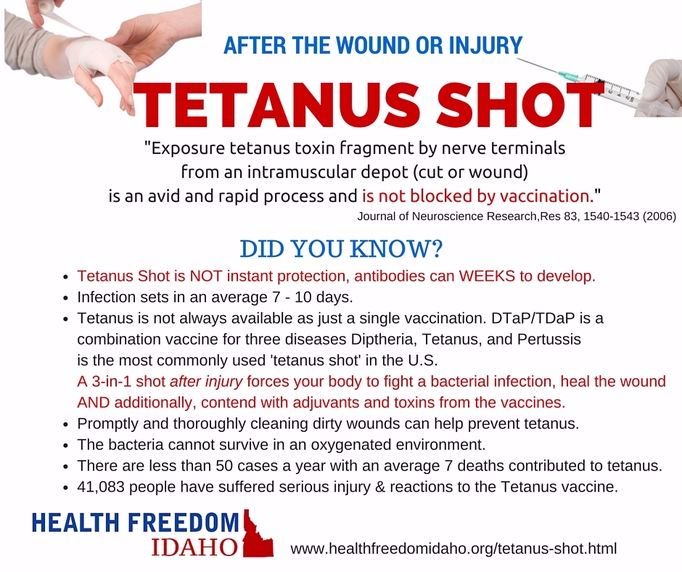
  • Tetanus Shot

    Tetanus Shot

    FIVE FACTS ABOUT TETANUS
    #1 – Getting a tetanus vaccine when infected will not halt the disease.
    Vaccine manufacturer states it take WEEKS for build antibodies to neutralize the toxin.
    #2 The tetanus vaccine does not guarantee immunity.
    #3 – The vaccine is packed with toxins.
    #4 – Vaccines may contribute to acute and chronic health issues.

    #5 – Proper wound cleaning can greatly reduce the likelihood of infection.

    NANCY:
    A Facebook friend wrote: “I had to go to the emergency room with my wife, she smashed her finger in a car door pretty bad, they had to remove the nail. They asked her if she wanted the DTaP, since the do not really have a tetanus shot anymore. She first said OK. I asked her not to get it because the tetanus is not contagious, and she could have not possibly been exposed from a car door because the bacteria is anaerobic, it can not survive when exposed to free oxygen. She then thankfully declined the shot. They were not pushy, but they did ask 3 more times if she was sure.
    Even if she had been exposed to the bacteria, which is less that 1 in a million chance, the vaccine would do no good, because your body does not instantly build antibodies from a vaccine to a bacteria you have already been exposed to. 
     The tetanus bacteria in generally found in animal poop, and is so sensitive to oxygen that a deep puncture is required, and if the wood bleeds sufficiently there is still very little chance of an infection.” 

    Further Research material

    1. An article: If you only want to read one link, this might be the one: Why You Never Need A Tetanus Vaccine, Regardless of Your Age or Location 
    by Dave Mihalovic Naturopathic Doctor who specializes in vaccine research, cancer prevention and a natural approach to treatment.
    2. A Video: Great detailed information by Dr Sherri Tenpenny, who has logged over 18,000 hours in vaccine research in addition to her medical training and experience. She is someone who reads ALL the details and explains what she learns in an understandable way. She once gave out “tetanus shots” like candy in the ER. Now she explains the science.
    3. Another video: 11 minutes on Tetanus, Prevention, Wound Care and Vitamin C by Dr Suzanne Humphries. An internal medicine specialist who began to listen to her patients when they responded with vaccine injuries and has spent years of her life devoted to the truth about vaccines, illness and the route to true health.
    4. Very well stated points here by Emily, a.k.a. Holistic Squid, who lives in the mountains above Malibu, CA; a mom, acupuncturist, and blogger in love with real food and healthy living. Sometimes moms have done more research than doctors – they take their role as protector of their child’s health very seriously.
    5. An article by Tetyana Obukhanych, Ph.D. in Immunologytetanus-shot-how-do-we-know-that-it-works?