
Tag: family

  • Gems In the Gem State: McIntyre Pastures’ Focus On The Soil

    In this new series, Gems In the Gem State, we focus on our local food, health and environment heroes. We recently interviewed Maria McIntyre of McIntyre Pastures and loved what she had to share about the foundation of their meat and egg production: the soil. Their family farm saw its start 109 years ago. The farm is currently being run by the third and fourth generation family members who are loving this way of life and the nourishing products they produce.

    By Maria McIntyre

    Everything hinges on the health of our soil. The difference between nutrient-dense food – and food that is not – all stems back to the soil it was raised in or consumed from. In a healthy teaspoon of soil, there can be anywhere from 100 million to 1 billion microbes. 

    Most people in agriculture don’t take time to try and understand what it takes to make these microbes happy. We don’t want to profess to know it all, because we feel like we might know 1/10 of a percent of how the soil functions, but…one thing we do know is that they need food and a safe habitat just like any other animal to be successful. 

    We have just as big of a responsibility to tend to the “livestock” that is under the ground as we do to what is grazing and living on top of the soil. 

    On our farm we do not till the soil, so we don’t disturb the habitat for the microbes. We constantly keep living roots in the soil via perennials and cover crops so they are giving off life-supporting food sources to the microbes. We also employ ruminants (cattle) to graze the plants and convert the plant material into another food source (manure and urine). All of this turns into nutrient dense grass and then, finally, nutrient dense meat and eggs. Behind our cattle, then come our chickens to do their valuable work. 

    What does this mean for you, the consumer? 

    A quote we found intriguing and alarming is this: “You would need to eat twice as much meat, 3 times as much fruit, and 4-5 times as many vegetables to get the same amount of minerals as available in the same foods in 1940” (Dr. Christine Jones, Amazing Carbon founder). 

    You can get overwhelmed with labels or even claims made on how your food is produced. If you do value the kind of nutrients that are being transferred to the foods you eat, you need to know the source of your food. Know your farmer. Know his or her practices. Know that what is being claimed is actually what is happening.

    These photos below help illustrate what we are doing here at McIntyre Pastures.

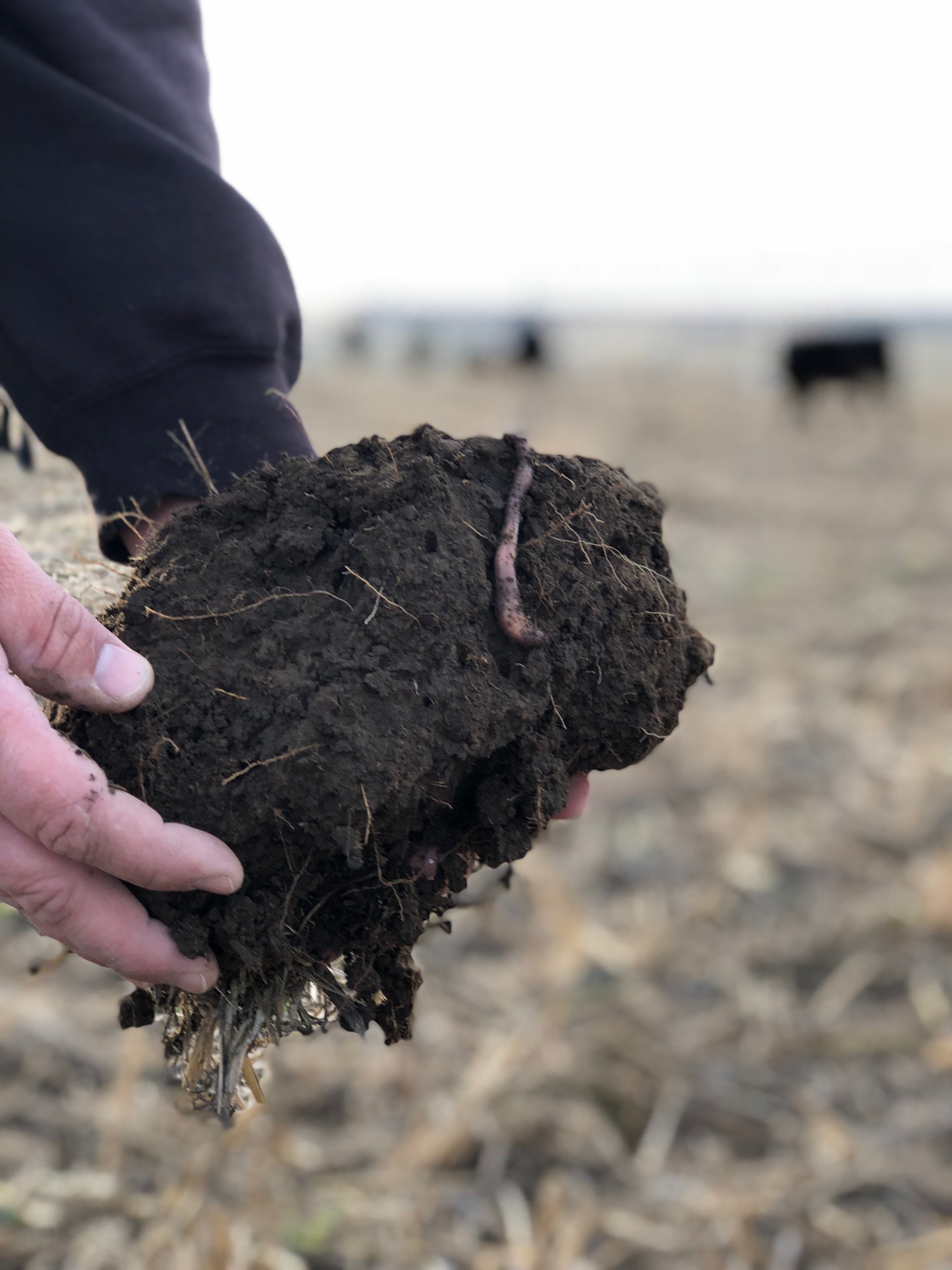
    The picture of the soil is from just last week! We seeded a cover crop (polyculture) early last fall for our mother cows and their calves to winter on. As spring has come, the plant matter (which included turnips, black oats, chickory, radish, collards, italian rye, and much more) has all been eaten, broken down, and re-deposited in the form of manure and urine. Look how happy the soil looks! Worms, worm casts, aeration and more, in abundance. 
    The pictures of the cattle grazing in paddocks shows how soil health is built by rotating (very often) the ruminants across a large area by sectioning it off. This spreads the urine and manure instead of letting them stay in an area for a long amount of time, thus building up the nutrients and minerals in the soil. 

    The chickens follow behind the cattle in such a great circle. They clean up what the cattle have left behind and deposit more manure and urine in the soil. They also glean from the manure the cattle have left and help naturally ‘sanitize’ the pasture by eating fly larva and insects.

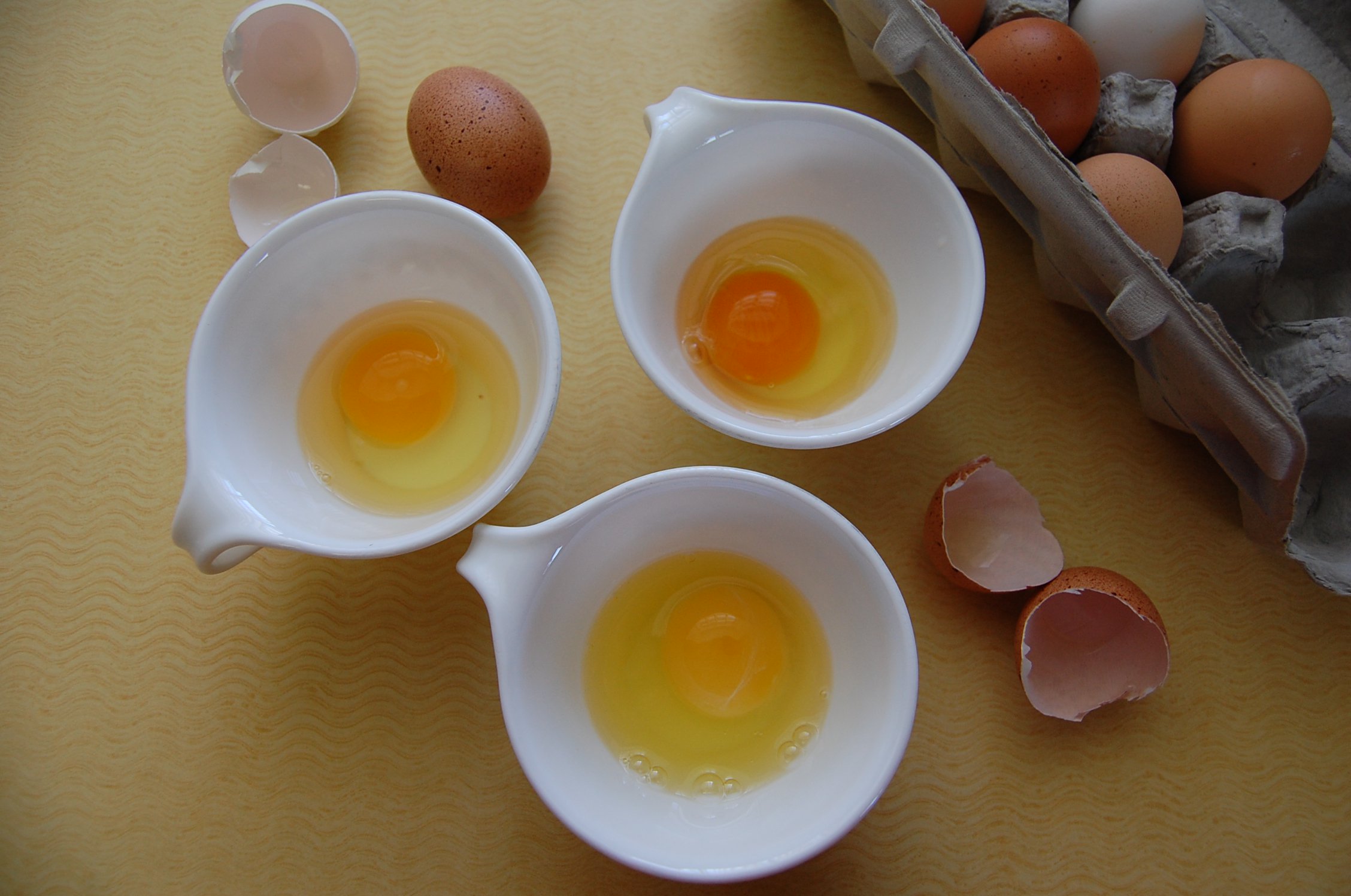
    The picture of the eggs compares our pastured eggs (the darkest orange yolked one) to a ‘free range’ and confined, ‘organic’. Although color is not a complete test, it is a great indicator of nutrient content. 
    By pasturing our chickens behind the cattle and rotating them on healthy pasture and cover crop, scratching manure behind the cattle for flies and larva, coupled with non-GMO / soy free feed and minerals free choice, those benefits they are drawing from the soil are passed onto the consumer in the egg. Again, make sure you know what you are getting.

    We love what we do here on the farm and especially appreciate providing nourishing food to people, while fostering a highly sustainable ecosystem for our animals and soil.



    You can read more about McIntyre’s farming practices on their website.

    If you’re interested in purchasing their meat and eggs, you can buy at select markets or order online and pick up at a number of locations in the Treasure Valley. McIntyre also provides products to local restaurants.

  • Fragrance Is The New Secondhand Smoke

    Fragrance is the New Secondhand Smoke | Branch Basics 
     
    Surely you’re familiar with one of these scenarios: The Scented Candle That Won’t Go Away

    You walk into a store full of scented candles. They smell so fresh and lovely, but a few minutes later, your nose starts to itch and you are starting to get a headache. You notice that you’re having a harder time focusing on anything and you start to feel light-headed.  You end up buying a candle and leaving, feeling better as soon as you walk out the door. A few days later, the smell of your new candle is on everything: your coat, your car, the living room – even when it’s not lit. The headache just won’t go away and you start to feel worn down and tired.

    The Mist That Never Disappears

    You spray a fine mist of air freshener all over that musty pile of backpacks in the mudroom. Your second-grader grabs his bag, now slightly wet and sweet-smelling, and starts to do homework, but is having trouble focusing. He’s getting a headache and starting to whine about wanting to play outside. Meanwhile, the fake scent of flowers dissipates as it numbs sensory receptors in your nose and starts driving your puppy a little crazy. Eventually, you can’t smell it anymore, but you’ve ingested it through your nose, lungs, and skin.

    Fragrance Is the New Secondhand Smoke

    If you’ve experienced anything like this and connected the dots, you know how insidious synthetic fragrance can be. It’s only human to seek out pleasant smells and to try to eliminate unattractive scents from our environments. However, the immediate and long-term effects of synthetic  fragrance exposure is hazardous to our health. Simply adding a pleasant smelling chemical to our bodies and air will not only affect our own health, but the health of the people (and pets!) who share the air with us.

    What’s Actually in A Fragranced Product?

    Today, fragrance is the elephant in the room. “Fragrance” or “parfum” on an ingredient list actually represents a trade secret fragrance recipe that could be made up of not just one or two chemicals, but hundreds of synthetic chemicals.4 These chemicals are selected from a reservoir of 5,000 ingredients.5 And of this large number of ingredients, none of them actually have to be disclosed or tested for safety.6

    According to an Environmental Working Group (EWG) study, 72% of products with the ingredient “fragrance” contained endocrine disruptors called phthalates.7 Phthalates have been linked to diabetes, obesity, liver and breast cancer, hormone disruption affecting fertility and development as well as linked to ADHD and Autism in first and third trimester prenatal exposure. The National Academy of Sciences, working with an expert panel, stated that there may be cancer-causing chemicals in fragrance recipes.8 Unfortunately, because of secrecy and a lack of transparency in labeling, there is really no way for a consumer to make informed decisions about fragranced products.9

    Up to 95% of these the synthetic chemicals used to make fragrance recipes are derived from petrochemicals.10 These particular ingredients are known (according to a 1991 EPA analysis) to cause cancer, birth defects, nervous system disorders, asthma, and allergies.11 To make matters even worse for the unsuspecting public, many products labeled as “unscented” are actually the fragranced product with the addition of another masking fragrance.12

    What about Natural Fragrance or Essential Oils?

    Unfortunately, the term “natural fragrance” or “essential oil” on an ingredient list does not necessarily mean it is safe. In a study analyzing 25 top selling products, researchers found that the “green”, natural, and organic fragranced products emitted just as many hazardous chemicals as regular fragranced products.13 That’s because most essential oils in consumer products are processed with a toxic solvent. In addition, essential oils containing terpenes such as pine and citrus oils react with ozone in surrounding air to create secondary pollutants such as formaldehyde, acetaldehyde, acetone, and ultrafine particles.14 To ensure safety, essential oils in products should be verified as organic and wildcrafted and extracted without solvents. 15, 16

    How can we help protect the public?

    Fragranced products  are harmful to our health. Babies, children, the elderly, and those with cancer or other chronic illness are particularly at risk. The current demand for products that  “smell good” reflects the misinformed innocence of consumers. Awareness of this issue is in its infancy, but the good news is that action is already being taken to pave the way in educating and protecting the public. The American Lung Association has created a fragrance-free policy for workplaces and for schools. Harvard University teaching hospital is a model for promoting fragrance-free policies in their hospital.17 Brigham and Women’s Hospital has even initiated a campaign for fragrance-free health care.

    The best way for individuals to influence the fragrance industry is at the cash register – this will ultimately provide the impetus for change in the marketplace.  Be proactive and only buy products that are unscented or have pure, safe essential oils. Even just removing all products with fragrance as an ingredient will immediately improve air quality in your home.  Take charge of your family’s health and wellbeing – ditch these synthetics! 

    Clean Up Your Act Branch Basics: Fragrance is the New Secondhand Smoke

    Join us to Clean Up Your Act. We are pledging the following:

    1. Don’t Buy Fragranced Products (unless contain pure organic essential oils)
    2. Ditch All Synthetic Fragrances
    3. Invest in Fragrance-Free, Nontoxic Alternatives

  • Easy Homeopathy: Homeopathic First Aid for the Whole Family

    Want to learn more about homeopathic medicine to get and keep your family in better health? Join Michele S. Morgan, PhD, a professional classical homeopath with 40 years experience, to learn the seven essential remedies you need for common illnesses and first-aid. These basic homeopathic remedies should be in every medicine cabinet! 

    When: April 25 6:30

    Where: Karlfeldt Center

    UPDATE: We’ve found that the book, “Easy Homeopathy” is difficult to obtain, and so we are recommending that students purchase “Homeopathic Medicine at Home” by Maesimund Panos instead. This book is available locally at Barnes and Noble, and online at Amazon! 

    If you can find it, “Easy Homeopathy” by Edward Shalts is a wonderful overview of at-home Homeopathy. ISBN# 0071457585. It can be purchased online and here’s what Amazon has to say about it:

    “Simple and inexpensive natural remedies every medicine cabinet should have!”

    “Dr. Edward Shalts’s easy-to-use reference book is designed for those just getting started in homeopathy as well as for those confused by the thousands of elixirs, herbs, and other healing methods on the market. Now, in one user-friendly guide, Shalts identifies the seven most useful and effective homeopathic remedies, explaining to you exactly what they are, how they work, and how to use them for hundreds of common conditions.”

  • An Attempt to Create the Toxin Free Household

    An Attempt to Create the Toxin Free Household

    I always thought of toxins as those products to ‘keep out of reach of child’ or I would end up calling poison control. Recently, I have begun to realize that toxins are those chemicals that disrupt our bodies natural processes, cause a plethora of ailments and could cause long term serious health issues. Thinking back, I was always grateful that in my family of many children, didn’t have to deal with food allergies. What a pain for those other families!
    And then my youngest was born. It was those allergies that took our family on a journey into an awareness of food ingredients and house hold toxins and helped us take back our health.  

    Over the past three years, we spent time focused on changing our eating habits. It took a couple years but we have eliminating 99% of processed foods stopped all fast food. Our meals, snacks and treats with are made with local,organic and fresh foods. Do not pity my children however. My baker in the making has discovered ways to allow us to enjoy organic brownies, homemade ice cream, HOMEMADE PEPPERMINT CHOCOLATE, home made pretzels and cakes galore! We still save up ‘out to eat money’ to visit our favorite french fry shop in town that sources its potatoes and cooks them safe for our family.

    So, this past year the focus has been products. What we put on our skin and hair and what we are surrounded in our home.
    I am amazed at the significant health improvements of our entire household.

    Common Household Toxins 
    This was a real eye-opener when we first saw it so we began to read labels on the stuff in our own home and confirmed what this is showing.  In some cases toxins were NOT listed on labels due to inconsistencies in government regulations.
    Healthy Home checklist printable

    Common Toxic Products In Your Home

    Items We Replaced:

    • Air Fresheners 
      “Fragrance” is a scary ingredient. According to the FDA, “fragrance” can be any combination of natural or synthetic chemicals (300+) to create a desired scent. The chemicals used in “fragrance” do not have to be disclosed on ingredient labels because of “proprietary secrets.” Many of these ingredients are carcinogenic, endocrine disruptors, and neurotoxic. Many air fresheners even cause respiratory ailments too!
    • Cleaning Supplies
      Cleaning supplies really anger me. Many of them are guilty of “Green Washing,” which is where they claim to be environmentally friendly and “nontoxic,” but they aren’t. Check out the EWG databases and see how your cleaning products measure up! It was a massive eye opener to me that products I grew up using was actually poisonous! Many cleaning products list “detergents,” but not which kind – which I find to be very misleading and dishonest. If people truly knew what was in their cleaners, popular companies would be out of business or executives jailed for false marketing and public endangerment! 
    • Personal Care Products
      You wash your hair, your body, your face, with the intention of cleaning. Surprisingly, if you get your personal care products from local department stores, like Walmart, Target… etc… chances are, they contain dangerous or potentially dangerous ingredients

      Disturbing fact: Since WWII, there have been over 80,000 new synthetic chemicals created. 10,500 of those are regularly used in the cosmetic and skincare industry. 10% of those have safety data available, not all have fully sufficient safety data. 1,500 have safety data that indicate they are toxic to humans.

      It only takes 22 seconds for your skin to absorb what you put on it. From there, it is absorbed into your blood stream. From the time you slather a lotion or cream on your skin, it takes less than a minute for the components to reach your brain. 

    We replaced: Window cleaner… kitchen cleaner… bathroom cleaner… floor cleaner… stove cleaner… oven cleaner… toilet cleaner… soft scrub… tub and shower cleaner… heavy duty cleaner… carpet cleaner… laundry detergent… laundry fabric softener… stain remover… dryer sheets..We don’t buy cleaners instead use products that are safe enough to eat. Yep. Vinegar and Baking soda take care of 99% of our cleaning needs.

    I threw out several shampoos and conditioners… deep conditioners… hair masks… hair spray… body wash… soap bars… liquid hand soaps (bye bye triclosan!)… lotions… face creams… deodorant… and a drawer full of makeup. We read labels closely and make as much of our own as we can. 

    At this point, we have completely eliminated our pharmaceuticals from the medicine cabinet.  We use essential oils, and herbs instead.

    We have shifted what we were once spending on synthetic drugs and man-made detergents and health and beauty products to natural alternatives.

    The girls are learning to make their own makeup and cleansers. We make toothpaste too.

    We purchase environmentally friendly dish and laundry soap but in a pinch washing the clothing and even the dishes with vinegar and warm water has been pretty successful too!

    We notice that costs are the same or less but we now have the peace of mind of knowing that we’re taking care of our bodies and the environment.

    What We’ve Found After a Year of Reduced Toxins

    So now that we’ve eliminated most of the toxins in our household what have we observed?  
    Less colds and when we get them, they are shorter duration than ever before.
    We are aware that we don’t sweat as much and don’t need antiperspirants;
    Less respiratory congestion; indigestion (bloating and gas), joint/body aches and pains eliminated; eliminated much of our skin issues, rashes, peeling nails, flaky and dry skin.

    Arguably some of these improvements could also be from the result of a mostly organic diet, increased multi-vitamins and ferments.
    One of the most recent noticeable changes has been attitude. Mood swings and impulse control have improve greatly. Our diet change has been solid for over a year and just recently we modified our detergents for laundry and clothing, we saw moods improve. I am amazed at how sensitive our household was to the residues of chemicals on our plates and our clothing. 

    How hard was it to change? 
     
    Not as disruptive to our busy lives as we expected.  We just kept at it and over a gradual process of months we were able to make the change-over. There were times I felt guilty after realizing I was exposing my kids to some pretty toxic stuff. But, I know better and do better. They are learning what a difference it has been in their lives and health and will be able to make better choices because they have seen how yucky their skin, hair and even mood was when we were surrounded by so much synthetic chemicals. 

    What have you done to reduce toxins? Do you have products that you specifically use and find effective for your family. Please share. 

  • Get Your Kids To Eat: Spinach

    Get Your Kids To Eat: Spinach

    It is hard to beat spinach when talking about nutrient packed greens. Just one leaf contains a sampling of more than 20 different nutrients. The list of benefits is nearly as long as the amount of nutrients: cancer fighting, blood pressure beating, bone strengthening, cardiovascular helping, brain boosting, skin smoothing, vision improving, inflammation reducing, energy increasing, and more. Spinach is a green smoothie staple for all!
    We eat it raw. Fresh, Crispy and full of flavor. 
    Some kids need a bit of dressing to ‘tone down’ the boisterous flavor of spinach. For these children we make a ‘real food’ dip.
    They enjoy spinach leaves in this special ‘ranch’ dressing. 
    Thanks to Wellness Mama for this homemade healthy ranch dressing with greek yogurt, olive oil and spices and no artificial ingredients!
    Serves: 4
    Ingredients
    • ½ to ¾ cup Plain Full Fat Yogurt or Greek Yogurt
    • 1 tsp (or more to taste) of dried dill weed
    • Sprinkle of salt and pepper to taste
    • 1 small clove of garlic
    • 6 TBSP olive oil
    • 2 TBSP parmesan
    Instructions
    1. Put yogurt, garlic and spices in a blender or food processor and blend until smooth.
    2. Very slowly, add the oil so that it emulsifies.
    3. Use immediately, or store up to 1 week in the fridge
    What tricks do you use to get your kids to acquire tastes for healthy fare?
  • Get Your Kids To Eat: Celery

    Get Your Kids To Eat: Celery

    Ever heard of phytonutrients? They are what makes celery stand out among other raw greens. Phytonutrients are an antioxidant that help prevent damage done to body fat and blood vessel walls. This may not sound important, but to put it in common terms blood vessel damage leads to many of the diseases we see today. Be sure to use strong fruit to balance out the potent flavor of the celery stalks and/or leaves.
    Some love it, some can’t stand it. 
    Our family discovered that if you de-string celery, many kids will come around. Its that gag reflex with a celery string hits the back of your throat that causes the aversion to celery. 
    De-stringing celery turns into a game which makes eating food a bit more fun. Here is how to de-string your celery:
    • A simple pop and pull technique. 
    • Snap the top portion of the celery stalk. 
    • Take the cut piece and gently peel the strings away from the celery rib. As you pull the strings, it will release down the whole rib of celery.

    If you do not get all of the strings with the first pull, take a knife and gently lift a string from the end. Once you get an end sticking up, you can pull that string all the way down the rib of celery.

    There you have it – string-free celery for the whole family to enjoy!

  • Get Your Kids To Eat: Cilantro

    Get Your Kids To Eat: Cilantro

    Most fast food is dipped, cooked, and lathered in all sorts of unhealthy things that cause high blood sugar and cholesterol, but not this “fast food.” One of the remedies for lowering blood sugar and cholesterol is cilantro, and its fast and easy to add to your daily smoothie! Try it with lime juice and other tropical treats.

    Here is how our family sneaks cilantro into SMOOTHIES. 

    GREEN SMOOTHIE WITH CILANTRO: 
    1. 3 ice cubes.
    2. 1 fresh or frozen medium banana.
    3. 1/2 cup cilantro.
    4. Juice of 1/2 lime.
    5. 1/2 tablespoon coconut oil.
    6. A dash of Celtic sea salt or other high quality salt.
    7. A little honey, maple syrup, or stevia to sweeten (optional)
    We also love in our SALSA. Throw all the ingredients into a food processor and pulse a couple times.
    HOMEMADE SALSA:

    • 6 tomatoes of varying sizes, chopped
    • 4 small jalapeno peppers* (leave the seeds in for an extra kick)
    • ½ onion
    • ¼-1/2 cup fresh cilantro
    • 3 garlic cloves
    • 1½ to 2 teaspoons ground cumin
    • 1 teaspoon sea salt
    • 2 tablespoons lemon juice (about ½ lemon, juiced)
    And, we love it even on our salads.
    FRESH GREENS SALAD WITH HERBS:
    • ½ head green cabbage
    • ¾ c. thinly sliced white onion
    • ½ c. fresh cilantro
    • ¼ c. vegetable oil
    • 3 tbsp. fresh lime juice
    • 1 tbsp. apple cider vinegar
    • 2 tsp. Freshly ground pepper
    How do you help your kids acquire the test for healthy foods?
  • Get Your Kids To Eat: Romaine

    Get Your Kids To Eat: Romaine

    Romaine lettuce is a nutrient rich leafy green that is good for your heart and low in calories. The vitamin C and beta-carotene content help to lower cholesterol and prevent build up on artery walls, which reduces the risk of heart attack. Being low in calories also helps you lose weight while keeping you full.

     Seems easy. But not the easy stuff isn’t always so easy. 

    We tend to “hide this lettuce in: 
    • A mixed green salad
    • Upon the hamburger
    • Dipped into our favorite ranch
    • Tucked into a taco
    What do you do to help your children ‘acquire a taste’ for healthy foods ?
  • Get your Kids to Eat: Cabbage

    Get your Kids to Eat: Cabbage

    Cabbage is yet another example of a cancer fighting leafy green. One thing that may help to separate it from the pack is its popularity in home gardens and fresh markets, which makes them easy to find. It also has a hint of sweetness to go with those yummy, summer smoothies filled with berries.
    We use cabbage as a base for our salads. 
    Slice cabbage thinly (like you are making coleslaw)
    Add Carrot Shreds
    sweet red onion
    Mix ins: 
    sunflower seeds, pumpkin seeds, dried cranberries (great for color and a bit of sweetness), sesame seeds
    Create a yummy citrus salad dressing:
    1. 1 small shallot, finely chopped.
    2. ¾ cup olive oil.
    3. ¼ cup Champagne vinegar or white wine vinegar.
    4. 3 tablespoons fresh lemon juice.
    5. 2 tablespoons fresh orange juice.
    6. ¼ teaspoon finely grated lemon zest.
    7. Kosher salt and freshly ground black pepper.
    Add dressing just before serving and Enjoy All Year Round. 
  • Get Your Kids to Eat: Kale

    Get Your Kids to Eat: Kale

    Kale
    If you like spinach then you will like kale. They are both known for their wide variety of nutrients, mild taste, and availability in your local markets. The best part is that they are from different families, which will make rotating a breeze. Having any kind of health issue? Kale will probably help, though they are especially talented at fighting cancer.
    If its good for them you want them to eat it. . .but, how!?
    We take our fresh kale strip it from the stalk, douse it in avocado oil with a generous sprinkle of pink salt and a dash of garlic salt and stick them in an oven for about an hour at 250 degrees. 
    KALE CHIPS! 
    Crunchy. Salty. Good food snacking.