Tag: food

  • Allergens and Vaccines

    Have an egg allergy? CDC has decided that a flu vaccine contaminated with eggs is ok. CDC, the doctors nor the pharmaceutical company isn’t liable if your child suffers a reaction from the contaminated vaccine. In the vast majority of cases, the flu is not a big deal for healthy children. Whereas anaphylactic food allergies kill thousands of children every year. 

    Philadelphia weatherman Adam Joseph shares that his son, who is allergic to eggs, is having an adverse reaction to the flu shot. 

    Several nurses have posted that, unlike in years past, the CDC now says it’s okay to give the flu vaccine to children with egg allergies, and that “even with the reactions, getting the vaccine is still better than getting the flu.” These nurses are so blinded by dogma that they have forgotten their first responsibility, which is to be an advocate for the patient. Instead, they are now simply salespeople for vaccines, spewing the misinformation from the CDC.

    The CDC owns 57 vaccine patents and buys and sells (at a hefty profit) nearly $5 Billion worth of vaccines every year. Taking advice from The CDC on vaccines safety is like believing everything a used car salesman tells you about that “little beauty grandma only drove to church on Sunday.”
    Adam asked for advice.

    Marcella Piper Terry’s response:
    I did not have an egg allergy until after getting my one and only flu shot – which put me in the hospital for a total of 31 days; five of which were in Neuro-Intensive Care in a medical coma. Injecting food proteins into the blood stream is THE WAY to cause food allergies.
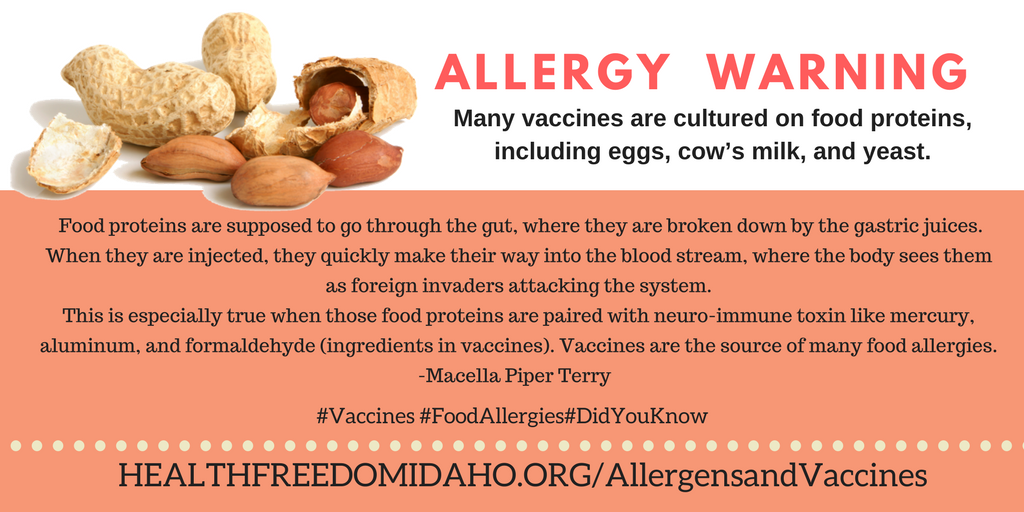
    Many vaccines are cultured on food proteins, including eggs, cow’s milk, and yeast. Food proteins are supposed to go through the gut, where they are broken down by the gastric juices. When they are injected, they quickly make their way into the blood stream, where the body sees them as foreign invaders attacking the system. This is especially true when those food proteins are paired with neuro-immune toxin like mercury, aluminum, and formaldehyde (ingredients in vaccines).

    Vaccines are the source of many food allergies. Anaphylactic peanut allergies were basically unheard of until vaccine manufacturers started using peanut oil as an adjuvant in the 1960s-1970s. An adjuvant is something that is added to the vaccine to cause an increased inflammatory response. Unfortunately, that response primes the immune system to recognize that substance as toxic, and the immune system responds violently when re-exposed to that substance later on.

    Look at the ingredients in vaccines, and also research the childhood infections they are designed to protect against.
    Doing a cost-benefit analysis is something we should all be doing, if we are to be informed consumers.

    Here is a list of vaccine ingredients (from the CDC website):
    TinyURL.com/ExcipientList

  • Talking Turkey: Conventional vs Organic

    When you choose your next turkey, what factors will you take into consideration? Do you want more meat or would you rather preserve an endangered breed? Do you know, understand the marketing gimmicks used by the industry to make you pay more? Organic turkeys are often in high demand; so if you choose to get one, you should order it now (if you haven’t already). Whole Foods/Amazon has a sale through November 26. <Click here >

    Hormones

    Most of us are willing to pay more for a bird raised without added hormones, right? We want that thick, juicy breast meat, but don’t want biological repercussions within our own bodies.

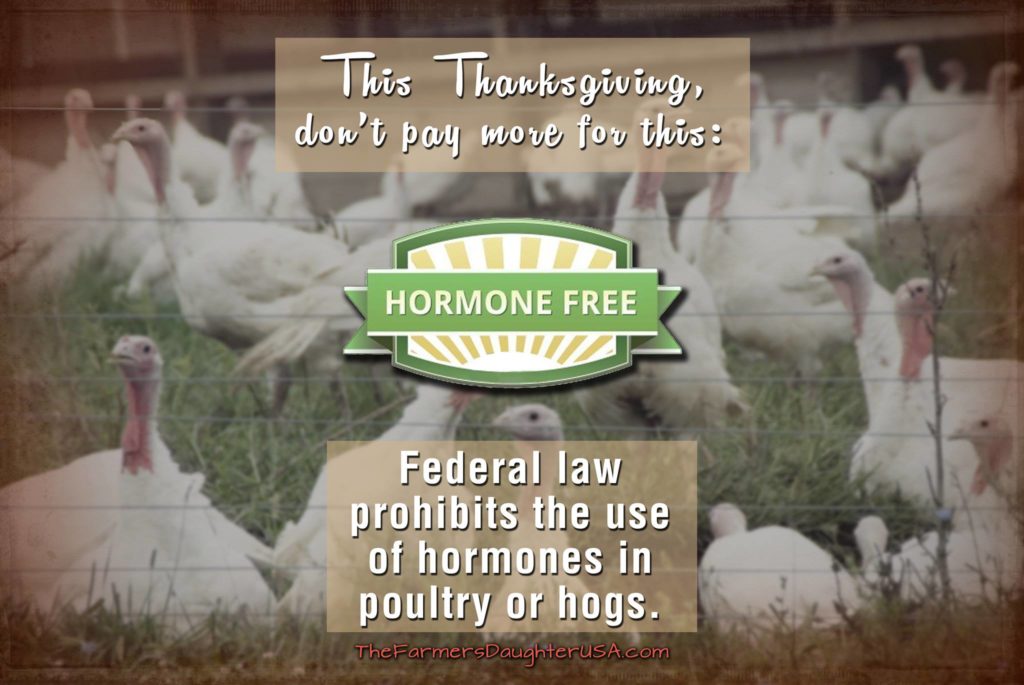
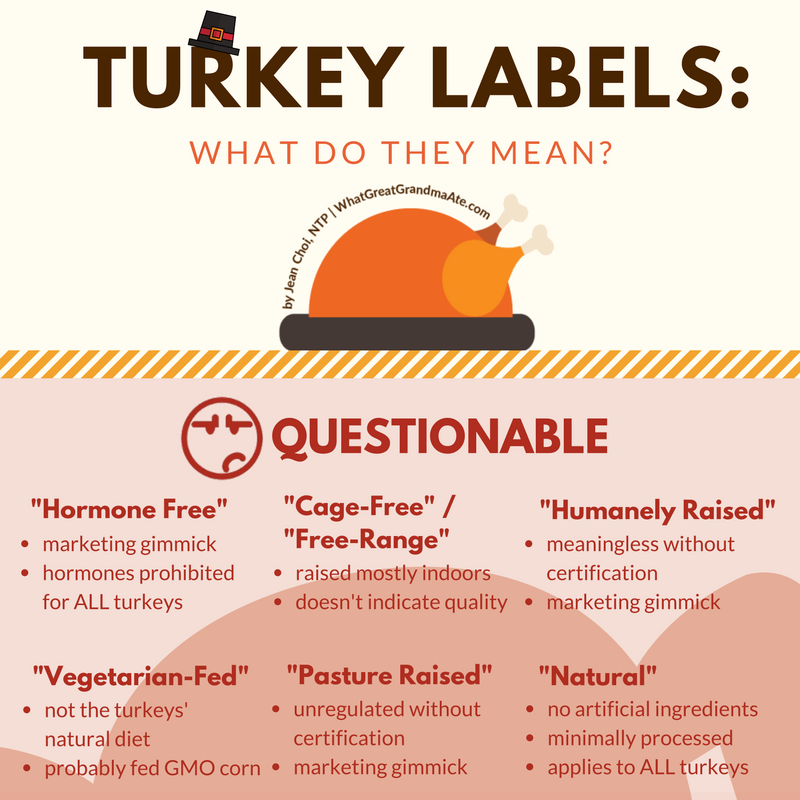
    What most of us don’t realize it’s illegal in the US to add hormones to poultry. Added hormones within our poultry is something we will probably never have to worry about. The packaging that says ‘no added hormones’ is simply a marketing ploy.

    Antibiotics

    An organic turkey is antibiotic free.
    Organic turkey farms use neither antibiotics nor feed that has not been certified organic.

    Turkeys may start out antibiotic-free, but farmers may medicate an entire flock if a few birds get sick. Some growers keep separate flocks, raising turkeys without antibiotics until problems occur, then moving sick birds to another pen if they have to medicate. Others must euthanize sick birds to keep the rest of the flock safe.

    An ongoing argument exists regarding the ethics of using antibiotics. While many farmers have announced that they will stop adding medication to daily feed, they hold that treating sick animals is the most humane way to raise meat. Eschewing all antibiotics means suffering of the animal, spread of disease, and euthanasia of sick animals before the other livestock can contract the illness.

    Injected Additives

    Self-basting or injected birds have been treated with a brine and/or a flavored injection to increase moisture retention and flavor. The fresh turkeys are injected with a basting solution made of salt water and “common household spices,”. Manufacturers are not required to share the specific ingredients/spices of their basting formula.

    Don’t let the “Natural” label fool you

    Unlike the word “organic” the word “natural” does not have a specific meaning and can mean many different things. In general, “natural” food does not contain artificial colors, flavors, sweeteners, preservatives or other additives. When you see the word “organic” on a label or a package that means the product was grown or made according to the strict standards (i.e. Without the use of toxic, persistent chemicals, GMOs, antibiotics or hormones) as established by the USDA.

    Summary of Organic vs Conventional

    Organic birds, one would imagine fields of open space with birds freely moving around. The use of synthetic fertilizers, pesticides, herbicides, irradiation, sewage sludge, hormones, antibiotics and genetic engineering is strictly prohibited. However, being organic does not guarantee they are free ranged.The appeal of free-range turkeys is that they are raised with access to outdoor space so they can roam — many folks believe that this makes for better tasting meat.

    Conventional broad breasted turkeys are in most cases caged, eat genetically modified grain, never see the light of day, and are given antibiotics, and injected with unknown solutions.

    Free-range and organic turkeys are often in high demand; so if you choose to get one, you should order it now (if you haven’t already). Whole Foods/Amazon has a sale through November 26. <Click ad below>


    THROUGH NOV 26, 2017


    Have you eaten heritage or organic turkeys? Did you notice a flavor difference? 


    Deciphering the Label Online RESOURCES:

    USDA guidelines for conventional/organic turkey
    https://www.fsis.usda.gov/wps/wcm/connect/2a9bcae8-ae1e-4248-9ce7-4e752f2f91fc/Turkey_Raised_by_the_Rules.pdf?MOD=AJPERES

    Label Guide: Food Network http://www.foodnetwork.com/healthyeats/healthy-tips/2009/04/eco-friendly-food-label-decoder

  • Orofino Farmers Market Celebrates National Farmers Market Week


    Orofino Farmers Market joins markets across the country in celebrating National Farmers Market Week, August 6-12. Vendors at the market on Tuesday, Aug. 8 will be giving away Idaho Preferred farmers market tote bags to the first 120 customers, one per family please. Kid’s coloring pages will also be available.

    Farmers markets help preserve America’s rural lifestyle and farmland by stimulating local economies, increasing access to fresh, nutritious food, supporting healthy communities, and promoting sustainability.

    This article originally appeared at: http://www.clearwatertribune.com/news/community_news/orofino-farmers-market-celebrates-national-farmers-market-week/article_265aa332-77a3-11e7-9f1d-8744f1a3fbb8.html.
  • Guerrilla Gardeners. Rebuilding Communities Growing Independence.

    The most effective change-makers in our society aren’t waiting around for a new president to make their lives better, they’re planting seeds, quite literally, and through the revolutionary act of gardening, they’re rebuilding their communities while growing their own independence.

    Every four years when the big election comes around, millions of people put their passion for creating a better world into an increasingly corrupt and absurd political contest. What if that energy was instead invested in something worthwhile, something that directly and immediately improved life, community, and the world at large?

    The simple act of growing our own food directly challenges the control matrix in many authentic ways, which is why some of the most forward-thinking and strongest-willed people are picking up shovels and defiantly starting gardens. It has become much more of a meaningful political statement than supporting political parties and candidates.

    Take, for example, Ron Finley, the ‘Guerrilla Gardener’ from Los Angeles who inspires the world with no-nonsense truth about how the corporate food system enslaves us, while proving to us that the most effective weapon in this fight is fertile soil. He makes growing veggies cool again, as it should be, because food sovereignty is the very foundation of personal independence.

    I live in a food prison.. It’s all by design just like prisons are by designed. I just got tired of being an inmate. So I figured, let me change this paradigm, let me grown my own food. This is one thing I can do to escape this predestined life that I have unwillingly subscribed to. – Ron Finley

    Think about it. Creating your own food supply challenges the status quo in a number of important ways. Growing your own food:

    -Decreases dependence on a polluted corporate food system

    -Improves health and wellness by providing exercise and nutritious food, freeing us from dependence on a for-profit medical system

    -Undermines Monsanto and the agro-chemical industry that is polluting our world and killing bees

    -Highlights issues of political control by pitting homeowners and gardeners against government and ordinance makers

    -Builds and heals community by providing a place and activity worth coming together over

    -Works to repair the damage we are doing to the environment with our consumer lifestyles

    -Protects us against insecurity and food unrest

    -Facilitates a greater awakening by setting an example for others to follow

    When united, awareness and action create the kind of changes that a rigid control system cannot tolerate, and when extraordinary people like Ron Finley take the lead, a meaningful movement can take hold. This is real action, it is very effective, and as it becomes more mainstream to set up gardens in your yard and on your block, we will witness the re-emergence of the kind of society we just cannot create by playing by the rules of a rigged system.

    What happens when you transform yourself by deepening your connection to nature?
    What happens when you then transform your community by bringing your neighbors together in the goal of providing something of immense value to all?
    What happens then when a nation of transformed communities sees their world without the boundaries of and limitations imposed on us by a corrupt system?

    The four-year cycle of presidential politics in the US is far more effective at stealing the constructive energy of motivated people than it is at bringing about meaningful change to our lives, communities and to the nation as a whole. Time to try something far more effective and rewarding. Let’s overgrow the system, and transform our health and communities in the process.

    For a sign that this movement is spreading across the nation, check out this homegrown music video, ‘Gardening is Gangsta,’ by Mark Jankins and Sifu Paul Davis.

    I don’t rely on new food stamps. Cuz’ every season got me harvesting some new plants.

  • Chocolate As Nutrition

    Chocolate isn’t just for guilt-trips anymore. It’s been shown in numerous studies to be a powerful performance-enhancing, happiness-triggering, mood-enhancing, appetite-reducing, inflammatory-nipping and good-bacteria-building substance. Yay for that! Side note though: GOOD chocolate must be consumed to make it all that it can be: preferably organic, super dark, low sugar and European, since you want as little mycotoxins as possible (since it is a fermented food).  

    Thanks to Bulletproof Executive for a great background on what chocolate actually contains and how it works to make us feel and look better, its caveats and for publishing the delicious keto chocolate mousse recipe below from Ryan Carter

    • High Pressure Mood Improver
    • Chocolate makes you eat less
    • Maintenance of a Healthy Cardiovascular System
    • Chocolate makes your skin glow…and may reduce sunburn
    • Healthy Inflammation Levels From Powerful Antioxidants (for mice!)
    • Chocolate is a prebiotic
    • Cellular Rejuvenation (Anti-Aging)

    Head on over to Bulletproof’s blog for the full spectrum of benefits and caveats, and then, enjoy your delicious health supplement! 

    Keto Chocolate Avocado Mousse

    Prep Time: 15 min.
    Total Time: 45 min.
    Makes: 3 servings

    Ingredients:

    Instructions:

    1. Chill ripe avocado for 1-2 hours prior. This step assures the blender stays cool, which helps maintain the temperature of your dessert just in case you want to consume it immediately.
    2. Add avocado to your blender, along with chocolate and protein powders, followed by the coconut milk.
    3. Add sweetener of choice (optional).
    4. Put the lid on and blend for 10 seconds then rest for 10 seconds in intervals until mousse reaches silky consistency. This helps to avoid overheating, which can destroy the protein in the powder as well as the consistency of the mousse.
    5. Transfer to bowls and add your favorite toppings!

    Optional toppings

    • Himalayan Sea Salt
    • Bulletproof Fuel Bar shavings
    • Blueberries
    • Chopped nuts (try macadamia or Brazil nuts)
    • Fresh ginger, chopped or shaved
    • Lightly toasted coconut

    Nutrition Facts

    Serving size: 100g

    Calories 198
    Total fat 15.6g
    Sat Fat 6.78g
    Cholesterol 0mg
    Sodium 27.8mg
    Total Carb 8.8g
    Dietary Fiber 5g
    Sugars 1.1g
    Protein 7.4g
    Vitamin A 2%
    Vitamin C 9%
    Calcium 1%
    Iron 6%

  • Eating Out? First Visit The Eat Well Guide

    HFI: What a wonderful resource to eating well wherever you are! These days, it’s hard to trust that the food you’re eating was produced in a safe, humane and sustainable manner. From their site: “We built the Eat Well Guide to make it easier to find good food and to support local farmers, restaurateurs and others who are doing their best by their customers, their workers and the planet. We personally vet every business that goes into the Guide, and we never charge or accept money in exchange for inclusion.”

    The Guide’s thousands of listings include restaurants, farms, farmers’ markets, stores and more. Search by location and/or category, or check out our city guides to find tailored listings for restaurants and other sustainable vendors in cities across the US.

    Visit the Eat Well Guide

    We’ve set out to map the sustainable food system. We can do a lot on our own, but we can go further, faster, with help from people like you all over the country. If you know of a sustainable business that should be listed in the Guide, please tell us! You can also use the “Help Improve This Listing” button to let us know about any errors, or to flag a business if you don’t think it belongs in the Eat Well Guide.

    Standards for Inclusion

    Sustainable agriculture means producing food using farming techniques that protect the environment, public health, human communities and animal welfare. This allows farmers to supply healthful food without compromising future generations’ ability to do the same. The Eat Well Guide includes sustainable farms, along with restaurants, markets and other businesses that offer sustain-ably produced foods.

    Our Process

    The Eat Well Guide is a labor of love – it’s a nonprofit endeavor and has always been completely free for those who use it and for all the businesses listed within. Over the course of the Guide’s decade-plus history, we’ve built the nation’s most robust directory of sustainable food purveyors through staff research, and with suggestions from individuals, partner organizations and the owners of many of the businesses we list.

    Our staff reviews all listings before adding them to the Guide by checking websites and/or calling businesses. Although we’re not a certifying agency, we make every effort to ensure that each listing meets the standards outlined below. We also make note of any sustainability certifications a business has earned from third-party certifiers on its listing page.

    Our Standards

    FARMS

    We list sustainable farms and ranches that offer foods including beef, dairy, eggs, pork, poultry and produce, along with U-pick farms and Community Supported Agriculture (CSA) programs that: 

    • Promote animal welfare and raise animals on pasture without non-therapeutic antibiotics, synthetic growth hormones or the confinement systems used on industrial operations.
    • Protect biodiversity, soil, water and other natural resources, and avoid use of toxic pesticides, synthetic fertilizers and genetically modified (GM) crop varieties.

    While many farms listed in the Guide are USDA certified organic, we also include farms that are in the process of transitioning to organic, farms that go above and beyond the organic standards and farms that choose to use sustainable production techniques without seeking organic certification.

    RESTAURANTS

    We list restaurants that: 

    • Offer foods prepared with ingredients supplied directly by local, sustainable farms and other purveyors of local, sustainable food. Since seasonal growing conditions and access to sustainable farms vary widely across the country, we don’t require restaurants to source exclusively from local, sustainable farms. We include restaurants that make a sincere effort toward sustainability by sourcing the most sustainable ingredients as often as possible.

    BEER, WINE AND COCKTAIL ESTABLISHMENTS

    We list breweries, wineries and bars that: 

    • Demonstrate a commitment to sustainability by offering beer, wine and/or liquor produced using ingredients from growers who have achieved organic or biodynamic certification or practice sustainable growing techniques; abstain from the use of industrial pesticides and/or preservatives; utilize agricultural methods that promote biodiversity and soil enrichment; and conserve water and protect natural resources.

    STORES

    We list stores including bakeries, butcher shops, cheese shops, co-ops, fish markets, online shops and other specialty shops that:

    • Offer foods supplied directly by local, sustainable farms and other purveyors of local, sustainable food. Since seasonal growing conditions and access to sustainable farms vary widely across the country, we don’t require stores to source exclusively from local, sustainable farms. We include stores that make a sincere effort toward sustainability by offering the most sustainable foods as often as possible.
    • Fish markets must demonstrate a commitment to sustainability by selling seafood that is fished or farmed in ways that have less impact on the environment. For more information on sustainable seafood, please see Food & Water Watch’s Smart Seafood Guide.

    FARMERS’ MARKETS

    We list farmers’ markets that:

    • Offer foods supplied directly by local, sustainable farms and other purveyors of local, sustainable food.

    CHEFS, CATERERS AND MEAL DELIVERY

    We list chefs, caterers and meal delivery services that:

    • Offer foods prepared with ingredients supplied directly by local, sustainable farms and other purveyors of local, sustainable food. Since seasonal growing conditions and access to sustainable farms vary widely across the country, we don’t require chefs, caterers and meal delivery services to source exclusively from local, sustainable farms. We include chefs, caterers and meal delivery services that make a sincere effort toward sustainability by sourcing the most sustainable ingredients as often as possible.

    BED AND BREAKFASTS

    We list bed and breakfasts and farm stays that:

    • Provide overnight guests with foods supplied directly by local, sustainable farms and other purveyors of local, sustainable food. Since seasonal growing conditions and access to sustainable farms vary widely across the country, we don’t require bed and breakfasts to source exclusively from local, sustainable farms. We include bed and breakfasts that make a sincere effort toward sustainability by sourcing the most sustainable ingredients as often as possible.

    ORGANIZATIONS

    We list community gardens, education centers and organizations that:

    • Promote a more sustainable food system through education and/or advocacy.
  • Farmed Salmon the Dirty Secret

    HFI: Here are some facts about Farmed Salmon which may get you think twice about buying one again:
    1. Farmed salmon is fed pellets of chicken feces, soy, GMO canola oil, corn meal and other fish with high levels of toxins
    2. Farmed salmon has 7 times higher levels of PCB’s compared to wild salmon
    3. Farmed salmon has 30 times more sea lice
    4. Farmed salmon is given toxic chemicals to intesify their flesh’s color
    5. Farmed salmon is pumped with more antibiotics than any other livestock
    6. Farmed salmon has less omega 3’s as a result of the lack of wild diet
    7. Farmed salmon is prone to more disease

    Next time you dine out and decide to try the salmon, make sure it’s wild and not farmed.

    According to the EPA the most toxic fish in the world is farmed salmon. They even advise people that more than one meal of farmed salmon a month is the maximum they should eat.

    But even their recommendation is wrong because farmed salmon is one of the most toxic FOODS in the world and should not be consumed in any amount.

    You should know that farmed fish of any kind is not good for your health and can wreak havoc on your organism in ways you can’t even imagine. Why? Well, because fish in the wild doesn’t eat corn, grains or pork, while farmed fish do, but they’re not supposed to. Moreover, farmers give fish a toxic combination of vitamins and antibiotics, which afterwards end up in your system. Some fish even get synthetic pigments.

    Farmed Salmon – One of the Most Toxic Foods in the World

    What’s even more surprising is that the toxins in farmed fish don’t come only from pesticides and antibiotics, most of them come from the dry pellet feed. Research has found that the fish feed contains dangerous amounts of dioxins, PCBs and a bunch of other drugs and chemicals which can cause permanent damage to your body and can even be linked to immune system problems, endocrine system disorders, autism and ADHD.

    Dr. Monsen, a well-renowned biologist says:

    “I do not recommend pregnant women, children or young people eat farmed salmon. It is uncertain in both the amount of toxins salmon contain, and how these drugs affect children, adolescents and pregnant women… The type of contaminants that have been detected in farmed salmon have a negative effect on brain development and is associated with autism, ADD / ADHD and reduced IQ. We also know that they can affect other organ systems in the body’s immune system and metabolism.”

    Omega-3 Levels in Farmed Salmon Is Nearly Half of That in Wild Salmon

    The International Fishmeal and Fish Oil Organization (IFFO) says that the farmed fish we eat today doesn’t contain even half of the amount of omega-3s compared to a decade ago. This is mostly due to the fact that farmed salmon are now fed more on byproducts of hog and poultry processing, soybeans and soybean oil, canola oil, corn and other grain when they should be fed smaller wild fish rich in omega-3s.

    Farmed Salmon Can Cause Cancer

    According to research, people that eat farmed salmon more than once a month are at a higher risk of developing some type of cancer later in life as a result of the high amount of chemicals and antibiotics found in the farmed salmon fillet.

    Moreover, it has been revealed that farmed salmon contains high levels of cancer causing PCB, 16 times higher than wild salmon. Farmed salmon also contains 11 times more dioxin than wild salmon.

    If this wasn’t enough, farmed salmon is rich in inflammation producing omega-6 fatty acids, which consequently can increase your risk of developing serious diseases like diabetes, cancer, arthritis, coronary artery disease and Alzheimer’s.

    Banned Synthetic Astaxanthin

    It’s astonishing to find out that farmers pump their salmon with synthetic astaxanthin, a substance that has been banned by every government in the world for human consumption. This harmful substance makes the farmed fish’s flesh look more pinkish and similar to wild salmon, fooling people into thinking they’re actually eating wild salmon.

     How can you tell the difference?
    Well, if the menu doesn’t say you can ask, and if it’s cheaper than usually it’s surely farmed because farmed salmon is more affordable than wild. Wild salmon can sometimes cost as much as a high end cut of beef. If you want to preserve your health choose wild and forget about farmed. Another telltale sign your salmon isn’t wild?  The color!  Farm- raised salmon is much lighter than wild salmon!

    Source: http://chere1.com

  • Food Affects How You Feel

    Harvard Health affirms that food affects how you feel. Your diet matters SO MUCH MORE than you think. 

    Beat anxiety and depression by eating eating more fruits and vegetables!

    “Serotonin is a neurotransmitter that helps regulate sleep and appetite, mediate moods, and inhibit pain. Since about 95% of your serotonin is produced in your gastrointestinal tract, and your gastrointestinal tract is lined with a hundred million nerve cells, or neurons, it makes sense that the inner workings of your digestive system don’t just help you digest food, but also guide your emotions. What’s more, the function of these neurons — and the production of neurotransmitters like serotonin — is highly influenced by the billions of “good” bacteria that make up your intestinal microbiome.”

    Start paying attention to how eating different foods makes you feel — not just in the moment, but the next day. Try eating a “clean” diet for two to three weeks — that means cutting out all processed foods and sugar. Add fermented foods like kimchi, miso, sauerkraut, pickles, or kombucha. You also might want to try going dairy-free — and some people even feel that they feel better when their diets are grain-free. See how you feel. Then slowly introduce foods back into your diet, one by one, and see how you feel.

    When my patients “go clean,” they cannot believe how much better they feel both physically and emotionally, and how much worse they then feel when they reintroduce the foods that are known to enhance inflammation. Give it a try!

    Make sure these fruits and vegetables are free from glyphosate and the Roundup product.

    Scientific studies have also discovered that glyphosate is an endocrine distruptor and can cause mental instability and mood disorders. 

    Tryptophan is an α-amino acid that is used in the biosynthesis of proteins.  Tryptophan is an essential amino acid in humans, meaning that the body cannot synthesize it: it must be obtained from the diet through plant and animal sources that include grains, nuts, oats, wheat, and eggs (list not exhaustive). Tryptophan is also a precursor to the neurotransmitter serotonin and the hormone melatonin.  Tryptophan deficiency can lead to lower serotonin levels. This can result in mood disorders, such as depression.

    Serotonin also impacts every part of your body, from your emotions to your motor skills. Serotonin is considered a natural mood stabilizer. It’s the neurotransmitter that helps with sleeping, eating, and digesting.

    Glyphosate works in plants by disrupting the plants shikimate pathway.  The shikimate pathway is involved with the synthesis of the essential amino acids, phenylalanine, tyrosine, and tryptophan.  When we consume Roundup treated plants, we do not get the needed amino acids like tryptophan necessary for the synthesis of serotonin.

    Another interesting point about glyphosate is that because of its chelating (binding and removing) abilities, it also reduces calcium and magnesium levels.

    From the Harvard Health Blog:

    Think about it. Your brain is always “on.” It takes care of your thoughts and movements, your breathing and heartbeat, your senses — it works hard 24/7, even while you’re asleep. This means your brain requires a constant supply of fuel. That “fuel” comes from the foods you eat — and what’s in that fuel makes all the difference. Put simply, what you eat directly affects the structure and function of your brain and, ultimately, your mood.

    Like an expensive car, your brain functions best when it gets only premium fuel. Eating high-quality foods that contain lots of vitamins, minerals, and antioxidants nourishes the brain and protects it from oxidative stress — the “waste” (free radicals) produced when the body uses oxygen, which can damage cells.

    Unfortunately, just like an expensive car, your brain can be damaged if you ingest anything other than premium fuel. If substances from “low-premium” fuel (such as what you get from processed or refined foods) get to the brain, it has little ability to get rid of them. Diets high in refined sugars, for example, are harmful to the brain. In addition to worsening your body’s regulation of insulin, they also promote inflammation and oxidative stress. Multiple studies have found a correlation between a diet high in refined sugars and impaired brain function — and even a worsening of symptoms of mood disorders, such as depression.

    It makes sense. If your brain is deprived of good-quality nutrition, or if free radicals or damaging inflammatory cells are circulating within the brain’s enclosed space, further contributing to brain tissue injury, consequences are to be expected. What’s interesting is that for many years, the medical field did not fully acknowledge the connection between mood and food.

    Today, fortunately, the burgeoning field of nutritional psychiatry is finding there are many consequences and correlations between not only what you eat, how you feel, and how you ultimately behave, but also the kinds of bacteria that live in your gut.

    How the foods you eat affect how you feel read more here http://www.health.harvard.edu/blog/nutritional-psychiatry-your-brain-on-food-201511168626.

    For more information on this topic, please see: Nutritional medicine as mainstream in psychiatry, Sarris J, et al. Lancet Psychiatry. 2015

    The field of Nutritional Psychiatry is relatively new, however there are observational data regarding the association between diet quality and mental health across countries, cultures and age groups – depression in particular. Here are links to some systematic reviews and meta-analyses:

    http://ajcn.nutrition.org/content/99/1/181.long
    http://www.ncbi.nlm.nih.gov/pubmed/23720230
    http://www.ncbi.nlm.nih.gov/pmc/articles/PMC4167107/

    There are also now two interventions suggesting that dietary improvement can prevent depression:

    http://www.ncbi.nlm.nih.gov/pmc/articles/PMC3848350/
    http://www.ncbi.nlm.nih.gov/pmc/articles/PMC4050338/

    Diet during early life is also linked to mental health outcomes in children (very important from public health perspective):

    http://www.ncbi.nlm.nih.gov/pubmed/24074470
    http://www.ncbi.nlm.nih.gov/pubmed/25524365 http://www.ncbi.nlm.nih.gov/pubmed/23541912

    Extensive animal data show that dietary manipulation affects brain plasticity and there are now data from humans to suggest the same:

    http://www.ncbi.nlm.nih.gov/pmc/articles/PMC4563885/

    Finally, while there are yet to be published RCTs testing dietary improvement as a treatment strategy for depression, the first of these is underway and results will be published within six months:

    http://www.ncbi.nlm.nih.gov/pmc/articles/PMC3636120/

  • Top 20 Tuna Brands Ranked

    2017 Tuna Shopping GuideOpen Tuna Can

    How does your can stack up?

    If you’re going to buy tuna, make sure to choose a responsibly-caught option.

    We’ve ranked 20 well-known canned tuna brands that can be found in grocery stores nationwide based on how sustainable, ethical, and fair their tuna products are for our oceans—and for the workers that help get the products to store shelves.

    If you’re going to buy tuna, make sure to choose a responsibly-caught option.
    check out this article before you shop: http://www.greenpeace.org/usa/oceans/tuna-guide/.

  • Celery: Nutritional Superhero

    Celery: Nutritional Superhero

    With its mild flavor, its delicate, pale color, and its (undeserved) reputation as a food with ‘little nutritional value,’ celery just might be the Clark Kent of the produce aisle.  The reality is: this underappreciated vegetable is a nutritional superhero that is just beginning to get its due.

    Not only is celery packed with essential vitamins, minerals and dietary fiber, but researchers are crediting it with impressive power to prevent – and even treat – cancer as well.

    Properties in celery target cancer cells at the molecular level

    Although celery is rich in many beneficial compounds, its premier cancer-fighting constituent is an antioxidant flavonoid called apigenin – which has been impressing researchers with its powerful chemopreventive effects. Again and again, in both cell and animal studies, apigenin was found to inhibit the initiation, progression and metastasis of tumors.

    And, apigenin fights cancer at every stage – with multiple mechanisms of action. This versatility is important because it may help to overcome the natural genetic variations that make some patients unable to benefit from a single chemopreventive compound.

    Apigenin prevents, suppresses and even reverses cancer in several distinct ways

    Angiogenesis – the growth of new blood vessels to nourish tumors – is an important process in the proliferation of cancer. Apigenin has been found to inhibit angiogenesis, thus depriving tumors of blood, oxygen and nutrients they need to survive.

    In a cell study, apigenin helped to “starve” human pancreatic cancer cells by depriving them of glucose, which is needed to fuel cancer’s rampant growth.

    Apigenin also interferes with molecular signaling, decreasing the production of chemicals needed by cancer cells. In a 2008 study published in Carcinogenesis, apigenin inhibited the expression of focal adhesion kinase – or FAK – a protein essential to cancer’s ability to break down and invade healthy tissue – thereby inhibiting the metastasis of human ovarian cancer cells.

    In another study, researchers found that apigenin protected pancreatic cells from inflammatory and cancer-causing damage induced by the NF-kappaB cytokine.  And, finally, apigenin promotes apoptosis – the programmed death of cancer cells. Researchers have found that the ability of apigenin to induce apoptosis reduced the incidence of early lesions in rats with laboratory-induced colon cancer.

    New review of research confirms anti-cancer effects

    In an extensive and recent review of cell and animal studies on apigenin published in 2016 in Journal of Cancer Protection, the authors credited the flavonoid (in celery) with diverse and powerful chemoprotective qualities and effects.

    These include suppressing the progression of prostate cancer, causing a marked reduction in carcinomas, slowing cancer cell proliferation, reducing levels of pro-inflammatory molecules that can trigger cancer, promoting apoptosis and decreasing blood vessel growth to tumors.

    Concluding that apigenin is beneficial in both the prevention and treatment of many types of cancer, the review authors called for more clinical studies.  Of course, research on apigenin’s stunning anti-cancer effects is ongoing.

    So, don’t be fooled: Despite its reputation as a nutritional “lightweight,” celery can be a powerful weapon in your arsenal of natural cancer-fighting foods.

    References:

    http://www.lifeextension.com/Magazine/2009/SS/Powerful-Advances-in-Natural-Cancer-Prevention/Page-01
    https://www.ncbi.nlm.nih.gov/pmc/articles/PMC5207605
    https://www.ncbi.nlm.nih.gov/pubmed/18974065

    This article originally appeared at: http://www.naturalhealth365.com/celery-cancer-cells-2167.html.