Tag: gardening

  • 4 Ways To Keep Monsanto Out Of Your Home Garden

    Monsanto/Bayer has been proven to knowingly falsifying documentation about the severity of harm their products cause humans and the environment. In 2019  punitive damages were ordered by the court as the jury found that Monsanto “engaged in conduct with malice, oppression or fraud committed by one or more officers, directors or managing agents of Monsanto”  who were acting on behalf of the company.  Evidence laid out in three trials included numerous scientific studies that showed what plaintiffs’ attorneys said was proof Monsanto’s herbicides can cause non-Hodgkin lymphoma. As well, the attorneys presented jurors with many internal Monsanto communications obtained through court-ordered discovery that show Monsanto has intentionally manipulated the public record to hide the cancer risks. 

    We home gardeners need to do our homework to make sure we purchase seeds from companies that aren’t in partnership with Bayer-Monsanto-Seminis. 

    It’s pretty important to make sure that none of the seeds you buy this year support Monsanto or one of the companies owned by them.  

    40% of US seed market is own by Monsanto GUILTY OF FRAUD and MALICIOUS HARM

    In 2005, Monsanto grabbed 40% of the U.S. seed market and 20% of the global seed market when it bought out Seminis, making them the largest seed company in the world. They supply the genetics for 55% of the lettuce on U.S. supermarket shelves, 75% of the tomatoes, and 85% of the peppers, with strong holdings in beans, cucumbers, squash, melons, broccoli, cabbage, spinach and peas! (source)

    And Monsanto has been buying up every seed company they can ever since. By going to the Seminis site, you can see their history of acquisitions. You can see Syngenta and Dow are doing the same.

    Apparently, Monsanto is now legally registered or established to hold the trademark for a plethora of the named heirloom seed varieties. (See a list of names below.) This company has strategically positioned itself to profit from the growing heirloom or open-pollinated home-gardening market.

    4 Ways To Keep Monsanto Out Of Your Home Garden. Seed industry and ownership chart

    (source) Click here for zoom.it (scroll in and out version)

    Bayer, Monsanto and Their Terrible Little Secrets

    First, as of “2015, the Bayer takeover of Monsanto merges a chemical giant with a seed giant and leaves the control of the world’s food supply in too few hands. The merger also links two key parts of agricultural production, reducing competition in the food chain. Bayer is now expected to control 29 per cent of the global seed market and 24 per cent of the global pesticide market.  

    Global seed market is projected to witness a CAGR of 7.82% during the forecast period to reach a total market size of US$99.041 billion by 2022, increasing from US$67.970 billion in 2017. (source)

    “Second, there are serious concerns about increased farmer dependency on a smaller number of suppliers, and higher prices due to weak competition. 

    “Third, the deal increases the power of an even smaller group of companies over the intellectual property, and patents that already lock up much of the world’s commercially produced food supply. The patents weaken farmers’ ability to use and reuse their own seeds.”

    “Finally, there are ongoing food health and safety concerns related to the seeds and chemicals produced by these companies. Increasing their market share increases their power over the market and over the producers and consumers that use their products. In 2015, the World Health Organisation declared glyphosate, the active ingredient in Monsanto’s herbicide, Roundup, as “probably carcinogenic in humans,””(source). There are THOUSANDS of court cases in the process regarding the carcinogenic components of the pesticide and Monsanto’s malicious cover-up of the harm caused to humans and the environment. You can follow the cases here.

    How long will we tolerate the growing monopolization and genetic engineering of seeds by a monopolistic pesticide company that poses a deadly threat to our health, our environment and the future of our food?

    4 Ways To Keep Monsanto Out Of Your Home Garden. Monsanto's monopoly

    (source)

    4 Ways To Keep Monsanto out of Your Garden: 

    So, it’s pretty important to make sure that none of the seeds you buy this year support Monsanto or one of the companies owned by them.

    Excellent seed companies that are NOT affiliated with Monsanto:

    Our Favorite for the Treasure Valley is a LOCAL Seed-CoOp – SNAKE RIVER SEEDS

    1.) Avoid buying anything from companies that are affiliated with Monsanto or Seminis. You can search the companies they do business with to avoid them as they are potentially compromised. 

    2.) Avoid buying seed or seedlings varieties that are trademarked and owned by Seminis or Monsanto. This includes popular tomato varieties such as ‘Early Girl’, ‘Better Boy’, and ‘Burpee’s Big Boy’, as well as a host of other common home garden varieties like ‘Habanero’ hot pepper and ‘Packman’ broccoli. These are not GMO varieties, but their purchase does profit Monsanto.

    Here’s a list.

    3.) Ask seed companies if they have taken the Safe Seed Pledge and tested their stock for GMOs. Here’s a list.

    Companies with ties: Kitazawa Seed Co., Wildflower Gardening, Jung Seeds, Gardener Supply, Tomato Growers, Territorial Seeds

    4.) Purchase, plant, and save seeds from heirloom varieties. We need to support Snake River Seed CoOp, Rare Seeds, Baker Creek Heirloom Seeds, Seed Savers Exchange, and Clear Creek Heirloom Seeds and others that specialize in heirlooms and that are NOT owned by Monsanto or Seminis. The legacy of Seed Saver’s Exchange is to tell you how to collect and store seeds.


    List of companies that specialize in heirlooms and that are NOT owned by Monsanto or Seminis:USA:

    Note: Always ask questions of a company if you want to verify they are not part of the corporate giant. Things change and companies are under pressure to survive. Some may sell out.

    Let’s boycott all gene-altering companies. Together, we can build a more sustainable world, one garden at a time!

    Adaptive Seeds
    All Good Things Organic (SW)
    Amishland Seeds
    Annie’s Heirloom Seeds
    The Ark Institute
    Backyard Beans and Grains Project
    Baker Creek Seed Co. (Rare Seeds)(MW)
    Beauty Beyond Belief (BBB Seeds)
    Botanical Interests
    Bountiful Gardens
    Crispy Farms
    Diane’s Flower Seeds (she has veggies now, too)

    Deep Harvest Farm and SeedsFamily Farmer’s Seed Co-op
    Farm Direct Seed (Hobb’s Family Farm)
    Fedco Seed Co.
    Garden City Seeds
    Gourmet Seed
    Grow Organic
    Heirlooms Evermore Seeds at Azure Standard
    Heirloom Seeds
    Heirloom Solutions
    High Mowing Seeds
    Horizon Herbs
    Hudson Valley Seed Library
    Humbleseeds
    Growing Crazy Acres
    Ed Hume Seeds
    Irish-Eyes
    J.L Hudson 

    Johnny’s Selected Seeds
    Kitchen Garden Seeds
    Knapp’s Fresh Vegies
     Kusa Seed Society
    Lake Valley Seeds
     
    Landreth Seeds
    Larner Seeds
    The Living Seed Company
    Livingston Seeds
    Local Harvest 

    Mary’s Heirloom Seeds

    MI Gardener Organic Seeds
    Moonlight Micro Farm
    Mountain Rose Herbs
    My Patriot Supply
    Native Seeds  (for the Arid Southwest)
    Natural Gardening Company
    New Hope Seed Company
    Nichol’s Garden Nursery
    Organica Seed
    Organic Sanctuary (SE)
    Peace Seeds
    Peaceful Valley Farm Supply
    Prairie Road Garden
    Renee’s Garden
    Restoration Seeds
    Sand Hill Preservation Center

    Sage Thymes
    Seed for Security

    Seed Treasures
    Seeds Trust

    Seeds Now
    Select Seeds
    Siskiyou Seeds (NW)

    Snake River Seeds (Idaho)

    Southern Exposure
    Sow True (SE)
    Sustainable Seed Co
    Tiny Seeds

    Tomato Bob Heirloom Seeds
    Tomato Fest
    Trees of Antiquity
    Turtle Tree Seed
    Underwood Garden Seeds
    Uprising Seeds
    Victory Seeds
    Vermont Wildflower Farm
    White Harvest Seed
    Wild Garden Seeds
    Wildseed Farms
    Wood Prairie Farm (NE)


    SNAKE RIVER SEED is run by locals is a community/family based business as are many of the remaining smaller seed companies! They work extensively to supply free seeds here at home in school gardens and other educational projects. It is their goal to educate everyone about a better, safer food supply.

    Don’t forget Seed-Savers! Here you can shop hundreds of heirloom, organic, non-GMO vegetable seeds and plants to grow in your garden.

    RESOURCES: 

    The Healthy Home Economist gives us 4 ways to forget Monsanto

    SnakeRiverSeeds

    https://livelovefruit.com/heirloom-seed-companies/

  • Create a Backyard Bee Haven

    Welcome Spring! The last of the snow is melting. Its time to think of planning our plantings. Consider planning a garden space that is a bee haven. Why? Honey is one of the oldest medicals found in the ancient pyramids of Egypt. You don’t have to be a bee-keeper to support honey production. pesticide-free, pollinator-friendly space is easy! Whether you have a large yard, front stoop or balcony window, follow these simple guidelines:

    Avoid pollinator-harming pesticides. Pesticides kill beneficial insects including pollinators and natural enemies that control common pests like aphids. Certain pesticides, including neonicotinoids, are highly toxic to honey bees in particular. Instead of using synthetic pesticides, explore organic ways to grow healthy plants, such as using compost for healthy soil and controlling pests with homemade remedies and biocontrols like ladybugs.

    Provide a variety of food. Consider clustered plantings with staggered blooming times so there is food throughout the year, particularly in the late summer and fall. Native plants are always best, and inter-planting and hedgerows provide additional forage on farms.

    Provide a year-round, clean source of water. This can be a river, pond, irrigation system, rainwater collection system or small-scale garden water features. Shallow water sources can provide more than enough water for bees and other pollinating insects without creating opportunities for mosquitoes to breed.

    Provide shelter for pollinators. Leave some ground undisturbed and untilled and some dead trees and plants on the property for wild bees to nest in. Glorybee.com suggests before you get rid of those dandelions and clovers, consider that these alleged undesirables can provide lots of deliciousness for your buzzing visitors. By keeping them right where they are, you’ll be helping your bee friends thrive. The same goes for flowers and vegetables you’ve actually taken the time to plant; if you harvest or deadhead these but leave them intact until all the flowers are completely gone, you’ll be able to support pollinators during their time of need (particularly when other options aren’t readily available).

    Buy local honey

    This is something just about anyone can do, even if they don’t like to garden. Beekeeping is an amazing endeavor, but the truth is that not everyone is cut out for it. If you try to take on this responsibility without the proper knowledge, you could end up doing more harm than good. That’s why it’s important to support your local beekeepers to ensure their efforts aren’t in vain. And while it hasn’t been totally proven, there is evidence to suggest that local honey can be the best thing for your allergies!

    Know how to aid a tired bee

    Have you ever seen a bee who seems to be struggling to fly? You might assume that it’s injured or worse, but this sweet bee might actually just be worn out. It’s usually pretty easy to revive them and get the buzz back in their wings. Just mix together two tablespoons of white, granulated sugar (no artificial sweeteners or honey from your cupboard!) and one teaspoon of water, then place on a plate or a spoon and bring the bee to drink. You can even put this mixture in a small, shallow container and leave it somewhere in your garden to keep your friends from getting too tired on-the-go. If you find a wet bee out in the rain, bring to a place where it can get dry; if you see a bee lying motionless on a flower, keep in mind that it may simply be resting, so don’t be too quick to try to move it and feed it.

    Bee-friendly gardening Garden, Pollinators

    https://glorybee.com/blog/horticultural-hive-mind-a-gardeners-guide-to-protecting-the-bees/

    More Resources: 

    The Power of Manuka Honey

    Herbal Honey Ancient Medicinal

  • A Cup of Tea For Your Garden. How Compost Tea Could Help You Avoid Chemicals.

    The best way to know what’s on your food is to grow your own. Mid-season the garden plants are pushed to their limits. Just as thriving plants are beginning to produce, insects and disease could arise. Instead of seeking a chemical to apply, here’s an environmental and health friendly alternative. Compost tea has beneficial, active aerobic microbes that can be applied to both soil and leaf. What are Microbes? It all goes back to the soil food web. Just put its a balance of insect and disease control and optimum plant health. Consider adding an aerobic compost tea to your garden system. Providing the garden with an astonishing number and diversity of beneficial, active, aerobic microbes will help you avoid problems such as mildews and fungus without the need to apply harmful and toxic chemicals.

    WHAT IS COMPOST TEA?

    Compost tea is a great way to revive the soil food web when there’s not enough compost to go around and to establish beneficial aerobic microbes on the leaves of our plants, as well. Gardeners have been making a form of compost tea for centuries by putting a small amount of compost in a pail of water, sometimes inside a burlap sack, stirring it once in a while for a few days, and then applying that water to the soil. It’s a lot like making a cup of tea — put the tea bag in the container, add water, stir and drink. That’s tea.

    There are two types of teas; Anaerobic (no oxygen) and aerobic. The difference is the length and intensity of the benefits it provides.

    Anaerobic tea:

    Gardeners add “foods” to the tea to wake up the microbes, but in doing this then they use up more oxygen, and the tea can quickly go anaerobic (no oxygen). Immature compost may also make an anaerobic tea. Anaerobic tea may have its particular uses, but it will be mainly composed of anaerobic bacteria and yeasts, not unusually diverse, and lacking aerobic microbes like fungi, protists, and many bacteria.We want the aerobic tea to restore more of the beneficial microbes.Bubbling air through the water with some kind of air pump and adding specific foods to feed and multiply the microbes produces aerated compost tea. This system can extract and increase an astonishing number and diversity of beneficial, active, aerobic microbes. The goal is aerobes (aerobic organisms), because they’re generally the beneficial ones. Excellent compost tea can contain as many as 100 trillion bacteria per 0.03 oz. (1 ml).

    Could Disease Controlled with Compost Tea instead of Pesticides/Herbicides?

    • One primary benefit of compost tea in disease control is the ability actually inoculate the leaves of our plants, something we can’t do with compost. With more experience, a gardener can also get fancy and brew specific teas for specific circumstances. A brew a tea to combat powdery mildew on grapes, or a tea to alter the microbial population in soil to allow the food grower to establish an orchard.
    • Compost tea can’t be marketed as a pesticide and people have found themselves in legal trouble for doing so, but of course, it can help to control some plant predators because that’s what beneficial microbes do.
    • There has been some excellent research on compost tea, mostly on a larger scale.
    • Vineyards have achieved good control of mildews and even been able to harvest their grapes several weeks early, giving them a head start on wine making.

    Food growers have controlled diseases and documented many other benefits for plant health. Golf courses and parks have reduced pesticide, chemical fertilizer, and water use, substantially lowering costs while creating healthier turf.

    Harvard University has been using compost tea for 10 years. (See their article)

    They did a one-acre test of mostly turf in 2008 using compost, compost tea, mycorrhizal fungi, humic acids, liquid kelp, and organic fertilizer. Compared to the control, root growth was two times greater and nitrogen produced was three to four times greater.

    •   They were able to mow 50% less, presumably because there wasn’t such a big hit of nitrogen and other chemical fertilizers all at once which often produces green grass and fast growth, but eventually causes problems.
    •   Cut water use by 30% and that was expected to increase to 50% for a savings of two million gallons a year. Apparently, all 16 acres at Harvard are now organic.

    In some gardens, one application of compost tea has cleared out plant predators overnight and perked the plants up as if it was exactly what they needed. In other gardens, a few applications have been necessary, and in other gardens, not much change was noticed. Part of gardening is trial and error, and the joy is in finding the solution. 

    Making Compost Tea

    from Phil the Smiling Gardener

    To make a good tea, you need to get a lot of factors right — air pressure, water quantity, size of the air bubbles, amount and types of compost and microbes foods, and on and on.

    That means you either need to purchase a quality brewer that has been thoroughly tested and has the data to support that, or build your own and test and tweak it until you get it right.

    The first option may cost you at least a couple hundred dollars for a five-gallon brewer, but that’s actually cheaper than the testing that needs to be done to build your own properly.

    DIY aerobic compost tea

    Aerobic Compost Tea it’s made by pumping air through water that contains a small amount of compost along with foods for aerobic microbes to multiply. Here’s an example brewer. This takes one to five days to make.

    1. You start with a small amount of exceptionally good, aerobic, fully finished compost. Finished compost should look like rich, black soil, without any visible chunks of whatever went into it (except for things like egg shells which break down very slowly).

    TIPS:

    •     A mixture of two or three different composts is even better. Using different composts will bring more microbial diversity, and you can also throw in a small amount of healthy soil.
    •     If you want to promote a fungal tea, perhaps to establish an orchard or shrub garden or strawberries, use compost that was made with a lot of woody material and still contains a small amount of woody material.
    •     Even better, mix some oatmeal or oat bran into the compost a few days before you brew at three tablespoons per cup of compost. Keep this moist, dark and warm at 75F (25C) to promote fungal growth. For a bacterial tea, go for a less woody compost.

    2. Add compost to a mesh bag or directly into a bucket of clean (filtered non-chlorinated), room temperature water. Don’t use irrigation water, chemical run-off and chemigation (specifically added chemicals directly to irrigation water) could destroy the beneficial microbes you are seeking. *If you use city water, you need to let that bucket of water sit out for 24 hours for the chlorine to dissipate, or you can turn your air pump on for 20 minutes instead, and that also does the trick.

    3. Your pump will blow air through tubes that are in the bottom of the bucket, the tubes attached with waterproof tape or weighed down somehow. The air goes through the water and compost, keeping the environment aerobic to favor the aerobic microbes, and physically pulling them off the compost.

    TIPS

    At the beginning of the brewing process add :

    •     Examples of right microbe foods include molasses, kelp, fish, humic acids and rock dust. Obviously, these products should not have preservatives in them, because preservatives are designed to kill microbes.
    •     Molasses, other sugars, fruit juice and kelp, promote more bacteria growth. Fish, seed meals, humic acids, yucca and rock dust, encourage more fungal growth.

    At the end of the brewing process add:

    Extracts from the yucca plant can be used as a biostimulant and wetting agent., which is added at the end., these are all added at the beginning of the brewing process. Mycorrhizal fungi can be added at the end of the brewing process if you’re making a soil application.

    RECIPE for a five-gallon homemade brewer:
    2 cups finished compost,
    1 Tablespoon unsulfured blackstrap molasses,
    1 Tablespoon liquid kelp,
    1 teaspoon liquid fish to 5 gallons of clean water.

    Brew for 2-3 days.

    If you use a purchased brewer, they often use less compost. You may be able to buy excellent compost from the brewer manufacturer and a mixture of the microbe foods too.

    Compost tea needs to be used as soon as possible after you make it because not long after that pump goes off, the oxygen in the water drops rapidly. It can be used for eight hours, but the sooner, the better. When possible use within one hour of its being ready.

    Application method of applying it is to strain it through nylon or cheesecloth into a quality backpack sprayer, such as those made by Solo. This allows me to spray a mist at 60 psi and thoroughly coat both sides of the leaves of all of my plants. A watering can will suffice for soil applications, but some kind of spray is best.

    A hose-end sprayer would work, but that water is coming through the hose often has chlorine in it, and it’s frigid. I’d instead not shock my microbes like that.

    For foliar applications, which is the primary method of application you’ll do, you’ll generally spray compost tea undiluted at 1 pint per 1,000 square feet, which means a good quality five-gallon brew can do about an acre.

    It doesn’t hurt to do more than that, though. You could spray your five gallons on a few thousand square feet and that’s just fine.

    TREES

    Of course, if you have tall trees, you’ll need more. The rule is 1 pint per 1,000 square feet for every six feet of tree height you have. If your trees are 12 feet tall, you need one quart. Don’t dilute the foliar sprays because you want the maximum number of microbes on the leaf surface as possible.

    Learn more about the soil web and compost tea at https://www.smilinggardener.com/collection/compost-tea/

  • How Does Your Garden Grow?

    By Suzanne at GrowOrganic.com on July 31, 2017

    blog-lead1280x720.jpg

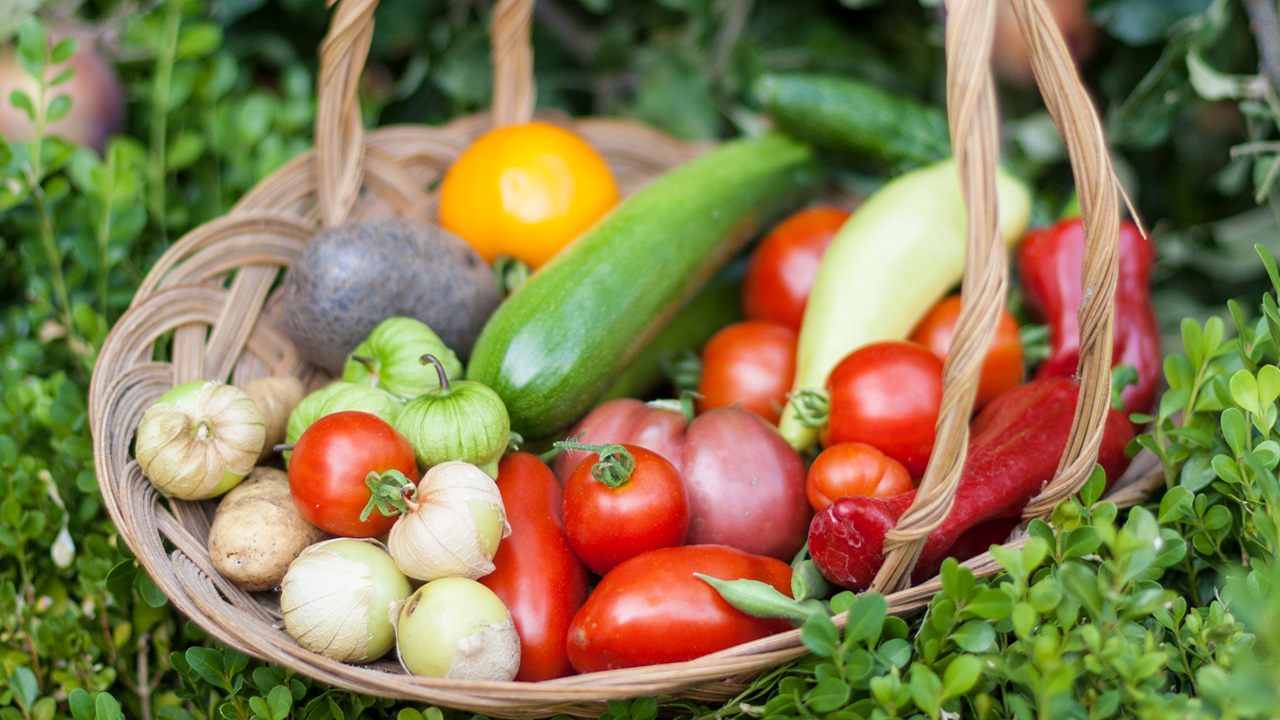
    Yummy summer veggies waiting for the table

    The dog days of summer are here! The garden is in full swing and the squash, beans, tomatoes, peppers and more overflowing our harvest basket. Here is a handy list to help you through the month of August and prepare for the fall and winter garden. Tricia shows you what she is doing in her garden in our video, August Gardening Checklist.
    1. Keep up on the Harvest
    Your garden does not take a vacation when you do. If you are leaving for an extended vacation, make sure that someone comes over and harvests your cucumbers, summer squash, and fresh snap beans. They will stop or slow down on new fruit production if not picked regularly. If you have too many cucumbers, make some pickles. If you are not into canning, then refrigerator pickles are easy, quick and require no canning. Check out recipes for a refrigerator pickles at our blog site under Recipes and Preserving.

    2. Check Your Fruit Trees
    August is a month for fresh fruit like peaches, plums, pluots, apricots and nectarines. Pick your fruit at the peak of ripeness. Peaches will smell, well like a peach, they will give slightly when squeezed and no longer have any green undertones. Same holds true for nectarines, except they will smell like a nectarine. Ripe plums and pluots will have a sweet, fruity smell and give slightly when squeezed.

    If you have more fruit than you can eat, think about preserving them by freezing, making jams, jelly or compotes.

    3. Seed a New Lawn or Fix Bare Spots
    Now through September is a good time to seed new lawns or fix any bare spots in the existing lawn. Watch our video, Organic Lawn Care for helpful information on caring for your lawn and reseeding it.

    4. Check Your Irrigation Lines for Leaks
    August is a hot month and the garden still needs regular watering. Check your irrigation lines for leaks, rodent damage or low flow due to clogs or kinks.

    5. Pinch off Flowers from Your Herbs
    Keep the flowers pinched off your herb plants to encourage more growth. It is especially important to remove the flowers from your basil plants. This will encourage bushier plants which will translate into more leaves for making pesto or to use fresh or dried.

    6. Remove Squash Flowers
    If you want less fruit but bigger winter squash or pumpkins, remove any new female flowers and new fruit.

    7. Prune the Tall Blackberry Canes
    Continue pruning the tall primocanes of your blackberries (this encourages lateral branches, which is where next years berries will be born). Prune them to the height of the support or fence. Floricanes can be cut back after berries have been harvested.

    8. Divide your Iris Plants
    If your bearded iris plants have slowed down on flower production or it seems that the plants are really crowded, then it is time to divide them. Watch our video, Dividing Perennials for helpful information.

    9. Remove Spent Flowers
    Deadhead existing flowers, you may get a second flush of flowers. Sow seed for winter pansies and violas and plant sunflower seed for fall display.

    10. Weed Control
    Weeds continue to grow and should be removed before they go to seed.

    11. Pick Your Sweet Corn at Its Peak
    Sweet corn might be ready to harvest. To pick at the peak of sweetness and flavor, harvest early in the morning when the sugar content is at its highest. Also the corn is ready to be picked when the silks have turned brown and drying up, and the ear feels full. You can peel back the husk on one ear to check the kernel size.

    12. Monitor Plants for Heat Stress and Sunburn
    If you see sunscald on your tomatoes or peppers, put up some shade cloth to protect from the intense sun. For any signs of heat stress, try giving your plants a little compost tea or kelp.

    13. Feed Your Heavy Feeding Plants
    Cucumbers, squash or corn will benefit from a feeding with a balanced fertilizer.

    14. Pre-order Your Garlic
    Garlic planting time will be here before you know it and now is the time to pre-order your garlic. Some varieties sell out quickly, so for the best selection, reserve your favorite variety.

    15. Plant Some of Your Fall/Winter Harvest Seeds
    Plant some seeds for your fall/winter garden. Veggies like turnips, beets, carrots, kale, greens, broccoli, radish or cabbage can be planted now for a fall or winter harvest. 

  • How to Harvest 100 Pounds of Potatoes From Just 4 Square Feet of Space

    How to Harvest 100 Pounds of Potatoes From Just 4 Square Feet of Space

    In Idaho, potatoes are a near and dear topic. But for those concerned with food freedoms, the FDA’s latest approval of a few new genetically modified potato varieties will not sit well. With spring gardening just ahead, it’s a great time to consider growing your own potatoes – and other fruits and vegetables as well!

    The Seattle Times wrote about a method from Washington potato farmer Greg Lutovsky to plant potatoes inside a box. The potential yield is staggering: up to 100 pounds of bounty in just 4 square feet! With a long planting season (April to August) and just 90 days’ from planting to harvest, you can enjoy your nutrition-packed, homegrown, organic, non-GMO potatoes all summer and fall. 

    The recipe to this bumper crop is:

    • Lumber
    • Seed potatoes
    • Soil
    • Watering (within a prescribed schedule)

    Greg Lutovsky shares his guide for building a potato growing box yields up to a 100 lbs. of potatoes in a mere 4 square feet is shown below:

    4-13-09potatoe2.png

    Image courtesy of The Seattle Times

    For more details and tips, read potato farmer Greg Lutovsky’s interview here.

  • All Hail Kale

    All Hail Kale

    ALL HAIL TO KALE! This leafy green grows well in parts of Idaho weathering well through the winter! The most common type of kale is called curly kale or Scots kale, which has green and curly leaves and a hard, fibrous stem.

    If you haven’t already, let’s all bravely select this curly, dark green, leafy veggie at the market and give it a go! There are so many ways to prepare this plant that you’ll not run out of ideas. Plus, if you have fussy eaters, you can hide this nutrient-rich plant into smoothies or sauces. They won’t even notice! However if you’re just jumping on the Kale-bandwagon please take it slow to avoid upsets to your digestive system.

    Quick Serving Ideas: It’s genuinely delicious! Sauté with a little olive oil until wilted, then add a pinch of sea salt, almond slivers and dried cranberries, and sauté for a few more minutes. Serve with brown rice and voila! The perfect low-calorie, high-nutrition lunch!
    ~Braise chopped kale and apples for a few minutes in broth or water. Just before serving, sprinkle with balsamic vinegar and chopped walnuts. Delish!
    ~Combine chopped fresh kale, toasted pine nuts, and crumbled feta cheese with (hot, just drained) whole grain pasta drizzled with olive oil. Healthy and amazing!

    Kid Favorite Recipe: Kale “Chips”
    2 Important Tips: Remove the stems and tear leaves into large pieces and spread them out into a thinner layer on each baking sheet.

    Ingredients:

    per baking sheet:
    • approx. 1/2 bunch kale leaves
    • 1/2 tablespoon extra virgin olive oil or melted coconut oil
    • 1.5 tablespoons nutritional yeast
    • 1 teaspoon garlic powder
    • 3/4 teaspoon chili powder
    • 1/2 teaspoon onion powder
    • 1/2 teaspoon smoked paprika
    • 1/4 teaspoon fine grain sea salt or pink Himalayan sea salt
    • 1/8 teaspoon cayenne pepper (optional)

    Directions:

    1. Preheat oven to 300F. Line a large rimmed baking sheet with parchment paper.
    2. Remove leaves from the stems of the kale and roughly tear it up into large pieces. Compost the stems (or freeze for smoothies). Wash and spin the leaves until thoroughly dry.
    3. Add kale leaves into a large bowl. Massage in the oil until all the nooks and crannies are coated in oil. Now sprinkle on the spices/seasonings and toss to combine.
    4. Spread out the kale onto the prepared baking sheet into a single layer, being sure not to overcrowd the kale.
    5. Bake for 10 minutes, rotate the pan, and bake for another 12-15 minutes more until the kale begins to firm up. The kale will look shrunken, but this is normal. I bake for 25 mins. total in my oven.
    6. Cool the kale on the sheet for 3 minutes before digging in! This really makes all the difference! Enjoy immediately as they lose their crispiness with time.
    7. Repeat this process for the other half of the bunch.

    (PRINT THIS RECIPE FROM OhSheGlows.com )

    Healthline provides this breakdown of kale’s nutrients:

    A single cup of raw kale (about 67 grams or 2.4 ounces) contains (1):

    • Vitamin A: 206% of the DV (from beta-carotene)
    • Vitamin K: 684% of the DV
    • Vitamin C: 134% of the DV
    • Vitamin B6: 9% of the DV
    • Manganese: 26% of the DV
    • Calcium: 9% of the DV
    • Copper: 10% of the DV
    • Potassium: 9% of the DV
    • Magnesium: 6% of the DV
    • It also contains 3% or more of the DV for vitamin B1 (thiamin), vitamin B2 (riboflavin), vitamin B3 (niacin), iron and phosphorus

    This is coming with a total of 33 calories, 6 grams of carbs (2 of which are fiber) and 3 grams of protein.

    Kale contains very little fat, but a large portion of the fat in it is an omega-3 fatty acid called alpha linolenic-acid.

    Given its incredibly low calorie content, kale is among the most nutrient-dense foods in existence. Eating more kale is a great way to dramatically increase the total nutrient content of your diet.

    This article originally appeared at: https://frontyardtobackcountry.com/2013/09/26/magnificent-kale/.
    Recipe 

  • The Scoop on Composting

    The Scoop on Composting

    Composting is so worth the effort. Adding compost to your garden feeds the soil food web and provides a slow release of nutrients to your crops.

    Compost also vastly improves soil structure, allows the soil to hold in moisture better and improves friability (workability).

    After surveying hundreds of MOTHER EARTH NEWS readers and checking out what our Facebook community had to say during Compost Awareness Week we were blown away by the many answers to the question of how to make compost at home.

    Do you have a garden? Chickens? Do you Compost? How do YOU do it? 

  • Get Seedy in 2017 COMING in just a few days!

    Get Seedy in 2017 COMING in just a few days!

    The best way to know what’s in your food – is to GROW YOUR OWN FOOD! Learn from local experts:

    SEED SAVING CLASSES: 

    Get Seedy in 2017!

    Come join local seed freak Casey O’Leary for a lively presentation about garden planning for seed saving, the importance of local seeds, and what’s hot in the local seed scene for 2017!

    Tues Feb. 7th, 6:45-7:45pm. Chinden Gardeners monthly meeting Meadow Creek Clubhouse
    5285 North Riffle Way, Garden City, Idaho

    All are welcome! For further information contact: Claudia Hambacker @ 804-212-9380 

    and LATER THIS MONTH!
    Mon Feb. 27th, 6-7:30pm
    Boise Co-op in The Village at Meridian. This one will touch on some seed starting basics as well! Contact leslie@boisecoop.com of visit www.boisecoop.com