Tag: healthy-food

  • Farmed Salmon — One of the Most Toxic Foods in the World

    According to the EPA the most toxic fish in the world is farmed salmon. They even advise people that more than one meal of farmed salmon a month is the maximum they should eat. But even their recommendation is wrong because farmed salmon is one of the most toxic FOODS in the world and should not be consumed in any amount.

    Toxicology researcher Jerome Ruzzin has confirmed Oddekalv’s claims. He’s tested a number of different food groups sold in Norway for toxins, and indeed, farmed salmon contains the greatest amount of toxins of them all, and by an incredibly large margin. Overall, farmed salmon is five times more toxic than any other food product tested. In animal feeding studies, mice fed farmed salmon grew obese, with thick layers of fat around their internal organs. They also developed diabetes. So what about wild caugh salmon? Alaskan salmon is said to have some of the lowest levels of toxins, but highest levels of parasites

    More about Farmed Salmon

  • Paleo Garlic Knots

    You know those meals that just need a side of garlic bread to make them complete? We are still in transition making our way completely away from grains. I’ll be honest some meals just don’t feel right unless there’s a crispy piece of warm garlic bread next to them. Our mixed greens salad with Dr Rosie’s healing dressing is a warm weather favorite. This recipe is promising to meet our cravings for bread without the wheat. These paleo garlic knots truly do make quite an addictive snack. With their delicious garlic flavoring from not only the coating but also the garlic powder used in the dough, they can be enjoyed freshly made or reheated in a toaster oven.


    Homemade Paleo Garlic Knots

    Save Recipe

    1. ½ cup almond meal
    2. ½ cup arrowroot flour plus extra for dusting
    3. ¼ tsp baking soda
    4. ¼ tsp salt
    5. ¼ cup almond milk
    6. ½ tsp garlic powder plus extra for dusting
    7. 1 ½ tbsp olive oil plus

    For the garlic coating

    1. 3 garlic cloves, finely chopped
    2. 2 tbsp chopped fresh parsley
    3. 3 tbsp olive oil

    Instructions

    1. Preheat the oven to 350°F. Line a baking sheet with parchment paper.
    2. In a large bowl, mix together the almond flour, arrowroot flour, garlic powder, baking soda and salt.
    3. Add the almond milk and 1 tablespoon of olive oil and mix to make a smooth dough.
    4. Lightly dust a working board with some extra arrowroot flour.
    5. Roll out the dough into a rectangle 1/3 inch thick.
    6. Dust with extra garlic powder.
    7. Cut the dough lengthwise into 8 strips.
    8. Roll out each strip into a rope then tie it into a knot.
    9. Place them on the prepared baking sheet.
    10. Brush the knots with ½ tablespoon of olive oil.
    11. Bake for 12 – 15 minutes or until they are just starting to turn golden.
    12. Meanwhile, in a small saucepan heat 3 tablespoons of olive oil over medium heat.
    13. Add the garlic and cook, stirring, until just softened, about 2 minutes.
    14. Stir in parsley and season with salt.
    15. Transfer the garlic mixture to a bowl and add warm knots.
    16. Gently toss until coated and serve.

    By Harper (PaleoGrubs.com) http://paleogrubs.com/paleo-recipes

  • Cheesy Baked Cauliflower

    We all know that the best topping for cauliflower is cheese, now you can have both your comfort food and your veggie all in one bowl. Dr Rosie Main shares this Homemade mac and cheese with cauliflower is a quick and easy dinner to prepare for weeknights that the whole family will love.

    Cheesy Baked Cauliflower

    Prep time: 25 mins Cook time: 40 mins Total time: 1 hour 5 mins
    Serves: 6

    Ingredients
    1 large head cauliflower, cut into small florets
    For the sauce:
    2 Tablespoons unsalted butter
    2 Tablespoons olive oil
    4 Tablespoons blanched almond flour
    ½ cup raw organic cheddar cheese, shredded
    ¾ cup whole milk
    ¾ organic chicken stock
    1 small garlic clove, minced
    1 tsp. dried or fresh thyme
    ½ tsp Dijon mustard (or dry mustard powder)
    sea salt & fresh cracked black pepper, to taste

    Instructions
    Cut the cauliflower into even-sized florets, rinse and drain. Boil in a large pot for 3-5 minutes, drain in colander and set aside.
    Preheat the oven to 350º. Melt the butter and olive oil on medium heat in medium skillet. Whisk the flour and cook for 1-2 minutes, until it becomes very thick. Add the milk and continue whisking— the sauce should still be very thick.
    Add the minced garlic, then chicken stock a little at a time, until the sauce is has thinned out enough to be “pourable”. Reduce the heat to low and add the grated cheese, stirring until it is completely melted.
    Add the thyme, then season, carefully, with salt & pepper and mustard. Give the sauce one final taste, and adjust the final seasonings to your preference.
    Pour the cauliflower into a casserole dish (or individual ramekins). Carefully pour and distribute the cheese sauce, evenly over the top. Sprinkle with additional shredded cheese if desired.

    Bake at 350F for about 20-25 minutes, or until lightly golden and bubbly.

  • Detoxing: Starting the Day Right.

    What we do in the morning sets the tone for the whole day. And if you’ve ever overslept, you know exactly how true this statement is. Mornings can be rough; it’s easy to rely on sugar and caffeine to energize you, which only wreaks havoc on your digestive system and exacerbates fluctuating energy levels and moods. If you’ve ever wanted a do-over before 9 a.m., start your day right—and keep it on the right track—with these 3 simple morning drinks to detox your body naturally each and every day. Regularly detoxing is beneficial to your health in the long run. Saves you money, too. A pound of prevention is definitely worth far more than a ton of cure.

    3 detoxing jump starting drinks

    Green Tea. 

    here’s a loose leaf organic variety

    Filled with endless anti-oxidants, vitamins, and general goodness, it has become a staple part of many gym-goers and health-conscious people’s diets.

    Some of the features of Green tea include:

    • Helps burn fat: The anti-oxidant features of the tea help speed up your metabolic rate, resulting in energy being burned, even when not active.
    • Improves immunity: Fights against flu and colds.
    • Super medicine: There have been reports that it can prevent and guard against certain cancers, arthritis, and diabetes.
    • Re-hydrates: Going against common beliefs that tea dehydrates you, green tea has been found to have similar re-hydration effects to our old friend H2O.
    • Neurological: Has been shown to prevent degenerative and neurological diseases such as Alzheimer’s.

    Japanese Matcha Tea

    Drinking one cup of Matcha tea is equal to 10 cups of green tea, talk about nutritional. Here’s a nice matcha tea powder that can be added to smoothies in the summer or made into a latte with favorite warmed milk.

    Matcha tea is incredibly popular in Japan and is now becoming widely recognized throughout the world for its ability to aid in detox plans and regimes. Some of the key benefits of Matcha tea include:

    • Prevents cancer with its high levels of anti-oxidants named catechins, which seek out and find dangerous free radicals within your body.
    • Prevents heart disease by lowering LDL cholesterol, or the bad type.
    • Helps in burning fat by increasing thermogensis from 8 – 10% to 35 – 43%.
    • Contains 5 times more L-theanine, an amino acid which helps with neurological activities, than standard green tea.

    Lemon, Pepper & Ginger Water

    • Lemon juice and cayenne pepper are both immune boosters; the extra vitamin C helps your immune system cope when you’re stressed
    • They’re also natural detoxifiers; lemon helps stimulate the liver to remove toxins and cayenne helps your body sweat them out
    • Lemons aid digestion and can help soothe indigestion
    • Lemon also helps fight hunger and sugar cravings
    • Cayenne pepper improves blood and lymphatic circulation so your cells get more nutrients
    • Lemon is packed with antioxidants that keep your skin healthy
    • Lemon water can help fight gingivitis and keep your breath fresh
    • If you’re trying to cut caffeine in the morning, a mug of hot lemon water can help you wean off
    • Lemon water can help your body beat viral infections like strep throat
    • Lemons have been shown to calming to the body; drinking lemon water can help ease anxiety and depression

    Ingredients

    • Glass of water, or mug of hot water
    • 1/2 lemon
    • Dash cayenne pepper
    • A few chopped ginger slices (optional)
    • 1 tablespoon honey (optional)

    Instructions

    1. Squeeze half of a lemon and add a dash of cayenne pepper to your water and stir. Add in ginger and honey if desired.

  • Hearty Stew

    Nothing says comfort like a hearty stew. Mental health is just as important as physical health. Busy holiday seasons can often mean a change in diet (quick snacks and sugar tempations). Treat your body right and keep your immune system strong with a heart stew.This quick and simple soup recipe will help you use them up..and heat you up as we enter into winter!

    Ingredients
    1 lb grass fed ground beef
    2- 32 oz containers of organic vegetable broth
    2 tbsp butter
    5 stalks celery, chopped
    1/2 large onion, chopped
    1/2 – 1 tsp italian seasoning (to taste)
    1/4 – 1/2 tsp black pepper (to taste)
    sea salt to taste (about 2 tsp)
    2 tomatoes (preferably blanched and peeled – check notes below)
    1 bunch spinach, coarsely chopped
    3 large carrots,
    1 cup frozen peas

    Melt butter in a stockpot and add celery, onions, and ground beef.  When beef is browned through, add the vegetable broth, italian seasoning, black pepper, sea salt and tomatoes.  Let cook for about 10-15 minutes.  Add spinach.  Serve.

    Additional notes/suggestions:
    To blanch and peel tomatoes just boil a pot of water and drop the tomatoes in for a few minutes.  When you see the skins begin to split apart, remove them from the water.  Then they are very easy to peel.  Once peeled, cut the tomato in half and remove as many seeds as possible then chop.

    This soup is even better re-heated the next day.

    For more great recipes visit https://www.doctormain.com/healthy-recipe.html

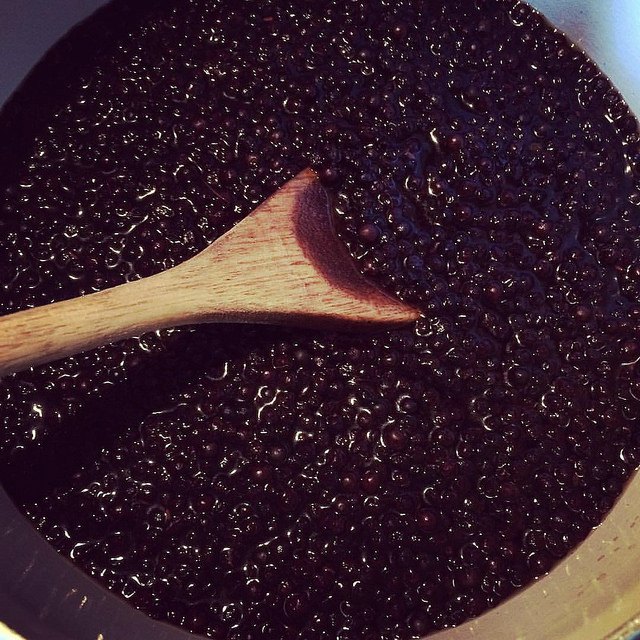
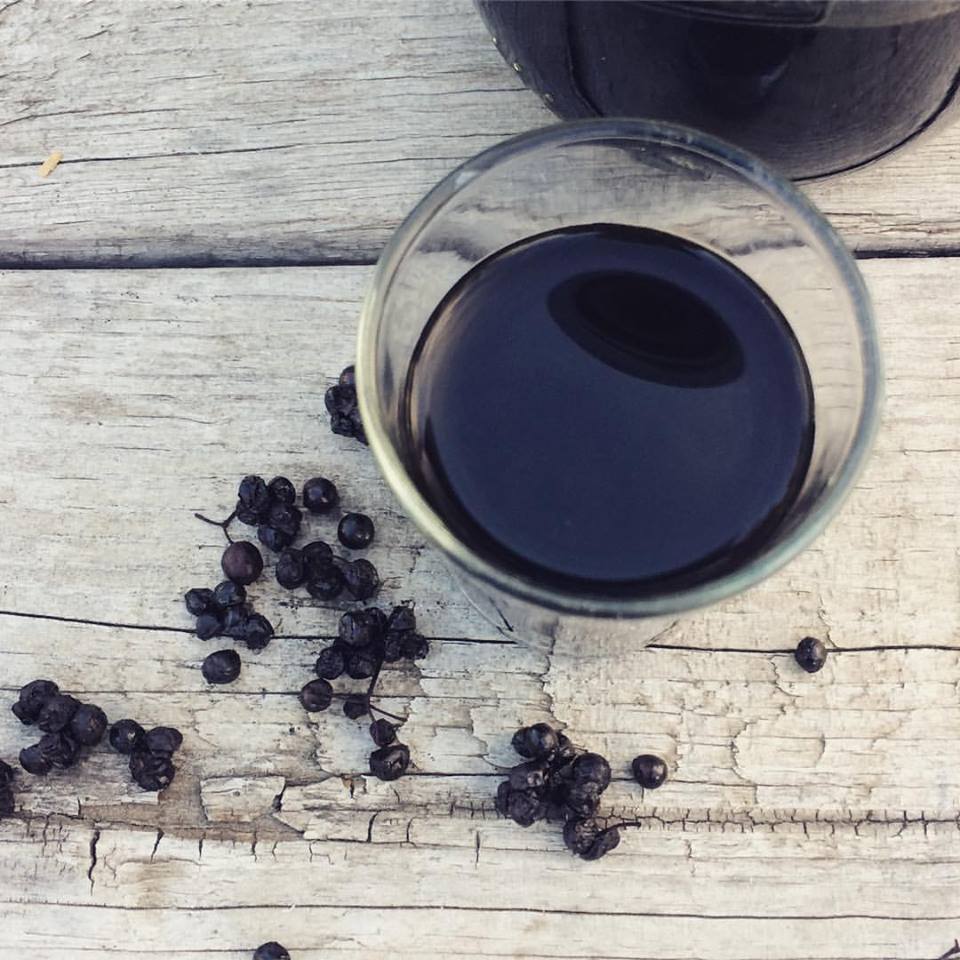
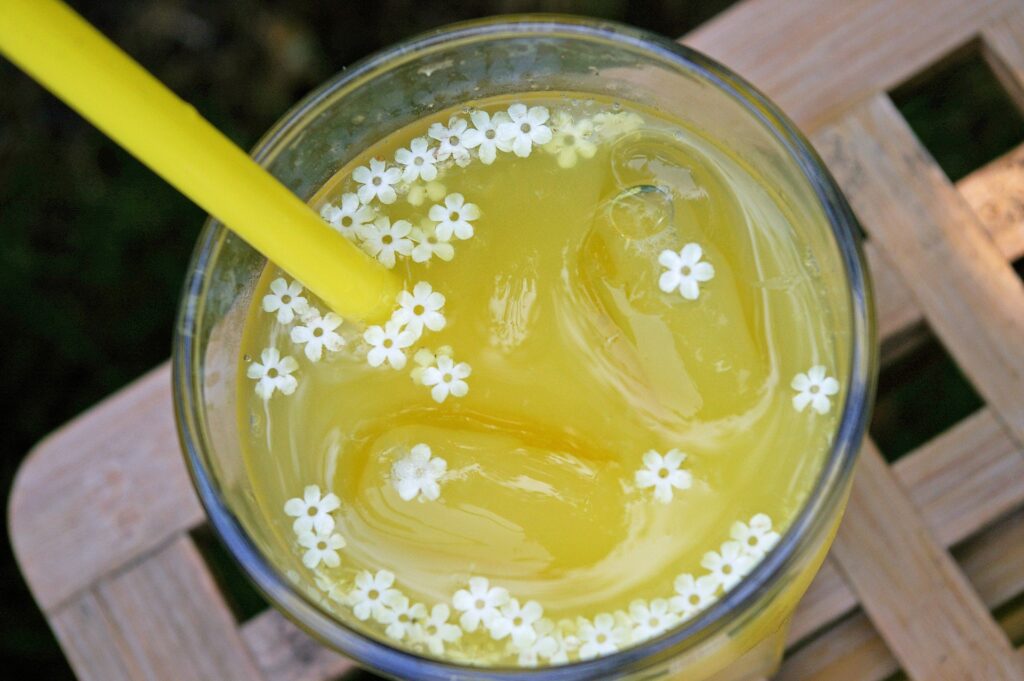
  • Very Soon it will be Elderberry Season!

    7 Surprising Elderberries Benefits

    Some of the most important health benefits of elderberries include their ability to boost immune system function, protect against bacteria and infection, slow down the spread of cancer, moderate the digestive process, prevent the development of diabetes, reduce the pain and speed associated with autoimmune diseases, help with weight loss, lower blood pressure, and alleviate allergies.

    Elderberries are the fruit from the flowering plant known as Sambucus,more commonly referred to as elder or elderflower. The full scientific name of the most common variant, from which we get the majority of our elderberries, is Sambucus nigra. You will primarily find elderberries in the Northern hemisphere, particularly in Europe and North America, although some southern species are grown in Australia. The berries are black or very dark blue, and have a sharp, sweet flavor that makes them highly preferred for desserts, syrups, jams, jellies, spreads, and as the base for various cocktails and beverages. Many people think that elderberries lend this scientific name to Sambuca, but in fact, that is not true. Elderberry wine is very popular and can be made quite simply at home.

    Most of the berries in the genus Sambucus are toxic, with the exception of Sambucus nigra, and even then caution is suggested and cooking the berries before consuming is always a wise choice. The branches, leaves, and twigs of all species contain trace elements of cyanide, which can build up in your body and eventually kill you, so be careful! However, despite the implicit risks of elderberries, they are packed with beneficial nutrients, so they have been a part of traditional medicine for hundreds of years, and some of the health benefits have even made it into the mainstream. The recent popularity of elderberries can largely be attributed to the discovery of its many health benefits, which are explained below!

    Nutritional Value Of Elderberries

    Elderberries pack a very nutritious punch, including minerals like iron, potassium, phosphorous, and copper, as well as vitamins, such as vitamin A, vitamin B, and vitamin C, proteins, and dietary fiber. Add some of the beneficial organic compounds that function as anti-inflammatory and antioxidant agents in the body, and you have one powerful berry!

    Health Benefits Of Elderberries

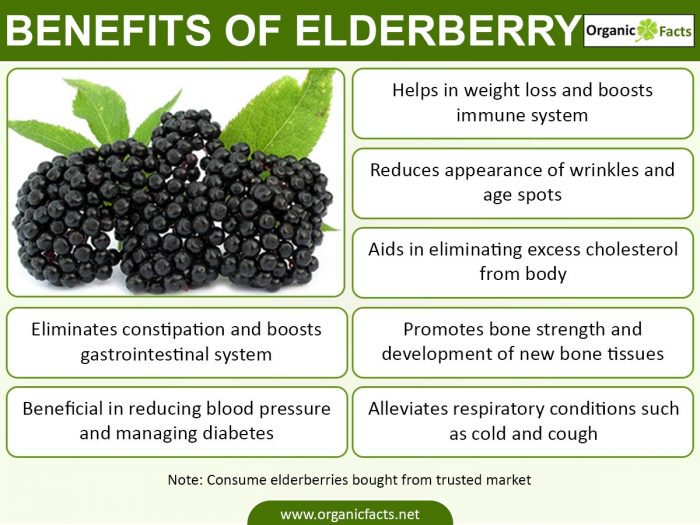
    Digestive Health: Although most fruits and vegetables can help you hit your fiber goals for the day, few fruits can boast more than 40% of your daily requirements for fiber in a single serving. Elderberries are packed with dietary fiber that can help eliminate constipation, reduce excess gas, and generally increase the health of your gastrointestinal system. Fiber can also help to increase the nutrient uptake efficiency in your gut so you get more out of your food!

    Cardiovascular Protection: It seems that heart health and fruits and vegetables go hand in hand, and with good reason. The high fiber levels help to eliminate excess cholesterol from the system and make room for “good” cholesterol that the body needs. This can help eliminate the chances of developing atherosclerosis and other cardiovascular issues. The high level of potassium in elderberries also protects the heart by relaxing the tension of blood vessels and arteries. As a vasodilator, potassium can significantly reduce blood pressure and keep your heart healthy!

    Respiratory Health: When it comes to clearing up a sore throat, a cough, cold, bronchitis, or any other issue that affects your respiratory system, elderberry juice might be your best choice. Like many cough syrups, elderberries contain active ingredients (bioflavanoids like anthocyanins, to be exact) that can soothe inflammation and irritation and also act as an expectorant and clear out phlegm that can trap foreign agents in your glands. Elderberry juice is even recommended for people with asthma.

    Immune System Health: It seems like people love to discuss elderberries in relation to its effects on the immune system. It has certain antibacterial and anti-infectious qualities, and is very commonly used to ward off influenza during bad seasons where it seems like everyone is catching it. Furthermore, elderberries can strengthen the immune system against itself, protecting against the effects of autoimmune disorders, even alleviating certain symptoms and associated pain of AIDS.

    Diabetes Aid: Some of the active antioxidant ingredients in elderberries work directly on the pancreas to regulate insulin and glucose levels, either providing stability for people who suffer from diabetes or helping non-diabetics to avoid developing this terrible condition.

    Also see

    Bone Health and Inflammation: While the antioxidant and anti-inflammatory compounds found in elderberries can help alleviate joint pain and soreness from inflammation, the high levels of essential minerals will help promote bone strength and the development of new bone tissue. Osteoporosis is a condition that millions of people face in the future, but increasing bone density during your younger decades can delay the onset considerably.
    elderberriesinfo

    Skin Health: Elderberry makes its way into a lot of cosmetic applications, primarily because the bioflavonoids in elderberries plays a very important role for the skin. The antioxidant activity, combined with its significant levels of vitamin A, make elderberries perfect for preventing or lessening wrinkles, helping age spots to fade, and generally improving the glow and tone of your body’s largest and most visible organ!

    Weight Loss Booster: With the high level of dietary fiber, combined with the metabolism-speeding effects of a solid vitamin and mineral injection, elderberries are great weight loss aids. The fiber keeps you feeling full, the low calorie count doesn’t affect your intake too much, and you also get dozens of other health benefits as well!

    Word of Caution: Considering that so few species are edible, it is always wise to find elderberries in a licensed and reputable store. Don’t pick wild elderberries and it is suggested to cook all berries before eating, as they may contain dangerous traces of cyanide. Furthermore, being allergic to plants in the honeysuckle family is not uncommon, so be careful about being up-to-date on your food allergies before adding elderberries to your diet. Finally, elderberries are known to act as diuretics for some people, so if you are already struggling with kidney problems, then elderberries may exacerbate them.

    Also see

    References

    1. http://onlinelibrary.wiley.com/doi/10.1046/j.1365-2745.2002.00698.x/full
    2. http://pubs.acs.org/doi/abs/10.1021/jf102083s
    3. http://www.sciencedirect.com/science/article/pii/S0040403900009941
    4. http://www.sciencedirect.com/science/article/pii/S0378874103000473
    5. http://bmccomplementalternmed.biomedcentral.com/articles/10.1186/1472-6882-10-17
    6. http://www.nature.com/ejcn/journal/v58/n2/abs/1601773a.html
    7. http://www.sciencedirect.com/science/article/pii/S0378874105000656
    8. http://jn.nutrition.org/content/130/1/15.short
    9. http://pubs.acs.org/doi/abs/10.1021/jf980296g
    10. http://www.academicjournals.org/article/article1380715471_Hearst%20et%20al.pdf
    11. http://www.sciencedirect.com/science/article/pii/S027153170200533X

    Elderberries: The Beginner's Guide to Foraging, Preserving and Using Elderberries for Health Remedies, Recipes, Drinks and More

    Or you can buy the Kindle version on Amazon.  It’s also free to read if you subscribe to Kindle Unlimited.

    You can look inside and check out a preview here (click on look inside).

    Recipes in the book include:

    Health Remedies 

    • Elderflower Tea 
    • Elderflower Herbal Hay Fever Tea 
    • Elderflower Tincture 
    • Elderflower Herbal Hay Fever Tincture 
    • Elderberry Syrup (Flu Remedy)
    • Alternate (Alcohol-Based) Elderberry Syrup 
    • Elderberry Tincture
    • Elderberry Tincture Tonic
    • Elderberry Elixir 
    • Elderberry Oxymel 
    • Elderberry Herbal Tea 
    • Elderberry Lollipops
    • Elderberry Gummies
    • Quick Elderberry Apple Juice 
    • Super-Strength Elderberry Apple Juice 
    • Elderberry Apple Juice Popsicles

    Jams & Jellies

    • Elderflower and Rhubarb Jam 
    • Apple-Elderflower Jelly
    • Elderberry Jelly
    • Elderberry & Crab Apple Jelly 
    • Easy Elderberry Jelly from Juice 
    • Easy Elderberry-Apple Jelly from Juice 
    • Easy Elderberry-Grape Jelly from Juice 
    • Elderberry Jam 
    • Elderberry Apricot Jam 

    Elderflower & Elderberry Treats

    • Elderflower Fritters 
    • Elderflower Pancakes 
    • Elderflower Syrup
    • Socată/Suc de Soc (Elderflower Soda)
    • Elderberry Thumbprint Cookies
    • Elderberry Crumble Muffins 
    • Elderberry-Ginger Buckwheat Muffins
    • Elderberry-Apple Fruit Leather
    • Elderberry Cream Cheese
    • Elderberry Cream Cheese Frosting
    • Roasted Pears with Elderberry Glaze
    • Dark Chocolate Elderberry Truffles
    • Striped Elderberry Truffles 
    • Lemon Cheesecake with Elderberry Syrup
    • Elderberry Dumplings
    • Elderberry Fluff
    • Elderberry Cream Cheese Pie
    • Elderberry Meringue Pie
    • Old-Fashioned Elderberry Pie 
    • Foolproof Elderberry Pie
    • Elderberry Apple Pie
    • Sour Cream Elderberry Pie

    Spirits

    • Elderflower Wine
    • Elderflower Liqueur 
    • Sparkling Elderflower Lemonade 
    • Elderflower Hard Lemonade
    • Raspberry Elderflower Garnita
    • Elderflower Smash
    • Blueberry Elderflower Smash
    • Basil and Elderflower Smash 
    • Elderitas 
    • Elderflower Champagne 
    • Elderflower Liqueur Ice Cream Float 
    • Elderberry Liqueur
    • Elderberry Hard Lemonade
    • Elderberry Schnapps
    • Elderberry Cordial
    • Elderberry Bourbon
    • Elderberry Wine
    • Elderberry Mead

    Happy elderberrying!


    Save

  • Sunday Brunch Paleo Sweet Potato Hash

    This Paleo Sweet Potato Hash has only 4 ingredients, but is loaded with flavor! Easy, delicious, and healthy! Whole30, gluten free, dairy free, and a great way to start the day!  This skillet serves two, for for family sized add a couple more eggs and have it feed more. I love that it’s an all-in-one breakfast, no sides needed! You have your carbs, protein, fat, and so much flavor!!

    The crispy salty bacon, soft onion, the slight sweetness from the sweet potato and the runny egg make for the perfect bite! You’ll be hooked once you try it! You will also love how easy it is.

    The sweet potato needs to be cooked since it won’t be in the pan long enough to cook from raw. I like to make mine a day ahead, just baked for an hour in the oven. You could even bake a few potatoes and eat this skillet all week. The bacon needs to be cut small in order to get crispy and I find that scissors work best for this. Just chop into little pieces as even as possible. I usually bake my bacon, this is the one exception I make. Cooking the bacon first means no other fat is needed. Everything is just cooked in the bacon fat making it extra delicious!!

    Paleo Sweet Potato Hash

    Ingredients

    • 8oz uncured bacon, cut into small pieces
    • 1/2 large onion, diced
    • 1 large cooked sweet potato, chopped
    • 4 eggs
    • salt and pepper to taste

    Instructions

    1. In a 10 inch skillet (I love cast iron) over medium heat, cook the bacon until crispy.
    2. Add the onion and cook until softened- about 5 minutes.
    3. Add the sweet potato and cook for another 5 minutes until the potato is warmed through.
    4. Make 4 little spaces in the mixture and crack an egg into each one.
    5. Cover and continue to cook until desired doneness. About 5-7 minutes for eggs that are still runny.
    6. Sprinkle a little salt and pepper over each egg.
    7. Serve straight from the skillet.

    http://www.jaysbakingmecrazy.com/2016/02/01/paleo-sweet-potato-hash/

    wordpress-plugin.png?url=http%3A%2F%2Fwww.jaysbakingmecrazy.com%2F2016%2F02%2F01%2Fpaleo-sweet-potato-hash%2F


    This article originally appeared at: http://www.jaysbakingmecrazy.com/2016/02/01/paleo-sweet-potato-hash/.
  • How Does Your Garden Grow?

    By Suzanne at GrowOrganic.com on July 31, 2017

    blog-lead1280x720.jpg

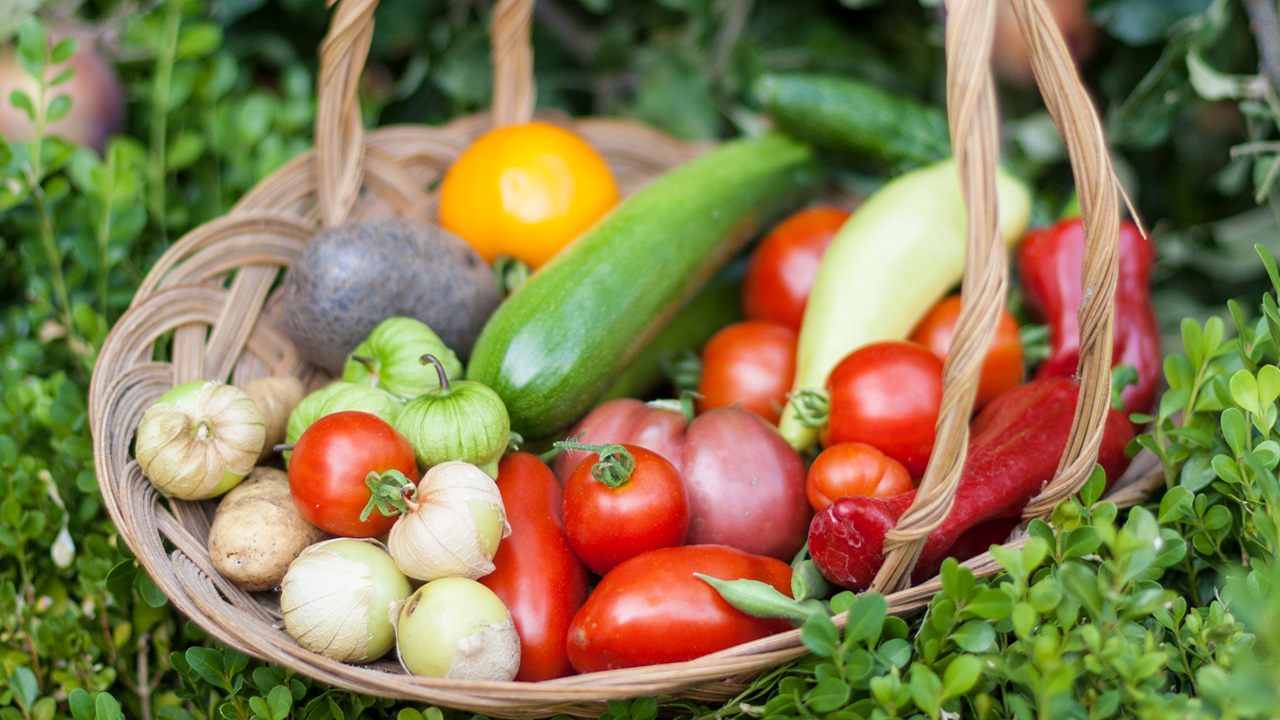
    Yummy summer veggies waiting for the table

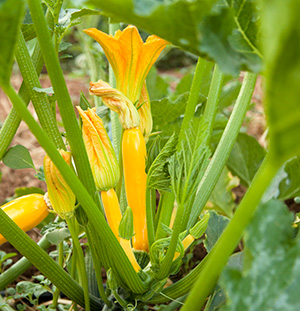
    The dog days of summer are here! The garden is in full swing and the squash, beans, tomatoes, peppers and more overflowing our harvest basket. Here is a handy list to help you through the month of August and prepare for the fall and winter garden. Tricia shows you what she is doing in her garden in our video, August Gardening Checklist.
    1. Keep up on the Harvest
    Your garden does not take a vacation when you do. If you are leaving for an extended vacation, make sure that someone comes over and harvests your cucumbers, summer squash, and fresh snap beans. They will stop or slow down on new fruit production if not picked regularly. If you have too many cucumbers, make some pickles. If you are not into canning, then refrigerator pickles are easy, quick and require no canning. Check out recipes for a refrigerator pickles at our blog site under Recipes and Preserving.

    2. Check Your Fruit Trees
    August is a month for fresh fruit like peaches, plums, pluots, apricots and nectarines. Pick your fruit at the peak of ripeness. Peaches will smell, well like a peach, they will give slightly when squeezed and no longer have any green undertones. Same holds true for nectarines, except they will smell like a nectarine. Ripe plums and pluots will have a sweet, fruity smell and give slightly when squeezed.

    If you have more fruit than you can eat, think about preserving them by freezing, making jams, jelly or compotes.

    3. Seed a New Lawn or Fix Bare Spots
    Now through September is a good time to seed new lawns or fix any bare spots in the existing lawn. Watch our video, Organic Lawn Care for helpful information on caring for your lawn and reseeding it.

    4. Check Your Irrigation Lines for Leaks
    August is a hot month and the garden still needs regular watering. Check your irrigation lines for leaks, rodent damage or low flow due to clogs or kinks.

    5. Pinch off Flowers from Your Herbs
    Keep the flowers pinched off your herb plants to encourage more growth. It is especially important to remove the flowers from your basil plants. This will encourage bushier plants which will translate into more leaves for making pesto or to use fresh or dried.

    6. Remove Squash Flowers
    If you want less fruit but bigger winter squash or pumpkins, remove any new female flowers and new fruit.

    7. Prune the Tall Blackberry Canes
    Continue pruning the tall primocanes of your blackberries (this encourages lateral branches, which is where next years berries will be born). Prune them to the height of the support or fence. Floricanes can be cut back after berries have been harvested.

    8. Divide your Iris Plants
    If your bearded iris plants have slowed down on flower production or it seems that the plants are really crowded, then it is time to divide them. Watch our video, Dividing Perennials for helpful information.

    9. Remove Spent Flowers
    Deadhead existing flowers, you may get a second flush of flowers. Sow seed for winter pansies and violas and plant sunflower seed for fall display.

    10. Weed Control
    Weeds continue to grow and should be removed before they go to seed.

    11. Pick Your Sweet Corn at Its Peak
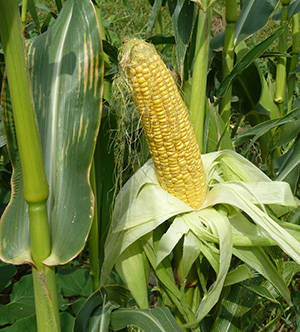
    Sweet corn might be ready to harvest. To pick at the peak of sweetness and flavor, harvest early in the morning when the sugar content is at its highest. Also the corn is ready to be picked when the silks have turned brown and drying up, and the ear feels full. You can peel back the husk on one ear to check the kernel size.

    12. Monitor Plants for Heat Stress and Sunburn
    If you see sunscald on your tomatoes or peppers, put up some shade cloth to protect from the intense sun. For any signs of heat stress, try giving your plants a little compost tea or kelp.

    13. Feed Your Heavy Feeding Plants
    Cucumbers, squash or corn will benefit from a feeding with a balanced fertilizer.

    14. Pre-order Your Garlic
    Garlic planting time will be here before you know it and now is the time to pre-order your garlic. Some varieties sell out quickly, so for the best selection, reserve your favorite variety.

    15. Plant Some of Your Fall/Winter Harvest Seeds
    Plant some seeds for your fall/winter garden. Veggies like turnips, beets, carrots, kale, greens, broccoli, radish or cabbage can be planted now for a fall or winter harvest. 

  • Pesticide Perspective: Eating Organic. Should You Care?

    Pesticides. Should we fear them? Does  an Organic diet eliminate them? Have there been studies to prove the cumulative effect of these chemicals on our bodies and the health of our children? Is it worth the money to buy organic produce for my family.

    Opinion from: 

    Joel Kahn, MD, FACC
    Clinical Professor of Medicine (Cardiology), Wayne State University School of Medicine

    If life were ideal, we would consume food contaminated with as little pesticide as possible. Pesticides have been classified as probable carcinogens for 25 years and have been associated with different kinds of cancers in certain workers, although they are exposed to much higher levels than found on our food.

    The fact that organic fruits and vegetables have lower residues of pesticides is well known. For example, researchers in Australia studied 13 volunteers who ate a conventional diet for one week and more than 80 percent organic foods for another week. Urinary levels of pesticides fell by 89 percent to 96 percent on the organic diet.

    In a different analysis of a family of five in Sweden, urine levels of pesticides fell by over 90 percent when the family’s diet shifted from conventional to organic, and the decrease was greatest in the children. 1

    Here’s a list of the pesticides (or plant protectors as they are sometimes referred to in the report) that were found in the family’s bodies:
    MPCA (herbicide)
    Ethylenebisdithiocarbamates (fungicide)
    Atrazine (herbicide)
    Chlorpyrifos (insecticide)
    Thiabendazole, iprodione, diuron, vinclozolin (fungicides)
    Boscalid (fungacide)
    2,4-dichlorophenoxyacetic acid (herbicides)
    Pyrethroids, such as cypermethrin and esfenvalerate (insecticides)
    Propamocarb (fungicide)
    Chlormequat chloride (CCC) and mepequat (growth inhibitors)
    Note: in some cases the testing was on metabolites of the original chemical compound.

    It’s clear from the experiment that eating organic significantly reduces the load of pesticides carried in your body.

    But should you care? Have you seen this resource? http://www.whatsonmyfood.org

    Organic foods do NOT eliminate chemicals but it DOES SIGNIFICANTLY REDUCE THEM in our bodies.

    The Conclusion of the report was: 

    Choosing organic foods not only reduces the levels of a number of pesticides that we are exposed to through what we eat, but also reduces the risk of a long-term impact and combination effects.
    IVL Report U 5080 Human exposure to pesticides from food
    21
     We also help to reduce the spread of chemicals in the environment, and protect those who work in the cultivation of fruit and vegetables. Considering that in our day-to-day lives we are exposed to a considerable number of other chemical substances depending on our choices of food, cleaning products, shampoo, furniture, and other items, it is difficult to make a complete assessment of how much the total chemical load decreased.

    Soon after the video detailing the findings was released the Co-op who produced the study was sued.

    Does that make their finding wrong or invalid?

    Is the law suit self serving?

    Do you believe a larger study is warranted that has better controls and a larger sampling of individuals/foods and pesticides/herbicides and insecticides reviewed?

    RESOURCES:

    Articles:
     1 https://www.verywell.com/buying-and-eating-organic-4140466 

    2 https://www.treehugger.com/family/swedes-show-how-eating-organic-nearly-eliminates-your-pesticide-load.html

    REPORT: https://www.coop.se/contentassets/dc9bd9f95773402997e4aca0c11b8274/coop-ekoeffekten_rapport_eng.pdf

    Report on Lawsuit: https://debunkingdenialism.com/2016/05/31/coop-sued-for-misleading-the-organic-effect-marketing-campaign/

  • FOOD DYES & KIDS: A Rainbow of Risk

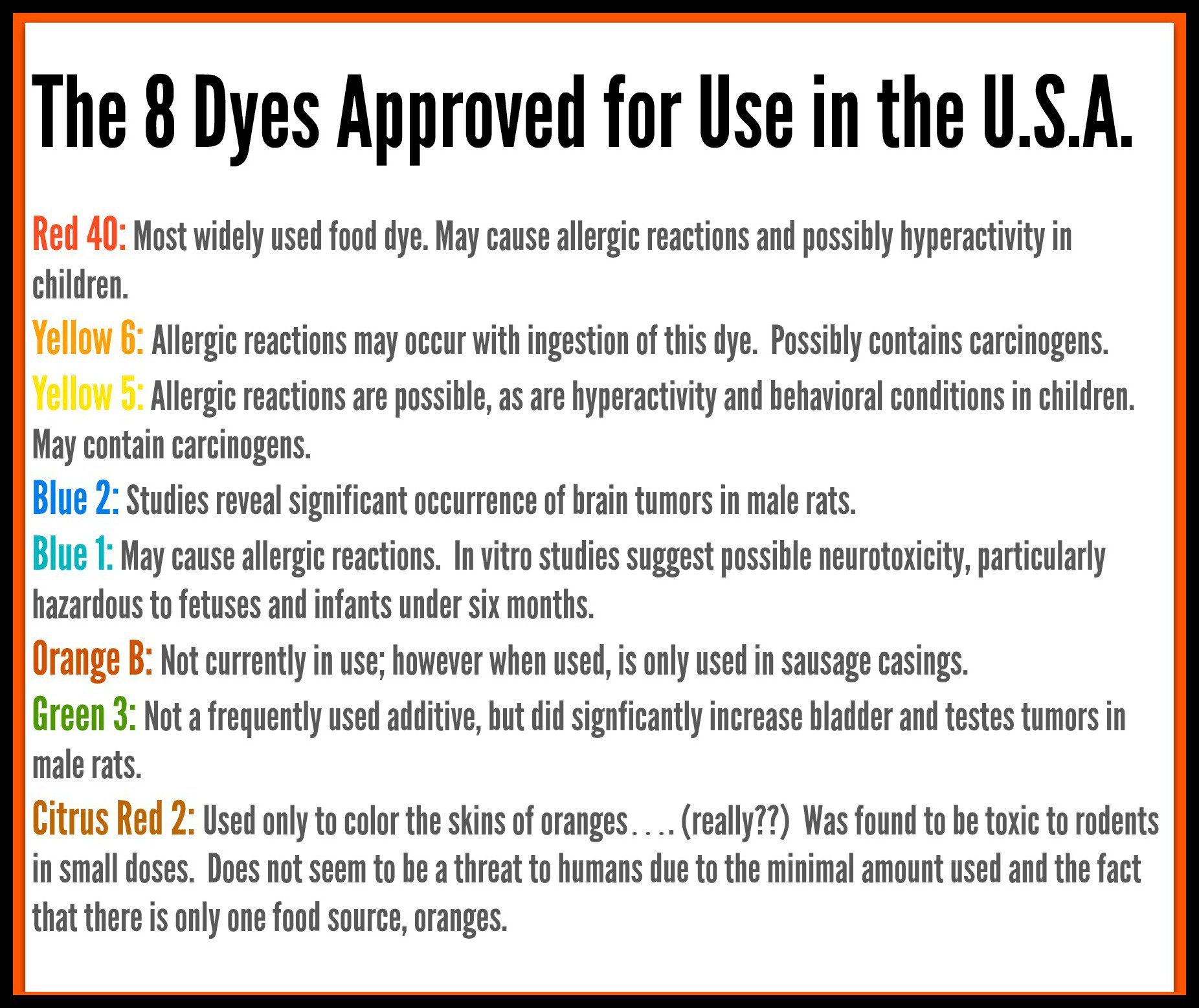
    In 2011, the FDA acknowledged that food dyes (and other ingredients) cause behavioral problems in some children, but has done nothing to protect children. Still, mounting public concerns about dyes has spurred several major companies to remove dyes in some of their foods. Kraft has removed food dyes from some child-oriented varieties of its Macaroni & Cheese but not the most popular one. General Mills has removed dyes from Trix and Yoplait Go-Gurt yogurts. Chick-fil-A removed Yellow 5 from its chicken soup. Frito-Lay has removed dyes from Lay’s seasoned and kettle-cooked chips, Sun Chips, and Tostitos. Pepperidge Farm has removed dyes from its Goldfish Colors crackers.

    Many studies have shown that food dyes can impair children’s behavior, but until now the amounts of dyes in packaged foods has been a secret. New research by Purdue University scientists, published in the journal Clinical Pediatrics, reports on the dye content of scores of breakfast cereals, candies, baked goods, and other foods. According to the nonprofit Center for Science in the Public Interest, the findings are disturbing since the amounts of dyes found in even single servings of numerous foods—or combinations of several dyed foods—are higher than the levels demonstrated in some clinical trials to impair some children’s behavior.

    • General Mills’ Trix cereal lists Yellow 6, Blue 1, and Red 40 on its ingredients list. But until now, no one would have known that Trix had 36.4 milligrams of those chemicals. Fruity Cheerios had 31 mg of food dyes, also some combination of Red 40, Yellow 6, and Blue 1.

      Of all the cereals tested, the one with the most artificial dyes was Cap’n Crunch’s Oops! All Berries, with 41 mg.

    • Target Mini Green Cupcakes, which have Yellow 5, Blue 1, Yellow 6, and Red 40, had 55.3 mg of artificial dyes per serving, the highest level found in any food. Red 40, Yellow 5, and Yellow 6 are the three most widely used dyes in the United States.
    • Skittles and M&M’s, which are dyed with Blue 1, Blue 2, Yellow 5, Yellow 6, and Red 40, had the highest levels found in candies.

      Skittles Original had 33.3 mg per serving; M&M’s Milk Chocolate had 29.5 mg per serving. Both candies are made by Mars, Inc.

    • Kraft Macaroni & Cheese was found to have 17.6 mg of artificial dyes per serving.
    • Keebler Cheese & Peanut Butter Crackers had 14.4 mg of artificial dyes, and Kraft’s Creamy French salad dressing had 5 mg.

    The Purdue researchers noted that one of the largest sources of artificial dyes in the American diet is beverages. They found high levels of dyes in 8-ounce servings of some, including 18.8 mg in Full Throttle Red Berry energy drink, 22.1 mg in Powerade Orange Sports Drink, 33.6 mg in Crush Orange, 41.5 mg in Sunny D Orange Strawberry, and 52.3 mg per serving in Kool-Aid Burst Cherry. The beverage data were published in Clinical Pediatrics last September.

    Clinical trials have shown that modest percentages of children are affected by doses up to 35 mg of mixtures of synthetic coloring, with larger percentages generally being affected by doses of 100 mg or more. The amount of dye that is needed to trigger reactions in the most sensitive children is not known.

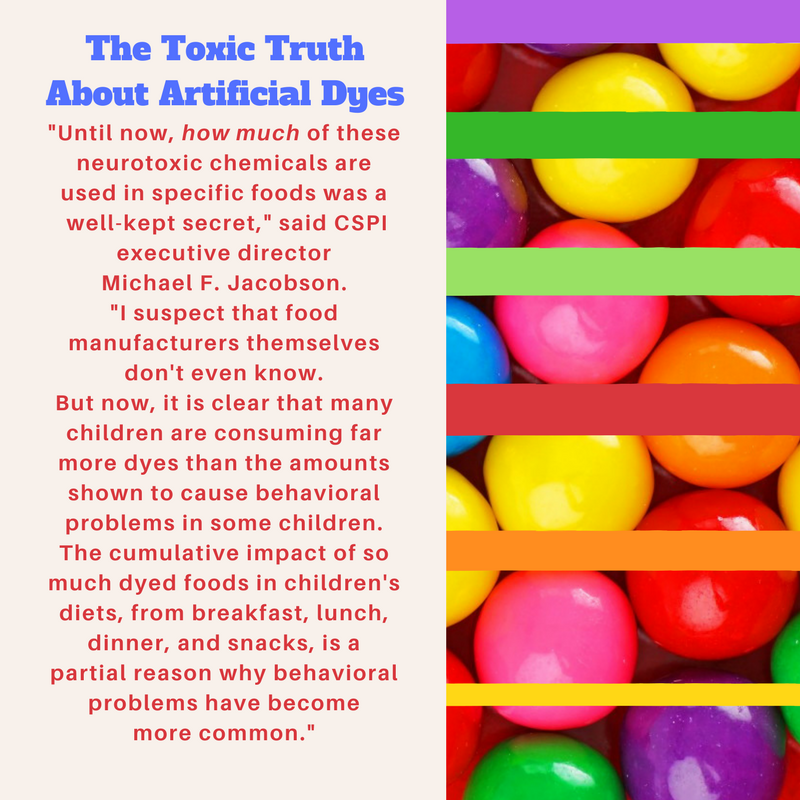
    “Until now, how much of these neurotoxic chemicals are used in specific foods was a well-kept secret,” said CSPI executive director Michael F. Jacobson. “I suspect that food manufacturers themselves don’t even know. But now it is clear that many children are consuming far more dyes than the amounts shown to cause behavioral problems in some children. The cumulative impact of so much dyed foods in children’s diets, from breakfast, lunch, dinner, and snacks, is a partial reason why behavioral problems have become more common.”

    According to the Purdue researchers, the amount of artificial food dye certified for use by the Food and Drug Administration has increased five-fold, per capita, between 1950 and 2012. The researchers estimate that a child could easily consume 100 mg of dyes in a day and that some children could consume more than 200 mg per day. Studies that tested much smaller amounts could easily have downplayed or missed entirely the effect of dyes on behavior.

    **See Food Dyes: Rainbow of Risk https://cspinet.org/resource/food-dyes-rainbow-risks

    Related Links and Downloads: 
    Contact Info: 

    Read the full article at https://cspinet.org/new/201405071.html