
Tag: healthy-food

  • Are Gum Additive Safe?

    What are Gum additives and Why are they in our food?

    Gum additives are everywhere in our food supply today. Xanthan and guar gum are by far the most common. But there are many others too, such as locust bean gum (carob gum), gellen gum, cellulose gum, and relative newcomer tara gum. The savvy shopper is clued into which gum additives to avoid and which are no big deal.

    Gums are mostly comprised of indigestible polysaccharides. Some are produced from plants and some from bacterial fermentation. Others are produced from edible plants and even a few from ornamentals.

    Food manufacturers love gums because they have unique properties that add desirable texture and/or shelf life to processed foods. Typical use is for thickening, stabilizing or emulsifying. Some are more heat and cold resistant than others. Others are more acid and pH resistant. Most are utilized as powders.

    Are Gum Additives Safe?

    Examination of the most common gum additives in food today indicates that in general they are safe for occasional consumption by healthy persons with normal gut function. The exceptions to this are xanthan gum, which infants should not consume. The worst of the lot is cellulose gum. It is best avoided by everyone as it is a chemically treated, ultra cheap, industrialized product.

    Guar gum, tara gum, gellen gum, and locust bean (carob) gum are all safe in small amounts. Tara gum has a perfect safety record in the research so far, although these results are only in animal studies.

    Locust bean gum is currently under investigation for pharmaceutical use and is well tolerated even by full term infants with reflux.

    All of the gums listed in this article must be temporarily avoided for those on the GAPS or SCD diets. This is due to to unknown long term effects on gut flora and the potential for inflaming a healing gut.

    Learn more about specific gums at 
  • Oregon Government Threatens to Spray 2000 acre Organic Farm with ROUNDUP

    UPDATE! Organic Farm WINS! 

    The government received 40,000 emails regarding their threat to spray the organic farm. A closed door meeting brought farmer out smiling as the County is willing to work on a resolution in weed mangement that DOES NOT INCLUDE spray! 

    Oregon a 2000 acre organic farm is UNDER THREAT of being force SPRAYED WITH ROUNDUP! You can help. You must send your email to lhernandez@co.sherman.or.us or call Lauren at 541-565-3416 by May 17. Let your voice be heard. 

    Send an email expressing your concern to the county government: lhernandez@co.sherman.or.us

    Read all the details at Azure’s website: https://hl.azurestandard.com/healthy-living/info/azure-farm-moro/

    PLEASE SHARE THIS FAR AND WIDE!!

  • Aluminum eliminating the bad and ugly

    Our bodies are exposed to pollutants before we’re even born. Many pollutants, like the ones in our air, are unavoidable. But there are many toxins that we can choose to avoid. Aluminum is one of those toxins. Unlike vitamins, minerals, and trace elements, the body does not need aluminum. And aluminum is no innocent or benign participant. Aluminum accumulates in the kidneys, brain, lungs, liver and thyroid where it competes with calcium for absorption and can affect skeletal mineralization. In infants, this can slow growth. Animal models have linked aluminum exposure to mental impairments. [1]

    The scary truth about aluminum is that it is found in so many things in our world and it is toxic to our bodies, even in small amounts. From household products to vaccinations, aluminum pervades our lifestyle, and if not monitored closely, can easily make its way into our bodies causing lasting, harmful effects.

    ALUMINUM IS FOUND IN:

    THE DANGERS OF ALUMINUM

    • Why is Aluminum Exposure Harmful?

      Just as cigarette smoke damages lung function and overexposure to UV rays will degrade your skin, aluminum is an attacker and its target is your central nervous system. [2]Studies show that toxic metals contribute to brain diseases by producing oxidative stress and aluminum is one of the worst offenders. [1] The prevailing belief around the world is that aluminum is linked to degenerative brain diseases:

      • linked to Alzheimers
      • epilepsy
      • dementia
      • osteomalacia
      • ADD
      • chronic fatigue syndrome

    It makes sense, research shows aluminum can produce toxic, oxidative stress in the brain and a brain autopsy study of elderly persons found them to have aluminum levels 20+ times higher than a middle-aged group. [3] [4] The Agency for Toxic Substances and Disease Registry, part of the U.S. Department of Health and Human Services, recognizes aluminum as one of several metals known to affect the neurological system. [5] As far as aluminum is concerned, the supreme brain-health concern is Alzheimer’s disease.

    • AVOIDING ALUMINUM
      Aluminum is one of the most abundant metals on earth and it has permeated mainstream products to the degree that it’s virtually impossible to completely avoid exposure. However, you can take certain measures to reduce your exposure.

      • Avoid using disposable aluminum pans for cooking. Use glass pans for baking, stoneware for cookie sheets, and cast-iron for stove-top cooking.
      • Do not wrap food in foil to cook in oven or on grill. Potatoes bake just fine with no wrapping at all on oven rack.
      • Don’t use deodorant that contains aluminum. Try using baking soda (as long as it is aluminum-free, too) or buy all-natural, aluminum-free deodorant, or make your own.
      • Read all labels on food and pay attention to packaging. Acidic foods in aluminum cans react, causing the aluminum to leach into the contents of the can.
      • Use all-natural shampoos, soaps, lotions, and cosmetics.
      • Avoid aluminum-containing antacids. Try natural remedies for heartburn and indigestion like sipping a glass of water with one tablespoon of apple cider vinegar, eat fresh pineapple or papaya, chew a sprig of parsley, drink a cup of peppermint tea, drink aloe vera, or coconut water, or milk.

    References (13)
    1. Kumar V, Gill KD. Aluminium neurotoxicity: neurobehavioural and oxidative aspects. Arch Toxicol. 2009 Nov;83(11):965-78. doi: 10.1007/s00204-009-0455-6. Epub 2009 Jul 1. Review.
    2. Michalke B, Halbach S, Nischwitz V. JEM spotlight: metal speciation related to neurotoxicity in humans. J Environ Monit. 2009 May;11(5):939-54. doi: 10.1039/b817817h. Epub 2009 Mar 19. Review.
    3. Fernández-Dávila ML, Razo-Estrada AC, García-Medina S, Gómez-Oliván LM, Piñón-López MJ, Ibarra RG, Galar-Martínez M. Aluminum-induced oxidative stress and neurotoxicity in grass carp (Cyprinidae–Ctenopharingodon idella). Ecotoxicol Environ Saf. 2012 Feb;76(2):87-92. doi: 10.1016/j.ecoenv.2011.09.012. Epub 2011 Oct 10.
    4. Jansson ET. Aluminum exposure and Alzheimer’s disease. J Alzheimers Dis. 2001 Dec;3(6):541-549.
    5. Pohl HR, Roney N, Abadin HG. Metal ions affecting the neurological system. Met Ions Life Sci. 2011;8:247-62.
    6. Brenner S. Aluminum may mediate Alzheimer’s disease through liver toxicity, with aberrant hepatic synthesis of ceruloplasmin and ATPase7B, the resultant excess free copper causing brain oxidation, beta-amyloid aggregation and Alzheimer disease. Med Hypotheses. 2013 Mar;80(3):326-7. doi: 10.1016/j.mehy.2012.11.036. Epub 2012 Dec 20.
    7. Shrivastava S. Combined effect of HEDTA and selenium against aluminum induced oxidative stress in rat brain. J Trace Elem Med Biol. 2012 Jun;26(2-3):210-4. doi: 10.1016/j.jtemb.2012.04.014. Epub 2012 May 8.
    8. Bondy SC. The neurotoxicity of environmental aluminum is still an issue. Neurotoxicology. 2010 Sep;31(5):575-81. doi: 10.1016/j.neuro.2010.05.009. Epub 2010 May 27. Review.
    9. Belojević G, Jakovljević B. [Aluminum and Alzheimer’s disease]. Srp Arh Celok Lek. 1998 Jul-Aug;126(7-8):283-9. Review. Serbian.
    10. Nishida Y. Elucidation of endemic neurodegenerative diseases–a commentary. Z Naturforsch C. 2003 Sep-Oct;58(9-10):752-8. Review.
    11. Mandour RA, Azab YA. The prospective toxic effects of some heavy metals overload in surface drinking water of Dakahlia Governorate, Egypt. Int J Occup Environ Med. 2011 Oct;2(4):245-53.
    12. Riihimäki V, Aitio A. Occupational exposure to aluminum and its biomonitoring in perspective. Crit Rev Toxicol. 2012 Nov;42(10):827-53. doi: 10.3109/10408444.2012.725027. Epub 2012 Sep 27. Review.
    13. Polizzi S, Pira E, Ferrara M, Bugiani M, Papaleo A, Albera R, Palmi S. Neurotoxic effects of aluminium among foundry workers and Alzheimer’s disease. Neurotoxicology. 2002 Dec;23(6):761-74.

    †Results may vary. Information and statements made are for education purposes and are not intended to replace the advice of your doctor. Global Healing Center does not dispense medical advice, prescribe, or diagnose illness. The views and nutritional advice expressed by Global Healing Center are not intended to be a substitute for conventional medical service. If you have a severe medical condition or health concern, see your physician.

  • A Smarter Way to Make Almond Milk (No Soaking, No Straining)

    Julie: We are dairy free, not by choice but out of necessity because of milk sensativities. LOVE our coconut milk in most things but a change is always good. Almond milk tastes yummy in pancakes. Did you know you can make your own? Better, smarter, faster and cheaper! Well, now you do!!

    “Fresh, Instant Almond Milk” is, at its core, almond butter blended with water, founded on the smart observation that the two differ by only one essential ingredient: water. With almond butter as a starting point, you can skip the soaking and the straining.

    All you need to do is blend 3 tablespoons of almond butter with 1 1/2 cups water. Laura also adds 1/8 teaspoon salt, 2 teaspoons maple syrup, and 1/4 teaspoon vanilla extract. Blend on high speed until smooth and creamy, and strain if you like (though not necessary).

    I keep a jar of raw almond butter on hand and I never go without fresh almond milk. —Laura Wright, The First Mess Cookbook 

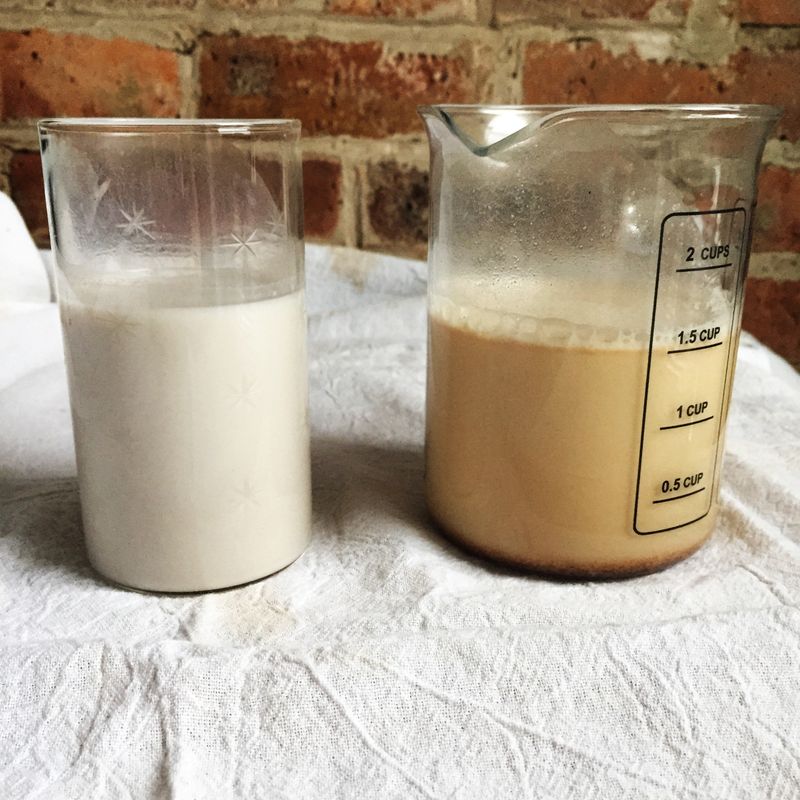
    Since this almond milk is less neutral-tasting (read: less watery) than store-bought almond milk, however, it might not be the best candidate for adding to coffee or pouring over cereal.

    Keep it stored in a jar in the refrigerator for up to 1 week. Since the almond butter particles will settle, you’ll want to give it a good shake before using.

    Store-bought almond milk (left) versus almond butter almond milk (right).

    Store-bought almond milk (left) versus almond butter almond milk (right).

    Almond milk: Do you love it, hate it, or feel totally neutral towards it? Tell us in the comments.

    SO, are almonds really all that good for you?? You decide. https://draxe.com/almonds-nutrition/

  • Celery: Nutritional Superhero

    Celery: Nutritional Superhero

    With its mild flavor, its delicate, pale color, and its (undeserved) reputation as a food with ‘little nutritional value,’ celery just might be the Clark Kent of the produce aisle.  The reality is: this underappreciated vegetable is a nutritional superhero that is just beginning to get its due.

    Not only is celery packed with essential vitamins, minerals and dietary fiber, but researchers are crediting it with impressive power to prevent – and even treat – cancer as well.

    Properties in celery target cancer cells at the molecular level

    Although celery is rich in many beneficial compounds, its premier cancer-fighting constituent is an antioxidant flavonoid called apigenin – which has been impressing researchers with its powerful chemopreventive effects. Again and again, in both cell and animal studies, apigenin was found to inhibit the initiation, progression and metastasis of tumors.

    And, apigenin fights cancer at every stage – with multiple mechanisms of action. This versatility is important because it may help to overcome the natural genetic variations that make some patients unable to benefit from a single chemopreventive compound.

    Apigenin prevents, suppresses and even reverses cancer in several distinct ways

    Angiogenesis – the growth of new blood vessels to nourish tumors – is an important process in the proliferation of cancer. Apigenin has been found to inhibit angiogenesis, thus depriving tumors of blood, oxygen and nutrients they need to survive.

    In a cell study, apigenin helped to “starve” human pancreatic cancer cells by depriving them of glucose, which is needed to fuel cancer’s rampant growth.

    Apigenin also interferes with molecular signaling, decreasing the production of chemicals needed by cancer cells. In a 2008 study published in Carcinogenesis, apigenin inhibited the expression of focal adhesion kinase – or FAK – a protein essential to cancer’s ability to break down and invade healthy tissue – thereby inhibiting the metastasis of human ovarian cancer cells.

    In another study, researchers found that apigenin protected pancreatic cells from inflammatory and cancer-causing damage induced by the NF-kappaB cytokine.  And, finally, apigenin promotes apoptosis – the programmed death of cancer cells. Researchers have found that the ability of apigenin to induce apoptosis reduced the incidence of early lesions in rats with laboratory-induced colon cancer.

    New review of research confirms anti-cancer effects

    In an extensive and recent review of cell and animal studies on apigenin published in 2016 in Journal of Cancer Protection, the authors credited the flavonoid (in celery) with diverse and powerful chemoprotective qualities and effects.

    These include suppressing the progression of prostate cancer, causing a marked reduction in carcinomas, slowing cancer cell proliferation, reducing levels of pro-inflammatory molecules that can trigger cancer, promoting apoptosis and decreasing blood vessel growth to tumors.

    Concluding that apigenin is beneficial in both the prevention and treatment of many types of cancer, the review authors called for more clinical studies.  Of course, research on apigenin’s stunning anti-cancer effects is ongoing.

    So, don’t be fooled: Despite its reputation as a nutritional “lightweight,” celery can be a powerful weapon in your arsenal of natural cancer-fighting foods.

    References:

    http://www.lifeextension.com/Magazine/2009/SS/Powerful-Advances-in-Natural-Cancer-Prevention/Page-01
    https://www.ncbi.nlm.nih.gov/pmc/articles/PMC5207605
    https://www.ncbi.nlm.nih.gov/pubmed/18974065

    This article originally appeared at: http://www.naturalhealth365.com/celery-cancer-cells-2167.html.
  • All Hail Kale

    All Hail Kale

    ALL HAIL TO KALE! This leafy green grows well in parts of Idaho weathering well through the winter! The most common type of kale is called curly kale or Scots kale, which has green and curly leaves and a hard, fibrous stem.

    If you haven’t already, let’s all bravely select this curly, dark green, leafy veggie at the market and give it a go! There are so many ways to prepare this plant that you’ll not run out of ideas. Plus, if you have fussy eaters, you can hide this nutrient-rich plant into smoothies or sauces. They won’t even notice! However if you’re just jumping on the Kale-bandwagon please take it slow to avoid upsets to your digestive system.

    Quick Serving Ideas: It’s genuinely delicious! Sauté with a little olive oil until wilted, then add a pinch of sea salt, almond slivers and dried cranberries, and sauté for a few more minutes. Serve with brown rice and voila! The perfect low-calorie, high-nutrition lunch!
    ~Braise chopped kale and apples for a few minutes in broth or water. Just before serving, sprinkle with balsamic vinegar and chopped walnuts. Delish!
    ~Combine chopped fresh kale, toasted pine nuts, and crumbled feta cheese with (hot, just drained) whole grain pasta drizzled with olive oil. Healthy and amazing!

    Kid Favorite Recipe: Kale “Chips”
    2 Important Tips: Remove the stems and tear leaves into large pieces and spread them out into a thinner layer on each baking sheet.

    Ingredients:

    per baking sheet:
    • approx. 1/2 bunch kale leaves
    • 1/2 tablespoon extra virgin olive oil or melted coconut oil
    • 1.5 tablespoons nutritional yeast
    • 1 teaspoon garlic powder
    • 3/4 teaspoon chili powder
    • 1/2 teaspoon onion powder
    • 1/2 teaspoon smoked paprika
    • 1/4 teaspoon fine grain sea salt or pink Himalayan sea salt
    • 1/8 teaspoon cayenne pepper (optional)

    Directions:

    1. Preheat oven to 300F. Line a large rimmed baking sheet with parchment paper.
    2. Remove leaves from the stems of the kale and roughly tear it up into large pieces. Compost the stems (or freeze for smoothies). Wash and spin the leaves until thoroughly dry.
    3. Add kale leaves into a large bowl. Massage in the oil until all the nooks and crannies are coated in oil. Now sprinkle on the spices/seasonings and toss to combine.
    4. Spread out the kale onto the prepared baking sheet into a single layer, being sure not to overcrowd the kale.
    5. Bake for 10 minutes, rotate the pan, and bake for another 12-15 minutes more until the kale begins to firm up. The kale will look shrunken, but this is normal. I bake for 25 mins. total in my oven.
    6. Cool the kale on the sheet for 3 minutes before digging in! This really makes all the difference! Enjoy immediately as they lose their crispiness with time.
    7. Repeat this process for the other half of the bunch.

    (PRINT THIS RECIPE FROM OhSheGlows.com )

    Healthline provides this breakdown of kale’s nutrients:

    A single cup of raw kale (about 67 grams or 2.4 ounces) contains (1):

    • Vitamin A: 206% of the DV (from beta-carotene)
    • Vitamin K: 684% of the DV
    • Vitamin C: 134% of the DV
    • Vitamin B6: 9% of the DV
    • Manganese: 26% of the DV
    • Calcium: 9% of the DV
    • Copper: 10% of the DV
    • Potassium: 9% of the DV
    • Magnesium: 6% of the DV
    • It also contains 3% or more of the DV for vitamin B1 (thiamin), vitamin B2 (riboflavin), vitamin B3 (niacin), iron and phosphorus

    This is coming with a total of 33 calories, 6 grams of carbs (2 of which are fiber) and 3 grams of protein.

    Kale contains very little fat, but a large portion of the fat in it is an omega-3 fatty acid called alpha linolenic-acid.

    Given its incredibly low calorie content, kale is among the most nutrient-dense foods in existence. Eating more kale is a great way to dramatically increase the total nutrient content of your diet.

    This article originally appeared at: https://frontyardtobackcountry.com/2013/09/26/magnificent-kale/.
    Recipe 

  • Get Your Kids To Eat: Spinach

    Get Your Kids To Eat: Spinach

    It is hard to beat spinach when talking about nutrient packed greens. Just one leaf contains a sampling of more than 20 different nutrients. The list of benefits is nearly as long as the amount of nutrients: cancer fighting, blood pressure beating, bone strengthening, cardiovascular helping, brain boosting, skin smoothing, vision improving, inflammation reducing, energy increasing, and more. Spinach is a green smoothie staple for all!
    We eat it raw. Fresh, Crispy and full of flavor. 
    Some kids need a bit of dressing to ‘tone down’ the boisterous flavor of spinach. For these children we make a ‘real food’ dip.
    They enjoy spinach leaves in this special ‘ranch’ dressing. 
    Thanks to Wellness Mama for this homemade healthy ranch dressing with greek yogurt, olive oil and spices and no artificial ingredients!
    Serves: 4
    Ingredients
    • ½ to ¾ cup Plain Full Fat Yogurt or Greek Yogurt
    • 1 tsp (or more to taste) of dried dill weed
    • Sprinkle of salt and pepper to taste
    • 1 small clove of garlic
    • 6 TBSP olive oil
    • 2 TBSP parmesan
    Instructions
    1. Put yogurt, garlic and spices in a blender or food processor and blend until smooth.
    2. Very slowly, add the oil so that it emulsifies.
    3. Use immediately, or store up to 1 week in the fridge
    What tricks do you use to get your kids to acquire tastes for healthy fare?
  • Get Your Kids To Eat: Cilantro

    Get Your Kids To Eat: Cilantro

    Most fast food is dipped, cooked, and lathered in all sorts of unhealthy things that cause high blood sugar and cholesterol, but not this “fast food.” One of the remedies for lowering blood sugar and cholesterol is cilantro, and its fast and easy to add to your daily smoothie! Try it with lime juice and other tropical treats.

    Here is how our family sneaks cilantro into SMOOTHIES. 

    GREEN SMOOTHIE WITH CILANTRO: 
    1. 3 ice cubes.
    2. 1 fresh or frozen medium banana.
    3. 1/2 cup cilantro.
    4. Juice of 1/2 lime.
    5. 1/2 tablespoon coconut oil.
    6. A dash of Celtic sea salt or other high quality salt.
    7. A little honey, maple syrup, or stevia to sweeten (optional)
    We also love in our SALSA. Throw all the ingredients into a food processor and pulse a couple times.
    HOMEMADE SALSA:

    • 6 tomatoes of varying sizes, chopped
    • 4 small jalapeno peppers* (leave the seeds in for an extra kick)
    • ½ onion
    • ¼-1/2 cup fresh cilantro
    • 3 garlic cloves
    • 1½ to 2 teaspoons ground cumin
    • 1 teaspoon sea salt
    • 2 tablespoons lemon juice (about ½ lemon, juiced)
    And, we love it even on our salads.
    FRESH GREENS SALAD WITH HERBS:
    • ½ head green cabbage
    • ¾ c. thinly sliced white onion
    • ½ c. fresh cilantro
    • ¼ c. vegetable oil
    • 3 tbsp. fresh lime juice
    • 1 tbsp. apple cider vinegar
    • 2 tsp. Freshly ground pepper
    How do you help your kids acquire the test for healthy foods?
  • Get Your Kids To Eat: Romaine

    Get Your Kids To Eat: Romaine

    Romaine lettuce is a nutrient rich leafy green that is good for your heart and low in calories. The vitamin C and beta-carotene content help to lower cholesterol and prevent build up on artery walls, which reduces the risk of heart attack. Being low in calories also helps you lose weight while keeping you full.

     Seems easy. But not the easy stuff isn’t always so easy. 

    We tend to “hide this lettuce in: 
    • A mixed green salad
    • Upon the hamburger
    • Dipped into our favorite ranch
    • Tucked into a taco
    What do you do to help your children ‘acquire a taste’ for healthy foods ?
  • What’s On My Favorite Food: Applesauce

    What’s On My Favorite Food: Applesauce

    Its been a favorite since they were sitting in the high chair. Now that they are ‘growing up’ we get those conventional single serving sizes for quick snacks during outings and after school.
    I thought I was doing right by them. Instead of junk food, giving them whole food. I didn’t realize, what I was putting into their developing bodies. 
    Yet, check out the 14 Pesticide Residues found on apples by the USDA Pesticide Data Program.
    I will be choosing ORGANIC from now on – NO MATTER WHAT!
    How about you? Did you know how many residual chemicals were in your child’s after school snack?