Tag: inflammation

  • Heart Disease. What if Cholesterol isn’t to Blame?

    Here’s a secret most drug manufacturers don’t want you to know – millions of people die from heart attacks with normal cholesterol levels.Three Large Industry-Funded studies found it was impossible for cholesterol to be the main cause of heart disease. For years, decades in fact, we have been conned into thinking that high cholesterol levels were contributing factors to heart disease. “Cholesterol and heart disease has been almost synonymous for the last half-century. Cholesterol has been portrayed as the Darth Vader to our arteries and our heart.”, Ron Rosedale, MD. While heart disease is a real health problem, cholesterol isn’t necessarily to blame.

    “Cholesterol is ESSENTIAL to every cell in the body.”

    Would you believe that cholesterol is a good thing?

    Cholesterol is a fatty substance produced by the liver that performs or assists in thousands of bodily functions such as building cell membranes, nerve sheaths, and critical for your brain.25% of the cholesterol in our body is found in the brain. It works to facilitate membrane function and is the raw material for making progesterone, estrogen, cortisol, testosterone and vitamin D.

    Learn more about cholesterol’s benefits on this interview from Healthmade Radio with Dr. Jack Wolfson and Dr. Michael Karlfeldt

    It was determined many years ago that the majority of cholesterol in your bloodstream
    comes from what your liver is manufacturing and distributing. The amount of cholesterol that one eats plays little role in determining your cholesterol levels. It is also known that HDL shuttles cholesterol away from tissues, and away from your arteries, back to your liver. That is why HDL is called the “good cholesterol;” because it is supposedly taking cholesterol away from your arteries. But let’s think about that.

    • Why does your liver make sure that you have plenty of cholesterol?
    • Why is HDL taking cholesterol back to your liver?
    • Why not take it right to your kidneys, or your intestines to get rid of it?

    The body’s natural process of taking cholesterol back to your liver so that your liver can recycle it; put it back into other particles to be taken to tissues and cells that need it. Your body is trying to make and conserve the cholesterol for the precise reason that it is so important, indeed vital, for health. 3

    Cholesterol-Lowering Drugs are Dangerous.

    Cholesterol-lowering drugs are dispensed like candy at the doctor’s office. Turn on the TV or radio and you are assured to hear a commercial about cholesterol dangers and why you need a drug to lower your numbers. Even your next-door neighbor or work colleague is bragging about the drug that lowered their numbers.

    If this sounds familiar, you are not alone. Statin drugs used to combat high cholesterol actually do way more harm than good…they kill more people than they save. Millions of people swallow pharmaceuticals to lower cholesterol. This is totally unnecessary “the benefits from statin treatment have been exaggerated”. 2

    Dr. Mercola says, “Using drugs to reduce cholesterol levels or inflammation may increase your risk of fatal side effects; natural remedies that are not associated with dangerous health problems include magnesium, balancing essential fats and reducing hyperinsulinemia.”

    Cholesterol is one of the “most vital” molecules in the body and prevents infection, cancer, muscle pain and other conditions in elderly people. Lowering cholesterol with medications for primary cardiovascular prevention in those aged over 60 is a total waste of time and resources, whereas altering your lifestyle is the single most important way to achieve a good quality of life. -Vascular and endovascular surgery expert Professor Sherif Sultan from the University of Ireland

    This information is more than two years old, so why are doctor’s still prescribing cholesterol reducing drugs to patients to ‘reduce their risk of heart disease’? Perhaps its the $316,000,000 paid by patients and insurance companies each year for treatments for heart disease that plays a role in their recommendations. 5

    If not cholesterol then what is causing heart disease?

    The fixation on cholesterol as a major cause of heart disease defies the last 15 years of science and deflects from real causes such as the damage (via glycation) that sugars such as glucose and fructose inflict on tissues, including the lining of arteries, causing chronic inflammation and resultant plaque. Ron Rosedale, MD

    Hundreds of excellent scientific articles have linked insulin resistance and more recently leptin resistance to cardiovascular disease
    much more strongly than cholesterol, and they are in fact at least partially responsible for cholesterol abnormalities. For instance, insulin and leptin
    resistance result in “small dense” LDL particles and a greater number of particles. This is much more important than the total cholesterol number. 

    The focus therefore should be to reduce inflammation.

    Chronic inflammation at the cellular level is the root cause of most all diseases.

    This is a serious concern that most regular MD’s aren’t treating. Rather, they are just prescribing Big Pharma medications to treat the symptoms of inflammation, rather than the causes of the inflammation itself. Dr. Wolfson, Paleo Carteologist suggests, instead of taking a statin for the rest of your life to treat a symptom, seek out a natural doctor who will get to the cause of why your arteries are inflamed.

    Concerned with heart disease 11 ways to reduce your risk of heart disease?

    Research Resources: 

    1. https://articles.mercola.com/sites/articles/archive/2018/10/10/high-cholesterol-heart-disease-myth.aspx

    2.https://www.telegraph.co.uk/science/2016/06/12/high-cholesterol-does-not-cause-heart-disease-new-research-finds/

    3. https://oawhealth.com/article/cholesterol-is-not-the-cause-of-heart-disease/

    4. https://www.thedrswolfson.com/inflammation-causes-symptoms-natural-treatments/

    5. https://www.drugs.com/slideshow/most-expensive-conditions-to-treat-1123

    6  Heart Disease, Stroke and Research Statistics At-a-Glance. American Heart Association. Accessed January 21, 2017 at https://www.heart.org/idc/groups/ahamah-public/@wcm/@sop/@smd/documents/downloadable/ucm_480086.pdf

  • Inflammation: The Root of Disease

    What is Inflammation? How does it affect our overall health? What can be done to repair or avoid it? These were the themes from all the practitioners at the Natural Health Symposium in Boise last month.  Research suggests that chronic inflammation contributes to the development of many diseases and various types of cancer. Genetic risk factors, a compromised immune system, stress, obesity, lack of sleep, and a poor diet all play a role in the onset of chronic inflammation. Maintaining a healthy, well-balanced diet, getting enough sleep, staying physically active, monitoring your genetic risk factors and staying on top of treating acute inflammation are steps to take to prevent an onset of chronic inflammation.
    Inflammation is the immune system’s protective response to injury, disease or irritation of the tissues.
    Inflammation may cause cancer, skin conditions, allergies, muscle pain, joint pain, headaches and painful menstruation. So what exactly is inflammation? 
    It’s a combination of heat, pain, redness and swelling that happens externally or inside the body. (Dr. David Samadi, Lenox Hill Hospital)

    Acute vs. Chronic Inflammation
    Acute inflammation occurs in the short-term and is responsible for getting rid of infection, helping clean a wound, and repairing your tissue. Examples may include cutting yourself while shaving, breaking a bone, or spraining your ankle. The inflammation that occurs is a healthy reaction to repair the injured tissue. An army of white blood cells are the first responders that essentially ingest and dispose of the damaged cells, pathogens, or irritants that may have entered your body.
    On average, as long as you don’t re-injure yourself, an acute inflammatory response should only last a few days or weeks. Your body knows to trigger acute inflammation in order to get rid of things that are harming you.
    Here’s the problem: if you don’t take care of that wound, or if your body is inundated with a constant invasion of pathogens or toxins, your cells continually call for help from your immune system, and your body is on high alert at all times. This prolonged “state of emergency” can cause lasting damage and is called chronic inflammation.
    Chronic inflammation can last from several months to years. The onset of chronic inflammation can be delayed, and signs of chronic inflammation are difficult to detect. In fact, it can be incredibly difficult to identify the part of your body that becomes inflamed when the problem is chronic.
    We were curious as to exactly which parts of our body are affected by inflammation. Let’s think of inflammation in terms of a car. For example, in order to run properly, a car engine needs fuel, air intake and a spark plug to ignite the fuel, which creates the energy to turn the driveshaft, that turns the qwheels and takes you to the grocery store. And the excess fuel mixture is burned off and turns into exhaust. (Dr. Brant Larsen)

    All of our human life happens inside our very tiny human cells. Each cell wall consists of a membrane made of a phospholipid bilayer that functions similarly to soap with a hydrophobic interior and a hydrophilic exterior. The food we eat gives the cells the fuel – in the form of sugars, glucose and fats. We breathe air to give the cells oxygen.  The spark – which are the electrical impulses from our nervous system – create the energy we need. Through the membrane, our cells eliminate the burned fuel, metabolic waste, and any harmful substances that have entered the cell through the membrane.

    Chronic inflammation is more common than we think.

    If our body is using energy to unnecessarily fight a perceived “invasion”, then it has less energy for normal functions. More importantly, with less energy available, our bodies cannot produce anti-inflammatory compounds such as glutathione, one of our bodies’ major antioxidant. In addition, adenosine tri-phosphate (ATP)— the energy molecule used by our cells is being used to fight a threat that isn’t real. At the end of the day, we have less energy and lower levels of antioxidants creating vulnerability for potentially diseased states.

    How do you know if you are chronically “inflamed”?

    You may not always be able to visually see the effects of inflammation, but there are signs that indicate its presence. 

    Chronic inflammation can manifest itself in many ways, including digestive issues and skin problems, exhaustion, and recurring infections.

    Genetics play a role in inflammatory responses.

    Chronic inflammation is believed to play a role in the development of several long-term illnesses like cancer, heart disease, autoimmune diseases and even brain diseases such as Alzheimer’s and dementia. 

    Triggers for chronic inflammation.
    To better understand the primary reasons our body could have chronic, low-grade inflammation, we spoke to Dr. Peter Bongiorno of Inner Source Health. He discussed three primary triggers for chronic inflammation: 
    Digestive, Obesity, and Toxins.

    Digestive: Since the majority of your immune system is located inside your digestive tract, it is important to keep this healthy. Eating nutrient-dense, whole foods will encourage good digestive enzymes and healthy microbiota and enable your digestive system to process your food and effectively eliminate waste. A poor diet high in many processed foods, including hydrogenated and partially hydrogenated oils, high in sugar and white flour causes your immune system to respond with an inflammatory response to protect its healthy cells. If you have been tested by your doctor and suffer from specific food allergens, like gluten or dairy for example, these foods can also trigger an inflammatory response.

    Researchers today are working hard to understand how much of the immune system is located inside your digestive tract. It is believed that it is a significant source for inflammation triggers.

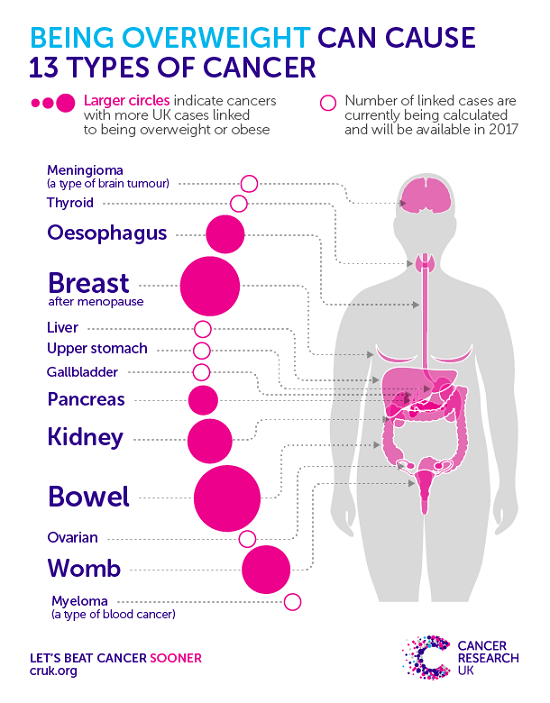
    Obesity: Having excess body fat, especially visceral fat around the hips and abdomen, contributes to chronic, low-grade inflammation, which can cause DNA damage and an increase in risk factors for certain types of cancer. According to the National Cancer Institute, obesity is linked to at least 13 different cancers. However, half of all cancer cases could be avoided using the information we already know (i.e. keep a healthy diet, don’t smoke, and get good amounts of sleep and exercise).

    Fat tissue will create inflammation that uses up nutrients and makes it more challenging for your body to clear toxic substances. It also switches how cells grow and use energy. Dr. Bongiorno

    Obesity is a leading cause of chronic illness and is attributed to many types of cancer.

    Toxins: If you are inhaling or ingesting large amounts of toxic substances, they can be stored in fatty tissue and then eventually your healthy cells. While our bodies can handle a certain amount, an overload can cause healthy tissue and cell membranes to become inflamed and damaged. Additionally, processed foods and an unhealthy gut will negatively affect your body’s ability to process exposure to toxic substances. If you are exposing yourself to more toxins than your body is eliminating, this may create inflammation.

    If you are exposing yourself to more toxicants than your body is eliminating this may create inflammation.

    How should we fight chronic inflammation?
    Keep a healthy diet. You can avoid certain foods that are known to trigger inflammation. These include sugars and overly-processed foods – otherwise known as “junk food.” Additionally, smoking and excessive alcohol consumption should be curbed.
    • A healthy diet helps fight inflammation.

    Foods to eat include plenty of colorful vegetables and greens, and foods containing healthy fatty acids, such as those found in nuts and avocados. Additionally, drink plenty of clean water so your cells stay hydrated and can perform at their optimal level!

    Learn More About Diet: Jennifer Whitney

    Regular exercise is also an important part of fighting inflammation. A recent study performed by Mark Hamer, PhD, an epidemiologist at the University College London, examined the long-term effects of exercise with regard to inflammation. The study lasted for 10 years and included 4,000 middle-aged men and women.

    Dr Rosie Main has nutrition and exercise plans to support your healing

    • Regular exercise helps fight inflammation.
    Ultimately, Dr. Hamer found that subjects who completed approximately 2.5 hours of “moderate” exercise per week – or at least 30 minutes a day – reduced their inflammation markers by a minimum of 12%. Additionally, some study participants began exercising midway through the study period and were able to significantly lower their inflammation levels as well— meaning it is never too late for the benefit of working out!

    Get enough sleep and reduce stress. Poor sleep and stress are known triggers of inflammation. According to a study performed by Emory University and presented at the 2010 American Heart Association Scientific Sessions, getting less than six hours of sleep per night is associated with higher levels of inflammation. This is also linked with an increased risk of heart attack and stroke.

    • Reducing stress and getting enough sleep helps fight inflammation.

    In addition to lack of sleep, excessive levels of long-term stress can negatively affect your gut and compromise the production of enzymes that aid in the digestive process. For your best performance, it is optimal to get eight hours of sleep each night, with at least five of those hours being continuous or uninterrupted.

    Our Local Practitioners All Shared Numerous Ways To Support Your Healing From Inflammation visit their sites to learn more: 

    David DeHaas of Living Waters Wellness Center  

    Malisa Williams, LMSW, CMSP of Renew Wellness  

    Dr. Michael Karlfeldt of The Karlfeldt Center

    Tamra Geryk RN of Functional Medicine of Idaho  

    Dr. Rosie Main DC of Main Health Solutions  

    Jennifer Whitney of Restoring Nutrition  

    Lisa Hevern, an Independent DoTerra Wellness Advocate 

    Dr. Jon Harmon of Clear Mind Idaho 

    Dr. Andrew Rostenberg of Red Mountain Natural Clinic  

    Sources:

    “Anti-Inflammatory Nutrition Research.” Inflammation Research Foundation, www.inflammationresearchfoundation.org/

    “Acute Inflammation.” Washington.Edu. University of Birmingham, n.d. Web. 05 Oct. 2016.

    DiCorleto, PhD Paul. “Why You Should Pay Attention to Chronic Inflammation.” Health Essentials from Cleveland Clinic, 25 July 2016, health.clevelandclinic.org/2014/10/why-you-should-pay-attention-to-chronic-inflammation/.

    Gushée, Sophia Ruan. A to Z of D-toxing: The Ultimate Guide to Reducing Our Toxic Exposures. N.p.: n.p., n.d. Print.

    Heid, Markham. “The Habit That Can Save Your Life.” Prevention. N.p., 16 Aug. 2012. Web. 05 Oct. 2016.

    “How being overweight causes cancer.” Cancer Research UK, 6 Apr. 2017, www.cancerresearchuk.org/about-cancer/causes-of-cancer/bodyweight-and-cancer/how-being-overweight-causes-cancer.

    Hume, Tim, and Jen Christensen. “WHO: Imminent Global Cancer ‘disaster’ Reflects Aging, Lifestyle Factors.” CNN. Cable News Network, 04 Feb. 2016. Web. 05 Oct. 2016.

    Nordqvist, Christian. “Pain / Anesthetics Bones / Orthopedics Immune System / Vaccines Arthritis / Rheumatology Inflammation: Chronic and Acute.”Medical News Today. MediLexicon International, 16 Sept. 2015. Web. 05 Oct. 2016.

    Paddock, Catharine. “Cardiovascular / Cardiology Sleep / Sleep Disorders / Insomnia Heart Disease Stroke Poor Sleep Tied To Inflammation, A Risk Factor For Heart Disease, Stroke.” Medical News Today. MediLexicon International, 15 Nov. 2010. Web. 05 Oct. 2016.

    Pevzner, Holly. “10 Ways to Reduce Inflammation.” EatingWell. Eating Well Magazine, June 2012. Web. 05 Oct. 2016.

    Rattue, Grace. “Immune System / Vaccines How Does The Immune System Power Inflammation?” Medical News Today. MediLexicon International, 05 July 2012. Web. 05 Oct. 2016.

    Samadi, David. “Inflammation: The Battle to the Death Inside Our Bodies.” The Observer. N.p., 11 Sept. 2015. Web. 05 Oct. 2016.

    Share:


    This article originally appeared at: https://www.dirt-to-dinner.com/what-is-inflammation/.
  • What Is Added To Our Foods Is Making Us Sick

    What Is Added To Our Foods Is Making Us Sick

    HFI Comment: It is SO VERY IMPORTANT to the health and well being of ourselves and our children to understand the additives in our foods. The rise of chronic disease is directly related to the increase of artificial foods, additives to our food and water and even to the amount of pesticides and herbicides we breathe and consume as residue on our foods.

    Thursday, December 01, 2016 by: Ethan A. Huff, staff writer

    They’re a staple ingredient in many processed foods, helping to maintain a food product’s texture and consistency while extending its shelf life. But chemical emulsifiers like polysorbate 80 and carboxymethylcellulose appear to be major driving factors in what many experts now admit are escalating rates of gastrointestinal disease and bowel cancer all around the world, a shocking new study has found.

    For their study, researchers from Georgia State University evaluated the metabolization of some of the more popular emulsifiers used in processed foods to see how they affect mammalian gut microflora. They tested these chemicals on mice at appropriate levels similar to what a human would encounter in common foods like baked bread, margarine, and dessert pastries.

    What they found is that the mice fed the chemicals experienced major changes to their internal microbial terrain, which resulted in a low-grade inflammation that precipitated the formation of cancer cells. A corresponding increase in “bad” bacteria offsetting the proper balance of “good” bacteria further created conditions hospitable to cancer cell growth and proliferation.

    With Crohn’s disease, ulcerative colitis, and other forms of inflammatory bowel disease on the rise, these findings have strong implications for the role that diet plays in exacerbating the colorectal cancer epidemic. The fourth most commonly diagnosed type of cancer after breast, prostate, and lung, colon cancer is a serious problem, and emulsifiers are at least partially to blame.

    “The incidence of colorectal cancer has been markedly increasing since the mid-20th century,” stated Dr. Emilie Viennois, lead author of the study, in conjunction with its publishing in the peer-reviewed journal Cancer Research. “A key feature of this disease is the presence of an altered intestinal microbiota that creates a favourable niche for tumorigenesis.”

    Vaccines often loaded with cancer-causing emulsifiersWhile food is probably the most significant source of exposure to chemical emulsifiers, vaccines are a close second. Polysorbate 80, for instance, is a common vaccine ingredient that’s used as a surfactant to reduce the surface tension between two or more liquid substances while increasing their solubility – in other words, like with food, it’s used to create a unified homogenous substance out of otherwise non-homogenous components.

    As explained by Health Impact News, polysorbate 80 is a key ingredient found in popular vaccines like those for DtaP (Infanrix), Influenza (Fluarix), Tdap (Boostrix), and Meningococcal (MenB-Trumenba). It poses many of the same risks as it does in food, and possibly even more due to the nature of its injection rather than ingestion.

    “Polysorbate 80 is used in pharmacology to assist in the delivery of certain drugs or chemotherapeutic agents across the blood-brain barrier,” explains pediatrician Dr. Lawrence Palevsky, M.D.

    “What viral, bacterial, yeast, heavy metal or other vaccine containing ingredient needs to pass into the brains of our children? Do they belong in the brain? Is that part of the needed immune response to protect our children from disease? Do vaccine materials pass across the blood-brain barrier with the help of Polysorbate 80? If so, are there complications from being in the brains of our children?” he asks.

    So while oral intake of emulsifiers like polysorbate 80 pose a direct threat to gut microbiota, intramuscular and/or intravenous intake of polysorbate 80 via vaccines poses a direct threat to the brain. In both cases, avoidance of this and other similar chemical emulsifiers seems prudent and necessary to mitigate potentially permanent damage to the body.

    The importance of maintaining a healthy ecological terrain in the gut for cancer prevention is now more evident than ever. And avoiding emulsifiers is clearly an important part of doing this, as is avoiding vaccines.

    Sources for this article include:

    DailyMail.co.uk

    MedicalXpress.com

    HealthImpactNews.com