Tag: pesticides

  • Pesticides: the Big Picture

    Pesticides are used all around us, in homes and gardens, schools, parks and agricultural fields. All too often, these chemicals are allowed onto the market before their impacts are fully understood — and harms to our health and the environment are discovered years later. The science is increasingly clear that even low levels of exposure can harm human health, and children are particularly vulnerable.

    Our national rules governing pesticide use are surprisingly weak. Yet as public concern continues to grow, alternative approaches to managing pests are increasingly available and gaining ground in homes, schools and agricultural fields across the country.

    Below is a brief overview of the problem; explore our campaigns and key issue pages to find out more about how PAN and our partners are building a healthy, thriving system of food and farming — and how you can help.

    What are pesticides?

    Insecticides (bug killers), herbicides (weed killers), and fungicides (fungus killers) are all pesticides; so are rodenticides and antimicrobials. Pesticides come in spray cans and crop dusters, in household cleaners, hand soaps and swimming pools.

    Insecticides are generally the most acutely (immediately) toxic. Many are designed to attack an insect’s brain and nervous system, which can mean they have neurotoxic effects in humans as well. Herbicides are more widely used (RoundUp and atrazine are the two most used pesticides in the world) and present chronic risks. This means ongoing, low-level exposures can increase the risk of diseases or disorders such as cancer, Parkinson’s disease or infertility and other reproductive harms. Fungicides are also used in large amounts; some are more benign, some are not.

    Pesticides are also sometimes broken down into chemical classes and modes of action. For example, fumigants are pesticides applied as gases to “sterilize” soil, and systemics work their way through a plant’s tissue after being taken up at the root. Major chemical classes include: carbamates, organochlorines, organophosphates (mostly developed 70 or more years ago for chemical warfare) and triazines. Newer classes include pyrethroids and neonicotinoids, synthesized to mimic nature’s pest protection. For more details on specific pesticides, visit our online database at www.pesticideinfo.org.

    What is the “pesticide treadmill?”

    Farmers get caught on the treadmill as they are forced to use more and more — and increasingly toxic — chemicals to control insects and weeds that develop resistance to pesticides.

    As “superbugs” and “superweeds” develop in response to widespread and continous use of chemicals, a farmer will spend more on pesticides each year just to keep crop losses at a standard rate.

    The recent introduction of crops genetically engineered for use with the herbicide 2,4-D provides a clear example of the pesticide treadmill. Widespread planting of RoundUp Ready crops and the associated application of RoundUp prompted weeds to develop resistance to the product. Resistant strains of “Pigweed” for instance, reportedly now grow with such vigor in southern cotton fields that the weeds can “stop a combine in its tracks.” Farmers are forced to return to use of 2,4-D — an antiquated, drift-prone chemical clearly linked to cancer and reproductive harms.

    Overall, pesticide resistance is increasing. In the 1940s, U.S. farmers lost seven percent of their crops to pests. Since the 1980s, loss has increased to 13 percent, even though more pesticides are being used. Between 500 and 1,000 insect and weed species have developed pesticide resistance since 1945.

    Rachel Carson clearly predicted the treadmill phenomenon in her 1962 book Silent Spring.

    There is another way. Agroecology is the science behind sustainable farming. This powerful approach combines scientific inquiry with place-based knowledge and experimentation, emphasizing approaches that are knowledge-intensive, low cost, ecologically sound and practical. Home use of pesticides — which on a per acre basis outpaces use on farms by a ratio of 10 to 1 — puts families across the North America at unnecessary risk. Alternatives are available to manage home, lawn and garden pests without toxic pesticides.

    Which rules govern pesticides?

    In the U.S., the Environmental Protection Agency (EPA) has primary authority to register and regulate pesticides. The agency’s oversight of pesticides is authorized by the following federal laws:

    The Federal Insecticide, Fungicide, and Rodenticide Act allows EPA to register pesticides using risk/benefit standards (how much risk is balanced by how much benefit);

    The Federal Food, Drug, and Cosmetic Act aims to increase protection for children and infants, including setting tolerances (maximum residues on food);

    The Food Quality Protection Act of 1996 (FQPA) amends previous laws by establishing a single safety standard for tolerances to increase protection of children from aggregate exposures (dietary, water and residential); and

    The Endangered Species Act of 1973 which requires that pesticides that will harm these species will not be registered.

    Some states have additional, stricter rules restricting pesticide use, and in a handful of states, local cities and counties can put even stricter rules in place.

    Internationally, pesticides are regulated through two treaties that PAN played a formative role in creating:

    • Stockholm Convention on Persistent Organic Pollutants (POPs treaty) addresses toxins that persist, move around the world on wind and water, and bioaccumulate (DDT, for example)and
    • Rotterdam Convention on Prior Informed Consent (PIC treaty) gives countries the right to refuse the import of highly hazardous toxins.

    The PIC treaty attempts to redress the dumping of obsolete or banned pesticides on the developing world. While only 25 percent of global pesticide use takes place in developing countries, 99 percent of acute pesticide-related fatalities occur there.

    Exposure & impacts

    Pesticide exposure depends on where you live and what you do.

    Each year, an estimated one billion pounds of pesticides are applied to U.S. farms, forests, lawns and golf courses. More than 17,000 pesticide products are currently on the market — with many of them approved through “conditional registration,” a regulatory loophole that allows products on the market quickly without thorough review.

    GLYPHOSATE MAKER to pay BILLIONS IN DAMAGES TO INDIVIDUALS WITH CANCER

    Pesticide applicators, farmers and farmworkers, and communities near farms are often most at risk, but studies by the Centers for Disease Control show that all of us carry pesticides in our bodies. Golf courses use pesticides heavily, as do some schools and parks. Consumers also face pesticide exposure through food and water residues. For instance, the herbicide atrazine is found in 94% of U.S. drinking water tested by the USDA.

    This widespread, long term use of pesticides has had tremendous ecological impacts over the years, from pest and weed resistance to environmental contamination and honey bee declines.

    In terms of human health, pesticides are now linked to a range of health impacts, including increased risk of cancer, Parkinson’s disease and neurodevelopmental effects like autism and ADHD. As we highlight in our A Generation in Jeopardy report, the science shows that infants and children are most at risk.

    LEARN MORE ABOUT PESTICIDES healthandenvironment.org/environmental-health/environmental-risks/chemical-environment-overview/pesticides

  • Top 3 Most Contaminated Produce

    The Environmental Working Group released its annual “Dirty Dozen” list of fruits and vegetables. The list includes the top 12 veggies and fruits found to have highest amount of pesticide residue. In 2019 strawberries, spinach, and kale top the list. 

    STRAWBERRIES

    The average American eats about eight pounds of fresh strawberries a year – and with them, dozens of pesticides, including chemicals that have been linked to cancer and reproductive damage, or that are banned in Europe. Strawberry growers use jaw-dropping volumes of poisonous gases to sterilize their fields before planting, killing every pest, weed and other living thing in the soil.

    Fumigants are acutely toxic gases that kill every living thing in the soil. Some were developed as chemical warfare agents, now banned by the Geneva Conventions. After growers inject fumigants, they cover the fields with plastic tarps to keep the gas underground and away from people and animals. But fumigants can leak during application and from torn tarps, sending the deadly fumes adrift and endangering farm workers and people who live nearby.

    USDA tests found that strawberries were the fresh produce item most likely to be contaminated with pesticide residues, even after they are picked, rinsed in the field and washed before eating. For these reasons, in 2019, strawberries are once again at the top of the Dirty Dozen™ list.

    The facts about strawberries and pesticides come from the USDA’s Pesticide Data Program. Between January 2015 and October 2016, USDA scientists tested 1,174 batches of conventional strawberries – about 89 percent of which were grown in the U.S., with the rest coming from Mexico, except one, which came from the Netherlands.

    The USDA’s strawberry tests found that:

    • Almost all samples – 99 percent – had detectable residues of at least one pesticide.
    • Some 30 percent had residues of 10 or more pesticides.
    • The dirtiest strawberry sample had residues of 23 different pesticides and breakdown products.
    • Strawberry samples contained residues of 81 different pesticides in various combinations.

    How hazardous are the chemicals used on strawberries? Some are fairly benign. But others are linked to cancer, reproductive and developmental damage, hormone disruption and neurological problems. Among the dangerous varieties are:

    • Carbendazim, a hormone-disrupting fungicide that damages the male reproductive system, which was detected on 16 percent of samples. The EU has banned it because of safety concerns.
    • Bifenthrin, a pyrethroid insecticide, which was found on more than 29 percent of samples, is an insecticide that the Environmental Protection Agency and California regulators have designated a possible human carcinogen.

    For those of us who don’t want to eat pesticide residues and who want to stop fumigants from endangering farmworkers and neighbors of farms, buying organic is a small price to pay. The transformation of strawberries from an occasional treat to a cheap and abundant supermarket staple should serve as cautionary tale about the consequences of chemically driven industrial agriculture.

    SPINACH

    Spinach is packed with nutrients, making it a staple for healthy eating. But federal data shows that conventionally grown spinach has more pesticide residues by weight than all other produce tested, with three-fourths of samples tested contaminated with a neurotoxic bug killer banned from use on food crops in Europe.

    Seventy-six percent of the samples contained residues of permethrin, a neurotoxic insecticide. At high doses, permethrin overwhelms the nervous system and causes tremors and seizures.

    But several studies also found a link between lower-level exposure to permethrin-type insecticides and neurological effects in children. In one study, children with detectable permethrin residues in their urine were twice as likely to be diagnosed with ADHD as children with non-detectable levels of the pesticide.

    The USDA found 83 samples that had residues of pesticides that are prohibited for use on spinach but legal on other food crops. Nearly all were grown in the U.S.

    DDT, a pesticide long banned in this country, also showed up on spinach and very few other crops. Residues of DDT and its breakdown products were found on 40 percent of spinach samples.

    The USDA washed all of the spinach samples vigorously before testing. The USDA has also detected pesticides on frozen and canned spinach, which suggests that washing and cooking reduces but does not eliminate pesticide levels.

    KALE

    Kale has higher pesticide residues than nearly all other produce found on supermarket shelves, according to the Environmental Working Group’s 2019 Dirty Dozen™.

  • Bees Attracted to Dangerous Fungicides

    Most people have heard that honey bee populations are struggling–and the affects that neonicotinoid pesticides are having on honey bee health are gradually becoming main-stream knowledge. Interestingly, what is coming to light as more research is done, fungicides may also have an adverse effect on honey bee health as well.

    Glorybee.com:

    We need bees. With 80% of food crops relying on honey bees for pollination, it has been found that one of every three bites of food we eat is pollinated by bees. Declines in honey bee populations have caused global concern for the world’s food supply and the uncertain future that would bring.

    This excerpt from an article in Science Daily details the findings of honey bees and fungicides.

    When given the choice, honey bee foragers prefer to collect sugar syrup laced with the fungicide chlorothalonil over sugar syrup alone, researchers report in the journal Scientific Reports.

    The puzzling finding comes on the heels of other studies linking fungicides to declines in honey bee and wild bee populations. One recent study, for example, found parallels between the use of chlorothalonil and the presence of Nosema bombi, a fungal parasite, in bumble bees. Greater chlorothalonil use also was linked to range contractions in four declining bumble bee species.

    To test whether foraging honey bees showed a preference for other chemicals they are likely to encounter in the wild, researchers set up two feeding stations in a large enclosure. Foraging honey bees could fly freely from one feeder to the other, choosing to collect either sugar syrup laced with a test chemical or sugar syrup mixed with a solvent as the control. Over the course of the study, they tested honey bee responses to nine naturally occurring chemicals, three fungicides and two herbicides at various concentrations.

    The trials revealed that honey bees prefer the naturally occurring chemical quercetin over controls at all concentrations tested.

    To the researchers’ surprise, the bees also preferred sugar syrup laced with glyphosate — the active ingredient in Monsanto’s Roundup herbicide — at 10 parts per billion, but not at higher concentrations.

    “The bees are not only not avoiding this fungicide, they’re consuming more of it at certain concentrations,” Berenbaum, the team’s research leader, said.

    Fungicides are among the most prevalent contaminants of honey bee hives, and it is likely the bees themselves are bringing these pesticides into the colony through their food-collecting activities. While perplexing, bees’ preferences for some potentially toxic chemicals may be the result of their distinct evolutionary history, Berenbaum said.

    The new findings are worrisome in light of research showing that exposure to fungicides interferes with honey bees’ ability to metabolize medications used by beekeepers to kill the parasitic varroa mites that infest their hives.

    To read this article in its entirety, please visit: Agricultural fungicide attracts honey bees.

    Learn more about simple steps to take to save the bees visit https://glorybee.com/blog/category/save-the-bee/

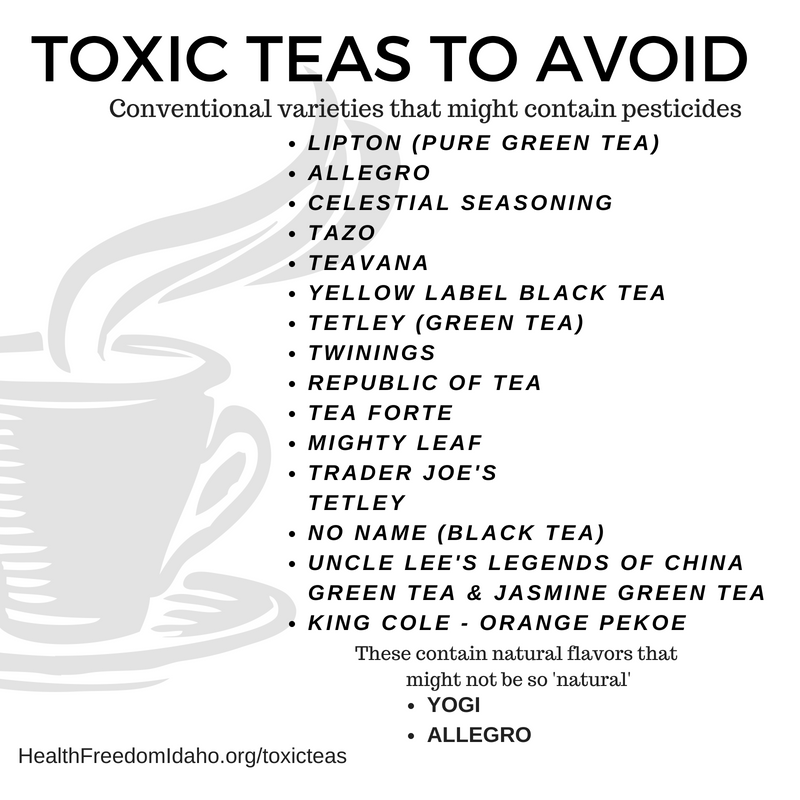
  • Toxic Teas To Avoid

    Although tea is widely thought to be a healthier source of caffeine than coffee, soda or energy drinks, conventional tea brands have been shown to contain high levels of toxic substances such as fluoride and pesticides, artificial ingredients, added flavors and GMOs(modified corn starch and soy lecithin).The levels found in these products are so high that they are considered unsafe for consumption. As with most products, all tea is not created equal. Opting to save a few dollars on cheaper tea can cost you a lot more when it comes to your health.

    Conventional Teas May Contain Fluoride and Pesticides

    Most tea isn’t washed before it is distributed into bags. If the tea was sprayed with pesticides, those pesticides will wind up directly in your cup. Many non-organic tea brands have been found to contain pesticides that are known carcinogens. Popular tea brands often get away with listing “natural flavors” as an ingredient, causing many consumers to think they are buying better, cleaner ingredients. But there is a whole list of what “natural flavors” could mean.

    Reports from India and China find high levels of banned pesticides in tea products, pointing to a lack of enforcement on pesticide use in major tea exporting countries. In the U.S., the Food and Drug Administration (FDA) consistently finds high levels of illegal residues on imported Tea that eventually finds its way to the American consumer. These include permethrin (a synthetic pyrethroid, linked to cancer and endocrine system disruption), DDE (a metabolite of DDT, banned in the U.S. in 1972), heptachlor epoxide (a derivative of the pesticide heptachlor, which was banned in the U.S. for use in agriculture and as a termiticide due to its carcinogenicity and persistence in the environment) and acetamiprid (a bee-toxic neonicotinoid). These issues increase consumer exposure to a dangerous blend of pesticides in conventional tea.

    Where Does The Fluoride Come From?

    Tea plants absorb fluoride from soil and accumulate it as they grow, so older leaves contain the most fluoride. Cheaper quality teas are often made from older tea leaves, which contain more fluoride. These teas also contain the least amount of anti-oxidants, lessening the health benefits associated with drinking tea.  See our full article on the dangers of neurotoxic Fluoride

    Which Brands Contain The Most Toxins?

    The Canadian Broadcasting Corporation actually conducted an investigation on several popular international tea companies, including:

    1. Tetley
    2. Lipton
    3. Twinnings
    4. No Name
    5. Uncle Lee’s Legends of China
    6. King Cole
    7. Signal

    Alarmingly, the CBC found that half of the tea brands contained a level of toxins that exceeded the legal limit. The worst offenders were:

    • King Cole, which contained the monocrotophos – a chemical that is currently in the process of being banned, as it causes irregular heartbeat and even coma.
    • Uncle Lee’s Legends of China, which contained more than 20 types of pesticides. One was endosulfan, which causes nervous system damage.
    • No Name, which contained more than 10 pesticide types.

    A study conducted by EuroFins (a worldwide analytic testing company) 91% of Celestial Seasonings teas contained levels of pesticides that exceed the US federal limits. Considering all of the other toxins and poisons that the FDA lets slide by, this is very alarming. When Celestial Seasonings started in 1969, it was “founded on the belief that all natural teas could help people live healthier lives.” Maybe that was the case in 1969 because there weren’t as many pesticides being sprayed, but in this day and age we have to be wary of the products we are consuming. <source>

    How To Avoid Toxic Chemicals in Tea

    You don’t need to stop drinking tea altogether to keep yourself safe from harmful toxins or pesticides that may be lurking in your cup. After all, tea is the source of some amazing health benefits. So what’s the solution?

    • Try switching to white tea. It has the least amount of fluoride because it’s made from young leaves.
    • Be sure to buy loose leaf tea or brew your own tea from scratch.
    • Buy organic! Choose a non-GMO certified brand of tea.
    • Check the ingredient list to make sure there are no added flavors or GMO ingredients added to the tea leaves.
    • Many restaurants use tea brands that are known to be full of pesticides, so be careful about ordering tea while out to eat.
    • Know the correct brewing times for certain types of tea. Black or Pu-reh teas should be steeped for 3-5 minutes; white or green teas should be steeped for 2-3 minutes; Oolong teas should be steeped for 4-7 minutes; and herbal teas should be left to steep for five minutes at minimum, longer for a stronger tea.

    That doesn’t mean the other tea brands were totally safe, however. 
    In fact, only Red Rose tea was found to contain no pesticides at all.

    Here is a list of bagged tea that is safe!

    Sources:

    IS THE TEA YOU ARE DRINKING TOXIC AND THE TEA BAG IT IS IN …. https://www.bwellbhealthy.com/blog/2017/2/26/is-the-tea-you-are-drinking-toxic-and-the-tea-bag-it-is-in

    Most Brands of Tea Contain THESE Harmful Chemicals …. https://www.davidwolfe.com/tea-contain-harmful-chemicals/

    These Popular Tea Brands Possess Dangerously High Levels …. https://worldtruth.tv/these-popular-tea-brands-possess-dangerously-high-levels-of-pesticides/

    The hidden dangers of bagged tea | Body Unburdened. https://bodyunburdened.com/the-hidden-dangers-of-bagged-tea/

    Additional Information:
    CBC
    FluorideAlert.org
    Toxipedia.org
    FoodBabe.com

  • It took 20 years to realize that the weapon against insects is harmful to humans

    HFI: Pesticides. Harmful to insects, damaging to the environment, and creating havoc on human health for decades. DDT “A Handful of concentrated death”. For years, DDT was promoted as a safe and effective insect killer. It wasn’t until 20 years later, we realized that it was also a human killer. 

    Historical clips on DDT, Rachel Carson and science explaining why humans pollute. Video put together for the MSc in Environmental Technology.

     Today, nearly 40 years after DDT was banned in the U.S., we continue to live with its long-lasting effects:

    DDT spray on beach

    • Food supplies: USDA found DDT breakdown products in 60% of heavy cream samples, 42% of kale greens, 28% of carrots and lower percentages of many other foods.
    • Body burden: DDT breakdown products were found in the blood of 99% of the people tested by CDC.
    • Health impacts: Girls exposed to DDT before puberty are 5 times more likely to develop breast cancer in middle age, according to the President’s Cancer Panel.

    Banned for agricultural uses worldwide by the 2001 Stockholm Convention on Persistent Organic Pollutants, the use of DDT is still permitted in small quantities in countries that need it, with support mobilized for the transition to safer and more effective alternatives. The treatment of DDT under the Stockholm Convention is strongly supported by PAN and our international partners.

    Rachel Carson highlighted the dangers of DDT in her groundbreaking 1962 book Silent Spring. Carson used DDT to tell the broader story of the disastrous consequences of the overuse of insecticides, and raised enough concern from her testimony before Congress to trigger the establishment of the Environmental Protection Agency (EPA).

    Her work attracted outrage from the pesticide industry and others. Her credibility as a scientist was attacked, and she was derided as “hysterical,” despite her fact-based assertions and calm and scholarly demeanor. Following the hearings, President Kennedy convened a committee to review the evidence Carson presented. The committee’s review completely vindicating her findings.

    One of the new EPA’s first acts was to ban DDT, due to both concerns about harm to the environment and the potential for harm to human health. There was also evidence linking DDT with severe declines in bald eagle populations due to thinning eggshells. Since DDT was banned in the U.S., bald eagles have made a dramatic recovery. 

    Recently, Carson’s work has again been targeted by conservative groups. Capitalizing on the iconic status of DDT, these groups are promoting widespread use of the chemical for malaria control as part of a broader effort to manufacture doubt about the dangers of pesticides, and to promote their anti-regulatory, free market agenda while attempting to undermine and roll back the environmental movement’s legacy.

    Many DDT promoters are also in the business of denying climate change.

    Attacks on Carson from groups like The Competitive Enterprise Institute and Africa Fighting Malaria portray DDT as the simple solution to malaria, and blame Carson for “millions of deaths in Africa.” Many of these DDT promoters are also in the business of denying climate change and defended the tobacco industry by denying the health harms of smoking.

    Human Health Harms

    The science on DDT’s human health impacts has continued to mount over the years, with recent studies showing harm at very low levels of exposure. Studies show a range of human health effects linked to DDT and its breakdown product, DDE:

    • breast & other cancers
    • male infertility
    • miscarriages & low birth weight
    • developmental delay
    • nervous system & liver damage
    This article originally appeared at: https://youtu.be/Ipbc-6IvMQI.
    More on DDThttp://www.panna.org/resources/ddt-story

  • Popular Pesticides Keep Bumblebees From Laying Eggs

    Pesticides harm the environment. A new study is adding to evidence that a popular class of pesticides can harm wild bees, like bumblebees.

    A new study is adding to evidence that a popular class of pesticides can harm wild bees, like bumblebees.

    Photo Researchers/Getty Images

    Wild bees, such as bumblebees, don’t get as much love as honeybees, but they should. They play just as crucial a role in pollinating many fruits, vegetables, and wildflowers, and compared to managed colonies of honeybees, they’re in much greater jeopardy.

    A group of scientists in the United Kingdom decided to look at how bumblebee queens are affected by some widely used and highly controversial pesticides known as neonicotinoids. What they found isn’t pretty.

    Neonics, as they’re often called, are applied as a coating on the seeds of some of the most widely grown crops in the country, including corn, soybeans, and canola. These pesticides are “systemic” — they move throughout the growing plants. Traces of them end up in pollen, which bees consume. Neonicotinoid residues also have been found in the pollen of wildflowers growing near fields and in nearby streams.

    The scientists, based at Royal Holloway University of London, set up a laboratory experiment with bumblebee queens. They fed those queens a syrup containing traces of a neonicotinoid pesticide called thiamethoxam, and the amount of the pesticide, they say, was similar to what bees living near fields of neonic-treated canola might be exposed to.

    Bumblebee queens exposed to the pesticide were 26 percent less likely to lay eggs, compared to queens that weren’t exposed to the pesticide. The team published their findings in the journal Nature Ecology and Evolution.

    “Without the queen laying eggs, there is no colony,” says Nigel Raine, one of the scientists who conducted the experiment. Raine helped start the experiment, but has since moved to the University of Guelph in Canada.

    According to Raine and his colleagues, the reduction in reproduction is so large that wild bumblebee populations exposed to these chemicals could enter a spiral of decline and eventually die out.

    “To me, based on the data we have, it seems like quite a big impact,” Raine says.

    But he says scientists don’t know how harmful the pesticide exposure is in the wildcompared to other perils the bees face, such as disappearing wildflowers that bees rely on for food. “I don’t think we have a really good handle on how important, say, nutrition limitation is — if they can’t find the right flowers. Or parasite loads. I’d say [neonic exposure] is important and significant, but other factors may be important and significant, too,” he says.

    The results are likely to strengthen calls for further restrictions on use of the pesticides. The European Union imposed a temporary moratorium on use of neonicotinoid pesticides on many crops in 2013, and is now considering proposals to make that moratorium permanent. Pesticide companies and some farmers are fighting those restrictions. They argue that the moratorium has led to lower yields of canola and an increase in spraying of otherpesticides to fight insects that previously were controlled by neonicotinoid coatings on seeds.

    Copyright 2017 NPR. To see more, visit http://www.npr.org/.__utm.gif?utmac=UA-5828686-4&utmdt=Popular+Pesticides+Keep+Bumblebees+From+Laying+Eggs&utme=8(APIKey)9(MDAzMTY3NDM2MDEyMzYyODg4ODVhMjM5Ng001)
    Featured Adventure

    This article originally appeared at: http://www.opb.org/news/article/npr-popular-pesticides-keep-bumblebees-from-laying-eggs/.
  • 3 Pesticide Realities

    All too often, Monsanto and the rest of the “Big 6” pesticide corporations distort information to make their products seem safe and necessary — but they’re not.

    Myths about pesticides are a testimony to the power of advertising, marketing and lobbying. Pesticide corporations, like big tobacco and the oil industry, have systematically manufactured doubt about the science behind pesticides, and fostered the myth that their products are essential to life as we know it — and harmless if “used as directed.”

    The book Merchants of Doubt calls it the Tobacco Strategy: orchestrated PR and legal campaigns to deny the evidence, often using rogue scientists to invent controversy around so-called “junk science” to deny everything — from second-hand smoke causing cancer to global warming to the hazards of DDT.

    Here are eight of the seemingly plausible myths we hear from the Big 6 every day:

    1. Pesticides are necessary to the feed the world
    2. Pesticides aren’t that dangerous
    3. The dose makes the poison
    4. The government is protecting us
    5. GMOs reduce reliance on pesticides
    6. We’re weaning ourselves off of pesticides
    7. Pesticides are the answer to global climate change
    8. We need DDT to end malaria, combat bedbugs, etc.

    Myth #1: “Pesticides are necessary to the feed the world”

    Reality: The most comprehensive analysis of world agriculture to date tells us that what can feed the world — and what feeds most of the world now, in fact — is small-scale agriculture that does not rely on pesticides.

    Dow, Monsanto, Syngenta and other pesticide producers have marketed their products as necessary to feed the world. Yet as insecticide use increased in the U.S. by a factor of 10 in the 50 years following World War II, crop losses almost doubled. Corn is illustrative: in place of crop rotations, most acreage was planted year after year only with corn. Despite more than a 1,000-fold increase in use of organophosphate insecticides, crop losses to insects has risen from 3.5% to 12% (D. Pimental and M. Pimental, 2008).

    More to the point, hunger in an age of plenty isn’t a problem of production (or yields, as the pesticide industry claims), efficiency or even distribution. It is a matter of priorities. If we were serious about feeding people, we wouldn’t grow enough extra grain to feed 1/3 of the world’s hungry — and then pour it into gas tanks.

    Myth #2: “Pesticides aren’t that dangerous”

    Reality:  Pesticides are dangerous by design. They are engineered to cause death. And harms to human health are very well documented, with children especially at risk. Here are a few recent examples from the news:

    • An entire class of pesticides (organophosphates) has been linked to higher rates of ADHD in children.
    • The herbicide atrazine, found in 94% of our water supply, has been linked to birth defects, infertility and cancer.
    • Women exposed to the pesticide endosulfan during pregnancy are more likely to have autistic children.
    • Girls exposed to DDT before puberty are five times more likely to develop breast cancer.
    • The World Health Organization recently designated the key ingredient in the widely used herbicide RoundUp a “probable human carcinogen.”

    A large and growing body of peer-reviewed, scientific studies document that pesticides are harmful to human health. The environmental damage caused by pesticides is also clear; from male frogs becoming females after exposure, to collapsing populations of bats and honeybees.

    Myth #3: “The dose makes the poison”

    Reality: If someone is exposed to an extremely small amount of one ingredient from a single pesticide at a time, and it was a chemical of relatively low toxicity and exposure occurred outside any window of biological vulnerability, it might pose little danger. Unfortunately, that’s an unlikely scenario.

    First, pesticide products typically contain several potentially dangerous ingredients (including so-called “inerts” not listed on the label). Second, we’re all exposed to a cocktail of pesticides in our air, water, food and on the surfaces we touchThe combination of these chemicals can be more toxic than any one of them acting alone. Third, many pesticides are endocrine disruptors and even extremely low doses can interfere with the delicate human hormone system and cause lifechanging damage.

    Finally, the timing of exposure can be just as — if not more — important than the dose. Even extremely low levels of pesticides can cause irreversible, lifechanging harm if they occur at a moment when organs or other systems are developing. One stark example from a recent study using MRI technology illustrates the point: children exposed in utero to the neurotoxic insecticide chlorpyrifos experienced lasting changes in their brain architecture.

    It’s also important to understand that research used to determine the safety of a pesticide is funded and conducted by the corporations marketing the product, often leading to distortion of findings.

  • TOXIC Neonicotinoids EPA Approved Bee Killer

    TOXIC Neonicotinoids EPA Approved Bee Killer

    HFI: Important!! Neonicotinoids Do not, I repeat, do not buy plants treated with Neonicotinoids. Bees take the pollen back to the hive and feed it to the brood.  This is the number one cause of colony collapse! They are banned in Europe! Avoid these toxins and Save the bees! Neonicotinoids are also known to kill our earthworms. 
    Save our food supply. Purchase local seeds and plants from local farmers and nurseries. Better yet save your own and grow at home!

    Toxic ‘witches brew’ of pesticides and fungicides is killing Up To Half Of America’s Bees

    This headline appeared in the Popular Science Magazine in March of 2013. Now four years later, BEES have been added to the endangered species list in the United States.Bees don’t just make honey, remember, but pollinate a ton of what we eat–as much as a fourth of it. That could lead to less food and higher food prices.

    In 2013 Quartz published these frightening facts:
     

    …The mysterious mass die-off of honey bees that pollinate $30 billion worth of crops in the US has so decimated America’s apis mellifera population that one bad winter could leave fields fallow. Now, a new study has pinpointed some of the probable causes of bee deaths and the rather scary results show that averting beemageddon will be much more difficult than previously thought.

    Scientists had struggled to find the trigger for so-called Colony Collapse Disorder (CCD) that has wiped out an estimated 10 million beehives, worth $2 billion, over the past six years. Suspects have included pesticides, disease-bearing parasites and poor nutrition. But in a first-of-its-kind study published today in the journal PLOS ONE, scientists at the University of Maryland and the US Department of Agriculture have identified a witch’s brew of pesticides and fungicides contaminating pollen that bees collect to feed their hives. The findings break new ground on why large numbers of bees are dying though they do not identify the specific cause of CCD, where an entire beehive dies at once.

    When researchers collected pollen from hives on the east coast pollinating cranberry, watermelon and other crops and fed it to healthy bees, those bees showed a significant decline in their ability to resist infection by a parasite called Nosema ceranae. The parasite has been implicated in Colony Collapse Disorder though scientists took pains to point out that their findings do not directly link the pesticides to CCD. The pollen was contaminated on average with nine different pesticides and fungicides though scientists discovered 21 agricultural chemicals in one sample. Scientists identified eight ag chemicals associated with increased risk of infection by the parasite.

    Most disturbing, bees that ate pollen contaminated with fungicides were three times as likely to be infected by the parasite. Widely used, fungicides had been thought to be harmless for bees as they’re designed to kill fungus, not insects, on crops like apples.

    BEES ADDED TO US ENDANGERED SPECIES LIST FOR THE FIRST TIME

    Toxins affect EVERYTHING! Bees & Earthworms

    Neonicotinoids : From Beecharmers.org

    Below is a summary of the chemical and brand names of the commonly used neonicotinoids. These are toxic to our honey bees. We are asking growers who are using these materials and who are dependent on honey bees for pollination, not to use these products currently until more research is done .
    Actara, Platinum, Helix, Cruiser, Adage, Meridian, Centric, Flagship, Poncho, Titan, Clutch, Belay, Arena, Confidor, Merit, Admire, Ledgend, Pravado, Encore, Goucho, Premise, Assail, Intruder, Adjust and Calypso (This list was generated by The Senior Extension Associate at Penn State)
    Never use a neonicotinoid pesticide on a blooming crop or on blooming weeds if honey bees are present.

    • The use of a neonicotinoid pesticide pre-bloom, just before bees are brought onto a crop is not recommended. If one of these materials MUST be used pre-bloom (for example at pink in apples), select a material that has a lower toxicity to bees (acetamiprid or thiacloprid) and apply only when bees are not foraging, preferably late evening.
    • Do not apply these materials post bloom (example petal fall) until after the bees have been
    removed from the crop. For the full report clicke here.

    Preserving the Bees: 

    •  *In the United States, a group of beekeepers from North Dakota is taking Bayer to court after losing thousands of honeybee colonies in 1995, during a period when oilseed rape in the area was treated with imidacloprid. A third of honeybees were killed by what has since been dubbed colony collapse disorder.
    • *The Dutch government has banned Imidaclprid completely in open-air situations. The product evidently also leaves a residue in the soil that completely destroys the Earthworm population that is so important to soil conservation. It also gets into weeds and other crops grown in the same ground. French beekeepers maintain they have lost thousands of colonies to this pesticide and a sister organo-phosphate called Fibronil produced by Aventis and are calling on the French government to remove both products from the market.
    • *PARIS – “Gaucho”, a broad-spectrum insecticide made by the Germany-based chemical giant Bayer, was banned in France in 1999 due to its toxicity to bees and other forms of life — including humans — but its replacement, “Regent”, from another German giant, BASF, is just as dangerous say beekeepers and biologists.

  • The 2017 Dirty Dozen: Strawberries, Spinach Top EWG’s List of Pesticides in Produce

    The 2017 Dirty Dozen: Strawberries, Spinach Top EWG’s List of Pesticides in Produce

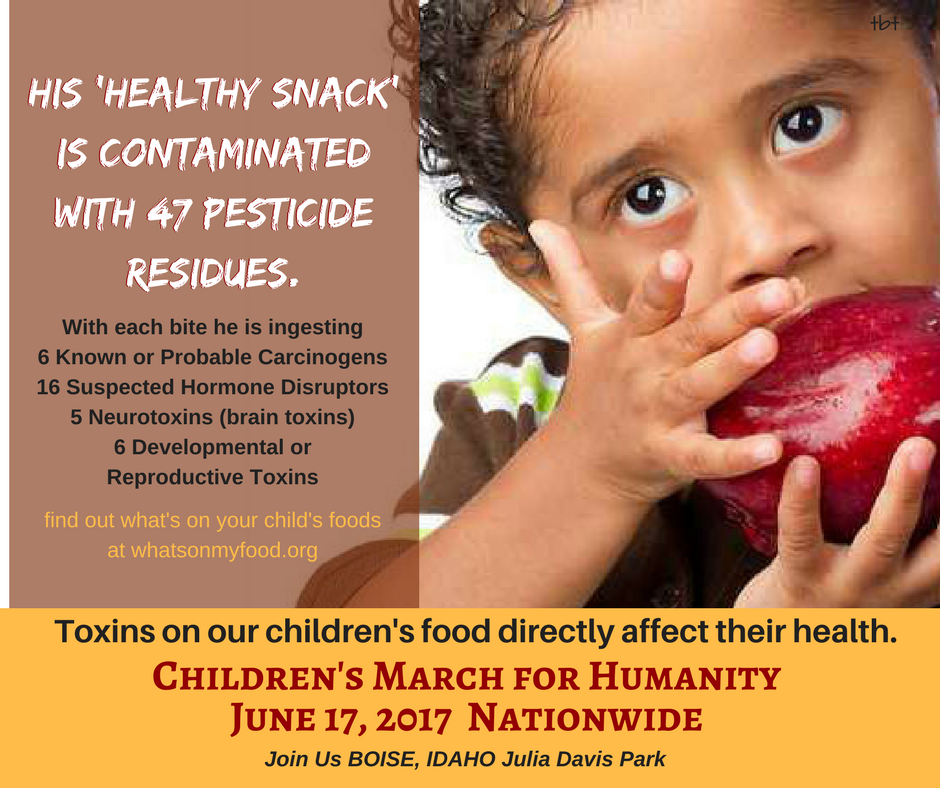
    Julie: My canary child can tell you if the strawberries are contaminated. Even if the label says ORGANIC – doesn’t mean it isn’t sprayed prior to planting. Driscolls causes almost instant reaction for his little body. We have to get to know our farmer before letting my littlest try the strawberries. 

    EWG’s analysis of tests by the U.S. Department of Agriculture found that nearly 70 percent of samples of 48 types of conventional produce were contaminated with residues of one or more pesticides. USDA researchers found a total of 178 different pesticides and pesticide breakdown products on the thousands of produce samples they analyzed. The pesticide residues remained on fruits and vegetables even after they were washed and, in some cases, peeled.

    “If you don’t want to feed your family food contaminated with pesticides, the EWG Shopper’s Guide helps you make smart choices, whether you’re buying conventional or organic produce,” said Sonya Lunder, an EWG senior analyst. “Eating plenty of fruits and vegetables is essential no matter how they’re grown, but for the items with the heaviest pesticide loads, we urge shoppers to buy organic. If you can’t buy organic, the Shopper’s Guide will steer you to conventionally grown produce that is the lowest in pesticides.”

    Landrigan, Dean of Global Health and Director of the Children’s Environmental Health Center at Mt. Sinai, was the principal author of a landmark 1993 National Academy of Sciences study, Pesticides in the Diets of Infants and Children. The study led to enactment of the 1996 Food Quality Protection Act that set safety standards for pesticides on foods.

    For the Dirty Dozen list, EWG singled out produce with the highest loads of pesticide residues. In addition to strawberries and spinach, this year’s list includes nectarines, apples, peaches, celery, grapes, pears, cherries, tomatoes, sweet bell peppers and potatoes.

    Key findings:

    • Nearly all samples of strawberries, spinach, peaches, nectarines, cherries and apples tested positive for residue of at least one pesticide.
    • The most contaminated sample of strawberries had 20 different pesticides.
    • Spinach samples had an average of twice as much pesticide residue by weight than any other crop. Three-fourths of spinach samples had residues of a neurotoxic pesticide banned in Europe for use on food crops – it’s part of a class of pesticides that recent studies link to behavioral disorders in young children.

    “From the surge in sales of organic food year after year, it’s clear that that consumers would rather eat fruits and vegetables grown without synthetic pesticides,” said Lunder. “But sometimes an all-organic diet is not an option, so they can use the Shopper’s Guide to choose a mix of conventional and organic produce.”

  • OUR FOOD, TOXIC FIELDS.

    OUR FOOD, TOXIC FIELDS.

    Among farmworkers, 10,000–20,000 pesticide poisonings occur every year. Beyond the acute poisonings, there are long-term, chronic health effects such as cancer, Parkinsons’ Disease, asthma, birth defects and neurological harms, including developmental delays and learning disabilities.

    Children of farmworkers are particularly at risk. Pesticides cling to workers’ skin and clothing long after they return home, putting their children at risk.

    PROTECTIONS MUST BE STRENGTHENED.

    A healthy, safe, and fair food system would protect us all and safeguard the health and economic needs of farmworkers, farmers, rural communities and consumers. Shifting away from reliance on hazardous pesticides is a key step toward this goal. But as long as harmful pesticides are in use, farmworkers need better protections in the field.

    GOOD NEWS FOR FARMWORKERS.

    After more than a decade of broken promises and delays, EPA recently updated and strengthened the rules protecting farmworker.
    Read reaction from labor, farmworker and environmental groups.

    Growing CHANGE. Being better in growing our food.