Tag: pesticides
-

What’s On Our Favorite Food: BLUEBERRIES
We LOVE a fresh ripe blueberry. We LOVE a fresh frozen blueberry. We LOVE warm from the oven blueberry baked into something good.WE DO NOT LOVE that there are 52 Pesticide Residues Found by the USDA Pesticide Data Program.Can you believe it? A blueberry can have 52 pesticides.My youngest is highly sensitive to pesticides. This child must eat PESTICIDE FREE foods. After looking at the list of effects of these 52 pesticides – NO ONE should eat a convention blueberry.Makes me want to grow my own. How about you? If you’re ambitious, check out how to grow blueberries in Idaho. -

Imagine a world without pesticides
Can we imagine a day, a year or a world without using hazardous chemicals to grow our food? I can. And we must.
Today, people are continuing to stand up for the future of food and farming, speaking out against harmful pesticide use in Hawaii, Iowa, California and beyond even when it draws the ire of corporate bullies like Monsanto and Dow. And internationally, often under daunting, even dangerous circumstances, grassroots groups in our global network are creatively and courageously drawing attention to the harms of chemical-intensive industrial farming in their countries.
“It has become clear that the problems we have today with children’s lives being continuously wrecked by pesticides are because of institutional failures to acknowledge that pesticides are not necessary,” charged our sister organization PAN Asia & the Pacific on No Pesticides Use Day.
….
A better world
Our vision of a better world for our children and for future generations is a powerfully motivating factor — and we’ve made important progress on many continents in recent years. But there is clearly more work to do.
For our children, we need to push back against corporate control over scientific and agricultural policies at every level — including in our state legislatures and in academic research on college campuses. For our children, we need to advocate for buffer zones to protect them from pesticide drift in agricultural areas. For our children, we need to provide farmers the tools and support to step off the pesticide treadmill.
If we can imagine a world for our children without hazardous pesticides, we must begin now to invest in non-chemical alternatives to provide more and more of the food we’ll need for coming generations. As the saying goes, “The best time to plant a tree was 20 years ago; the second best time is now.”
What alternatives do you use to protect your children from household toxins? Sharing information is the start of change. -

The Problem with Pesticides

Pesticides
Pesticides are the only toxic substances released intentionally into our environment to kill living things. This includes substances that kill weeds (herbicides), insects (insecticides), fungus (fungicides), rodents (rodenticides), and others.
The use of toxic pesticides to manage pest problems has become a common practice around the world. Pesticides are used almost everywhere — not only in agricultural fields, but also in homes, parks, schools, buildings, forests, and roads. It is difficult to find somewhere where pesticides aren’t used — from the can of bug spray under the kitchen sink to the airplane crop dusting acres of farmland, our world is filled with pesticides. In addition, pesticides can be found in the air we breathe, the food we eat, and the water we drink.
Pesticides and Human HealthPesticides have been linked to a wide range of human health hazards, ranging from short-term impacts such as headaches and nausea to chronic impacts like cancer, reproductive harm, and endocrine disruption.
<pdf printable about pesticides and human health>Acute dangers – such as nerve, skin, and eye irritation and damage, headaches, dizziness, nausea, fatigue, and systemic poisoning – can sometimes be dramatic, and even occasionally fatal.
Chronic health effects may occur years after even minimal exposure to pesticides in the environment, or result from the pesticide residues which we ingest through our food and water. A July 2007 study conducted by researchers at the Public Health Institute, the California Department of Health Services, and the UC Berkeley School of Public Health found a sixfold increase in risk factor for autism spectrum disorders (ASD) for children of women who were exposed to organochlorine pesticides.
Pesticides can cause many types of cancer in humans. Some of the most prevalent forms include leukemia, non-Hodgkins lymphoma, brain, bone, breast, ovarian, prostate, testicular and liver cancers. In February 2009, the Agency for Toxic Substances and Disease Registry published a study that found that children who live in homes where their parents use pesticides are twice as likely to develop brain cancer versus those that live in residences in which no pesticides are used.
Studies by the National Cancer Institute found that American farmers, who in most respects are healthier than the population at large, had startling incidences of leukemia, Hodgkins disease, non-Hodgkins lymphoma, and many other forms of cancer.
There is also mounting evidence that exposure to pesticides disrupts the endocrine system, wreaking havoc with the complex regulation of hormones, the reproductive system, and embryonic development. Endocrine disruption can produce infertility and a variety of birth defects and developmental defects in offspring, including hormonal imbalance and incomplete sexual development, impaired brain development, behavioral disorders, and many others. Examples of known endocrine disrupting chemicals which are present in large quantities in our environment include DDT (which still persists in abundance more than 20 years after being banned in the U.S.), lindane, atrazine, carbaryl, parathion, and many others.
Multiple Chemical Sensitivity (MCS) is a medical condition characterized by the body’s inability to tolerate relatively low exposure to chemicals. This condition, also referred to as Environmental Illness, is triggered by exposure to certain chemicals and/or environmental pollutants. Exposure to pesticides is a common way for individuals to develop MCS, and once the condition is present, pesticides are often a potent trigger for symptoms of the condition. The variety of these symptoms can be dizzying, including everything from cardiovascular problems to depression to muscle and joint pains. Over time, individuals suffering from MCS will begin to react adversely to substances that formerly did not affect them. (toxic buildup)
For individuals suffering from MCS, the only way to relieve their symptoms is to avoid those substances that trigger adverse reactions. For some individuals, this can mean almost complete isolation from the outside world.
Pesticides and Children
Children are particularly susceptible to the hazards associated with pesticide use. There is now considerable scientific evidence that the human brain is not fully formed until the age of 12, and childhood exposure to some of the most common pesticides on the market may greatly impact the development of the central nervous system. Children have more skin surface for their size than adults, absorb proportionally greater amounts of many substances through their lungs and intestinal tracts, and take in more air, food and water per pound than adults.
Children have not developed their immune systems, nervous systems, or detoxifying mechanisms completely, leaving them less capable of fighting the introduction of toxic pesticides into their systems.
Pesticides and the Environment
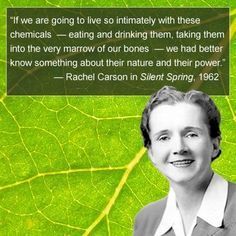
Since the publication of Rachel Carson’s landmark 1962 book Silent Spring, the impacts of pesticides on the environment have been well known. Pesticides are toxic to living organisms. Some can accumulate in water systems, pollute the air, and in some cases have other dramatic environmental effects. Scientists are discovering new threats to the environment that are equally disturbing.
Pesticide use can damage agricultural land by harming beneficial insect species, soil microorganisms, and worms which naturally limit pest populations and maintain soil health;
Weakening plant root systems and immune systems;
Reducing concentrations of essential plant nutrients in the soil such nitrogen and phosphorous.
The Solution to Pesticides
We need to make our food, our air, our water, and our soil free from toxic chemicals.
The real solution to our pest and weed problems lies in non-toxic and cultural methods of agriculture, not in pulling the pesticide trigger. Organically grown foods and sustainable methods of pest control are key to our families’ health and the health of the environment.

This article originally appeared at: http://www.toxicsaction.org/problems-and-solutions/pesticides -

How to avoid the ORGANIC lie.
When you load up your shopping cart with organic leafy greens, are you getting more nutritional benefits than consumers on the other side of the produce aisle? More than half of Americans now believe organic food is healthier than conventionally-grown produce, even though there is no evidence to prove it.
Fifty-five percent of Americans said they believed organic food to be more nutritional, a recent Pew Research Center study found — and of the 40% of Americans who say that “some” of the food they buy is organic, 75% do so because they believe it is healthier.
“That is what 20 years of intensive marketing will do,” said Steve Savage, an agriculture expert and writer on farming and sustainability. Organic farming sales hit record highs in 2015, up 11% from the previous year at $43.3 billion, and is now more profitable than traditional farming. Despite the craze for organic food, Savage says there is no proven scientific reason to believe there are health benefits to opting for it. One 2012 study from Stanford University reviewed 237 top papers on the topic and found no evidence of a significant difference in health benefits between produce grown organically versus conventionally grown food.
read more of this article at: http://www.marketwatch.com/story/is-organic-food-really-healthier-2016-12-01When the Soil Association, a major organic accreditation body in the UK, asked consumers why they buy organic food, 95% of them said their top reason was to avoid pesticides. They, like many people, believe that organic farming involves little to no pesticide use. I hate to burst the bubble, but that’s simply not true. Organic farming, just like other forms of agriculture, still uses pesticides and fungicides to prevent critters from destroying their crops.
Confused?
There are over 20 chemicals commonly used in the growing and processing of organic crops that are approved by the US Organic Standards. And, shockingly, the actual volume usage of pesticides on organic farms is not recorded by the government. Why the government isn’t keeping watch on organic pesticide and fungicide use is a good question, especially considering that many organic pesticides that are also used by conventional farmers are used more intensively than synthetic ones due to their lower levels of effectiveness. According to the National Center for Food and Agricultural Policy, the top two organic fungicides, copper and sulfur, were used at a rate of 4 and 34 pounds per acre in 1971 1. In contrast, the synthetic fungicides only required a rate of 1.6 lbs per acre, less than half the amount of the organic alternatives.
The sad truth is, factory farming is factory farming, whether its organic or conventional. Many large organic farms use pesticides liberally. They’re organic by certification, but you’d never know it if you saw their farming practices. As Michael Pollan, best-selling book author and organic supporter, said in an interview with Organic Gardening, “They’re organic by the letter, not organic in spirit… if most organic consumers went to those places, they would feel they were getting ripped off.”
What makes organic farming different, then? It’s not the use of pesticides, it’s the origin of the pesticides used. Organic pesticides are those that are derived from natural sources and processed lightly if at all before use. This is different than the current pesticides used by conventional agriculture, which are generally synthetic. It has been assumed for years that pesticides that occur naturally (in certain plants, for example) are somehow better for us and the environment than those that have been created by man. As more research is done into their toxicity, however, this simply isn’t true, either. Many natural pesticides have been found to be potential – or serious – health risks.2
In the end, it really depends on exactly what methods are used by crop producers. Both organic and conventional farms vary widely in this respect. Some conventional farms use little to no pesticides. Some organic farms spray their crops twice a month. Of course, some conventional farms spray just as frequently, if not more so, and some organic farms use no pesticides whatsoever.
To really know what you’re in for, it’s best if you know your source, and a great way to do that is to buy locally. Talk to the person behind the crop stand, and ask them about their methods. This is the ONLY way to be certain of what you’re eating.
read more about Organic Myths at https://blogs.scientificamerican.com/science-sushi/httpblogsscientificamericancomscience-sushi20110718mythbusting-101-organic-farming-conventional-agriculture/
-

Tree-killing herbicide pulled from market
Dupont’s new systemic herbicides, designed to keep turf grass free of troublesome weeds, seem to pose little direct danger to human health. But it turns out they do kill trees.
After receiving more than 7,000 reports of damaged or killed trees in states throughout the midwest, last week EPA ordered Dupont to immediately “halt the sale, use or distribution” of the company’s herbicide Imprelis.
EPA approved conditional registration of Imprelis in August 2010. New York and California chose not to register the herbicide because tests showed it failed to bind with soil, “raising a red flag for potentially contaminating groundwater and damaging non-target plants,” according to BioCycle Magazine.
BioCycle also reports that a national law firm has organized a class action lawsuit targeting Dupont on behalf of homeowners in Ohio, Michigan, Indiana, Iowa, and Minnesota whose trees have been damaged or killed. Plans are underway for additional legal actions in Wisconsin, Illinois, Kansas and South Dakota.
Norway spruce and white pine appear to be particularly susceptible to harm from the longlasting herbicide.
Imprelis is one of dozens of Dupont products with the active ingredient aminocyclopyrachlor, most designed for use on turf grass or roadside brush control. All other products in this family, including the herbicides Perspective, Plainview, Streamline and Viewpoint, are still on the market.
Growing trouble with herbicides
Last week’s action by EPA and the pending lawsuits — with billions in potential liability — come on the heels of Dupont’s losses in a lawsuit around damage caused by the company’s herbicide Oust. Another longlasting, water-soluble herbicide (active ingredient: sulfometuron methyl), Oust was used by the Bureau of Land Management back in 2001 to control invasive weeds on more than 30,000 acres of public rangeland in Idaho.
When the wind came, the herbicide was carried in dust onto more than 100 neighboring farms. Sugar beets wilted, corn was stunted and potatoes died; after years of crop failure, farmers suffered millions in losses, and some lost their land to creditors.
One of the attorneys in the case described the herbicide as “very potent,” known to hurt crops in concentrations as low as parts-per-trillion.
In a 2009 trial involving just 4 of the 118 farmers who have filed suit, a jury ordered Dupont to pay $17.8 million in damages, finding the company “responsible for selling a product that was defective, unreasonably dangerous and lacking adequate warnings” according to coverage in the MagicValley Times-News.
Dupont has appealed the ruling, and the 114 other cases remain to be heard. Between dying trees and damaged crops, Dupont’s herbicides seem to be keeping the company lawyers very busy.
This article originally appeared at: http://www.panna.org/blog/tree-killing-herbicide-pulled-market
