Tag: processed-foods

  • Preservatives Are the Real Hidden Danger in Fast Food

    Fast Food. Processed Foods. These are some of the most chemically laden things we put into our bodies. Have you seen the cheeseburger and fries that survived two and a half years without decomposing? What are those preservatives doing to our bodies? What ARE we actually eating?? 

    For most people, there’s nothing more satisfying than a fast food meal of a cheeseburger and fries. We all know it’s not the healthiest meal available due to the high amounts of sodium, fat and calories, but there are other hidden dangers lurking in these meals. These foods have gained an unwanted popularity for having the same appearance years after the date they are purchased.

    Two eighth grade schoolgirls put this theory to the test. The young ladies found that due to the preservatives in our fast food, a cheeseburger and fries can survive for two and a half years without decomposing. They earned first place for their efforts.

    Back in October, 2014, Catherine Goffard and Ava Van Straten, who entered the Notre Dame Academy Science Fair in Wisconsin, stored several fast food cheeseburgers and fries in open jars kept at room temperature. Two and a half years later, the results were very interesting. Slight molding only occurred in one cheeseburger; the rest of the food had no bacteria growth. They young ladies compared the fast food meal to a healthier cheeseburger and fries meal that was prepared using fresh, local products. When they let the healthier meal sit for one week, it was covered in mold.

    There was a reason why the girls were interested in this food experiment exposing how preservatives can affect foods. “We want them to know what’s in these burgers that causes them to not mold, and how they’re unhealthy to eat,” said Ava.

    Catherine added, “It makes you kind of think, like, ‘What am I actually eating?’ because there are so many other things that are not included in their ingredients list that are definitely dangerous for you.”

    Over the last decade, lots of stories have been written about the after lives of fast food meals. Here’s a breakdown of some of the preservatives that can be found in the very popular fast food meal of burger and fries:

    TBHQ

    French fries can sometimes keep their crispy look because of TBHQ, which is a simpler way of referring to tertiary butylhydroquinone. TBHQ is a petroleum-based substance used to stop fats and oils from oxidizing, but TBHQ is also used in butane lighters, lacquer and varnish. Children are more prone to experience nausea, vomiting and tinnitus, or hearing loss, when exposed to this substance.

    Calcium Sulfate

    Hamburger buns stay mold-free thanks to ingredients like calcium sulfate. It is usually listed among most fast food restaurants’ nutritional data information, but it doesn’t mean it isn’t a questionable ingredient to include in a food product. This crystalline powder is white, odorless and more commonly used for vehicles, plastics, metal and pesticides.

    Additives

    Many hamburgers contain as little as 2 percent meat and instead contain ingredients normally found in hamburgers like blood vessels, nerves, plant material, cartilage and bone. These beef patties are also high in fat and cooked at high heat, which helps it to lose moisture, thus helping to give it a longer shelf life. Sometimes, a wide variety of additives are used to preserve and texturize the meat, like sodium phosphate and nitrates. Sodium phosphate is considered generally safe but it can disrupt how your body absorbs iron, calcium and magnesium and is not recommended for people with kidney problems. Eating too many nitrates has been linked to a variety of cancers including colorectal and stomach cancers.

    Read More:

    This article originally appeared at: http://nucific.com/fast-food-experiment/?utm_campaign=arti_lal_dlpa_ppe%7Cc_us-g_b-a_35p-int_n-aud_la10_all%5Epreservative-v02-t00.

  • What Not To Eat! Dr. Rosie Main

    Dr. Rosie Main shares What Not to Eat! 

    If you can’t read it..don’t eat it!!

    Dr. Rosie Main is on a mission to transform the health of those who are seeking ways to to live to their God Given Potential. Dr. Main is a Wellness Doctor, Speaker and Radio Host both in English and Spanish and speaks on nutrition, the importance of the nervous system, toxicity, mindset, exercise, healthy recipes, and current health news. She is a Maximized Living Doctor and has her own practice in Meridian, ID where she helps people with chronic conditions and many kids and families that travel to find solutions to many of their health problems that mainstream medicine has not helped. She has a passion to see people transform the health and lives to reach their true potential.

    Main Health Solutions
    2300 W Everest Ln, Ste 175

    Meridian, Idaho

    @MainHealthSolutions

    Call (208) 859-6170


    This article originally appeared at: https://youtu.be/YwEwOZIz6yY.

  • The secret ingredient in fast food packaging

    The secret ingredient in fast food packaging

    • Chemicals in fast food packaging have been linked to health problems
    • Fluorinated compounds are also in furniture, carpets, clothing, cosmetics and cookware

    (CNN)Most of the time, when you order fast food, you know exactly what you’re getting: an inexpensive meal that tastes great but is probably loaded with fat, cholesterol and sodium.

    But it turns out that the packaging your food comes in could also have a negative impact on your health, according to a report published Wednesday in the journal Environmental Science & Technology Letters.
    The report found fluorinated chemicals in one-third of the fast food packaging researchers tested.
    These chemicals are favored for their grease-repellent properties.
    Along with their use in the fast food industry, fluorinated chemicals — sometimes called PFASs — are used “to give water-repellant, stain-resistant, and non-stick properties to consumer products such as furniture, carpets, outdoor gear, clothing, cosmetics (and) cookware,” according to a news release that accompanied the report.
    Read More
    “The most studied of these substances (PFOSs and PFOAs) has been linked to kidney and testicular cancer, elevated cholesterol, decreased fertility, thyroid problems and changes in hormone functioning, as well as adverse developmental effects and decreased immune response in children.”
    These are long-chain PFASs that have largely been phased out, in favor of shorter-chain compounds that are thought to have shorter half-lives in the human body, but these shortened forms have not yet been thoroughly studied.
    As these chemicals are used in many everyday products, consumers are exposed to them frequently, and the same health effects may not be true for all of them.
    Previous studies have shown that PFASs can migrate from food packaging into the food you eat, said Laurel Schaider, a research scientist at the Silent Spring Institute and one of the authors of the paper.

    “These studies have found that the extent of migration depends on the temperature of the food, the type of food and how long the food is in contact with the paper,” Schaider said. “And it depends on which specific chemical” is in the packaging.
    What constitutes a bad (w)rap?
    Scientists at the five institutions that collaborated on the report collected more than 400 samples of fast food packaging from 27 leading US chains.

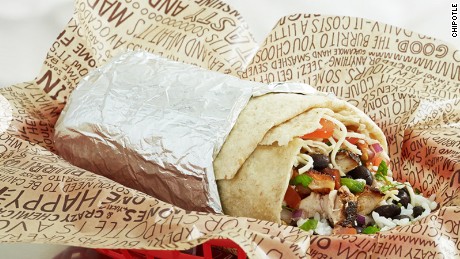
    The types of packaging were split into six categories: food contact paper (sandwich wrappers and pastry bags), food contact paperboard (boxes for fries or pizza), non-contact paper (outer bags), paper cups, other beverage containers (milk and juice containers) and miscellaneous (lids).
    Food contact papers were divided into three subcategories: sandwiches, burgers and fried foods; Tex-Mex; and desserts and breads.
    Food contact paper fared the worst, with 46% of all samples testing positive for fluorine. Food contact paperboard was next, at 20%, followed by other beverage containers at 16%. Non-contact paper, paper cups and miscellaneous all tested negative for fluorine.
    The researchers did not provide any chain-specific data in order to compare fast food restaurants or determine which brands scored better or worse than average.
    “For foodservice packaging that requires a barrier coating, ‘short chain’ fluorochemicals are used today, so it’s no surprise that the study would find these chemicals,” said Lynn M. Dyer, President of the Foodservice Packaging Institute in the US. “These, like all packaging products, go through rigorous testing to ensure that they meet stringent US Food and Drug Administration regulations, providing the safe delivery of foods and beverages to consumers.”
    Dryer added, however, that “some fluorochemical-free products have been introduced since this study was conducted in 2014 and 2015,” meaning there are now a greater numbers of options available for fast food chains to provide oil, grease and/or water resistance.
    What’s a consumer to do?
    Short of asking that your next burger be served in between two lids, there isn’t a whole lot you can do to avoid PFAS exposure once you’ve chosen to eat at a fast food restaurant.
    “Unfortunately, for consumers, there’s no easy way to tell — just by looking at packaging — whether or not it contains fluorinated chemicals,” Schaider said. “For people who wish to reduce their exposure to these chemicals, they may be able to take some steps … to reduce that migration from packaging into food — for instance, by taking the food out of the packaging sooner rather than later.”
    You could also ask that your fries or dessert be served in a paper cup or a noncontact paper bag. This is the outer bag all your items are usually put into when you get your food.
  • Five Ways to Reduce Your Exposure to Toxins in Food

    Five Ways to Reduce Your Exposure to Toxins in Food

    Food may go through a lot on its journey to your plate, sometimes in ways that are not beneficial to your health. Some things may occur before food is even planted or harvested. For example, crops can be treated with pesticides and fertilizers or transformed through hybridization or genetic engineering. And then there are toxic substances that are added to food either intentionally as ingredients or inadvertently as contaminants while food is being processed. While pesticides and genetically engineered foods can be mostly avoided by choosing organic, it can be challenging to avoid toxins added to food during processing and packaging.

    Researchers recently found almost two hundred chemicals of concern are used in food storage materials in the U.S. (1). Of these, I’ll focus this blog post on two types of chemicals: phthalates and bisphenol A (BPA), as well as its replacements. These chemicals are components in plastic wraps and food containers and give them flexibility and strength. They are also present in containers of small kitchen appliances like mixers, blenders, popcorn poppers, and water filtration pitchers.

    So, how are these chemicals a concern for your health? One of the major issues is that they act as hormone disruptors, meaning they interfere with your body’s natural cycles. Studies have shown that some phthalates have been linked to feminization of male fetuses in women who had higher levels in their blood stream during pregnancy (2). BPA has been shown to increase susceptibility to breast cancer or to act as an obesogen, which means that children exposed to higher levels as fetuses are more likely to gain weight later in their lives than those exposed to lower levels (3,4). Please note that products labeled ‘BPA-free’ may have alternatives that have also been shown to be disruptive to hormone cycles (5).

    So how do you avoid these chemicals in your diet? Several recent studies give some guidance both on ways to avoid them and how hard it can be to do so. Two of these studies tracked levels of BPA and phthalates in people’s urine before and during an intervention where they were asked to eat only unprocessed, unpackaged food. In one study, the levels of these chemicals dropped by more than half during the week they ate unprocessed food (6). In the other study, there were some sources of chemicals that they hadn’t expected and the reductions weren’t as successful (7). In another study, volunteers were asked to eat one serving of canned soup daily for five days. Their BPA levels went up by 1000% (e.g. a 10-fold increase) during that time (8).

    Because problematic chemicals aren’t well regulated in our food and consumer products, such as the ‘BPA-free’ products containing replacements that can be as toxic as the original, I recommend using non-plastic alternatives for cooking and storage of food and water, like stainless steel, glass, and low-lead ceramic containers. Also, it’s a good idea to use mesh and canvas bags when buying produce and bulk foods and become a collector of glass jars (i.e. canning and food jars) for storage.

    I offer these simple steps for reducing your exposure to toxins in food, whether they were added during processing, packaging, or from environmental contamination:

    1. Avoid processed and packaged food, including canned foods and beverages.
    2. Choose organic food whenever possible to reduce exposure to pesticides.
    3. Cook and store food in stainless steel, glass and ceramic and avoid plastic containers and nonstick pans.
    4. Minimize consumption of animal fats (meat, cheese, and butter), as they accumulate toxins like PCBs and dioxins (9).
    5. Avoid char on food (yup, even in barbecue), since it’s highly carcinogenic (10).

    References

    1. Geueke, B, et al. (2014). “Food contact substances and chemicals of concern: a comparison of inventories. Food Additives & Contaminants: Part A. Vol 31:1438.
    2. Swan SH, et al (2005). “Decrease in anogenital distance among male infants with prenatal phthalate exposure.Environmental Health Perspectives Vol 113:1056.
    3. Bhan, A, et al. (2014). “Bisphenol-A and diethylstilbestrol exposure induces the expression of breast cancer associated long noncoding RNA HOTAIR in vitro and in vivo.The Journal of Steroid Biochemistry and Molecular Biology, Vol. 141:160.
    4. Trasande, L, et al. (2012). “Association Between Urinary Bisphenol A Concentration and Obesity Prevalence in Children and Adolescents.Journal of the American Medical Association. 308:1113.
    5. Bienkowski, B. and Environmental Health News (2013). “BPA Replacement Also Alters Hormone.
    6. Rudel, R, et al. (2011). “Food Packaging and Bisphenol A and Bis(2-Ethyhexyl) Phthalate Exposure: Findings from a Dietary Intervention.Environmental Health Perspectives. 119:914.
    7. Sathyanarayana, S. et al. (2013). “Unexpected results in a randomized dietary trial to reduce phthalate and bisphenol A exposures.Journal Exposure Science & Environmental Epidemiology. Vol. 23:378.
    8. Carwile, JL, et al (2011). “Canned Soup Consumption and Urinary Bishphenol A: A Randomized Crossover Trial.Journal of the American Medical Association. 306:2218.
    9. Kalantzi, OI, et al. (2001). “The global distribution of PCBs and organochlorine pesticides in butter.”  Environmental Science & Technology. 35:1013.
    10. Massachusetts General Hospital (2011). “Can eating grilled foods really increase cancer risk?” 01/Jul/2011

    Photo: “Rusty tin cans” © 2013 by Beverley Goodwin. Used under Creative Commons License.

    —This article originally appeared at: https://eatingrules.com/reduce-toxin-exposure-in-food/