
Tag: tea

  • 4 Types of Green Tea and Their Health Benefits

    The world of tea offers something for everyone, depending on your taste, mood, and health goals. All true tea comes from the tea plant Camellia sinensis. That’s right, black tea, green tea, white tea, and oolong tea all come from the same plant—everything else is technically a tisane! What makes them so unique in look and taste is the way they are grown, harvested, and prepared.

    And while all contain antioxidant, antibacterial, anti-inflammatory, and antiviral benefits due to their shared catechin polyphenol, antioxidant content, each type contains its own individual benefits, which can help you better decide which will be your go-to choice. 

    Dr. Will Cole, leading functional-medicine expert share insight into the variety of Green Tea which he calls : the grounder.

    It is definitely the most popular, right now. While harvested later than white tea, green tea does not go through the same oxidation process that oolong and black tea go through. Like white tea, this allows for some of the highest levels of catechins, specifically the uber-beneficial compound epigallocatechin gallate (EGCG).

    It’s been shown in a number of exciting studies to be extremely powerful in a number of issues:

    • Boosts metabolism
    • Improves the skin
    • Slows down aging
    • Decreases cancer growth
    • Improves brain function
    • Protects from brain diseases
    • Reduces heart disease risk
    • Reverses diabetes
    • Decreases inflammation through boosting pro-antioxidant Nrf2 pathways and decreases pro-inflammatory activity.

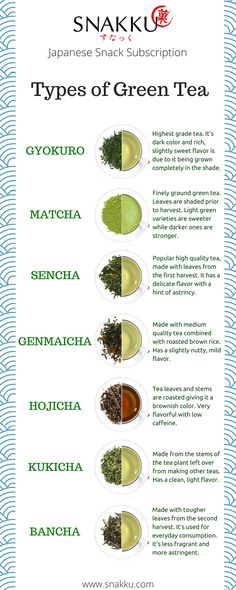
    Green tea is a fun part of the kingdom. Like all the varieties of beer or wine, green tea comes in different forms that each can have their own individual taste and array of nutrients. Here’s how the different green teas rank:
    Matcha:

    Matcha is a green powder made from a specific kind of green tea leaf. Unlike many other green teas, plants used for matcha are first covered and grown in the shade for weeks upon weeks before they are harvested, resulting in boosted chlorophyll levels, which gives it the bright green color it is known for. Then the leaves are dried and ground into powder. Matcha has one of the highest concentrations of EGCG of all green teas, up to three times more than a typical sencha!

    Sencha:

    Sencha is brewed by infusing the whole tea leaves in water to produce a very mild and pleasant taste. Harvested early on in the season, sencha is made from some of the most flavorful top leaves. It’s no wonder that this is the most popular tea in Japan.

    Gyukuro:

    Similar to sencha, the biggest difference is that the leaves are also shade grown just like matcha versus in the sun, which results in a stronger, more intense flavor. Gyokuro is also touted as having the highest EGCG levels.

    Sancha:

    More bitter in taste, bancha has the lowest caffeine content of all green tea varieties. It is harvested from the same tree as sencha but later in the season, making it one of the cheapest, most commonly found green teas out there.

    The bottom line? All tea is super healthy, so choose based on your personal goals and flavor preferences.

    As with the importance of what’s in teas, it is just as important about what is not in teas.

    Says Julie Graves-LaForge an Independent Sipologist with Sipology by Steeped Tea (who are members of the Ethical Tea Partership).  The ETA is a community of tea producers that meet international social standards. They practice safety and opportunity for tea workers and their communities. They strive to improve tea producers’ sustainability; protecting soil, water, ecosystems and wildlife.  They provide education and training around good practice tea farming.
    To Learn More about Sipology by Steeped Tea visit http://mysteepedteaparty.com/myuniquepartea

    MORE ABOUT TEA BENEFITS

    This is what happens when you give up coffee for matcha.

    Portion of this article originally appeared at the site of 

    William Cole, D.C., IFMCP Functional Medicine Practitioner https://www.mindbodygreen.com/articles/the-healthiest-types-of-tea.

  • Weed Killer Found in Your “All Natural” Cup of Tea

    Last year, OCA sued Bigelow, after the brand’s Classic Green Tea tested positive for glyphosate, the active ingredient in Monsanto’s Roundup weedkiller. Glyphosate is the active ingredient in many herbicides, most notably in Monsanto’s star product, Roundup. The chemical is applied to more than 150 food and non-food crops and used on lawns, gardens and parks. In fact, researchers from the University of California San Diego School of Medicine found that human exposure to glyphosate has increased approximately 500 percent since 1994, the year Monsanto introduced its genetically modified Roundup Ready crops in the U.S. Today, the chemical can be detected in everyday household foods such as cookies, crackers, ice cream and even our urine.

    Organic Consumer Association alleges that Bigelow Tea puts the words “All Natural” on its Classic Green Tea and other tea products, and also represents its products and the company as being “environmentally friendly” even though Bigelow’s Green Tea tested positive for glyphosate, the active ingredient in Monsanto’s Roundup® weedkiller.

    Among other health and environmental concerns, according to a report published January 2017, low doses of glyphosate have been linked to non-alcoholic fatty liver disease, suggesting that there is no “safe” level of glyphosate.

    In March 2015, the World Health Organization’s International Agency for Research on Cancer (IARC) which labeled glyphosate a “probable carcinogen.” The France-based panel’s ruling has since sparked debate around the world, prompted hundreds of lawsuits over allegations that glyphosate causes cancer, and resulted in the state of California adding glyphosate to its list of cancer-causing chemicals.

    “All Natural” Should Mean Pesticide Free

    According to the lawsuit that an estimated 0.38 ppm in Bigelow Green Tea. The lawsuit isn’t about the contamination rather, the complaint alleges that Bigelow deceptively labeled, marketed and sold tea products with the representation of “All Natural” and “Natural,” making the products appear environmentally friendly.

    “Like other companies that market their products as ‘natural’ and ‘environmentally friendly,’ Bigelow is using these terms to profit from growing consumer demand for healthier, more sustainable produced products, even though the company knows those claims are false,” said Ronnie Cummins, international director of the Organic Consumers Association.

    “Bigelow knows that health-conscious consumers will pay a premium for “all natural” products believing those products are free of pesticides and other contaminants. Likewise, Bigelow knows that consumers who care about the environment will pay more for products they believe were produced using methods that don’t harm the environment. As a consumer education and advocacy group, it’s our job to expose these false claims and force corporations to either clean up their products, or clean up their labels and advertising.”

    Judge Denies Request for Case Dismissal

    OCA is represented by Richman Law Group.

    They filed the suit in Washington, D.C., under the District of Columbia Consumer Protection Procedures Act (CPPA), because we believe consumers don’t expect an “All Natural” product to contain pesticide residues.

    Bigelow did what all corporations do in the face of a lawsuit—it asked the court to dismiss the case. The court said no. The case will go forward.

    In its ruling, Judge Robert Rigsby agreed with us—that any “reasonable fact-finder considering the facts as alleged [in this case] could conclude that consumers have been misled in violation of the CPPA.”

    In other words, Judge Rigsby recognized that the word “natural” means something to consumers. And that “something” doesn’t include pesticide contamination.

    More on the Myth of Natural Campaign

    *Read the full complaint 

    Learn More:

    See Monsanto’s internal documents revealing the company is well aware of health risks to humans

    Toxicity of Glyphosate (sign the Petitions)

    Detoxing from Glyphosate

  • Toxic Tea. Popular Tea Brands Contain Illegal Amounts of Pesticides

    Although tea is widely thought to be a healthier source of caffeine than coffee, soda or energy drinks, conventional tea brands have been shown to contain high levels of toxic substances such as fluoride and pesticides, artificial ingredients, added flavors and GMOs(modified corn starch and soy lecithin).The levels found in these products are so high that they are considered unsafe for consumption. As with most products, all tea is not created equal. Opting to save a few dollars on cheaper tea can cost you a lot more when it comes to your health.

    Conventional Teas May Contain Fluoride and Pesticides

    Most tea isn’t washed before it is distributed into bags. If the tea was sprayed with pesticides, those pesticides will wind up directly in your cup. Many non-organic tea brands have been found to contain pesticides that are known carcinogens. Popular tea brands often get away with listing “natural flavors” as an ingredient, causing many consumers to think they are buying better, cleaner ingredients. But there is a whole list of what “natural flavors” could mean.

    Reports from India and China find high levels of banned pesticides in tea products, pointing to a lack of enforcement on pesticide use in major tea exporting countries. In the U.S., the Food and Drug Administration (FDA) consistently finds high levels of illegal residues on imported Tea that eventually finds its way to the American consumer. These include permethrin (a synthetic pyrethroid, linked to cancer and endocrine system disruption), DDE (a metabolite of DDT, banned in the U.S. in 1972), heptachlor epoxide (a derivative of the pesticide heptachlor, which was banned in the U.S. for use in agriculture and as a termiticide due to its carcinogenicity and persistence in the environment) and acetamiprid (a bee-toxic neonicotinoid). These issues increase consumer exposure to a dangerous blend of pesticides in conventional tea.

    Where Does The Fluoride Come From?

    Tea plants absorb fluoride from soil and accumulate it as they grow, so older leaves contain the most fluoride. Cheaper quality teas are often made from older tea leaves, which contain more fluoride. These teas also contain the least amount of anti-oxidants, lessening the health benefits associated with drinking tea.  See our full article on the dangers of neurotoxic Fluoride

    Which Brands Contain The Most Toxins?

    The Canadian Broadcasting Corporation actually conducted an investigation on several popular international tea companies, including:

    1. Tetley
    2. Lipton
    3. Twinnings
    4. No Name
    5. Uncle Lee’s Legends of China
    6. King Cole
    7. Signal

    Alarmingly, the CBC found that half of the tea brands contained a level of toxins that exceeded the legal limit. The worst offenders were:

    • King Cole, which contained the monocrotophos – a chemical that is currently in the process of being banned, as it causes irregular heartbeat and even coma.
    • Uncle Lee’s Legends of China, which contained more than 20 types of pesticides. One was endosulfan, which causes nervous system damage.
    • No Name, which contained more than 10 pesticide types.

    That doesn’t mean the other tea brands were totally safe, however. 
    In fact, only Red Rose tea was found to contain no pesticides at all.

    How To Avoid Toxic Chemicals in Tea

    You don’t need to stop drinking tea altogether to keep yourself safe from harmful toxins or pesticides that may be lurking in your cup. After all, tea is the source of some amazing health benefits. So what’s the solution?

    • Try switching to white tea. It has the least amount of fluoride because it’s made from young leaves.
    • Be sure to buy loose leaf tea or brew your own tea from scratch.
    • Buy organic! Choose a non-GMO certified brand of tea.
    • Check the ingredient list to make sure there are no added flavors or GMO ingredients added to the tea leaves.
    • Many restaurants use tea brands that are known to be full of pesticides, so be careful about ordering tea while out to eat.
    • Know the correct brewing times for certain types of tea. Black or Pu-reh teas should be steeped for 3-5 minutes; white or green teas should be steeped for 2-3 minutes; Oolong teas should be steeped for 4-7 minutes; and herbal teas should be left to steep for five minutes at minimum, longer for a stronger tea.

    Here is a list of bagged tea that is safe!

    Watch the video below for a breakdown of different tea brands and how they measure up in terms of health:

    Sources:

    Sources:

    IS THE TEA YOU ARE DRINKING TOXIC AND THE TEA BAG IT IS IN …. https://www.bwellbhealthy.com/blog/2017/2/26/is-the-tea-you-are-drinking-toxic-and-the-tea-bag-it-is-in

    Most Brands of Tea Contain THESE Harmful Chemicals …. https://www.davidwolfe.com/tea-contain-harmful-chemicals/

    These Popular Tea Brands Possess Dangerously High Levels …. https://worldtruth.tv/these-popular-tea-brands-possess-dangerously-high-levels-of-pesticides/

    The hidden dangers of bagged tea | Body Unburdened. https://bodyunburdened.com/the-hidden-dangers-of-bagged-tea/

  • Daily Detox Lemon, Ginger, and Turmeric Tea

    Ginger Turmeric tea may have some very strong health benefits that cannot be ignored. Some of the benefits could deflect some serious health benefits even to the extent of being life-saving. Ginger turmeric tea may not be considered a super tea like some of the famous health teas out there but it is a formidable health agent in it’s own right. It may be that not a lot of people associate ginger turmeric tea with healthy living. But ginger tea may be a good addition to a healthy lifestyle.

    The Benefits of the Ingredients used in this Tea

    • Lemons– Are beneficial for flushing out the kidneys which prevents kidney stones and urinary tract infections. Good source of vitamin C which is supposed to be one of the best antioxidants in nature
    • Ginger- A good source for stomach issues it it supposed to help the food travel faster from the stomach to the intestines helping with issues such as:indigestion, acid reflux, bloating, and gas. It’s also super effective in helping with inflammation.      
    • Turmeric– is another powerful anti-inflammatory which is high in antioxidants. Curcumin is the main ingredient in turmeric which helps the immune system fight infection and has pain-relieving properties. Say goodbye to headaches.
    • Cayenne– It will add a kick to the mix and it will benefit your insides. It helps with weight loss and inflammation. It will give your immune system a boost with its source of beta-carotene
    • Cinnamon– The final kicker in the mix. It has more antioxidants to help combat infection and it may help to elevate insulin sensitivity thus stabilizing blood sugar levels

    Ingredients:

    • 6 cups water
    • 1 chunk fresh ginger {approximately 5-6″ in length}
    • 3 cinnamon sticks
    • 1 tsp ground turmeric
    • ½ tsp cayenne pepper
    • 6 fresh lemons

    Instructions:

    • peel the ginger and dice into thin slices.
    • in a large pot or saucepan over high heat on the stove combine the peeled and sliced ginger and water. bring to a boil. then turn to low heat and let simmer for approximately 10 minutes.
    • after 10 minutes, add the cinnamon sticks, turmeric and cayenne and simmer on low heat for another 10 minutes; stirring occasionally.
    • then remove from heat, let cool and strain.
    • this makes about 6 cups of a concentrated version of the detox tea which you can store in a glass container in the fridge. you can drink this concentrate warm or cold and add ½ fresh lemon juice right before you enjoy.
    • You can add ¼ cup of this mixture to ½ fresh lemon juice and 6 oz hot water.

    this and other great recipes for gingerand tumeric can be found  Balance Me Beautiful

  • A New Favorite Herb: Lemon Balm

    If you haven’t yet discovered lemon balm, let me introduce you to your new favorite herb. There are so many wonderful uses for lemon balm! Lemon balm is a powerful herb that can combat viruses in the body and powerfully reduce anxiety. Use lemon balm in the garden, for cleaning, and as a tasty addition to numerous recipes.

    Lemon Balm Benefits

    Heart palpitations, nervous tension, insomnia, and hyperactivity are all classic indications for lemon balm and these combined describe what some people experience when their thyroid becomes overactive, such as in Grave’s disease. In fact, lemon balm, bugleweed (Lycopus spp.) and motherwort (Leonorus cardiacus) is a classic western formula for a hyperactive thyroid. 

    Lemon balm is a member of the mint family and, like other mints, it has complicated energetics. Thermally it has been classified as both warming and cooling. This is explained partly by understanding different perspectives within the major living herbal traditions today. 

    Lemon balm has a sour taste. In Ayurveda sour is classified as hot and wet while in Traditional Chinese Medicine sour is thought to be cooling and moistening. In western herbalism sour is generally thought to be cooling. 

    Matthew Wood explains: 

    “Lemon balm has a sour taste, as its name indicates – it is one of the few sour mints. Like most sour plants, it is cooling and sedative. It combines this property with the typical nerve-calming powers of the mint family to make a strong, but safe and simple sedative. These powers are much more marked when the plant is tinctured fresh. A tincture of fresh melissa should be on the shelf in every household as a general sedative.”

    Lemon Balm been used as a mild emmenagogue to promote late menstruation as well as relieve menstrual cramping

    How to Identify The Lemon Balm Plant

    As mentioned, lemon balm is in the mint family and has many attributes or identifying features common to this family.
    It has square stems and leaves are in an opposite branching pattern.
    Lemon balm flowers are white and have the classic “lipped” look of the mint family. It typically flowers from June to September.
    This is a perennial plant that is easy to grow. Watch out! It will spread readily in your garden.
    If you crush a leaf in your fingers you’ll be introduced to the wonderful lemon scent of lemon balm. In the past it was considered a “strewing herb,” which is an herb hung in the rafters or strewed on the ground to emanate a pleasant scent.